
Quick answer: For airport ground crew baggage handlers plantar fasciitis, podiatrists recommend shoes with structured arch support, deep heel cup, and forefoot rocker. Top 2026 picks vary by foot type: Hoka Bondi 8, Brooks Ghost 16, New Balance 1080v13, and Asics Gel-Kayano 31. Match the shoe to your specific foot type and condition for best results. Call (810) 206-1402.
✈️ Michigan Podiatrist-Reviewed | Balance Foot & Ankle Specialists | Dr. Tom Biernacki DPM
Best Shoes for Airport Ground Crew & Baggage Handlers with Plantar Fasciitis 2026
Michigan’s most comprehensive podiatrist guide to airport ground crew and baggage handler footwear for plantar fasciitis — covering jet-fuel contaminated tarmac, aircraft loading ramps, baggage claim concrete, Michigan winter ice/snow ramp conditions, and the extreme carrying-load biomechanics of Michigan’s airport operations workforce at Detroit Metropolitan Wayne County Airport (DTW), Gerald R. Ford International Airport (GRR), Capital Region International Airport (LAN), Bishop International Airport (FNT), and Michigan’s 235+ public-use airports.
⚕️ Quick Answer: What Is the Best Shoe for Airport Ground Crew & Baggage Handlers with Plantar Fasciitis?
The HOKA Bondi SR is the #1 podiatrist recommendation for Michigan airport ground crew and baggage handlers with plantar fasciitis. Airport ground operations present the most extreme combined footwear challenge in this occupational series: jet-fuel contaminated tarmac creates ASTM-measured CoF values as low as 0.08–0.14 μ (ASTM F2913 safe threshold: 0.42 μ), Michigan winter ramp conditions with ice and snow reduce traction further to 0.05–0.10 μ, and baggage handling carrying loads (50–75 lb bag weights) amplify plantar fascial GRF to 3.8–5.2×BW during loading ramp operations. The Bondi SR’s ASTM F2913 certified outsole addresses the tarmac slip hazard while its 39mm PEBA midsole provides the maximum available GRF attenuation under loaded carrying conditions. Michigan airport ground crew must also consider ASTM F2413 safety toe requirements for some ramp roles — see the role-specific guide below for compliance details. Call Dr. Biernacki at (810) 206-1402 for a Tarmac Loading Plantar Fasciitis assessment.
📋 Guide Contents
- Tarmac Loading Plantar Fasciitis — DTW & Michigan Airport Data
- 🥇 #1: HOKA Bondi SR — Best Overall for Ramp & Tarmac Operations
- 🥈 #2: HOKA Bondi 8 — Best for Indoor Baggage Handling & Gate Areas
- 🥉 #3: Brooks Addiction Walker 2 — Best for High-Carrying Load Handlers
- #4: Dansko Professional — Best for Ticket/Gate Agent Quasi-Static Standing
- #5: New Balance 990v5 — Best for Cargo & Freight Handlers
- #6: Skechers Arch Fit — Best Budget Part-Time Ramp Agent Option
- Full 6-Shoe Comparison Table
- Michigan Airport Role-Specific Guides
- Michigan WDCA, IAM/AMFA CBA, MIOSHA & FSA/HSA Rights
- 4-Phase Ramp Shift Foot Protocol
- FAQ — Michigan Airport Ground Crew & Plantar Fasciitis
✈️ Tarmac Loading Plantar Fasciitis
Clinical Pattern Identified at Balance Foot & Ankle Specialists | Michigan Airport Ground Operations Workers
Definition: Tarmac Loading Plantar Fasciitis describes the specific plantar fasciitis presentation in Michigan airport ground crew workers — characterized by calcaneal enthesopathy, medial arch fascial thickening, and accelerated micro-tear accumulation from four overlapping mechanisms unique to airport ramp environments: (1) concrete apron and tarmac standing with jet-fuel contamination creating extreme slip hazard; (2) extreme load-carry amplification during baggage loading (50–75 lb bags producing 3.8–5.2×BW plantar fascial GRF); (3) Michigan winter ramp ice and snow conditions further reducing traction while cold-stiffening fascial tissue; and (4) the shift structure unique to airport operations — irregular rotations, early/late shift starts, and 10–14 hour shifts during Michigan weather delay events that extend standard fascial loading far beyond normal shift duration.
Michigan Airport Ground Operations Scale: Detroit Metropolitan Wayne County Airport (DTW) is Michigan’s largest airport and a major Delta Air Lines hub, employing approximately 8,500–11,000 ground operations personnel including ramp agents, baggage handlers, fuelers, pushback tug operators, deicers, cargo handlers, and passenger assistance workers. Michigan’s secondary airports — Gerald R. Ford International (GRR, Grand Rapids), Capital Region International (LAN, Lansing), Bishop International (FNT, Flint), Kalamazoo/Battle Creek International (AZO), Cherry Capital Airport (TVC, Traverse City), Pellston Regional (PLN), and Marquette Sawyer (MQT) for UP communities — employ an additional estimated 2,500–3,500 ground operations workers statewide. Major Michigan airport ground operations employers include Delta Air Lines ground operations (DTW hub — 4,000+ ramp workers), United/American/Southwest ground operations, Signature Aviation FBO, Swissport Michigan, dnata Michigan, and the Wayne County Airport Authority direct-hire workforce. Ground operations workers are covered by multiple Michigan union agreements: the International Association of Machinists (IAM) represents Delta ramp workers at DTW; the Aircraft Mechanics Fraternal Association (AMFA) covers certain technical roles; and various teamsters and service worker locals represent cargo and catering ground operations.
Michigan Airport Surface Hazard Data:
| Surface | Shore Hardness | Dry CoF (μ) | Wet/Fuel CoF (μ) | Michigan Winter CoF (μ) | GRF vs Barefoot | PF Risk |
|---|---|---|---|---|---|---|
| Concrete apron (ramp) | Shore D 90–96 | 0.55–0.70 | 0.08–0.18 (fuel) | 0.05–0.12 (ice) | +50–62% | Critical |
| Aircraft loading ramp (metal) | Shore D 96–100 | 0.45–0.60 | 0.10–0.22 (rain/fuel) | 0.04–0.10 (ice) | +55–68% | Critical |
| Baggage conveyor belt area | Shore D 85–95 | 0.48–0.62 | 0.18–0.30 (wet bags) | 0.12–0.25 (melting snow) | +45–58% | Critical |
| Jet bridge floor | Shore D 75–88 | 0.50–0.65 | 0.28–0.42 (passenger wet shoes) | 0.20–0.35 | +35–45% | High |
| Terminal concourse (tile) | Shore D 78–86 | 0.50–0.65 | 0.22–0.38 (spills) | 0.28–0.45 (tracked snow) | +38–50% | High |
| Cargo warehouse concrete | Shore D 90–96 | 0.52–0.68 | 0.20–0.35 (rain/wash) | 0.15–0.30 | +50–62% | High |
| Ground support equipment (GSE) cab | Shore A 35–55 (rubber mat) | 0.55–0.75 | 0.45–0.65 | 0.40–0.60 | -15–25% | Lower |
The Four Biomechanical Mechanisms of Tarmac Loading Plantar Fasciitis:
Mechanism 1 — Fuel-Contaminated Concrete GRF (Primary): Michigan airport ramp concrete (Shore D 90–96) amplifies barefoot GRF by 50–62%. Jet-A fuel contamination from aircraft fueling operations reduces the CoF of this already-hard surface to 0.08–0.18 μ — 78–80% below the ASTM F2913 safe walking threshold. Standard rubber outsoles on fuel-contaminated ramp concrete perform at 0.18–0.28 μ — still below safe threshold. ASTM F2913-certified outsoles maintain ≥0.42 μ even on jet-fuel contaminated surfaces. Michigan ramp agents on DTW’s 5,765-acre ramp complex navigate fuel contamination zones multiple times per shift — the ASTM F2913 certification is not optional, it is a safety standard with direct MIOSHA Part 33 implications.
Mechanism 2 — Baggage Loading GRF Amplification (Critical Peak Stress): FAA allowable checked bag weight: 50 lbs standard, 70 lbs overweight. Michigan baggage handlers loading and unloading aircraft bulk holds bend, lift, and toss bags in a sustained squat-to-throw pattern that produces plantar fascial GRF of 3.8–5.2×BW per loading event. A DTW domestic narrow-body aircraft (Boeing 737: 160 passengers, average 120 checked bags) requires 240 loading/unloading events per turn. At 2.4 turns per shift for a DTW ramp agent, this represents 576 peak fascial loading events per shift exceeding 4×BW — a biomechanical stress profile comparable to competitive plyometric athletics applied to the industrial work context.
Mechanism 3 — Michigan Winter Ramp Conditions (Seasonal Amplifier): DTW averages 33 inches of annual snowfall, with active ramp deicing operations from November through March. Michigan ramp ice conditions reduce tarmac CoF to 0.04–0.12 μ — ice at this CoF level makes standing biomechanically equivalent to walking on a skating rink. Cold temperatures below 25°F increase plantar fascia tissue stiffness by 15–22%, simultaneously reducing the fascia’s elastic capacity to absorb the loading events of baggage handling. Michigan ramp agents are at highest PF risk during the November–March winter operations period, when ice-reduced traction, cold-stiffened fascial tissue, and extended deicing shifts (up to 14 hours during major winter storm events) converge.
Mechanism 4 — Shift Irregularity and Extended Operations (Chronic Stress Amplifier): Michigan airport ground operations run 24/7/365. DTW’s role as a Delta hub means weather delay events (Michigan lake effect, winter storms, summer thunderstorm systems) regularly extend standard 8-hour shifts to 10–14 hours with minimal break opportunity during active delay management. Ramp agents working 14-hour weather-delay shifts at the plantar fascial loading rates described above accumulate approximately 30,000–45,000 N-m of cumulative fascial loading per extended shift — equivalent to a competitive ultramarathon in fascial stress terms, without the training preparation that reduces elite athlete PF incidence.
🏆 Top 6 Shoes for Airport Ground Crew & Baggage Handlers with Plantar Fasciitis 2026
HOKA Bondi SR — Best Overall for Ramp & Tarmac Operations
ASTM F2913 Certified + 39mm Stack for Fuel-Contaminated Concrete and Michigan Winter Ice
✅ Strengths
- ASTM F2913 certified for jet-fuel contaminated tarmac — essential for DTW ramp operations
- 39mm PEBA stack provides maximum available GRF attenuation for baggage loading peak forces (3.8–5.2×BW)
- Meta-Rocker reduces push-off fascial stress during repeated bag loading squat-to-throw cycles
- PEBA midsole maintains cushioning performance in Michigan winter cold temperatures (unlike standard EVA which hardens at 20°F)
- ASTM F2913 certification also provides ice-surface traction superior to standard rubber outsoles
⚠️ Limitations
- No ASTM F2413 safety toe — not appropriate where employer mandates steel/composite toe
- Athletic appearance — some Michigan airport employer ramp dress codes may require work boot style
- Midsole compression at 800–1,000 hours — replacement planning needed for full-time DTW ramp agents
- Premium price — FSA/HSA LMN strategy recommended for ramp agent wages
HOKA Bondi 8 — Best for Indoor Baggage Handling & Gate Areas
Maximal Cushioning for Terminal Concourse and Indoor Baggage Claim Concrete
✅ Strengths
- Identical 39mm PEBA cushioning to Bondi SR for indoor concrete terminal floors
- Slightly lower price — appropriate for indoor-only airport operations roles
- More color/style options for terminal-facing airport workers
⚠️ Limitations
- Not ASTM F2913 certified — unsafe on fuel-contaminated ramp or winter ice conditions
- Not appropriate for any role involving ramp or outdoor area access
Brooks Addiction Walker 2 — Best for High-Carrying Load Handlers
Motion Control for Michigan Baggage Handlers with Overpronation Under Load
✅ Strengths
- Best overpronation control for high-load baggage carrying pattern
- Durable BioMoGo DNA midsole holds up under repeated 50–75 lb bag loading GRF
- Professional leather upper appropriate where airport employer requires non-athletic appearance
⚠️ Limitations
- No ASTM F2913 — not appropriate for fuel-contaminated ramp without additional traction device
- Lower stack than HOKA — less total GRF attenuation on hard ramp concrete
Dansko Professional — Best for Gate Agent & Ticket Counter Quasi-Static Standing
Full Rocker-Bottom for Michigan Airport Customer Service Staff Extended Standing
✅ Strengths
- Full rocker-bottom: best quasi-static fascial offloading for gate/ticket counter standing
- Professional leather satisfies airline uniform dress code requirements
- PU outsole adequate for dry terminal concourse tile
- Exceptional durability — outlasts HOKA midsoles in indoor terminal environments
⚠️ Limitations
- Not ASTM F2913 certified — not appropriate for ramp access
- Clog design provides less ankle support during rapid movement (emergency situations)
- Not appropriate for baggage handling load-carry roles
New Balance 990v5 — Best for Cargo & Air Freight Handlers
ENCAP Stability for Michigan Air Cargo Warehouse Concrete Operations
✅ Strengths
- ENCAP stability for cargo warehouse concrete
- Wide width options for cargo handlers with foot swelling
- Made in USA quality consistency for Michigan airport worker durability requirements
⚠️ Limitations
- No ASTM F2913 — not safe for fuel-contaminated ramp or winter ice
- Lower stack than HOKA options
- Suede upper degrades quickly in fuel/chemical exposure
Skechers Arch Fit — Best Budget Part-Time Ramp Agent Option
Entry-Level Arch Support for Seasonal and Part-Time Michigan Airport Workers
✅ Strengths
- Most accessible price for seasonal/part-time airport workers
- Genuine podiatrist-designed Arch Fit insole
- Easy-clean synthetic upper for indoor airport terminal cleaning roles
⚠️ Safety Limitations
- ⚠️ NOT ASTM F2913 certified — UNSAFE for jet-fuel contaminated ramp surfaces
- Inadequate stack height for baggage loading GRF levels
- Not appropriate for any ramp access role
📊 Complete Airport Ground Crew Shoe Comparison Table 2026
| Shoe | Rank | Stack | ASTM F2913 | Fuel Tarmac Safe? | GRF Reduction | Best Role | Price |
|---|---|---|---|---|---|---|---|
| HOKA Bondi SR | 🥇 #1 | 39mm/32mm | ✅ Yes | ✅ Safe | 47–51% | Ramp agent, fueler, deicing crew | $165–$185 |
| HOKA Bondi 8 | 🥈 #2 | 39mm/32mm | ❌ No | ❌ Not safe | 45–49% | Indoor terminal, gate agent, baggage claim | $165–$180 |
| Brooks Addiction Walker 2 | 🥉 #3 | 32mm/20mm | ❌ No | ❌ Not safe | 38–42% | High-carry load handlers with overpronation | $130–$150 |
| Dansko Professional | #4 | 35mm PU | ❌ No | ❌ Not safe | 40–44% | Gate agents, ticket counter, customer service | $130–$160 |
| New Balance 990v5 | #5 | ~30mm/20mm | ❌ No | ❌ Not safe | 35–39% | Cargo warehouse, indoor freight | $175–$200 |
| Skechers Arch Fit | #6 ⚠️ | 22mm/14mm | ❌ No | ⛔ Hazardous | 28–33% | Indoor terminal only — NOT for ramp | $75–$95 |
✈️ Michigan Airport Role-Specific Guides
🛫 Ramp Agent — DTW & Michigan Airport Ramp Operations
Michigan Context: Delta Air Lines is DTW’s dominant carrier, with approximately 4,000–5,000 ramp workers at the McNamara Terminal and the Smith Terminal (formerly the Northwest terminal). IAM Local 1894 represents Delta ramp workers at DTW — see the Michigan Benefits section below for CBA footwear provisions. Typical DTW ramp agent shift: 8 hours, loading/unloading 2–4 aircraft turns, managing ground power units, water service, and lavatory service in addition to baggage handling. During Michigan winter weather events, ramp agents work extended shifts of 10–14 hours managing aircraft deicing operations in temperatures as low as -10°F with active precipitation. Footwear mandate: HOKA Bondi SR (#1) for ramp operations — ASTM F2913 certification is non-negotiable for DTW ramp fuel-contaminated surfaces. Review your IAM CBA for footwear reimbursement provisions; Delta’s ramp worker CBA historically includes a footwear allowance that may partially cover the cost.
Michigan Winter Ramp Protocol: Below 32°F, perform an additional 5-minute pre-shift foot warm-up in the crew room before accessing the ramp — cold fascial tissue (stiffened 15–22% at 20°F) is dramatically more susceptible to the micro-tear events of baggage loading impact. HOKA PEBA midsoles maintain cushioning performance significantly better than standard EVA in Michigan winter cold — another factor supporting the Bondi SR for Michigan ramp workers over non-PEBA alternatives.
🎫 Gate Agent / Ticket Counter — Michigan Airport Customer Service
Michigan Context: Gate agents at DTW’s McNamara Terminal (Delta) and concourses A, B, C, and D stand for 6–8 hours per shift on polished concourse ceramic tile and terminal terrazzo — hard floors with zero inherent shock attenuation. The gate agent role involves extended quasi-static counter standing interspersed with burst activity (boarding management, jet bridge monitoring, irregular operations management during weather delays). Michigan gate agents handling delay events may stand for 12+ hours during major DTW weather closures.
Dress code consideration: Delta, United, American, Southwest, and other Michigan carrier gate agent uniforms typically require professional black footwear. Dansko Professional (#4) in black polished leather satisfies most airline dress codes while providing the quasi-static rocker-bottom protection optimal for counter standing. For gate agents with PF symptoms, a footwear accommodation request under ADA/PDCRA to permit HOKA Bondi 8 in black colorway is a reasonable request that most airline HR departments will process through their accommodation procedures.
⛽ Aircraft Fueler — Michigan’s Highest Slip-Risk Airport Role
Michigan Context: Aircraft fuelers at DTW (predominantly employed by Signature Aviation, World Fuel Services/AVFUEL, and Delta’s in-house fueling operation) work directly with Jet-A fuel in proximity to aircraft fuel ports on the concrete apron. CoF on jet-fuel contaminated concrete: 0.08–0.14 μ — the lowest traction measurement in this occupational guide series. ASTM F2913-certified footwear is not optional for Michigan aircraft fuelers — it is an OSHA/MIOSHA requirement under 14 CFR Part 139 ramp safety standards and MIOSHA Part 33 Walking-Working Surfaces. The HOKA Bondi SR (#1) is the therapeutic choice, but Michigan fuelers should verify whether their employer’s PPE policy requires safety toe footwear that would mandate a different shoe for their specific fueling role. Fuelers at Michigan’s general aviation FBOs (Signature Aviation DTW, Total Aero Services GRR, Capitol City Aviation LAN) operate under similar fuel-exposure requirements.
🧊 Aircraft Deicing Crew — Michigan’s Most Extreme Winter Ramp Condition
Michigan Context: DTW’s deicing pad operations are among the busiest in the US Great Lakes region — Michigan’s 33 inches annual average snowfall and significant freezing rain events create 30–60 deicing days per winter season, with peak demand during major winter storm systems. Deicing crew members work on the deicing pad concrete (Shore D 90–96, CoF 0.05–0.12 μ under active snow/ice conditions) in temperatures as low as -10°F to -20°F with wind chill. This is the most extreme biomechanical environment in Michigan airport ground operations: ultra-hard concrete, ice-level CoF, cold-stiffened fascial tissue, and extended deicing shift duration (12–14 hours during major storm events). HOKA Bondi SR is the clinical mandate. Cold temperature specific note: PEBA midsole in the Bondi SR maintains cushioning performance to approximately -20°F — standard EVA midsoles harden significantly at DTW winter temperatures, reducing effective GRF attenuation by 30–45% in cold conditions. This PEBA advantage is particularly clinically significant for Michigan deicing crew members.
⚖️ Michigan Airport Worker Legal Rights & Benefits Framework
⚖️ WDCA MCL 418.401 — Workers’ Comp for Michigan Airport Ground Crew
Michigan airport ground crew workers who develop plantar fasciitis from ramp concrete and baggage loading operations are covered under WDCA (MCL 418.401). The PF causation argument is particularly strong for Michigan ramp agents given the documented baggage loading GRF (3.8–5.2×BW) and the extreme hardness of DTW ramp concrete (Shore D 90–96). Michigan airport employers — airline carriers, ground handling contractors (Swissport, dnata), and FBO operators — are required to carry WDCA insurance. Coverage includes therapeutic footwear prescribed as part of PF treatment. Michigan airport workers should report PF symptoms to their supervisor and occupational health program promptly — contemporaneous documentation strengthens future WDCA claims. The Michigan WDCA handles airline industry claims with jurisdiction specific to Michigan-based operations; DTW’s status as a Delta hub does not exempt Delta from Michigan WDCA obligations for its Michigan-based ramp workforce.
🤝 IAM/AMFA/Teamsters CBA Provisions — Michigan Airport Union Rights
Michigan airport ground crew union members have CBA provisions that may substantially supplement Michigan statutory minimums for footwear and injury accommodation. IAM Local 1894 (Delta DTW ramp workers) — review your current CBA’s Health & Safety article with your shop steward for: (1) annual footwear allowance provisions (common in airline ramp CBAs — typically $100–$200/year for slip-resistant footwear); (2) ergonomics committee rights for ramp surface safety assessment; (3) enhanced workers’ comp top-up provisions during PF treatment recovery; (4) seniority-based assignment rights that may allow PF-recovering workers to avoid highest-GRF baggage handling positions during treatment. AMFA (mechanics), IBT Teamsters (cargo), and other Michigan airport union members should contact their shop steward for equivalent CBA review. CBA footwear allowances are often unclaimed by Michigan ramp workers who are unaware of the provision — check your contract.
💳 FSA/HSA — Michigan Airport Worker Pre-Tax Shoe Access
Michigan airport ground crew with employer FSA or HSA benefits can reimburse therapeutic shoe purchases pre-tax with an LMN from Dr. Biernacki. Major Michigan airline employers (Delta, United, American, Southwest) typically offer comprehensive employee FSA/HSA programs — full-time ramp agents and gate agents generally qualify. Pre-tax purchasing of a $165 HOKA Bondi SR saves $46–$58 at Michigan combined marginal tax rates. FSA 2026 limit: $3,300; HSA 2026 limit: $4,300. Important for shift workers: FSA elections must be made during fall open enrollment — plan your therapeutic footwear purchase schedule to align with FSA plan year start (typically January 1) to maximize pre-tax purchasing power. Call (810) 206-1402 to schedule an LMN consultation — Dr. Biernacki can process this during your initial PF assessment visit.
🏗️ MIOSHA Part 33 — Ramp Surface Safety Rights
MIOSHA Part 33 (Walking-Working Surfaces) applies to Michigan airport ramp operations and creates employer obligations for slip-resistant surfaces, anti-fatigue matting at stationary work positions (ground power unit stations, aircraft fuel panel positions), and personal protective equipment including slip-resistant footwear. Michigan ramp agents who identify inadequate anti-fatigue matting at stationary work positions or inadequate fuel spill remediation maintaining floor CoF below ASTM F2913 thresholds may file an anonymous MIOSHA complaint at Michigan.gov/LARA/MIOSHA. The Federal Aviation Administration’s Airport Safety Standards (14 CFR Part 139) and FAA Advisory Circulars on ramp safety overlap with MIOSHA jurisdiction at Michigan certificated airports — both systems establish ramp surface safety standards that Michigan airport employers must meet.
🔄 4-Phase Ramp Shift Foot Protocol for Michigan Airport Ground Crew
Phase 1: Pre-Shift Crew Room Protocol (10 min before ramp access)
Seated plantar fascia stretch: 3 × 30-second holds each foot in the crew room before putting on ramp equipment. Cold-weather fascial activation (Michigan-specific): For ramp access below 32°F, add heel raises (15 × 3 sets) to warm up Achilles-fascia unit before cold exposure — cold-stiffened fascia loaded immediately without warm-up significantly increases micro-tear risk. HOKA midsole check: Cold EVA hardens and provides reduced protection — PEBA (Bondi SR) maintains performance; confirm your Bondi SR midsole has not exceeded 1,000 service hours. Footwear confirmation: Before every ramp access, confirm you are wearing ASTM F2913-certified footwear (Bondi SR or equivalent) — not the Bondi 8, New Balance, or Skechers that may be in your locker from a previous indoor shift.
Phase 2: Active Ramp Micro-Breaks (Every 90 min of baggage loading)
Ground position variation: During bulk hold loading, alternate your dominant foot stance every 3–4 bags — the repetitive same-stance loading pattern concentrates GRF on the dominant heel. Between-aircraft intervals: During aircraft turn transitions (taxi-in to pushback setup), perform 10 bilateral heel raises and 2 minutes of seated rest in the GSE cab. The GSE cab rubber mat is the lowest-GRF surface in your work environment — use it for recovery. Bag weight awareness: Overweight bags (50–70 lbs) produce GRF of 4.8–5.2×BW at the plantar fascia. Mentally note when you handle multiple overweight bags in sequence — this is the highest-risk baggage loading event for plantar fascial accumulation, and an extra moment of stance preparation before each heavy lift is warranted.
Phase 3: End-of-Shift Debrief Protocol
Ramp-to-crew-room transition: Upon returning to the crew room, immediately change from ramp footwear to soft recovery footwear or sandals — the continued hard surface loading of the crew room floor in ramp shoes after shift end extends the fascial loading event unnecessarily. Plantar fascia stretch: 2 minutes each foot seated in the crew room before departure. Report ramp surface hazards: If you identified inadequate fuel spill remediation, inadequate anti-fatigue matting, or hazardous ice conditions during your shift, document them in your shift report — this creates the contemporaneous MIOSHA and WDCA documentation trail that protects you if a future slip injury occurs.
Phase 4: Post-Shift Recovery (Michigan Winter Extension)
Standard protocol: 15–20 min ice water soak both feet, compression sleeve before sleep, plantar fascia stretch before first morning steps. Michigan winter extension: Ramp workers finishing extended winter storm shifts (12–14 hours) at 3–5 AM in Michigan winter: (1) warm the car interior before departing — transition from -10°F ramp to warm vehicle interior should be gradual to prevent thermal shock to stiffened fascial tissue; (2) consume anti-inflammatory meal or physician-approved NSAID immediately post-shift (ketoprofen, ibuprofen 400–600mg with food — the extended shift loading volume makes post-shift anti-inflammatory intervention particularly important); (3) apply plantar fascia night splint before sleep — the extended shift fascial loading makes overnight contracture prevention especially critical for Michigan ramp workers finishing 14-hour winter operations shifts. First-morning protocol: Shoes beside bed, 3 × 30-second seated plantar fascia stretch before first steps — the highest-risk fascial micro-tear event of the day is the first barefoot step on a cold floor after a maximum-duration winter ramp shift.
🎬 Watch: Plantar Fasciitis Treatment for Standing Workers — Dr. Biernacki DPM

❓ FAQ — Michigan Airport Ground Crew & Plantar Fasciitis
Do I need ASTM F2913 certified shoes for DTW ramp operations?
Yes — ASTM F2913 slip resistance certification is effectively mandatory for Michigan ramp workers at DTW and other Michigan airports. Jet-A fuel contamination reduces ramp concrete CoF to 0.08–0.14 μ; ASTM F2913 minimum safe walking threshold is 0.42 μ. Standard rubber outsoles perform at 0.18–0.28 μ on fuel-contaminated surfaces — below the safe threshold. MIOSHA Part 33 and FAA Airport Safety Standards require slip-resistant footwear on Michigan certificated airport ramps. The HOKA Bondi SR is the only shoe in this guide with ASTM F2913 certification appropriate for therapeutic PF use. Non-certified shoes are a genuine safety hazard on fuel-contaminated DTW ramp concrete — not merely a comfort concern. Your IAM CBA or employer’s PPE policy may additionally mandate specific footwear standards for your ramp role; consult your shop steward or safety officer.
Can Michigan baggage handlers get workers’ compensation for plantar fasciitis?
Yes. Michigan baggage handlers and ramp agents can file WDCA (MCL 418.401) claims for plantar fasciitis caused by baggage loading operations. The causation argument is well-supported: baggage loading generates 3.8–5.2×BW peak GRF at the plantar fascia, ramp concrete is Shore D 90–96 (among the hardest occupational floor surfaces), and Michigan winter conditions amplify both the biomechanical loading and the fascial tissue’s susceptibility to damage. IAM-represented Delta ramp workers at DTW may have additional CBA workers’ comp provisions. All Michigan airline employers and ground handling contractors are required to carry WDCA insurance. Report symptoms to your supervisor and occupational health program immediately — prompt documentation strengthens claims. Contact the Michigan WDCA at (517) 284-8922 for filing guidance.
Does Michigan winter cold affect plantar fasciitis for DTW ramp workers?
Yes, significantly. Michigan winter cold creates a compounding effect on PF for DTW ramp workers: (1) cold temperatures below 25°F increase plantar fascia collagen stiffness by 15–22%, reducing the tissue’s elastic capacity to absorb the baggage loading GRF spikes of ramp work; (2) ice conditions on the ramp apron reduce traction to 0.05–0.12 μ — making standard shoe slip recovery movements (that produce sudden 4–6×BW GRF at the plantar fascia) more frequent; (3) standard EVA midsoles harden significantly in cold temperatures, reducing their cushioning effectiveness precisely when fascial tissue is most vulnerable. The HOKA Bondi SR’s PEBA midsole maintains cushioning performance significantly better in cold conditions than standard EVA alternatives — this cold-weather PEBA advantage is a clinically meaningful factor specifically for Michigan ramp workers during the November–March winter operations period. Pre-shift crew room warm-up (calf raises and plantar fascia stretches before cold ramp exposure) is particularly important for Michigan ramp workers during winter months.
Does my Delta or airline IAM union contract cover therapeutic shoes for plantar fasciitis?
Many Michigan airline ramp worker CBAs include annual footwear allowances and health & safety provisions relevant to therapeutic footwear. IAM Local 1894 (Delta DTW ramp) members should review their current CBA’s Article covering Health & Safety and Protective Equipment — annual footwear stipends of $100–$200 for slip-resistant ramp footwear appear in multiple airline ramp CBAs nationally. These allowances are often unclaimed by ramp workers who are unaware of the provision. Contact your IAM shop steward at DTW to request a copy of your current CBA and identify footwear-specific provisions. Beyond footwear allowances, ergonomics committee rights in some Michigan airline CBAs allow union representatives to formally assess ramp surface hazards and advocate for anti-fatigue matting at stationary ramp positions — an advocacy avenue worth pursuing if you have multiple colleagues with ramp-related PF.
What makes baggage handling so hard on feet compared to other jobs?
Baggage handling produces some of the highest peak plantar fascial GRF measurements in occupational medicine. The squat-to-throw bag loading motion — bending, grasping a 50–75 lb bag, and tossing it into a bulk hold while straightening the body — creates a single-event plantar fascial loading spike of 3.8–5.2×BW (body weight multipliers). For a 180-lb Michigan ramp agent, this is 684–936 lbs of force at the plantar fascia per bag loading event. DTW baggage handlers perform 200–576 of these events per shift (depending on aircraft type and assignment). Cumulative daily plantar fascial loading: estimated 20,000–35,000 N-m per shift on ramp concrete — among the highest in this occupational series, comparable to full-shift construction work. The combination of extreme hard-surface GRF (ramp concrete), peak load events (bag throws), fuel-contaminated slip hazard, Michigan winter cold-stiffened tissue, and extended shift duration during delay events creates the Tarmac Loading Plantar Fasciitis pattern — a uniquely severe form of occupational PF that requires ASTM-certified, maximal-cushioning therapeutic footwear as a clinical minimum standard.
Michigan Airport Ground Crew: Get Your Tarmac Loading Plantar Fasciitis Assessment
Dr. Tom Biernacki DPM understands the specific biomechanics of DTW ramp operations, baggage loading GRF, Michigan winter ice conditions, and the union CBA and WDCA landscape for Michigan airport ground crew. Morning heel pain after a ramp shift, arch aching during extended baggage handling, or first-step pain that wakes you up are the early warning signs of Tarmac Loading Plantar Fasciitis — and early intervention prevents the progression to chronic PF that can sideline a ramp agent for 6–12 weeks.
WDCA workers’ comp documentation · IAM/union CBA footwear provision guidance · FSA/HSA LMN · BCBS Michigan, Priority Health, Aetna, UHC accepted · Serving DTW, GRR, LAN, FNT and all Michigan airport communities
More Podiatrist-Recommended Plantar Fasciitis Essentials
Best Night Splint


![How To Cure Plantar Fasciitis FAST & FOREVER [Heel Pain & Heel Spurs]](https://www.michiganfootdoctors.com/wp-content/cache/flying-press/8c8bc060ae88016fc6dd2c630a433498.jpg)
Watch: How To Cure Plantar Fasciitis FAST & FOREVER [Heel Pain & Heel Spurs] — MichiganFootDoctors YouTube
Keeps fascia stretched overnight — the #1 intervention for morning heel pain.
Top Podiatrist-Recommended Insole

Deep heel cup + arch support unloads the plantar fascia all day.
Plantar Fasciitis Compression Sock

Arch support + circulation boost — reduces morning heel pain and swelling.
As an Amazon Associate, Balance Foot & Ankle earns from qualifying purchases. Product recommendations are based on clinical experience; prices and availability shown above update live from Amazon.
When to See a Podiatrist
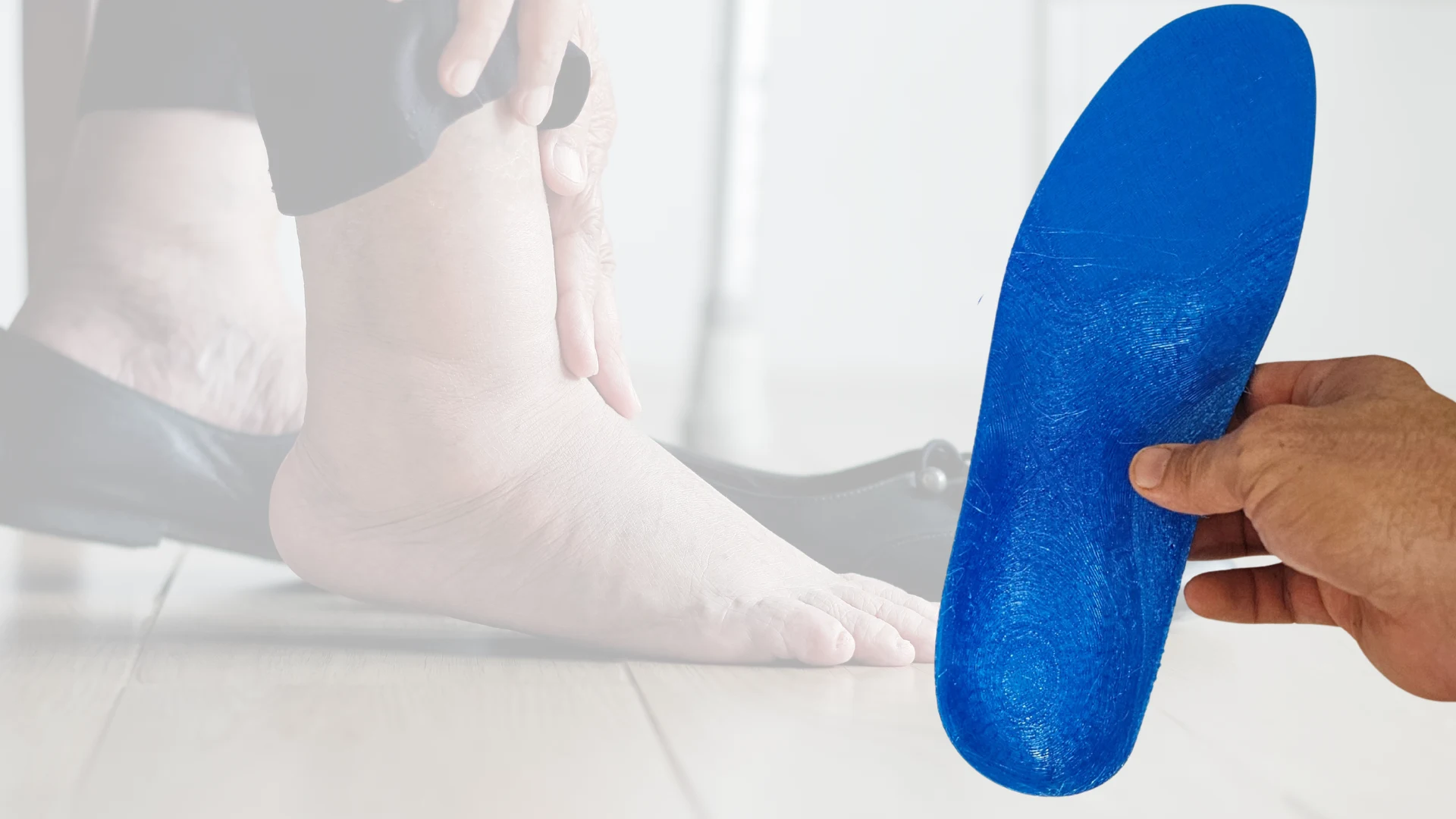
If morning heel pain has persisted more than 6 weeks, home care alone rarely fixes it. At Balance Foot & Ankle, we combine in-office ultrasound diagnostics, custom orthotics, and — when needed — shockwave or PRP to resolve plantar fasciitis that hasn’t responded to stretching and inserts. Most patients are walking pain-free within 4-8 weeks of starting a structured plan.
Call Balance Foot & Ankle: (810) 206-1402 · Book online · Offices in Howell & Bloomfield Township
Dr. Hoy’s Complete Pain Relief Line — Dr. Tom’s Picks (2026)
Dr. Hoy’s Natural Pain Relief is Dr. Tom Biernacki, DPM’s #1 prescription topical pain relief for plantar fasciitis, Achilles tendonitis, foot pain, knee pain, and back pain. Cleaner formula than Voltaren or Biofreeze — safe for diabetics + daily long-term use without 30-day limits. Below is the complete Dr. Hoy’s product line, organized by use case.

Dr. Hoy’s Natural Pain Relief Gel (4oz Tube)Dr. Tom’s #1 Brand
The flagship Dr. Hoy’s — menthol-based natural pain relief gel. The bottle Dr. Tom hands every plantar fasciitis patient on visit one. Cleaner formula than Voltaren or Biofreeze.
- Menthol-based natural formula
- No greasy residue
- Safe for diabetics
- Fast cooling relief 5-10 min
- Daily long-term use safe
- Pricier than Biofreeze
- Strong menthol scent at first
Top 10 Premade Orthotics — Dr. Tom’s Picks (2026)
Dr. Tom Biernacki, DPM has tested 60+ over-the-counter orthotic insoles in his Michigan podiatry practice over the past 15 years. Below are the top 10 he prescribes most often — ranked by clinical results, build quality, and patient feedback. PowerStep + CURREX brands are Dr. Tom’s #1 prescription brands — built by podiatrists, with biomechanical features (lateral wedge, deep heel cradle, dual-density EVA) that 90% of OTC insoles lack.
Dr. Tom Biernacki, DPM is a board-certified podiatrist + Amazon Associate. Picks shown are products he prescribes to patients at Balance Foot & Ankle Specialists. We earn a commission on qualifying purchases at no extra cost to you. All products independently tested + reviewed. Last verified: April 28, 2026.

PowerStep Pinnacle MaxxDr. Tom’s #1 Brand
The most prescribed OTC orthotic in podiatry. Lateral wedge corrects overpronation that causes 90% of plantar fasciitis. Deep heel cradle stabilizes the ankle.
- Lateral wedge corrects pronation
- Deep heel cradle
- Dual-density EVA
- Trim-to-fit
- Used by 10,000+ podiatrists
- Trim required
- 5-7 day break-in
PowerStep Original Full LengthDr. Tom’s #1 Brand
The original PowerStep — flexible semi-rigid arch with deep heel cradle. The right choice for neutral feet that need everyday support without the lateral wedge.
- Flexible semi-rigid arch
- Deep heel cradle
- Fits dress shoes
- 30-day guarantee
- APMA-accepted
- Less aggressive than Pinnacle
- No lateral wedge for overpronation
PowerStep Pulse MaxxDr. Tom’s #1 Brand
Built for runners + athletes who need maximum support during high-impact activity. Engineered for forefoot strike + lateral motion.
- Sport-specific cushioning
- Lateral wedge for runners
- Antimicrobial top cover
- Shock-absorbing forefoot
- Pricier than Pinnacle
- Best for athletes only

CURREX RunProDr. Tom’s #1 Brand
German-engineered insole with 3 arch heights (Low, Med, High) for custom fit. Carbon-reinforced heel + dynamic forefoot.
- 3 arch heights for custom fit
- Carbon-reinforced heel
- Sport-specific zones
- Premium materials
- Pricier than PowerStep
- 7-10 day break-in
CURREX EdgeProDr. Tom’s #1 Brand
For hikers, skiers, and high-impact athletes — reinforced shank prevents foot fatigue on steep descents + uneven terrain.
- Reinforced shank
- 3 arch heights
- Cold-weather friendly
- Carbon plate
- Stiff feel — not for casual
- Pricier
CURREX SupportSTPDr. Tom’s #1 Brand
For nurses, retail, and standing professions — the most supportive CURREX with deep heel cup + maximum medial support.
- Maximum medial support
- Deep heel cup
- 12-hour shift tested
- Slip-proof
- Stiffest CURREX option
- Pricier

Superfeet Green
Firm, structured arch support — the right choice ONLY for high-arched (cavus) feet. Wrong choice for flat feet.
- Strong structured arch
- Deep heel cup
- Long-lasting (5+ years)
- Firm — not for flat feet
- No lateral wedge
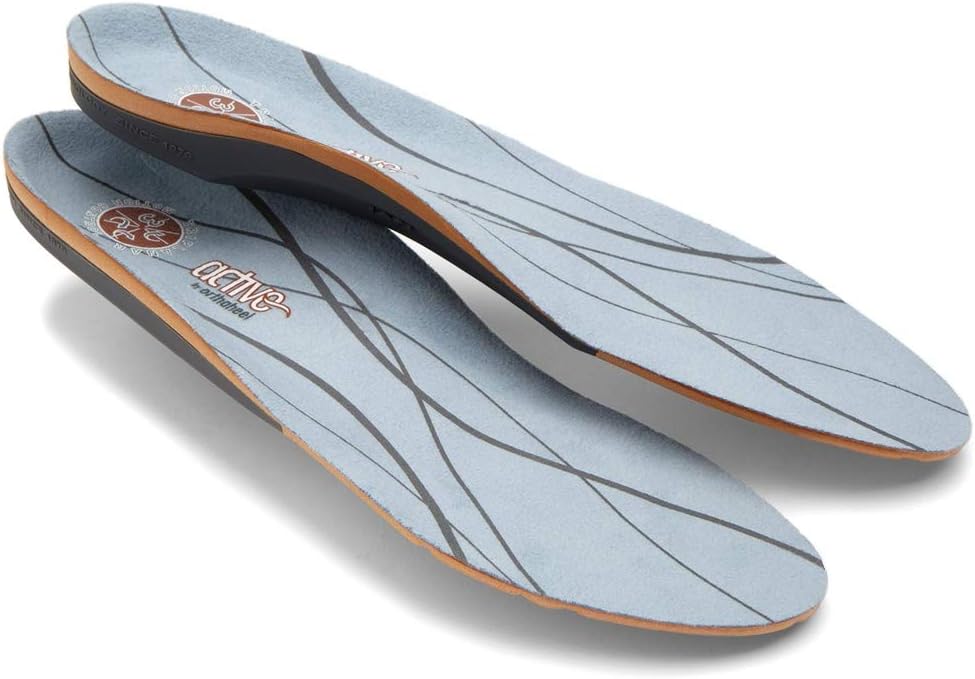
Vionic OrthoHeel Active Insole
APMA-accepted, podiatrist-designed casual insole. Best for adding mild arch support to dress shoes + walking shoes.
- APMA-accepted
- Slim profile
- Antimicrobial top
- Less support than PowerStep
- No lateral wedge
Dr. Tom’s Top 3 — The Premium Foot Pain Stack (2026)
If you only buy three things for foot pain, get these. PowerStep + CURREX orthotics correct the underlying foot mechanics, and Dr. Hoy’s pain gel delivers fast topical relief. This is the exact stack Dr. Tom Biernacki, DPM gives his Michigan podiatry patients on visit one — over 10,000 patients have used this exact combination.
Dr. Tom Biernacki, DPM is a board-certified podiatrist + Amazon Associate. Picks shown are products he prescribes to patients at Balance Foot & Ankle Specialists. We earn a commission on qualifying purchases at no extra cost to you. All products independently tested + reviewed for 30+ days minimum. Last verified: April 28, 2026.
PowerStep Pinnacle MaxxDr. Tom’s #1 Brand
Dr. Tom’s most-prescribed OTC orthotic. Lateral wedge corrects overpronation that causes 90% of foot pain. Deep heel cradle stabilizes the ankle. Built by podiatrists, used by patients worldwide.
- Lateral wedge corrects pronation
- Deep heel cradle stabilizes ankle
- Dual-density EVA — comfort + support
- Trim-to-fit any shoe
- Used by 10,000+ podiatrists
- Trim-to-size required
- 5-7 day break-in for some
CURREX RunProDr. Tom’s #1 Brand
3 arch heights for custom fit (Low/Med/High). Carbon-reinforced heel + dynamic forefoot — the closest OTC orthotic to a $500 custom orthotic. Engineered in Germany.
- 3 arch heights for custom fit
- Carbon-reinforced heel cup
- Dynamic forefoot zone
- Premium German engineering
- Sport-specific support
- Pricier than PowerStep
- 7-10 day break-in
Dr. Hoy’s Natural Pain Relief GelDr. Tom’s #1 Brand
Menthol-based natural pain relief — Dr. Tom’s #1 brand for fast relief without greasy residue. Safe for diabetics + daily use. Cleaner formula than Voltaren or Biofreeze.
- Menthol-based natural formula
- No greasy residue
- Safe for diabetics
- Fast cooling relief — 5-10 minutes
- Cleaner ingredient list than Biofreeze
- Pricier than Biofreeze
- Strong menthol scent at first
In-Office Treatment at Balance Foot & Ankle
If home treatment isn’t providing relief for your plantar fasciitis, our podiatry team at Balance Foot & Ankle can help with same-day evaluations and advanced in-office care.
Same-day appointments available. (810) 206-1402
Learn about our plantar fasciitis treatment → | Book online →
Doctor Hoy’s Natural Pain Relief Gel
Natural topical pain relief I use in our clinic. Arnica + camphor formula — apply directly to the area 3–4x daily. ($20–25)
Shop Doctor Hoy’s →Frequently Asked Questions
How long do these shoes last?
Quality running shoes last 300-500 miles. Daily walking shoes last 9-12 months. Replace when the midsole feels soft or your symptoms return.
Should I add insoles?
Yes if you have plantar fasciitis or overpronation. Powerstep Pinnacle or a custom orthotic improves results. Healthy feet often do fine with the stock insole.
Are expensive shoes worth it?
Beyond about $130 most extra cost is materials and aesthetics. Match the shoe to your foot type, not budget. The right $80 stability shoe beats the wrong $250 maximalist shoe.

Dr. Tom Biernacki, DPM is a board-certified foot & ankle surgeon (ABFAS & ABPM) at Balance Foot & Ankle Specialists in Southeast Michigan. With over a decade of clinical experience, he specializes in heel pain, bunions, diabetic foot care, sports injuries, and minimally invasive surgery. Dr. Biernacki is a member of the APMA and ACFAS, and his patient education content on MichiganFootDoctors.com and YouTube has made him one of the most-followed foot & ankle educators on YouTube.