
Best Shoes for Overpronation 2026: Podiatrist’s Guide to Stability & Motion Control Footwear
👟 Reviewed by Dr. Tom Biernacki, DPM — Balance Foot & Ankle Specialists
Dr. Tom Biernacki is a board-certified podiatrist with over a decade of clinical experience treating biomechanical foot problems including overpronation, flat feet, plantar fasciitis, and related overuse injuries. He prescribes both custom orthotics and evidence-based footwear recommendations as part of his conservative treatment protocols. These reviews are based on clinical outcomes — not sponsorship. Affiliate links support the practice.
Last updated: April 2026 | Book a biomechanical evaluation with Dr. Tom →
⚡ Quick Answer: Best Shoes for Overpronation 2026
- Best Overall Stability: ASICS Gel-Kayano 30 — premium stability with excellent cushioning and FlyteFoam midsole
- Best Value Stability: Brooks Adrenaline GTS 23 — consistent podiatry favorite, reliable GuideRails technology
- Best Maximum Motion Control: New Balance 1540v3 — ROLLBAR posting for severe overpronation/flat feet
- Best Lightweight Stability: HOKA Arahi 6 — maximum cushion + J-Frame stability in a lighter package
- Best for Severe Pronation (Women’s): Brooks Beast 20 — most aggressive motion control in any mainstream shoe
- Best Wide-Width Stability: ASICS Gel-Foundation 13 — extra-depth, wide-width stability for broader feet
Overpronation is one of the most commonly cited reasons people seek new footwear — and one of the most frequently misunderstood. Not everyone who overpronates needs a stability shoe, and not all stability shoes are appropriate for all types of pronation. The shoe industry has simplified a complex biomechanical picture into a straightforward “you overpronate, buy a stability shoe” message — and while that’s often right, it can also put patients in the wrong shoes for their specific gait pattern.
As a podiatrist, I evaluate overpronation through gait analysis, static standing posture assessment, and clinical examination of the foot’s structural alignment. This guide explains what overpronation actually is, which patients truly benefit from stability or motion control shoes, and which six shoes I most commonly recommend for different clinical presentations of overpronation.
If you’re dealing with flat feet, plantar fasciitis driven by overpronation, shin splints, or knee pain from medial load transfer, the right footwear can be a meaningful therapeutic intervention — but only if it’s matched correctly to your specific biomechanical pattern.
What Is Overpronation? A Podiatrist’s Clinical Definition
Pronation vs. Overpronation: The Critical Distinction
Pronation is a normal, essential component of healthy gait. When your foot contacts the ground, it naturally rolls inward and the arch flattens slightly — this is pronation, and it’s the foot’s primary mechanism for absorbing impact energy and adapting to uneven terrain. Without any pronation, the foot would be a rigid lever incapable of shock absorption, and impact forces would transfer directly and catastrophically to the joints of the ankle, knee, and hip.
Overpronation occurs when this inward rolling motion is excessive in magnitude, duration, or timing within the gait cycle. The key distinction: mild pronation ends before mid-stance, allowing the foot to resupinate (roll outward) and become a rigid lever for push-off. Overpronation continues through mid-stance and into the push-off phase, meaning the foot never fully resupinates — it pushes off from a collapsed, unstable position rather than a stiffened, stable one.
This mechanical difference has real clinical consequences. A foot that pushes off while still in pronated position transfers internal tibial rotation to the knee, loads the medial (inner) knee compartment asymmetrically, increases tensile stress on the plantar fascia, and reduces the efficiency of the calf-Achilles-plantar fascia power system. Over time, this inefficient mechanics contributes to a predictable pattern of overuse injuries.
What Causes Overpronation?
Overpronation is not a single entity — it results from several underlying structural and muscular factors, and identifying the primary cause determines the most effective treatment approach:
- Pes planus (flat feet / fallen arches): Low or absent medial longitudinal arch means the foot has limited structural resistance to inward collapse under load. This is the most common structural cause of overpronation.
- Flexible hypermobile foot type: Some people have structurally normal arch height at rest but excessive joint mobility that allows the arch to collapse significantly under body weight. This “functional flat foot” can overpronate without structural arch loss.
- Weak hip abductors and external rotators: Overpronation is often driven from above, not below. Weak hip muscles allow the femur to internally rotate, which cascades downward — internal tibial rotation, calcaneal eversion, and arch collapse. In running, hip abductor weakness is the most frequent driver of overpronation in patients with structurally normal arches.
- Tight Achilles tendon/gastrocnemius complex: Limited ankle dorsiflexion forces the foot to compensate through subtalar joint pronation. When the ankle can’t dorsiflex adequately (tight calf muscles), the subtalar joint “cheats” by pronating — collapsing the arch to create the dorsiflexion range the ankle cannot provide.
- Leg-length discrepancy: The shorter leg may overpronate as a compensatory mechanism to functionally lengthen itself.
The Injuries Overpronation Causes
Overpronation is not inherently pathological — many elite athletes pronate significantly without injury. The clinical significance depends on the magnitude of overpronation, the activity demands placed on the foot, and the individual’s capacity for tissue adaptation. When overpronation exceeds that capacity, a predictable pattern of injuries emerges:
- Plantar fasciitis: The collapsed arch increases tensile loading on the plantar fascia. Combined with the late-stage resupination failure, the fascia never fully unloads during gait, leading to cumulative microtearing at the calcaneal insertion.
- Medial tibial stress syndrome (shin splints): Excessive tibial internal rotation during overpronation creates torsional stress at the medial tibial cortex and periosteum.
- Patellofemoral pain (runner’s knee): Internal tibial rotation from overpronation increases the Q angle at the knee, increasing lateral patellar pressure and lateral patellar tracking dysfunction.
- Posterior tibial tendon dysfunction (PTTD): The posterior tibial tendon is the primary dynamic supinator of the foot. Chronic overpronation overloads the tendon beyond its capacity, causing progressive tendinopathy and — in advanced cases — complete tendon rupture and acquired adult flatfoot deformity.
- Bunion deformity progression: Overpronation increases medial forefoot loading and hallux valgus stress, accelerating bunion deformity in genetically susceptible individuals.
- Achilles tendinopathy: Calcaneal eversion (heel rolling inward) during overpronation changes the mechanical axis of the Achilles, increasing torsional load on the tendon and contributing to insertional and mid-substance Achilles tendinopathy.
Stability vs. Motion Control Shoes: Which Do You Need?
The shoe industry divides overpronation footwear into two categories, and choosing the right category is as important as choosing the right brand:
Stability Shoes
Stability shoes incorporate a medial post — a firmer density foam or material on the inner (medial) side of the midsole — that resists inward compression under body weight. This creates a gentle correction force that limits excessive arch collapse and calcaneal eversion. Stability shoes are appropriate for mild to moderate overpronation in patients who still have some functional arch and reasonable muscle strength.
Modern stability technologies include Brooks’ GuideRails (posts on both medial and lateral sides that guide motion within a functional range), ASICS’ Duomax (dual-density medial post), and HOKA’s J-Frame (J-shaped firmer foam along the inner heel and arch). These are more sophisticated than the simple medial wedge of earlier generations — they guide motion rather than rigidly blocking it.
Motion Control Shoes
Motion control shoes are the aggressive end of the stability spectrum — designed for significant to severe overpronation, typically in patients with significant flat feet, high body weight, or severe calcaneal eversion. They feature a rigid medial post, a straighter last (the shoe’s internal shape), and a firm heel counter that resists rearfoot motion. Motion control shoes sacrifice some cushioning softness for aggressive biomechanical control.
Motion control shoes are most appropriate for: severe (>10°) calcaneal eversion, complete structural flat foot, significant PTTD, and patients with body weight above 220 lbs where softer stability foams compress too easily under load. Patients with mild overpronation do NOT benefit from motion control shoes — the excessive rigidity can create medial arch pain and lateral column stress as the foot fights against overcorrection.
Neutral Shoes + Custom Orthotics
A third approach, which I increasingly favor for patients with specific biomechanical patterns, is to use a neutral-to-stable cushioned shoe (like the HOKA Bondi or Clifton) with a custom or semi-custom orthotic that provides precisely calibrated biomechanical correction. This approach allows the orthotic to be customized to the specific degree and type of overpronation — something a production shoe’s medial post cannot replicate. For patients who have tried multiple stability shoes without resolution of symptoms, custom orthotics in a neutral shoe often outperform any stock stability shoe.
The 5 Features That Define a Good Stability Shoe
1. Medial Post Material and Density
The medial post must be firm enough to resist compression under body weight without being so rigid that it creates medial arch pain. Modern dual-density EVA posts in the 25–35 Shore C hardness range provide the best balance. The post should extend from the heel through the midfoot — heel-only posts are insufficient for mid-stance overpronation control, and the post should transition smoothly to the forefoot rather than ending abruptly.
2. Straight or Semi-Straight Last
The last is the internal shape around which the shoe is built. Curved lasts follow the natural curve of a supinated (higher-arched) foot. Straight lasts — like those in most stability and motion control shoes — follow a straighter line from heel to toe, providing better medial forefoot coverage and arch contact for pronated, flatter feet. A straighter last in a stability shoe means better arch support coverage throughout the foot rather than just at the rear and front.
3. Firm, Supportive Heel Counter
The heel counter is the rigid cup at the back of the shoe that encapsulates the calcaneus (heel bone). A firm heel counter prevents calcaneal eversion (inward heel tilting) that occurs during overpronation — it’s the first line of mechanical resistance against rearfoot pronation. Cheap stability shoes often have heel counters that are too flexible to provide meaningful calcaneal control. Press your thumb firmly into the back of any stability shoe — it should have significant resistance, not fold easily.
4. Adequate Cushioning Despite Stability Features
A common complaint about older motion control and stability shoes was that the medial post came at the cost of cushioning — they felt “hard” and fatiguing over long distances. Modern stability shoes from ASICS, Brooks, and HOKA have largely solved this problem by using high-rebound foams (FlyteFoam Blast, DNA Loft, CMEVA) in the lateral and forefoot zones while maintaining the medial post where needed. The result is a shoe that corrects overpronation without sacrificing the cushioning that makes it wearable for 8–12 miles.
5. Appropriate Width Accommodation
Overpronated (flat) feet are often wider in the midfoot than neutral or supinated feet because the collapsed arch spreads the navicular medially. Standard-width stability shoes may be too narrow in the midfoot for many flat-footed patients, causing medial midfoot pressure that creates its own pain. Wide-width options (2E/4E) are essential for patients with significant flat foot deformity. Check that the forefoot and midfoot widths — not just the heel — accommodate the foot without compression.
The 6 Best Shoes for Overpronation 2026: Podiatrist Reviews
I evaluated these shoes based on their clinical effectiveness for overpronation control, real-world patient outcomes in my practice, cushioning quality, durability, and compatibility with custom orthotics. These are the shoes my patients return with good results — not just the shoes with the best marketing.
#1 Best Overall Stability: ASICS Gel-Kayano 30 — The Premium Standard in Overpronation Control
No products found.
The ASICS Gel-Kayano has been the benchmark stability running shoe for over three decades — the Kayano 30 is the culmination of that lineage. What distinguishes the Kayano 30 from earlier generations is the integration of FlyteFoam Blast+ midsole technology that delivers high-rebound cushioning in the lateral stack while maintaining the 4D Guidance System medial post — the result is a shoe that feels genuinely cushioned while still providing meaningful overpronation control.
✅ What Dr. Tom Likes
- 4D Guidance System (medial post extending from heel to forefoot) provides comprehensive overpronation control throughout the full gait cycle — not just at heel strike
- LITETRUSS technology in the arch area provides additional medial arch integrity without adding weight
- FlyteFoam Blast+ delivers one of the best cushioning-to-weight ratios in any stability shoe — patients don’t feel like they’re wearing a “heavy” orthopedic shoe
- GEL technology in heel and forefoot provides superior heel shock attenuation — critical for overpronation patients who frequently develop concurrent plantar fasciitis
- Available in wide widths (2E/4E), important for the broader midfoot of many flat-footed patients
- Excellent durability — patients typically report 400–500 miles before meaningful cushioning degradation
⚠️ Considerations
- Premium price ($160–$180) — though the mileage durability makes the cost-per-mile competitive
- The medial post is substantial — patients with mild overpronation may find it overcorrecting, causing lateral arch pain
- Heavier than neutral alternatives (11–12 oz) — patients doing speed work may prefer a lighter stability option
Dr. Tom’s clinical note: The Gel-Kayano 30 is my go-to recommendation for moderate to significant overpronation in runners and active walkers. Its 4D Guidance System is one of the most complete medial post designs available — it controls both rearfoot pronation at heel strike and mid-stance arch collapse simultaneously. For patients with plantar fasciitis driven by overpronation, this combined control often provides faster symptom improvement than either shoes or orthotics alone. I start with the Kayano before recommending custom orthotics in most moderate overpronation cases.
#2 Best Value Stability: Brooks Adrenaline GTS 23 — Podiatry’s Consistent Favorite
No products found.
The Brooks Adrenaline GTS has been the stability shoe I’ve recommended most consistently over the past decade — not because it’s the flashiest or most technologically advanced, but because it reliably works for the broadest range of moderate overpronators. The GTS 23 refines the GuideRails technology that distinguishes the Adrenaline from competitors: rather than a traditional medial post, GuideRails places firm guidance elements on both the medial and lateral sides of the shoe, limiting excess motion in either direction while allowing natural movement within a functional range.
✅ What Dr. Tom Likes
- GuideRails technology is clinically distinctive — controls both overpronation and oversupination, making it appropriate for a wider patient population than traditional medial-post-only designs
- DNA LOFT v3 foam provides excellent cushioning throughout — one of the softer-feeling stability shoes while maintaining meaningful guidance
- Segmented crash pad in the heel accommodates a many foot strike patterns
- Available in an unusually many widths: B (narrow), D (standard), 2E (wide), 4E (extra-wide) for men; AA, B, D, 2E for women
- Excellent durability — 400–500 miles typical lifespan for moderate-use runners
- Lower price point ($140–$150) than the Kayano
⚠️ Considerations
- GuideRails control is less aggressive than the Kayano’s 4D system — patients with significant overpronation may need a more assertive stability architecture
- The DNA LOFT foam feels very soft initially — some patients perceive this as “cushioning without support” before the GuideRails engage under heavier loading
- Not recommended for severe overpronation or flat foot — better options exist (1540v3, Beast 20)
Dr. Tom’s clinical note: The Brooks Adrenaline GTS 23 is the shoe I recommend for mild to moderate overpronators who are new to stability footwear. The GuideRails system is gentle enough that most patients don’t experience the medial arch pain that sometimes accompanies more aggressive posting, yet effective enough to meaningfully reduce overpronation-driven symptoms. I also recommend it for patients who prefer a softer feel — those coming from neutral cushioned shoes often find the Kayano or 1540v3 too firm, but adapt well to the Adrenaline’s guided softness.
#3 Best Maximum Motion Control: New Balance 1540v3 — Maximum Correction for Severe Flat Feet
No products found.
When a patient walks into my clinic and I can see the medial ankle touching or nearly touching the floor during standing — indicating severe pes planus — the New Balance 1540v3 is the first shoe I reach for. The ROLLBAR medial post is the most aggressive overpronation control architecture in any mainstream production shoe: a rigid thermoplastic insert that physically resists calcaneal eversion and arch collapse under even significant body weight.
✅ What Dr. Tom Likes
- ROLLBAR technology is the most aggressive OTC motion control available — appropriate for the most severe overpronation cases where stability shoes fail
- ABZORB cushioning in the heel and forefoot delivers meaningful shock attenuation despite the firm midsole architecture — avoids the “walking on concrete” feel of older motion control shoes
- Available in B, 2E, and 4E widths — critical for severe flat feet that spread significantly under load
- Removable insole accommodates custom orthotics — can layer additional correction on top of the shoe’s built-in motion control
- Lower price point ($140–$160) than premium stability shoes
- Excellent durability — the firmer midsole resists compression set that degrades softer shoes faster
⚠️ Considerations
- The ROLLBAR is too aggressive for mild to moderate overpronation — patients without significant flat feet will feel overcorrected and may develop lateral column pain
- Heavy shoe (12–13 oz) — not suitable for speed training or athletes who value responsiveness
- The firmer midsole feel takes significant break-in time — 2–3 weeks before feeling natural
- Style is clearly “functional” not fashion — limited aesthetic appeal
Dr. Tom’s clinical note: The 1540v3 is reserved for my most severe overpronation patients — those with stage 1 or 2 PTTD, complete structural flat foot, or body weight above 220–250 lbs where stability shoe foams bottom out too quickly. For these patients, the ROLLBAR’s aggressive control is therapeutic rather than excessive. I pair it with custom orthotics in many cases — the removable insole accommodates a full-length device without volume problems. Combined, the 1540v3 + custom orthotic is one of the most effective non-surgical interventions for symptomatic severe flatfoot.
#4 Best Lightweight Stability: HOKA Arahi 6 — Maximum Cushion Without Sacrifice in Control
No products found.
HOKA entered the stability category with the Arahi and changed what overpronation footwear could feel like. The traditional stability shoe bargain — “we’ll correct your pronation, but you’ll sacrifice cushioning and add weight” — doesn’t apply to the Arahi. It delivers HOKA’s signature maximal cushioning platform with a J-Frame stability system that addresses overpronation without making the shoe feel like a motion control device. For patients who love the feel of HOKA’s neutral shoes but need some medial support, the Arahi is the answer.
✅ What Dr. Tom Likes
- J-Frame stability system (J-shaped firmer foam along the medial heel and arch) provides genuine overpronation control while maintaining HOKA’s plush ride quality — the least “stability-shoe-like” stability shoe I’ve worn
- Among the lightest stability shoes available (8–9 oz men’s) — makes it appropriate for speed work and those transitioning from lighter neutral shoes
- Meta-Rocker geometry reduces forefoot loading during push-off — valuable for overpronators who also have plantar fasciitis or metatarsalgia
- Early-stage heel rocker accommodates several foot strike patterns
- Excellent for overpronators who want to run longer distances without fatigue
⚠️ Considerations
- J-Frame control is appropriate for mild to moderate overpronation — insufficient for severe overpronation or significant structural flat foot
- The thick platform (33mm heel stack) makes the shoe feel “tall” — some patients find the instability of the high stack counteracts the medial control benefits
- Width options are more limited than Brooks or New Balance — standard and wide, but not extra-wide in most models
- Higher price point ($160–$170)
Dr. Tom’s clinical note: I recommend the Arahi 6 to two specific patient groups: (1) runners who prefer the HOKA platform feel and need mild stability control; and (2) patients with overpronation-driven plantar fasciitis who benefit from both the Meta-Rocker’s forefoot pressure reduction and the J-Frame’s arch control. The combination addresses both the biomechanical cause (overpronation) and the symptomatic manifestation (plantar fascia loading) simultaneously, which is clinically efficient. For patients who don’t need aggressive control, the Arahi often outperforms heavier stability shoes simply because they’ll actually wear it.
#5 Best for Severe Pronation: Brooks Beast 20 — The Most Aggressive Motion Control in Mainstream Footwear
No products found.
The Brooks Beast (and its women’s equivalent, the Ariel) occupies the extreme end of the motion control spectrum. It’s the shoe I recommend when a patient has tried the 1540v3 and still has insufficient control — or when the clinical presentation is so severe (significant calcaneal eversion, stage 2 PTTD, extreme structural flat foot) that starting with a less aggressive shoe seems futile. The Beast 20 is not a comfortable first-day shoe for most people — it’s a therapeutic device in shoe form.
✅ What Dr. Tom Likes
- The most aggressive medial post and heel counter rigidity of any mainstream shoe — maximum biomechanical resistance to calcaneal eversion
- Extended heel counter wraps higher than standard shoes, providing superior rearfoot control even during more aggressive movements
- Extended width base provides exceptional lateral stability — less tipping/rolling on uneven surfaces for patients with poor rearfoot control
- GuideRails integrated into a motion control architecture — the most advanced motion control geometry Brooks has produced
- Excellent for very high body weight patients where softer stability foams compress rapidly
- BioMoGo DNA midsole adapts to individual weight for personalized cushioning within the controlled framework
⚠️ Considerations
- Absolutely not appropriate for mild or moderate overpronation — will overcorrect and cause lateral forefoot pain, IT band issues, or lateral knee pain
- Extremely heavy (13–14 oz) — this is not a performance running shoe
- Long break-in period — 2–4 weeks of progressive use before wearing for extended periods
- Aesthetics are clearly “orthopedic” — limited appeal for patients concerned about appearance
- Higher price ($160–$170) for a shoe many patients may resist wearing due to appearance and weight
Dr. Tom’s clinical note: The Beast 20 is a last resort before custom orthotics for my most severely affected overpronation patients. I reserve it specifically for patients with documented stage 1–2 PTTD (posterior tibial tendon dysfunction), or those with BMI above 35 where standard stability foams provide insufficient control. The break-in protocol is essential — I give patients a specific progressive wear schedule and warn them that the first week will be uncomfortable as their foot adapts to the correction. For the right patient, however, the Beast 20 can meaningfully slow the progression of PTTD and avoid the need for surgical reconstruction.
#6 Best Wide-Width Stability: ASICS Gel-Foundation 13 — Extra Depth, Wide Widths, Complete Stability
No products found.
The ASICS Gel-Foundation 13 fills a specific clinical niche: an extra-depth stability shoe with wide-width options designed for patients whose overpronated, flat feet are also wider than the standard stability shoe accommodates. It’s less well-known than the Kayano, but for patients who also need extra width and depth alongside stability control, the Gel-Foundation 13 is one of the few shoes that delivers all three without compromise.
✅ What Dr. Tom Likes
- Extra-depth design accommodates custom orthotics in a stability shoe — rare combination that allows layering of biomechanical correction
- Available in 2E and 4E widths — the extra width matters for the midfoot spreading typical of severe flat-foot overpronation
- Duomax midsole (dual-density medial post) provides solid overpronation control appropriate for moderate to significant flat foot
- GEL cushioning in both heel and forefoot absorbs impact for patients with concurrent metatarsalgia
- Medicare-approved in some configurations — suitable for diabetic patients who also overpronate
- Removable insole with good orthotic compatibility
⚠️ Considerations
- Less cushioned than the Kayano 30 — the extra-depth design adds volume at the cost of midsole foam height
- Heavier and more utilitarian styling than performance stability shoes
- The Duomax post is moderate rather than maximum — not the right choice for severe overpronation without augmentation by orthotics
Dr. Tom’s clinical note: The Gel-Foundation 13 is my recommendation for patients who have both overpronation and foot width issues — a combination that standard stability shoes handle poorly. The extra depth also makes it an excellent choice for diabetic patients with overpronation, since the foot has adequate room without any medial or lateral compression that could compromise skin integrity. I’ve had particularly good outcomes pairing the Gel-Foundation with custom orthotics in diabetic flatfoot patients who need comprehensive biomechanical management.
Dr. Tom Discusses Flat Feet, Overpronation & Treatment Options
Watch Dr. Tom explain the biomechanics of overpronation, flat feet treatment, and what footwear interventions are most effective:
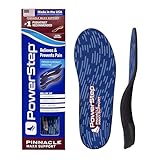
- Slightly Angled Heel Post: PowerStep Pinnacle Maxx insoles for men & women keep the feet from rolling inward, improve stability, and prevent problems caused by overpronation including flat feet and plantar fasciitis.
- Firm But Flexible Design: Our orthotics Pinnacle PowerStep insoles for overpronation are equipped with a deep heel insert cradle for increased comfort, stability, and motion control for standard arch support and immediate heel pain relief.
- Premium Dual Layer Cushioning: For enhanced comfort from heel to toe. As the thickest of our Pinnacle PowerStep orthotics, these need to be worn in shoes where the factory insole can be removed. HSA & FSA Eligible. Made in the USA
- The Perfect Balance of Comfort and Support: These PowerStep Pinnacle arch support inserts for men & women are unlike most other orthotics as they help to correct over-pronation which can cause ankle, knee, and hip pain in your daily routine
- No Trimming: Our arch support PowerStep insoles men & women can use can be worn in a variety of shoe styles & fit in any type with no trimming required! Unlike most insoles for flat feet and other heel pain relief products, these come ready to wear.
As an Amazon Associate, Balance Foot and Ankle earns from qualifying purchases. Product links are affiliate links and we may earn a commission at no extra cost to you. This does not influence our clinical recommendations. Last update on 2026-09-20 / Images from Amazon Product Advertising API
Overpronation Shoe Comparison Table
| Shoe | Control Type | Best Overpronation Level | Cushioning | Width Options | Weight | Price |
|---|---|---|---|---|---|---|
| ASICS Gel-Kayano 30 | Stability (4D Guidance) | Moderate–Significant | ★★★★★ | B, 2E, 4E | 11–12 oz | $$$ |
| Brooks Adrenaline GTS 23 | Stability (GuideRails) | Mild–Moderate | ★★★★★ | AA–4E | 10–11 oz | $$ |
| New Balance 1540v3 | Motion Control (ROLLBAR) | Significant–Severe | ★★★★☆ | B, 2E, 4E | 12–13 oz | $$ |
| HOKA Arahi 6 | Stability (J-Frame) | Mild–Moderate | ★★★★★ | B, 2E | 8–9 oz | $$$ |
| Brooks Beast 20 | Maximum Motion Control | Severe | ★★★★☆ | 2E, 4E (men’s) | 13–14 oz | $$$ |
| ASICS Gel-Foundation 13 | Stability (Duomax) + Extra Depth | Moderate–Significant (wide feet) | ★★★★☆ | B, 2E, 4E | 12 oz | $$ |
How to Tell If You Overpronate: Self-Assessment Guide
The Wet Foot Test
Stand on a piece of brown paper bag or cardboard with wet feet. Step off and examine the footprint. A neutral foot leaves a footprint showing the heel, the outer edge of the foot, and the ball — with a curved notch on the inner side where the arch is. An overpronated foot leaves a full footprint with no notch or a very shallow notch — the arch has collapsed enough to contact the ground across its full length. A high-arched (supinated) foot leaves a very narrow print with a deep notch or complete gap between heel and ball.
This test provides a rough guide but is not a clinical diagnosis. The footprint shows the resting arch height but not the dynamic pronation pattern during gait — a patient can have a visible arch at rest and still significantly overpronate while walking. A proper gait analysis by a podiatrist provides more accurate assessment.
The Shoe Wear Pattern Test
Look at the wear pattern on your current or old shoes. Flip them over and examine the outsole. Normal wear: slightly more at the heel center and the first and second metatarsals. Overpronation pattern: excessive wear on the inner (medial) heel and inner forefoot, often with the shoe tilting inward when placed on a flat surface. Supination pattern: excessive wear on the outer (lateral) edge of the heel and outer forefoot.
Also examine the heel counter of your shoes. Overpronators’ shoes show lateral compression of the heel counter even though overpronation is a medial problem — this is because the heel counter is overwhelmed and collapses in the direction the foot is rolling. If your heel counters are crushed inward despite the shoe being a stability design, you may need a more aggressive motion control category.
The Ankle Observation Test
Stand in front of a mirror in bare feet. Look at your ankles from the front. Neutral: the ankles appear vertical or very slightly inward-tilted. Overpronation: the inner ankle bone (medial malleolus) appears to protrude medially and the foot tilts inward — in severe cases, the medial ankle approaches the floor. You can also have someone observe you from behind while walking — the heel should track straight during stance phase; if it tilts noticeably inward, significant overpronation is present.
Beyond Shoes: Complete Overpronation Treatment Protocol
Custom Orthotics vs. Stability Shoes: When Each Is Appropriate
The decision between stability shoes and custom orthotics is not either/or — they address overpronation through different mechanisms and can complement each other. Here’s the clinical framework I use:
- Mild overpronation with no injury history: Stability shoe alone (Adrenaline GTS or Arahi 6). Monitor for symptom development.
- Mild–moderate overpronation with acute injury (plantar fasciitis, shin splints): Stability shoe + OTC arch support insole (Powerstep Pinnacle Maxx) as a first step. If no improvement in 6–8 weeks, custom orthotics.
- Moderate–significant overpronation: Stability shoe (Kayano 30 or 1540v3) + semi-custom or custom orthotics.
- Severe overpronation / structural flat foot: Motion control shoe (Beast 20 or 1540v3) + custom orthotics + physical therapy for hip/core strengthening.
- PTTD (posterior tibial tendon dysfunction): Motion control shoe + custom AFO or UCBL orthotic + immobilization if acute. Surgical referral if conservative care fails at 3–4 months.
Calf Stretching and Intrinsic Strengthening
The most evidence-based non-shoe intervention for overpronation is consistent calf stretching combined with posterior tibial tendon and peroneal strengthening. Tight gastrocnemius and soleus muscles are among the most common drivers of compensatory subtalar pronation — the ankle’s inability to dorsiflex adequately forces the foot to collapse through the arch instead. A twice-daily stretching program (30 seconds × 3 repetitions each of standing calf stretch with straight knee and bent knee) can meaningfully reduce functional overpronation driven by ankle equinus within 8–12 weeks.
Posterior tibial strengthening exercises (resistance band inversion curls, single-leg heel raises on an inclined surface) target the primary dynamic stabilizer of the medial arch. Physical therapy programs incorporating these exercises have shown reduction in calcaneal eversion of 2–4° — equivalent to the correction provided by moderate medial posting. For patients who also have weakness driving their overpronation, strengthening is more sustainable than footwear correction alone.
⚠️ When Stability Shoes Aren’t Enough: See a Podiatrist
- Persistent pain after 8–12 weeks in appropriate stability shoes — requires clinical assessment, possibly custom orthotics or imaging
- Progressive “falling” of the arch over months or years — may indicate posterior tibial tendon dysfunction, which can progress to rigid flatfoot deformity if untreated
- Inner ankle swelling or pain — classic symptom of posterior tibial tendon pathology, which requires imaging and early intervention
- Pain that radiates up the leg — may indicate compartment syndrome, nerve entrapment, or stress fracture beyond overpronation-related problems
- Children with painful flat feet — pediatric flatfoot may represent tarsal coalition (congenital joint fusion) that requires specific evaluation
- Overpronation following trauma — post-traumatic flatfoot requires orthopedic evaluation regardless of shoe intervention
At Balance Foot & Ankle Specialists, we provide comprehensive biomechanical evaluation including gait analysis, custom orthotic fabrication, and complete flatfoot treatment. Contact us to schedule your evaluation.
More Podiatrist-Recommended Flat Feet Essentials
PowerStep Pinnacle Insole

- #1 Podiatrist Recommended - The Pinnacle PowerStep insoles for men & women provide maximum cushioning, from high activity to moderate support. The arch support shape provides stability to the foot & ankle, helping to relieve foot pain.
- When you spend all day on your feet, every step counts. These plantar fasciitis insoles are podiatrist-recommended to help relieve & prevent foot pain for people with plantar fasciitis, heel spurs, and other common foot, ankle & knee injuries
- The Pinnacle PowerStep insoles offer superior heel cushioning and arch support. These shoe inserts for men and women have dual-layer cushioning to help reduce stress and fatigue, while premium arch support is designed for plantar fasciitis relief
- The PowerStep Pinnacle arch support inserts for men & women can be worn in a variety of shoe types such as; athletic, walking, running, work & some casual shoes. Orthotic Inserts are ordered by shoe size, no trimming required.
- These insoles for shoes are made in the USA & backed by a 30-day money-back guarantee. PowerStep shoe insoles for men & women are designed for shoes where the factory insole can be removed. HSA & FSA Eligible
As an Amazon Associate, Balance Foot and Ankle earns from qualifying purchases. Product links are affiliate links and we may earn a commission at no extra cost to you. This does not influence our clinical recommendations. Last update on 2026-09-20 / Images from Amazon Product Advertising API
Top orthotic for flat feet — lifts the collapsed arch and controls pronation.
Stability Running Shoe
No products found.
New Balance Fresh Foam X 860 — designed for overpronators with flat feet.
Supportive Stability Shoe
No products found.
Brooks Adrenaline GTS 25 — gold-standard stability shoe for flat feet.
As an Amazon Associate, Balance Foot & Ankle earns from qualifying purchases. Product recommendations are based on clinical experience; prices and availability shown above update live from Amazon.

When to See a Podiatrist
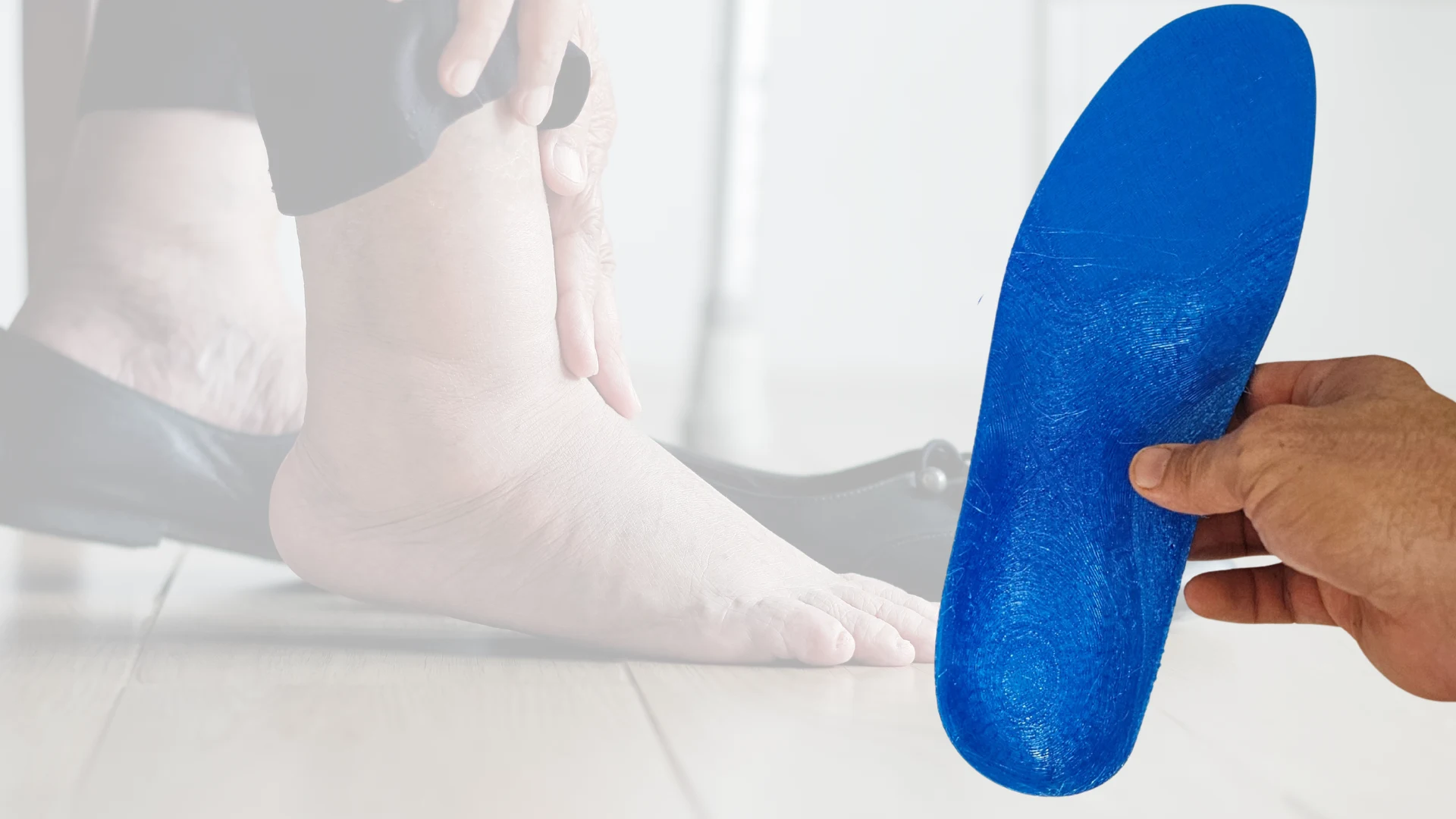
Painful flat feet in adults can signal posterior tibial tendon dysfunction — a progressive condition that needs early intervention to avoid surgery. Balance Foot & Ankle evaluates adult flatfoot with weight-bearing imaging and custom orthotic prescriptions. Catching PTTD at stage 1-2 makes the difference between a brace and a reconstruction.
Call Balance Foot & Ankle: (810) 206-1402 · Book online · Offices in Howell & Bloomfield Township
Frequently Asked Questions: Shoes for Overpronation
Do I need stability shoes if I overpronate but don’t have pain?
Not necessarily. Asymptomatic overpronation — overpronation without any associated pain or injury — doesn’t automatically require stability shoes. Many people overpronate throughout their lives without developing problems, either because the degree of overpronation is mild enough that it doesn’t exceed tissue tolerance, or because their muscle strength and movement patterns compensate effectively. However, if you’re increasing your activity level (starting to run, beginning a standing-intensive job), preventively addressing significant overpronation before symptoms develop is reasonable. If you’re sedentary and comfortable, there’s less urgency. Discuss with a podiatrist if you’re unsure.
Can stability shoes make overpronation worse?
Yes, in certain scenarios. Overcorrection — using a motion control shoe for mild overpronation — can create lateral column overload, IT band syndrome, and even increase supination-driven injuries. The rigid posting that controls excessive medial collapse can force the foot to the opposite extreme if the overpronation being “corrected” was actually mild and functional. Additionally, some research suggests that very rigid stability shoes may reduce the proprioceptive feedback the foot uses to self-correct, potentially creating dependency on the shoe’s mechanical correction rather than improving the foot’s own biomechanical function. This is one argument for using a neutral shoe with a custom orthotic — the orthotic provides precise, calibrated correction while leaving the shoe’s proprioceptive qualities intact.
How often should I replace stability shoes?
The general guideline of 300–500 miles for running shoes applies, but with an important caveat for stability shoes specifically: the medial post compresses before the rest of the foam shows visible wear. The cushioning may feel adequate while the medial post has lost 30–40% of its resistance. This means overpronation may return before the shoe looks worn out. I recommend replacing stability shoes at 300–400 miles for runners, or every 6–9 months for daily walkers — whichever comes first. A practical check: if overpronation-related symptoms (plantar fascia pain, shin discomfort) that were controlled are returning despite no change in activity, the shoe’s posting has likely degraded and replacement is due.
Can I use a stability shoe with custom orthotics?
Yes, but carefully. Combining a stability shoe’s medial post with a custom orthotic that also provides medial arch support can produce overcorrection — too much medial force pushing the foot outward, creating lateral column pain, peroneal tendon overload, or lateral knee stress. When using custom orthotics, I generally recommend starting with a neutral or minimally stable shoe so the orthotic’s correction is not doubled by the shoe’s architecture. Exceptions: the Gel-Foundation 13 and 928v3 are designed as “extra-depth” shoes specifically to accommodate orthotics — the deeper volume allows an orthotic without adding excess posting. Some patients with severe overpronation can genuinely benefit from the combined approach — but this should be managed by a podiatrist who can assess the cumulative correction.
Are barefoot or minimalist shoes bad for overpronators?
This is contested territory in sports medicine, and the evidence is nuanced. The barefoot/minimalist argument holds that removing external support forces the foot’s intrinsic muscles to develop naturally, potentially improving pronation control over time through strength adaptation. There is some evidence supporting this for mild overpronators who have adequate intrinsic foot strength and can manage a very gradual transition. However, for clinically significant overpronators — particularly those with structural flat feet, PTTD, or existing overuse injuries — minimalist shoes remove the mechanical support the weakened posterior tibial tendon and collapsed arch genuinely need. The transition to minimalist shoes in these patients can accelerate injury. My clinical recommendation: only consider minimalist shoes for mild overpronation without symptoms, with an extremely gradual 3–6 month transition period, and only after building foot intrinsic strength through targeted exercise.
Dr. Tom’s Final Recommendations by Overpronation Severity
🏆 Match Your Overpronation Severity to the Right Shoe
- Mild overpronation (functional, no structural flat foot): Brooks Adrenaline GTS 23 — gentle GuideRails control, excellent cushioning, suitable for both running and walking
- Mild–moderate overpronation + plantar fasciitis: HOKA Arahi 6 — J-Frame stability + Meta-Rocker geometry addresses both the cause and the symptom simultaneously
- Moderate–significant overpronation (structural flat foot): ASICS Gel-Kayano 30 — comprehensive 4D Guidance System provides complete arch and rearfoot control with premium cushioning
- Significant overpronation, wide feet + orthotics: ASICS Gel-Foundation 13 — extra-depth, wide-width stability for orthotic-compatible comprehensive correction
- Severe overpronation / high body weight: New Balance 1540v3 — ROLLBAR motion control for cases where stability shoes fail
- Severe structural flat foot / early PTTD: Brooks Beast 20 — maximum motion control architecture for the most clinically severe presentations
The right stability shoe is the first step — but it’s not always the complete solution. For most patients with moderate to significant overpronation, shoes control symptoms but don’t address underlying muscle weakness, tightness, or structural deformity. A comprehensive approach that combines appropriate footwear with consistent stretching, strengthening exercises, and professional evaluation when symptoms persist gives you the best chance of long-term resolution.
🦶 Need a Professional Biomechanical Evaluation?
Dr. Tom Biernacki provides comprehensive gait analysis, overpronation assessment, and custom orthotic fabrication at Balance Foot & Ankle Specialists. Our patients in Howell, Brighton, Fowlerville, and surrounding Livingston County communities can schedule same-week evaluations for overpronation-related conditions.
Book Your Biomechanical Evaluation →
Or call us directly: (517) 491-8600
In-Office Treatment at Balance Foot & Ankle
If home treatment isn’t providing relief for your foot pain, our podiatry team at Balance Foot & Ankle can help with same-day evaluations and advanced in-office care.
Same-day appointments available. (810) 206-1402
Related Resources from Dr. Tom
- Best Orthotics for Overpronation 2026
- Podiatrist Recommended Orthotics 2026: Dr. Tom’s Top 10 Insoles
- Best Shoe Insoles for Flat Feet 2026
- Best Plantar Fasciitis Insoles for Work Boots 2026
- Best Running Shoes for Plantar Fasciitis 2026
- Best Walking Shoes for Heel Pain 2026
Dr. Tom’s Recommended Insoles for Overpronation
- PowerStep Maxx Insoles — Maximum medial arch control for severe overpronation. My top OTC pick before custom orthotics for patients with Stage I–II posterior tibial tendon dysfunction.
- PowerStep Pinnacle Insoles — For mild to moderate overpronation: the right balance of arch support and cushion. More compliance-friendly than the stiffer Maxx for everyday use.
- CURREX RunPro Insoles — For runners with overpronation: dynamic posting that controls pronation in real time without the rigidity of traditional stability insoles.
Severe overpronation with arch collapse needs custom orthotics — OTC options have limits. Learn about our custom orthotics or book a same-day appointment → · (810) 206-1402
What is Foot pain?
Foot pain is a common foot/ankle condition that affects mobility and quality of life. Understanding the underlying cause is the first step in successful treatment. Our podiatrists at Balance Foot & Ankle perform a hands-on biomechanical exam, review your activity history, and use diagnostic imaging when appropriate to identify the root cause—not just treat the symptom. Many patients have been told to “rest and ice” without a deeper diagnostic workup; our approach is different.
Symptoms and warning signs
Common signs of foot pain include pain that worsens with activity, morning stiffness, swelling, tenderness when palpated, and difficulty bearing weight. If you experience sudden severe pain, inability to walk, visible deformity, numbness or color change, contact our office the same day or visit urgent care—these can signal a more serious injury such as a fracture, tendon rupture, or vascular compromise. Diabetics with any foot wound should seek same-day care.
Conservative treatment options
Most cases of foot pain respond to non-surgical care: structured rest, supportive footwear changes, custom orthotics, targeted stretching and strengthening protocols, anti-inflammatory medications when medically appropriate, and in-office procedures such as ultrasound-guided injections. We also offer advanced therapies including MLS laser therapy, EPAT/shockwave, regenerative injections, and image-guided procedures. Treatment is sequenced from least invasive to most invasive, and we explain the rationale at every step.
When is surgery considered?
Surgery is reserved for cases that fail 3-6 months of well-structured conservative care, when there is structural pathology (severe deformity, complete tear, advanced arthritis), or when imaging shows damage that will not heal without intervention. Our surgeons have performed 3,000+ foot and ankle procedures and prioritize minimally-invasive techniques whenever appropriate. We discuss recovery timelines, return-to-activity milestones, and realistic outcome expectations before any procedure is scheduled.
American Podiatric Medical Association: Flatfoot and Overpronation
Recovery timeline and prevention
Recovery from foot pain varies based on severity and chosen treatment path. Conservative cases often improve within 4-8 weeks with consistent adherence to the protocol. Post-procedural recovery may range from a few days (in-office procedures) to several months (reconstructive surgery). Long-term prevention involves footwear assessment, activity modification, structured strengthening, and regular check-ins with your podiatrist if you have a history of recurrence. We provide written home-exercise plans and digital follow-up support.
Ready to feel better?
Same-week appointments available in Howell and Bloomfield Township, Michigan.
Book Your VisitDr. Tom’s Insoles to Pair With Your Overpronation Shoes
Even a motion-control shoe works better with a proper insole inside. Pinnacle Maxx adds the arch support most factory insoles lack. For moderate-to-severe overpronators.
View on Amazon →
For mild overpronators who need consistent arch support without going custom. Semi-rigid, holds shape longer than Superfeet. Fits in most athletic shoes.
View on Amazon →
Overpronation strains arches, ankles, and knees. Apply Doctor Hoy’s post-activity to sore spots. Natural arnica formula — what I switched my own family to.
View on Amazon →
As an Amazon Associate I earn from qualifying purchases. As a Foundation Wellness partner I may also earn commission. Recommendations based on clinical experience.

Dr. Tom Biernacki, DPM is a board-certified foot & ankle surgeon (ABFAS & ABPM) at Balance Foot & Ankle Specialists in Southeast Michigan. With over a decade of clinical experience, he specializes in heel pain, bunions, diabetic foot care, sports injuries, and minimally invasive surgery. Dr. Biernacki is a member of the APMA and ACFAS, and his patient education content on MichiganFootDoctors.com and YouTube has made him one of the most-followed foot & ankle educators on YouTube.