
The best plantar fasciitis shoes of 2026 are the HOKA Bondi 9 for maximum-cushion running, the Brooks Adrenaline GTS 24 for overpronators, the New Balance 928v3 for walking, and the Dansko Professional for long shifts on hard floors. Whichever you choose, the specs matter more than the brand: a firm medial arch, an 8–12 mm heel-to-toe drop, a deep heel cup, a rigid midfoot shank, and a removable insole that accepts an orthotic. Below, the podiatrists at Balance Foot & Ankle rank the running, walking, and work shoes we actually dispense in clinic, explain how your foot type changes the right pick, and list the shoes that make heel pain worse. For a same-week gait and footwear evaluation in Howell or Bloomfield Hills, call (810) 206-1402.
| Shoe Feature | Why It Matters for Plantar Fasciitis | Minimum Spec | Ideal Spec |
|---|---|---|---|
| Heel-to-toe drop | Reduces Achilles/fascia tension at heel | 8 mm | 10–12 mm |
| Arch support | Directly offloads plantar fascia | Moderate medial arch contour | Semi-rigid or firm medial post |
| Heel cup depth | Centers fat pad under calcaneus; absorbs impact | 10 mm | 12–15 mm deep, firm walls |
| Midsole cushioning | Reduces ground reaction force at heel | 20 mm heel stack | 28–35 mm with EVA or PEBA foam |
| Torsional rigidity | Prevents arch collapse under load | Moderate (cannot twist easily) | Rigid midfoot shank |
| Toe box width | Prevents forefoot crowding that worsens gait | Thumb-width clearance | Anatomic toe box, no taper |
| Removable insole | Allows DPM-prescribed custom orthotic insertion | Yes | Deep, removable with firm base |
| Activity / Setting | Top Shoe Features | Podiatrist Pick Category | What to Avoid |
|---|---|---|---|
| Daily walking / casual | 10–12 mm drop, firm arch, deep heel cup | Brooks Addiction Walker, New Balance 1540 | Fashion sneakers, flats, canvas shoes |
| Running | High stack, medial post, responsive foam | Brooks Adrenaline GTS, HOKA Arahi | Minimalist / zero-drop shoes |
| Standing all day (work) | Anti-fatigue midsole, slip-resistant, rocker sole | Dansko Professional, Alegria TRAQ | Clogs without heel strap, thin soles |
| Hiking | Firm shank, deep heel cup, cushion + stability | Salomon X Ultra 4, Merrell Moab Speed | Trail runners with flat platform |
| Post-surgery / acute flare | Surgical shoe or rocker-sole with extra-depth | Apex brand, Orthofeet Stretch Knit | Any shoe without rocker geometry |
| Dress / professional | Low heel, firm counter, cushioned footbed | SAS Time Out, Ecco Helsinki 2 | High heels, pointed-toe dress shoes |
| Beach / pool | Arch-support sandal; NO flat flip-flops | Vionic Tide, OOFOS OOahh Slide | Standard flip-flops (zero arch support) |

![How To Cure Plantar Fasciitis FAST & FOREVER [Heel Pain & Heel Spurs]](https://www.michiganfootdoctors.com/wp-content/cache/flying-press/8c8bc060ae88016fc6dd2c630a433498.jpg)
Watch: How To Cure Plantar Fasciitis FAST & FOREVER [Heel Pain & Heel Spurs] — MichiganFootDoctors YouTube
Foot pain isn't resolving?
Same-week appointments at Howell & Bloomfield Hills
In This Article
- What Makes a Shoe Good for Plantar Fasciitis?
- The 3 Foot Types and How They Change What Shoe You Need
- Best Running Shoes for Plantar Fasciitis (2026)
- Best Walking Shoes for Plantar Fasciitis (2026)
- Best Work Shoes for Plantar Fasciitis
- Should You Use Orthotics With Your Shoes?
- What Shoes to Avoid with Plantar Fasciitis
- The Most Common Shoe Mistake We See in Our Clinic
- Frequently Asked Questions
- The Bottom Line
- Sources
If you’ve ever stepped out of bed in the morning and felt that sharp, stabbing heel pain — you already know how much your footwear choices matter with plantar fasciitis. In our Howell and Bloomfield Hills clinics, I see hundreds of patients each year where the wrong shoe is either causing or prolonging their plantar fasciitis. The right shoe won’t cure plantar fasciitis on its own, but it can take enormous pressure off the inflamed fascia and dramatically speed up recovery.
I’m Dr. Tom Biernacki, a board-certified podiatric surgeon who has performed over 3,000 surgeries and treated thousands of plantar fasciitis patients. In this guide, I’ll explain exactly what to look for in a plantar fasciitis shoe — and which specific features we recommend most in our practice.
HOKA Bondi 9 — the maximum-cushion shoe we recommend most often for plantar fasciitis heel pain. Its tall heel stack, rocker geometry, and deep heel cup offload the plantar fascia with every step — our first choice for patients with heel pad atrophy or anyone standing on hard floors all day.
What Makes a Shoe Good for Plantar Fasciitis?
Not every “supportive” or “comfort” shoe is actually good for plantar fasciitis. In our clinic, we evaluate shoes based on five specific mechanical features that directly affect plantar fascia stress loading.
Heel-to-toe drop (8–12mm): This is the height difference between the heel and the forefoot. A moderate drop (8–12mm) shortens the functional length of the plantar fascia, reducing tension on the attachment point at the heel. Zero-drop and minimalist shoes are the opposite of what most plantar fasciitis patients need — despite popular misconceptions about “natural” footwear.
Firm, structured arch support: The shoe’s midsole should have a medial (inner) arch support that’s firm enough to actually hold its shape under your bodyweight. Soft foam arches that collapse with each step provide no mechanical benefit. In our clinic, we differentiate between “arch feel” (soft cushioning that feels supportive) and “arch function” (actual structural support).
Adequate heel cushioning with stability: The heel cup should absorb shock on contact, but the heel counter (the rigid back section) must be firm enough to control rear-foot motion. A heel that cups and stabilizes reduces excessive pronation, which is one of the most common drivers of plantar fasciitis in our patients.
Stiff enough midsole: You should not be able to easily bend the shoe in the middle with your hands. A shoe that bends mid-foot forces your plantar fascia to work as a spring on every step — exactly what we’re trying to rest.
Adequate toe box: The front of the shoe should allow your toes to lie flat without being squeezed upward. Shoes that push your toes into dorsiflexion increase tension on the entire plantar fascia from the toe end.
Key takeaway: Heel drop, arch firmness, and heel counter stability are the three mechanical factors that matter most — not brand name or price.
The 3 Foot Types and How They Change What Shoe You Need
One of the most important concepts I teach patients is that “best shoe for plantar fasciitis” isn’t one-size-fits-all. Your ideal shoe depends heavily on your foot type and arch structure. Getting this wrong is the number-one reason people buy expensive shoes and still don’t feel better.
Low arch / flat foot (overpronation): You need maximum motion control and structured arch support. Your plantar fascia is under chronic tensile stress because your arch collapses with each step. Shoes with a medial post (denser foam on the inner side of the midsole) are ideal. Brooks Adrenaline GTS, New Balance 860, and ASICS Gel-Kayano are consistently excellent for this foot type.
Neutral arch: You have the most flexibility in shoe choice, but still benefit from stability features and adequate heel drop. HOKA Bondi, Brooks Ghost, and New Balance Fresh Foam 1080 are excellent options. You can also do well with stability shoes if your pronation is moderate.
High arch (underpronation/supination): You need maximum cushioning and a flexible midsole that allows natural foot motion. Cushioned neutral shoes work best — avoid motion-control shoes, which can actually increase lateral stress on the fascia. HOKA Clifton, ASICS Gel-Nimbus, and Brooks Glycerin perform well for high-arch plantar fasciitis.
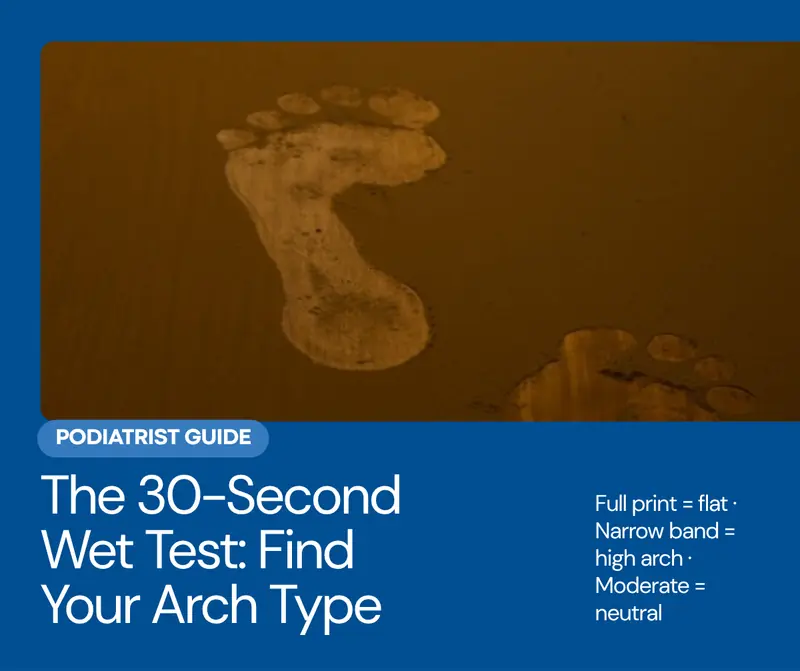
In our clinic, we determine foot type using a combination of the wet footprint test, gait analysis on our pressure plate, and hands-on examination of arch flexibility. If you’re unsure of your foot type, a brief podiatric evaluation is far more reliable than any at-home test.
Why these recommendations: I personally use the products on this page in my Howell and Bloomfield Hills clinics. When you buy through the links here, Balance Foot & Ankle earns a small commission at no cost to you — and it helps fund the free educational content I make on YouTube. I will never recommend a product I wouldn’t use on my own family.
Best Running Shoes for Plantar Fasciitis (2026)
For patients who run or do high-impact exercise with plantar fasciitis, shoe selection is especially critical. These are the models we most commonly recommend in our practice as of 2026 based on current construction and patient feedback.
HOKA Bondi 9 — The Bondi’s maximal cushioning platform and low 4 mm drop offset by an exceptionally thick, cushioned heel stack make it exceptional for heel-dominant plantar fasciitis. The rocker-bottom geometry naturally reduces tension at push-off. We recommend this for patients with significant heel pad atrophy or who stand on hard floors all day.

Brooks Adrenaline GTS 24 — The GuideRails technology in the Adrenaline provides medial and lateral stability without forcing the foot into a single motion path. This is our top recommendation for overpronators — it’s a stability shoe that doesn’t feel rigid. Available in wide widths, which matters for patients with concurrent bunions or wide forefoot.

- Get your daily dose of running as the weather turns. The Adrenaline GTS 24 Weatherized offers enhanced wet/dry traction to help provide confidence with every step, and the DWR mesh upper provides temperature management and weather protection.
- WEATHERIZED MEN’S RUNNING SHOE: The Adrenaline GTS 24 Weatherized delivers superior wet/dry traction for confident steps on any surface, while the DWR mesh upper offers weather protection and temperature control, ensuring you stay comfortable and focused on your run—no matter the conditions.
- WEATHERPROOF & REFLECTIVE UPPER: The knit DWR mesh upper offers superior weather protection, effectively managing temperature while keeping your feet dry in various conditions. Reflective elements enhance visibility in low-light environments.
- GUIDERAILS HOLISTIC SUPPORT SYSTEM: Our innovative technology - known as “GTS” for “Go-To Support” - supports your body in its natural motion path while keeping excess movement in check.
- DYNAMIC CUSHIONING: Nitrogen-infused DNA Loft v3 midsole foam delivers soft, smooth cushioning that adapts to your unique stride for lightweight comfort mile after mile.
ASICS Gel-Kayano 31 — The Kayano’s dual-density midsole provides the kind of reliable motion control that clinical studies have shown effective for medial plantar fasciitis. The GEL heel cushioning absorbs impact exceptionally well. This is a premium shoe, but the durability (typically 500+ miles for running) makes it cost-effective.

- Engineered mesh upper: Improves breathability
- Knit heel pull tab: For easy on and off
- 4D GUIDANCE SYSTEM feature: Helps create adaptive stability for a more balanced stride
- Rearfoot PureGEL technology: Helps provide lightweight cushioning and softer landings
- FF BLAST PLUS ECO cushioning is made with approximately 20% bio-based content and helps provide cloud-like comfort: OrthoLite X-55 sockliner
New Balance Fresh Foam X 860v14 — New Balance’s Fresh Foam X platform is one of the better combinations of cushioning and structure we’ve tested. The 860 adds a medial post without making the shoe feel stiff. Excellent for patients transitioning from custom orthotics to shoe-only support during recovery.

- Fresh Foam X midsole delivers our most cushioned Fresh Foam experience for incredible comfort
- Durable rubber outsole
Key takeaway: For running with plantar fasciitis, prioritize heel-to-toe drop of 8mm or more and a firm heel counter. Avoid racing flats, minimalist shoes, and zero-drop designs until you’re fully recovered.
Best Walking Shoes for Plantar Fasciitis (2026)
Walking shoes need different properties than running shoes — they typically have a firmer construction and less aggressive cushioning, which is actually preferable for many plantar fasciitis patients who don’t need maximal impact absorption.
New Balance 928v3 — This is our single most-recommended walking shoe for moderate-to-severe plantar fasciitis. The combination of ROLLBAR stability technology, wide medial post, and generous heel height makes it exceptionally effective for daily walking. Available in multiple widths including 4E (extra-extra wide), making it ideal for patients who also have edema or bunions. It’s not glamorous, but it works.
- Leather upper
- Removable polyurethane footbeds
- Rubber outsole
Brooks Addiction Walker 2 — The Addiction Walker has an unusually deep heel cup that reduces the amount of heel strike force transmitted to the fascia attachment. The leather upper also provides more structure than mesh alternatives. This is our go-to for patients with both plantar fasciitis and heel pad syndrome (fat pad atrophy).
- THIS MEN’S SHOE IS FOR: Designed for long days on your feet, this lace-up walking shoe offers reliable cushioning, all-day wearability, and trusted stability. The Brooks Addiction Walker 2 is a certified PDAC A5500 Diabetic shoe and has been granted the APMA Seal of Acceptance.
- RESPONSIVE CUSHIONING: BioMoGo DNA cushioning adapts to your weight, speed, and stride—absorbing shock and delivering personalized comfort with every step.
- ENHANCED STABILITY & ALIGNMENT: The Extended Progressive Diagonal Rollbar (PDRB) provides full-body support by guiding your stride and promoting natural motion—ideal for those who need added arch and pronation control.
- BUILT FOR LONGEVITY: Featuring a robust outsole and durable construction, this walking shoe stands up to everyday wear while maintaining structure, comfort, and performance.
- SLEEK LEATHER UPPER: A full-grain leather upper offers a clean, classic look with long-lasting durability—perfect for both casual and work-ready outfits.
HOKA Transport — For patients who want a more casual-looking walking shoe without sacrificing function, the Transport is one of the better options. HOKA’s rocker geometry means you’re never fully loading the heel attachment point at any phase of gait. The extended heel bevel absorbs heel-strike forces that standard shoes transmit directly to the fascia.
Vionic Walker Classic — Vionic is one of the few consumer footwear brands that incorporates orthotics-grade arch support directly into the footbed. For patients who find custom orthotics uncomfortable or expensive, the Vionic can bridge the gap. The Orthaheel technology was designed in collaboration with podiatrists and performs well for mild-to-moderate flat foot pronation with plantar fasciitis.
Best Work Shoes for Plantar Fasciitis
For patients on their feet 8+ hours at work — nurses, teachers, warehouse workers, retail staff — the work shoe choice can make or break a plantar fasciitis treatment plan. Standard dress shoes and standard sneakers both typically fail here.
Dansko Professional Clog — Counterintuitively, a well-made clog is one of our top work shoe recommendations. The Dansko’s rocker bottom, rigid midsole, and substantial heel lift work together to reduce plantar fascia elongation at push-off. The slip-resistant outsole meets hospital and restaurant requirements. Many nurses and healthcare workers in our practice report dramatic improvement after switching to these.

- Leather and or fabric uppers
- Padded instep collar for comfort when walking
- Roomy reinforced toe box for protection with plenty of "wiggle room" for your toes
- PU outsole with rocker bottom to propel foot forward and provide shock absorption
- Wide heel strike for greater stability
Skechers Work Relaxed Fit line — For patients needing a safety-toe option or something with a more athletic look, the Skechers Work Relaxed Fit series provides adequate cushioning and meets ASTM F2413 safety standards. The memory foam insole should be replaced with a more structured aftermarket insole (we recommend Superfeet Green) to provide functional arch support rather than just cushioning.
Alegria TRAQ series — For patients in professional settings who need a more attractive work shoe, Alegria’s built-in arch support and substantial heel lift makes it one of the better podiatrist-approved dress shoe alternatives. Available in many widths.
Should You Use Orthotics With Your Shoes?
This is one of the most common questions we get. The answer is: it depends on severity and foot type.
For mild plantar fasciitis with a neutral arch, a quality supportive shoe alone — like the options above — is often sufficient. The structural support built into stability and motion-control shoes provides enough arch offloading for most patients with mild symptoms.
For moderate-to-severe plantar fasciitis, chronic or recurring cases, or patients with significant flat feet or high arches, we strongly recommend custom functional orthotics in addition to supportive footwear. In our clinical experience, the combination of the right shoe and custom orthotics resolves plantar fasciitis significantly faster than either intervention alone.
Over-the-counter orthotics (Superfeet, Powerstep, PowerStep Pinnacle’s Plantar Fasciitis) are a reasonable bridge while awaiting custom devices. Superfeet Green is the most structurally sound OTC option we recommend; it’s firm enough to actually affect foot mechanics rather than just providing cushioning.
⚠️ When to See a Podiatrist About Your Shoes:
- You’ve tried 2+ different supportive shoes with no improvement after 4–6 weeks
- Pain is getting worse despite supportive footwear
- You have severe flat feet, high arches, or a limb length difference
- Pain extends beyond the heel into the arch or calf
- You’ve had plantar fasciitis for more than 3 months
- You have diabetes, peripheral neuropathy, or circulatory problems
What Shoes to Avoid with Plantar Fasciitis
Knowing what NOT to wear is just as important as knowing what to wear. These shoe types consistently worsen plantar fasciitis symptoms in our patients.
Flip-flops and sandals without arch support: Even brief periods in flat flip-flops — walking from the car to the gym, or around the house — can set back weeks of progress. The plantar fascia is maximally loaded in flat footwear. If you need sandals, choose structured options from Vionic, Birkenstock (cork footbed style), or OluKai.
Barefoot at home: Going barefoot on hard floors is one of the most common mistakes plantar fasciitis patients make. Wearing supportive slippers or dedicated house shoes (not socks) significantly reduces morning pain and daily symptom aggravation. We recommend HOKA Ora Recovery Slide or Brooks Adrenaline Recovery Sandal as house slippers.
Zero-drop and minimalist shoes: Despite their popularity in running communities, zero-drop shoes (Altra, Vivobarefoot, Luna Sandals) increase elongation of the plantar fascia with every step. These are appropriate for healthy feet but almost universally worsen plantar fasciitis, especially insertional (heel) pain.
Old worn-out shoes: Most running shoes lose their functional support between 300–500 miles. After that point, the midsole is no longer providing meaningful arch or heel support even though the outsole may still look fine. If your shoes are over 1 year old with regular use, they’re likely contributing to your symptoms.
High heels: While a moderate heel lift (the 8–12mm drop we recommend) is helpful, high heels shorten the Achilles tendon and calf complex dramatically over time — which directly increases tension on the plantar fascia. They can be worn briefly for formal occasions, but should not be daily footwear during active treatment.
The Most Common Shoe Mistake We See in Our Clinic
The most common mistake I see is patients buying the most cushioned shoe they can find and wondering why their plantar fasciitis doesn’t improve. Extra-soft cushioning feels good in the store but does nothing to mechanically support the arch. In fact, very soft midsoles can allow more pronation than a moderately cushioned stability shoe.
The second most common mistake is wearing supportive shoes only during exercise but going barefoot or in unsupportive footwear the rest of the day. Plantar fasciitis recovery requires consistent mechanical support throughout the day — not just during workouts. The fascia re-injures itself during those barefoot kitchen trips and morning walk to the bathroom.
Third: buying shoes that are too narrow. Feet often swell during the day, and narrow shoes compress the forefoot and create dorsiflexion of the toes, increasing tension on the entire plantar fascia. When trying on plantar fasciitis shoes, do it in the afternoon when your foot is at its largest.
Frequently Asked Questions
What features should I look for in shoes for plantar fasciitis?
Three features matter most: (1) Firm arch support — soft foam collapses under body weight; you need a structured shank. (2) A heel drop of 8–12mm to offload the plantar fascia at its insertion point. (3) A roomy toe box that doesn’t compress the forefoot. Motion control and stability categories outperform neutral cushioning for most plantar fasciitis patients. Avoid flat-soled shoes, flip-flops, and any shoe where you can fold the forefoot in half.
Do expensive shoes for plantar fasciitis actually work better?
Price correlates weakly with clinical effectiveness. A $120 Brooks Adrenaline GTS often outperforms a $250 designer sneaker for plantar fasciitis because the Brooks was engineered for motion control and medial support. Focus on biomechanical features, not brand cachet. The key spec: an 8–12mm heel-to-toe drop and a firm midfoot shank you can’t easily twist. Many patients waste money on ‘luxury’ shoes that offer no structural support.
How long should shoes for plantar fasciitis last?
Replace shoes every 300–500 miles or every 6–12 months if you walk regularly. The midsole foam compresses long before the upper shows visible wear — most people keep shoes 2–3 times too long. A simple test: place the shoe on a flat surface and look from the back. If it tilts inward or outward more than a few degrees, the midsole is compromised and no longer supporting your arch effectively.
Should I wear my plantar fasciitis shoes all day, or just for exercise?
All day — including the first steps from bed. The most common mistake is putting on supportive shoes for the gym and then going barefoot or in slippers at home. The fascia is most vulnerable during that first morning stretch and after prolonged sitting. Keep supportive footwear within reach of your bed. Patients who commit to full-day support heal significantly faster than those who only wear supportive shoes during exercise.
Can the right shoes cure plantar fasciitis?
Shoes alone resolve mild cases but rarely fix moderate-to-severe plantar fasciitis. Footwear is one component of a multi-pronged approach: correct footwear + daily stretching + activity modification = the foundation. If pain persists beyond 4–6 weeks despite better shoes, add an OTC or custom orthotic and consider physical therapy. Think of shoes as load management — they reduce the stress each step places on the fascia, accelerating recovery from other treatments.
Do I need orthotics in addition to supportive shoes?
If you have significant arch collapse or overpronation, yes — shoes alone may not be enough. A high-quality OTC orthotic (Superfeet Green, Powerstep Pinnacle) costs $40–60 and resolves symptoms for about 60% of patients when paired with supportive shoes. Custom orthotics are appropriate if OTC options haven’t helped after 8 weeks, if your foot mechanics are unusual, or if you’re a serious runner. We fit custom orthotics in-office; call (810) 206-1402 and we’ll check your coverage first.
Are minimalist or zero-drop shoes bad for plantar fasciitis?
For most plantar fasciitis patients, yes. Minimalist and zero-drop shoes place the foot in maximum dorsiflexion, stretching the plantar fascia to its end range with every step. This is precisely the mechanical load that caused the injury. Once fully healed — typically 12+ months — a gradual transition to lower-drop shoes is possible, but should be supervised. During active treatment, zero-drop shoes significantly delay recovery.
What’s the best shoe for plantar fasciitis to wear around the house?
A supportive slide or clog — not a thin slipper or bare feet. Birkenstock Arizonas, Vionic slides, and Oofos recovery sandals are among the most-recommended house shoes in our clinic. The key is medial arch support and a 2–4cm heel lift. Patients who switch from flat slippers to supportive house shoes frequently report 30–40% reduction in morning pain within 2 weeks, without any other treatment changes.
Should I buy wide-width shoes for plantar fasciitis?
Width affects toe box comfort more than arch support, but it matters. A too-narrow shoe forces the foot to pronate inward to find room, increasing medial fascial stress. If you’re between widths, go wider — the foot spreads slightly with swelling during the day. Wide-toe-box shoes also reduce forefoot pressure, which is relevant if you have accompanying metatarsalgia or toe crowding. Most major brands offer D/wide and 2E/extra-wide options.
When should I see a podiatrist instead of just buying better shoes?
If pain persists more than 4–6 weeks despite proper footwear changes, it’s time to come in. Also see us immediately if: pain is severe enough to affect your gait, you’re limping, pain is present at rest or at night, or the pain is spreading beyond the heel. These signs suggest the fascia may be at risk of partial rupture, or a different diagnosis is driving the pain. Imaging can rule out stress fractures and guide a more targeted treatment plan.
Can children wear the same plantar fasciitis shoes as adults?
Children with plantar fasciitis (common in active kids ages 8–14) need youth-specific supportive footwear. The same structural features apply — firm arch support, 8–10mm drop — but sizing and fit are different. Saucony Ride, New Balance 860, and Asics Kayano come in youth sizes. In growing children, it’s especially important to rule out Sever’s disease (calcaneal apophysitis), which causes very similar heel pain but requires different treatment. Bring them in for an evaluation if pain persists more than 2 weeks.
The Bottom Line
The best shoe for plantar fasciitis is the one that provides firm, structured arch support, a moderate heel-to-toe drop, and a stable heel counter — matched to your specific foot type. For flat-footed patients, motion-control or stability shoes are essential. For high arches, cushioned neutral shoes work best. For neutral arches, you have the most flexibility.
Shoes alone may resolve mild plantar fasciitis, but they work best as part of a comprehensive treatment plan that includes stretching, activity modification, and — when needed — custom orthotics. If you’ve been struggling with persistent heel pain despite trying supportive footwear, our team at Balance Foot & Ankle in Howell and Bloomfield Hills, MI can evaluate your gait, foot type, and footwear to give you a specific, personalized recommendation.
More podiatrist shoe guides by activity & brand
- Landorf KB, Menz HB. Plantar heel pain and fasciitis. BMJ Clinical Evidence. 2023.
- Rathleff MS, et al. High-load strength training improves outcome in patients with plantar fasciitis. Scand J Med Sci Sports. 2015;25(3):e292-300.
- Crowell HP, Davis IS. Gait retraining to reduce lower extremity loading in runners. Clin Biomech. 2011.
- American College of Foot and Ankle Surgeons. Heel Pain (Plantar Fasciitis). 2024.
- Irving DB, et al. Obesity and pronated foot type may increase the risk of chronic plantar heel pain. BMC Musculoskelet Disord. 2007.
Related Conditions
Struggling with Plantar Fasciitis? Get a Gait & Footwear Evaluation.
Same-day appointments available in Howell & Bloomfield Hills, MI
4.9★ | 1,123 Reviews | 3,000+ Surgeries
Or call: (810) 206-1402
![Future of Custom Orthotics? [Balance Foot & Ankle in Michigan]](https://www.michiganfootdoctors.com/wp-content/cache/flying-press/b3fee74e6d3bff9675b3e5e39e45890e.jpg)
In-Office Treatment at Balance Foot & Ankle
If home treatment isn’t providing relief for your plantar fasciitis, our podiatry team at Balance Foot & Ankle can help with same-day evaluations and advanced in-office care.
Same-day appointments available. (810) 206-1402
Learn about our plantar fasciitis treatment → | Book online →
Same-Week Appointments in Howell & Bloomfield Hills
Three board-certified podiatric surgeons. 1,123+ five-star reviews. Most insurance accepted.
For a complete clinical overview: Plantar Fasciitis Treatment Guide — every treatment from stretching to surgery
What is the fastest way to recover from plantar fasciitis?
The fastest results come from combining consistent calf and plantar fascia stretching, supportive footwear or custom orthotics, activity modification, and early physical therapy. Most patients improve within 6–8 weeks of dedicated conservative treatment.
Does plantar fasciitis ever require surgery?
Only about 5% of plantar fasciitis cases need surgery. Endoscopic plantar fascial release is highly effective when 6–12 months of conservative treatment has failed. A podiatrist will confirm the diagnosis with ultrasound before recommending surgery.
Sources
- American Academy of Orthopaedic Surgeons (AAOS): Plantar Fasciitis and Bone Spurs
- StatPearls (NIH): Plantar Fasciitis
- MedlinePlus (NIH): Plantar Fasciitis

Dr. Tom Biernacki, DPM is a board-certified foot & ankle surgeon (ABFAS & ABPM) at Balance Foot & Ankle Specialists in Southeast Michigan. With over a decade of clinical experience, he specializes in heel pain, bunions, diabetic foot care, sports injuries, and minimally invasive surgery. Dr. Biernacki is a member of the APMA and ACFAS, and his patient education content on MichiganFootDoctors.com and YouTube has made him one of the most-followed foot & ankle educators on YouTube.