

Affiliate disclosure: Some product links on this page go to Amazon. As an Amazon Associate, Balance Foot & Ankle earns from qualifying purchases, at no extra cost to you.
Dress shoes do not have to wreck your feet — but you have to know the 4 features that make a podiatrist-approved dress shoe different from the typical narrow-toed pair.
You’ve come to the right podiatry team. Dr. Tom Biernacki, DPM, FACFAS — board-certified foot & ankle surgeon with 3,000+ surgeries — explains exactly what podiatrist-recommended dress shoes means and what works. Book a dress shoe fitting online for an appointment at Howell or Bloomfield Township, or call (810) 206-1402.
Dress shoes still hurting after switching pairs? Book a real appointment time online, 24/7 — Howell or Bloomfield Township.
Medically reviewed by Dr. Tom Biernacki, DPM
Board-certified podiatric surgeon | Balance Foot & Ankle | Last reviewed: May 2026

Specs and sizing: our sister site Podiatrist Tested keeps a side-by-side breakdown, with every figure labeled by source, in its dress shoes with a wider toe box.
Why Most Dress Shoes Are a Problem for Your Feet
If you’ve ever ended a work day with aching feet, tight toes, or a throbbing ball of foot — your dress shoes are probably the culprit. As a podiatrist, I see the downstream effects of dress shoe damage every week: bunions accelerated by narrow toe boxes, neuromas from repeated forefoot compression, metatarsalgia from heel elevation, and Achilles shortening from years in elevated heels. The good news: there are genuinely stylish dress shoes that don’t destroy your feet — if you know what to look for.

PowerStep Pinnacle Maxx Orthotic Insoles
Firm arch support with an angled heel for flat feet and overpronation, the heavier-duty version of the PowerStep Pinnacle. Made in the USA.
Check price →Key takeaway: Podiatrist-approved dress shoes have a wider toe box, heel height under 1 inch, genuine arch support, and removable insoles. Both men’s and women’s dress shoes can meet these criteria without sacrificing style.
What Makes a Dress Shoe Podiatrist-Approved
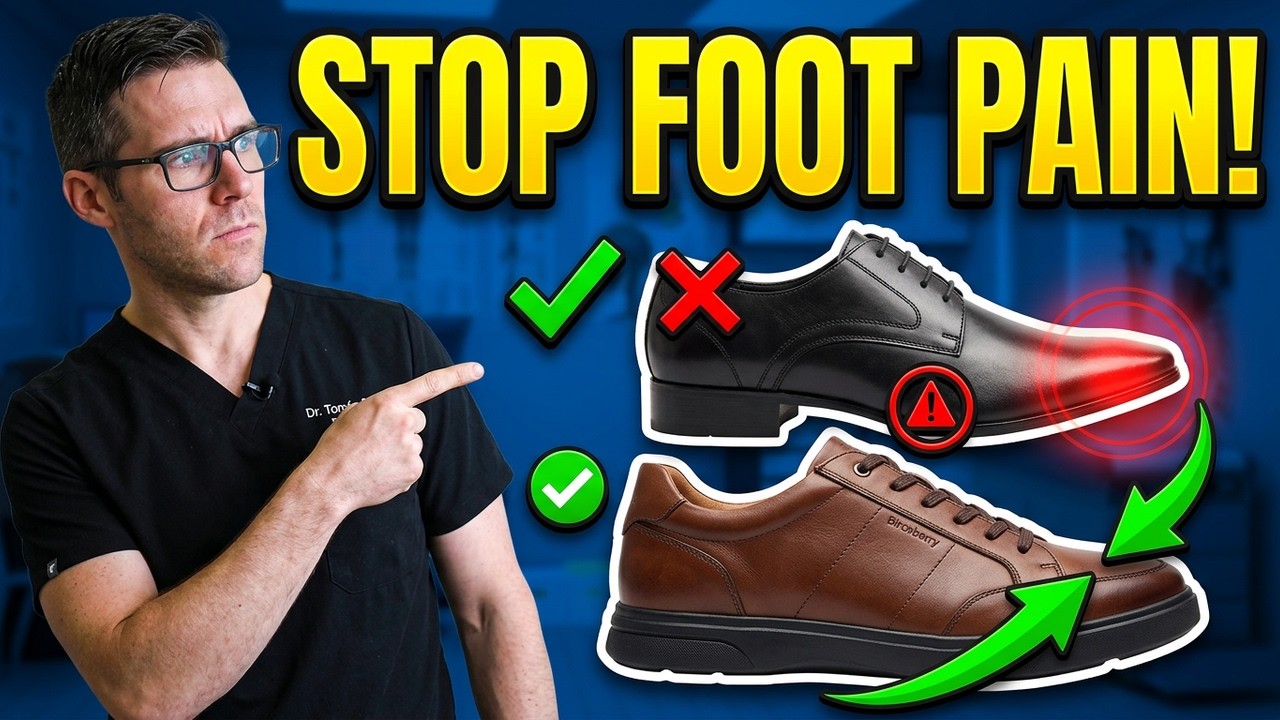
Wide toe box: The toe box should allow all five toes to lie flat without compression. For men, look for “wide” (E or EE) width options. For women, a rounded or square toe front is far better than a pointed toe. The widest part of the shoe should match the widest part of the foot — usually at the first and fifth metatarsal heads, not the toes. Heel height under 1 inch: Every centimeter of heel elevation shifts more body weight onto the forefoot. Under 1 inch is ideal for all-day wear. Women’s block heels distribute load more evenly than stilettos at the same height. Genuine arch support: Most dress shoes have minimal built-in arch support. A firm midsole and a slight medial arch contour help. If the insole is flat foam, it provides no functional support. Look for shoes with removable insoles so you can add your own orthotics.
Rigid shank: The midfoot section of the sole should resist twisting. Hold both ends of the shoe and try to twist — a good shoe resists this significantly. A flexible sole means the foot does all the stabilization work, which accelerates fatigue and flat foot progression. Adequate depth: The shoe should have enough vertical space in the toe box for the top of the toes. Shallow toe boxes cause dorsal corn formation and hammertoe aggravation.
Best Dress Shoe Brands for Foot Health (Podiatrist Perspective)
For men: Ecco consistently makes dress shoes with wider fits, genuine leather uppers, and removable insoles — their Street Tray and Metropole lines are our most commonly recommended. Rockport makes traditional dress silhouettes with athletic-inspired cushioned midsoles. Samuel Hubbard is a premium option with a podiatrist-designed last. For women: Vionic builds medically proven arch support into dress flat and heel styles. Naturalizer offers wider toe boxes at accessible price points. New Balance has expanded into dress-casual styles (327, 574 lifestyle) with the width options and foot support that has defined their athletic line.

- High Arch Support: PowerStep supination insoles deliver firm, flexible high arch support plus a deep heel cradle for comfort, stability & motion control, helping align feet, reduce pain, and protect against ball & heel pressure.
- All Day Comfort & Support: PowerStep Pinnacle High shoe inserts for women and men use premium dual layer cushioning to deliver heel to toe comfort and responsive bounce back with every step, without going flat.
- Relieves & Helps Prevent Pain: PowerStep Pinnacle High insoles for supination can help alleviate common foot conditions often linked to supination, including plantar fasciitis, Achilles tendonitis, fat pad atrophy, and Morton’s neuroma.
- No Trimming: PowerStep insoles move easily from shoe to shoe. Inserts are sized by shoe size for footwear with removable factory insoles. Designed for walking, running, work & casual dress shoes; pairs well with best walking shoes for women and men.
- Made in the USA: We stand behind our PowerStep Insoles for women and men. Proudly made in the USA & backed by a 30-day money-back guarantee. HSA & FSA Eligible
⚠️ Dress shoe warning signs — see a podiatrist if:
- A bony bump is developing at the base of the big or little toe
- Burning, shooting pain in the ball of the foot during or after wearing dress shoes
- Toes that no longer straighten flat when shoes come off
- Heel or arch pain first thing in the morning after regular dress shoe wear
- Numbness in any toe after a full work day
2026 Dress Shoe Comparison: Podiatrist’s Brand Rankings
These are the brands and models that consistently perform best in clinical use for patients with plantar fasciitis, metatarsalgia, and general foot pain requiring dress footwear.
| Brand / Model | Arch Support | Heel Drop | Removable Insole? | Toe Box | Best For | Price Range |
|---|---|---|---|---|---|---|
| Orthofeet Gramercy | Excellent — Propel insoles built in | Low (8mm) | Yes | Wide; multiple widths | Plantar fasciitis, wide feet, neuropathy | $130–160 |
| Clarks Un.Kenneth | Good — OrthoLite cushioning | ~10mm | Yes | Standard–wide | All-day standing; moderate PF | $90–120 |
| Ecco Metropole / Helsinki | Good — contoured footbed | ~8mm | Yes | Standard–wide | Office wear; moderate pronation | $150–200 |
| Rockport Total Motion | Good — foam padded insole | ~12mm | Yes | Standard | Business casual; daily wear | $80–120 |
| Vionic Winthrop | Excellent — podiatrist-designed orthotic | Low | Yes | Standard | Plantar fasciitis; morning heel pain | $100–140 |
| Johnston & Murphy Stanton | Moderate — padded collar | ~14mm (higher) | Yes | Standard | Formal occasions; patients tolerating dress shoes well | $150–200 |
The single most important feature to verify before buying: does the insole come out? A dress shoe that accommodates a custom or semi-custom orthotic is worth far more than one with slightly better stock cushioning. Most podiatric conditions are best managed with a prescription orthotic inside a shoe that fits properly — not a better shoe alone.
The Insole That Actually Fits a Dress Shoe
Both devices shown above are full-length, and a full-length orthotic is the wrong shape for most dress shoes: it only goes in once the factory liner comes out, and in a slim Oxford or a pump there is rarely enough depth left afterwards. That is the practical reason so many people conclude orthotics and dress shoes do not mix.
The answer is a 3/4-length device. It stops behind the ball of the foot, so it sits under the arch and heel where the support is needed and leaves the toe box alone — which is exactly where a dress shoe has no room to spare. It is also the shape our own custom dress orthotics are made in, for the same reason.
- PowerStep Pinnacle 3/4 — semi-rigid arch support and a deep heel cradle in a three-quarter length, so it goes into a dress shoe without fighting the toe box. This is the over-the-counter version of the device described in the FAQ below. See today’s price →
If you purchase through this link, Balance Foot & Ankle may earn a small commission at no additional cost to you. A three-quarter insole supports the arch; it does not add forefoot cushioning, so if the pain is under the ball of the foot rather than the arch, a metatarsal pad is the better first purchase.
Best Dress Shoes for Women With Plantar Fasciitis
Everything above applies to both feet in any shoe, but the women’s dress shoe market is a different problem in practice, and the advice women are usually given about it is wrong in a specific and expensive way.
The flat shoe is not automatically the safe one
The instinct, once the heel pain starts, is to abandon heels entirely and live in ballet flats. It is the change I talk patients out of most often. A ballet flat is typically a thin sheet of leather over a thin sheet of rubber: no heel counter, no shank, nothing resisting torsion, and a footbed that is flat foam at best. It asks the fascia to do all of the work on every step, on hard office floors, for the whole day.
As set out in the heel-height section above, a modest heel actually takes tension off the fascia rather than adding it. So a well-built low block heel is frequently a better shoe for plantar fasciitis than the unstructured flat that replaced it — which is the opposite of what most people assume when they make the switch.
Knit flats for work: our Vivaia shoes review covers what its APMA Seal does and does not mean, and where flats fall short.
Ranking the silhouettes
Roughly in order of how well they tend to be tolerated, best first:
- Low block heel. A broad base under the heel means the load is spread and the ankle is not fighting to stay balanced. This is the shape to look for first.
- Wedge. Support runs the full length of the sole, so there is no gap under the arch and nothing for the midfoot to collapse into. Often the most comfortable option at a given heel height.
- Loafer or Mary Jane with a strap. Anything that holds the foot down onto the footbed is doing real work. Without a strap or laces, the toes grip to keep the shoe on, and that clawing is its own source of forefoot pain.
- Low pump. Workable if the heel is modest and the shoe has a real heel counter you cannot collapse with your thumb.
- Stiletto. Same height, a fraction of the base. Event wear only.
- Unstructured ballet flat. Last, for the reasons above — and the one most often chosen first.
Why a pointed toe fits differently than it looks
The point on a pointed shoe extends past where your toes actually end, so the shoe looks longer than the foot inside it. People buy that length, then wonder why the ball of the foot is still being squeezed. The measurement that matters is the width of the shoe at its widest point, which needs to sit under the widest part of your foot — the joints behind the big and little toes, not the toes themselves. If those joints are being pressed inward, the shoe is too narrow no matter how much empty space is in the point.
This is also the mechanism behind bunion and neuroma complaints in dress shoes specifically: the compression is at the joints, not at the tips.
The insole problem is worse in women’s shoes
Men’s dress shoes routinely have a liner that lifts out. Women’s dress shoes frequently do not — the footbed is glued in, and in a slim pump there would be no depth to reclaim even if it came out. That is why the three-quarter device described earlier matters more here than it does for men: it sits under the arch and heel and leaves the front of the shoe alone, which is the only part of a pump that has no room to give.
When you are shopping, check for a removable liner before you check anything else. It narrows the field quickly, and it is the single feature that decides whether a shoe can be made to work or not.
Two pairs, not one
For an evening event, the realistic plan is not a heel you can survive for six hours. It is the shoe you want to be photographed in and a supportive pair in the bag for the walk in, the walk out, and the hour standing at the end. Patients who do this do far better than patients trying to find one shoe that does both jobs, because that shoe mostly does not exist.
Fitting Dress Shoes Correctly
Shop in the afternoon when feet are at their largest (feet swell 5–8% throughout the day). Stand during fitting — feet spread 4–6mm with weight bearing. Allow 1/4 to 1/2 inch between the longest toe and the shoe end. Both shoes must be comfortable immediately — dress shoes should not require a “break-in period” that causes blisters. If a shoe causes any discomfort during a 10-minute store walk, move on.
What are the best dress shoes for plantar fasciitis?
The best dress shoes for plantar fasciitis have a removable insole (to accommodate custom orthotics), a low-to-moderate heel drop (8–12mm), a firm heel counter for rearfoot stability, and genuine arch support rather than just soft cushioning. Top brands include Orthofeet, Vionic, Clarks, and Ecco. Avoid any dress shoe with a heel above 1 inch, a non-removable insole, or a completely rigid leather upper with no give at the forefoot.
Can you wear dress shoes with plantar fasciitis?
Yes, but the shoe must meet specific criteria. The most important: the insole must be removable to accommodate a custom or OTC orthotic, and the heel drop should be 8–14mm (not flat, which overloads the fascia, and not high-heeled, which shortens the calf and worsens morning pain). Dress shoes with rocker soles or flexible forefoot constructions significantly reduce fascia strain during push-off. Those specifications help a fascia that is still settling down, but if your first steps in the morning have not improved after a solid stretch in the right shoes, the problem has moved past what footwear alone can fix. Book a plantar fasciitis visit online.
What heel height is safe with foot pain?
For patients with plantar fasciitis, metatarsalgia, or Morton’s neuroma, a heel height of 1 inch or less (25mm) is generally safe. Heels above 1.5 inches shift up to 75% of body weight to the forefoot and significantly compress the neuroma site or plantar fascia. A small heel (0.5–1 inch / 12–25mm) actually reduces plantar fascia tension compared to a completely flat shoe by allowing slight equinus relaxation.
Should I use orthotics in dress shoes?
Yes, if you have a diagnosed foot condition. Custom orthotics prescribed by a podiatrist address biomechanical causes of foot pain that stock insoles cannot correct. A slimmer-profile custom orthotic (3/4 length) fits in most dress shoes without removing the original insole. Vionic and Orthofeet shoes have orthotic-grade insoles built in that work well for patients with mild–moderate conditions who do not require custom devices.
Frequently Asked Questions
Can I put orthotics in dress shoes? Yes, but it requires planning. Choose dress shoes with removable insoles and adequate depth. Slim custom orthotics (3–4mm profile) made specifically for dress shoes are available — our clinic makes these regularly for professional patients who need support without sacrificing appearance.
What heel height is safe for all-day wear? Under 1 inch (2.5cm) for all-day professional wear. For event wear at higher heels: limit to 2–3 hours and alternate with supportive footwear. Never stand or walk in heels over 2 inches for more than 2 hours consecutively.
Are men’s dress shoes better for feet than women’s? Traditionally, yes — men’s dress shoes have lower heels, wider toe boxes, and more substantial construction. However, the market has improved significantly for women’s options in the last decade. The key criteria are the same regardless of gender.
The Bottom Line
Stylish and foot-healthy dress shoes are not mutually exclusive. Prioritize wide toe box, heel under 1 inch, removable insoles, and a rigid shank. Brands like Ecco, Rockport, Vionic, and Naturalizer consistently deliver these features. If your career requires long hours in dress shoes, custom slim orthotics provide the support standard dress shoes lack.
Sources
- Coughlin MJ, Jones CP. “Hallux valgus and first ray mobility: a prospective study.” J Bone Joint Surg Am. 2007.
- Menz HB, Morris ME. “Clinical determinants of plantar forces and pressures during walking in older people.” Gait Posture. 2006.
- AAOS. “Foot Health Basics.” OrthoInfo, American Academy of Orthopaedic Surgeons.
Dr. Tom’s Picks: Dress Shoe Comfort Products
Podiatrist-approved dress shoes that hide real support — Cole Haan OriginalGrand (men’s, cushioned EVA sole) and Naturalizer Michelle (women’s, padded comfort pump). Both verified in stock:

- Wingtip oxford in leather and nubuck uppers.
- EVA midsole with rubber outsole.
- Grand.OS technology.
- Natural storm welt

As an Amazon Associate, Balance Foot and Ankle earns from qualifying purchases. Product links are affiliate links and we may earn a commission at no extra cost to you. This does not influence our clinical recommendations. Last update on 2026-10-18 / Images from Amazon Product Advertising API
Women’s Naturalizer Michelle — check price on Amazon →
For female patients who can’t give up heels, Foot Petals is the difference between ‘tolerable’ and ‘painful.’ Ball-of-foot and heel cushions that fit in even slim dress shoes.
Check Price
After a long day in dress shoes, massage a thin layer into the ball of the foot and heels. Arnica gel with 15 homeopathic ingredients and soothing aloe, no menthol sting.
Check Price
As an Amazon Associate I earn from qualifying purchases. As an affiliate for other retailers, I may also earn a commission. Recommendations based on clinical experience.
Ready to Get Relief?
Book online 24/7 for Howell & Bloomfield Township, MI
4.9★ | 1,200+ Reviews | 3,000+ Surgeries
Or call: (810) 206-1402
Yes — but the heel drop is everything. Plantar fasciitis patients need a dress shoe with 8–12mm heel-to-toe drop to reduce fascia tension at push-off. Most fashion dress shoes offer 0–4mm, which is why patients with PF flare within 30 minutes of wearing them. The 3 brands that consistently pass Dr. Tom’s 4-point clinical check for plantar fasciitis patients: Ecco (men), Vionic (women), and Rockport (both). The specific models — and why certain popular choices in these brands still fail the test — are in the breakdown below. Schedule an evaluation at our Howell or Bloomfield Township office for a fitting assessment.
Visit Balance Foot & Ankle — Book Online 24/7
Our podiatry team serves patients throughout Michigan including Howell, Brighton, and Bloomfield Township. If you’re dealing with heel pain, ingrown toenails, or a foot injury, you can book online any time.
New patients welcome. (810) 206-1402
Get Expert Care at Balance Foot & Ankle
Book online 24/7 for our Howell and Bloomfield Township offices. Board-certified podiatric surgeons. Most insurance accepted.
Appointments in Howell & Bloomfield Township
Three board-certified podiatric surgeons. 1,200+ five-star reviews. Most insurance accepted.
What should I look for in dress shoes for foot pain?
Look for at least a 1/2-inch heel, a removable insole that fits a custom orthotic, a firm heel counter, adequate toe box width (at least 3/8 inch clearance past the longest toe), and breathable leather or quality synthetic uppers. Avoid pointed toe boxes, stilettos, and completely flat shoes. A slight heel-to-toe drop of 4–8mm reduces Achilles and plantar fascia strain.
Are there dress shoes that work with custom orthotics?
Yes. Brands with removable footbeds that accommodate custom orthotics include Ecco, Clarks, Vionic, Rockport, and Drew. Oxford-style shoes with a wider last (D or EE width) work best. Have your orthotics with you when trying on dress shoes — the orthotic should fill the heel cup snugly without forcing your foot out of the shoe.
What dress shoes do podiatrists recommend for plantar fasciitis?
Ecco’s leather Oxfords, Clarks Tilden Cap, Vionic’s dress line, and Rockport’s DresSports series are commonly recommended for plantar fasciitis. These models offer structured arch support, cushioned midsoles, and heel counters that reduce plantar fascial strain. Pair with a custom orthotic for best results if OTC insoles are insufficient.
Can tight dress shoes cause bunions?
Tight, narrow, or pointed-toe dress shoes do not cause bunions but they accelerate progression and worsen symptoms in individuals who already have a bunion deformity. Bunions are primarily genetic — caused by the foot mechanics passed down through families. However, wearing correctly fitted dress shoes slows bunion progression and significantly reduces pain.
For the full PF treatment picture: Dr. Biernacki’s plantar fasciitis treatment guide covers every evidence-based option — shoe choice, orthotics, injections, and when surgery is considered.
Related guide: If your foot rolls outward (supination / underpronation), shoe selection is critical to reducing ankle injuries and lateral foot pain. See Podiatrist-Recommended Shoes for Supination — 2026 picks ranked by cushioning, flared soles, and lateral support.
Related guide: Shoes that rub the back of your heel can trigger blisters, Haglund’s irritation, and retrocalcaneal bursitis. See How to Stop Shoes Rubbing the Back of Your Heel — 7 podiatrist-tested fixes including lacing techniques and heel-lock pads.
For a complete clinical overview: Podiatrist-Recommended Shoes Guide — shoe recommendations for every foot condition
Dress shoes are a top trigger for metatarsalgia. See our guide: Best Shoes for Metatarsalgia — Michigan podiatrist rates athletic and casual options that offload forefoot pressure effectively.
Narrow dress shoes are a leading Morton's neuroma trigger. See our guide: Best Shoes for Morton’s Neuroma — Michigan podiatrist recommends wide toe box styles that reduce intermetatarsal nerve compression.
What features should I look for in podiatrist-recommended dress shoes?
Key features include a stiff heel counter for rearfoot stability, a roomy toe box (avoid pointed tips), at least ¼ inch of heel elevation to reduce Achilles strain, removable insoles to accommodate custom orthotics, and a firm midsole with cushioning. Leather uppers that mold to the foot are preferable to rigid synthetic materials.
Can dress shoes cause plantar fasciitis or metatarsalgia?
Yes. Flat dress shoes with no arch support, narrow toe boxes, and thin soles are a leading cause of plantar fasciitis, metatarsalgia, and bunion progression. The combination of a hard floor surface and unsupportive footwear creates peak stress on the plantar fascia and forefoot during prolonged standing or walking.
Do podiatrists recommend dress shoes with built-in arch support?
Yes. Built-in arch support in dress shoes significantly reduces foot fatigue and injury risk, particularly for people with flat feet or high arches. Look for brands such as Ecco, Rockport, Vionic, or Clarks that integrate real arch support into dress-appropriate styles. Custom orthotics can be added to most quality dress shoes with removable insoles.
📋 Dr. Tom Biernacki, DPM, FACFAS answers:
Most dress shoes are terrible for foot health — narrow toe boxes, rigid soles, and elevated heels conspire to create or worsen metatarsalgia, neuromas, and bunions. What to look for instead: a toe box wide enough that your widest toe isn’t touching the sides, a heel no higher than 1 inch (each additional inch roughly doubles forefoot loading), a leather upper that stretches and molds to the foot rather than remaining rigid, and a slight forefoot rocker to allow natural roll-through. Brands like Ecco, Clarks, Rockport, and Vionic produce dress shoes with orthopedic-grade lasts. Avoid pointed-toe shoes entirely if you have any forefoot condition. If you must wear narrow formal shoes for special occasions, limit wear to under 3 hours and switch to supportive footwear as soon as possible.
More Podiatrist Shoe Guides

Dr. Tom Biernacki, DPM is a board-certified foot & ankle surgeon (ABFAS & ABPM) at Balance Foot & Ankle Specialists in Southeast Michigan. With over a decade of clinical experience, he specializes in heel pain, bunions, diabetic foot care, sports injuries, and minimally invasive surgery. Dr. Biernacki is a member of the APMA and ACFAS, and his patient education content on MichiganFootDoctors.com and YouTube has made him one of the most-followed foot & ankle educators on YouTube.
More questions patients ask
What are the best dress shoe brands for foot health?
Podiatrist-recommended dress shoe brands include Ecco (excellent arch support and quality leather), Clarks (cushioned insoles, wide width options), Rockport (shock-absorbing technology), New Balance dress styles, and Allen Edmonds (quality construction, available in multiple widths). Look for removable insoles so custom orthotics can be inserted.
Can I wear dress shoes with plantar fasciitis?
Yes, but choose carefully. Look for dress shoes with slight heel elevation (1–1.5 inches), firm arch support, and cushioned insoles. Flat dress shoes with no support are hard on the plantar fascia. Adding custom orthotics or high-quality inserts to dress shoes with removable footbeds can dramatically improve comfort.
What dress shoes are best for foot health?
The healthiest dress shoes for foot health have a low heel (1 inch or less), a roomy toe box, cushioned insole, adequate arch support, and breathable materials. At Balance Foot & Ankle, we recommend dress shoes that do not compromise foot mechanics, and can provide custom orthotics to make even standard dress shoes more comfortable for patients with foot conditions.
Can dress shoes cause foot problems?
Yes, ill-fitting dress shoes — particularly narrow-toed shoes, high heels, and thin-soled styles — are major contributors to bunions, hammertoes, Morton's neuroma, metatarsalgia, plantar fasciitis, and blisters. Balance Foot & Ankle treats many patients whose foot conditions are exacerbated by professional footwear and can recommend dress shoe brands that prioritize foot health.
How do I find dress shoes that work with orthotics?
Dress shoes that accommodate orthotics should have a removable insole, extra depth, and a wide enough toe box to fit the orthotic without crowding. Some dress shoe brands offer extra-depth or wide-width options. Balance Foot & Ankle can help you select dress shoes compatible with your custom orthotics and may be able to design thinner orthotics for dress shoe use specifically.
Are there podiatrist-approved dress shoes for men and women?
Yes, several shoe brands offer dress styles with podiatric features including Vionic, Clarks, Ecco, New Balance, and Orthofeet. These brands offer roomy toe boxes, lower heels, and built-in arch support. Balance Foot & Ankle podiatrists can recommend specific styles based on your foot conditions and professional footwear requirements.
Should I tell my podiatrist about my dress shoes?
Yes, bringing your commonly worn dress shoes to your Balance Foot & Ankle appointment is very helpful. Your podiatrist can assess shoe wear patterns, evaluate whether your footwear is contributing to your foot problems, and make specific recommendations for improvements. Call (810) 206-1402 to schedule at our Howell (4330 E Grand River) or Bloomfield Township (43494 Woodward Ave #208) office.
What are the best dress shoes for people with plantar fasciitis?
The best dress shoes for plantar fasciitis have a firm heel counter, a heel height between 1–2 inches (reduces plantar fascia tension vs flat shoes), a structured insole cavity to accept a PowerStep or custom orthotic, and a non-tapering toe box. Best men's picks include Allen Edmonds dress shoes, Ecco shoes, and Rockport. Best women's picks include Vionic, Clarks Artisan, and low-heeled pumps with structured counters. Avoid completely flat shoes.
Can you wear orthotics in dress shoes?
Yes, but you need to size the shoe slightly larger (half size up) to accommodate the insole depth. Dress shoes with removable insoles accept custom orthotics better than non-removable footbeds. PowerStep Slimtech and CURREX OfficeStep are designed specifically for dress shoes — they are thin enough to fit in a formal shoe without altering the fit. Heel cups and arch cookies (half insoles) are also excellent options for dress shoes with limited depth.
Are high heels bad for your feet?
Regular high heel wear causes significant foot and musculoskeletal changes: shortens the Achilles tendon and calf muscles, increases forefoot loading by up to 75% (directly causing metatarsalgia and Morton's neuroma), compresses toes into bunion-promoting positions, and increases knee and hip loading. If worn, limit wear time, choose heels under 2 inches, and use Foot Petals Heavenly Heelz cushions inside the shoe to reduce forefoot impact.
What insoles work in dress shoes for foot pain?
Foot Petals Heavenly Heelz (heel cushion) and Tip Toes (metatarsal cushion) are the top choice for dress shoes — they are thin, discreet, and targeted. CURREX OfficeStep is a slim full-length insole designed for formal footwear. PowerStep Slimtech works in men's dress shoes with enough depth. For women's heels, a heel grip combined with a Foot Petals toe insert provides the most benefit in a thin form factor.
When should I see a podiatrist about dress shoe pain?
See a podiatrist if dress shoe wear causes persistent heel pain (plantar fasciitis), ball of foot pain (metatarsalgia), burning between toes (Morton's neuroma), or toe joint pain (bunion). At Balance Foot & Ankle, Dr. Tom Biernacki provides orthotic prescriptions that work in dress shoes — so you don't have to choose between professional footwear and foot health. Call (810) 206-1402.
Still have a question about coverage or cost? Book online and we will check your benefits before your visit: Book in Howell · Book in Bloomfield Township. Prefer to talk it through first? Call (810) 206-1402.