



Medically Reviewed by Dr. Tom Biernacki, DPM, FACFAS — Board-certified podiatrist & foot surgeon | Balance Foot & Ankle | Last updated: May 2026
Quick Answer: CrossFit Foot & Ankle Injuries
CrossFit’s high-intensity, multi-modal programming creates distinctive foot and ankle injury patterns. The most common are Achilles tendinopathy from repeated box jumps and double-unders, plantar fasciitis from barefoot or minimalist training, and ankle sprains during lateral movements. Early recognition and load management prevent most acute injuries from becoming chronic. Athletes who maintain foot strength, use appropriate footwear, and respect progressive overload principles can train continuously without serious foot problems.
CrossFit Injury Patterns: What the Data Shows
CrossFit’s functional movement philosophy — Olympic lifts, gymnastics, metabolic conditioning — generates injury profiles different from traditional gym training. In my practice, CrossFit athletes present with a characteristic cluster of foot and ankle conditions that reflect the sport’s unique demands.
The combination of high volume, varied movements, and competitive intensity creates vulnerability at the ankle-foot complex. Understanding which movements cause which injuries allows targeted prevention.
| Injury | Primary Movement | Risk Factor | Recovery |
|---|---|---|---|
| Achilles tendinopathy | Box jumps, double-unders | Sudden volume increase | 6–12 weeks |
| Plantar fasciitis | Rope climbs, running WODs | Minimalist footwear | 8–16 weeks |
| Ankle sprain | Box jumps (landing), lateral burpees | Fatigue, poor landing mechanics | 2–8 weeks |
| Sesamoiditis | Olympic lifting, handstand push-ups | Forefoot loading in flat shoes | 6–10 weeks |
| Stress fracture (metatarsal) | High-rep running, jump rope | Nutritional deficiency, RED-S | 8–12 weeks NWB |
| Turf toe / hallux sprain | Squat, deadlift with toe-off | Flexible shoes + heavy load | 4–8 weeks |
The Box Jump Problem: Achilles and Plantar Loading
Box jumps concentrate enormous eccentric force through the Achilles and plantar fascia on landing. A 200-pound athlete landing from a 24-inch box generates ground reaction forces 4–6× body weight through the heel-cord complex. When programmed in high-repetition WODs — 50 box jumps for time — cumulative tendon loading can exceed tissue tolerance even in conditioned athletes.
The critical variable is step-down versus jump-down on the descent. Stepping down reduces landing force by roughly 60% compared to jumping down for each rep. For athletes with existing Achilles sensitivity, I recommend the step-down protocol through symptom resolution.
Footwear Strategy for CrossFit
CrossFit’s movement variety creates a genuine footwear dilemma: Olympic lifting benefits from a heel-elevated, rigid sole (weightlifting shoe); distance running requires cushioning and flexibility; rope climbs require thin, grippy soles. No single shoe optimally serves all demands.
Practical approach: use a CrossFit-specific trainer (Reebok Nano, Nike Metcon) as the daily workhorse, and consider dedicated weightlifting shoes for strength-focused cycles. Athletes with flat feet or pronation issues — a significant proportion of foot pain patients — need stability features that most CrossFit trainers don’t provide. A custom orthotic paired with a removable-insole CrossFit shoe is often the best solution.
⚠️ Most Common Mistake: Training Through Achilles Pain
The most dangerous CrossFit foot mistake I see is athletes “training through” Achilles pain because it warms up and feels better after 5 minutes. This is classic tendinopathy behavior — morning stiffness that resolves with activity — and it masks progressive tendon damage. Every WOD performed through Achilles pain drives further collagen disorganization. Tendon rupture is the endpoint of this pattern. If Achilles pain doesn’t fully resolve within 24 hours of a workout, that workout is too much load for your current tissue capacity. Scale or substitute until a podiatrist clears you for full loading.
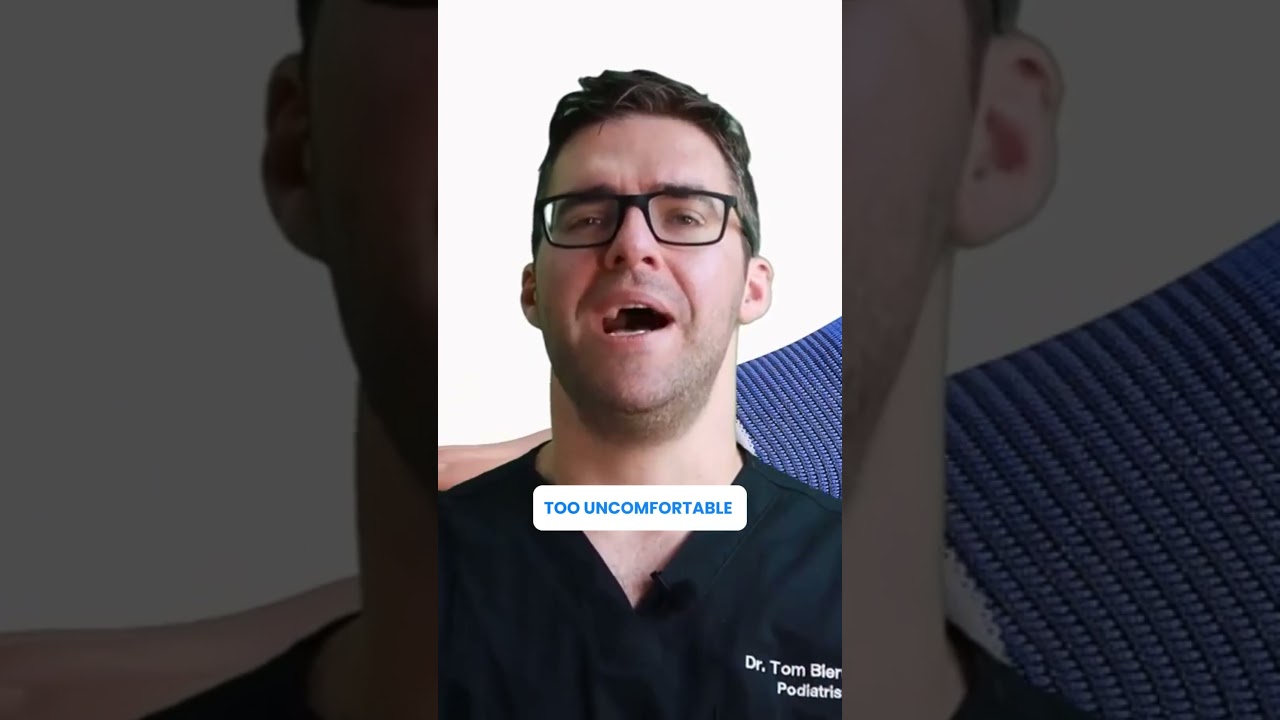
Video: Ankle Braces and Cross-Training Injury Prevention
Dr. Tom explains how ankle bracing and cross-training strategies protect athletes from the most common foot and ankle injuries:
Book a same-day evaluation → · (810) 206-1402
Double-Under Jump Rope: Plantar Fascia Stress
Double-unders require forefoot landing with rapid plantarflexion-dorsiflexion cycling. In a set of 100 double-unders, the plantar fascia undergoes approximately 200 high-load stretch cycles in under 2 minutes. Athletes with tight calf muscles or reduced ankle dorsiflexion compensate by supinating — shifting load to the lateral column — which overloads the peroneal tendons and lateral ankle ligaments. Calf and ankle mobility work before double-under sets meaningfully reduces this risk pattern.
Olympic Lifting: Sesamoid and Forefoot Loading
The squat clean and snatch require maximum ankle dorsiflexion and transfer load aggressively through the forefoot at the catch position. CrossFit-specific shoes with compressed soles and minimal arch support focus this load on the sesamoid bones beneath the first metatarsal head. Sesamoiditis — inflammation of the sesamoid bones — presents as a burning, aching pain under the big toe joint that worsens with push-off activities. Early treatment involves offloading padding and activity modification; delayed treatment often requires weeks of non-weight-bearing.
Prevention Protocol for CrossFit Athletes
The most effective prevention combines footwear selection, tissue preparation, and load management. Athletes should mobilize ankles and calves for 5 minutes before any WOD involving jumps or running. Foot strengthening — single-leg calf raises, towel scrunches, single-leg balance work — builds the intrinsic muscle capacity that protects tendons and ligaments. Progressive overload principles apply to CrossFit just as to powerlifting: a 10% weekly volume increase maximum when introducing new high-impact movements.
Frequently Asked Questions
Can I continue CrossFit with plantar fasciitis?
Modified CrossFit is often possible with plantar fasciitis if you substitute high-impact movements. Replace box jumps with step-ups, running with rowing or biking, and double-unders with single-unders. Maintain upper body and strength work. Complete rest is rarely necessary or beneficial — the key is removing the specific load pattern aggravating the fascia while keeping fitness. See a podiatrist to confirm the diagnosis and get a structured return-to-WOD plan.
Why does my Achilles hurt more in the morning after CrossFit?
Morning Achilles stiffness following CrossFit reflects reactive tendinopathy — the tendon’s inflammatory response to excessive load. During rest, the tendon becomes stiff; the first few steps stretch this tissue, causing pain that temporarily resolves with warm-up. This pattern is a reliable indicator of tendon overload. Reduce box jump and double-under volume by 50% immediately and reassess weekly. Persistent morning stiffness lasting more than 2 weeks warrants podiatric evaluation.
What CrossFit shoes are best for flat feet?
Flat-footed CrossFit athletes need a trainer with meaningful arch support and motion control features. The Reebok Nano X series and Nike Metcon 9 offer removable insoles that accept custom orthotics — critical for athletes with significant overpronation. Fully minimalist CrossFit shoes are contraindicated for flat feet and significantly increase plantar fasciitis and posterior tibial tendon stress. A sports podiatrist can assess your foot type and recommend the appropriate stability level.
How long does a CrossFit ankle sprain take to heal?
Grade I ankle sprains (stretch without tearing) typically allow return to modified CrossFit within 1–2 weeks. Grade II sprains (partial ligament tear) require 3–6 weeks of progressive rehabilitation. Grade III sprains (complete ligament rupture) may need 6–12 weeks and occasionally surgical consultation. The critical factor is completing proprioceptive rehabilitation — balance and neuromuscular retraining — before returning to box jumps and lateral movements. Athletes who skip this step re-sprain at significantly higher rates.
When should a CrossFit athlete see a podiatrist for foot pain?
See a podiatrist if foot or ankle pain prevents you from scaling to a modified WOD, if pain persists more than 48 hours after rest, if you notice swelling, bruising, or point tenderness on a bone (potential stress fracture), or if you’ve had the same recurring pain more than twice. CrossFit athletes often have a high pain tolerance that leads to delayed evaluation — catching tendon and stress fracture problems early dramatically shortens total recovery time. Balance Foot & Ankle offers same-week appointments at (810) 206-1402.
CrossFit Foot Pain? Get Back to the Box Faster
Board-certified podiatrist Dr. Tom Biernacki specializes in athlete foot care. Same-week appointments in Howell and Bloomfield Township, MI.
Related Resources
- Achilles Tendon Pain: Causes & Treatment
- Plantar Fasciitis Stretches for Athletes
- Ankle Strengthening Exercises
- Podiatrist-Recommended Athletic Shoes
- Sports Foot & Ankle Injury Guide
🦶 Dr. Tom’s Recommended Products
These are the at-home products I recommend most often to patients at Balance Foot & Ankle in Howell, MI.
The OTC orthotic I recommend most in our clinic. Medical-grade arch support at a fraction of custom orthotic cost.
View on Amazon →
Natural topical pain relief I use in our clinic. Arnica + menthol formula — apply directly to the area 3-4x daily. FSA-eligible.
View on Amazon →
FTC Disclosure: As an Amazon Associate and Foundation Wellness affiliate, we earn from qualifying purchases. This never affects our clinical recommendations.
In-Office Treatment at Balance Foot & Ankle
If home treatment isn’t providing relief for your foot and ankle conditions, our podiatry team at Balance Foot & Ankle can help with same-week evaluations and advanced in-office care.
Same-week appointments available. (810) 206-1402

Dr. Tom Biernacki, DPM is a board-certified foot & ankle surgeon (ABFAS & ABPM) at Balance Foot & Ankle Specialists in Southeast Michigan. With over a decade of clinical experience, he specializes in heel pain, bunions, diabetic foot care, sports injuries, and minimally invasive surgery. Dr. Biernacki is a member of the APMA and ACFAS, and his patient education content on MichiganFootDoctors.com and YouTube has made him one of the most-followed foot & ankle educators on YouTube.
More questions patients ask
How long does an ankle sprain take to heal?
Recovery time depends on severity: Grade 1 (mild stretching) typically heals in 1-3 weeks, Grade 2 (partial tear) in 3-6 weeks, and Grade 3 (complete tear) in 6-12 weeks or longer. Proper rehabilitation is critical to prevent chronic ankle instability, which affects up to 40% of patients who don't receive adequate treatment. Dr. Biernacki creates customized recovery plans.
When should I see a doctor for a sprained ankle?
Seek professional evaluation if you can't bear weight, notice significant swelling or bruising, hear a pop at the time of injury, have numbness, or if pain hasn't improved after 5-7 days of RICE treatment. X-rays or MRI may be needed to rule out fractures. Dr. Biernacki offers same-day urgent evaluations at 810-206-1402.
Can a sprained ankle heal without treatment?
While mild sprains may heal with rest and home care, undiagnosed ligament tears and improperly rehabilitated sprains frequently lead to chronic ankle instability, recurrent sprains, and early-onset arthritis. A proper evaluation ensures appropriate treatment and reduces your risk of long-term complications significantly.
Still have a question about coverage or cost? Book online and we will check your benefits before your visit: Book in Howell · Book in Bloomfield Township. Prefer to talk it through first? Call (810) 206-1402.