
Quick answer: Sesamoiditis Ball Of Foot Pain Big Toe has multiple potential causes including mechanical, neurological, vascular, and inflammatory. The most common causes we identify are overuse, ill-fitting shoes, and biomechanical imbalance. Red flags requiring urgent evaluation: warmth/redness (infection), inability to bear weight (fracture), and unilateral swelling without injury (DVT). Call (810) 206-1402.
Medically reviewed by Dr. Tom Biernacki, DPM — Board-Certified Podiatric Surgeon — Balance Foot & Ankle, Howell & Bloomfield Hills, MI. Last updated April 2026.
Medically Reviewed by Dr. Tom Biernacki, DPM — Board-Certified Podiatrist, Balance Foot & Ankle Specialists, Michigan. Last updated April 2026.
What Are the Sesamoids and Why Do They Hurt?
The sesamoids are two small pea-sized bones embedded within the tendons beneath the first metatarsophalangeal joint — the joint at the base of the big toe. Unlike most bones, the sesamoids are not connected to other bones by joints; instead, they float within the flexor hallucis brevis tendon, functioning as a pulley system to increase the mechanical advantage of the tendon while protecting it from the high compressive loads beneath the big toe joint.
Sesamoiditis refers to inflammation and pain involving the sesamoid bones and their surrounding structures. It is a common overuse condition in athletes and active individuals who place repetitive high load on the ball of the foot. At Balance Foot & Ankle, we regularly evaluate patients with chronic ball-of-foot pain that has been dismissed as general metatarsalgia when the actual problem is sesamoid pathology requiring specific targeted treatment.
Anatomy and Function of the Sesamoids
The medial (tibial) sesamoid lies on the inner side of the first metatarsal head, while the lateral (fibular) sesamoid lies on the outer side. Each is approximately the size of a corn kernel. They are encased in a layer of cartilage and surrounded by bursa sacs that allow smooth gliding movement.
During normal walking, the sesamoids bear body weight as the heel rises and the foot pushes off through the big toe. During running and jumping, sesamoid loading increases dramatically — up to three times body weight or more. High-heeled shoes force the foot into a position that concentrates even more load on the sesamoids with every step.
Who Gets Sesamoiditis?
Sesamoiditis particularly affects ballet dancers, runners, basketball players, football players, and anyone who performs repetitive push-off or forefoot loading activities. High-arched feet (pes cavus) increase sesamoid load because the ball of the foot bears a disproportionate share of body weight. Prominent first metatarsal heads and a long first metatarsal also predispose to sesamoid problems.
Sudden increases in activity level — starting a new running program, ramping up training for a race, or beginning a new sport — commonly trigger sesamoiditis. The sesamoids have relatively limited blood supply, which slows their healing response and makes them vulnerable to stress injury with training load spikes.
Types of Sesamoid Conditions
Sesamoiditis
True sesamoiditis is inflammation of the sesamoid bone and its surrounding soft tissue without a discrete fracture. Pain develops gradually with activity, is localized to the plantar surface directly beneath the first metatarsal head, and is worsened by big toe extension (dorsiflexion) and push-off activities.
Sesamoid Stress Fracture
Repetitive overloading can cause stress fractures within the sesamoid bones. These are more serious than simple sesamoiditis and require longer rest periods for healing. Distinguishing a stress fracture from sesamoiditis requires MRI or bone scan, as plain X-rays may appear normal in early stress fractures. A bipartite sesamoid — a normal anatomic variant where the sesamoid forms as two separate pieces — can mimic a fracture on X-ray and must be distinguished from a true fracture.
Sesamoid Osteonecrosis (AVN)
In severe or neglected cases, blood supply to the sesamoid can be compromised, leading to avascular necrosis — bone death from inadequate circulation. This is more common with the medial sesamoid and represents a more serious complication requiring extended treatment. MRI is the diagnostic study of choice for suspected osteonecrosis.
Acute Sesamoid Fracture
A direct blow to the ball of the foot or landing awkwardly from a jump can cause an acute sesamoid fracture. This presents with immediate sharp pain and swelling at the injury site and is distinguished from sesamoiditis by the clear traumatic mechanism.
Diagnosis of Sesamoiditis
Clinical examination reveals point tenderness directly over the sesamoid — pressing directly beneath the first metatarsal head recreates the pain. Pain is typically worsened by passively extending the big toe or having the patient perform a single-leg calf raise. Localization of tenderness to the medial versus lateral sesamoid helps guide treatment decisions.
Weight-bearing foot X-rays are the initial imaging study. They identify bipartite sesamoids, assess sesamoid morphology, and may show fragmentation in chronic cases. MRI provides definitive assessment of bone marrow edema (stress reaction or fracture), cartilage integrity, and surrounding soft tissue involvement. Bone scan shows increased uptake at symptomatic sesamoids and can confirm stress injury when MRI is inconclusive.
Conservative Treatment for Sesamoiditis
The foundation of sesamoiditis treatment is offloading the sesamoid. A J-shaped pad placed to redistribute pressure away from the sesamoid while maintaining weight-bearing on the surrounding foot dramatically reduces pain. These pads are custom-cut and can be incorporated into an orthotic device for sustained use.
Custom orthotics with a first ray cutout — a small depression carved beneath the first metatarsal head — transfer load from the sesamoids to adjacent metatarsal heads. This is one of the most effective conservative interventions for chronic sesamoiditis and allows most patients to return to activity.
Activity modification reduces sesamoid load while the inflammatory process resolves. Switching to low-impact exercise (swimming, cycling) maintains cardiovascular fitness without sesamoid loading. Complete non-weight bearing in a boot may be necessary for stress fractures or severe cases to allow bone healing.
Anti-inflammatory measures include ice, NSAIDs (if not contraindicated), and in carefully selected cases, corticosteroid injection into the periosteal tissues surrounding the sesamoid. Steroid injection directly into the sesamoid is avoided due to concerns about increasing avascular necrosis risk.
Recovery from sesamoiditis typically requires 6 to 8 weeks of conservative treatment. Sesamoid stress fractures may require 3 to 6 months of protected weight bearing for adequate healing.
Surgical Treatment
Sesamoidectomy — surgical removal of the affected sesamoid — is reserved for cases that fail exhaustive conservative treatment over 6 to 12 months. The medial sesamoid can be removed with minimal functional consequence. Lateral sesamoidectomy requires more careful technique to avoid destabilizing the big toe. Removal of both sesamoids simultaneously is contraindicated as it reliably causes hallux valgus (bunion) deformity from the lost mechanical support.
Recovery from sesamoidectomy typically involves 3 to 6 weeks of protected weight bearing followed by progressive return to activity. Most patients experience excellent pain relief with successful sesamoidectomy, though some sensitivity at the surgical site may persist.
If you have persistent pain under the ball of your foot near the big toe that has not improved with rest and simple measures, contact Balance Foot & Ankle for a thorough evaluation. Our board-certified podiatrists serve Southeast Michigan patients with same-week appointments available.
Ready to Relieve Your Foot Pain?
Board-certified podiatrists serving Southeast Michigan. Same-week appointments available.
Book Your AppointmentSesamoiditis & Big Toe Pain Treatment in Michigan
Sesamoiditis causes pain under the big toe joint that can severely limit walking and activity. Dr. Tom Biernacki at Balance Foot & Ankle provides targeted treatment including custom orthotics, offloading modifications, and advanced therapies at our Howell and Bloomfield Hills offices.
Learn About Our Forefoot Pain Treatment | Book Your Appointment | Call (810) 206-1402
Clinical References
- Cohen BE. “Hallux sesamoid disorders.” Foot and Ankle Clinics. 2009;14(1):91-104.
- Boike A, et al. “Sesamoid disorders of the first metatarsophalangeal joint.” Clinics in Podiatric Medicine and Surgery. 2011;28(2):269-285.
- Bichara DA, et al. “Sesamoiditis of the hallux.” Foot and Ankle Specialist. 2012;5(3):185-190.
Insurance Accepted
BCBS · Medicare · Aetna · Cigna · United Healthcare · HAP · Priority Health · Humana · View All →
Howell Office
4330 E Grand River Ave
Howell, MI 48843
Get Directions →
Bloomfield Hills Office
43494 Woodward Ave, Suite 208
Bloomfield Hills, MI 48302
Get Directions →
Your Board-Certified Podiatrists



Ready to Get Back on Your Feet?
Same-week appointments available at both locations.
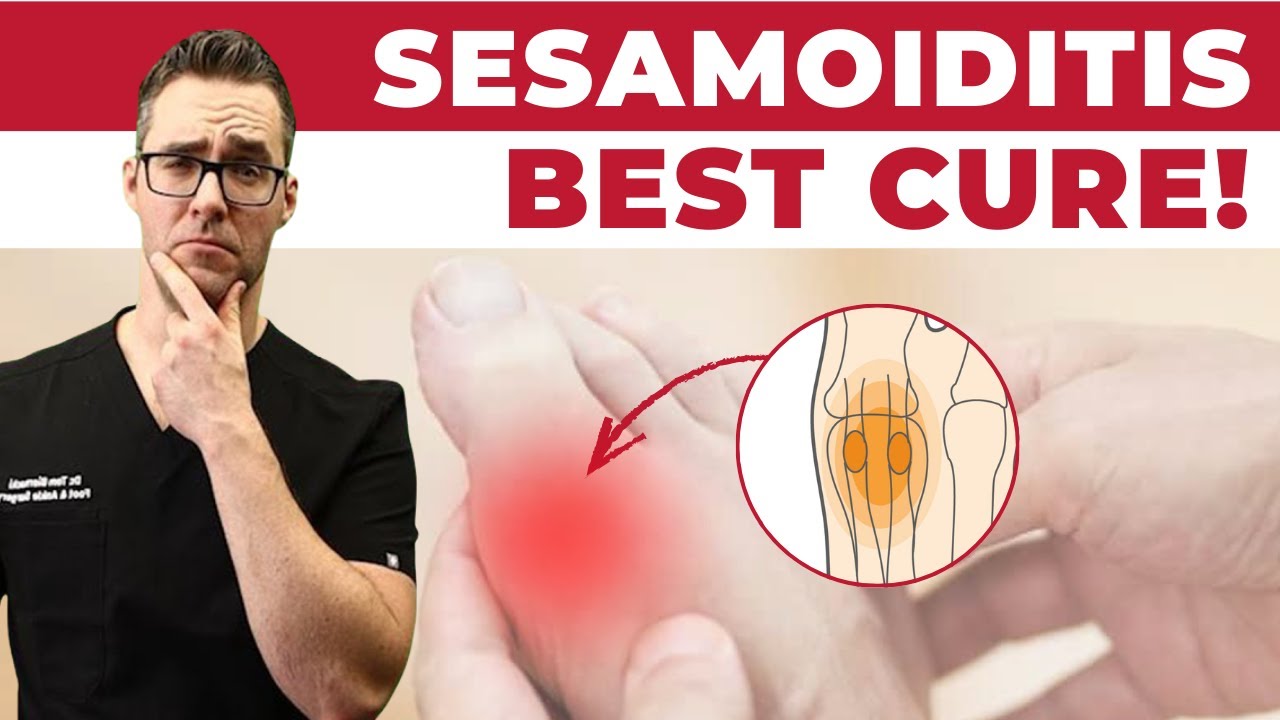
Book Your AppointmentWatch Dr. Tom on Sesamoiditis
Dr. Tom’s step-by-step sesamoiditis treatment ladder — from dancer’s pads to surgical options.
Podiatrist-Recommended Sesamoiditis Relief
Sesamoiditis responds to offloading the sesamoids (the two pea-sized bones under the big toe). These three products do that job at home:
Dancer’s Pads (Horseshoe-Shaped)
The #1 intervention for sesamoiditis — redirects pressure AWAY from the sesamoids.
Check Amazon Price →PowerStep Pinnacle Insoles
Firm arch + deep heel cup redistributes load back from the forefoot.
Check Amazon Price →Altra Torin Stiff-Soled Shoes
Stiff forefoot prevents toe-off motion that aggravates sesamoids.
Check Amazon Price →Affiliate disclosure: Amazon links are affiliate links — we earn a small commission if you buy through them, at no cost to you. We only recommend products we actually prescribe to patients at Balance Foot & Ankle.
Related from Balance Foot & Ankle
Differential Diagnosis: What Else Could It Be?
Not every case of sesamoiditis is straightforward. In our clinic we routinely rule out three look-alike conditions before confirming the diagnosis. If your symptoms don’t match the classic presentation, one of these may explain the pain — which is why physical exam matters more than self-diagnosis.
| Condition | How It Differs |
|---|---|
| Sesamoid stress fracture | Acute or gradually worsening sharp pain, tender directly over one sesamoid, positive findings on MRI. |
| Hallux rigidus | Stiff, painful big toe joint with limited dorsiflexion — pain is AT the joint, not UNDER the ball. |
| Turf toe (plantar plate injury) | Acute hyperextension mechanism, diffuse swelling of the 1st MTP, positive 1st MTP drawer test. |
Red Flags — When to See a Podiatrist Now
Seek same-day evaluation at Balance Foot & Ankle if you notice any of the following:
- Sudden sharp onset (possible fracture)
- Bruising or swelling under the big toe
- Pain at rest or at night
- Inability to push off during gait
Call (810) 206-1402 or request an appointment. Our Howell and Bloomfield Hills offices reserve same-day slots for urgent foot and ankle issues.
In Our Clinic: What We See
Clinical perspective from Dr. Tom Biernacki, DPM — Balance Foot & Ankle, Howell & Bloomfield Hills, MI:
In our Balance Foot & Ankle clinic, sesamoiditis patients are usually dancers, runners, or women who have spent significant time in heels. They describe pain directly UNDER the big toe joint — not at the joint (that’s hallux rigidus) — which worsens with push-off. On exam we palpate each sesamoid separately (tibial and fibular) and assess for sensitivity. We always get X-rays to look for sesamoid fracture or bipartite sesamoid (a normal variant). Treatment uses a dancer’s pad to offload the sesamoid, stiff-soled footwear to reduce push-off stress, and activity modification.
More Podiatrist-Recommended Foot Health Essentials
Hoka Clifton 10


![How to Cure Plantar Fasciitis in One Week? [FAST Heel Pain Relief!]](https://www.michiganfootdoctors.com/wp-content/cache/flying-press/b5600c3bfb9845a6095da8266d8b5363.jpg)
Watch: How to Cure Plantar Fasciitis in One Week? [FAST Heel Pain Relief!] — MichiganFootDoctors YouTube
Max-cushion everyday shoe — podiatrist favorite for walking and running.

OOFOS Recovery Slide

Impact-absorbing recovery sandal — wear after long days on your feet.
As an Amazon Associate, Balance Foot & Ankle earns from qualifying purchases. Product recommendations are based on clinical experience; prices and availability shown above update live from Amazon.
When to See a Podiatrist
If foot or ankle pain has been bothering you for more than a few weeks, home care alone may not be enough. Balance Foot & Ankle offers same-week appointments at our Howell and Bloomfield Hills clinics — no referral needed in most cases. Bring your current shoes and a short list of symptoms and we’ll build you a treatment plan in one visit.
Call Balance Foot & Ankle: (810) 206-1402 · Book online · Offices in Howell & Bloomfield Hills
In-Office Treatment at Balance Foot & Ankle
If home treatment isn’t providing relief for your sesamoiditis, our podiatry team at Balance Foot & Ankle can help with same-day evaluations and advanced in-office care.
Same-day appointments available. (810) 206-1402
Doctor Hoy’s Natural Pain Relief Gel
Natural topical pain relief I use in our clinic. Arnica + camphor formula — apply directly to the area 3–4x daily. ($20–25)
Shop Doctor Hoy’s →Frequently Asked Questions
When should I see a doctor?
See a podiatrist if pain persists past 2 weeks, prevents normal activity, or is accompanied by red-flag symptoms (warmth, swelling, numbness, inability to bear weight).
Can I treat this at home?
Mild cases respond to RICE protocol (rest, ice, compression, elevation), supportive shoes, and OTC anti-inflammatories. Persistent symptoms need professional evaluation.
How long does it take to heal?
Most soft tissue injuries resolve in 2-6 weeks with appropriate care. Bone injuries take 6-12 weeks. Chronic conditions need longer-term management.
What is Sesamoiditis?
Sesamoiditis is a common foot/ankle condition that affects mobility and quality of life. Understanding the underlying cause is the first step in successful treatment. Our podiatrists at Balance Foot & Ankle perform a hands-on biomechanical exam, review your activity history, and use diagnostic imaging when appropriate to identify the root cause—not just treat the symptom. Many patients have been told to “rest and ice” without a deeper diagnostic workup; our approach is different.
Symptoms and warning signs
Common signs of sesamoiditis include pain that worsens with activity, morning stiffness, swelling, tenderness when palpated, and difficulty bearing weight. If you experience sudden severe pain, inability to walk, visible deformity, numbness or color change, contact our office the same day or visit urgent care—these can signal a more serious injury such as a fracture, tendon rupture, or vascular compromise. Diabetics with any foot wound should seek same-day care.
Conservative treatment options
Most cases of sesamoiditis respond to non-surgical care: structured rest, supportive footwear changes, custom orthotics, targeted stretching and strengthening protocols, anti-inflammatory medications when medically appropriate, and in-office procedures such as ultrasound-guided injections. We also offer advanced therapies including MLS laser therapy, EPAT/shockwave, regenerative injections, and image-guided procedures. Treatment is sequenced from least invasive to most invasive, and we explain the rationale at every step.
When is surgery considered?
Surgery is reserved for cases that fail 3-6 months of well-structured conservative care, when there is structural pathology (severe deformity, complete tear, advanced arthritis), or when imaging shows damage that will not heal without intervention. Our surgeons have performed 3,000+ foot and ankle procedures and prioritize minimally-invasive techniques whenever appropriate. We discuss recovery timelines, return-to-activity milestones, and realistic outcome expectations before any procedure is scheduled.
Recovery timeline and prevention
Recovery from sesamoiditis varies based on severity and chosen treatment path. Conservative cases often improve within 4-8 weeks with consistent adherence to the protocol. Post-procedural recovery may range from a few days (in-office procedures) to several months (reconstructive surgery). Long-term prevention involves footwear assessment, activity modification, structured strengthening, and regular check-ins with your podiatrist if you have a history of recurrence. We provide written home-exercise plans and digital follow-up support.
Ready to feel better?
Same-week appointments available in Howell and Bloomfield Hills, Michigan.
Book Your Visit
Dr. Tom Biernacki, DPM is a board-certified foot & ankle surgeon (ABFAS & ABPM) at Balance Foot & Ankle Specialists in Southeast Michigan. With over a decade of clinical experience, he specializes in heel pain, bunions, diabetic foot care, sports injuries, and minimally invasive surgery. Dr. Biernacki is a member of the APMA and ACFAS, and his patient education content on MichiganFootDoctors.com and YouTube has made him one of the most-followed foot & ankle educators on YouTube.