

Quick answer: Field Hockey Foot Ankle Injuries Turf Toe Ankle Sprains Cleats is a common foot/ankle topic that affects many patients. The 2026 evidence-based approach combines proper diagnosis, conservative-first treatment, and escalation only when needed. We treat this regularly at our Howell and Bloomfield Township practices. Call (810) 206-1402.
Medically reviewed by Dr. Tom Biernacki, DPM — Board-Certified Podiatric Surgeon — Balance Foot & Ankle, Howell & Bloomfield Township, MI. Last updated April 2026.
Quick Answer
Field hockey players face unique foot and ankle risks from running on artificial turf in low-profile cleats while maintaining a crouched stance. The most common injuries include ankle sprains, turf toe, metatarsal stress fractures, and Achilles tendinitis. Early treatment with proper footwear, orthotic support, and targeted rehabilitation prevents minor injuries from becoming season-ending problems.
Medical Review
Affiliate disclosure: This page contains affiliate links to products we recommend. We may earn a small commission at no extra cost to you. We only recommend products used in our clinical practice.
Table of Contents
- Why Field Hockey Is Hard on Your Feet
- Ankle Sprains in Field Hockey
- Turf Toe and MTP Joint Injuries
- Metatarsal Stress Fractures
- Achilles Tendinitis From the Crouched Stance
- Plantar Fasciitis in Field Hockey Players
- Cleat-Related Blisters and Toenail Problems
- Shin Splints and Medial Tibial Stress
- Foot and Ankle Contusions From Ball Impact
- Injury Prevention Strategies
- Orthotic Support for Field Hockey
- Topical Pain Relief for Training and Recovery
- Compression Therapy for Ankle Support
- Most Common Mistake
- Warning Signs You Need Professional Help
- Returning to Play After Injury
- Special Considerations for Youth Players
- Video Guide
- Frequently Asked Questions
- Sources
- Book an Appointment
Why Field Hockey Is Uniquely Hard on Your Feet
Field hockey combines several biomechanical demands that create a perfect storm for foot and ankle injuries. Players spend the majority of each game in a low, crouched position with their weight shifted forward onto the balls of their feet. This sustained forefoot loading dramatically increases pressure on the metatarsal heads and the plantar fascia.
The sport requires constant multidirectional movement — sprinting, sudden stops, lateral shuffles, and explosive direction changes — all while maintaining stick control. Unlike sports where players run primarily in straight lines, field hockey demands rapid pivoting that places extreme rotational stress on the ankle joint complex.
Modern field hockey is played almost exclusively on artificial turf, which provides a consistent but unforgiving playing surface. While synthetic turf allows faster play and smoother ball movement, it offers less shock absorption than natural grass. Studies show that artificial turf increases peak impact forces by 15-20% compared to natural grass, contributing to higher rates of overuse injuries in the lower extremities.
Field hockey cleats are designed to be lightweight and low-profile for maximum ball feel and speed. However, this minimal construction often provides inadequate arch support and limited cushioning, leaving feet vulnerable to repetitive stress injuries over the course of a season.
Ankle Sprains in Field Hockey Players
Ankle sprains are the single most common acute injury in field hockey, accounting for approximately 15-20% of all injuries reported in competitive play. The lateral ankle sprain — where the foot rolls inward and stretches the outer ligaments — dominates due to the combination of uneven turf contact, rapid directional changes, and contact with other players’ sticks and feet.
The anterior talofibular ligament (ATFL) bears the brunt of most field hockey ankle sprains. This ligament is weakest when the foot is plantarflexed (pointed downward), which is exactly the position field hockey players maintain in their characteristic crouched stance. When a player pivots quickly or steps on another player’s foot while in this vulnerable position, the ATFL can partially or completely tear.
High ankle sprains (syndesmotic injuries) are less common but significantly more serious. These occur when the foot is forced into external rotation, damaging the ligaments that hold the tibia and fibula together. High ankle sprains typically require 2-3 times longer recovery than standard lateral sprains and may require surgical intervention if the syndesmosis is unstable.
Chronic ankle instability develops in approximately 30-40% of players who do not properly rehabilitate their initial ankle sprain. This creates a cycle of repeated sprains that progressively weakens the ankle joint and can eventually lead to early-onset ankle arthritis.
Turf Toe and MTP Joint Injuries
Turf toe — a sprain of the first metatarsophalangeal (MTP) joint — is particularly prevalent in field hockey because of the combination of artificial turf and the sport’s biomechanical demands. The condition occurs when the big toe is forced into extreme hyperextension, typically during a push-off or when a player’s toe catches on the turf surface during a sprint.
The plantar plate, a thick fibrous structure on the bottom of the MTP joint, absorbs tremendous force during the push-off phase of running. In field hockey players who maintain a crouched stance, the big toe is chronically hyperextended, creating microtrauma to the plantar plate with every step. Over time, this repetitive stress can weaken the structure until a single forceful hyperextension event causes a significant tear.
Grading turf toe helps determine treatment and return-to-play timelines. Grade 1 injuries involve stretching of the plantar plate with localized tenderness and minimal swelling — most players can return within one to two weeks. Grade 2 injuries involve a partial tear with moderate swelling, bruising, and restricted range of motion, typically requiring three to six weeks of recovery. Grade 3 injuries represent a complete tear of the plantar plate complex, often with dislocation of the sesamoid bones, requiring six to sixteen weeks for full recovery and sometimes surgical repair.
Metatarsal Stress Fractures
Stress fractures in the metatarsal bones are among the most significant overuse injuries affecting field hockey players. The second and third metatarsals are most commonly affected because they bear the greatest load during the forefoot-dominant running pattern that field hockey demands. The sustained crouched position shifts weight distribution from a normal heel-to-toe pattern to a predominantly forefoot loading pattern, concentrating repetitive impact forces on these vulnerable bones.
The progression from healthy bone to stress fracture follows a predictable pattern. Initial bone stress causes microscopic damage that healthy bone can normally repair through natural remodeling. However, when training volume or intensity increases faster than bone can adapt — common during preseason conditioning or tournament schedules — the rate of damage exceeds the rate of repair. A stress reaction develops first, causing deep, aching pain that worsens with activity. If training continues without adequate rest, the stress reaction progresses to a true stress fracture.
Fifth metatarsal stress fractures deserve special attention because they occur in a watershed zone with limited blood supply. These fractures, known as Jones fractures when they occur at the proximal diaphysis, have a high rate of delayed union and nonunion. Surgical fixation with an intramedullary screw is often recommended for competitive athletes with fifth metatarsal stress fractures to ensure reliable healing and faster return to sport.
Female field hockey players face a statistically higher risk of stress fractures than their male counterparts. The female athlete triad — the interrelationship between energy availability, menstrual function, and bone mineral density — contributes significantly to this increased risk. Players with irregular menstrual cycles, disordered eating patterns, or low body weight should be screened for bone density deficiencies and counseled on nutritional strategies to protect bone health.
Achilles Tendinitis From the Crouched Stance
The characteristic crouched running position in field hockey places the Achilles tendon under constant eccentric load. Unlike upright running where the Achilles cycles through full stretch and contraction, field hockey players maintain a semi-flexed knee and dorsiflexed ankle position that keeps the Achilles in a perpetually lengthened state. This sustained loading pattern accelerates degenerative changes within the tendon, particularly at the midportion where blood supply is most limited.
Insertional Achilles tendinitis — where the tendon attaches to the calcaneus — develops when the repeated dorsiflexion of field hockey creates friction and compression at the heel bone insertion point. Players often notice a hard, painful bump at the back of their heel that worsens during play and during warm-up periods. The Haglund’s deformity (pump bump) that frequently accompanies insertional tendinitis can be aggravated by the rigid heel counter found in many field hockey cleats.
Treatment begins with relative rest — reducing training volume by 30-50% while maintaining cardiovascular fitness through low-impact alternatives like swimming or cycling. Eccentric calf strengthening exercises, particularly the Alfredson protocol of heel drops performed on a step, have the strongest evidence base for mid-substance Achilles tendinopathy. A temporary heel lift of 6-10mm inside the cleat can reduce tendon strain during the transition back to full training.
Plantar Fasciitis in Field Hockey Players
Plantar fasciitis affects field hockey players at higher rates than many other sports due to the sustained forefoot loading and minimal arch support in most field hockey footwear. The plantar fascia — a thick band of connective tissue spanning from the heel to the base of the toes — acts as a dynamic bowstring that supports the arch during weight-bearing activities. In field hockey, the crouched stance maximizes tension on this structure with every step.
Players typically report sharp heel pain with their first steps in the morning and at the beginning of practice. The pain may temporarily improve during warm-up as the fascia stretches, only to return with increased intensity after prolonged play. As the condition progresses, the pain may persist throughout activity and begin affecting performance.
Artificial turf compounds the problem by providing a uniformly hard surface without the natural give of grass. Impact forces transmitted through the foot are higher and more repetitive on turf, accelerating the inflammatory and degenerative cycle within the plantar fascia. Players who train and compete primarily on turf surfaces should be particularly vigilant about early symptoms.
Cleat-Related Blisters and Toenail Problems
The fit and design of field hockey cleats directly contribute to several painful foot conditions. Because the sport demands precise stick handling and ball control, players often choose cleats that fit tightly to maximize ground feel. This snug fit, combined with the repetitive running and pivoting of gameplay, creates an environment ripe for blisters, calluses, and toenail injuries.
Subungual hematomas (black toenails) are extremely common in field hockey players. The combination of sudden deceleration and tight toe box construction causes the toes to repeatedly jam against the front of the shoe. The big toe and second toe are most frequently affected. When blood accumulates beneath the nail, the resulting pressure can be extremely painful and may require drainage by a podiatrist using a sterile technique to decompress the hematoma.
Ingrown toenails develop when the nail edges are compressed into the surrounding skin fold by tight-fitting cleats. The lateral borders of the great toenail are most commonly affected. Proper nail trimming technique — cutting straight across rather than rounding the corners — combined with appropriately sized footwear can prevent most ingrown toenails. Players who develop recurrent ingrown toenails may benefit from a partial nail avulsion with chemical matrixectomy to permanently narrow the nail.
Shin Splints and Medial Tibial Stress
Medial tibial stress syndrome (shin splints) ranks among the most common overuse complaints in field hockey, particularly during preseason training when volume increases sharply. The condition involves irritation and inflammation where the deep calf muscles attach to the inner border of the tibia. In field hockey players, the combination of running on hard artificial turf and the increased calf muscle activation required to maintain the crouched stance creates significant traction forces along the tibial periosteum.
Early shin splints present as a diffuse aching pain along the inner shin that worsens during activity and resolves with rest. As the condition progresses, the pain zone becomes more focal and may persist even during walking. Without proper management, medial tibial stress syndrome can progress to a tibial stress fracture, requiring weeks or months of rest that could sideline a player for an entire season.
Overpronation — excessive inward rolling of the foot during the gait cycle — is the primary biomechanical risk factor for shin splints in field hockey players. Custom or high-quality prefabricated orthotics that control pronation can significantly reduce tibial stress and prevent recurrence. Gradually increasing training volume by no more than 10% per week allows the tibial bone and surrounding soft tissues to adapt without exceeding their tolerance threshold.
Foot and Ankle Contusions From Ball Impact
A field hockey ball weighs between 156 and 163 grams and can travel at speeds exceeding 100 miles per hour in competitive play. When this dense, hard ball strikes an unprotected foot or ankle, the resulting contusion can be severe. Common locations include the dorsum (top) of the foot, the lateral malleolus (outer ankle bone), and the toes. The minimal padding in most field hockey footwear provides little protection against direct ball impact.
Goalkeepers face the highest risk of foot contusions due to their role as the last line of defense. While field players typically wear standard cleats, goalkeepers wear specialized padded shoes called kickers that provide additional protection. However, even kicker-style footwear may not fully prevent deep bone bruises or fractures from high-velocity shots.
Distinguishing a simple contusion from a fracture requires clinical evaluation. If pain persists beyond 48 hours despite RICE protocol (rest, ice, compression, elevation), if weight-bearing remains difficult, or if significant swelling and bruising develop rapidly, X-rays should be obtained to rule out a metatarsal fracture or other bony injury.
Injury Prevention Strategies for Field Hockey Players
Effective injury prevention in field hockey requires addressing the sport’s unique biomechanical demands through a multi-faceted approach. Pre-practice dynamic warm-up routines that include ankle circles, calf raises, toe walks, and lateral shuffles prepare the foot and ankle for the stresses of play. Research shows that structured warm-up programs like the FIFA 11+ reduce lower extremity injuries by approximately 30-40% across field sports.
Proprioceptive training is perhaps the single most effective intervention for preventing ankle sprains in field hockey. Single-leg balance exercises on unstable surfaces (wobble boards, BOSU balls, foam pads) train the neuromuscular system to detect and correct ankle instability before a sprain occurs. Players who perform proprioceptive training three times per week for at least six weeks show a 50% reduction in ankle sprain rates.
Recovery and load management between sessions are equally important. Adequate sleep (8-10 hours for adolescent athletes), proper hydration, and nutrition that supports bone health (calcium, vitamin D, adequate caloric intake) form the foundation of injury resilience. Players should monitor training loads and incorporate deload weeks into their periodization plan, particularly during tournament-heavy portions of the schedule.
Orthotic Support for Field Hockey Cleats
Most field hockey cleats provide woefully inadequate arch support, leaving players reliant on aftermarket insoles or custom orthotics to protect their feet. The removable factory insole in most cleats is a flat, minimally cushioned liner that does nothing to address biomechanical imbalances or absorb impact forces.
We recommend PowerStep Pinnacle Insoles for field hockey players who need reliable arch support and shock absorption that fits inside low-profile cleats. The semi-rigid arch support controls overpronation while the double-layer cushioning absorbs repetitive turf impact. The slim profile is essential for cleat compatibility — bulkier orthotics can alter the fit of already-tight field hockey shoes and create new pressure points.
For players with specific biomechanical issues like severe flat feet, high arches, or a history of stress fractures, custom-molded orthotics fabricated from a 3D scan or plaster cast of the foot provide the most precise correction. Custom orthotics can be made thin enough to fit inside field hockey cleats while providing targeted support exactly where the individual foot needs it most.
Topical Pain Relief for Training and Recovery
Managing the inevitable aches and pains of competitive field hockey requires effective pain relief strategies that don’t impair athletic performance. Oral NSAIDs (ibuprofen, naproxen) provide systemic pain relief but carry risks of GI irritation and may impair bone healing when used chronically — making them a poor choice for athletes managing overuse injuries.
We recommend Doctor Hoy’s Natural Pain Relief Gel for field hockey players who need targeted topical relief without the systemic side effects of oral medications. The natural menthol and camphor formula provides immediate cooling pain relief when applied to sore Achilles tendons, aching arches, or bruised feet. Unlike chemical-heavy alternatives, the clean ingredient profile means players can apply it before practice without worrying about skin irritation inside sweaty cleats.
Topical pain relief is most effective as part of a comprehensive recovery routine. Apply after icing for 15-20 minutes post-training to extend the analgesic effect. The combined approach of cryotherapy followed by topical menthol-based gel provides superior pain relief compared to either modality alone for musculoskeletal sports injuries.
Compression Therapy for Ankle Support and Recovery
Compression plays a dual role in field hockey — preventing injury during play and accelerating recovery afterward. During competition, compression ankle sleeves provide proprioceptive feedback that helps the ankle joint sense its position in space, reducing the risk of sprains during rapid direction changes. After play, graduated compression promotes venous return and reduces post-exercise swelling in the feet and ankles.
We recommend DASS Compression Socks for field hockey players who need performance-grade compression that fits comfortably inside cleats. The targeted compression zones support the arch and ankle while the moisture-wicking fabric helps prevent the blisters and hot spots that plague field hockey players. Wearing compression socks during training and for 2-3 hours post-exercise helps manage the cumulative microtrauma of repetitive turf running.
Players recovering from ankle sprains benefit particularly from compression therapy. The gentle external pressure limits post-injury swelling, which in turn reduces pain and allows earlier initiation of rehabilitation exercises. Compression combined with elevation during the first 72 hours after an ankle sprain significantly accelerates the transition from acute inflammation to active recovery.
Most Common Mistake: Playing Through “Minor” Ankle Sprains
The biggest mistake we see in field hockey players is returning to play too quickly after an ankle sprain. Many athletes treat ankle sprains as minor inconveniences and rush back to competition within days. Without proper rehabilitation — especially proprioceptive retraining and peroneal strengthening — the ankle remains vulnerable to re-injury. Research shows that 70% of recurrent ankle sprains occur within the first year after the initial injury, and each subsequent sprain increases the risk of chronic instability, cartilage damage, and eventually ankle arthritis. Take the full rehabilitation time. Your ankle will thank you for the next twenty years of your athletic career.
Warning Signs You Need to See a Podiatrist
- Inability to bear weight after an ankle twist or ball impact — may indicate fracture or severe ligament tear
- Persistent swelling that does not improve after 48 hours of RICE protocol — suggests more than a simple contusion
- Sharp, localized pain in a metatarsal that worsens with every practice — classic presentation of a stress fracture
- Ankle that “gives way” repeatedly during cutting and pivoting — sign of chronic ankle instability requiring structured rehabilitation
- Numbness or tingling in the toes during or after play — may indicate nerve compression or compartment syndrome
- Morning heel pain lasting more than two weeks — plantar fasciitis that rarely resolves without targeted treatment
- Visible deformity or bruising spreading rapidly — warrants urgent evaluation for fracture or tendon rupture
Returning to Play After a Foot or Ankle Injury
Safe return to field hockey after a foot or ankle injury requires meeting specific functional milestones rather than following arbitrary timelines. Each injury has different healing demands, and players vary in their individual recovery rates. The progression from injury to full competition should follow a structured return-to-play protocol that gradually increases load and complexity.
Phase one focuses on restoring full, pain-free range of motion and normalizing gait. Players should be able to walk without a limp and perform basic daily activities without pain before progressing. Phase two introduces straight-line jogging, beginning at 50% speed and gradually increasing. Phase three adds sport-specific movements — lateral shuffles, backpedaling, and figure-eight patterns at increasing speeds. Phase four includes stick work and non-contact drills. Phase five allows full team training, and phase six clears the athlete for competition.
Objective criteria for return-to-play should include single-leg hop test performance within 90% of the uninjured side, full strength on manual muscle testing, and completion of a sport-specific agility test without pain, swelling, or apprehension. Players who meet these criteria before returning to competition have significantly lower rates of re-injury than those who return based on time alone.
Special Considerations for Youth Field Hockey Players
Youth field hockey players face unique injury risks due to their developing skeletal systems. Growth plates (physes) in the foot and ankle are weaker than surrounding ligaments and tendons, making them vulnerable to fracture patterns that would produce sprains in adults. What appears to be a simple ankle sprain in a young player may actually be a Salter-Harris growth plate fracture that requires careful management to prevent growth disturbance.
Sever’s disease (calcaneal apophysitis) is the most common cause of heel pain in young field hockey players between ages 8 and 14. This condition occurs when the Achilles tendon pulls on the growth plate at the back of the heel bone, causing inflammation and pain. The combination of growth-related tightness in the calf muscles and the repetitive impact of running on turf makes field hockey a particularly high-risk sport for Sever’s disease. Treatment focuses on activity modification, heel cups, calf stretching, and reassurance that the condition resolves once the growth plate fuses.
Iselin’s disease — apophysitis at the base of the fifth metatarsal — affects young athletes who perform repetitive lateral movements. The peroneus brevis tendon pulls on the immature apophysis during the cutting and pivoting that field hockey demands, causing lateral foot pain that mimics a stress fracture. Proper diagnosis with X-rays showing the characteristic apophysis prevents unnecessary immobilization and allows appropriate activity modification while the growth center matures.
Video: Foot and Ankle Care Guide
Watch Dr. Biernacki explain the most effective treatments and prevention strategies for common foot and ankle injuries in field sports.
More Podiatrist-Recommended Ankle Sprain Essentials
Ankle Brace Stabilizer
Compression + lateral support during walking — prevents re-injury during recovery.
Kinesiology Tape
Proprioceptive support for athletic return-to-play without restricting motion.
Arch Support Insole
Stable midfoot platform reduces the inversion forces that re-sprain ankles.
As an Amazon Associate, Balance Foot & Ankle earns from qualifying purchases. Product recommendations are based on clinical experience; prices and availability shown above update live from Amazon.

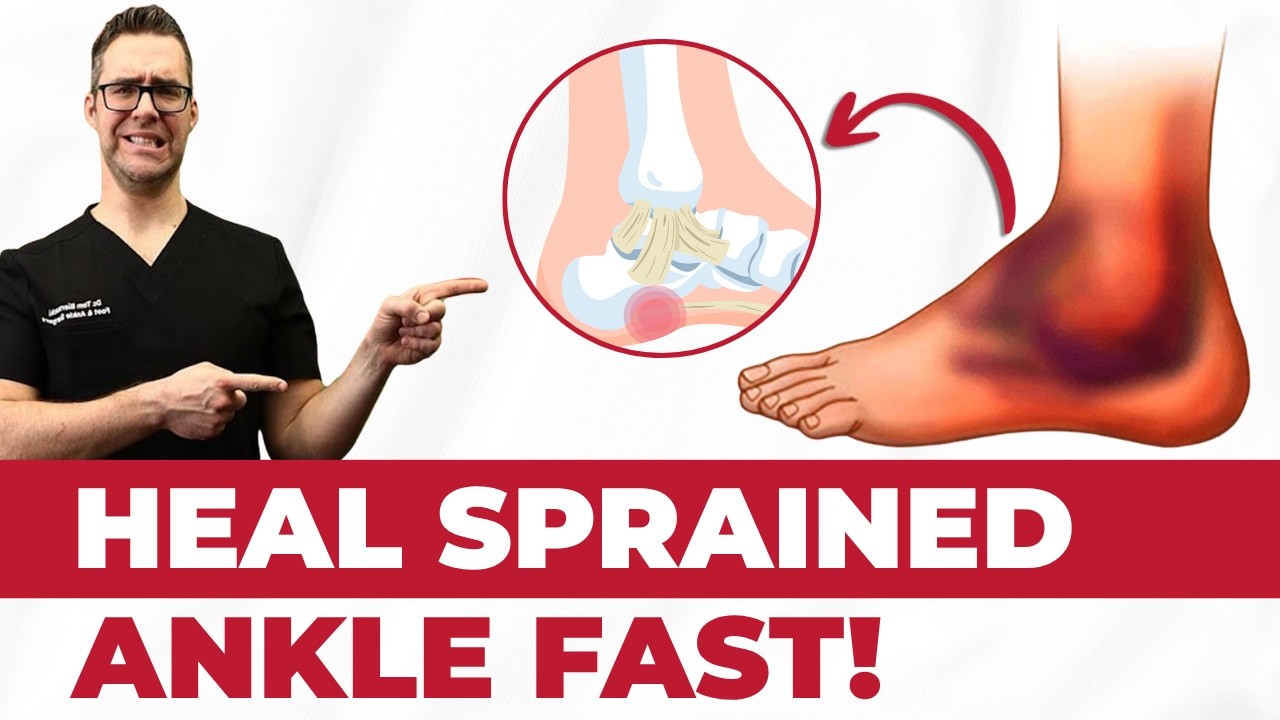
Watch: Fix TWISTED Ankle, ROLLED Ankle or SPRAINED Ankle Ligaments FASTER! — MichiganFootDoctors YouTube
When to See a Podiatrist
A sprain that hasn’t fully recovered after 6 weeks often has residual ligament laxity or occult fracture that keeps the ankle unstable. Balance Foot & Ankle X-rays and stress-tests every lingering sprain — if the ligament is torn, we offer bracing, PRP, and (for chronic instability) minimally-invasive repair. Don’t keep re-rolling the same ankle; let us stabilize it properly.
Call Balance Foot & Ankle: (810) 206-1402 · Book online · Offices in Howell & Bloomfield Township
Frequently Asked Questions
What is the most common foot injury in field hockey?
Ankle sprains are the most common acute foot and ankle injury in field hockey, accounting for approximately 15-20% of all injuries. Among overuse injuries, plantar fasciitis and metatarsal stress fractures are the most frequently diagnosed conditions. The combination of artificial turf, minimal cleat cushioning, and the sport’s crouched running position creates an environment where both acute and chronic injuries are common. Proper footwear, orthotic support, and proprioceptive training significantly reduce injury risk.
Can I play field hockey with plantar fasciitis?
You can often continue playing field hockey with mild plantar fasciitis if you implement proper management strategies. This includes using supportive insoles like PowerStep Pinnacle inside your cleats, performing calf stretches and plantar fascia stretches before and after practice, applying ice for 15-20 minutes post-activity, and using topical pain relief. However, if your pain is severe enough to alter your running mechanics or worsens progressively, you should reduce training volume and see a podiatrist for a comprehensive treatment plan that may include custom orthotics, night splints, or shockwave therapy.
How long does a field hockey ankle sprain take to heal?
Recovery time depends on the severity of the sprain. A Grade 1 lateral ankle sprain (stretching without significant tearing) typically requires one to three weeks before return to play. A Grade 2 sprain (partial ligament tear) usually needs three to six weeks with structured rehabilitation. A Grade 3 sprain (complete ligament rupture) requires six to twelve weeks and may need surgical repair. High ankle sprains (syndesmotic injuries) take the longest, often requiring eight to sixteen weeks for full recovery. Returning before completing proper rehabilitation dramatically increases the risk of re-injury.
Do I need special insoles for field hockey cleats?
Yes, most field hockey cleats come with inadequate factory insoles that provide minimal arch support and shock absorption. Replacing the stock insole with a supportive aftermarket option like PowerStep Pinnacle insoles significantly improves foot comfort and reduces injury risk. Choose a slim-profile insole specifically designed to fit in athletic cleats — bulky insoles will make cleats feel too tight and create new problems. Players with specific biomechanical issues may benefit from custom orthotics made by a podiatrist and designed to fit their cleats.
When should a field hockey player see a podiatrist?
See a podiatrist if you experience foot or ankle pain that persists beyond two weeks despite rest and home treatment, if you cannot bear weight after an injury, if your ankle gives way repeatedly during play, if you notice progressive worsening of symptoms during the season, or if you develop numbness or tingling in your feet. Early intervention prevents minor issues from becoming major injuries. A sports-focused podiatrist can diagnose the specific problem, determine whether imaging is needed, and create a treatment plan that gets you back on the field safely.
Differential Diagnosis: What Else Could It Be?
Not every case of turf toe / first mtp sprain is straightforward. In our clinic we routinely rule out three look-alike conditions before confirming the diagnosis. If your symptoms don’t match the classic presentation, one of these may explain the pain — which is why physical exam matters more than self-diagnosis.
| Condition | How It Differs |
|---|---|
| Hallux rigidus | Chronic progressive stiffness, not a single hyperextension event; dorsal osteophyte on X-ray. |
| Sesamoiditis | Pain under the joint (at the sesamoid bones), not on top; worse with push-off. |
| Gout | Warm, erythematous, crystal-driven flare; elevated uric acid and crystal arthrocentesis. |
Red Flags — When to See a Podiatrist Now
Seek same-day evaluation at Balance Foot & Ankle if you notice any of the following:
- Inability to push off big toe
- Swelling and bruising across entire joint
- Grade 3 injury on MRI (complete plantar plate tear)
- Progressive hallux valgus after injury
Call (810) 206-1402 or request an appointment. Our Howell and Bloomfield Township offices reserve same-day slots for urgent foot and ankle issues.
In Our Clinic: What We See
Clinical perspective from Dr. Tom Biernacki, DPM — Balance Foot & Ankle, Howell & Bloomfield Township, MI:
Turf toe is the injury everyone remembers — a football cleat stuck in the turf, a yoga pose that forced the toe too far back, or a misstep off a curb. In our clinic we grade 1, 2, or 3. Grade 1 is taping, a stiff-soled shoe, and return to play in a week. Grade 2 frequently takes 4-6 weeks and may need a carbon-fiber plate inside the shoe. Grade 3 plantar-plate tears need imaging and often surgical repair. We have patients keep a photo of the toe in neutral so we can track swelling and bruising across follow-ups. Return-to-sport is earned, not timed.
Sources
- Theilen TM, et al. “Injury data of major international field hockey tournaments.” British Journal of Sports Medicine. 2016;50(11):657-660.
- Barboza SD, et al. “Injuries in Field Hockey Players: A Systematic Review.” Sports Medicine. 2018;48(4):849-866.
- Bahr R, Krosshaug T. “Understanding injury mechanisms: a key component of preventing injuries in sport.” British Journal of Sports Medicine. 2005;39(6):324-329.
- Steffen K, et al. “High adherence to a neuromuscular injury prevention programme is associated with fewer anterior cruciate ligament injuries.” British Journal of Sports Medicine. 2020;54(2):117-122.
- Doherty C, et al. “The incidence and prevalence of ankle sprain injury: a systematic review and meta-analysis of prospective epidemiological studies.” Sports Medicine. 2014;44(1):123-140.
Foot or Ankle Pain From Field Hockey? We Can Help
Dr. Biernacki at Balance Foot & Ankle treats field hockey players of all levels across Southeast Michigan. From ankle sprains and stress fractures to chronic overuse conditions, we provide expert diagnosis and treatment to get you back on the field safely.
Related Articles
- Understanding Ankle Sprains: Causes & Treatment
- Stress Fractures in the Foot: Complete Guide
- Plantar Fasciitis Treatment Options
- Sports Podiatrist Near Me
- Podiatrist Recommended Foot Care Products
When to See a Podiatrist for Field Hockey Injuries
If you’ve sustained turf toe, ankle sprains, or cleat-related foot pain from field hockey, prompt podiatric care ensures proper healing and a safe return to play. At Balance Foot & Ankle, we treat field sport injuries at our Howell and Bloomfield Township offices.
Learn About Our Sports Injury Treatment | Book Your Appointment | Call (810) 206-1402
Clinical References
- Dick R, Hootman JM, Agel J, Vela L, Marshall SW, Messina R. “Descriptive epidemiology of collegiate women’s field hockey injuries.” Journal of Athletic Training. 2007;42(2):211-220.
- Theilen TM, Mueller-Eising W, Wefers-Albers M, Becker HP, Schilgen M, Giannakopoulos NN. “Injury data of major international field hockey tournaments.” British Journal of Sports Medicine. 2016;50(11):657-660.
- Fong DT, Hong Y, Chan LK, Yung PS, Chan KM. “A systematic review on ankle injury and ankle sprain in sports.” Sports Medicine. 2007;37(1):73-94.
Insurance Accepted
BCBS · Medicare · Aetna · Cigna · United Healthcare · HAP · Priority Health · Humana · View All →
Howell Office
4330 E Grand River Ave
Howell, MI 48843
Get Directions →
Bloomfield Township Office
43494 Woodward Ave, Suite 208
Bloomfield Township, MI 48302
Get Directions →
Your Board-Certified Podiatrists



Ready to Get Back on Your Feet?
Same-week appointments available at both locations.
Book Your AppointmentWatch: Field Hockey Foot & Ankle Injuries
Dr. Tom on field hockey injuries — crouched stance stress, turf toe, ankle sprains on artificial turf, stick-related foot contusions, cleat fit, prevention strategies.

Field Hockey Foot Kit
Crouch-game ready. Dr. Tom’s kit:
As an Amazon Associate, Balance Foot & Ankle earns from qualifying purchases. This supports our free patient education content.
Turf ankle sprain prevention.
Crouched-stance arch support.
Post-match inflammation.
Topical post-game relief.
Related: Turf Toe · Ankle Sprains · Book Same-Week Appointment
In-Office Treatment at Balance Foot & Ankle
If home treatment isn’t providing relief for your ankle sprains, our podiatry team at Balance Foot & Ankle can help with same-week evaluations and advanced in-office care.
Same-week appointments available. (810) 206-1402
What is Ankle sprain?
Ankle sprain is a common foot/ankle condition that affects mobility and quality of life. Understanding the underlying cause is the first step in successful treatment. Our podiatrists at Balance Foot & Ankle perform a hands-on biomechanical exam, review your activity history, and use diagnostic imaging when appropriate to identify the root cause—not just treat the symptom. Many patients have been told to “rest and ice” without a deeper diagnostic workup; our approach is different.
Symptoms and warning signs
Common signs of ankle sprain include pain that worsens with activity, morning stiffness, swelling, tenderness when palpated, and difficulty bearing weight. If you experience sudden severe pain, inability to walk, visible deformity, numbness or color change, contact our office the same day or visit urgent care—these can signal a more serious injury such as a fracture, tendon rupture, or vascular compromise. Diabetics with any foot wound should seek same-day care.
Conservative treatment options
Most cases of ankle sprain respond to non-surgical care: structured rest, supportive footwear changes, custom orthotics, targeted stretching and strengthening protocols, anti-inflammatory medications when medically appropriate, and in-office procedures such as ultrasound-guided injections. We also offer advanced therapies including laser therapy, EPAT/shockwave, regenerative injections, and image-guided procedures. Treatment is sequenced from least invasive to most invasive, and we explain the rationale at every step.
When is surgery considered?
Surgery is reserved for cases that fail 3-6 months of well-structured conservative care, when there is structural pathology (severe deformity, complete tear, advanced arthritis), or when imaging shows damage that will not heal without intervention. Our surgeons have performed 3,000+ foot and ankle procedures and prioritize minimally-invasive techniques whenever appropriate. We discuss recovery timelines, return-to-activity milestones, and realistic outcome expectations before any procedure is scheduled.
Recovery timeline and prevention
Recovery from ankle sprain varies based on severity and chosen treatment path. Conservative cases often improve within 4-8 weeks with consistent adherence to the protocol. Post-procedural recovery may range from a few days (in-office procedures) to several months (reconstructive surgery). Long-term prevention involves footwear assessment, activity modification, structured strengthening, and regular check-ins with your podiatrist if you have a history of recurrence. We provide written home-exercise plans and digital follow-up support.
Ready to feel better?
Same-week appointments available in Howell and Bloomfield Township, Michigan.
Book Your Visit
Dr. Tom Biernacki, DPM is a board-certified foot & ankle surgeon (ABFAS & ABPM) at Balance Foot & Ankle Specialists in Southeast Michigan. With over a decade of clinical experience, he specializes in heel pain, bunions, diabetic foot care, sports injuries, and minimally invasive surgery. Dr. Biernacki is a member of the APMA and ACFAS, and his patient education content on MichiganFootDoctors.com and YouTube has made him one of the most-followed foot & ankle educators on YouTube.
More questions patients ask
How long does an ankle sprain take to heal?
Recovery time depends on severity: Grade 1 (mild stretching) typically heals in 1-3 weeks, Grade 2 (partial tear) in 3-6 weeks, and Grade 3 (complete tear) in 6-12 weeks or longer. Proper rehabilitation is critical to prevent chronic ankle instability, which affects up to 40% of patients who don't receive adequate treatment. Dr. Biernacki creates customized recovery plans.
When should I see a doctor for a sprained ankle?
Seek professional evaluation if you can't bear weight, notice significant swelling or bruising, hear a pop at the time of injury, have numbness, or if pain hasn't improved after 5-7 days of RICE treatment. X-rays or MRI may be needed to rule out fractures. Dr. Biernacki offers same-day urgent evaluations at 810-206-1402.
Can a sprained ankle heal without treatment?
While mild sprains may heal with rest and home care, undiagnosed ligament tears and improperly rehabilitated sprains frequently lead to chronic ankle instability, recurrent sprains, and early-onset arthritis. A proper evaluation ensures appropriate treatment and reduces your risk of long-term complications significantly.
Still have a question about coverage or cost? Book online and we will check your benefits before your visit: Book in Howell · Book in Bloomfield Township. Prefer to talk it through first? Call (810) 206-1402.