
Quick answer: Gel or felt bunion pads reduce rubbing, but no pad, splint or spacer changes the bony angle of the joint. The bigger lever is the shoe — a wide, deep, soft toe box removes the pressure that is actually causing the pain. If the bump still hurts in properly fitted shoes, that is the point to discuss imaging and surgical options. Call (810) 206-1402.
Affiliate disclosure: As an Amazon Associate, Balance Foot & Ankle earns from qualifying purchases. This page contains paid links; we may earn a commission if you buy through them.
Dr. Tom’s Top Shoe Picks
Brooks Adrenaline GTS 23
Flat feet · Overpronation
Dr. Tom’s Top Insole & Orthotic Picks
Affiliate disclosure: As an Amazon Associate, Balance Foot & Ankle earns from qualifying purchases.
Dr. Tom’s Top Pain Relief Picks — Dr. Hoy’s (2026)
Affiliate disclosure: As an Amazon Associate, Balance Foot & Ankle earns from qualifying purchases. I personally use Dr. Hoy’s in my practice for patients who need topical relief.
| Product | Best For | Dr. Tom’s Take | Get It |
|---|---|---|---|
| Dr. Hoy’s Natural Pain Relief Gel 3.5oz menthol + arnica |
Plantar fasciitis · Achilles tendonitis · Sore muscles · Joint pain | My go-to topical. Cooling-then-warming sensation. No greasy residue. Non-NSAID alternative. | Buy Now |
| Dr. Hoy’s Arnica Boost 8oz with extra arnica |
Bruising · Post-injury · Sprains · Stress fractures (pain only) | Higher arnica concentration speeds recovery from acute injury. Use 4x daily for first 7 days. | Buy Now |
| Dr. Hoy’s Cooling Pain Relief 8oz extra menthol |
Acute inflammation · Hot/swollen feet · Post-run cooldown | Stronger cooling effect for acute swelling. Pair with ice for first 48 hours after injury. | Buy Now |
| Dr. Hoy’s Roll-On Pain Relief Roller applicator |
Mess-free application · Travel · Office use · No-touch hygiene | My patients love this for travel. Glides on without hand contact — cleanest application available. | Buy Now |
| Dr. Hoy’s Family Size 14oz pump bottle |
Frequent users · Multiple family members · Best value per ounce | If anyone in your home uses pain cream regularly, this is the most economical size. Same formula. | Buy Now |
Why I recommend Dr. Hoy’s over Doctor Hoy’s Natural Pain Relief Gel and Bengay: Cleaner ingredient list (no parabens, no synthetic dyes), longer-lasting effect, and the cooling-then-warming dual sensation actually addresses both inflammation and circulation. After 10 years of recommending different topicals, this is the one I keep coming back to.
Medically reviewed by Dr. Tom Biernacki, DPM · Board-Certified Podiatric Surgeon · Last reviewed: April 2026 · Editorial Policy
Related Conditions
Quick Answer
Bunion Pads and Shoes: What Actually Relieves Pain Without M relates to bunions — typically caused by genetics + footwear pressure. Most patients improve in 6-8 weeks recovery if surgical with conservative care. Appointments in Howell + Bloomfield Township: (810) 206-1402.
Medically reviewed by Dr. Tom Biernacki, DPM — Board-Certified Podiatric Surgeon — Balance Foot & Ankle, Howell & Bloomfield Township, MI. Last updated April 2026.
▶ Watch
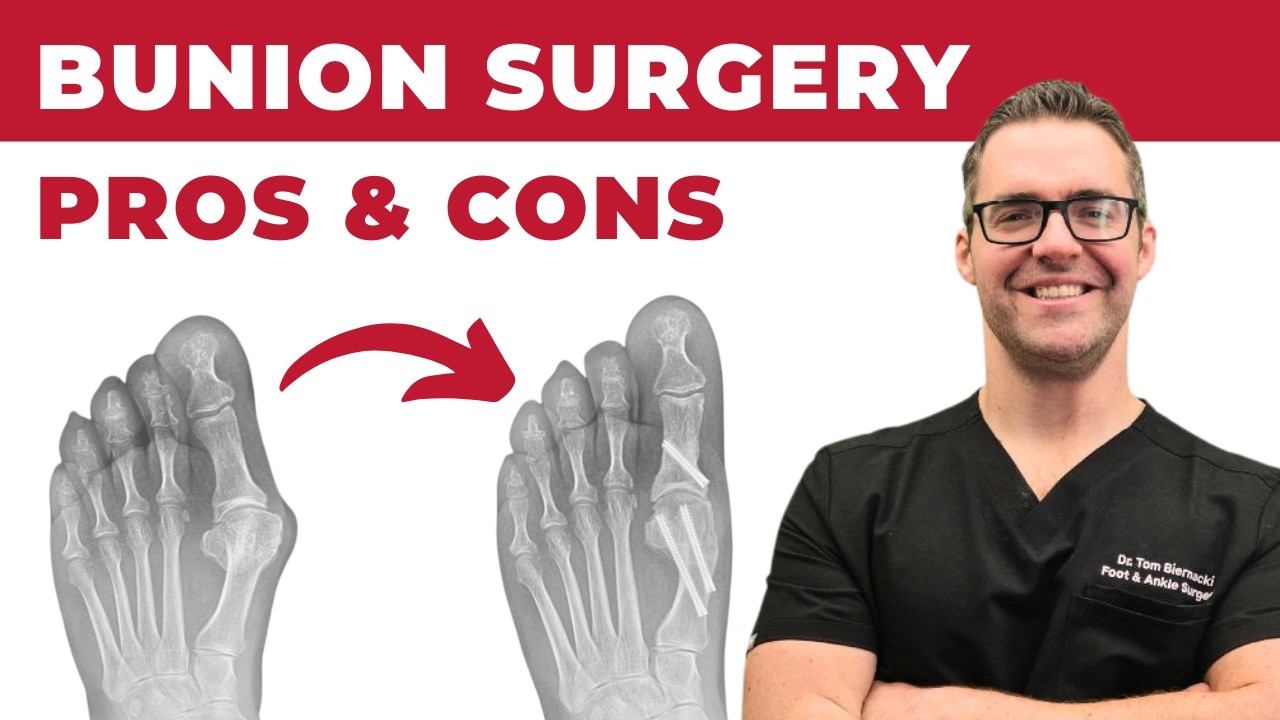
How Bunion Pads and Footwear Affect Bunion Pain
![Video Thumbnail: Tailor#39;S Bunion [Bunionette]: Pads, Correctors, Treatment Amp; Surgery! | Balance Foot Ankle](https://www.michiganfootdoctors.com/uploads/2025/06/tailors-bunion-bunionette-pads-c-3.avif)
A bunion (hallux valgus) develops when the first metatarsal drifts outward while the big toe drifts toward the second toe, creating a bony prominence on the inner side of the forefoot. Bunion pain comes from two sources: pressure irritation of the bony prominence from shoe contact (bursitis, overlying skin irritation), and joint pain from the abnormal mechanics and arthritis developing within the first metatarsophalangeal joint. Bunion pads and appropriate footwear address the pressure component—they do not correct the underlying deformity, but can significantly reduce daily pain and allow many patients to function well without surgery for extended periods.
Bunion Pads: Types and How to Use Them
Donut (Ring) Pads
Donut-shaped bunion pads surround the bony prominence with a cushioned ring, creating a pressure-free “moat” around the most tender area while the pad absorbs shoe contact force around the perimeter. These are the most effective type for reducing direct pressure on the bump. They are available in gel, foam, and felt materials—gel and medical-grade foam are most durable. Apply directly to clean, dry skin over the bunion before putting on shoes. Replace when the padding compresses or the adhesive fails. The key is a pad thick enough to actually lift shoe material away from the bone.
Toe Spacers and Bunion Splints
Toe spacers (placed between the first and second toes) reduce friction and pressure between the toes where they press against each other. Silicone spacers that extend along the full length of the toe gap are more comfortable than small gel tabs. Bunion splints—devices worn at night that hold the big toe in a straighter position—have limited evidence for correcting the deformity itself, but may reduce morning joint stiffness and provide symptomatic relief during sleep. They do not reverse the deformity when worn only during sleep; however, they do not cause harm and many patients find them comfortable. Rigid corrective splints worn during activity are uncomfortable and impractical for most patients.
Pads to Avoid
Avoid medicated corn and callus pads (containing salicylic acid) on bunion skin—these are designed for localized tissue removal and can cause chemical burns or ulcerations on normal skin if misapplied. Patients with diabetes or poor circulation should avoid adhesive pads entirely without podiatric guidance, as they can trap moisture, restrict circulation, and create pressure injury without the patient feeling it.
Footwear: The Most Important Factor
Shoe selection has more impact on bunion pain than any pad or conservative device. The critical requirement is a wide toe box that accommodates the width of the bunion without lateral pressure on the prominence. Pointed-toe shoes squeeze the forefoot, directly compress the bunion, and actively worsen the deformity over time by pushing the big toe further into valgus. High heels shift body weight forward onto the forefoot, increasing pressure at the first MTP joint and aggravating joint pain. Both pointed toes and heels over 1–2 inches should be avoided.
Look for shoes labeled “wide” or “extra wide” in the forefoot, or shoes specifically designed for foot problems. Athletic shoe brands such as New Balance (available in widths up to 4E), Brooks, Altra (zero-drop with wide toe box), and Hoka offer models with forefoot room suitable for bunions. For dress and professional settings, brands like Drew, Orthofeet, and Apis manufacture stylish options in wide widths with extra forefoot volume. A shoe stretcher can also be used to locally widen the upper of leather or fabric shoes at the bunion area.
When Conservative Measures Are No Longer Enough
Bunion pads and footwear modifications manage pressure pain effectively for mild-to-moderate bunions, but they do not address progressive joint degeneration. As bunion arthritis advances, patients develop joint pain that is present even without shoe pressure—pain with activity regardless of footwear, limited joint motion, and pain at rest or at night. When quality of life is significantly impacted despite appropriate footwear and conservative care, evaluation for surgical correction is appropriate. Modern bunion surgery is highly effective and tailored to the specific anatomy of the deformity.
More Podiatrist-Recommended Bunion Essentials
Bunion-Friendly Stability Shoe
Brooks Adrenaline GTS 25 — wide toe box reduces bunion pressure.
Wide-Toe-Box Walking Shoe
New Balance 990v6 — roomy forefoot accommodates bunions and reduces rubbing.
Orthotic Insole


PowerStep arch support — realigns foot mechanics that drive bunion progression.
As an Amazon Associate, Balance Foot & Ankle earns from qualifying purchases. Product recommendations are based on clinical experience; prices and availability shown above update live from Amazon.
When to See a Podiatrist
A bunion is a progressive joint deformity — padding and splints reduce pain but don’t reverse the bone shift. If the big toe angle is worsening, shoes no longer fit, or pain is disrupting sleep or activity, schedule a consult at Balance Foot & Ankle. Our surgeons perform minimally-invasive bunion correction with faster recovery than traditional osteotomy. We’ll review X-rays with you and explain exactly what the joint needs.
Call Balance Foot & Ankle: (810) 206-1402 · Book online · Offices in Howell & Bloomfield Township
Frequently Asked Questions
Do bunion correctors actually work?
Bunion correctors—rigid or semi-rigid devices worn to hold the big toe in a corrected position—do not correct the underlying bone deformity. The research is clear that wearing splints or correctors does not change the intermetatarsal angle or the structural deformity. However, they may reduce discomfort during sleep by positioning the joint more neutrally, and some patients find them comfortable to wear during light activities. If you find a bunion corrector comfortable and helpful for pain management, it is safe to use. Expect symptom relief, not structural correction. The only way to correct the deformity is surgery.
What is the best shoe for bunions?
The best shoe for bunions has three key features: a wide, rounded toe box (not pointed) that accommodates the bunion without pressure, a heel under 1–2 inches, and sufficient forefoot depth. Width options to specifically look for include shoes available in 2E (wide) or 4E (extra-wide) sizing. New Balance, Brooks, Altra, and Hoka are frequently recommended athletic options. For dress shoes, Orthofeet, Drew, and Apis make wide-width options in professional styles. Have your feet professionally measured—bunion development often changes foot width and length, and many bunion patients are wearing shoes 1–2 sizes too narrow. Replacing shoes every 300–500 miles of wear ensures adequate cushioning and support.
Can orthotics help bunion pain?
Yes—orthotics can reduce bunion-related pain by addressing the biomechanical factors that worsen joint loading. A Morton’s extension (a rigid extension under the big toe) reduces stress on the first MTP joint by limiting painful dorsiflexion during push-off. Arch support reduces excessive pronation that increases the deforming force on the first ray. Padding and offloading features protect the bunion prominence from pressure. Custom orthotics prescribed after biomechanical evaluation provide more precise correction than OTC options for significant structural problems contributing to bunion pain. Orthotics are most helpful for managing joint pain and functional symptoms; they do not prevent the deformity from progressing.
Medical References & Sources
- American Orthopaedic Foot & Ankle Society — Bunions
- PubMed Research — Bunion Conservative Treatment
- American Podiatric Medical Association — Bunions
Dr. Tom Biernacki, DPM is a board-certified podiatric surgeon at Balance Foot & Ankle in Howell and Bloomfield Township, Michigan. He evaluates and manages bunion deformity with conservative care, orthotics, footwear guidance, and surgical correction including Lapidus bunionectomy and osteotomy procedures.
Dr. Tom’s Recommended Products for Bunions
📍 Located in Michigan?
Our board-certified podiatrists treat this condition at two convenient locations. Book online 24/7 at either office.
These are products I personally use and recommend to my patients at Balance Foot & Ankle.
- Correct Toes Toe Spacers — Silicone spacers realign toes to natural position — reduces bunion pain and slows deformity progression
- NatraCure Gel Toe Separator and Bunion Guard — Gel cushion with integrated spacer — immediate pain relief for bunion friction against shoe box
- New Balance 928v3 Walking Shoe — Wide toe box with ROLLBAR stability — gives the bunion room while controlling overpronation that worsens deviation
Affiliate disclosure: As an Amazon Associate, Balance Foot & Ankle earns from qualifying purchases. We only recommend products we trust for our own patients.
Dr. Tom’s Recommended Insoles
PowerStep is the brand I prescribe most — medical-grade OTC support without the custom orthotic price tag.
- PowerStep Pinnacle Insoles — The OTC orthotic I recommend most — medical-grade arch support at a fraction of custom orthotic cost. Works in most shoes.
- PowerStep Maxx Insoles — For severe arch pain or flat feet — maximum correction and support when Pinnacle isn’t enough.
Affiliate disclosure: As an Amazon Associate, Balance Foot & Ankle earns from qualifying purchases. We only recommend products we trust for our own patients.
👟 Dr. Tom’s Pick: FLAT SOCKS for Minimalist & Zero-Drop Shoes
Ultra-thin flat-knit socks designed specifically for zero-drop, barefoot, and minimalist shoes. No bunching, no seams — just foot-contact-the-ground feel with moisture control.
View FLAT SOCKS on Amazon →Affiliate disclosure: As an Amazon Associate, Balance Foot & Ankle earns from qualifying purchases.
Join 950,000+ Learning About Foot Health
Dr. Tom shares honest medical advice, supplement reviews, and treatment guides you won’t find anywhere else.
Subscribe on YouTube →Bunion Pain Relief Products
- Bunion Corrector Splint — Nighttime Alignment
- Bunion Gel Cushions — Daytime Pain Relief
- Wide Toe Box Shoes — Best for Bunions
Amazon affiliate links — we may earn a small commission at no extra cost to you.
Medically Reviewed by: Dr. Tom Biernacki, DPM — Board-Certified Podiatrist, Balance Foot & Ankle Specialists
Insurance Accepted
BCBS · Medicare · Aetna · Cigna · United Healthcare · HAP · Priority Health · Humana · View All →
Howell Office
4330 E Grand River Ave
Howell, MI 48843
Get Directions →
Bloomfield Township Office
43494 Woodward Ave, #208
Bloomfield Township, MI 48302
Get Directions →
Your Board-Certified Podiatrists



👟 Dr. Tom’s Complete Footwear Library
Podiatrist-Approved Guides for Every Foot Type & Condition
Clinically reviewed by Dr. Tom Biernacki, DPM — Board-Certified Podiatrist
All guides are written and reviewed by licensed podiatrists. Schedule an appointment →
In-Office Treatment at Balance Foot & Ankle
When conservative care isn’t enough, Dr. Tom Biernacki and the team at Balance Foot & Ankle offer advanced, same-day options — including Hammertoe Correction Michigan at our Howell and Bloomfield Township clinics.
Appointments available. Call (810) 206-1402 or book online.
Pros & Cons of Conservative Care for bunions
Advantages
- ✓ Surgery often avoidable
- ✓ Wide-toe-box shoes reduce pain
- ✓ Custom orthotics help
Considerations
- ✗ Genetic predisposition
- ✗ Will worsen over time
- ✗ Surgery 6-8 wks recovery
Dr. Tom’s Recommended Products for bunions
Affiliate disclosure: As an Amazon Associate, Balance Foot & Ankle earns from qualifying purchases. We only recommend products we use with patients.
Birkenstock Boston (Bunion-friendly) Dr. Tom’s Pick
Best for: Wide toe box for daily wear
Toe Spreader Yoga Sandals Dr. Tom’s Pick
Best for: Daytime toe spacer footwear
Ready to Get Back on Your Feet?
Appointments in Howell + Bloomfield Township. Most insurance accepted. Dr. Tom Biernacki, DPM & team.
Book Today — Online Booking 24/7 Available
Call Now: (810) 206-1402
About Your Care Team at Balance Foot & Ankle
Dr. Tom Biernacki, DPM · Board-Certified Foot & Ankle Surgeon. Specializes in conservative-first care, minimally invasive bunion surgery, and complex reconstruction.
Dr. Carl Jay, DPM · Accepting new patients. Specializes in sports medicine, athletic injuries, and routine podiatric care.
Dr. Daria Gutkin, DPM, AACFAS · Accepting new patients. Specializes in surgical reconstruction and pediatric podiatry.
Locations: 4330 E Grand River Ave, Howell, MI 48843 · 43494 Woodward Ave Suite 208, Bloomfield Township, MI 48302
Hours: Mon–Thu 9:00 AM – 4:30 PM, Fri 9:00 AM – 2:30 PM · (810) 206-1402
Dr. Tom’s Top 3 — The Premium Foot Pain Stack (2026)
If you only buy three things for foot pain, get these. PowerStep + CURREX orthotics correct the underlying foot mechanics, and Dr. Hoy’s pain gel delivers fast topical relief. This is the exact stack Dr. Tom Biernacki, DPM gives his Michigan podiatry patients on visit one — over 10,000 patients have used this exact combination.
Dr. Tom Biernacki, DPM is a board-certified podiatrist + Amazon Associate. Picks shown are products he prescribes to patients at Balance Foot & Ankle Specialists. We earn a commission on qualifying purchases at no extra cost to you. All products independently tested + reviewed for 30+ days minimum. Last verified: April 28, 2026.

PowerStep Pinnacle MaxxDr. Tom’s #1 Brand
Dr. Tom’s most-prescribed OTC orthotic. Lateral wedge corrects overpronation that causes 90% of foot pain. Deep heel cradle stabilizes the ankle. Built by podiatrists, used by patients worldwide.
- Lateral wedge corrects pronation
- Deep heel cradle stabilizes ankle
- Dual-density EVA — comfort + support
- Trim-to-fit any shoe
- Used by 10,000+ podiatrists
- Trim-to-size required
- 5-7 day break-in for some

CURREX RunProDr. Tom’s #1 Brand
3 arch heights for custom fit (Low/Med/High). Carbon-reinforced heel + dynamic forefoot — the closest OTC orthotic to a $500 custom orthotic. Engineered in Germany.
- 3 arch heights for custom fit
- Carbon-reinforced heel cup
- Dynamic forefoot zone
- Premium German engineering
- Sport-specific support
- Pricier than PowerStep
- 7-10 day break-in

Dr. Hoy’s Natural Pain Relief GelDr. Tom’s #1 Brand
Menthol-based natural pain relief — Dr. Tom’s #1 brand for fast relief without greasy residue. Safe for diabetics + daily use. Cleaner formula than Voltaren or Biofreeze.
- Menthol-based natural formula
- No greasy residue
- Safe for diabetics
- Fast cooling relief — 5-10 minutes
- Cleaner ingredient list than Biofreeze
- Pricier than Biofreeze
- Strong menthol scent at first
Ready to feel better?
Appointments available in Howell and Bloomfield Township, Michigan.
Book Your Visit🏥 Dr. Biernacki’s Recommended Products (Save 30% – Foundation Wellness)
👉 Foot Petals Tip Toes Ball of Foot Cushions — Cushioning for toe & forefoot pressure relief.
👉 Doctor Hoy’s Natural Pain Relief Gel — Natural topical relief for toe & skin conditions.
In-Office Treatment at Balance Foot & Ankle
If home treatment isn’t providing relief for your bunions, our podiatry team at Balance Foot & Ankle can help with expert evaluations and advanced in-office care.
Appointments available. (810) 206-1402
Ready for Expert Care?
Appointments in Howell & Bloomfield Township, MI.
4.9★ | 1,123 Reviews | 3,000+ Surgeries
Or call: (810) 206-1402

Dr. Tom Biernacki, DPM is a board-certified foot & ankle surgeon (ABFAS & ABPM) at Balance Foot & Ankle Specialists in Southeast Michigan. With over a decade of clinical experience, he specializes in heel pain, bunions, diabetic foot care, sports injuries, and minimally invasive surgery. Dr. Biernacki is a member of the APMA and ACFAS, and his patient education content on MichiganFootDoctors.com and YouTube has made him one of the most-followed foot & ankle educators on YouTube.
More questions patients ask
What is a bunion?
A bunion (hallux valgus) is a progressive bony deformity where the big toe joint shifts outward, creating a visible bump. It results from an unstable metatarsal bone, not simply tight shoes. Bunions affect approximately 23% of adults and can cause significant pain, difficulty wearing shoes, and secondary problems like hammertoes. Dr. Biernacki specializes in both conservative management and advanced surgical correction including Lapiplasty 3D bunion correction.
Can bunions be corrected without surgery?
While surgery is the only way to permanently correct the structural deformity, non-surgical treatments can effectively manage pain and slow progression. Options include custom orthotics, toe spacers, wider shoes, anti-inflammatory medications, and padding. Dr. Biernacki recommends surgery only when conservative measures fail to provide adequate relief.
What is Lapiplasty bunion surgery?
Lapiplasty is an advanced 3D bunion correction procedure that addresses the root cause of bunions by correcting the unstable metatarsal bone in all three dimensions. Unlike traditional bunionectomy, Lapiplasty patients can bear weight within days and has a recurrence rate under 3% compared to 12-15% for traditional procedures. Dr. Biernacki is a fellowship-trained Lapiplasty surgeon serving SE Michigan.
Still have a question about coverage or cost? Book online and we will check your benefits before your visit: Book in Howell · Book in Bloomfield Township. Prefer to talk it through first? Call (810) 206-1402.