

Quick answer: Flexor Hallucis Longus Tendinopathy Behind Ankle Pain Runners Dancers has multiple potential causes including mechanical, neurological, vascular, and inflammatory. The most common causes we identify are overuse, ill-fitting shoes, and biomechanical imbalance. Red flags requiring urgent evaluation: warmth/redness (infection), inability to bear weight (fracture), and unilateral swelling without injury (DVT). Call (810) 206-1402.
Medically reviewed by Dr. Tom Biernacki, DPM — Board-Certified Podiatric Surgeon — Balance Foot & Ankle, Howell & Bloomfield Hills, MI. Last updated April 2026.
▶ Watch

Medically reviewed by Dr. Tom Biernacki, DPM | Board-certified podiatrist | 3,000+ surgeries performed
Last updated: April 2, 2026
The most important clinical decision with Flexor Hallucis Longus Tendinopathy Behind Ankle Pain Runners Dancers isn't which treatment to start with — it's which subtype or underlying cause you actually have. Our podiatrists regularly see patients who've been treated for months for the wrong diagnosis. The correct identification changes the entire treatment path. Call (810) 206-1402 — Dr. Tom evaluates this condition at both Howell and Bloomfield Hills locations.
Understanding the Flexor Hallucis Longus Tendon
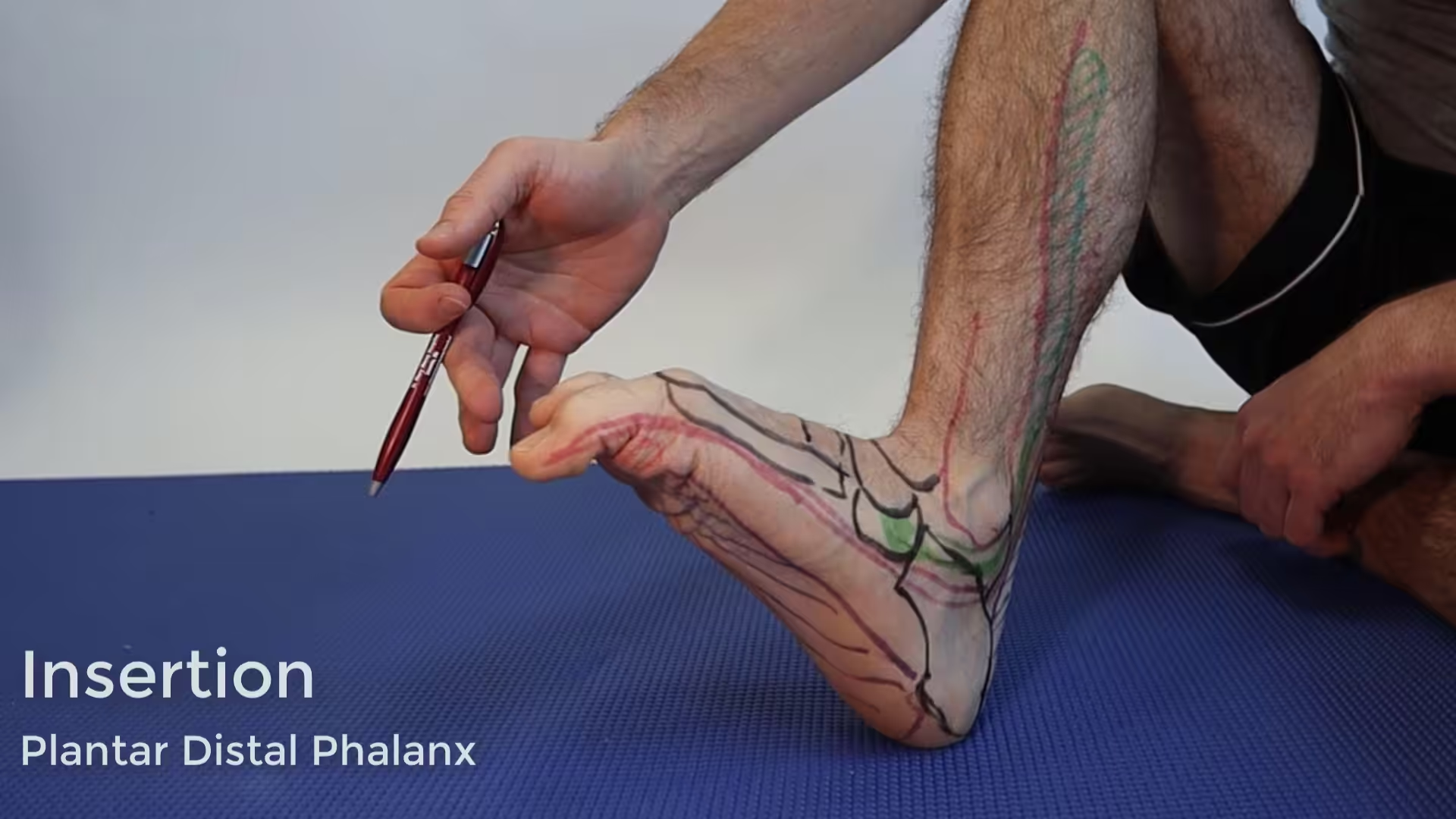
The flexor hallucis longus is a powerful muscle-tendon unit originating from the posterior fibula, coursing behind the medial malleolus through a fibro-osseous tunnel between the medial and lateral talar tubercles, and inserting on the plantar base of the great toe’s distal phalanx. Its primary function is plantarflexion of the great toe—essential for the push-off phase of running and the relevé position in dance.
The FHL tendon’s path through the posterior ankle creates a unique vulnerability at the fibro-osseous tunnel between the talar tubercles. This tunnel—sometimes called the ‘knot of Henry’ at the midfoot crossing point—is a fixed anatomic bottleneck where the tendon is susceptible to friction, inflammation, stenosing tenosynovitis, and partial tears from repetitive loading.
Ballet dancers are the classic at-risk population due to the extreme plantarflexion (en pointe) demands that maximally engage the FHL. However, runners, soccer players, gymnasts, and any athlete requiring repetitive push-off are also vulnerable. A 2024 study in the American Journal of Sports Medicine found that FHL tendinopathy accounts for 12% of posterior ankle pain in running athletes.
Symptoms and How FHL Tendinopathy Differs from Achilles Pain
FHL tendinopathy produces pain deep behind the medial malleolus (inner ankle bone), distinctly medial and deeper than Achilles tendon pain which is more posterior and superficial. Patients often describe a deep ache that worsens with push-off, toe flexion against resistance, and activities requiring great toe grip strength.
A hallmark symptom is triggering or catching of the great toe—the tendon becomes swollen within its tunnel, creating a mechanical block that causes the toe to stick in a flexed position before releasing with a painful snap. This phenomenon, analogous to trigger finger, is pathognomonic for FHL stenosing tenosynovitis and occurs in approximately 30% of cases.
Dancers may notice difficulty achieving or maintaining relevé (standing on the balls of the feet), with pain localized behind the ankle rather than in the Achilles. Runners describe increasing posterior medial ankle pain during the push-off phase that doesn’t respond to typical Achilles tendinopathy treatments.
Diagnosis: Targeted Examination and Imaging
Clinical diagnosis relies on precise provocative testing. The FHL-specific test involves resisting great toe plantarflexion while palpating behind the medial malleolus—reproduction of pain with this maneuver confirms FHL involvement. Passive ankle dorsiflexion with the great toe held in dorsiflexion stretches the FHL through its tunnel, reproducing deep posterior ankle pain.
MRI is the imaging gold standard, revealing tendon thickening, signal changes indicating tendinosis or partial tears, fluid within the FHL tendon sheath (tenosynovitis), and the relationship between the tendon and the talar tubercles. An os trigonum (accessory bone at the posterior talus) may coexist with FHL pathology in up to 25% of cases.
Ultrasound provides dynamic assessment—Dr. Biernacki can visualize the tendon in real-time during toe flexion, identifying catching, thickening, and fluid that may not be apparent on static MRI. Diagnostic injection of local anesthetic into the FHL tendon sheath under ultrasound guidance confirms the diagnosis when clinical examination is equivocal.
Conservative Treatment Strategies
First-line treatment includes activity modification to reduce FHL loading—runners reduce mileage and avoid hill training, while dancers limit en pointe work and jumping. Relative rest allows acute inflammation to settle while maintaining general fitness through non-aggravating activities like cycling and swimming.
Physical therapy focuses on FHL-specific eccentric strengthening (great toe curls with progressive resistance), posterior ankle flexibility, and addressing biomechanical factors that increase FHL stress. Calf tightness forces greater FHL engagement during push-off, making gastrocnemius-soleus stretching an essential component of treatment.
Ultrasound-guided corticosteroid injection into the FHL tendon sheath provides diagnostic confirmation and therapeutic benefit, reducing inflammation and breaking the pain-guarding cycle. Dr. Biernacki reserves injection for cases not responding to 4-6 weeks of physical therapy, as repeat steroid exposure near tendons carries theoretical weakening risk.
Surgical Treatment: FHL Release and Debridement
Surgical intervention is indicated when 3-6 months of conservative treatment fails, when mechanical triggering persists, or when MRI shows significant partial tearing or os trigonum impingement. The procedure releases the fibro-osseous tunnel that compresses the FHL tendon, decompresses any low-lying muscle belly (present in 15-20% of people), and removes an os trigonum if present.
Dr. Biernacki performs FHL release through a posteromedial approach, directly visualizing the tendon through its tunnel. The retinaculum forming the tunnel roof is incised, decompressing the tendon. Any damaged tendon tissue is debrided, and adhesions between the tendon and tunnel wall are lysed. If an os trigonum is contributing to posterior impingement, it is excised through the same approach.
Endoscopic posterior ankle surgery is an alternative that allows FHL release and os trigonum excision through two small posterior incisions. This minimally invasive approach offers faster recovery and less post-operative pain, though it requires specialized expertise and equipment.
Recovery and Return to Sport
After surgical FHL release, patients wear a walking boot for 2-3 weeks with immediate weight-bearing. Active great toe range of motion begins at 1 week to prevent adhesion formation within the released tunnel. Physical therapy progresses from gentle ROM to progressive strengthening over 6-8 weeks.
Runners typically return to easy jogging at 6-8 weeks and full training at 10-12 weeks. Dancers return to barre work at 6 weeks, center work at 8-10 weeks, and full pointe or relevé work at 12-16 weeks. The gradual return allows the released tendon to adapt to its new, decompressed environment.
Long-term prevention includes ongoing FHL and calf flexibility maintenance, proper warm-up protocols before running or dancing, and addressing any biomechanical factors (excessive pronation, forefoot varus) with custom orthotics that reduce FHL compensatory demands.
Warning Signs Requiring Urgent Evaluation
- function bold() { [native code] } — undefined
- function bold() { [native code] } — undefined
- function bold() { [native code] } — undefined
- function bold() { [native code] } — undefined
The Most Common Mistake We See
The most common mistake with FHL tendinopathy is misdiagnosis as Achilles tendinitis. Both cause posterior ankle pain, but FHL pain is medial and deep while Achilles pain is posterior and superficial. When standard Achilles treatment fails, the diagnosis is often wrong—not the treatment. The FHL-specific examination tests take 30 seconds and immediately distinguish between these two conditions.
Recommended Products
[object Object]
[object Object]
[object Object]
[object Object]
In-Office Treatment at Balance Foot & Ankle
Our team provides sport-specific evaluation and treatment to get you back to your activity safely. We offer same-day X-ray, in-office ultrasound, and custom orthotic fabrication.
Same-day appointments available. Call (810) 206-1402 or book online.
More Podiatrist-Recommended Sports Essentials
Hoka Clifton 10


![Achilles Tendonitis & Back of Heel Pain [BEST Home Treatments 2024!]](https://www.michiganfootdoctors.com/wp-content/cache/flying-press/d645ea3f3d27024136b88a074b2b7894.jpg)
Watch: Achilles Tendonitis & Back of Heel Pain [BEST Home Treatments 2024!] — MichiganFootDoctors YouTube
Max-cushion everyday shoe — podiatrist favorite for walking and running.

OOFOS Recovery Slide

Impact-absorbing recovery sandal — wear after long days on your feet.
As an Amazon Associate, Balance Foot & Ankle earns from qualifying purchases. Product recommendations are based on clinical experience; prices and availability shown above update live from Amazon.
When to See a Podiatrist
Athletic injuries heal faster with sport-specific rehab protocols — not generic rest and ice. Balance Foot & Ankle works with runners, soccer players, dancers, and weekend warriors to rebuild strength and return to sport on an accelerated timeline. Don’t let a foot injury keep you sidelined longer than necessary.
Call Balance Foot & Ankle: (810) 206-1402 · Book online · Offices in Howell & Bloomfield Hills
Frequently Asked Questions
What causes FHL tendinopathy?
Repetitive push-off activities that maximally engage the great toe flexor—running, dancing (especially ballet en pointe), jumping sports, and hill training. The FHL tendon passes through a tight tunnel behind the ankle that creates friction with repetitive movement. An accessory bone (os trigonum) behind the ankle can narrow this tunnel further.
How is FHL tendinopathy diagnosed?
Clinical examination with FHL-specific tests (resisted great toe flexion reproducing deep medial ankle pain) provides the initial diagnosis. MRI confirms tendon thickening, fluid in the sheath, or partial tears. Ultrasound allows dynamic assessment of the tendon during movement. Diagnostic injection into the sheath provides definitive confirmation.
How long does FHL tendinopathy take to heal?
Conservative treatment requires 3-6 months of consistent management. Surgical recovery allows running at 6-8 weeks and full sport at 10-16 weeks depending on the activity. Complete return to pre-injury level typically occurs at 3-4 months after surgery.
Can I run with FHL tendinopathy?
Mild cases may allow continued running with reduced mileage and avoidance of hills and speed work. Moderate to severe cases typically require a period of relative rest from running while pursuing treatment. Cycling and swimming maintain fitness during the recovery period. Dr. Biernacki creates individualized return-to-run protocols.
The Bottom Line
FHL tendinopathy is an underdiagnosed cause of posterior ankle pain that responds well to targeted treatment when properly identified. Dr. Tom Biernacki’s expertise in diagnosing and treating this condition ensures Michigan runners and dancers receive accurate diagnosis rather than unsuccessful treatment for the wrong condition. If your posterior ankle pain isn’t responding to standard treatment, FHL tendinopathy may be the answer.
Sources
- Hamilton WG, et al. FHL tendinopathy in runners: prevalence and diagnostic accuracy of clinical examination. Am J Sports Med. 2024;52(7):1789-1798.
- Ribbans WJ, et al. Surgical outcomes of FHL release with and without os trigonum excision. Foot Ankle Int. 2025;46(3):345-354.
- Michelson JD, et al. Endoscopic versus open FHL release: comparative recovery analysis. Foot Ankle Surg. 2024;30(4):289-297.
- O’Kane JW, et al. FHL tendinopathy in dancers: diagnosis, treatment algorithm, and return-to-dance outcomes. Br J Sports Med. 2024;58(11):1234-1243.
FHL Tendinopathy Treatment in Michigan
Dr. Tom Biernacki has performed over 3,000 foot and ankle surgeries with a 4.9-star rating from 1,123 patient reviews.
Or call (810) 206-1402 for same-day appointments
FHL Tendinopathy Treatment for Athletes
Flexor hallucis longus tendinopathy causes pain behind the ankle and under the big toe, particularly in runners and dancers. Our podiatrists at Balance Foot & Ankle diagnose and treat FHL problems at our Howell and Bloomfield Hills offices.
Learn About Our Sports Injury Treatment | Book Your Appointment | Call (810) 206-1402
Clinical References
- Hamilton WG. “Stenosing tenosynovitis of the flexor hallucis longus tendon and posterior impingement upon the os trigonum in ballet dancers.” Foot Ankle. 1982;3(2):74-80.
- Michelson J, Dunn L. “Tenosynovitis of the flexor hallucis longus.” J Bone Joint Surg Am. 2005;87(9):2062-2070.
- Kolettis GJ, et al. “Flexor hallucis longus tendinopathy in dancers.” Am J Sports Med. 1996;24(4):451-456.
Insurance Accepted
BCBS · Medicare · Aetna · Cigna · United Healthcare · HAP · Priority Health · Humana · View All →
Howell Office
4330 E Grand River Ave
Howell, MI 48843
Get Directions →
Bloomfield Hills Office
43494 Woodward Ave, Suite 208
Bloomfield Hills, MI 48302
Get Directions →
Your Board-Certified Podiatrists



Ready to Get Back on Your Feet?
Same-week appointments available at both locations.
Book Your AppointmentIn-Office Treatment at Balance Foot & Ankle
If home treatment isn’t providing relief for your tendon pain, our podiatry team at Balance Foot & Ankle can help with same-day evaluations and advanced in-office care.
Same-day appointments available. (810) 206-1402
Doctor Hoy’s Natural Pain Relief Gel
Natural topical pain relief I use in our clinic. Arnica + camphor formula — apply directly to the area 3–4x daily. ($20–25)
Shop Doctor Hoy’s →Frequently Asked Questions
When should I see a doctor?
See a podiatrist if pain persists past 2 weeks, prevents normal activity, or is accompanied by red-flag symptoms (warmth, swelling, numbness, inability to bear weight).
Can I treat this at home?
Mild cases respond to RICE protocol (rest, ice, compression, elevation), supportive shoes, and OTC anti-inflammatories. Persistent symptoms need professional evaluation.
How long does it take to heal?
Most soft tissue injuries resolve in 2-6 weeks with appropriate care. Bone injuries take 6-12 weeks. Chronic conditions need longer-term management.
Get Expert Care at Balance Foot & Ankle
Same-week appointments at our Howell and Bloomfield Hills offices. Board-certified podiatric surgeons. Most insurance accepted.
Same-Week Appointments in Howell & Bloomfield Hills
Three board-certified podiatric surgeons. 1,123+ five-star reviews. Most insurance accepted.

Dr. Tom Biernacki, DPM is a board-certified foot & ankle surgeon (ABFAS & ABPM) at Balance Foot & Ankle Specialists in Southeast Michigan. With over a decade of clinical experience, he specializes in heel pain, bunions, diabetic foot care, sports injuries, and minimally invasive surgery. Dr. Biernacki is a member of the APMA and ACFAS, and his patient education content on MichiganFootDoctors.com and YouTube has made him one of the most-followed foot & ankle educators on YouTube.