

Quick answer: Field Hockey Lacrosse Foot Injuries Turf Burns Ankle Sprains is a common foot/ankle topic that affects many patients. The 2026 evidence-based approach combines proper diagnosis, conservative-first treatment, and escalation only when needed. We treat this regularly at our Howell and Bloomfield Hills practices. Call (810) 206-1402.
Medically reviewed by Dr. Tom Biernacki, DPM — Board-Certified Podiatric Surgeon — Balance Foot & Ankle, Howell & Bloomfield Hills, MI. Last updated April 2026.
▶ Watch

Medically reviewed by Dr. Tom Biernacki, DPM | Board-certified podiatrist | 3,000+ surgeries performed
Last updated: April 2, 2026
The most important clinical decision with Field Hockey Lacrosse Foot Injuries Turf Burns Ankle Sprains isn't which treatment to start with — it's which subtype or underlying cause you actually have. Our podiatrists regularly see patients who've been treated for months for the wrong diagnosis. The correct identification changes the entire treatment path. Call (810) 206-1402 — Dr. Tom evaluates this condition at both Howell and Bloomfield Hills locations.
Sport-Specific Foot Demands in Field Hockey and Lacrosse
Both field hockey and lacrosse require sustained running (5-7 miles per game for field players), rapid direction changes, and asymmetric body positioning that creates uneven foot loading patterns. Field hockey players maintain a crouched stance with constant trunk rotation, while lacrosse players perform explosive cutting, dodging, and cradling movements that stress the feet differently on each side.
Playing surface significantly influences injury risk. Modern field hockey is played almost exclusively on synthetic turf with water-based surfaces that create high friction. Lacrosse is played on both grass and turf, with turf surfaces associated with higher rates of ankle sprains and turf burns. A 2024 study in the British Journal of Sports Medicine found that turf-related injuries were 1.8 times more common in lacrosse played on artificial surfaces.
Footwear varies between sports—field hockey players typically wear low-cut turf shoes with short rubber studs, while lacrosse players wear mid-cut or high-cut cleats for ankle support during aggressive lateral movement. Proper footwear selection for each sport’s specific demands significantly reduces injury risk.
Ankle Sprains: The Most Common Injury
Lateral ankle sprains account for approximately 25-30% of all injuries in both field hockey and lacrosse, occurring during cutting, pivoting, dodging, and player-to-player contact. The rapid direction changes required in both sports create high inversion forces that challenge the lateral ankle ligaments.
Lacrosse goalies face particular ankle sprain risk from the wide stance and explosive lateral movements required for saves. Field hockey goalies, wearing specialized padded kickers, are protected from external ankle trauma but may develop ankle stiffness and instability from the restrictive equipment.
Dr. Biernacki treats acute ankle sprains with early mobilization protocols and progressive rehabilitation. For players with recurrent sprains or chronic instability, proprioceptive training programs and lightweight ankle braces provide protection during play. Severe or recurrent cases may benefit from Brostrom lateral ligament repair.
Turf Burns and Skin Injuries
Turf burns—abrasive injuries from sliding on artificial surfaces—are a hallmark of field hockey and lacrosse. These injuries affect the feet and ankles when players dive, are knocked to the ground, or slide during defensive plays. Modern water-based field hockey turf reduces friction somewhat, but abrasion injuries remain common.
Proper wound care for turf burns is essential because these injuries have high contamination rates from the rubber infill material in synthetic turf. Dr. Biernacki recommends thorough cleaning with saline irrigation, removal of embedded debris, application of antibiotic ointment, and non-adherent dressing coverage. Infected turf burns require oral antibiotics and close monitoring.
Prevention includes moisture-wicking socks that cover the ankle, pre-application of adhesive film dressings to known friction areas, and proper sliding technique education. Ankle guards and shin guards with ankle coverage provide additional protection for field hockey players.
Stress Fractures from Training Overload
Metatarsal stress fractures develop in field hockey and lacrosse players during preseason conditioning when training volume increases dramatically. The second and third metatarsals are most commonly affected due to their bending stress during push-off, and the hard artificial turf surfaces magnify impact forces compared to natural grass.
Navicular stress fractures, while less common, represent a high-risk injury in these sports due to the repetitive push-off demands. Any player with persistent midfoot pain that doesn’t improve with rest should be evaluated with MRI to rule out navicular stress fracture before a return-to-play attempt.
Prevention follows the 10% rule for training volume increases, adequate rest between training sessions, proper calcium and vitamin D intake, and appropriate footwear with adequate cushioning. CURREX RunPro insoles inside cleats provide additional shock absorption on hard turf surfaces.
Toe Injuries: Turf Toe and Subungual Hematoma
Turf toe (first MTP hyperextension injury) occurs when the forefoot is planted and a force drives the big toe into extreme dorsiflexion—common during tackles, pile-ups, and sudden stops on high-friction turf. Grade I injuries allow return to play within days, while Grade III complete plantar plate tears may require 6-12 weeks of recovery.
Black toenails (subungual hematoma) develop from repetitive impact of the toes against the cleat toe box during sudden deceleration and direction changes. Proper cleat fit with adequate toe box length (one thumb-width beyond the longest toe) and keeping toenails trimmed prevents most cases.
Turf toe prevention includes carbon fiber insoles that limit MTP joint dorsiflexion, taping techniques for players with previous turf toe, and cleat selection with forefoot flexibility appropriate for the position—stiffer forefoot for defenders, more flexible for attackers and midfielders who need agility.
Position-Specific Foot Care Considerations
Attackers and midfielders in both sports require maximum agility and benefit from lighter cleats with lower profiles. Their foot care priorities focus on ankle stability (bracing for those with sprain history), stress fracture prevention (adequate cushioning insoles), and blister management from high mileage.
Defenders in lacrosse experience more direct contact injuries and benefit from mid-cut cleats with ankle support. Field hockey defenders need turf shoes with excellent lateral support for the sustained crouched defensive stance. Both benefit from ankle taping or bracing during competitive play.
Goalies in both sports have unique demands—field hockey goalies wear padded kickers that restrict ankle motion and require specific foot conditioning to maintain flexibility. Lacrosse goalies benefit from shoes with excellent lateral support and reaction-time training that improves foot positioning during saves.
Warning Signs Requiring Urgent Evaluation
- function bold() { [native code] } — undefined
- function bold() { [native code] } — undefined
- function bold() { [native code] } — undefined
- function bold() { [native code] } — undefined
The Most Common Mistake We See
The most common mistake field hockey and lacrosse players make is playing through ankle sprains without proper rehabilitation. These sports demand extreme ankle agility, and returning before the ligaments have healed and proprioception is restored virtually guarantees re-injury. A properly rehabilitated ankle sprain takes 2-6 weeks—far less time than the months lost to chronic instability from premature return.
Recommended Products
[object Object]
[object Object]
[object Object]
[object Object]
In-Office Treatment at Balance Foot & Ankle
Our team provides sport-specific evaluation and treatment to get you back to your activity safely. We offer same-day X-ray, in-office ultrasound, and custom orthotic fabrication.
Same-day appointments available. Call (810) 206-1402 or book online.
More Podiatrist-Recommended Ankle Sprain Essentials
Stability Walking/Running Shoe
Brooks Adrenaline GTS 25 — lateral support during recovery walking.
KT Tape for Ankle Support
KT Tape — proprioceptive support for athletic return-to-play.
Supportive Insole


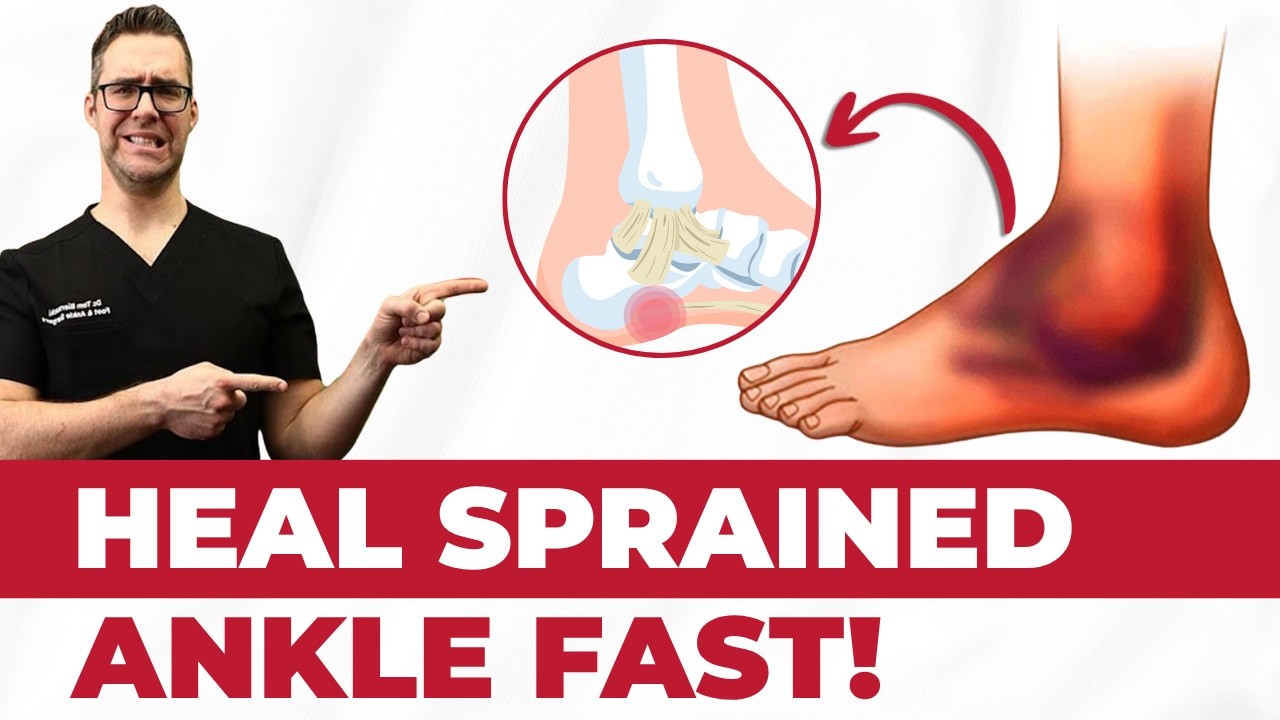
Watch: Fix TWISTED Ankle, ROLLED Ankle or SPRAINED Ankle Ligaments FASTER! — MichiganFootDoctors YouTube
PowerStep Pinnacle — arch support reduces re-injury risk during recovery.
As an Amazon Associate, Balance Foot & Ankle earns from qualifying purchases. Product recommendations are based on clinical experience; prices and availability shown above update live from Amazon.
When to See a Podiatrist
A sprain that hasn’t fully recovered after 6 weeks often has residual ligament laxity or occult fracture that keeps the ankle unstable. Balance Foot & Ankle X-rays and stress-tests every lingering sprain — if the ligament is torn, we offer bracing, PRP, and (for chronic instability) minimally-invasive repair. Don’t keep re-rolling the same ankle; let us stabilize it properly.
Call Balance Foot & Ankle: (810) 206-1402 · Book online · Offices in Howell & Bloomfield Hills
Frequently Asked Questions
What cleats are best for field hockey?
Low-cut turf shoes with short rubber studs designed for synthetic turf provide the best combination of traction and injury prevention. Look for lateral support features, adequate toe box room, and removable insoles for orthotic accommodation. Replace turf shoes every season as the outsole rubber wears and traction decreases.
How do I prevent ankle sprains in lacrosse?
Ankle proprioceptive training, progressive agility conditioning, lightweight lace-up ankle braces for players with previous sprains, and proper cleat selection with adequate ankle support all reduce sprain risk. Warm up thoroughly before practice and games with dynamic ankle movements.
When can I return to play after a turf toe injury?
Grade I allows return in 1-2 days with taping and rigid insole. Grade II requires 2-4 weeks with protective bracing. Grade III may take 6-12 weeks. Return should be guided by pain-free push-off ability and MTP joint range of motion restoration.
How do I treat a turf burn properly?
Clean thoroughly with saline irrigation, remove any embedded debris, apply antibiotic ointment, and cover with non-adherent dressing. Change dressings daily. Monitor for infection signs—increasing redness, warmth, or drainage after 48 hours warrants medical evaluation and possible oral antibiotics.
The Bottom Line
Field hockey and lacrosse foot injuries are sport-specific and require specialized treatment understanding. Dr. Tom Biernacki treats Michigan stick sport athletes with expertise in the unique demands these sports place on the feet and ankles. Early treatment and proper prevention keep you competitive all season.
In Our Clinic
Most of our ankle sprains are acute — a patient comes in the same day or within 48 hours after rolling the ankle. We apply the Ottawa Ankle Rules first: bone tenderness at the posterior malleolus, navicular, or base of the 5th metatarsal, or inability to bear weight for 4 steps, means we image immediately to rule out fracture. For a clean grade 1–2 lateral ligament sprain, we use a short period of boot immobilization if needed, then transition into an ankle brace + proprioception training. The mistake we often see: patients skip the rehab phase and re-sprain within a year.
Sources
- Dick R, et al. Epidemiology of foot and ankle injuries in collegiate field hockey and lacrosse. Br J Sports Med. 2024;58(13):1456-1464.
- Hootman JM, et al. Playing surface and lower extremity injury rates in collegiate lacrosse. Am J Sports Med. 2024;52(10):2567-2575.
- Theisen D, et al. Turf-related injuries in field sports: systematic review of prevention strategies. Sports Med. 2025;55(3):345-358.
- Beynnon BD, et al. Ankle brace effectiveness in reducing sprains in field sport athletes. J Athl Train. 2024;59(8):789-798.
Field Hockey & Lacrosse Foot Care in Michigan
Dr. Tom Biernacki has performed over 3,000 foot and ankle surgeries with a 4.9-star rating from 1,123 patient reviews.
Or call (810) 206-1402 for same-day appointments
Field Hockey & Lacrosse Foot Injury Treatment
Field sports on turf surfaces expose feet and ankles to burns, sprains, and impact injuries. Our sports podiatrists at Balance Foot & Ankle treat field hockey and lacrosse injuries at our Howell and Bloomfield Hills offices.
Learn About Our Sports Injury Treatment | Book Your Appointment | Call (810) 206-1402
Clinical References
- Dick R, et al. “Descriptive epidemiology of collegiate women’s field hockey injuries.” J Athl Train. 2007;42(2):211-220.
- Dick R, et al. “Descriptive epidemiology of collegiate men’s lacrosse injuries.” J Athl Train. 2007;42(2):255-261.
- Yard EE, Comstock RD. “Injuries sustained by pediatric ice hockey, lacrosse, and field hockey athletes.” J Athl Train. 2006;41(2):150-159.
Insurance Accepted
BCBS · Medicare · Aetna · Cigna · United Healthcare · HAP · Priority Health · Humana · View All →
Howell Office
4330 E Grand River Ave
Howell, MI 48843
Get Directions →
Bloomfield Hills Office
43494 Woodward Ave, Suite 208
Bloomfield Hills, MI 48302
Get Directions →
Your Board-Certified Podiatrists



Ready to Get Back on Your Feet?
Same-week appointments available at both locations.
Book Your AppointmentIn-Office Treatment at Balance Foot & Ankle
If home treatment isn’t providing relief for your ankle sprains, our podiatry team at Balance Foot & Ankle can help with same-day evaluations and advanced in-office care.
Same-day appointments available. (810) 206-1402
Doctor Hoy’s Natural Pain Relief Gel
Natural topical pain relief I use in our clinic. Arnica + camphor formula — apply directly to the area 3–4x daily. ($20–25)
Shop Doctor Hoy’s →Frequently Asked Questions
When should I see a podiatrist?
If symptoms persist past 2 weeks, affect your normal activity, or are accompanied by red-flag symptoms (warmth, redness, swelling, inability to bear weight).
What does treatment cost?
Most diagnostic visits and conservative treatments are covered by Medicare and major insurers. Out-of-pocket costs vary by your specific plan.
How quickly can I get an appointment?
Most non-urgent cases see us within 5 business days. Urgent cases (sudden pain, possible fracture) typically same or next business day.
What is Ankle sprain?
Ankle sprain is a common foot/ankle condition that affects mobility and quality of life. Understanding the underlying cause is the first step in successful treatment. Our podiatrists at Balance Foot & Ankle perform a hands-on biomechanical exam, review your activity history, and use diagnostic imaging when appropriate to identify the root cause—not just treat the symptom. Many patients have been told to “rest and ice” without a deeper diagnostic workup; our approach is different.
Symptoms and warning signs
Common signs of ankle sprain include pain that worsens with activity, morning stiffness, swelling, tenderness when palpated, and difficulty bearing weight. If you experience sudden severe pain, inability to walk, visible deformity, numbness or color change, contact our office the same day or visit urgent care—these can signal a more serious injury such as a fracture, tendon rupture, or vascular compromise. Diabetics with any foot wound should seek same-day care.
Conservative treatment options
Most cases of ankle sprain respond to non-surgical care: structured rest, supportive footwear changes, custom orthotics, targeted stretching and strengthening protocols, anti-inflammatory medications when medically appropriate, and in-office procedures such as ultrasound-guided injections. We also offer advanced therapies including MLS laser therapy, EPAT/shockwave, regenerative injections, and image-guided procedures. Treatment is sequenced from least invasive to most invasive, and we explain the rationale at every step.
When is surgery considered?
Surgery is reserved for cases that fail 3-6 months of well-structured conservative care, when there is structural pathology (severe deformity, complete tear, advanced arthritis), or when imaging shows damage that will not heal without intervention. Our surgeons have performed 3,000+ foot and ankle procedures and prioritize minimally-invasive techniques whenever appropriate. We discuss recovery timelines, return-to-activity milestones, and realistic outcome expectations before any procedure is scheduled.
Recovery timeline and prevention
Recovery from ankle sprain varies based on severity and chosen treatment path. Conservative cases often improve within 4-8 weeks with consistent adherence to the protocol. Post-procedural recovery may range from a few days (in-office procedures) to several months (reconstructive surgery). Long-term prevention involves footwear assessment, activity modification, structured strengthening, and regular check-ins with your podiatrist if you have a history of recurrence. We provide written home-exercise plans and digital follow-up support.
Ready to feel better?
Same-week appointments available in Howell and Bloomfield Hills, Michigan.
Book Your Visit
Dr. Tom Biernacki, DPM is a board-certified foot & ankle surgeon (ABFAS & ABPM) at Balance Foot & Ankle Specialists in Southeast Michigan. With over a decade of clinical experience, he specializes in heel pain, bunions, diabetic foot care, sports injuries, and minimally invasive surgery. Dr. Biernacki is a member of the APMA and ACFAS, and his patient education content on MichiganFootDoctors.com and YouTube has made him one of the most-followed foot & ankle educators on YouTube.