
This page covers the clinical evaluation, evidence-based treatment options, and recovery timeline for flexor hallucis longus tendonitis at Balance Foot & Ankle in Michigan. For same-week appointments at our Howell or Bloomfield Township offices, call (810) 206-1402.
Foot or ankle pain that isn’t getting better? A podiatrist can diagnose it in one visit — pick a real appointment time online, 24/7: Howell or Bloomfield Township. Takes about a minute, 24/7.

Quick Answer · From Dr. Biernacki
Flexor hallucis longus (FHL) tendonitis is most commonly seen in dancers, runners, and rock climbers — it presents as deep posterior-medial ankle pain that's worse with big-toe push-off and often associated with a triggering or catching sensation in the toe. The two-test screen: (1) resisted big-toe flexion reproduces pain, (2) pain along the FHL tendon course behind the medial malleolus on palpation. First-line treatment is 2-4 weeks of relative rest plus eccentric calf-and-toe loading, ultrasound-guided cortisone or PRP for stubborn cases, and surgical debridement only when 6+ months of conservative care fails. Most cases resolve without surgery if you fix the trigger (over-pointing, push-off mechanics) and load the tendon eccentrically.
In this guide ↓
- FHL anatomy — why it gets pinched behind the ankle
- The 2-test diagnostic screen every podiatrist uses
- FHL tendonitis vs posterior ankle impingement (os trigonum)
- Eccentric loading protocol — the missing piece in most rehab
- When ultrasound-guided injection is appropriate
- FHL tenosynovectomy — surgical timing and outcomes
Medically reviewed by Dr. Tom Biernacki, DPM
Board-certified podiatric surgeon | Balance Foot & Ankle
Last reviewed: April 2026
The flexor hallucis longus tendon is one of the most mechanically stressed structures in the foot — yet it’s also one of the least discussed. In our podiatry practice at Balance Foot & Ankle, we see FHL tendonitis primarily in runners, ballet dancers, and patients who spend extended time on their toes. The pain pattern is distinctive once you know what to look for: deep pain behind and below the inner ankle bone, often with a triggering or catching sensation when the big toe is flexed.
What makes FHL tendonitis particularly important to recognize is that it can masquerade as posterior ankle impingement, os trigonum syndrome, or medial ankle pain from other causes — and the treatment approach differs substantially depending on the correct diagnosis.
Flexor hallucis longus tendonitis is irritation of the tendon that bends the big toe, felt along the inside of the ankle and arch, and common in dancers and runners. It usually responds to rest, supportive footwear, and targeted rehab. Below we cover the causes, symptoms, and treatment. Call (810) 206-1402.
What Is Flexor Hallucis Longus Tendonitis?
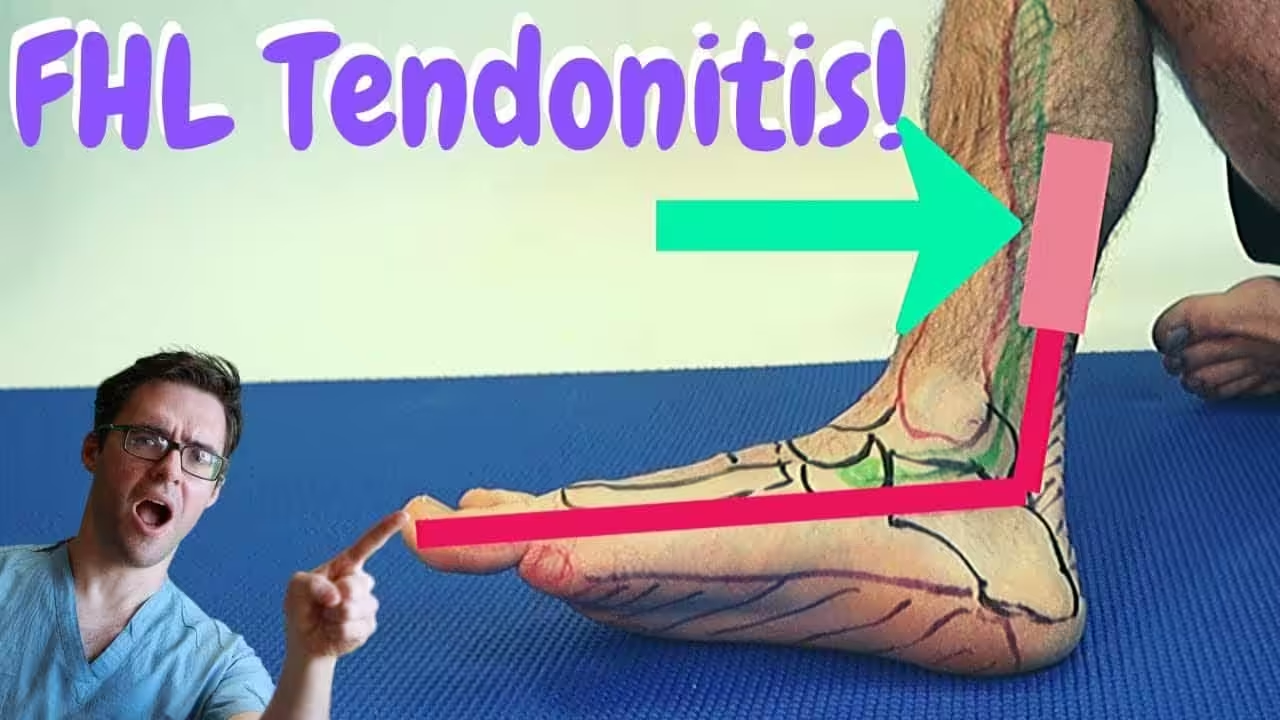
The flexor hallucis longus (FHL) is a deep posterior compartment muscle in the calf. Its tendon travels down behind the fibula, passes through a tight fibro-osseous tunnel behind the talus bone (the posteromedial ankle), then continues under the sustentaculum tali of the calcaneus, along the plantar foot, and inserts into the base of the big toe’s distal phalanx. Its job: flex the big toe downward (plantarflexion) and assist with pushing off the ground.
The anatomical bottleneck at the posterior talus — where the tendon must pass through a narrow tunnel — is the site most vulnerable to friction and inflammation. This site is also adjacent to the os trigonum, a small accessory bone present in approximately 10% of people, whose presence can dramatically narrow the space available for the tendon.
FHL tendonitis exists on a spectrum: acute inflammatory tenosynovitis (common in those who’ve suddenly increased activity), chronic tendinopathy (degenerative changes within the tendon from repetitive microtrauma), and in severe cases, partial or complete tendon tears. A related variant, FHL stenosing tenosynovitis, involves such pronounced scarring within the tendon sheath that the tendon catches, snaps, or locks — producing “trigger toe,” a condition where the big toe suddenly locks in a flexed position.
![Torn Achilles Tendon Rupture or Achilles Tendonitis? [HOW TO TELL]](https://www.michiganfootdoctors.com/wp-content/cache/flying-press/6a0b15e9da9b87a49f0fd87eb3fc4925.jpg)
Symptoms of FHL Tendonitis
FHL tendonitis symptoms are centered at the posterior medial ankle and follow the tendon’s course toward the big toe. The distribution of symptoms depends on where along the tendon the inflammation is most active.
- Deep pain behind the inner ankle bone (medial malleolus) — the posteromedial ankle, not the outer ankle
- Pain that worsens with big toe push-off — climbing stairs, running, dancing en pointe, jumping
- Tenderness along the tendon tracking from behind the ankle toward the inner arch and big toe
- Clicking, snapping, or triggering of the big toe during flexion and extension (stenosing tenosynovitis / trigger toe)
- Morning stiffness behind the ankle that loosens with activity — the classic tendinopathy pattern
- Swelling along the tendon sheath behind the ankle
- Pain specifically provoked by resisted big toe flexion — a key clinical test
- Arch pain or big toe pain when the distal tendon is involved
Key takeaway: The combination of posteromedial ankle pain + big toe push-off pain + triggering or clicking of the big toe is highly characteristic of FHL pathology. None of these features are typical of Achilles tendonitis or posterior tibial tendonitis.
What Causes FHL Tendonitis?
FHL tendonitis is fundamentally an overuse injury driven by repetitive loading at the anatomical bottleneck behind the ankle. Several factors accelerate this process:
- Ballet and dance — pointe and demi-pointe positions place extreme load on the FHL as it bears body weight through the big toe; this is why FHL tendonitis is called “dancer’s tendon”
- Running — particularly uphill and track running — the push-off phase of running heavily loads the FHL; increased mileage or speed work are common triggers
- Os trigonum — a posterolateral accessory bone present in ~10% of people that can impinge on the FHL at the posteromedial ankle during plantarflexion
- Hypertrophied posterior talar process — a prominent bony prominence (Stieda process) that similarly narrows the FHL tunnel
- Flat feet — excessive pronation changes the FHL’s mechanical angle and increases strain through the medial aspect of the ankle
- Tight gastrocnemius and soleus — reduced ankle dorsiflexion increases the demand on the forefoot and FHL during gait
- Previous ankle sprains — scar tissue from lateral ankle sprains can alter gait mechanics in ways that overload the FHL
Diagnosing FHL Tendonitis
FHL tendonitis is diagnosed through a combination of targeted clinical examination and selective imaging. The diagnosis is often missed in non-specialist settings because the posteromedial ankle pain is attributed to Achilles pathology or posterior tibial tendon dysfunction without a specific FHL provocation test being performed.
Clinical examination: The Hallux Tendon Test — with the patient seated, the examiner passively flexes and extends the big toe while palpating behind the medial malleolus. Pain reproduction with resisted big toe plantarflexion, or palpable crepitus/clicking behind the ankle, strongly suggests FHL tenosynovitis. Tendon triggering with the ankle plantarflexed confirms stenosing tenosynovitis.
Ultrasound: Dynamic real-time ultrasound is the ideal first-line imaging modality for FHL tendonitis. It can demonstrate tenosynovial fluid around the tendon, intratendinous changes, and — critically — can capture the triggering mechanism in real time by visualizing the tendon during active toe flexion and extension.
MRI: Provides superior resolution for evaluating intratendinous tears, posterior impingement from os trigonum, and the relationship of the tendon to surrounding bony structures. Required before any surgical intervention and when a partial tear is suspected.
Differential diagnosis: Posterior tibial tendon dysfunction (PTTD), Achilles tendinopathy, os trigonum syndrome (posterior ankle impingement), tarsal tunnel syndrome, medial ankle instability, and — in runners — medial tibial stress syndrome. The key differentiator is the specific provocation with resisted big toe flexion and the pattern of tenderness tracking along the FHL rather than the posterior tibial or Achilles tendons.
FHL Tendonitis Treatment
FHL tendonitis treatment is guided by the same load-management-and-rehabilitation principles that apply to all lower limb tendinopathies, with the critical addition of addressing any posterior bony impingement contributing to mechanical compression.
Conservative Treatment
Activity modification: Temporarily reducing or eliminating the aggravating activity — for dancers, coming off pointe; for runners, reducing mileage and eliminating hill work. Cross-training with swimming or cycling maintains fitness without loading the posterior ankle.
Ice and NSAIDs: Anti-inflammatory measures for the acute phase. Applied to the posterior medial ankle. Short-course ibuprofen or naproxen when medically appropriate.
Orthotic support: Devices that reduce excessive pronation and support the medial longitudinal arch decrease the mechanical demand on the FHL through the ankle:
Physical therapy: Eccentric FHL strengthening, gastrocnemius and soleus stretching, and ankle proprioception work. For dancers, specific technique correction to reduce the mechanical stress during pointe work. A careful graduated return-to-activity protocol is essential — returning too quickly is the most common cause of relapse.

In-Office Treatment
Tendon sheath injection: A peritendinous corticosteroid injection into the FHL tendon sheath (not the tendon itself) can rapidly reduce tenosynovial inflammation and support return to rehabilitation. Ultrasound guidance is recommended for this injection given the tendon’s deep posterior location and proximity to the posterior tibial neurovascular bundle.
Surgical Treatment
Surgery is indicated when conservative treatment over 3–6 months fails, when os trigonum or a prominent Stieda process is confirmed as a mechanical contributor, or when stenosing tenosynovitis produces recurrent trigger toe that significantly limits function.
Surgical options include: FHL tendon sheath release (decompression of the fibro-osseous tunnel), os trigonum excision, debridement of intratendinous degenerative tissue, and in rare cases of complete tear, primary repair or tendon transfer. Arthroscopic techniques have improved significantly — many of these procedures can now be performed with minimal incisions and faster recovery.
Recovery from FHL surgery: 4–6 weeks in a protective boot, 3–6 months to return to sport. For dancers, full return to pointe work may require 4–6 months and should be guided by a physical therapist experienced in performing arts medicine.
⚠️ When to see a podiatrist for posterior ankle or big toe pain:
- Persistent posteromedial ankle pain that hasn’t improved with rest after 2 weeks
- A “trigger toe” — big toe that catches, snaps, or locks during walking or dancing
- Sudden complete loss of big toe push-off strength (possible tendon rupture)
- Numbness or tingling along the inside of the foot (possible tarsal tunnel involvement)
- Pain that worsens progressively despite activity reduction
- Any posterior ankle or big toe pain in a diabetic patient
The Most Common Mistake We See
The most common mistake with FHL tendonitis is treating it as Achilles tendinopathy. Both cause posterior ankle pain, both worsen with push-off activities, and both are common in runners. But the Achilles tendon is posterior and central; the FHL tendon is posteromedial and deeper. Eccentric heel-drop exercises — the gold standard for Achilles tendinopathy — do not effectively load the FHL and won’t rehabilitate FHL tendinopathy. Patients who’ve been doing heel drops for months without improvement for “Achilles pain” should specifically ask their provider to examine the FHL.
The second mistake is missing os trigonum as a contributing factor. When FHL tendonitis doesn’t respond to conservative treatment, we routinely obtain MRI to evaluate for posterior bony impingement. Os trigonum is present in ~10% of the population, and when it contributes to FHL entrapment, conservative measures alone will never provide durable relief — surgical excision is required.
Frequently Asked Questions About FHL Tendonitis
How long does FHL tendonitis take to heal?
Acute FHL tenosynovitis typically responds within 6–8 weeks of appropriate conservative management. Chronic FHL tendinopathy — where degenerative changes are established — may require 3–6 months of structured rehabilitation. When os trigonum is present and surgically excised, recovery to full activity is typically 3–6 months postoperatively. Early diagnosis and treatment consistently produce faster, more complete recovery.
Can FHL tendonitis cause big toe pain?
Yes — when FHL pathology involves the distal portion of the tendon (toward the arch and big toe), pain can extend along the plantar surface of the big toe and under the ball of the foot. This can be confused with sesamoiditis or hallux limitus. The distinguishing feature is that FHL-related big toe pain specifically worsens with resisted big toe plantarflexion (pushing the toe down against resistance), whereas sesamoiditis pain worsens primarily with passive big toe dorsiflexion (bending up).
Is FHL tendonitis only a dancer’s problem?
No — while dancers (particularly ballet dancers) have a disproportionately high prevalence due to the extreme demands of pointe work, FHL tendonitis occurs in runners, cyclists, soccer players, and anyone who repetitively loads the big toe push-off. We see it regularly in recreational runners who’ve increased training volume, and in older patients with arthritic changes at the first metatarsophalangeal joint that alter FHL mechanics.
The Bottom Line
Flexor hallucis longus tendonitis is a specific, diagnosable condition — not generic ankle or big toe pain. Its characteristic presentation (posteromedial ankle pain + big toe push-off aggravation + possible triggering) distinguishes it from Achilles tendinopathy and posterior tibial tendon dysfunction. Most cases resolve with conservative treatment when diagnosed correctly and managed with targeted rehabilitation. For those with os trigonum or stenosing tenosynovitis, surgical intervention produces excellent long-term outcomes. Don’t let this condition linger untreated — the longer the tendon is irritated, the more likely degenerative changes are to develop.
Sources
- Hamilton WG, Geppert MJ, Thompson FM. Pain in the posterior aspect of the ankle in dancers: differential diagnosis and operative treatment. J Bone Joint Surg Am. 1996;78(10):1491-1500.
- Kolettis GJ, Micheli LJ, Klein JD. Release of the flexor hallucis longus tendon in ballet dancers. Am J Sports Med. 1996;24(2):233-237.
- Schweitzer ME, van Leersum M, Ehrlich SS, Wapner K. Fluid in normal and abnormal ankle joints: amount and distribution as seen on MR images. AJR Am J Roentgenol. 1994;162(1):111-114.
- Mansur NSB, Lalevée M, Diallo M, Lintz F, de Cesar Netto C. Flexor hallucis longus tendon disorders. Foot Ankle Clin. 2022;27(3):659-673.
Posterior Ankle or Big Toe Pain? Get Expert Help
Same-day appointments available in Howell & Bloomfield Township, MI. Dr. Tom Biernacki specializes in tendon injuries — accurate diagnosis and complete recovery.
4.9★ | 1,123 Reviews | 3,000+ Surgeries
Or call: (810) 206-1402
In-Office Treatment at Balance Foot & Ankle
If home treatment isn’t providing relief for your foot and ankle conditions, our podiatry team at Balance Foot & Ankle can help with same-day evaluations and advanced in-office care.
Same-day appointments available. (810) 206-1402
Get Expert Care at Balance Foot & Ankle
Same-week appointments at our Howell and Bloomfield Township offices. Board-certified podiatric surgeons. Most insurance accepted.
Same-Week Appointments in Howell & Bloomfield Township
Three board-certified podiatric surgeons. 1,123+ five-star reviews. Most insurance accepted.

Dr. Tom Biernacki, DPM is a board-certified foot & ankle surgeon (ABFAS & ABPM) at Balance Foot & Ankle Specialists in Southeast Michigan. With over a decade of clinical experience, he specializes in heel pain, bunions, diabetic foot care, sports injuries, and minimally invasive surgery. Dr. Biernacki is a member of the APMA and ACFAS, and his patient education content on MichiganFootDoctors.com and YouTube has made him one of the most-followed foot & ankle educators on YouTube.