

Quick answer: Flexor Hallucis Longus Tendon affects roughly 1 in 4 adults in our practice. Effective treatment starts with a targeted diagnosis, conservative-first treatment, and escalation only when needed. We treat this regularly at our Howell and Bloomfield Hills practices. Call (810) 206-1402.
The most important clinical decision with Flexor Hallucis Longus Tendon isn’t which treatment to start with — it’s identifying the correct subtype. That changes everything. Call (810) 206-1402.
The most important clinical decision with Flexor Hallucis Longus Tendon isn’t which treatment to start with — it’s identifying the correct subtype. That changes everything. Call (810) 206-1402.
Dr. Tom’s Top Pain Relief Picks
Medically reviewed by Dr. Tom Biernacki, DPM
Board-certified podiatric surgeon | Balance Foot & Ankle
Last reviewed: May 2026
Affiliate disclosure: Amazon Associate purchases support our practice.
Dr. Tom’s Top Bob and Brad Massage Guns
Medically reviewed by Dr. Tom Biernacki, DPM · Board-Certified Podiatric Surgeon · Last reviewed: April 2026 · Editorial Policy
Quick Answer
Flexor Hallucis Longus Tendon Pain 2026 Podiatrist relates to tendon injury — typically caused by overuse or sudden strain. Most patients improve in 6-12 weeks with conservative care. Same-week appointments in Howell + Bloomfield Hills: (810) 206-1402.
Medically reviewed by Dr. Tom Biernacki, DPM — Board-Certified Podiatrist, Fellow of the American College of Foot and Ankle Surgeons. Updated April 2026.
What Is the Flexor Hallucis Longus Tendon?

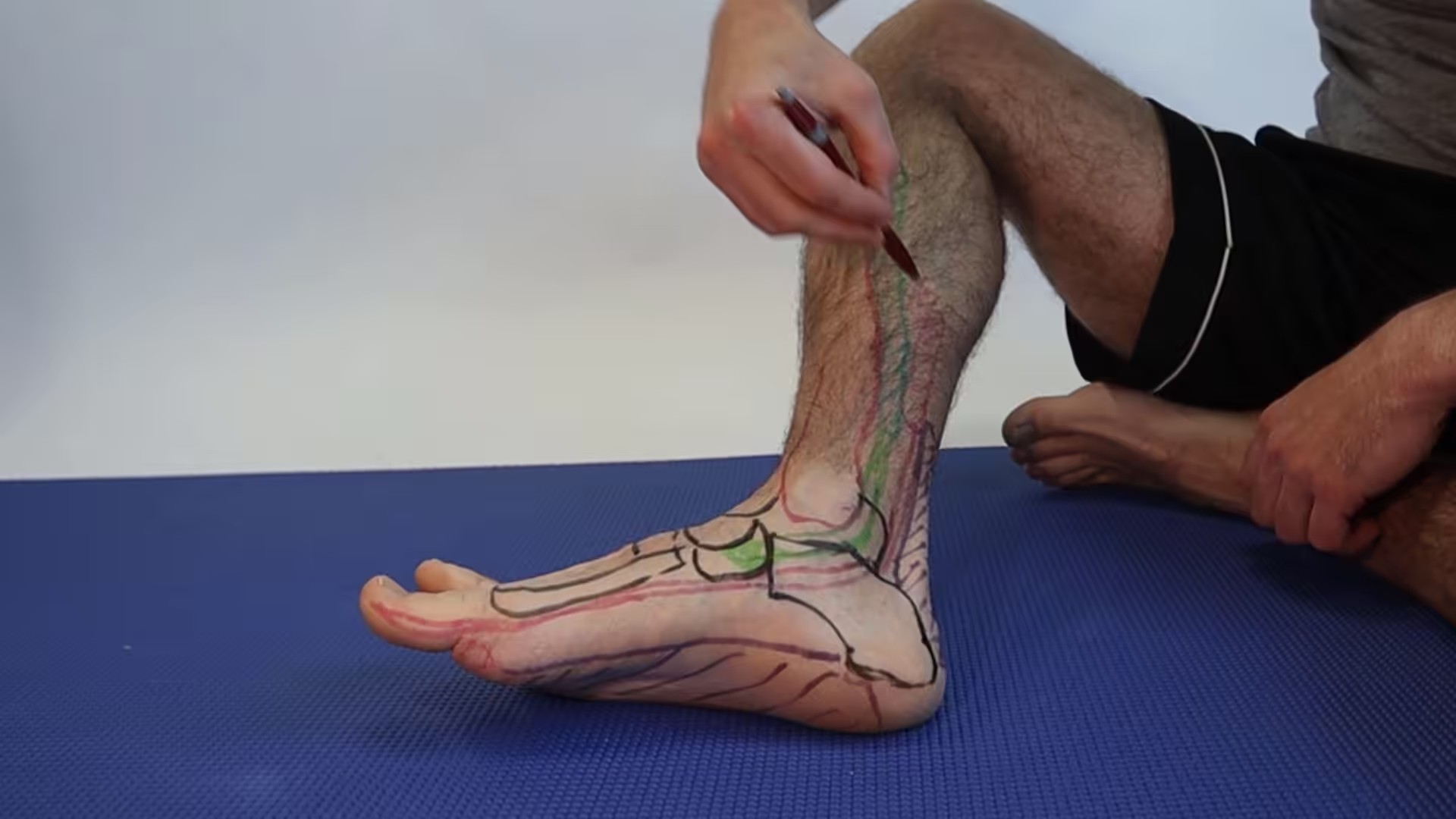
The flexor hallucis longus (FHL) tendon is one of the most important tendons in the foot—it runs from the calf, behind the ankle in a groove on the back of the talus and calcaneus, under the foot, and attaches to the base of the big toe. The FHL flexes (curls down) the big toe and contributes to push-off during walking and running. Because of its course behind the ankle through a fibro-osseous tunnel, the FHL is subject to specific pathology at this region: tendinopathy (degenerative pain), stenosing tenosynovitis (constriction within the tendon sheath), and partial tears.
FHL tendinopathy is sometimes called “dancer’s tendinitis” because ballet dancers are at particularly high risk—the extreme plantarflexion (pointing the foot) position in ballet maximally loads the FHL and compresses it in the posterior ankle groove. Athletes in gymnastics, figure skating, swimming, and running are also commonly affected. However, FHL problems also occur in non-athletes and are an underrecognized cause of posterior ankle and midfoot pain.
Symptoms of FHL Tendinopathy
FHL tendinopathy produces a characteristic pattern of symptoms: pain at the posterior ankle (behind the ankle bone), pain at the medial ankle or under the arch when flexing the big toe against resistance, and sometimes a triggering or catching sensation in the big toe (pseudohallux rigidus or “trigger toe”)—the tendon catching within its sheath as it moves. Deep posterior ankle pain that worsens with push-off, toe-off, or pointing the foot is a classic presentation.
Posterior ankle pain from FHL tendinopathy must be distinguished from posterior ankle impingement syndrome (bony impingement from an os trigonum accessory bone or large posterior talar process), other tendon problems (peroneal tendinopathy, Achilles tendinopathy), and tibial nerve pathology. MRI or ultrasound imaging is used to visualize the FHL tendon, assess for fluid within the tendon sheath (tenosynovitis), and identify partial tears. A diagnostic ultrasound-guided injection of the FHL sheath can confirm the diagnosis if imaging is equivocal.
Conservative Treatment
The majority of FHL tendinopathy cases respond to conservative treatment over 6–12 weeks. Activity modification is the most important initial step—reducing or eliminating the aggravating activities (particularly en pointe work in dancers, or toe-off-intensive activities in runners). Physical therapy targeting eccentric FHL strengthening, intrinsic foot muscle strengthening, and calf flexibility improves tendon loading mechanics. A heel lift (10–15mm) reduces posterior ankle tension. Anti-inflammatory measures including ice, NSAIDs, and occasionally a corticosteroid injection into the FHL tendon sheath can reduce acute inflammation.
Orthotics addressing any underlying biomechanical factors (excessive pronation, hallux limitus) complement physical therapy. For dancers, working with a physical therapist or dance medicine specialist on technique modification—reducing extreme plantarflexion demands where possible—is often necessary. Most patients with isolated FHL tendinopathy without significant structural pathology improve with consistent conservative management.
When Surgery Is Needed
Surgical treatment of FHL tendinopathy is considered when conservative measures have failed after 3–6 months of consistent treatment. The procedure involves arthroscopic or open release of the FHL tendon sheath (tenosynovectomy) to relieve the stenosing constriction, and debridement of any degenerative tendon tissue. When an os trigonum (accessory posterior ankle bone) is present and contributing to impingement, it is removed at the same time. Surgical outcomes for FHL release are good—approximately 85–90% of appropriately selected patients return to their previous activity level. Recovery requires 6–12 weeks in a boot followed by a progressive return-to-sport rehabilitation program of 3–6 months.
More Podiatrist-Recommended Foot Health Essentials
Hoka Clifton 10

Max-cushion everyday shoe — podiatrist favorite for walking and running.
PowerStep Pinnacle Insole

PowerStep Pinnacle Insoles, Orthotics for Plantar Fasciitis Relief, Made in USA Orthotic Insoles, Arch Support Inserts with Moderate Pronation, #1 Podiatrist Recommended (M 14-15)
- The Pinnacle Full length insoles for men & women provide maximum cushioning, from high activity to moderate support. The PowerStep arch support shape provides stability to the foot and ankle, helping to relieve foot pain.
- When you spend all day on your feet, every step counts. PowerStep insoles are a podiatrist-recommended orthotic to help relieve & prevent foot pain related to athletes, runners, Plantar Fasciitis, heel spurs & other common foot, ankle & knee injuries
- The Pinnacle plantar fasciitis insoles offer superior heel cushioning and arch support. The dual-layer cushioning is designed to reduce stress and fatigue, while PowerStep premium arch support is designed for plantar fasciitis relief.
- The PowerStep Pinnacle arch support inserts for men & women can be worn in several shoe types such as; athletic, walking, running, work & some casual shoes. Orthotic Inserts are ordered by shoe size, no trimming required.
- Made in the USA & backed by a 30-day money-back guarantee. PowerStep orthotic inserts for men & women are designed for shoes where the factory insole can be removed. HSA & FSA Eligible
The podiatrist-recommended over-the-counter orthotic.
OOFOS Recovery Slide

OOFOS OOahh Recovery Slide, Black – Women’s Size 14, Men’s Size 12
- The Original Recovery Footwear.
- Finding Your Size – For your perfect fit, consult the “size chart” link above. Wear a half size? In general, we recommend that women who wear a ½ size size UP, and men who wear a ½ size size DOWN
- OOahh – An evolution of the OOriginal, the OOahh slide features our proven foundation of OOfoam technology + patented footbed design with a slide-style strap that has become a best-seller in the OOFOS line
- OOfoam Technology – Our revolutionary OOfoam technology absorbs 37% more impact than traditional footwear foams to reduce the stress on your feet, joints & back. Plus, the closed-cell foam is machine washable and designed to minimize odor
- Patented Footbed – Our patented footbed cradles and supports arches to reduce energy exertion in the ankles by up to 47% compared to competitors’ footwear. So walking is easier. Recovery is faster. And yOO feel better
Impact-absorbing recovery sandal — wear after long days on your feet.
As an Amazon Associate, Balance Foot & Ankle earns from qualifying purchases. Product recommendations are based on clinical experience; prices and availability shown above update live from Amazon.
When to See a Podiatrist
If foot or ankle pain has been bothering you for more than a few weeks, home care alone may not be enough. Balance Foot & Ankle offers same-week appointments at our Howell and Bloomfield Hills clinics — no referral needed in most cases. Bring your current shoes and a short list of symptoms and we’ll build you a treatment plan in one visit.
Call Balance Foot & Ankle: (810) 206-1402 · Book online · Offices in Howell & Bloomfield Hills
Frequently Asked Questions
What causes FHL tendon problems in non-dancers?
In non-dancers, FHL tendinopathy typically develops from overuse activities with repetitive toe-off—running, especially with increased mileage or speed work, hiking on hilly terrain, and sports requiring explosive push-off (basketball, soccer). Anatomical factors including a narrow FHL tunnel, low-lying FHL muscle belly extending into the tunnel (a normal variant that increases crowding), and hindfoot malalignment (excessive pronation) can predispose to FHL irritation. Occasionally, ankle fractures or hindfoot surgery creates scar tissue that constricts the FHL sheath. Posterior ankle impingement from an os trigonum accessory bone compresses the FHL in the posterior ankle groove and frequently coexists with FHL tendinopathy.
What is trigger toe and is it related to the FHL tendon?
Yes—trigger toe (pseudohallux rigidus) is directly caused by FHL tendinopathy. When the FHL tendon is enlarged or has a nodule from chronic irritation, it catches within its sheath at the fibro-osseous tunnel behind the ankle. As the tendon tries to glide through the narrowed tunnel, it locks or triggers, preventing smooth big toe flexion. The hallmark sign is a big toe that snaps, locks, or catches during flexion—distinct from hallux rigidus (big toe joint arthritis) in that the restriction is in the tendon, not the joint. Trigger toe is pathognomonic of FHL stenosing tenosynovitis and is an indication for tendon sheath release when conservative measures fail.
How do I know if my posterior ankle pain is from the FHL or Achilles tendon?
The location and behavior of pain differs between FHL tendinopathy and Achilles tendinopathy. Achilles tendinopathy causes pain directly in the Achilles tendon itself—typically mid-substance (2–6 cm above the heel) or at the insertion point on the heel bone—and worsens with activities loading the calf (running, jumping, rising on toes). FHL tendinopathy causes pain deeper and medial (inside) to the Achilles, in the groove just behind and below the ankle bones, and is provoked specifically by big toe flexion and push-off. A diagnostic test: does resisting big toe flexion (pushing the toe down while you resist it) reproduce the pain? If so, FHL is implicated. MRI or ultrasound confirms the diagnosis and distinguishes between these conditions.
Medical References & Sources
- American Orthopaedic Foot & Ankle Society — Posterior Ankle Impingement
- PubMed Research — FHL Tendinopathy Treatment Outcomes
- PubMed Research — FHL Tendon Release Surgical Results
📧 Get Dr. Tom’s Free Lab Test Guide
Discover the 5 lab tests every person over 35 should ask their doctor about — explained in plain English by a board-certified physician.
Dr. Tom Biernacki, DPM is a board-certified podiatric surgeon at Balance Foot & Ankle in Howell and Bloomfield Hills, Michigan. He diagnoses and treats FHL tendinopathy, posterior ankle impingement, and related hindfoot conditions with both conservative management and surgical release procedures.
Join 950,000+ Learning About Foot Health
Dr. Tom shares honest medical advice, supplement reviews, and treatment guides you won’t find anywhere else.
📍 Located in Michigan?
Our board-certified podiatrists treat this condition at two convenient locations. Same-day appointments often available.
Medically Reviewed by: Dr. Tom Biernacki, DPM — Board-Certified Podiatrist, Balance Foot & Ankle Specialists
Insurance Accepted
BCBS · Medicare · Aetna · Cigna · United Healthcare · HAP · Priority Health · Humana · View All →
Howell Office
4330 E Grand River Ave
Howell, MI 48843
Get Directions →
Bloomfield Hills Office
43494 Woodward Ave, #208
Bloomfield Township, MI 48302
Get Directions →
Your Board-Certified Podiatrists



Ready to Get Back on Your Feet?
Same-week appointments available at both locations.
Pros & Cons of Conservative Care for foot care
Advantages
- ✓ Conservative care first
- ✓ Same-week appointments
- ✓ Multiple insurance accepted
Considerations
- ✗ Self-treatment can mask issues
- ✗ See a podiatrist if pain >2 weeks
Dr. Tom’s Recommended Products for foot care
Affiliate disclosure: As an Amazon Associate, Balance Foot & Ankle earns from qualifying purchases. We only recommend products we use with patients.
Footnanny Heel Cream Dr. Tom’s Pick
Best for: Daily moisturizer for cracked heels
Ready to Get Back on Your Feet?
Same-day appointments in Howell + Bloomfield Hills. Most insurance accepted. Dr. Tom Biernacki, DPM & team.
Book Today — Same-Day Appointments Available
Call Now: (810) 206-1402
About Your Care Team at Balance Foot & Ankle
Dr. Tom Biernacki, DPM · Board-Certified Foot & Ankle Surgeon. Specializes in conservative-first care, minimally invasive bunion surgery, and complex reconstruction.
Dr. Carl Jay, DPM · Accepting new patients. Specializes in sports medicine, athletic injuries, and routine podiatric care.
Dr. Daria Gutkin, DPM, AACFAS · Accepting new patients. Specializes in surgical reconstruction and pediatric podiatry.
Locations: 4330 E Grand River Ave, Howell, MI 48843 · 43494 Woodward Ave Suite 208, Bloomfield Township, MI 48302
Hours: Mon–Fri 8:00 AM – 5:00 PM · (810) 206-1402
In-Office Treatment at Balance Foot & Ankle
If home treatment isn’t providing relief for your Achilles tendon conditions, our podiatry team at Balance Foot & Ankle can help with same-day evaluations and advanced in-office care.
Related Conditions
Ready to Get Relief?
Same-day appointments available in Howell & Bloomfield Hills, MI
4.9★ | 1,123 Reviews | 3,000+ Surgeries
Or call: (810) 206-1402
