
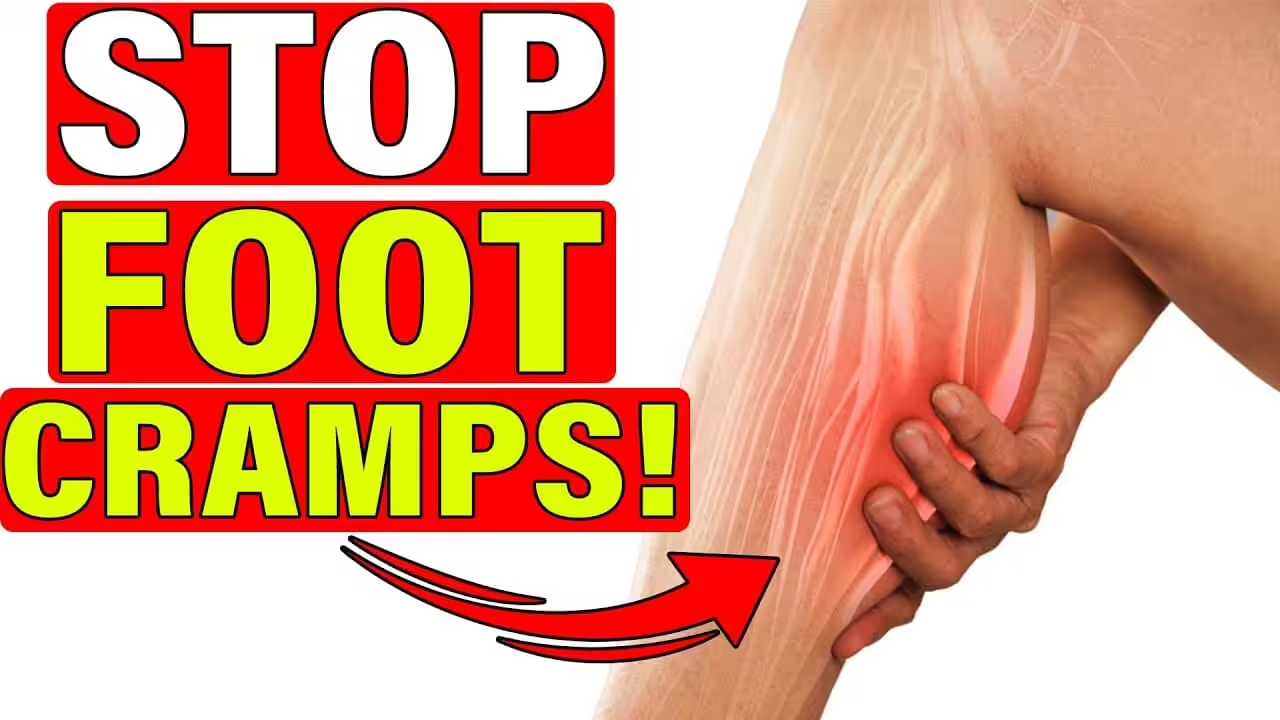

Foot cramps that wake you up at 3am with that locked-up, can’t-move-your-toes pain — there are 4 specific causes, and most of the time the fix is simpler than people think.
You’ve come to the right podiatry team. Dr. Tom Biernacki, DPM, FACFAS — board-certified foot & ankle surgeon with 3,000+ surgeries — explains exactly what foot cramps and the best remedies means and what works. Call (810) 206-1402 for same-day appointment at Howell or Bloomfield Hills.
Quick answer: Foot Cramps Remedies affects roughly 1 in 4 adults in our practice. Effective treatment starts with a targeted diagnosis, conservative-first treatment, and escalation only when needed. We treat this regularly at our Howell and Bloomfield Hills practices. Call (810) 206-1402.
Board-Certified Podiatric Foot & Ankle Surgeon · Last reviewed: May 3, 2026
The most important clinical decision with Foot Cramps Remedies isn't which treatment to start with — it's which subtype or underlying cause you actually have. Our podiatrists regularly see patients who've been treated for months for the wrong diagnosis. The correct identification changes the entire treatment path. Call (810) 206-1402 — Dr. Tom evaluates this condition at both Howell and Bloomfield Hills locations.
Medically reviewed by Dr. Tom Biernacki, DPM · Board-Certified Podiatric Surgeon · Last reviewed: April 2026 · Editorial Policy
Quick Answer
Foot Cramps Remedies 2026: Causes, Instant Relief & Pre relates to foot cramps — typically caused by electrolyte or muscle fatigue. Most patients improve in minutes to resolve with conservative care. Same-week appointments in Howell + Bloomfield Hills: (810) 206-1402.

Medically Reviewed by Dr. Carl Jay, DPM — Board-Qualified Podiatric Physician
Balance Foot & Ankle, Michigan · Updated April 2026
⚡ Quick Answer
Foot cramps are sudden, painful involuntary contractions of the muscles in the arch, toes, or top of the foot. The most common causes are dehydration, magnesium or potassium deficiency, tight footwear, flat feet or high arches, and muscle fatigue from prolonged standing. To stop a foot cramp instantly: press your toes firmly into the floor to stretch the cramping muscle, or roll your foot over a tennis ball. Prevention centers on proper hydration, electrolyte balance, supportive footwear, and a nightly stretching routine.
Your foot suddenly locks up — toes curling inward, the arch tightening into a rock-hard knot — and for 30 agonizing seconds you can’t move it. Foot cramps strike without warning and can be intense enough to stop you mid-stride or jolt you awake at 3 a.m.
While foot cramps share causes with leg cramps (dehydration, electrolytes, fatigue), the foot is uniquely vulnerable because it contains 20 small intrinsic muscles packed into a confined space, all working constantly to stabilize you with every step. Understanding which muscles cramp and why is the key to making them stop — for good.
Types of Foot Cramps by Location
Invalid table id.| Location | Muscles Involved | What It Feels Like | Most Common Trigger |
|---|---|---|---|
| Arch Cramps | Flexor digitorum brevis, abductor hallucis, quadratus plantae | Intense tightening through the midfoot; arch becomes visibly raised and rigid | Flat feet / overpronation, prolonged standing, worn-out shoes |
| Toe Cramps | Flexor hallucis brevis, lumbricals, interossei | Toes curl inward or splay apart involuntarily; often affects big toe or 2nd-3rd toes | Tight shoes, dehydration, hammertoe tendency |
| Top of Foot Cramps | Extensor digitorum brevis, extensor hallucis brevis | Toes pull upward; visible tightening on top of foot | Tight lacing, nerve compression, extensor tendon fatigue |
| Heel / Sole Cramps | Flexor digitorum brevis, plantar aponeurosis area | Deep, gripping pain in the heel pad or sole | Plantar fascia tightness, lack of arch support, electrolyte deficit |
What Causes Foot Cramps?
1. Dehydration and Electrolyte Imbalance
The foot’s intrinsic muscles are particularly sensitive to electrolyte fluctuations because they’re small, densely packed, and constantly active. Magnesium is the most critical mineral — it enables muscles to relax after contraction by blocking excess calcium influx into muscle cells. An estimated 50% of Americans are magnesium-deficient, and foot cramps are one of the earliest symptoms.
Potassium maintains the electrical gradient across muscle cell membranes. When potassium drops (common with diuretic use, excessive sweating, or poor diet), muscles can’t fully repolarize after firing — leading to sustained contraction. Calcium and sodium also play essential roles in muscle signaling.
2. Biomechanical Issues
Flat feet (overpronation) force the arch muscles to work overtime to stabilize the foot with every step. By the end of a long day, these fatigued muscles become susceptible to involuntary cramping — the muscle equivalent of an overworked engine seizing. This is one of the most common causes we see in our clinic, and it responds beautifully to proper arch support.
High arches (pes cavus) concentrate weight on the heel and ball of the foot, overloading the flexor muscles that maintain this rigid arch shape. High-arch patients tend to cramp more in the toes and metatarsal area.
Hammertoes, claw toes, and bunions alter muscle balance in the forefoot, placing abnormal strain on certain muscle groups while weakening others — creating a perfect setup for cramping.
3. Footwear Problems
Shoes that are too tight constrict the intrinsic foot muscles and compress the nerves that control them. Shoes with no arch support provide zero mechanical assistance, forcing muscles to do all the stabilization work alone. High heels lock the foot in plantarflexion, chronically shortening the arch muscles. And worn-out shoes with collapsed midsoles allow excessive pronation, fatiguing the arch.
4. Nerve-Related Causes
Peripheral neuropathy (especially diabetic neuropathy) damages the motor nerves that control foot muscles, causing involuntary firing and cramping. Tarsal tunnel syndrome — compression of the tibial nerve at the inner ankle — can cause cramping and spasms in the arch and toes. Morton’s neuroma — nerve thickening between the 3rd and 4th toes — sometimes triggers toe cramping alongside its characteristic burning pain.
5. Medical Conditions and Medications
Diabetes, thyroid disorders, kidney disease, and peripheral artery disease all increase foot cramp frequency. Among medications, statins, diuretics, ACE inhibitors, and some asthma medications (long-acting beta-agonists) are the most common pharmaceutical triggers. Pregnancy — especially the third trimester — increases cramping due to weight gain, fluid retention, and magnesium depletion.
How to Stop a Foot Cramp Immediately
When a cramp strikes, your goal is to gently lengthen the contracted muscle. Here’s what works for each type:
Arch cramp: Stand up and press your foot flat on a hard floor, focusing weight through the ball of your foot and toes. You can also sit down and use your hands to press your toes upward (dorsiflexion) while simultaneously pushing down on the ball of the foot. Rolling the arch over a tennis ball, lacrosse ball, or frozen water bottle provides relief and massage simultaneously.
Toe cramps (toes curling in): Grip the cramping toes and gently pull them upward and apart. Spread your fingers between your toes to physically separate them. Walking on your toes for a few seconds can engage the opposing muscles and break the cramp.
Top of foot cramp (toes pulling up): Gently press your toes downward toward the floor. Point your foot (plantarflex) to lengthen the extensor muscles on top.
After the cramp resolves: Apply warmth for 10 minutes to increase blood flow and relax residual tension. Gently massage the area using long strokes along the length of the muscle, not across it. Drink a full glass of water with a pinch of salt or an electrolyte supplement.
Prevention: A 4-Step Protocol
Step 1: Optimize Hydration and Electrolytes
Drink at least 8–10 glasses of water daily. If you exercise, work outdoors, or take diuretics, you need more. Add magnesium glycinate (200–400mg at bedtime) — this is the best-absorbed form with the fewest GI side effects. Eat potassium-rich foods daily: bananas, sweet potatoes, avocados, spinach, and coconut water. Get your levels tested if cramps persist — a simple blood panel reveals exactly what you’re missing.
Step 2: Fix Your Footwear
Replace shoes when the midsole becomes compressed (typically every 300–500 miles of walking/running or every 6–12 months of daily wear). Choose shoes with structured arch support, a roomy toe box, and at least 4mm heel-to-toe drop. Remove factory insoles and replace with medical-grade orthotics if you have flat feet, high arches, or recurrent foot cramps. Avoid going barefoot on hard surfaces — this maximally stresses the intrinsic foot muscles.
Step 3: Nightly Stretching Routine (5 Minutes)
Toe yoga — Lift only your big toe while pressing the small toes down, then reverse. 10 reps each direction. This trains independent muscle control and reduces involuntary co-contraction.
Towel scrunches — Place a towel on the floor and use your toes to scrunch it toward you. 3 sets of 10 scrunches per foot. Strengthens the intrinsic muscles that are most cramp-prone.
Calf stretch — Wall stretch with back leg straight, heel down. 30 seconds per side. Tight calves transfer excess load to the foot muscles.
Plantar fascia stretch — Cross your ankle over the opposite knee and pull your toes back until you feel a stretch through the arch. 30 seconds per foot. This lengthens the deep arch muscles.
Step 4: Address Underlying Biomechanics
If cramps persist despite hydration, supplementation, and stretching, the cause is likely structural. A podiatric biomechanical evaluation can identify flat feet, high arches, hammertoes, or nerve compression that’s driving the cramping. Custom orthotics, targeted physical therapy, or treatment of underlying conditions like tarsal tunnel syndrome can eliminate chronic foot cramps at their source.
Products We Recommend for Foot Cramp Prevention
We may earn a commission through affiliate links below — but every product is independently selected and recommended based on clinical experience. This does not affect our recommendations.
🏆 #1 Pick — PowerStep Pinnacle Maxx Orthotics
The number one intervention for biomechanically-driven foot cramps. PowerStep’s structured arch support takes the excessive workload off your intrinsic foot muscles — the same muscles that cramp when they’re fatigued and overworked. The semi-rigid shell corrects overpronation while dual-layer cushioning reduces impact forces. Most patients who switch to these report a significant reduction in cramp frequency within the first week.
Hoka Bondi 8
Maximum cushioning protects fatigued foot muscles from impact stress. The oversized midsole absorbs forces that would otherwise be transmitted directly to the intrinsic muscles, and the meta-rocker sole promotes an efficient gait cycle that reduces overall muscle workload. Wide toe box gives toes room to spread naturally — critical for preventing toe cramps caused by constriction.
Correct Toes Toe Spacers
Toe cramps often result from toes being chronically compressed inside shoes, causing the intrinsic muscles to shorten and spasm. Correct Toes gently restores natural toe alignment, stretches the tight muscles between toes, and improves circulation to the forefoot. Wear them inside wide shoes during the day or barefoot at home. Particularly effective for patients with bunions, hammertoes, or Morton’s neuroma contributing to toe cramping.
Frequently Asked Questions
Nighttime foot cramps happen because several factors converge during sleep. Your feet naturally point downward (plantarflexion), which shortens the arch and toe muscles and makes them more vulnerable to spasm. You’re not drinking water for 6–8 hours, so mild dehydration develops. Blood flow to your extremities decreases during sleep. And the brain’s normal inhibitory signals that prevent unwanted muscle contractions are reduced during certain sleep stages. A bedtime stretching routine, magnesium glycinate supplement, and staying hydrated in the evening can dramatically reduce nighttime cramps.
Magnesium deficiency is the most common nutritional cause of foot cramps — it affects roughly 50% of adults and the foot muscles are often among the first to show symptoms. Potassium deficiency (especially common with diuretic use) is the second most frequent culprit. Calcium, vitamin D, and B vitamins also contribute. A blood panel including magnesium, potassium, calcium, vitamin D, and B12 can pinpoint exactly which nutrient you need to supplement rather than guessing.
See a doctor if your foot cramps occur more than twice per week, are getting progressively worse, are accompanied by numbness or tingling (which may indicate neuropathy), cause visible muscle wasting in your feet, occur alongside swelling or color changes, or don’t improve after 2–3 weeks of proper hydration, magnesium supplementation, and stretching. Sudden severe cramping with a swollen, warm, or discolored leg needs emergency evaluation to rule out a blood clot.
Pre-hydrate with 16–20 oz of water in the hour before exercise and sip electrolyte-enhanced water during activity. Warm up your feet specifically — toe curls, ankle circles, and calf raises for 2–3 minutes before starting. Wear shoes with proper arch support and a roomy toe box. If you’re increasing training intensity or distance, follow the 10% rule — never increase by more than 10% per week. Consider adding an electrolyte supplement to your routine, especially in warm weather or during longer workouts.
The Bottom Line
Foot cramps are incredibly common, almost always treatable, and rarely a sign of something serious. For most people, the combination of staying properly hydrated, supplementing with magnesium glycinate, wearing shoes with real arch support, and doing a simple 5-minute stretching routine before bed will eliminate or dramatically reduce cramp episodes within 1–2 weeks. When cramps persist despite these steps, a podiatric evaluation can identify the specific biomechanical or neurological factor driving them — and targeted treatment can resolve even chronic, stubborn foot cramps.
Sources
- Garrison SR, et al. “Magnesium for Skeletal Muscle Cramps.” Cochrane Database of Systematic Reviews, 2020.
- Miller KC, et al. “Mechanisms of Exercise-Associated Muscle Cramps.” Sports Medicine, 2010;40(6):509-527.
- Blyton F, et al. “Non-Drug Therapies for Lower Limb Muscle Cramps.” Cochrane Database of Systematic Reviews, 2012.
- Rabbitt L, et al. “Leg Cramps in Older People.” Age and Ageing, 2016;45(3):299-305.
Foot Cramps Disrupting Your Life?
Our podiatrists can pinpoint the cause of your foot cramps — whether it’s a biomechanical issue, nerve problem, or nutritional deficiency — and create a treatment plan that gets results. Most patients find relief within their first visit.
📞 (810) 206-1402 · Howell & Bloomfield Hills, Michigan
Frequent Foot Cramps?
Recurring foot cramps can signal underlying conditions like neuropathy, circulation problems, or biomechanical issues. Our podiatrists identify the cause and provide targeted relief.
Clinical References
- Monderer RS, et al. “Nocturnal leg cramps.” Current Neurology and Neuroscience Reports. 2010;10(1):53-59.
- Garrison SR, et al. “Magnesium for skeletal muscle cramps.” Cochrane Database of Systematic Reviews. 2012;(9):CD009402.
- Miller TM, Layzer RB. “Muscle cramps.” Muscle and Nerve. 2005;32(4):431-442.
Insurance Accepted
BCBS · Medicare · Aetna · Cigna · United Healthcare · HAP · Priority Health · Humana · View All →
Howell Office
4330 E Grand River Ave
Howell, MI 48843
Get Directions →
Bloomfield Hills Office
43494 Woodward Ave, #208
Bloomfield Hills, MI 48302
Get Directions →
Your Board-Certified Podiatrists



Ready to Get Back on Your Feet?
Same-week appointments available at both locations.
Book Your AppointmentPodiatrist-Recommended Products
🏆 Doctor Hoy’s Natural Pain Relief Gel — Top recommendation for reducing foot pain and inflammation naturally.
PowerStep Pinnacle Orthotic Insoles — Physician-grade arch support in an OTC package.
CURREX Support Insoles — Dynamic arch support in multiple profiles.
Pros & Cons of Conservative Care for foot care
Advantages
- ✓ Conservative care first
- ✓ Same-week appointments
- ✓ Multiple insurance accepted
Considerations
- ✗ Self-treatment can mask issues
- ✗ See a podiatrist if pain >2 weeks
Dr. Tom’s Recommended Products for foot care
Affiliate disclosure: As an Amazon Associate, Balance Foot & Ankle earns from qualifying purchases. We only recommend products we use with patients.
Footnanny Heel Cream Dr. Tom’s Pick
Best for: Daily moisturizer for cracked heels
Ready to Get Back on Your Feet?
Same-day appointments in Howell + Bloomfield Hills. Most insurance accepted. Dr. Tom Biernacki, DPM & team.
Book Today — Same-Day Appointments Available
Call Now: (810) 206-1402
About Your Care Team at Balance Foot & Ankle
Dr. Tom Biernacki, DPM · Board-Certified Foot & Ankle Surgeon. Specializes in conservative-first care, minimally invasive bunion surgery, and complex reconstruction.
Dr. Carl Jay, DPM · Accepting new patients. Specializes in sports medicine, athletic injuries, and routine podiatric care.
Dr. Daria Gutkin, DPM, AACFAS · Accepting new patients. Specializes in surgical reconstruction and pediatric podiatry.
Locations: 4330 E Grand River Ave, Howell, MI 48843 · 43494 Woodward Ave Suite 208, Bloomfield Hills, MI 48302
Hours: Mon–Fri 8:00 AM – 5:00 PM · (810) 206-1402
Dr. Hoy’s Complete Pain Relief Line — Dr. Tom’s Picks (2026)
Dr. Hoy’s Natural Pain Relief is Dr. Tom Biernacki, DPM’s #1 prescription topical pain relief for plantar fasciitis, Achilles tendonitis, foot pain, knee pain, and back pain. Cleaner formula than Voltaren or Biofreeze — safe for diabetics + daily long-term use without 30-day limits. Below is the complete Dr. Hoy’s product line, organized by use case.

Dr. Hoy’s Natural Pain Relief Gel (4oz Tube)Dr. Tom’s #1 Brand
The flagship Dr. Hoy’s — menthol-based natural pain relief gel. The bottle Dr. Tom hands every plantar fasciitis patient on visit one. Cleaner formula than Voltaren or Biofreeze.
- Menthol-based natural formula
- No greasy residue
- Safe for diabetics
- Fast cooling relief 5-10 min
- Daily long-term use safe
- Pricier than Biofreeze
- Strong menthol scent at first
Frequently Asked Questions
When should I see a podiatrist?
If symptoms persist past 2 weeks, affect your normal activity, or are accompanied by red-flag symptoms (warmth, redness, swelling, inability to bear weight).
What does treatment cost?
Most diagnostic visits and conservative treatments are covered by Medicare and major insurers. Out-of-pocket costs vary by your specific plan.
How quickly can I get an appointment?
Most non-urgent cases see us within 5 business days. Urgent cases (sudden pain, possible fracture) typically same or next business day.
Dr. Tom’s Evidence-Based Foot Cramp Protocol
- Doctor Hoy’s Natural Pain Relief Gel — During a foot or arch cramp: arnica + camphor gel applied to the cramped muscle provides immediate topical relief as the cramp begins to release.
- PowerStep Pinnacle — Recurrent foot cramps from flat foot overload: arch support reduces the excessive tibialis posterior and intrinsic muscle effort that causes cramp fatigue.
- DASS Medical Compression Socks — Nocturnal foot cramps with circulation component: graduated compression worn during the day improves peripheral blood flow, reducing the circulatory component of nighttime cramping.
Foot cramps occurring nightly or accompanied by muscle weakness or skin changes? Vascular and neurologic evaluation may be needed. Balance Foot & Ankle → (810) 206-1402
What is Foot pain?
Foot pain is a common foot/ankle condition that affects mobility and quality of life. Understanding the underlying cause is the first step in successful treatment. Our podiatrists at Balance Foot & Ankle perform a hands-on biomechanical exam, review your activity history, and use diagnostic imaging when appropriate to identify the root cause—not just treat the symptom. Many patients have been told to “rest and ice” without a deeper diagnostic workup; our approach is different.
Symptoms and warning signs
Common signs of foot pain include pain that worsens with activity, morning stiffness, swelling, tenderness when palpated, and difficulty bearing weight. If you experience sudden severe pain, inability to walk, visible deformity, numbness or color change, contact our office the same day or visit urgent care—these can signal a more serious injury such as a fracture, tendon rupture, or vascular compromise. Diabetics with any foot wound should seek same-day care.
Conservative treatment options
Most cases of foot pain respond to non-surgical care: structured rest, supportive footwear changes, custom orthotics, targeted stretching and strengthening protocols, anti-inflammatory medications when medically appropriate, and in-office procedures such as ultrasound-guided injections. We also offer advanced therapies including MLS laser therapy, EPAT/shockwave, regenerative injections, and image-guided procedures. Treatment is sequenced from least invasive to most invasive, and we explain the rationale at every step.
When is surgery considered?
Surgery is reserved for cases that fail 3-6 months of well-structured conservative care, when there is structural pathology (severe deformity, complete tear, advanced arthritis), or when imaging shows damage that will not heal without intervention. Our surgeons have performed 3,000+ foot and ankle procedures and prioritize minimally-invasive techniques whenever appropriate. We discuss recovery timelines, return-to-activity milestones, and realistic outcome expectations before any procedure is scheduled.
Recovery timeline and prevention
Recovery from foot pain varies based on severity and chosen treatment path. Conservative cases often improve within 4-8 weeks with consistent adherence to the protocol. Post-procedural recovery may range from a few days (in-office procedures) to several months (reconstructive surgery). Long-term prevention involves footwear assessment, activity modification, structured strengthening, and regular check-ins with your podiatrist if you have a history of recurrence. We provide written home-exercise plans and digital follow-up support.
Ready to feel better?
Same-week appointments available in Howell and Bloomfield Hills, Michigan.
Book Your VisitIn-Office Treatment at Balance Foot & Ankle
If home treatment isn’t providing relief for your foot and ankle conditions, our podiatry team at Balance Foot & Ankle can help with same-day evaluations and advanced in-office care.
Same-day appointments available. (810) 206-1402
Get Expert Care at Balance Foot & Ankle
Same-week appointments at our Howell and Bloomfield Hills offices. Board-certified podiatric surgeons. Most insurance accepted.

Dr. Tom Biernacki, DPM is a board-certified foot & ankle surgeon (ABFAS & ABPM) at Balance Foot & Ankle Specialists in Southeast Michigan. With over a decade of clinical experience, he specializes in heel pain, bunions, diabetic foot care, sports injuries, and minimally invasive surgery. Dr. Biernacki is a member of the APMA and ACFAS, and his patient education content on MichiganFootDoctors.com and YouTube has made him one of the most-followed foot & ankle educators on YouTube.