
Medically reviewed by Dr. Tom Biernacki, DPM
Board-certified podiatric surgeon | Balance Foot & Ankle, Howell & Bloomfield Hills, MI
Last reviewed: May 2026
| Treatment | Setting | Clearance Rate | Sessions Needed | Pain Level | Best Indication |
|---|---|---|---|---|---|
| Salicylic acid (17–40%) | Home | 50–75% | Daily × 6–12 weeks | None–mild | Small, superficial warts; first-line OTC |
| Cryotherapy (liquid nitrogen) | Office | 65–80% | 1–5 sessions (every 2–4 weeks) | Moderate (burning/stinging) | Standard office treatment; any plantar wart |
| Cantharidin | Office only | 80–90% | 1–3 applications | None at application; blister pain 24–48h | Children; mosaic warts; cryotherapy failures |
| Immunotherapy (Candida antigen injection) | Office | 70–80% | 3–6 injections | Moderate (injection site) | Multiple/resistant warts; immune stimulation preferred |
| Laser (CO2 or pulsed dye) | Office/surgical | 75–90% | 1–4 sessions | Moderate; local anesthetic often used | Resistant warts; large mosaic warts |
| Surgical excision / curettage | Office/surgical | High single-session | 1 | Moderate (local anesthetic) | Single large wart; rapid clearance desired |
| Bleomycin injection | Specialist office | 85–95% | 1–3 | Significant (injection) | Resistant warts; mosaic warts; last resort |
| Wart Characteristic | Recommended First-Line | If No Response (6–8 weeks) |
|---|---|---|
| Single small wart (<1cm); recent onset | Salicylic acid 40% pad | Cryotherapy or cantharidin |
| Multiple warts; spreading | Cantharidin or Candida immunotherapy | Bleomycin or laser |
| Mosaic wart (large confluent cluster) | Cantharidin + SA combination | Laser or bleomycin |
| Wart present >2 years; failed OTC treatment | Podiatry evaluation; cryotherapy or immunotherapy | Laser; bleomycin; surgical excision |
| Diabetic patient | Podiatry office only — no home SA | Conservative office treatments only; avoid aggressive |
| Immunocompromised patient | Podiatry / dermatology; aggressive treatment often needed | Systemic agents (cidofovir) in severe cases |
A persistent wart on your foot that resists every drugstore option? Office-based treatments actually clear them.
You are in the right place. Dr. Tom Biernacki, DPM, FACFAS — board-certified foot & ankle surgeon with 3,000+ surgeries — explains exactly what foot warts treatment in adults means and what works. Call (810) 206-1402 for same-day appointment at Howell or Bloomfield Hills.
Quick answer: Treatment for foot warts treatment adults follows a stepwise approach: 1) conservative care first (rest, ice, supportive footwear, OTC anti-inflammatories), 2) physical therapy and targeted exercises, 3) in-office treatments (injections, custom orthotics) if conservative fails at 4-6 weeks, 4) surgery for refractory cases. Most patients resolve at step 1 or 2. Call (810) 206-1402.
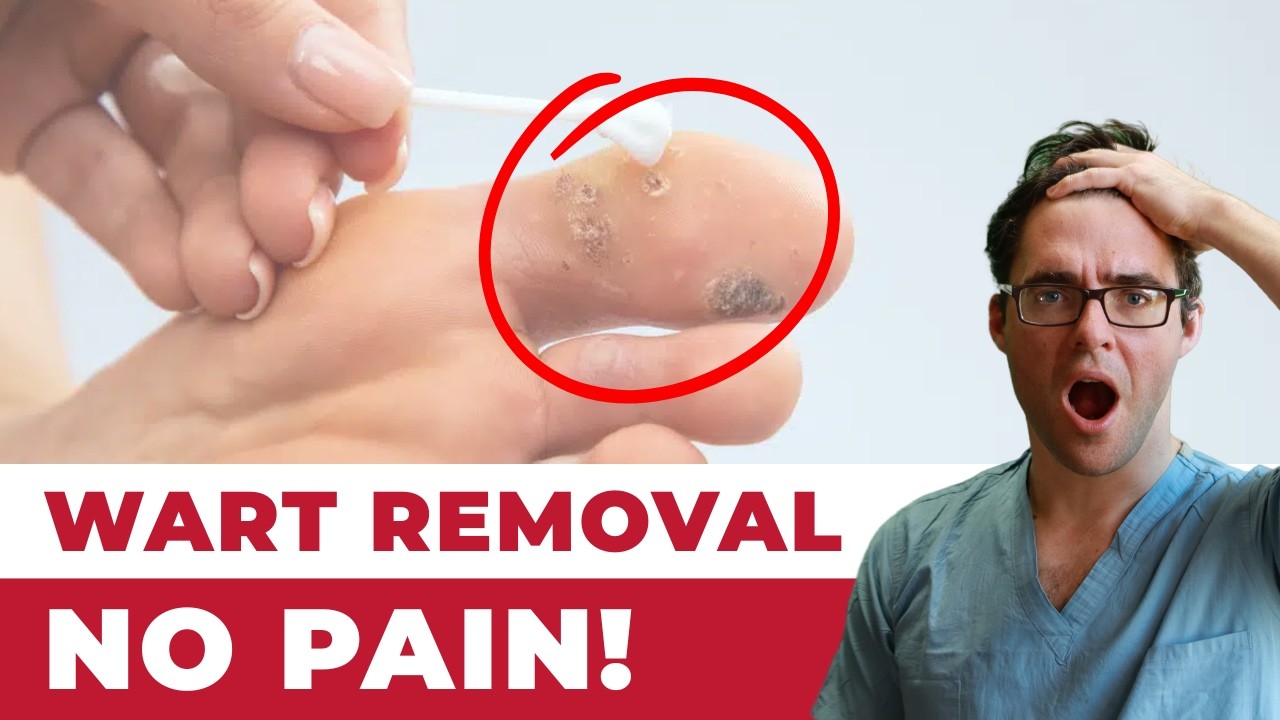
Watch: Plantar Wart Removal — MichiganFootDoctors YouTube
Medically Reviewed | Dr. Tom Biernacki, DPM | Board-Certified Podiatrist | Balance Foot & Ankle, Michigan
The most important clinical decision with Foot Warts Treatment Adults isn’t which treatment to start with — it’s identifying the correct subtype. That changes everything. Call (810) 206-1402.
The most important clinical decision with Foot Warts Treatment Adults isn’t which treatment to start with — it’s identifying the correct subtype. That changes everything. Call (810) 206-1402.
Why Adults Are Harder to Treat Than Children

Plantar warts are caused by human papillomavirus (HPV) — specifically HPV types 1, 2, and 4 for plantar warts. Children clear plantar warts spontaneously in 65% of cases within 2 years through immune recognition of the virus. Adults have more established HPV tolerance in the immune system, meaning the body is less likely to mount the attack that clears the wart. This is why plantar warts in adults require active treatment and why multiple sessions are typically needed.
Treatment Options Ranked by Evidence
Salicylic acid (OTC and prescription strength): OTC Dr. Scholl’s Plantar Wart Remover (40% salicylic acid) applied daily after paring (removing the superficial callus). Consistent 3–6 month daily use achieves cure in 60–70% of cases in adults. The keys: (1) pare the wart with an emery board or pumice before each application to remove dead skin so acid reaches live wart tissue; (2) don’t miss applications — 3 times per week is far less effective than daily use. Prescription-strength 60% salicylic acid applied in-office accelerates the timeline.
Cryotherapy (liquid nitrogen): Applied in-office to freeze the wart tissue. Creates a blister; wart tissue sloughs off over 1–2 weeks. Typically requires 3–4 sessions at 2–3 week intervals. Success rates: 50–70% for plantar warts after multiple sessions. Effective, moderately painful, and accessible. My standard second-line treatment after adequate salicylic acid trials.
Cantharidin (“beetle juice”): A vesicant derived from blister beetles, applied in-office. Creates a blister under the wart that separates it from the dermis. Painless at application, sore for 24–48 hours afterward. Among the most effective in-office single treatments for plantar warts. Often combined with salicylic acid and cryotherapy for mosaic (multiple) wart clusters.
Swift microwave immunotherapy: The newest and most evidence-backed immunotherapy approach. Microwave energy applied directly to the wart triggers an immune response against HPV. Typically 3–4 sessions at monthly intervals. Success rates of 70–80% even for resistant warts. No blister or wound created — minimal downtime. Becoming the standard for recalcitrant plantar warts in podiatric practice.
Frequently Asked Questions
How long does it take to get rid of plantar warts in adults? 3–6 months with consistent treatment. Faster with in-office procedures. Swift microwave usually achieves results in 3–4 monthly sessions.
Will plantar warts go away without treatment in adults? Eventually — but the average untreated adult plantar wart persists for 2–3 years. Active treatment significantly shortens this timeline and prevents spread to other areas.
Michigan Foot Pain? See Dr. Biernacki In Person
Same-week appointments at our Howell and Bloomfield Hills offices.
📞 (810) 206-1402 Book Online →Frequently Asked Questions
How long does treatment take to work?
Most patients see improvement in 4-8 weeks with consistent conservative care. Persistent symptoms after 8 weeks need imaging and escalation.
When is surgery needed?
Surgery is reserved for cases that fail 3-6 months of conservative care, structural deformities, or fractures requiring stabilization.
Is this covered by insurance?
Most diagnostic visits and conservative treatments are covered by Medicare and major insurers. Custom orthotics often require diabetic or post-surgical justification.
In-Office Treatment at Balance Foot & Ankle
If home treatment isn’t providing relief for your plantar warts, our podiatry team at Balance Foot & Ankle can help with same-day evaluations and advanced in-office care.
Foot Health & Care Resource Center (American Podiatric Medical Association)
Ready to Get Relief?
Same-day appointments available in Howell & Bloomfield Hills, MI
4.9★ | 1,123 Reviews | 3,000+ Surgeries
Or call: (810) 206-1402

Dr. Tom Biernacki, DPM is a board-certified foot & ankle surgeon (ABFAS & ABPM) at Balance Foot & Ankle Specialists in Southeast Michigan. With over a decade of clinical experience, he specializes in heel pain, bunions, diabetic foot care, sports injuries, and minimally invasive surgery. Dr. Biernacki is a member of the APMA and ACFAS, and his patient education content on MichiganFootDoctors.com and YouTube has made him one of the most-followed foot & ankle educators on YouTube.