
Medically reviewed by Dr. Tom Biernacki, DPM
Board-certified podiatric surgeon | Balance Foot & Ankle, Howell & Bloomfield Township, MI
Last reviewed: May 2026

You are in the right place. Dr. Tom Biernacki, DPM, FACFAS — board-certified foot & ankle surgeon with 3,000+ surgeries — explains exactly what in-toeing (pigeon-toed walking) means and what works. Call (810) 206-1402 for same-week appointment at Howell or Bloomfield Township.
Quick answer: In Toeing is a common foot/ankle topic that affects many patients. The 2026 evidence-based approach combines proper diagnosis, conservative-first treatment, and escalation only when needed. We treat this regularly at our Howell and Bloomfield Township practices. Call (810) 206-1402.
In-Toeing: Quick Answer
In-toeing (also called “pigeon toes”) is when a child’s feet point inward when walking. Three main causes by age: metatarsus adductus (newborn-2 years — the foot itself curves inward); internal tibial torsion (1-3 years — the lower leg rotates inward); femoral anteversion (3-8 years — the upper leg rotates inward at the hip). Most cases resolve spontaneously by age 8-10 without treatment. The classic “twisted feet” appearance worries parents but is normal developmental variation in 90%+ of cases. Treatment is rarely needed — only severe cases that persist beyond age 8-10 may benefit from corrective shoes, physical therapy, or (very rarely) surgery. Reassurance is the most common podiatrist intervention. Persistent in-toeing past age 10 with functional limitations warrants gait analysis and possibly orthotics.
What Is In-Toeing? (And Why Parents Worry)
In-toeing — colloquially called “pigeon toes” — describes a gait pattern where one or both feet point inward (medially) instead of straight ahead during walking. It’s extremely common in young children and is a normal developmental variation in the vast majority of cases.
The cause depends on the child’s age, and the level of the rotation determines the cause:
Foot level (newborn-2 years): Metatarsus adductus — the foot itself is curved inward (the forefoot bends in relative to the heel).
Lower leg level (1-3 years): Internal tibial torsion — the tibia (shin bone) is rotated inward.
Upper leg level (3-8 years): Femoral anteversion — the femur (thigh bone) is rotated inward at the hip.
These conditions usually resolve spontaneously as the child grows. The femur naturally derotates by age 8-10. Tibial torsion typically resolves by age 4-5. Metatarsus adductus often self-corrects in the first year of life.
Cause #1: Metatarsus Adductus (Newborn-2 Years)
Metatarsus adductus is when the forefoot is angled inward relative to the heel. The foot looks “C-shaped” or “kidney-shaped.” Most commonly noticed shortly after birth.
Causes: Position in utero (especially in first pregnancies, multiple pregnancies, or breech position); genetic factors; relative tightness of certain foot muscles.
Severity: Mild (passively correctable to neutral) — almost always resolves in first year. Moderate (passively correctable beyond neutral but reverts) — usually resolves with stretching. Severe (rigid, cannot be passively corrected) — may require serial casting and rarely surgery.
Treatment: Mild — observation; gentle stretching by parent (gently push the forefoot outward several times per day). Moderate — same plus reverse-last shoes. Severe — serial casting in early infancy; rarely surgical correction.
Outcome: 85-90% resolve spontaneously or with simple stretching. <5% require surgery.
Cause #2: Internal Tibial Torsion (1-3 Years)
The tibia rotates internally relative to the femur. When the child stands with kneecaps pointing forward, the feet point inward.
Cause: Normal developmental variation — newborn tibial torsion is normally internal (medial), gradually rotating to slight external (lateral) by adulthood. Some children are slower to derotate.
Diagnosis: Lay child prone on exam table. Bend the knee 90 degrees. Note the angle between the foot axis and the thigh — this is the thigh-foot angle. Normal in newborns: -15° (internal). Normal at age 5: 0° to +20° (slight external). Internal tibial torsion causes the foot axis to rotate inward.
Treatment: Generally NONE needed. The tibia derotates gradually with normal growth until age 4-5. Special “twister cables” or “Denis Browne bars” used in past decades have been shown to NOT help and are no longer recommended.
Outcome: 95%+ resolve spontaneously by age 4-5. Persistent severe torsion past age 8-10 may warrant orthopedic referral.
Cause #3: Femoral Anteversion (3-8 Years)
The femoral neck rotates internally at the hip joint, causing the entire leg to rotate inward. The hallmark: child sits in “W-position” (legs bent and rotated outward, knees facing forward) because internal hip rotation is preferred.
Cause: Normal developmental variation. All children are born with high femoral anteversion (~40°), which gradually decreases to 10-15° by adulthood. Some children are slower to derotate.
Diagnosis: Examine hip rotation in prone position with knee flexed. Normal hip internal rotation: 30-50° in toddlers; 30° in adults. Excessive internal rotation (60-80°) with limited external rotation suggests femoral anteversion.
Treatment: Generally NONE needed. Discourage W-sitting (it perpetuates the deformity). Encourage cross-legged sitting. Treadmill walking (mild external rotation force) helps in older children.
Outcome: 90%+ resolve spontaneously by age 8-10. Severe persistent cases past age 10-11 may warrant orthopedic referral; surgical derotation osteotomy is rarely needed but exists for severe functional cases.
When to Worry: Red Flags That Need Evaluation
See a podiatrist or pediatric orthopedic surgeon if: In-toeing is asymmetric (one side much worse than other); progressive worsening rather than gradual resolution; associated with frequent tripping/falling; pain in feet, knees, or hips; persistence past age 10 with functional limitations; suspicion of underlying neurologic condition (cerebral palsy, hereditary motor and sensory neuropathies); skin abnormalities or foot deformities besides the in-toeing.
Imaging may be warranted: X-rays for rigid metatarsus adductus or persistent severe deformity. CT scan for femoral version measurement in severe cases.
Most cases need NO imaging or treatment — just reassurance and observation.
Common Myths About In-Toeing
Myth: “In-toeing causes long-term problems.” TRUTH: Most cases resolve spontaneously without long-term consequences. Adults with mild residual in-toeing typically have normal function.
Myth: “Special shoes will fix in-toeing.” TRUTH: Most “corrective shoes” sold for in-toeing have no proven benefit. The deformity resolves with growth, not with shoes.
Myth: “Braces or twister cables will help.” TRUTH: Studies have shown these don’t change the natural history. They’re no longer recommended.
Myth: “Children should be made to point their feet straight when walking.” TRUTH: Don’t correct gait deliberately — let the child walk naturally. Self-conscious “correction” can cause balance problems.
Myth: “All in-toeing should be treated by an orthopedic surgeon.” TRUTH: Most cases are normal developmental variation that podiatrists or pediatricians can manage with reassurance and observation. Orthopedic referral only for severe persistent cases past age 8-10 with functional issues.
When to See a Podiatrist or Pediatrician
Routine pediatrician well-visits typically include observation of gait. Most pediatricians can evaluate and reassure parents without referral.
Podiatrist or pediatric orthopedic referral if: parents need detailed reassurance after pediatrician visit; in-toeing is severe or asymmetric; pain or functional limitations are present; persistence past age 8-10; suspicion of underlying neurologic condition; family history of severe in-toeing requiring surgery.
At Balance Foot & Ankle we evaluate pediatric foot conditions including in-toeing. Most parents leave the visit reassured that their child’s feet are developing normally.
When Shoes Aren’t Enough — Dr. Tom’s Top 9 Orthotics
About 30% of patients I see for foot pain need MORE than a great shoe — they need a structured insole. Below: my complete 2026 orthotic ranking with pros, cons, and the specific patient I’d give each one to.


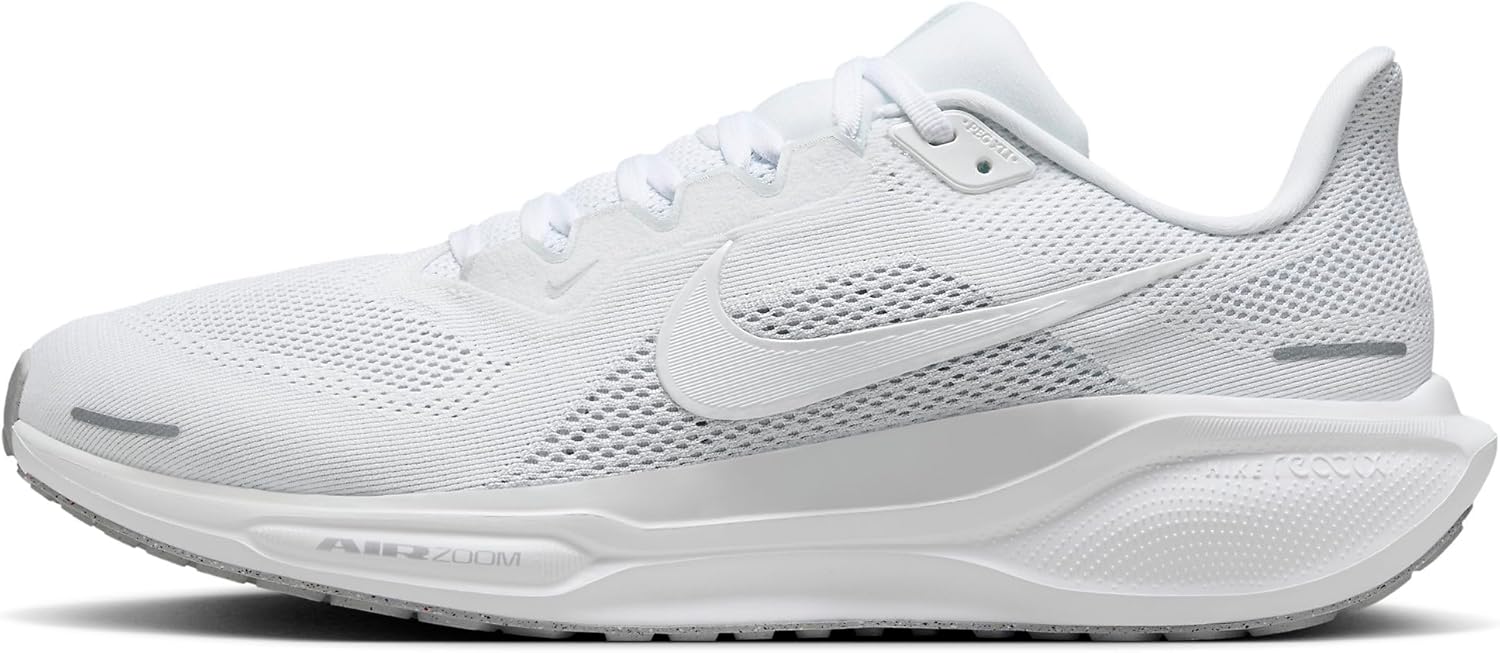


In-Office Treatment at Balance Foot & Ankle
If home treatment isn’t providing relief for your flat feet, our podiatry team at Balance Foot & Ankle can help with same-week evaluations and advanced in-office care.
Frequently Asked Questions About In-Toeing
What causes in-toeing in children?
Three main causes by age: metatarsus adductus (newborn-2 yrs – foot curves inward), internal tibial torsion (1-3 yrs – shin rotates in), femoral anteversion (3-8 yrs – thigh rotates in at hip). Almost all are normal developmental variations.
Will my child grow out of in-toeing?
Yes — 90%+ of children outgrow in-toeing by age 8-10 without any treatment. Femoral anteversion is the slowest to resolve.
Should I take my pigeon-toed child to a doctor?
Routine: pediatrician evaluation at well visits is sufficient for most cases. Specialized: podiatrist or pediatric orthopedic if asymmetric, painful, severely limiting, or persistent past age 8-10.
Do special shoes help in-toeing?
No — most “corrective shoes” sold for in-toeing have no proven benefit. The deformity resolves with growth, not shoes.
Is in-toeing the same as bowed legs?
No — different conditions. In-toeing is a rotational issue; bowed legs (genu varum) is angular. Many young children have both — both usually resolve spontaneously.
Can in-toeing cause hip problems later?
Mild residual in-toeing (most adults with childhood in-toeing have some) doesn’t cause significant adult problems. Severe untreated cases very rarely require surgical correction in adulthood.
Why does my child W-sit?
Children with femoral anteversion prefer W-sitting because it puts hips in their preferred internal rotation. Discouraging W-sitting and encouraging cross-legged sitting helps gradual derotation.
Related Resources from Balance Foot & Ankle
- Sever’s Disease (Pediatric Heel Pain)
- Best Orthotics for Flat Feet
- Foot Shape Types
- Best Shoes for Flat Feet
- Pronation Explained
Ready to fix this for good?
Reading goes so far. The fastest path is a 30-minute office visit. Same-day Howell or Bloomfield Township. Call (810) 206-1402.
AAOS OrthoInfo: In-Toeing Treatment
Ready to Get Relief?
Same-week appointments available in Howell & Bloomfield Township, MI
4.9★ | 1,123 Reviews | 3,000+ Surgeries
Or call: (810) 206-1402

Dr. Tom Biernacki, DPM is a board-certified foot & ankle surgeon (ABFAS & ABPM) at Balance Foot & Ankle Specialists in Southeast Michigan. With over a decade of clinical experience, he specializes in heel pain, bunions, diabetic foot care, sports injuries, and minimally invasive surgery. Dr. Biernacki is a member of the APMA and ACFAS, and his patient education content on MichiganFootDoctors.com and YouTube has made him one of the most-followed foot & ankle educators on YouTube.
More questions patients ask
What causes in-toeing (pigeon toes)?
In-toeing stems from tibial torsion (twisted shin bone), femoral anteversion (inward hip rotation), or metatarsus adductus (curved forefoot). Most children outgrow it by age 8 without treatment.
When does in-toeing need treatment?
In-toeing rarely needs intervention if it's improving and not causing pain. Persistent in-toeing causing tripping, pain, or affecting gait after age 8 warrants evaluation. Custom orthotics help in some cases.
When should I see a podiatrist for in-toeing?
See Dr. Tom Biernacki DPM if in-toeing persists >4 weeks, worsens, or prevents normal walking. Same-day at Balance Foot & Ankle — Howell & Bloomfield Township. (810) 206-1402.
Does insurance cover podiatry in Michigan?
Most PPO plans and Medicare Part B cover medically necessary podiatry. We accept BCBS and most Michigan insurers. Call (810) 206-1402.
Still have a question about coverage or cost? Book online and we will check your benefits before your visit: Book in Howell · Book in Bloomfield Township. Prefer to talk it through first? Call (810) 206-1402.