

| Non-Surgical Method | Mechanism | Evidence | Best For | Success Rate |
|---|---|---|---|---|
| Warm water + antiseptic soaks | Softens nail and periungual skin; reduces bacterial load; reduces inflammation | Moderate (expert consensus) | Stage 1 — tenderness without pus | 60–70% at Stage 1 with proper technique |
| Cotton/foam gutter splint (nail bracing) | Guides nail edge over skin groove without cutting; creates drainage channel | Moderate (clinical studies) | Stage 1–2; patients wanting to avoid procedure | 65–75% resolution over 4–8 weeks |
| Taping technique (lateral nail fold traction) | Pulls skin away from nail edge; reduces pressure; allows drainage | Moderate (Japanese literature) | Stage 1–2; children; pregnant patients | 70–80% in compliant patients |
| Nail edge filing (beveled edge) | Removes sharp spike that embeds in sulcus tissue | Moderate | Early Stage 1; nail edge visible and accessible | Helpful as adjunct; rarely sufficient alone |
| Topical antibiotic + daily dressing | Reduces superficial bacterial colonization; prevents Stage 1→2 progression | Low (supportive only) | Stage 1 with mild redness — adjunct to soaks | Not curative; preventive only |
| BS brace (nail corrector brace) | Memory wire brace glued to nail surface; exerts corrective force over weeks | Moderate (clinical series) | Recurrent ingrown nail; structural overcurving | 75–85% over 3–6 months of bracing |
| Stage | Appearance | Non-Surgical Appropriate? | In-Office Procedure | Time to Resolution |
|---|---|---|---|---|
| Stage 1 — Mild inflammation | Tenderness, redness along nail border; no pus; no granulation tissue | Yes — 60–70% resolve with soaks + taping | Optional — nail edge elevation or gutter splint | 1–3 weeks |
| Stage 2 — Infection + granulation | Swelling, discharge (clear or yellow), granulation tissue forming on nail fold | Limited — soaks only; probing contraindicated | Partial nail avulsion recommended for faster resolution | Weeks to months without procedure |
| Stage 3 — Severe infection | Frank pus, large granulation tissue, severe pain, possible fever | No — infection risk too high | Partial nail avulsion + oral antibiotics essential | Procedure + 2–4 weeks healing |
| Recurrent (3+ episodes) | History of repeated ingrown, same border | No — temporary measures only | Phenol matricectomy — 95% permanent cure rate | Single procedure; 2–3 week healing |
| Diabetic / immunocompromised | Any stage | No — all stages require podiatric care | Same-day podiatry evaluation regardless of apparent severity | Urgent |
Foot pain isn't resolving?
Same-week appointments at Howell & Bloomfield Township
The internet is full of terrifying descriptions of ingrown toenail “surgery” — incisions, sutures, phenol, weeks of recovery. No wonder so many patients try to tough it out at home long past the point where home treatment can help. The truth? The vast majority of ingrown toenails that come through our door at Balance Foot & Ankle don’t need anything close to surgery. They need a brief, highly effective office procedure that takes about 10 minutes and has you walking out in a regular shoe the same day.
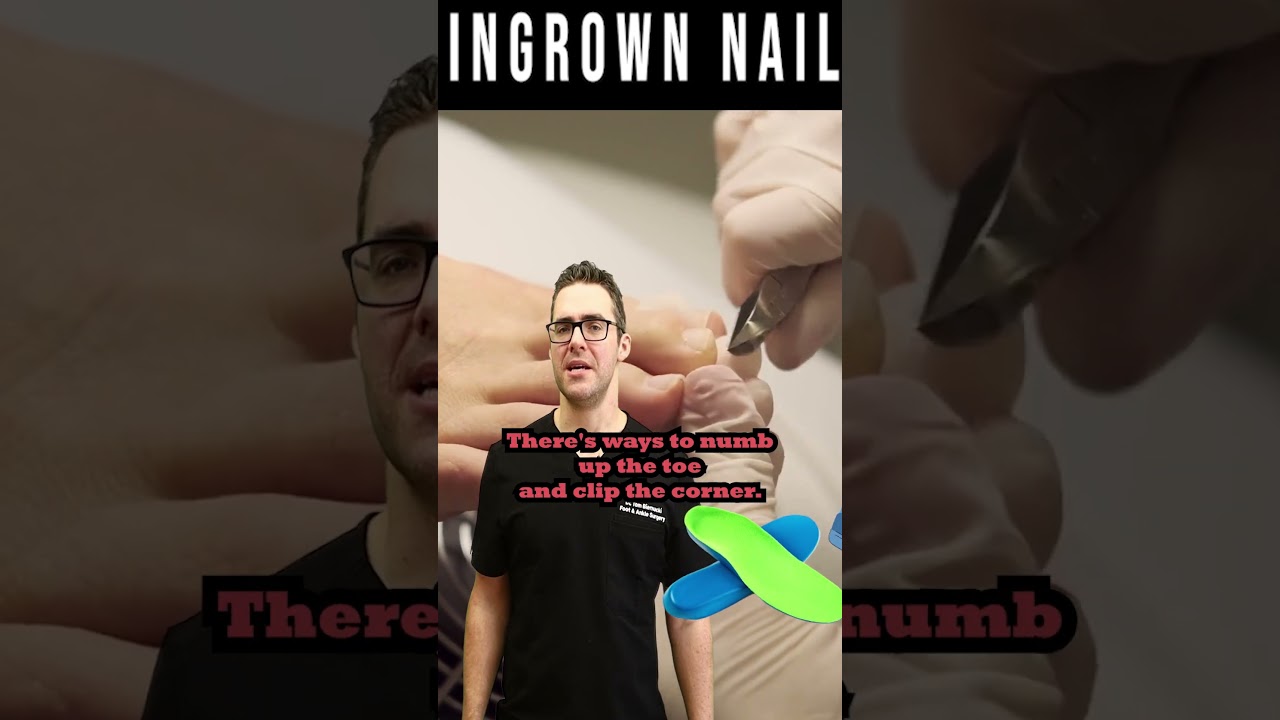
Watch: Ingrown Toenail Self Care & Home Treatment — Michigan Foot Doctors on YouTube
In our clinic, we see the full spectrum — from early ingrown nails that respond to home care instructions to severe infections that have been ignored for weeks. The right treatment at the right stage makes an enormous difference. This guide explains exactly what to try at home, when home treatment has run its course, and what your real options are when you come in — including how painless modern partial nail avulsion actually is.
What Is an Ingrown Toenail

An ingrown toenail (onychocryptosis) occurs when the edge or corner of a toenail grows into the surrounding skin rather than over it. The great toe (hallux) accounts for approximately 95% of all ingrown toenails, though any toe can be affected. The nail edge breaks the skin barrier, creating a portal for bacteria, triggering an inflammatory response, and in advanced cases causing granulation tissue (hypergranulation — the red, fleshy, moist tissue that forms around chronic wounds) and frank infection.
Structurally, ingrown toenails result from a mismatch between the width of the nail plate and the width of the nail bed — either because the nail is too wide/curved, the skin fold is too prominent, or the nail has been trimmed too short and curved at the edges. Contributing factors include genetics (hereditary nail curvature — if your parents had ingrown nails, you’re more likely to have them), trauma, repetitive pressure from tight shoes, and improper nail trimming.
Stages of Ingrown Toenails
The Heifetz classification provides a useful clinical framework that also guides treatment decisions. Understanding which stage you’re in is the first step toward choosing the right intervention.
| Stage | What You See | Recommended Treatment |
|---|---|---|
| Stage 1 | Mild redness, swelling of nail fold, pain with pressure. No drainage. Skin not broken. | Home treatment: soaking, cotton wedge, proper trimming |
| Stage 2 | Increased redness and swelling. Clear or cloudy drainage. Possible infection beginning. | Office partial nail avulsion — fast, effective, minimal recovery |
| Stage 3 | Chronic infection, granulation tissue (proud flesh), marked swelling and drainage. | Partial or total nail avulsion + chemical matrixectomy if recurrent |
Home Treatment That Actually Works (Stage 1)
For Stage 1 ingrown toenails — pain with pressure, mild redness, no drainage, skin intact — a consistent home care protocol has a good chance of resolving the problem without professional intervention. The key is consistency over 1–2 weeks, not one-time attempts.
Step 1: Warm Soak Protocol
Soak the affected foot in warm (not hot) water for 15–20 minutes, 2–3 times daily. You can add Epsom salt (1–2 tablespoons per gallon) — the magnesium sulfate helps reduce inflammation and softens the skin fold, making subsequent steps easier. Do not add antibiotics or harsh antiseptics to the soak; these damage the granulation tissue needed for healing and aren’t necessary at Stage 1.
Step 2: Cotton Wedge Technique
After soaking (when the nail fold is soft), carefully lift the ingrown nail edge with a clean, flat instrument (a clean toothpick, orange stick, or the flat end of a nail file) and slide a tiny wisp of clean cotton or dental floss under the nail corner. This creates a barrier between the nail edge and the skin, allowing the nail to grow over the skin fold rather than into it. Change the cotton daily after soaking. This is genuinely effective for Stage 1 — multiple studies confirm cotton wick technique reduces pain and prevents progression.
Step 3: Correct Nail Trimming
The most important prevention measure, and also directly therapeutic: trim toenails straight across — never curved at the corners. The corners should be visible and not buried in the nail fold. Trim to the end of the toe, not shorter. Use clean, sharp nail clippers (dull clippers shatter the nail edge). Never rip or tear the nail. If you can’t see the nail corner, it’s probably still ingrown — do not attempt to dig it out at home; you risk creating a puncture wound.
Step 4: Footwear Modification
Switch to open-toed shoes, sandals, or shoes with a wide toe box while the nail is healing. Any pressure on the nail fold from a shoe perpetuates the inflammatory cycle. This is non-negotiable during home treatment — we’ve seen Stage 1 ingrown nails resolve completely within a week once patients stop wearing tight dress shoes.
When Home Treatment Has Run Its Course
Home treatment is appropriate for Stage 1 and early Stage 2 without infection. If any of the following are present, home treatment is no longer appropriate and professional care is needed — continuing to treat at home at this point wastes time and risks making things worse:
Active drainage (cloudy or opaque fluid — not clear) suggests bacterial colonization or early infection. Increasing pain despite correct home treatment after 5–7 days means the nail edge hasn’t been adequately lifted. Granulation tissue (fleshy, red, moist tissue at the nail corner — looks like a tiny pink grape) will not resolve with home care and needs to be addressed clinically. Diabetes, immunosuppression, or peripheral vascular disease — these conditions lower the threshold for professional intervention dramatically; even a Stage 1 ingrown nail can escalate rapidly in these patients.
In-Office Options — What We Actually Do (Not “Surgery”)
When patients come in scared of “surgery,” we take a few minutes to explain what we actually do — and watch their anxiety drop. Here’s an honest description of the most common in-office ingrown toenail procedures at Balance Foot & Ankle:
Partial Nail Avulsion (The Standard Procedure)
This is what we do for the vast majority of ingrown toenails — Stage 2 and most Stage 3. Total procedure time: 10–15 minutes. We numb the toe with a small digital block injection (the injection itself is the only uncomfortable part — usually a 3–5/10 for about 30 seconds). Once numb, we use a nail splitter to separate the ingrown border of the nail — typically 1–3mm wide — from the rest of the nail plate and remove that sliver. We pack the corner with a small gauze dressing. You walk out in your regular shoe. There are no sutures, no incisions, no post-operative limitations other than keeping it dry for 24 hours. Pain after the anesthetic wears off: typically 1–3/10, managed with ibuprofen. Return to work: same day for sedentary jobs, next day for most physical work.
Partial Nail Avulsion + Chemical Matrixectomy (For Recurrent Cases)
If you’ve had the same side of the nail ingrown repeatedly, or if the nail is structurally too curved to ever grow properly, we add phenol application after the nail removal. Phenol is a chemical that destroys the nail matrix cells responsible for growing that corner of the nail. The result: that portion of nail never regrows, permanently eliminating the ingrown side. This adds approximately 2–3 minutes to the procedure and does not significantly change recovery. Success rate for permanent cure: approximately 95%. This is the closest thing to “surgery” in the traditional sense — it’s permanent — so we discuss it carefully before proceeding.
Nail Bracing (Onyfix — Non-Invasive)
For patients who want a non-procedural option for mild-to-moderate ingrowing — particularly those on blood thinners or with anxiety about even minor procedures — nail bracing is an emerging technique. A composite strip is bonded to the nail plate and acts as a spring, gradually pulling the nail edges upward and flattening the curvature over 6–12 months. It doesn’t remove anything, has no recovery, and can be applied in minutes. We offer this for appropriately selected patients.
When Full Nail Removal Is Actually Needed
Full nail avulsion (total nail removal) is indicated in a minority of cases: severe infection with abscess formation that cannot be adequately drained without full nail removal; fungal nail infection so thickened that it’s perpetually traumatizing the nail fold; congenital nail deformity where the entire nail plate needs to be removed and the matrix permanently ablated. Even “total nail removal” under local anesthesia is a 20-minute office procedure — not an OR case — in most scenarios.
In-Office Treatment at Balance Foot & Ankle
We perform same-day partial nail avulsion, matrixectomy, and nail bracing at both our Howell and Bloomfield Township locations. No hospital visit, no general anesthesia, no multiple appointments before treatment. We see ingrown toenail patients on the same day they call. Call (810) 206-1402 or book at new-patient-information.
⚠️ Warning Signs — Seek Same-Day Care
- Red streaking up the toe or foot — lymphangitis, a sign of spreading bacterial infection
- Pus or foul-smelling drainage — active bacterial infection requiring antibiotics ± drainage
- Fever with toe pain — systemic infection
- Severe swelling of the entire toe — possible deep space infection or osteomyelitis
- Black or dark tissue around the nail — tissue necrosis, emergency in diabetics
- Diabetic or immunocompromised patient with ANY ingrown nail — call same day regardless of apparent severity
Prevention — Stop the Cycle
Ingrown toenails recur if the underlying drivers aren’t addressed. Prevention requires attention to three areas: nail care (straight across trimming, never cutting corners short, cleaning nippers with alcohol), footwear (wide toe box with adequate depth — enough room to wiggle all five toes), and biomechanics (severe bunions can force the big toe under the second toe, changing nail loading — orthotic correction or bunion treatment removes this pressure).
For patients with chronically curved nails (hereditary nail curvature, pincer nail deformity), preventive matrixectomy of the nail border is worth discussing before the next acute episode — far better to do a planned, elective 10-minute procedure than an emergency visit with a painful infected toe.
Recommended Products
FLAT SOCKS — No-Sock Shoe Inserts for Post-Procedure Comfort
After partial nail avulsion, regular socks can catch on the gauze dressing and cause discomfort. FLAT SOCKS thin no-sock shoe inserts eliminate the friction of a sock fabric against the treated toe while keeping footwear comfortable. Ideal for the 24–48 hours post-procedure before switching back to normal socks. Also useful for patients with recurring ingrown toenails who wear loafers, boat shoes, or other sockless footwear — eliminates the friction of shoe lining on the nail fold.
Best For: Post-procedure recovery, sockless shoe wearers, patients who want to avoid sock pressure on a healing nail.
Not Ideal For: Running or athletic use during ingrown toenail treatment — proper socks with adequate toe box provide more protection during exercise.
Doctor Hoy’s Natural Pain Relief Gel
For the mild inflammation of an early-stage ingrown toenail, Doctor Hoy’s arnica and camphor gel provides topical anti-inflammatory and analgesic relief without systemic medication. Apply around the nail fold 2–3 times daily during the soaking/cotton-wick treatment phase. The natural formula is gentler than alcohol-based products that can dry and crack the nail fold skin, making the ingrown nail worse.
Best For: Stage 1 ingrown toenail pain during home treatment, post-procedure soreness (once the dressing is removed, typically day 2–3).
Not Ideal For: Application over open wounds, active drainage, or infected tissue — infection requires professional treatment, not topical gel.
The most dangerous home treatment mistake we see is patients using nail scissors, pushpins, or nail files to try to dig out the ingrown corner. This almost always creates a small puncture wound in the nail fold that becomes infected — turning a Stage 1 problem into a Stage 2 or 3 emergency in 48 hours. If you can’t gently lift the nail edge with a cotton wick after soaking, stop. Don’t dig. Call us for a 10-minute appointment. The procedure is genuinely fast and painless once numbed, and infinitely better than an infected toe requiring antibiotics.
Ingrown Toenail Treatment in Howell & Bloomfield Township
Same-day partial nail avulsion — 10 minutes, local anesthetic, walk out in your own shoe. No hospital. No general anesthesia. No sutures.
⭐⭐⭐⭐⭐ 4.9 stars · 1,123 reviews
(810) 206-1402 Book Online →Frequently Asked Questions
Can an ingrown toenail heal on its own?
Stage 1 ingrown toenails can sometimes resolve with consistent home treatment (soaking, cotton wicking, correct trimming) over 1–2 weeks. Once drainage appears, granulation tissue forms, or the infection has started, self-resolution is unlikely — and attempting to wait it out risks the infection spreading. At that point, a brief office procedure is far faster, safer, and less painful than continued home attempts.
How painful is the ingrown toenail procedure?
The digital block injection is the only uncomfortable part — typically a 3–5/10 for about 30 seconds. Once the toe is numb, you feel pressure and movement but no pain during the nail removal. After the anesthetic wears off (1–2 hours), most patients rate their pain as 1–3/10, easily managed with over-the-counter ibuprofen. The vast majority of our patients are surprised by how comfortable the recovery is compared to their expectations.
How do I know if my ingrown toenail is infected?
Signs of infection: drainage that is cloudy, yellow, or green (not clear); warmth to touch; increasing swelling beyond just the nail fold; redness spreading beyond the immediate nail area; pain increasing despite rest and home treatment; odor. Any of these signs means infection is present and professional treatment — typically partial nail avulsion plus possibly oral antibiotics — is needed the same day you notice them.
Will the nail grow back after treatment?
After a standard partial nail avulsion (without matrixectomy), yes — the removed border grows back over 3–6 months. If we also perform a chemical matrixectomy (phenol application), that border of the nail is permanently prevented from regrowing, eliminating the risk of recurrence on that side. The remaining nail looks completely normal — you lose only 1–3mm of the edge, which is not visible in normal footwear or even bare feet for most patients.
Does insurance cover ingrown toenail removal?
Yes. Partial nail avulsion (CPT 11730) and nail avulsion with matrixectomy (CPT 11750) are covered by Medicare and virtually all private insurance plans as medically necessary procedures. There is typically a small copay or coinsurance. Our team at Balance Foot & Ankle verifies coverage before your appointment and will let you know your out-of-pocket cost upfront. Call (810) 206-1402.
Sources
- Heidelbaugh JJ, Lee H. “Management of the ingrown toenail.” Am Fam Physician. 2009;79(4):303–308.
- Khunger N, Kandhari R. “Ingrown toenails.” Indian J Dermatol Venereol Leprol. 2012;78(3):279–289.
- Rounding C, Hulm S. “Surgical treatments for ingrowing toenails.” Cochrane Database Syst Rev. 2012;(2):CD001541.
- Ezekian B, Englum BR, Gilmore BF, et al. “Onychocryptosis: diagnosis and management.” J Am Acad Dermatol. 2020;83(4):1020–1026.
- Watabe A, Yamasaki K, Hashimoto A. “A new conservative treatment for ingrown nails using a shape memory alloy device.” J Cutan Med Surg. 2020;24(6):583–587.
Ready to Get Rid of Foot Pain for Good?
Same-week appointments available at our Howell and Bloomfield Township offices. Call (810) 206-1402 or book online.
American Academy of Dermatology: Ingrown Toenails
In-Office Treatment at Balance Foot & Ankle
If home treatment isn’t providing relief for your ingrown toenail, our podiatry team at Balance Foot & Ankle can help with same-week evaluations and advanced in-office care.
Same-week appointments available. (810) 206-1402
Our podiatrists treat the underlying cause, not just the symptom. Same-week appointments at our Howell and Bloomfield Township, Michigan offices.
Same-Week Appointments in Howell & Bloomfield Township
Three board-certified podiatric surgeons. 1,123+ five-star reviews. Most insurance accepted.

Dr. Tom Biernacki, DPM is a board-certified foot & ankle surgeon (ABFAS & ABPM) at Balance Foot & Ankle Specialists in Southeast Michigan. With over a decade of clinical experience, he specializes in heel pain, bunions, diabetic foot care, sports injuries, and minimally invasive surgery. Dr. Biernacki is a member of the APMA and ACFAS, and his patient education content on MichiganFootDoctors.com and YouTube has made him one of the most-followed foot & ankle educators on YouTube.