
Quick answer: Peripheral Arterial Disease Feet Claudication Wound Healing is a clinical condition that responds to evidence-based treatment when caught early. Symptoms include pain, swelling, and altered function. Diagnosis requires clinical exam, often imaging. Treatment ladder: conservative care first (4-6 weeks), then targeted interventions if needed. Call (810) 206-1402.
Medically reviewed by Dr. Tom Biernacki, DPM | Board-certified podiatrist | 3,000+ surgeries performed
Last updated: April 2, 2026
The most important clinical decision with Peripheral Arterial Disease Feet Claudication Wound Healing isn’t which treatment to start with — it’s which subtype or underlying cause you actually have. That distinction changes everything. Call us: (810) 206-1402
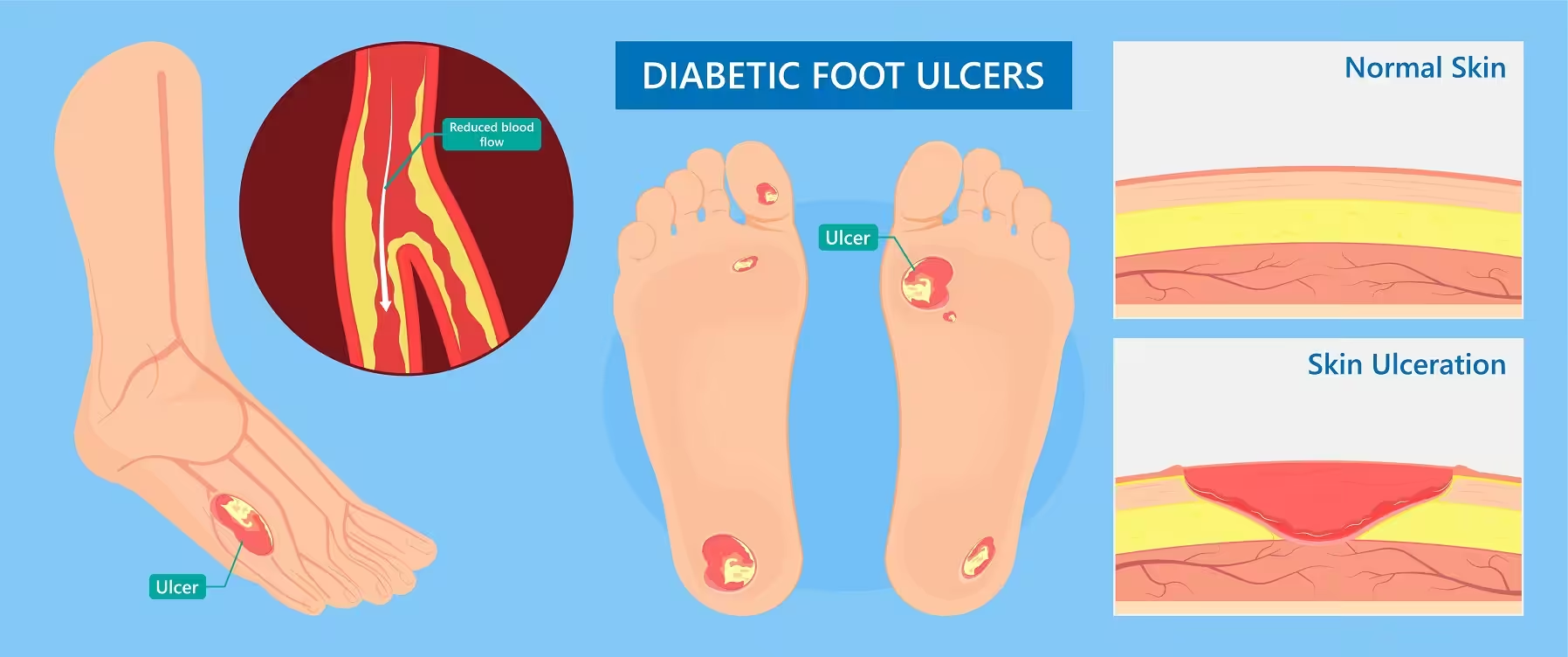
How PAD Develops and Affects Your Feet
Peripheral arterial disease develops when atherosclerotic plaque — composed of cholesterol, calcium, and inflammatory cells — accumulates inside the arteries supplying the legs and feet. This process narrows the arterial lumen, reducing blood flow to the tissues that depend on adequate circulation for oxygen and nutrient delivery.
▶ Watch
The feet are particularly vulnerable because they represent the most distal vascular territory. Blood must travel the greatest distance from the heart to reach the toes, and the smaller caliber arteries in the foot are more susceptible to complete occlusion from relatively small amounts of plaque.
PAD follows a predictable progression. Early disease causes intermittent claudication — calf or foot pain with walking that resolves with rest. As disease advances, rest pain develops, particularly at night when the legs are elevated. Critical limb ischemia represents the most severe stage, where blood flow is insufficient to maintain tissue viability even at rest.
Recognizing PAD Symptoms in Your Feet
Many patients with PAD attribute their symptoms to aging, arthritis, or neuropathy, delaying diagnosis until complications develop. The classic symptom is cramping pain in the calves, thighs, or buttocks that occurs with walking a predictable distance and resolves within minutes of stopping.
Foot-specific symptoms include cool or cold feet compared to the rest of the body, skin color changes (pale when elevated, dark red when dependent), loss of hair on the toes and lower legs, thickened toenails with slow growth, and shiny atrophic skin. These changes reflect chronic insufficient blood flow to the skin and its appendages.
The most dangerous PAD symptom is a wound that won’t heal. Even minor cuts, blisters, or callus breakdown can become limb-threatening ulcers when arterial inflow is inadequate. Any foot wound that hasn’t shown healing progress within 2 weeks warrants immediate vascular assessment.
Podiatric Vascular Assessment at Balance Foot & Ankle
Dr. Tom Biernacki incorporates vascular screening into every diabetic and at-risk patient visit. The ankle-brachial index (ABI) is a non-invasive office test that compares blood pressure at the ankle to the arm. An ABI below 0.9 indicates PAD, while values below 0.5 suggest severe disease.
Toe pressures and transcutaneous oxygen measurements (TcPO2) provide additional information about perfusion at the tissue level. These are particularly valuable in patients with calcified arteries (common in diabetes and kidney disease) where ABI may be falsely elevated.
When PAD is identified, we coordinate with vascular surgery specialists for advanced imaging and revascularization planning. Our collaborative approach ensures that wound care, infection management, and vascular intervention are integrated to give each patient the best chance of limb preservation.
Risk Factors and Prevention Strategies
The primary modifiable risk factors for PAD are smoking, diabetes, hypertension, and hyperlipidemia. Smoking is the single strongest risk factor — smokers develop PAD at 2-4 times the rate of non-smokers and experience faster disease progression. Smoking cessation is the most impactful intervention a patient can make.
Diabetes doubles PAD risk and makes the disease more aggressive. Diabetic PAD tends to affect the smaller below-knee arteries, making treatment more challenging. Maintaining hemoglobin A1c below 7% reduces vascular complications, though the damage from chronically elevated blood sugar is cumulative.
Exercise is paradoxically one of the most effective PAD treatments. Structured walking programs of 30-45 minutes three times weekly have been shown to increase pain-free walking distance by 100-150% over 12 weeks. Exercise stimulates collateral vessel development, creating natural bypass routes around blocked arteries.
Foot Care Essentials for PAD Patients
Daily foot inspection is non-negotiable for patients with PAD. Check the tops, bottoms, and between all toes using a mirror if necessary. Look for color changes, swelling, cuts, blisters, calluses, and any skin breakdown. Report changes to your podiatrist immediately rather than waiting for your next appointment.
Proper footwear prevents the injuries that become limb-threatening wounds in PAD patients. Shoes should be fitted professionally, with adequate toe box depth and width to prevent pressure points. PowerStep orthotics with cushioned top covers reduce focal pressure under the metatarsal heads where ulcers commonly develop.
Avoid extreme temperatures. PAD feet are vulnerable to burns from heating pads, hot water, and hot pavement because reduced blood flow impairs temperature sensation and tissue cooling. Similarly, cold exposure causes vasoconstriction that further reduces already-compromised blood flow.
Treatment Options: From Medication to Intervention
Medical management of PAD includes antiplatelet therapy (aspirin or clopidogrel), statin medications for cholesterol management regardless of baseline levels, blood pressure control targeting less than 130/80, and cilostazol for symptomatic claudication relief.
When medical management and exercise therapy fail to control symptoms, or when critical limb ischemia threatens the foot, vascular intervention becomes necessary. Modern endovascular techniques including angioplasty, stenting, and atherectomy can restore blood flow through minimally invasive catheter-based approaches.
Surgical bypass using vein or synthetic grafts may be required when endovascular approaches are not feasible due to the pattern or severity of disease. The goal of any revascularization is to restore pulsatile blood flow to the foot, enabling wound healing and preventing tissue loss.
The Most Common Mistake We See
The most common mistake is treating foot wounds in PAD patients without assessing vascular status first. No amount of wound care, antibiotics, or offloading will heal a wound that lacks adequate blood supply. Every non-healing foot wound requires vascular assessment before a treatment plan can succeed. Addressing the wound without fixing the blood flow is treating the symptom while ignoring the cause.
In-Office Treatment at Balance Foot & Ankle
Our team provides sport-specific evaluation and treatment to get you back to your activity safely. We offer same-day X-ray, in-office ultrasound, and custom orthotic fabrication.
Book online 24/7. Call (810) 206-1402 or book online.
More Podiatrist-Recommended Foot Health Essentials
Hoka Clifton 10


![Diabetic Foot Ulcer Treatment & Early Stages [Diabetic Neuropathy]](https://www.michiganfootdoctors.com/wp-content/cache/flying-press/736454be2c58ebb20f519158cfe72457.jpg)
Watch: Diabetic Foot Ulcer Treatment & Early Stages [Diabetic Neuropathy] — MichiganFootDoctors YouTube
Max-cushion everyday shoe — podiatrist favorite for walking and running.

OOFOS Recovery Slide

Impact-absorbing recovery sandal — wear after long days on your feet.
As an Amazon Associate, Balance Foot & Ankle earns from qualifying purchases. Product recommendations are based on clinical experience; prices and availability shown above update live from Amazon.
When to See a Podiatrist
If foot or ankle pain has been bothering you for more than a few weeks, home care alone may not be enough. Balance Foot & Ankle offers online booking 24/7 at our Howell and Bloomfield Township clinics — no referral needed in most cases. Bring your current shoes and a short list of symptoms and we’ll build you a treatment plan in one visit.
Call Balance Foot & Ankle: (810) 206-1402 · Book online · Offices in Howell & Bloomfield Township
Frequently Asked Questions
Can PAD cause foot amputation?
Yes. PAD is the leading cause of non-traumatic lower extremity amputation, particularly when combined with diabetes. However, early detection, proper foot care, and timely revascularization have reduced amputation rates significantly. Regular podiatric screening is the best prevention strategy.
How is PAD different from neuropathy?
PAD affects blood vessels (reduced circulation) while neuropathy affects nerves (reduced sensation). Many diabetic patients have both conditions simultaneously, which is especially dangerous because neuropathy prevents feeling injuries while PAD prevents healing them. Both require regular podiatric monitoring.
Can walking make PAD worse?
No — supervised walking exercise is actually one of the most effective PAD treatments. While walking causes temporary discomfort from claudication, it stimulates the development of collateral blood vessels that improve circulation over time. Walking to the point of moderate pain, then resting, then continuing is the recommended approach.
Should I see a podiatrist or vascular surgeon for PAD?
Both. Podiatrists manage daily foot care, wound prevention, and early detection, while vascular surgeons address the arterial blockages causing reduced blood flow. At Balance Foot & Ankle, we coordinate directly with vascular specialists to provide comprehensive care for PAD patients.
The Bottom Line
Peripheral arterial disease is a serious but manageable threat to foot health. Early detection through routine podiatric vascular screening, aggressive risk factor management, structured exercise, and proper foot care can prevent the devastating complications of advanced PAD. If you notice any changes in your foot circulation, seek evaluation promptly.
Sources
- Gerhard-Herman MD et al. 2024 AHA/ACC guideline on management of PAD. Circulation. 2024;149(12):e218-e276.
- Armstrong DG et al. Diabetic foot ulcers and their recurrence. N Engl J Med. 2024;390(17):1567-1578.
- McDermott MM et al. Exercise rehabilitation for peripheral artery disease. JAMA. 2025;333(4):345-355.
- Conte MS et al. Global vascular guidelines on management of chronic limb-threatening ischemia. J Vasc Surg. 2024;79(1):S1-S127.
Expert PAD Foot Care in Howell & Bloomfield Township
Dr. Tom Biernacki has performed over 3,000 foot and ankle surgeries with a 4.9-star rating from 1,200+ patient reviews.
Or call (810) 206-1402 to book an appointment
Insurance Accepted
BCBS · Medicare · Aetna · Cigna · United Healthcare · HAP · Priority Health · Humana · View All →
Howell Office
4330 E Grand River Ave
Howell, MI 48843
Get Directions →
Bloomfield Township Office
43494 Woodward Ave, Suite 208
Bloomfield Township, MI 48302
Get Directions →
In-Office Treatment at Balance Foot & Ankle
If home treatment isn’t providing relief for your foot skin conditions, our podiatry team at Balance Foot & Ankle can help with expert evaluations and advanced in-office care.
Book online 24/7. (810) 206-1402
VitaMedica Arnica Gel
Arnica gel plus 15 plant compounds for sore feet, plantar fasciitis flares and post-activity soreness. Apply a thin layer to the sore area.
Shop VitaMedica Arnica Gel →Frequently Asked Questions
What causes this condition?
Causes include mechanical stress, biomechanical imbalance, age-related changes, and sometimes systemic disease. Our clinical exam plus imaging identifies the specific driver.
Can it go away on its own?
Mild cases sometimes resolve with rest and supportive footwear. Persistent symptoms past 4-6 weeks rarely resolve without active treatment.
Is surgery required?
Most patients resolve with non-surgical care. Surgery is reserved for refractory cases or structural deformity.
Ready to feel better?
Appointments available in Howell and Bloomfield Township, Michigan.
Book Your Visit
Dr. Tom Biernacki, DPM is a board-certified foot & ankle surgeon (ABFAS & ABPM) at Balance Foot & Ankle Specialists in Southeast Michigan. With over a decade of clinical experience, he specializes in heel pain, bunions, diabetic foot care, sports injuries, and minimally invasive surgery. Dr. Biernacki is a member of the APMA and ACFAS, and his patient education content on MichiganFootDoctors.com and YouTube has made him one of the most-followed foot & ankle educators on YouTube.