

Ready to be seen? Book a real appointment time online, 24/7 — Howell or Bloomfield Township. Takes about a minute, 24/7.
Medically reviewed by Dr. Tom Biernacki, DPM
Board-certified podiatric surgeon | Balance Foot & Ankle
Last reviewed: May 2026

Pigeon-toed walking in adults — when your toes turn inward as you walk — usually traces back to either tibial torsion or femoral anteversion that did not fully resolve in childhood. Most of it can still be improved.
You’ve come to the right podiatry team. Dr. Tom Biernacki, DPM, FACFAS — board-certified foot & ankle surgeon with 3,000+ surgeries — explains exactly what being pigeon-toed as an adult means and what works. Call (810) 206-1402 for same-day appointment at Howell or Bloomfield Township.
In-toeing in adults is rarely just an aesthetic issue — persistent pigeon-toed gait loads the medial knee, hip, and arch differently than neutral alignment, accelerating arthritis in those joints over decades. The clinical question is whether the cause is femoral anteversion (hip-rotated), tibial torsion (shin-rotated), or metatarsus adductus (foot-rotated) — because each responds to completely different interventions. Most adults with in-toeing have never been told which structure is responsible. Call (810) 206-1402.
Board-Certified Podiatric Foot & Ankle Surgeon · Last reviewed: May 3, 2026
In This Article
- Quick Answer
- What Does Pigeon-Toed Mean in Adults?
- Causes of In-Toeing in Adults
- Consequences of In-Toeing in Adults
- Frequently Asked Questions
- Frequently Asked Questions
- What is Foot pain?
- Symptoms and warning signs
- Conservative treatment options
- When is surgery considered?
- Recovery timeline and prevention
Medically reviewed by Dr. Tom Biernacki, DPM · Board-Certified Podiatric Surgeon · Last reviewed: April 2026 · Editorial Policy
The most important clinical decision with Pigeon Toed Adults isn’t which treatment to start with — it’s identifying the correct subtype. That changes everything. Call (810) 206-1402.
What Does Pigeon-Toed Mean in Adults?
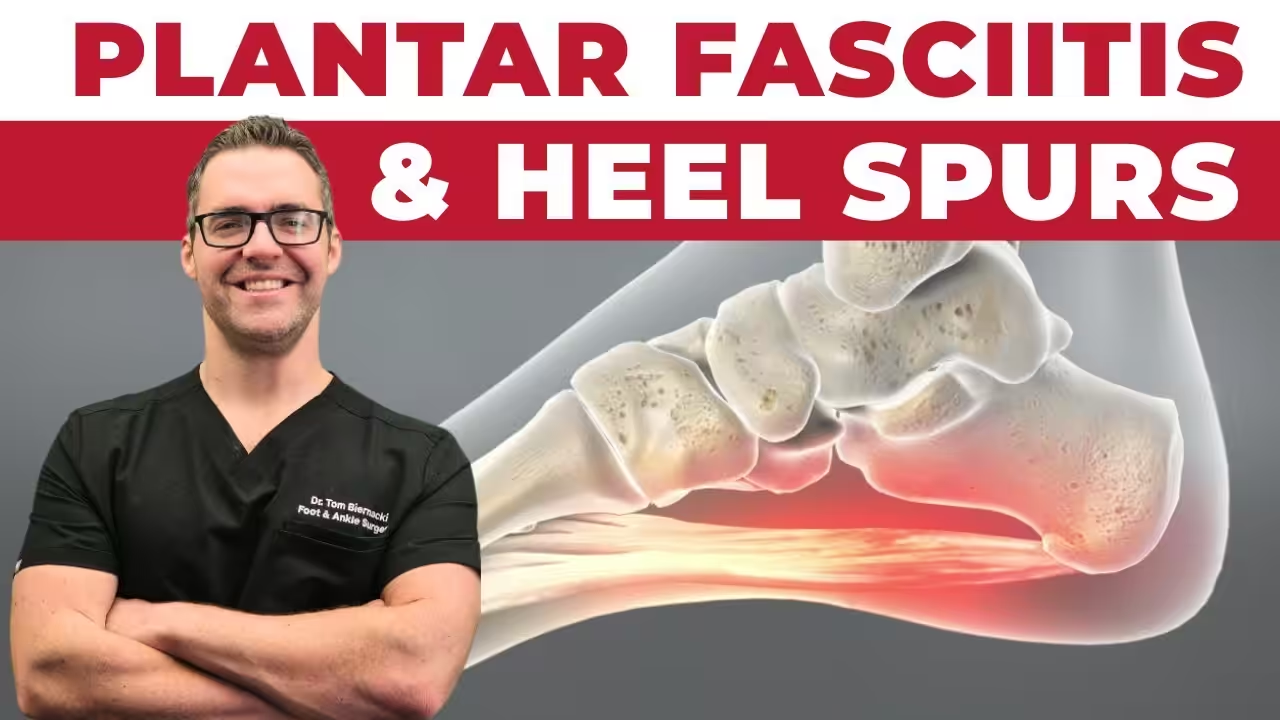
Pigeon-toed gait—technically called in-toeing—is a walking pattern in which the feet point inward rather than straight ahead or slightly outward. While in-toeing is commonly noticed in children and often resolves spontaneously with growth, adults with persistent in-toeing gait have structural causes that don’t self-correct. In-toeing in adults may be a residual of childhood rotational development, a result of joint degeneration, or a sign of neurological or musculoskeletal conditions. Understanding the anatomical level of the cause guides appropriate treatment.
Causes of In-Toeing in Adults
Femoral Anteversion
Femoral anteversion—increased forward twist of the femur (thigh bone) at the hip—causes the entire lower extremity to rotate inward, directing the foot inward during walking. Patients with excessive femoral anteversion often sit in the characteristic “W” position (sitting with knees forward and feet out to each side) and walk with both feet pointing inward, with internal rotation appearing most prominent at the thigh and hip. Mild-to-moderate femoral anteversion is usually asymptomatic and requires no treatment. Severe femoral anteversion causing significant functional limitation or pain can be corrected surgically (derotational femoral osteotomy), though this is rarely performed in adults unless deformity is severe.
Internal Tibial Torsion
Internal tibial torsion—an inward twist of the tibia (shin bone) relative to the femur—causes in-toeing at the level of the leg. Unlike femoral anteversion (where the inward rotation is most evident at the thigh), tibial torsion produces in-toeing with normal hip rotation. Internal tibial torsion is the most common cause of in-toeing that persists into adolescence. In adults, residual tibial torsion is generally well-tolerated, though it can contribute to patellofemoral pain (runner’s knee), iliotibial band syndrome, and abnormal foot mechanics. Surgical correction (tibial derotation osteotomy) is rarely indicated in adults.
Metatarsus Adductus
Metatarsus adductus—inward curvature of the forefoot relative to the hindfoot—causes a “C”-shaped foot with the toes pointing inward. In adults, persistent metatarsus adductus that was not treated in childhood creates a characteristic foot shape where the lateral border is curved and shoe fitting can be problematic. Most adults with mild-to-moderate metatarsus adductus are asymptomatic, though some develop forefoot pain from abnormal loading, difficulty finding comfortable shoes, and callus formation on the lateral foot margin. Custom orthotics can redistribute plantar pressure; surgical correction (metatarsal osteotomies) is rarely needed.
Hip Osteoarthritis
Adults with hip osteoarthritis commonly develop an antalgic gait pattern with external rotation of the affected hip—but a significant number develop internal rotation posturing as a pain-avoidance strategy, producing a new-onset or worsened in-toeing gait. Any adult who develops a new in-toeing pattern without prior history of childhood in-toeing should have hip and spine evaluation, as new-onset in-toeing in adults more often reflects acquired neurological or orthopedic disease than childhood rotational variants.
Consequences of In-Toeing in Adults
Mild in-toeing in adults is usually functionally well-tolerated. When the in-toeing is more significant, associated problems can include: patellofemoral pain syndrome from abnormal patellar tracking, medial knee pain, increased pronation and arch pain from compensatory foot mechanics, and difficulty with athletic activities requiring directional changes. Footwear wear patterns are characteristically abnormal—heavy lateral heel wear and medial forefoot wear. A podiatric evaluation can identify whether the in-toeing is contributing to foot pain and whether orthotics, physical therapy, or gait training would be beneficial.
Frequently Asked Questions
Can adults fix being pigeon-toed?
Yes, partially in most cases. Adult pigeon-toe (in-toeing) typically comes from internal tibial torsion, femoral anteversion, or metatarsus adductus that wasn’t corrected in childhood. Treatment includes gait retraining, custom orthotics, hip-strengthening exercises, and selective stretching. Severe cases may benefit from rotational osteotomy surgery.
What causes pigeon toes in adults?
Three main causes: (1) Internal tibial torsion — the tibia is rotated inward; (2) Femoral anteversion — the hip socket faces forward more than normal; (3) Metatarsus adductus — the forefoot curves inward. Most cases originate in childhood and persist if untreated. Adult pigeon-toe is rarely due to muscular imbalance alone.
Do pigeon toes cause foot or knee pain?
Often yes. In-toeing alters knee tracking, hip rotation, and foot strike patterns, leading to: medial knee pain, hip impingement, IT band syndrome, plantar fasciitis (from compensatory pronation), and metatarsal stress fractures. Many patients don’t realize their pain is downstream of the pigeon-toe gait pattern.
What exercises help pigeon-toed adults?
Most-recommended: clamshells (hip external rotators), single-leg bridges, side-lying hip abductions, calf stretches with foot externally rotated, and gait retraining with a physical therapist. Daily 15-minute routine for 6-12 weeks shows measurable improvement in many adults.
When should adults see a podiatrist for being pigeon-toed?
See a podiatrist if pigeon-toe is causing pain, worsening, affecting work or athletic performance, or accompanied by knee/hip issues. Early intervention with custom orthotics + gait training prevents most associated injuries. Severe rotational issues benefit from imaging (CT scan) and surgical evaluation.
What does treatment cost?
Most diagnostic visits and conservative treatments are covered by Medicare and major insurers. Out-of-pocket costs vary by your specific plan.
How quickly can I get an appointment?
Most non-urgent cases see us within 5 business days. Urgent cases (sudden pain, possible fracture) typically same or next business day.
What is Foot pain?
Foot pain is a common foot/ankle condition that affects mobility and quality of life. Understanding the underlying cause is the first step in successful treatment. Our podiatrists at Balance Foot & Ankle perform a hands-on biomechanical exam, review your activity history, and use diagnostic imaging when appropriate to identify the root cause—not just treat the symptom. Many patients have been told to “rest and ice” without a deeper diagnostic workup; our approach is different.
Symptoms and warning signs
Common signs of foot pain include pain that worsens with activity, morning stiffness, swelling, tenderness when palpated, and difficulty bearing weight. If you experience sudden severe pain, inability to walk, visible deformity, numbness or color change, contact our office the same day or visit urgent care—these can signal a more serious injury such as a fracture, tendon rupture, or vascular compromise. Diabetics with any foot wound should seek same-day care.
Conservative treatment options
Most cases of foot pain respond to non-surgical care: structured rest, supportive footwear changes, custom orthotics, targeted stretching and strengthening protocols, anti-inflammatory medications when medically appropriate, and in-office procedures such as ultrasound-guided injections. We also offer advanced therapies including MLS laser therapy, EPAT/shockwave, regenerative injections, and image-guided procedures. Treatment is sequenced from least invasive to most invasive, and we explain the rationale at every step.
When is surgery considered?
Surgery is reserved for cases that fail 3-6 months of well-structured conservative care, when there is structural pathology (severe deformity, complete tear, advanced arthritis), or when imaging shows damage that will not heal without intervention. Our surgeons have performed 3,000+ foot and ankle procedures and prioritize minimally-invasive techniques whenever appropriate. We discuss recovery timelines, return-to-activity milestones, and realistic outcome expectations before any procedure is scheduled.
Recovery timeline and prevention
Recovery from foot pain varies based on severity and chosen treatment path. Conservative cases often improve within 4-8 weeks with consistent adherence to the protocol. Post-procedural recovery may range from a few days (in-office procedures) to several months (reconstructive surgery). Long-term prevention involves footwear assessment, activity modification, structured strengthening, and regular check-ins with your podiatrist if you have a history of recurrence. We provide written home-exercise plans and digital follow-up support.
Ready to feel better?
Same-week appointments available in Howell and Bloomfield Township, Michigan.
Book Your VisitRelated Conditions
Related Care at Balance Foot & Ankle
Clinical foot and ankle services at our Howell and Bloomfield Township offices.
Get Expert Care at Balance Foot & Ankle
Same-week appointments at our Howell and Bloomfield Township offices. Board-certified podiatric surgeons. Most insurance accepted.
In-Office Treatment at Balance Foot & Ankle
If home care isn’t resolving your symptoms — or if you’re unsure of your diagnosis — a same-visit evaluation with Dr. Tom Biernacki, DPM gives you a clear diagnosis and a treatment plan the same day. We serve patients in Howell and Bloomfield Township, MI. Book online →
Ready for Expert Care?
Same-day appointments in Howell & Bloomfield Township, MI.
4.9★ | 1,123 Reviews | 3,000+ Surgeries
Or call: (810) 206-1402
According to OrthoInfo (AAOS), in-toeing (pigeon toes) in adults is often biomechanical in origin and can be addressed through orthotic insoles, targeted stretching, and footwear modifications.
When in-toeing in an adult is worth assessing
In-toeing that has persisted into adulthood is usually rotational and structural — femoral anteversion, internal tibial torsion, or metatarsus adductus in the foot itself — and for most people it is simply a variation that causes no trouble. It becomes worth assessing when it is actually doing something: repeated tripping or catching of the trailing foot, callus building along the outer border of the foot or under the fifth metatarsal, recurrent ankle sprains, anterior knee pain, or a bunion developing on a foot that turns in. Where the rotation sits matters, because that determines whether footwear, an orthosis, a gait and strength programme, or nothing at all is the right response. Adults with in-toeing plus persistent foot pain generally do best with a weight-bearing exam and, where indicated, custom orthotics that address the resulting load pattern rather than the rotation itself.
Balance Foot & Ankle sees patients at two Michigan offices: our Howell podiatry office, serving Livingston County, and our Bloomfield Township podiatry office, serving Bloomfield Hills, Birmingham, Pontiac and the rest of Oakland County. Dr. Tom Biernacki sees patients at both. Call (810) 206-1402 to book an appointment.
Book an appointment with a podiatrist
In-toeing that persists into adulthood is usually rotational and often harmless, but when it causes pain, tripping or lopsided shoe wear it is worth measuring properly. The assessment tells you whether anything needs doing at all. Balance Foot & Ankle sees patients at two offices — Howell in Livingston County, and Bloomfield Township in Oakland County.
Call (810) 206-1402 or use the form below and our team will find you an appointment time.

Dr. Tom Biernacki, DPM is a board-certified foot & ankle surgeon (ABFAS & ABPM) at Balance Foot & Ankle Specialists in Southeast Michigan. With over a decade of clinical experience, he specializes in heel pain, bunions, diabetic foot care, sports injuries, and minimally invasive surgery. Dr. Biernacki is a member of the APMA and ACFAS, and his patient education content on MichiganFootDoctors.com and YouTube has made him one of the most-followed foot & ankle educators on YouTube.
More questions patients ask
Can adults be pigeon-toed?
Yes. While pigeon toes (in-toeing) is most common in children, adults can remain pigeon-toed or develop in-toeing due to tibial torsion, femoral anteversion, or metatarsus adductus that was not corrected in childhood. It can also develop in adulthood from hip muscle weakness or tightness. A podiatrist or orthopedist can assess the cause.
Does being pigeon-toed cause problems in adults?
Pigeon-toeing in adults can contribute to knee pain, hip pain, bunions, and increased risk of ankle sprains due to altered gait mechanics. Many adults adapt without symptoms, but those with moderate to severe in-toeing may experience accelerated joint wear, patellofemoral syndrome, or balance issues. Gait analysis by a podiatrist helps identify functional impact.
How is pigeon-toeing treated in adults?
Treatment for pigeon-toeing in adults focuses on gait retraining, hip abductor and external rotator strengthening exercises, and custom orthotics to improve foot alignment during walking. Severe structural cases (tibial or femoral torsion) may be evaluated for surgical correction, though this is rarely needed in adults without significant disability.
What causes adults to be pigeon-toed?
In adults, in-toeing (pigeon-toed gait) results from one of three structural causes: femoral anteversion (excessive inward rotation of the thigh bone at the hip), internal tibial torsion (inward rotation of the shin bone), or metatarsus adductus (inward curving of the foot bones). Femoral anteversion is the most common cause in adults and is identified by examining the range of internal versus external hip rotation. Tibial torsion is assessed by the thigh-foot angle. Each cause requires different management.
Does pigeon-toed walking cause knee or hip problems?
Yes — persistent in-toeing gait alters the mechanical load distribution through the lower extremity kinetic chain. It increases medial knee stress, predisposing to patellofemoral syndrome and medial compartment osteoarthritis. At the hip, it loads the anterior acetabulum differently than neutral alignment. Over decades, these altered load patterns accelerate joint wear. The severity depends on the degree of rotation and the activities performed.
Can pigeon-toed walking be corrected in adults?
Correction options in adults depend on the structural cause and severity. Femoral anteversion rarely improves without surgery in adults — osteotomy (bone realignment) is reserved for severe, symptomatic cases. Tibial torsion similarly has limited conservative correction options in adults. Metatarsus adductus (foot-based in-toeing) responds better to stretching, custom orthotics that guide forefoot alignment, and specific footwear selection. Conservative care for all types includes physical therapy to improve gait mechanics and reduce compensatory strain.
What is the difference between femoral anteversion and tibial torsion?
Femoral anteversion is inward rotation at the hip — the thigh bone is rotated so both knees point inward when the feet face forward. On examination, internal hip rotation exceeds external rotation significantly. Tibial torsion is inward rotation of the shin bone — the knee cap points forward but the foot points inward. The thigh-foot angle (measured with the patient prone and knee bent to 90 degrees) differentiates the two. Both can coexist in the same patient.
Still have a question about coverage or cost? Book online and we will check your benefits before your visit: Book in Howell · Book in Bloomfield Township. Prefer to talk it through first? Call (810) 206-1402.