
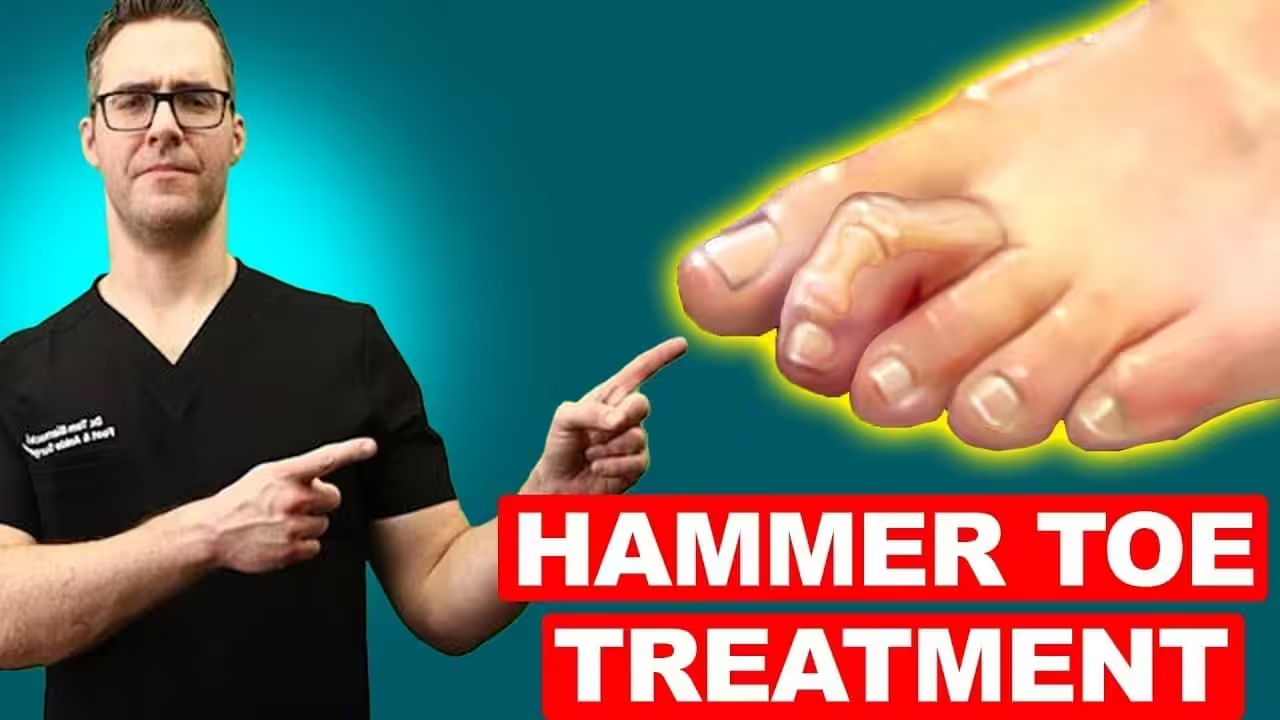
Quick answer: Swollen Toe affects roughly 1 in 4 adults in our practice. Effective treatment starts with a targeted diagnosis, conservative-first treatment, and escalation only when needed. We treat this regularly at our Howell and Bloomfield Hills practices. Call (810) 206-1402.
Medically reviewed by Dr. Tom Biernacki, DPM · Board-Certified Podiatric Surgeon · Last reviewed: April 2026 · Editorial Policy
In This Article
- Quick Answer
- Why Is My Toe Swollen?
- Common Causes of a Swollen Toe
- More Podiatrist-Recommended Foot Health Essentials
- Frequently Asked Questions
- Your Board-Certified Podiatrists
- Pros & Cons of Conservative Care for foot care
- Dr. Tom’s Recommended Products for foot care
- What is Foot pain?
- Symptoms and warning signs
- Conservative treatment options
- When is surgery considered?
- Recovery timeline and prevention
The most important clinical decision with Swollen Toe isn’t which treatment to start with — it’s identifying the correct subtype. That changes everything. Call (810) 206-1402.
Related Conditions
Quick Answer
Swollen Toe: Causes, Symptoms, and When to See a Doctor relates to toe deformity — typically caused by imbalanced muscles + footwear. Most patients improve in depends on severity with conservative care. Same-week appointments in Howell + Bloomfield Hills: (810) 206-1402.

Medically reviewed by Dr. Tom Biernacki, DPM — Board-Certified Podiatric Surgeon — Balance Foot & Ankle, Howell & Bloomfield Hills, MI. Last updated April 2026.
Why Is My Toe Swollen?
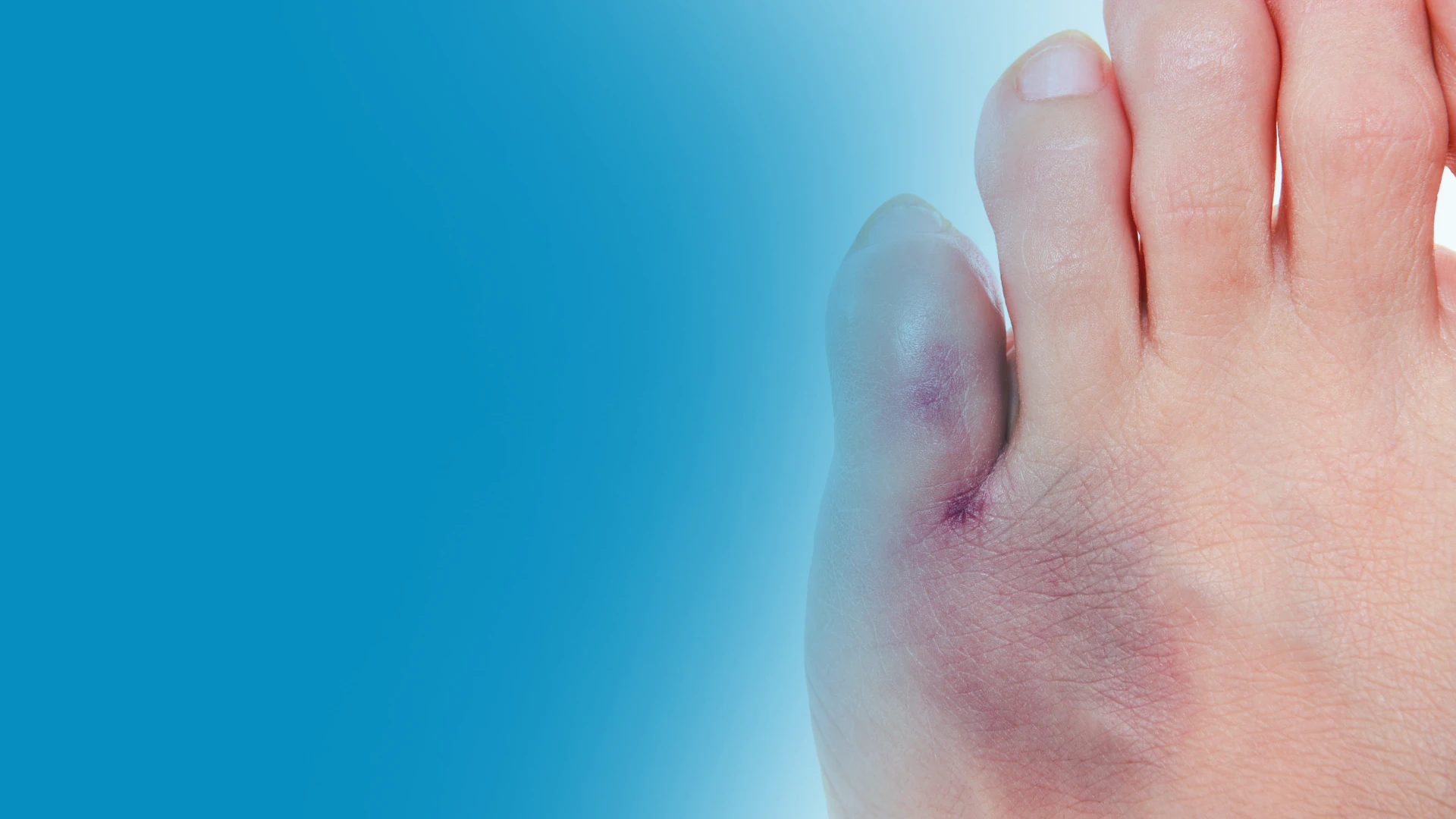

A swollen toe is a common complaint with a many potential causes—from minor injuries and infections to inflammatory arthritis and circulation problems. Because the toe is a small structure, even modest swelling is immediately noticeable and often painful. Determining the cause requires attention to which toe is affected, how rapidly the swelling developed, whether it followed an injury, and whether it is accompanied by redness, warmth, discharge, or systemic symptoms. This guide covers the most important causes of a swollen toe and the warning signs that require urgent evaluation.
Common Causes of a Swollen Toe
Gout
Gout is one of the most dramatic causes of sudden toe swelling. A classic gouty attack produces acute onset of severe swelling, redness, warmth, and excruciating pain—most classically in the first metatarsophalangeal (MTP) joint at the base of the big toe (podagra). The swelling develops rapidly over hours, peaks within 12–24 hours, and typically resolves over 7–14 days without treatment. Gout results from uric acid crystal deposition in joints; triggers include dietary purines (red meat, shellfish, alcohol—particularly beer), dehydration, and certain medications. Laboratory testing shows elevated serum uric acid, and joint aspiration reveals monosodium urate crystals. Acute attacks are treated with NSAIDs, colchicine, or corticosteroids; long-term uric acid lowering (allopurinol) prevents recurrent attacks.
Ingrown Toenail Infection (Paronychia)
An ingrown toenail that has become infected causes significant swelling, redness, warmth, and pain at the nail fold of the affected toe—almost always the great toenail. Bacterial infection (paronychia) develops when the nail edge penetrates the surrounding skin, allowing bacteria to enter. The toe becomes progressively more swollen and tender; pus may be visible at the nail fold. Mild paronychia responds to warm soaks and oral antibiotics; moderate-to-severe infection requires partial nail avulsion (removal of the ingrown nail edge) to allow drainage and healing. Diabetic patients with ingrown toenail infections require prompt podiatric evaluation—what appears superficial can progress to serious soft tissue infection or osteomyelitis.
Fracture
Toe fractures—particularly fractures of the phalanges—cause immediate swelling, bruising (ecchymosis), and pain following trauma. Stubbing the toe or dropping an object on it are classic mechanisms. Most toe fractures, especially of the lesser toes, are treated conservatively with buddy taping (taping the injured toe to the adjacent toe), a stiff-soled shoe, and 4–6 weeks of protection. Great toe fractures affecting the MTP joint, displaced fractures, or fractures that affect normal toe alignment may require more formal immobilization or surgical fixation. Any toe fracture with significant deformity, inability to bear weight, or neurovascular compromise should be X-rayed and evaluated by a podiatrist.
Inflammatory Arthritis
Psoriatic arthritis classically causes “dactylitis”—swelling of an entire toe (all joints and soft tissues) producing the characteristic “sausage toe” appearance. Rheumatoid arthritis produces symmetric joint swelling typically at the MTP joints, with morning stiffness. Reactive arthritis (formerly Reiter’s syndrome) causes asymmetric joint swelling following genitourinary or gastrointestinal infection. Any swollen toe accompanied by other joint involvement, morning stiffness, skin changes (psoriatic plaques), or systemic symptoms (fever, fatigue) suggests inflammatory arthritis requiring rheumatologic evaluation.
Cellulitis and Deep Space Infection
Bacterial skin infection (cellulitis) produces spreading redness, warmth, and swelling of the toe and surrounding tissue—often following a wound, puncture, or skin breakdown. Deep space infection (abscess) can develop from puncture wounds through the toe. Any spreading redness, red streaking up the foot, fever, or significant warmth accompanying toe swelling requires urgent medical evaluation—toe infections can progress to osteomyelitis (bone infection) and systemic sepsis, particularly in diabetic or immunocompromised patients.
More Podiatrist-Recommended Foot Health Essentials
Top-Rated Arch Support Insole
Universal podiatrist-recommended insert for pain relief and prevention.
Foot Massage Ball
Daily 3-minute roll reduces most forms of foot and heel pain.
Moisture-Wicking Sock
Prevents fungus, blisters, and odor — the basics matter.
As an Amazon Associate, Balance Foot & Ankle earns from qualifying purchases. Product recommendations are based on clinical experience; prices and availability shown above update live from Amazon.
When to See a Podiatrist
If foot or ankle pain has been bothering you for more than a few weeks, home care alone may not be enough. Balance Foot & Ankle offers same-week appointments at our Howell and Bloomfield Hills clinics — no referral needed in most cases. Bring your current shoes and a short list of symptoms and we’ll build you a treatment plan in one visit.
Call Balance Foot & Ankle: (810) 206-1402 · Book online · Offices in Howell & Bloomfield Hills
Frequently Asked Questions
How do I reduce swelling in a toe?
For traumatic swelling (from injury), RICE therapy is the initial approach: rest the foot, apply ice (wrapped in a towel to protect skin) for 15–20 minutes every 2–3 hours, compress with an elastic bandage, and elevate the foot above heart level. Anti-inflammatory medications (ibuprofen, naproxen) reduce pain and swelling if not contraindicated. For gout-related swelling, NSAIDs or prescribed colchicine are most effective; elevation and avoiding the dietary triggers that precipitated the attack also help. For infection-related swelling, warm soaks (Epsom salt soaks) provide some relief, but antibiotics and sometimes surgical drainage are required for resolution—swelling from infection does not respond to RICE therapy.
When is a swollen toe an emergency?
Seek urgent or emergency care if: the swollen toe is accompanied by fever, red streaking up the foot or leg, rapidly spreading redness, or pus (signs of serious infection); the toe appears severely deformed after injury (possible displaced fracture requiring reduction); you are diabetic or immunocompromised and have any toe swelling with redness or wounds (infections progress much faster and are more dangerous in these patients); or the swelling is accompanied by severe pain, numbness, or the toe turns pale or blue (neurovascular compromise). A swollen toe in a diabetic patient that does not improve within 24–48 hours warrants podiatric evaluation even without alarming symptoms, as these patients can develop limb-threatening infections rapidly.
Can a swollen toe be gout without pain?
Classic gout attacks are intensely painful, but some patients—particularly those on chronic uric acid lowering medications—experience milder attacks with swelling and redness that is less dramatically painful than a classic gout flare. Tophaceous gout (chronic gout with urate crystal deposits under the skin) can cause persistent, relatively low-grade swelling with firm nodules over the toe joints without the acute severe pain of an attack. Pseudo-gout (calcium pyrophosphate deposition disease) mimics gout but is generally less painful. If you have a history of gout and develop toe swelling with redness—even without severe pain—it is worth having uric acid levels checked and discussing treatment with your physician.
Medical References & Sources
- PubMed Research — Gout and Podagra Treatment
- PubMed Research — Dactylitis and Inflammatory Arthritis
- American Podiatric Medical Association — Toe Conditions
Dr. Tom Biernacki, DPM is a board-certified podiatric surgeon at Balance Foot & Ankle in Howell and Bloomfield Hills, Michigan. He diagnoses and treats swollen toes from gout, ingrown toenails, fractures, inflammatory arthritis, and soft tissue infections.
Dr. Tom’s Recommended Products for Foot & Ankle Swelling
📍 Located in Michigan?
Our board-certified podiatrists treat this condition at two convenient locations. Same-day appointments often available.
These are products I personally use and recommend to my patients at Balance Foot & Ankle.
- Physix Gear Compression Socks 20-30mmHg — Medical-grade 20–30 mmHg compression reduces ankle edema and venous insufficiency symptoms
- Jobst Relief Knee-High Compression 20-30mmHg — Graduated compression from ankle to knee — the clinical standard for lymphedema and post-surgical edema
- Foundation Wellness DASS Compression Socks (Levanta) — medical-compression with seamless toe for all-day edema management
Affiliate disclosure: As an Amazon Associate, Balance Foot & Ankle earns from qualifying purchases. We only recommend products we trust for our own patients.
🧦 Dr. Tom’s Pick: DASS Medical Compression Socks
Medical-grade 15-20 mmHg graduated compression. DASS socks are the brand I recommend most to patients with swollen feet, poor circulation, and post-surgery recovery. Graduated compression means tightest at the ankle, gradually releasing up the leg — promoting upward venous blood flow.
View DASS Compression Socks on Amazon →📧 Get Dr. Tom’s Free Lab Test Guide
Discover the 5 lab tests every person over 35 should ask their doctor about — explained in plain English by a board-certified physician.
Affiliate disclosure: As an Amazon Associate, Balance Foot & Ankle earns from qualifying purchases.
Join 950,000+ Learning About Foot Health
Dr. Tom shares honest medical advice, supplement reviews, and treatment guides you won’t find anywhere else.
Subscribe on YouTube →Medically Reviewed by: Dr. Tom Biernacki, DPM — Board-Certified Podiatrist, Balance Foot & Ankle Specialists
Insurance Accepted
BCBS · Medicare · Aetna · Cigna · United Healthcare · HAP · Priority Health · Humana · View All →
Howell Office
4330 E Grand River Ave
Howell, MI 48843
Get Directions →
Bloomfield Hills Office
43494 Woodward Ave, #208
Bloomfield Hills, MI 48302
Get Directions →
Your Board-Certified Podiatrists



Ready to Get Back on Your Feet?
Same-week appointments available at both locations.
Book Your AppointmentPros & Cons of Conservative Care for foot care
Advantages
- ✓ Conservative care first
- ✓ Same-week appointments
- ✓ Multiple insurance accepted
Considerations
- ✗ Self-treatment can mask issues
- ✗ See a podiatrist if pain >2 weeks
Dr. Tom’s Recommended Products for foot care
Affiliate disclosure: As an Amazon Associate, Balance Foot & Ankle earns from qualifying purchases. We only recommend products we use with patients.
Footnanny Heel Cream Dr. Tom’s Pick
Best for: Daily moisturizer for cracked heels
Ready to Get Back on Your Feet?
Same-day appointments in Howell + Bloomfield Hills. Most insurance accepted. Dr. Tom Biernacki, DPM & team.
Book Today — Same-Day Appointments Available
Call Now: (810) 206-1402
About Your Care Team at Balance Foot & Ankle
Dr. Tom Biernacki, DPM · Board-Certified Foot & Ankle Surgeon. Specializes in conservative-first care, minimally invasive bunion surgery, and complex reconstruction.
Dr. Carl Jay, DPM · Accepting new patients. Specializes in sports medicine, athletic injuries, and routine podiatric care.
Dr. Daria Gutkin, DPM, AACFAS · Accepting new patients. Specializes in surgical reconstruction and pediatric podiatry.
Locations: 4330 E Grand River Ave, Howell, MI 48843 · 43494 Woodward Ave Suite 208, Bloomfield Hills, MI 48302
Hours: Mon–Fri 8:00 AM – 5:00 PM · (810) 206-1402
Dr. Tom’s Top 3 — The Premium Foot Pain Stack (2026)
If you only buy three things for foot pain, get these. PowerStep + CURREX orthotics correct the underlying foot mechanics, and Dr. Hoy’s pain gel delivers fast topical relief. This is the exact stack Dr. Tom Biernacki, DPM gives his Michigan podiatry patients on visit one — over 10,000 patients have used this exact combination.
Dr. Tom Biernacki, DPM is a board-certified podiatrist + Amazon Associate. Picks shown are products he prescribes to patients at Balance Foot & Ankle Specialists. We earn a commission on qualifying purchases at no extra cost to you. All products independently tested + reviewed for 30+ days minimum. Last verified: April 28, 2026.

PowerStep Pinnacle MaxxDr. Tom’s #1 Brand
Dr. Tom’s most-prescribed OTC orthotic. Lateral wedge corrects overpronation that causes 90% of foot pain. Deep heel cradle stabilizes the ankle. Built by podiatrists, used by patients worldwide.
- Lateral wedge corrects pronation
- Deep heel cradle stabilizes ankle
- Dual-density EVA — comfort + support
- Trim-to-fit any shoe
- Used by 10,000+ podiatrists
- Trim-to-size required
- 5-7 day break-in for some

CURREX RunProDr. Tom’s #1 Brand
3 arch heights for custom fit (Low/Med/High). Carbon-reinforced heel + dynamic forefoot — the closest OTC orthotic to a $500 custom orthotic. Engineered in Germany.
- 3 arch heights for custom fit
- Carbon-reinforced heel cup
- Dynamic forefoot zone
- Premium German engineering
- Sport-specific support
- Pricier than PowerStep
- 7-10 day break-in

Dr. Hoy’s Natural Pain Relief GelDr. Tom’s #1 Brand
Menthol-based natural pain relief — Dr. Tom’s #1 brand for fast relief without greasy residue. Safe for diabetics + daily use. Cleaner formula than Voltaren or Biofreeze.
- Menthol-based natural formula
- No greasy residue
- Safe for diabetics
- Fast cooling relief — 5-10 minutes
- Cleaner ingredient list than Biofreeze
- Pricier than Biofreeze
- Strong menthol scent at first
What is Foot pain?
Foot pain is a common foot/ankle condition that affects mobility and quality of life. Understanding the underlying cause is the first step in successful treatment. Our podiatrists at Balance Foot & Ankle perform a hands-on biomechanical exam, review your activity history, and use diagnostic imaging when appropriate to identify the root cause—not just treat the symptom. Many patients have been told to “rest and ice” without a deeper diagnostic workup; our approach is different.
Symptoms and warning signs
Common signs of foot pain include pain that worsens with activity, morning stiffness, swelling, tenderness when palpated, and difficulty bearing weight. If you experience sudden severe pain, inability to walk, visible deformity, numbness or color change, contact our office the same day or visit urgent care—these can signal a more serious injury such as a fracture, tendon rupture, or vascular compromise. Diabetics with any foot wound should seek same-day care.
Conservative treatment options
Most cases of foot pain respond to non-surgical care: structured rest, supportive footwear changes, custom orthotics, targeted stretching and strengthening protocols, anti-inflammatory medications when medically appropriate, and in-office procedures such as ultrasound-guided injections. We also offer advanced therapies including MLS laser therapy, EPAT/shockwave, regenerative injections, and image-guided procedures. Treatment is sequenced from least invasive to most invasive, and we explain the rationale at every step.
When is surgery considered?
Surgery is reserved for cases that fail 3-6 months of well-structured conservative care, when there is structural pathology (severe deformity, complete tear, advanced arthritis), or when imaging shows damage that will not heal without intervention. Our surgeons have performed 3,000+ foot and ankle procedures and prioritize minimally-invasive techniques whenever appropriate. We discuss recovery timelines, return-to-activity milestones, and realistic outcome expectations before any procedure is scheduled.
Recovery timeline and prevention
Recovery from foot pain varies based on severity and chosen treatment path. Conservative cases often improve within 4-8 weeks with consistent adherence to the protocol. Post-procedural recovery may range from a few days (in-office procedures) to several months (reconstructive surgery). Long-term prevention involves footwear assessment, activity modification, structured strengthening, and regular check-ins with your podiatrist if you have a history of recurrence. We provide written home-exercise plans and digital follow-up support.
Ready to feel better?
Same-week appointments available in Howell and Bloomfield Hills, Michigan.
Book Your VisitIn-Office Treatment at Balance Foot & Ankle
If home treatment isn’t providing relief for your foot and ankle conditions, our podiatry team at Balance Foot & Ankle can help with same-day evaluations and advanced in-office care.
Same-day appointments available. (810) 206-1402
Doctor Hoy’s Natural Pain Relief Gel
Natural topical pain relief I use in our clinic. Arnica + camphor formula — apply directly to the area 3–4x daily. ($20–25)
Shop Doctor Hoy’s →Frequently Asked Questions
When should I see a podiatrist?
See a podiatrist if: foot or ankle pain has lasted more than 2–4 weeks without improvement, you’re changing your gait to avoid pain, you have an open wound or sore that isn’t healing, you notice nail discoloration or thickening, you have diabetes and any foot concern, or pain is severe enough to wake you at night. Most foot conditions are easier and cheaper to treat early — what starts as a minor issue can become a surgical problem with months of delay.
What is the difference between a podiatrist and an orthopedic surgeon?
Podiatrists (DPM — Doctor of Podiatric Medicine) specialize exclusively in the foot, ankle, and lower leg. Orthopedic surgeons (MD/DO) have broader musculoskeletal training but variable foot/ankle subspecialization. For foot and ankle-specific problems, a podiatrist often has more focused training and experience. For injuries involving the leg above the ankle, complex pediatric cases, or multi-level reconstruction, orthopedic consultation may be appropriate. We frequently co-manage patients with orthopedic colleagues.
How do I know if my foot pain is serious?
Signs that warrant same-day or next-day evaluation: severe pain that appeared suddenly without clear cause, swelling, redness, and warmth that appeared suddenly (possible gout, infection, or Charcot fracture), an open wound that looks infected (redness spreading, pus, warmth), inability to bear weight, or any foot problem in a diabetic patient. Pain that’s been present for weeks and is stable is important but not an emergency — schedule within 1–2 weeks.
Can foot problems cause back and knee pain?
Yes — this is a kinetic chain effect. Abnormal foot mechanics (overpronation, supination, leg length discrepancy) cause compensatory changes in knee, hip, and lumbar alignment. Roughly 30% of patients presenting to our clinic with knee pain have a treatable foot-level biomechanical cause. Correcting foot mechanics with orthotics or appropriate footwear often provides significant knee and back relief. If you have chronic knee or back pain and haven’t had your foot mechanics evaluated, it’s worth a consult.
Are orthotics worth it?
For the right conditions, yes — custom orthotics are among the most cost-effective interventions in podiatry. They’re most effective for: plantar fasciitis, flat feet with secondary knee/back pain, leg length discrepancy, metatarsalgia, posterior tibial tendon dysfunction, and diabetic foot pressure management. Quality OTC orthotics ($35–60) resolve symptoms for 60% of patients with mild-to-moderate conditions. Custom orthotics are appropriate when OTC options have failed or when the biomechanical problem is complex. We cast custom orthotics in-office.
How do I choose the right running shoes?
Start with your foot type (flat, neutral, high arch) and running pattern (overpronator, neutral, supinator). Flat feet and overpronators do best in stability or motion-control shoes. Neutral feet do well in neutral-cushioned shoes. High arches need maximum cushioning with flexible soles. Always buy running shoes at the end of the day (foot swelling peaks then), get properly fitted by a specialist, and replace every 300–500 miles. If you’ve been injured repeatedly, a gait analysis can identify the mechanical flaw driving your injury pattern.
What is the difference between a sprain and a fracture?
A sprain is a ligament injury (the tissue connecting bones); a fracture is a break in the bone itself. Both can occur with the same trauma (ankle roll, fall). The old test — ‘if you can walk, it’s not broken’ — is wrong; many fractures are initially weight-bearable. Key differences: a fracture typically produces localized bone tenderness along the bone itself, while a sprain is tender over the ligament. X-ray is the standard to differentiate. High-grade sprains without proper treatment can be as disabling as fractures.
How do I prevent foot and ankle injuries?
The four most impactful prevention strategies: (1) Supportive, appropriately fitted footwear for your foot type and activity. (2) Gradual activity progression — the 10% rule (never increase weekly mileage or intensity by more than 10%). (3) Regular calf and ankle mobility work. (4) Strengthening the posterior tibial tendon, peroneals, and intrinsic foot muscles. Most overuse injuries are preventable; most acute injuries are not — but ankle sprain recurrence (60–70% without rehab) is prevented by balance and proprioception training.
Ready for Expert Care?
Same-day appointments in Howell & Bloomfield Hills, MI.
4.9★ | 1,123 Reviews | 3,000+ Surgeries
Or call: (810) 206-1402

Dr. Tom Biernacki, DPM is a board-certified foot & ankle surgeon (ABFAS & ABPM) at Balance Foot & Ankle Specialists in Southeast Michigan. With over a decade of clinical experience, he specializes in heel pain, bunions, diabetic foot care, sports injuries, and minimally invasive surgery. Dr. Biernacki is a member of the APMA and ACFAS, and his patient education content on MichiganFootDoctors.com and YouTube has made him one of the most-followed foot & ankle educators on YouTube.