
Why Exercise Is Central to Plantar Fasciitis Recovery

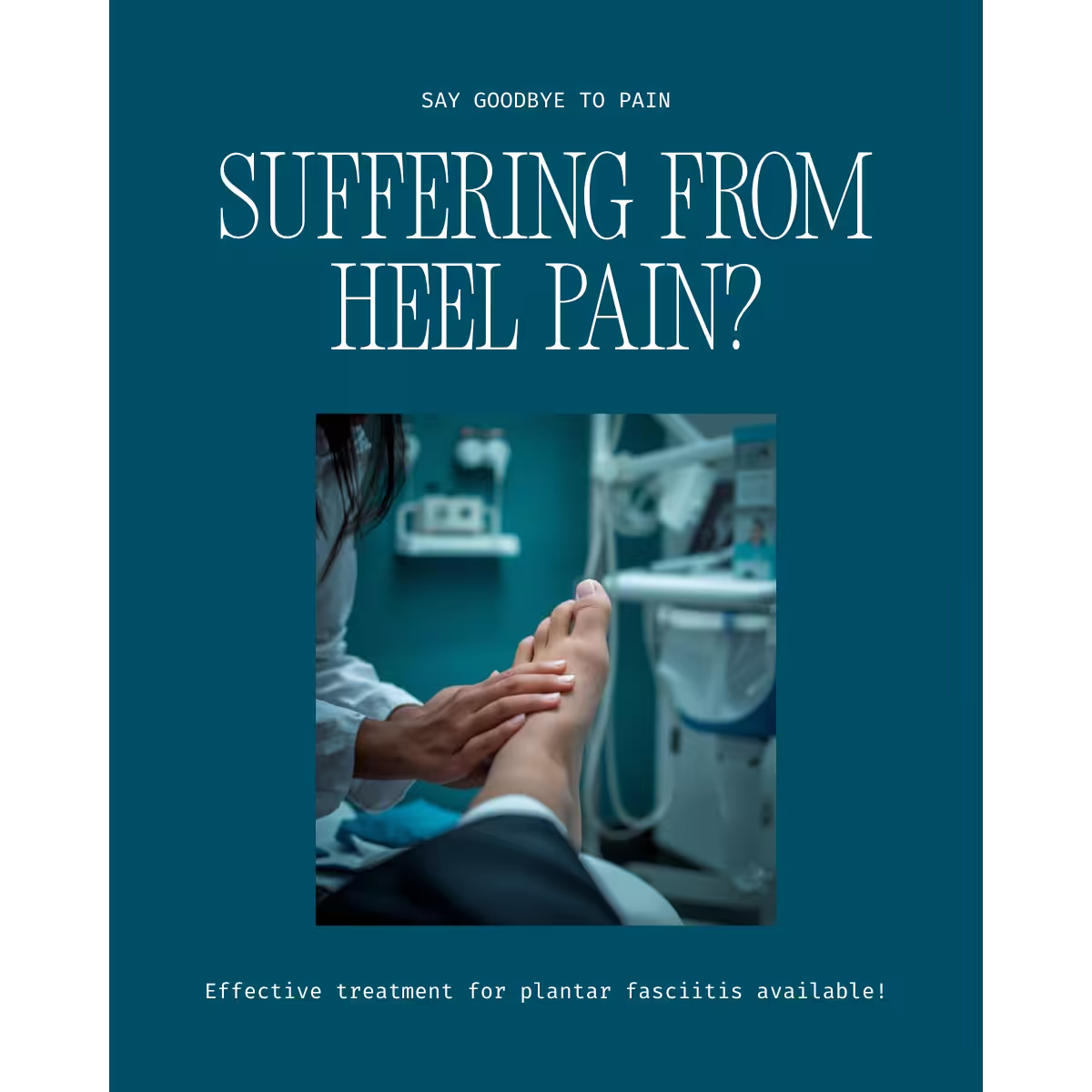
Plantar fasciitis—inflammation and microtearing of the plantar fascia at its origin on the heel bone—is the most common cause of heel pain, affecting approximately 1 in 10 people during their lifetime. The plantar fascia is a thick band of connective tissue running from the heel to the base of the toes that supports the arch and absorbs impact during walking. Most cases respond well to conservative treatment, and the cornerstone of that treatment is a structured program of stretching and strengthening exercises that address the root biomechanical causes: calf tightness, limited ankle dorsiflexion, and intrinsic foot muscle weakness.
Multiple randomized controlled trials have demonstrated that plantar fascia-specific stretching and calf stretching are among the most effective treatments for plantar fasciitis—more effective than ultrasound, cortisone injection alone, or passive modalities when used consistently. Exercises must be performed correctly and consistently (typically 2–3 times daily) for 6–12 weeks to achieve meaningful improvement. The morning stretch routine is particularly important because night sleep causes the plantar fascia and calf to shorten; the first steps of the day create micro-tears that produce the characteristic first-step morning pain.
The Best Stretches for Plantar Fasciitis
1. Plantar Fascia-Specific Stretch (Before First Step)
This is the most evidence-supported stretch for plantar fasciitis. Before getting out of bed in the morning—before your first step—sit on the edge of the bed, cross the affected foot over your knee, and pull the toes back firmly toward the shin until you feel a stretch along the arch of the foot. Hold for 10 seconds. Release and repeat 10 times. Perform this routine first thing in the morning, before any weight-bearing, and again before standing after prolonged sitting. Stretching the fascia before first weight-bearing significantly reduces morning pain and recurrent micro-tearing. DiGiovanni et al. (JBJS 2003) demonstrated this stretch superior to general Achilles stretching in a randomized trial.
2. Gastrocnemius (Calf) Stretch
Stand facing a wall with hands on the wall at shoulder height. Step the affected foot back 2–3 feet, keeping the back knee straight and the back heel flat on the floor. Lean your hips toward the wall until a stretch is felt in the calf of the back leg. Hold 30 seconds. Repeat 3 times per side. This stretches the gastrocnemius—the superficial calf muscle that crosses the knee—and is most effective when the back knee is straight. Tight calves increase tension transmitted through the Achilles tendon and into the plantar fascia, making calf flexibility restoration essential for heel pain resolution.
3. Soleus Stretch
The soleus (deep calf muscle) is stretched with the knee bent. Stand facing a wall, step the affected foot back, and bend the back knee while keeping the heel on the floor. Lean forward until a stretch is felt lower in the calf (just above the heel). Hold 30 seconds, repeat 3 times. This isolates the soleus, which is frequently the tighter of the two calf muscles and has a proportionally larger contribution to plantar fascia tension during the stance phase of gait when the knee is flexed.
4. Intrinsic Foot Strengthening: Towel Scrunches and Short Foot Exercise
Weak intrinsic foot muscles allow excessive arch collapse with each step, overloading the plantar fascia. Towel scrunches: sit in a chair, place a small towel on the floor, and use your toes to scrunch the towel toward you 10–15 times. Short foot exercise: sit in a chair with the foot flat on the floor and attempt to shorten the foot (bring the ball of the foot toward the heel without curling the toes)—this activates the intrinsic arch muscles. Progress to standing and eventually single-leg standing as strength improves. Regular intrinsic strengthening reduces arch collapse and plantar fascia strain during weight-bearing.
Eccentric Calf Training
Eccentric calf exercises—lowering the heel slowly under load—have significant evidence for treating insertional tendon problems. Stand with the balls of both feet on the edge of a step, rise on both feet, then lower slowly on only the affected foot over 3 seconds until the heel drops below the step edge. Perform 3 sets of 15 repetitions, twice daily. This exercise remodels the Achilles-plantar fascia junction tissue and reduces chronic tendinopathy. It should initially be performed without pain; modify the range of motion as tolerated and progress over 6–8 weeks.
Frequently Asked Questions
How often should I do plantar fasciitis stretches?
For active plantar fasciitis, stretches should be performed at minimum 3 times daily: first thing in the morning before taking your first step, after any prolonged sitting or rest before standing, and before bed. The plantar fascia-specific stretch (pulling toes back before first step) is particularly important to do before morning weight-bearing. Consistency over weeks matters more than intensity at any single session—doing 10 repetitions of the arch stretch 3 times daily for 8–12 weeks has significantly better outcomes than irregular stretching. Most patients notice improvement within 4–6 weeks of consistent stretching combined with appropriate footwear and activity modification.
Should I stretch if my heel hurts?
Yes—gentle stretching is appropriate and beneficial even when the heel is painful. The key is that stretching should produce a comfortable stretch sensation, not sharp pain. The plantar fascia-specific stretch (pulling toes back before getting out of bed) should be performed gently and is specifically designed to reduce the micro-tearing that causes first-step morning pain. Calf stretches held for 30 seconds at moderate tension are appropriate even with active symptoms. High-intensity stretching or aggressive massage directly on the painful area should be avoided acutely. If stretching consistently produces sharp pain rather than gradual improvement over 2 weeks, podiatric evaluation is warranted.
How long until plantar fasciitis exercises help?
Most patients notice improvement in first-step morning pain within 2–4 weeks of consistent stretching. Significant reduction in overall daily pain typically takes 6–8 weeks. Complete resolution (being able to exercise, stand, and walk without limitation) takes 3–6 months on average with a comprehensive conservative program. Patients who are most consistent with their stretching routine—particularly the morning pre-step stretch—improve fastest. Adding night splints (which maintain the plantar fascia in a stretched position during sleep) to a stretching program accelerates improvement, especially for patients with severe morning stiffness. If pain is not improving after 6 weeks of consistent stretching, podiatric evaluation should identify whether additional interventions (custom orthotics, physical therapy, cortisone injection) are needed.
Medical References & Sources
- DiGiovanni et al. — Plantar Fascia-Specific Stretching vs. Achilles Stretching (JBJS 2003)
- PubMed Research — Plantar Fasciitis Exercise Trials
- American Podiatric Medical Association — Heel Pain
Dr. Tom Biernacki, DPM is a board-certified podiatric surgeon at Balance Foot & Ankle in Howell and Bloomfield Hills, Michigan. He treats plantar fasciitis with a comprehensive conservative program including stretching, custom orthotics, physical therapy, and injection therapy.
Dr. Tom’s Recommended Products for Plantar Fasciitis & Heel Pain
📍 Located in Michigan?
Our board-certified podiatrists treat this condition at two convenient locations. Same-day appointments often available.
These are products I personally use and recommend to my patients at Balance Foot & Ankle.
- PowerStep Pinnacle Insoles — Firm arch support with dual-layer cushioning — the #1 podiatrist-recommended OTC insole for plantar fasciitis
- PowerStep Pinnacle Insoles — High-profile biomechanical stabilizer cap controls overpronation and reduces fascia tension at the insertion
- Brooks Adrenaline GTS 24 — GuidRails support system with 12mm heel drop — the most-prescribed running shoe for plantar fasciitis in our practice
📧 Get Dr. Tom’s Free Lab Test Guide
Discover the 5 lab tests every person over 35 should ask their doctor about — explained in plain English by a board-certified physician.
Affiliate disclosure: As an Amazon Associate, Balance Foot & Ankle earns from qualifying purchases. We only recommend products we trust for our own patients.
Join 950,000+ Learning About Foot Health
Dr. Tom shares honest medical advice, supplement reviews, and treatment guides you won’t find anywhere else.
Subscribe on YouTube →
Dr. Tom Biernacki, DPM is a double board-certified podiatrist and foot & ankle surgeon at Balance Foot & Ankle Specialists in Southeast Michigan. With over a decade of clinical experience, he specializes in heel pain, bunions, diabetic foot care, sports injuries, and minimally invasive surgery. Dr. Biernacki is a member of the APMA and ACFAS, and his patient education content on MichiganFootDoctors.com and YouTube has reached over one million views.
Frequently Asked Questions
What is the fastest way to cure plantar fasciitis?
Is plantar fasciitis covered by insurance?
Can plantar fasciitis go away on its own?
Related Treatments at Balance Foot & Ankle
Our board-certified podiatrists offer advanced treatments at our Bloomfield Hills and Howell locations.