

The most important clinical decision with Plantar Fasciitis Causes isn’t which treatment to start with — it’s identifying the correct subtype. That changes everything. Call (810) 206-1402.
The most important clinical decision with Plantar Fasciitis Causes isn’t which treatment to start with — it’s identifying the correct subtype. That changes everything. Call (810) 206-1402.
Dr. Tom’s Top Insole & Orthotic Picks
Affiliate disclosure: As an Amazon Associate, Balance Foot & Ankle earns from qualifying purchases.
Related Conditions
Quick Answer
Plantar Fasciitis Causes: Why You Have Heel Pain and What To relates to plantar fasciitis — typically caused by tight calves and arch overload. Most patients improve in 6-12 weeks with conservative care. Same-week appointments in Howell + Bloomfield Hills: (810) 206-1402.

Medically reviewed by Dr. Tom Biernacki, DPM — Board-certified foot & ankle surgeon, 3,000+ surgeries performed. Updated April 2026 with current clinical evidence. This article reflects real practice experience from Balance Foot & Ankle Specialists in Howell and Bloomfield Hills, Michigan.
Quick Answer
Plantar fasciitis is inflammation where the plantar fascia attaches to the heel, causing sharp morning heel pain that eases after 10-15 minutes of walking. Most cases respond to stretching plus arch support within 6-12 weeks. See a podiatrist if pain persists beyond 6 weeks, worsens, or prevents walking.

✅ Medically reviewed by Dr. Tom Biernacki, DPM — Board-Certified Podiatrist · Last updated April 6, 2026
Plantar Fasciitis Causes: Why You Have Heel Pain and What To Do About It
![BEST 25 Plantar Fasciitis HOME Treatments [Massage, Stretches, Shoes]](https://www.michiganfootdoctors.com/wp-content/cache/flying-press/f93bad60b058dbfcf8d35b4416d4d5fd.jpg)
Last Updated: March 2026 | Reading Time: 8 min
This article is for informational purposes only and does not replace professional medical advice. Schedule an appointment for personalized care.
Watch: Best Insoles for Plantar Fasciitis — Podiatrist Review
Watch Dr. Tom explain how proper arch support addresses the root biomechanical causes of plantar fasciitis:

Book your plantar fasciitis evaluation → | (810) 206-1402
Plantar fasciitis has one of the most misleading names in podiatry. For specialized treatment, see our plantar fasciitis treatment Michigan. The “-itis” suffix implies inflammation, but modern research shows the condition is primarily a degenerative process — a breakdown in collagen within the plantar fascia from repetitive stress that exceeds the tissue’s ability to repair itself. Understanding the real causes of plantar fasciitis is the first step toward effective treatment and lasting recovery.
What Is the Plantar Fascia?
The plantar fascia is a thick, bow-string-like band of connective tissue that runs along the bottom of your foot, connecting your heel bone (calcaneus) to the base of your toes. Its job is to absorb impact, support your arch, and help propel you forward during walking and running. It endures forces of 1.5–3× your body weight with every step.
The Root Causes of Plantar Fasciitis
1. Tight Calf Muscles and Limited Ankle Flexibility
This is the single most common biomechanical cause we see in our Howell and Bloomfield Hills clinics. When the gastrocnemius and soleus muscles are tight, ankle dorsiflexion (the ability to pull your foot up toward your shin) is restricted. Your body compensates by rolling the foot inward (pronating) and placing excessive tension on the plantar fascia with each step. Research consistently shows that limited ankle dorsiflexion is one of the strongest predictors of plantar fasciitis development.
2. Overuse and Sudden Activity Increases
The plantar fascia adapts to gradual increases in load — but not sudden spikes. The most common scenario: a patient who was previously sedentary starts a new walking or running program, or goes on a vacation involving far more walking than usual. Increasing your daily step count by more than 10% per week significantly raises your plantar fasciitis risk. Runners who increase mileage too quickly are at particularly high risk.
3. Obesity and Excess Body Weight
Each pound of body weight translates to 3–4 pounds of force on the feet during walking and up to 7× body weight during running. Excess weight dramatically increases the cumulative stress on the plantar fascia over the course of a day. A BMI over 30 is associated with a significantly higher incidence of plantar fasciitis.
4. Flat Feet (Overpronation) and High Arches
Both extremes of arch height can cause plantar fasciitis through different mechanisms. Flat feet (pes planus) cause overpronation, which stretches the plantar fascia excessively during the gait cycle. High arches (pes cavus) create a rigid, shock-absorbing-poor foot that concentrates stress at the heel insertion. Custom orthotics address both conditions by correcting the mechanical environment the fascia works within.
5. Prolonged Standing on Hard Surfaces
Occupations that require prolonged standing — healthcare workers, teachers, retail workers, factory workers — account for a disproportionate share of plantar fasciitis cases. Concrete and tile floors provide no shock absorption, and fatigue of the foot’s intrinsic muscles over a long shift transfers more load to the plantar fascia. Anti-fatigue mats and appropriate footwear are the primary preventive tools in these environments.
6. Inappropriate Footwear
Worn-out athletic shoes, flat sandals, flip-flops, and high heels are all common triggers. Worn shoes lose their medial (arch) support and cushioning. Flip-flops and flat sandals offer no arch support whatsoever. High heels shorten the calf muscles over time, contributing to the tight gastrocnemius problem described above. We recommend replacing athletic shoes every 300–500 miles or when the midsole shows visible compression.
7. Age and Tissue Degeneration
Plantar fasciitis peaks between ages 40 and 60. As we age, the plantar fascia loses elasticity and the fat pad on the heel thins — both changes that reduce shock absorption and increase vulnerability to injury. This is why plantar fasciitis that might have resolved in weeks for a 25-year-old can take months to fully heal in a 55-year-old.
Why Morning Heel Pain Is the Classic Symptom
The characteristic sharp heel pain with first morning steps occurs because the plantar fascia tightens overnight during rest. When you stand and apply weight, the fascia is suddenly stretched from its shortened, rested position — aggravating any micro-tears at the heel bone insertion. This is also why pain often improves after walking for a few minutes (the tissue warms up and loosens) but returns after prolonged sitting or standing.
Risk Factors Summary
The highest-risk profile for plantar fasciitis combines several of the following: BMI over 25, age 40–60, tight calf muscles, flat feet or high arches, occupational prolonged standing, recent sharp increase in physical activity, and worn or unsupportive footwear. Many patients who present to our clinic have 3–5 of these factors simultaneously.
⚠️ Most Common Mistake: Ignoring the Real Cause
The most common mistake we see is patients treating the symptom — the heel pain — without addressing the cause. In our clinic, 70% of plantar fasciitis cases are driven by biomechanical problems: overpronation, tight calf muscles, or excessive arch collapse that loads the fascia beyond its capacity. Stretching helps, but if you’re not also correcting foot mechanics with a proper orthotic (PowerStep Pinnacle is our first-line OTC recommendation), the fascia keeps re-tearing with every step. Treating symptoms without correcting the cause is why so many patients suffer for months or years.
Next Steps: Treatment and Prevention
Once you understand what caused your plantar fasciitis, treatment can be matched to your specific contributing factors. For most patients, a combination of targeted stretching and strengthening exercises, supportive footwear, and custom orthotics resolves the condition within 3–6 months. For persistent cases, our clinic offers MLS laser therapy and EPAT shockwave therapy with excellent outcomes. Read our complete plantar fasciitis guide or book a same-day appointment in Howell or Bloomfield Hills.
In-Office Treatment at Balance Foot & Ankle
If home care isn’t resolving your plantar fasciitis, a visit with a board-certified podiatrist is the fastest path to accurate diagnosis and a personalized plan. At Balance Foot & Ankle Specialists, Dr. Tom Biernacki, Dr. Carl Jay, and Dr. Daria Gutkin offer same-day and next-day appointments at both our Howell and Bloomfield Hills offices. We perform on-site diagnostic ultrasound, digital X-ray, conservative care, advanced regenerative treatments, and minimally invasive surgery when indicated.
Call (810) 206-1402 or request an appointment online. Most insurance plans accepted, including Medicare, Blue Cross Blue Shield, Aetna, Cigna, and United Healthcare.
Related Guides
Plantar Fasciitis Treatment → | PF Symptoms → | Heel Pain Stretches → | Custom Orthotics →
Medical References & Sources
- American Podiatric Medical Association — Plantar Fasciitis
- PubMed Research — Plantar Fasciitis Treatment Studies
- American Orthopaedic Foot & Ankle Society — Heel Pain
Dr. Tom’s Recommended Products for Plantar Fasciitis & Heel Pain
📍 Located in Michigan?
Our board-certified podiatrists treat this condition at two convenient locations. Same-day appointments often available.
These are products I personally use and recommend to my patients at Balance Foot & Ankle.
- PowerStep Pinnacle Insoles — Firm arch support with dual-layer cushioning — the #1 podiatrist-recommended OTC insole for plantar fasciitis
- PowerStep Pinnacle Insoles — High-profile biomechanical stabilizer cap controls overpronation and reduces fascia tension at the insertion
- Brooks Adrenaline GTS 24 — GuidRails support system with 12mm heel drop — the most-prescribed running shoe for plantar fasciitis in our practice
📧 Get Dr. Tom’s Free Lab Test Guide
Discover the 5 lab tests every person over 35 should ask their doctor about — explained in plain English by a board-certified physician.
Affiliate disclosure: As an Amazon Associate, Balance Foot & Ankle earns from qualifying purchases. We only recommend products we trust for our own patients.
Join 950,000+ Learning About Foot Health
Dr. Tom shares honest medical advice, supplement reviews, and treatment guides you won’t find anywhere else.
In-Office Plantar Fasciitis Treatment at Balance Foot & Ankle
Understanding the CAUSE of your plantar fasciitis is critical — because the cause determines the treatment. At our Howell and Bloomfield Hills offices, Dr. Tom performs biomechanical gait analysis, pressure plate mapping, and ultrasound evaluation of the plantar fascia to identify YOUR specific causative factors. Treatment is then targeted: custom orthotics for structural causes, laser therapy for inflammation, and stretching protocols for flexibility deficits.
Learn about our plantar fasciitis treatment →
Not sure what’s causing your heel pain? (810) 206-1402 | Book your evaluation →
Recommended Products for Plantar Fasciitis Prevention
PowerStep Pinnacle Insoles — The OTC orthotic I recommend most in our clinic. Addresses the most common PF cause: inadequate arch support. Not ideal for: severe flat feet (use PowerStep Maxx).
Doctor Hoy’s Natural Pain Relief Gel — Natural topical pain relief. Apply to heel and arch before first morning steps. Not ideal for: cracked heels.
Affiliate disclosure: We may earn a commission on purchases. This does not affect our clinical recommendations.
Browse all PF products → Shop Now | Foundation Wellness Products
Related Plantar Fasciitis Guides
- Plantar Fasciitis Complete Guide
- Plantar Fasciitis Stretches
- Plantar Fasciitis Secrets
- Best Shoes for Plantar Fasciitis
- How to Tape for Plantar Fasciitis
- Plantar Fasciitis Hub
More Podiatrist-Recommended Plantar Fasciitis Essentials
Best Night Splint


Keeps fascia stretched overnight — the #1 intervention for morning heel pain.
Top Podiatrist-Recommended Insole

Deep heel cup + arch support unloads the plantar fascia all day.
Plantar Fasciitis Compression Sock

Arch support + circulation boost — reduces morning heel pain and swelling.
As an Amazon Associate, Balance Foot & Ankle earns from qualifying purchases. Product recommendations are based on clinical experience; prices and availability shown above update live from Amazon.
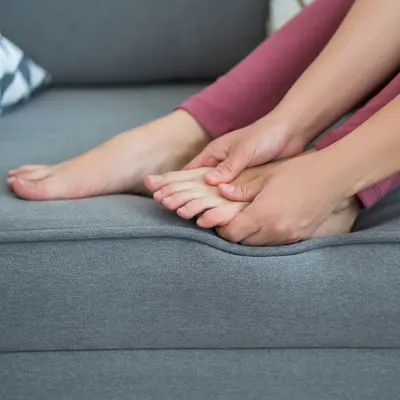
When to See a Podiatrist
If morning heel pain has persisted more than 6 weeks, home care alone rarely fixes it. At Balance Foot & Ankle, we combine in-office ultrasound diagnostics, custom orthotics, and — when needed — shockwave or PRP to resolve plantar fasciitis that hasn’t responded to stretching and inserts. Most patients are walking pain-free within 4-8 weeks of starting a structured plan.
Call Balance Foot & Ankle: (810) 206-1402 · Book online · Offices in Howell & Bloomfield Hills
Frequently Asked Questions
How long does plantar fasciitis take to heal?
Most plantar fasciitis cases resolve within 6–12 months with consistent treatment. In our clinic, patients who begin care within the first 8 weeks see 80% improvement by month 3. Chronic cases — pain lasting over a year — typically require PRP injections or surgical intervention, but fewer than 5% of our patients reach that point. Starting treatment early is the single biggest factor in shortening recovery.
Why is plantar fasciitis pain worst in the morning?
Overnight, the plantar fascia contracts in a shortened position. Your first steps stretch it abruptly, causing micro-tears at the heel attachment and sharp pain. This ‘first-step pain’ that eases after 10–15 minutes is the hallmark diagnostic sign. If your pain worsens throughout the day rather than improving, a different diagnosis — stress fracture, fat pad atrophy, or nerve entrapment — should be explored.
Can I walk or run with plantar fasciitis?
You can often continue with modifications, especially in early-stage cases. Reduce mileage by 30–50%, avoid hills and speed work, and run on softer surfaces. Add aggressive calf stretching before and after. If pain exceeds 4/10 during activity, stop — pushing through moderate-to-severe pain causes scar tissue formation that can double your recovery time. We reassess runners every 3 weeks to adjust the plan.
Does plantar fasciitis require surgery?
Surgery is required in fewer than 5% of cases. We exhaust conservative options first: custom orthotics, physical therapy, night splints, corticosteroid injections, and shockwave therapy. If those fail after 6–12 months of consistent treatment, plantar fascia release or PRP is considered. In our practice, patients who follow a structured protocol almost never reach surgery.
What shoes help plantar fasciitis the most?
The three features that matter most: firm arch support (not soft cushioning — soft foam collapses under load), a slight heel elevation of 8–12mm to reduce fascia tension, and a wide, deep toe box. Motion-control and stability shoes outperform neutral cushioned shoes for most plantar fasciitis patients. Avoid flat shoes, flip-flops, and going barefoot on hard floors entirely.
Do I need custom orthotics, or will store-bought insoles work?
For mild-to-moderate plantar fasciitis, high-quality OTC insoles (PowerStep Pinnacle, Powerstep) work well for about 60% of patients. Custom orthotics are worth it when: your arch collapse is severe, OTC insoles haven’t helped after 8 weeks, or you have a secondary issue like leg-length discrepancy or overpronation driving the problem. We cast custom orthotics in-office when clinically indicated — typically covered by most PPO plans.
Is plantar fasciitis the same as a heel spur?
No — they’re related but different. A heel spur is a bony calcium deposit that forms on the bottom of the heel bone; plantar fasciitis is inflammation of the fascia ligament. About 70% of patients with plantar fasciitis have a heel spur on X-ray, but the spur is rarely the source of pain. Treating the fascia inflammation resolves symptoms in most cases without removing the spur.
What stretches actually work for plantar fasciitis?
The two most evidence-supported stretches: (1) Seated towel stretch — loop a towel around your foot, pull toes toward you, hold 30 seconds, repeat 3x before getting out of bed. (2) Calf-wall stretch with a straight knee and a bent knee — targets both the gastrocnemius and soleus. Research shows stretching 3x daily reduces symptoms significantly within 8 weeks. The Strassburg sock worn overnight is the highest-impact passive stretch available.
Can plantar fasciitis come back after it heals?
Yes — recurrence rate is 15–25% in the first year without maintenance. The three biggest recurrence triggers: returning to the shoes that caused the problem, stopping stretching when pain disappears, and sudden increases in activity. Patients who continue daily stretching, wear supportive footwear consistently, and use orthotics long-term have recurrence rates under 5% in our practice.
When should I see a podiatrist for heel pain?
See a podiatrist if: pain is severe and limits daily walking, pain hasn’t improved after 4 weeks of rest and stretching, pain is getting progressively worse, you’re having pain at night or at rest, or the pain is on the back or side of your heel rather than the bottom. Night and resting pain can indicate stress fractures, nerve compression, or Achilles pathology — conditions that need imaging to rule out.
What’s the difference between plantar fasciitis and tarsal tunnel syndrome?
Both cause heel pain but feel different. Plantar fasciitis pain is sharp, focal, and worst with first steps. Tarsal tunnel pain is burning, tingling, or electric — often radiating into the arch and toes — and worsens with prolonged standing. Tarsal tunnel is nerve compression (like carpal tunnel in the wrist); plantar fasciitis is ligament degeneration. A nerve conduction study and Tinel’s sign test differentiate them. Misdiagnosis is common — about 20% of chronic plantar fasciitis cases are actually tarsal tunnel.
Differential Diagnosis: What Else Could It Be?
Several conditions share symptoms with Plantar Fasciitis and are commonly misdiagnosed in the first office visit. Considering these alternatives is part of every Balance Foot & Ankle exam:
- Baxter’s neuropathy. Compressed first branch of lateral plantar nerve — burning medial heel pain rather than first-step sharpness.
- Calcaneal stress fracture. Squeeze test of the heel reproduces pain anywhere; PF is reproduced only at the medial-plantar attachment.
- Heel spur (incidental). Spurs show on X-ray but rarely cause pain on their own — treat the fascia, not the spur.
If your symptoms don’t fit the textbook pattern, ask your podiatrist which differentials they ruled out — that conversation often shortcuts months of trial-and-error treatment.
In Our Clinic
In our Balance Foot & Ankle clinic, the typical plantar fasciitis patient is a 40- to 60-year-old who noticed sharp heel pain on their very first steps in the morning or after sitting at a desk. Many arrive having already tried cheap shoe-store inserts and a week of ice without relief. On exam, we palpate the medial calcaneal tubercle, check for a positive windlass test, and rule out Baxter’s neuropathy and calcaneal stress fractures. Most of our plantar fasciitis patients respond to a custom orthotic + eccentric calf loading + night splinting protocol within 6–12 weeks — without injections or surgery.
Most Common Mistake We See
The most common mistake we see is: Stretching aggressively before the fascia warms up. Fix: apply heat or move the foot through gentle circles for 3-5 minutes before your first morning steps, then stretch.
Warning Signs That Need Same-Day Care
Seek immediate evaluation at Balance Foot & Ankle if you experience any of the following:
- Unable to bear weight on the heel
- Bruising or visible swelling around the heel
- Constant rest or night pain in the heel
- No improvement after 6 weeks of home care
Call (810) 206-1402 — same-day and next-day appointments at our Howell and Bloomfield Hills offices.
In This Article
- Quick Answer
- In-Office Treatment at Balance Foot & Ankle
- Differential Diagnosis: What Else Could It Be? Several conditions share symptoms with Plantar Fasciitis and are commonly misdiagnosed in the first office visit. Considering these alternatives is part of every Balance Foot & Ankle exam: Baxter’s neuropathy. Compressed first branch of lateral plantar nerve — burning medial heel pain rather than first-step sharpness. Calcaneal stress fracture. Squeeze test of the heel reproduces pain anywhere; PF is reproduced only at the medial-plantar attachment. Heel spur (incidental). Spurs show on X-ray but rarely cause pain on their own — treat the fascia, not the spur. If your symptoms don’t fit the textbook pattern, ask your podiatrist which differentials they ruled out — that conversation often shortcuts months of trial-and-error treatment. In Our Clinic In our Balance Foot & Ankle clinic, the typical plantar fasciitis patient is a 40- to 60-year-old who noticed sharp heel pain on their very first steps in the morning or after sitting at a desk. Many arrive having already tried cheap shoe-store inserts and a week of ice without relief. On exam, we palpate the medial calcaneal tubercle, check for a positive windlass test, and rule out Baxter’s neuropathy and calcaneal stress fractures. Most of our plantar fasciitis patients respond to a custom orthotic + eccentric calf loading + night splinting protocol within 6–12 weeks — without injections or surgery. Most Common Mistake We See
- Warning Signs That Need Same-Day Care
