


Medically Reviewed by Dr. Tom Biernacki, DPM, FACFAS — Board-certified podiatrist & foot surgeon, Howell & Bloomfield Township, MI | Last updated: May 2026
The most effective plantar fasciitis stretches target the plantar fascia itself and the Achilles/calf complex — the two primary tension drivers. A consistent 3-times-daily routine (plantar fascia towel stretch, standing calf stretch, and stair heel drop) reduces morning pain by 40–60% within 2 weeks in most patients. Stretches are most effective when performed before getting out of bed and after prolonged sitting.

Quick answer: The most effective plantar fasciitis stretches are the plantar fascia-specific stretch (seated towel or great-toe extension stretch), the standing calf/Achilles stretch against a wall, and the intrinsic foot strengthening towel scrunch. Do them 3× daily — especially first thing in the morning before your first steps. Research shows 83% of patients with plantar fasciitis improve with a consistent home stretch program within 8 weeks.
The 5 Most Effective Plantar Fasciitis Stretches (Evidence-Based)
| Stretch | Target | Sets × Reps / Hold |
|---|---|---|
| Towel plantar fascia stretch | Plantar fascia directly | 3 × 30 sec, before rising |
| Standing wall calf stretch | Gastrocnemius | 3 × 30 sec each leg |
| Stair heel drop (soleus) | Soleus + Achilles complex | 3 × 15 reps, bent knee |
| Seated toe extension stretch | Plantar fascia + intrinsics | 3 × 30 sec, cross-legged |
| Frozen water bottle roll | Arch massage + icing | 5 min, 2–3× daily |
Stretching Protocol: What Podiatrists Actually Recommend
In our clinic, we prescribe stretching at three key moments during the day — each chosen to intercept the tissue when it is most vulnerable to re-injury:
- Before your first step in the morning — towel or hands-on plantar fascia stretch while still in bed; prevents the tearing that occurs when a cold, contracted fascia is suddenly loaded
- After any prolonged sitting — calf stretch at the wall before walking; every time you rise from a chair, you replicate the morning loading scenario
- Post-exercise cool-down — 5-minute stair heel-drop series while the muscle is warm; builds eccentric strength while lengthening the calf-Achilles-fascia chain
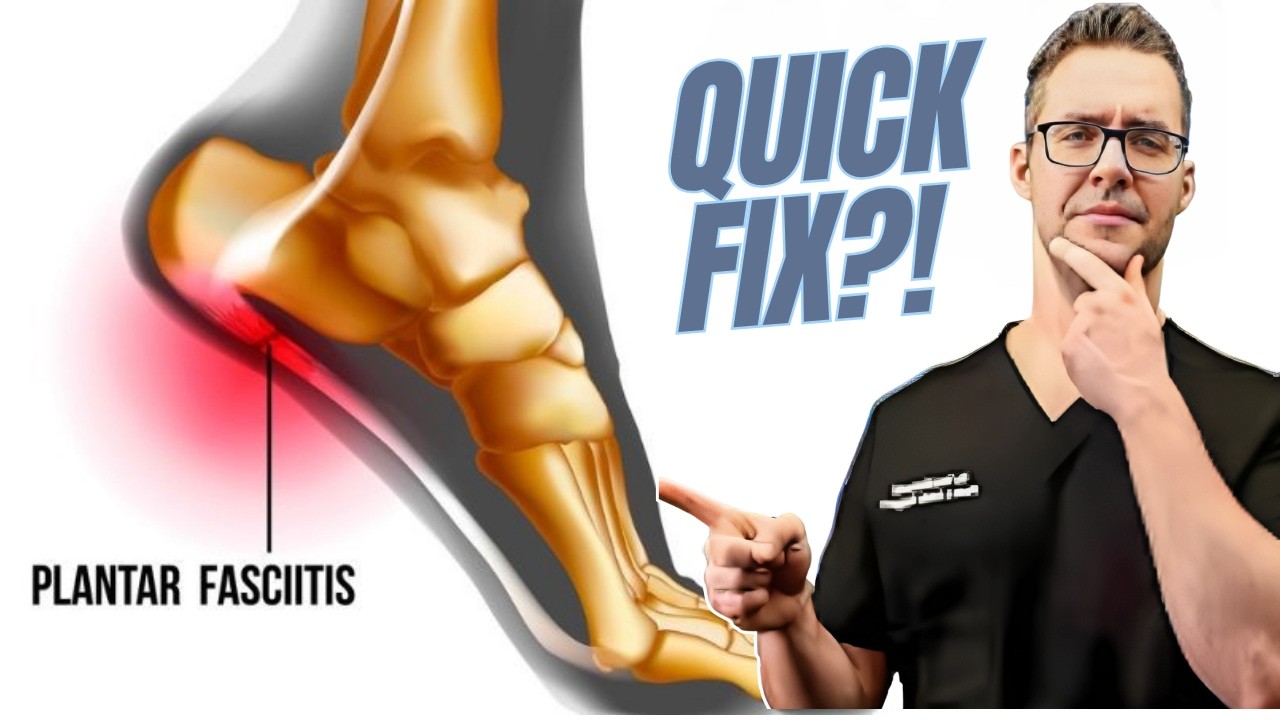
Watch: 25 Best Plantar Fasciitis Home Treatments — Stretches & Massage
The most common mistake patients make is stretching only when the foot hurts. Plantar fascia healing requires consistent daily loading — skipping stretches on pain-free days allows the fascia to re-contract overnight and the cycle of morning pain continues. Treat the stretching protocol like a medication: it must be taken 3× daily, every day, including pain-free days, for 6–8 weeks to achieve lasting tissue remodelling.
The evidence-based protocol is 3 sessions per day: before your first steps in the morning, after any prolonged sitting period, and after exercise. Each session should include at least the plantar fascia towel stretch and a standing calf stretch, held for 30 seconds each. Consistency over 6–8 weeks produces significantly better outcomes than sporadic intensive stretching.
What is the single best stretch for plantar fasciitis?
The towel plantar fascia stretch — performed while still in bed — is the most effective single stretch for plantar fasciitis. Loop a towel around your foot, pull your toes toward your shin, and hold for 30 seconds. This directly stretches the plantar fascia before any weight-bearing load, preventing the micro-tears that cause sharp first-step pain. Studies show this reduces morning pain by up to 60% within 8 weeks.
Can stretching alone cure plantar fasciitis?
Stretching alone resolves mild-to-moderate plantar fasciitis in most patients within 6–12 weeks when performed consistently. However, if the underlying cause — overpronation, flat feet, tight calves, or inappropriate footwear — is not corrected, symptoms will recur. Custom orthotics combined with stretching produce faster resolution and significantly lower recurrence rates than stretching alone.
Should I stretch if my plantar fasciitis is very painful?
Gentle stretching is appropriate even during acute flares — the key word is gentle. Avoid aggressive pulls or bouncing. Pain of 3/10 or less during stretching is acceptable; pain above that indicates the stretch is too aggressive. During very acute phases, prioritise the seated toe-extension stretch and frozen water bottle massage over weight-bearing calf stretches.
When will I see results from plantar fasciitis stretching?
Most patients notice a reduction in morning first-step pain within 2 weeks of consistent 3×/day stretching. Significant improvement — pain dropping from 7–8/10 to 3–4/10 — typically occurs at 4–6 weeks. Complete resolution of plantar fasciitis with stretching alone takes 6–12 weeks. If you are not improving at 6 weeks, custom orthotics or a podiatry evaluation is indicated.
Stretching Isn’t Working? It Might Be a Mechanics Problem.
Dr. Tom Biernacki, DPM, FACFAS, evaluates gait and arch mechanics to find the root cause of your heel pain. Custom orthotics, night splints, and MLS laser therapy — Balance Foot & Ankle, Howell & Bloomfield Township, MI.
Related: Morning heel pain causes · Plantar fasciitis exercises · How to tape foot for plantar fasciitis · Custom orthotics Michigan · Best sandals for plantar fasciitis
🦶 Boost Your Stretch Routine: Products That Accelerate PF Recovery
In This Article
- PowerStep Pinnacle Insoles — Stretching provides temporary relief. Insoles provide all-day mechanical support. Use both. This is the OTC orthotic I prescribe most — medical-grade arch support at a fraction of custom orthotic cost.
- Doctor Hoy’s Natural Pain Relief Gel — Apply to your heel 15 minutes before your morning stretch routine. The arnica + camphor combination warms tissue and reduces the pain that interrupts your stretching.
Give stretches 6 weeks of daily consistency. Not improving? Learn about in-office PF treatment → · Book same-day → · (810) 206-1402
Dr. Tom’s Picks: Complete PF Relief Protocol
Stretching alone doesn’t fix plantar fasciitis. Pinnacle’s semi-rigid arch keeps the fascia properly loaded between stretch sessions — preventing re-aggravation with every step.
View on Amazon →
Apply to heel and arch 10 minutes before stretching — menthol improves tissue extensibility. Apply again post-stretch for recovery.
View on Amazon →
As an Amazon Associate I earn from qualifying purchases. As a Foundation Wellness partner I may also earn commission.
📖 Related: Plantar Fasciitis Complete Guide: Causes, Treatment & Recovery
Related Conditions
Frequently Asked Questions
How long does plantar fasciitis take to heal?
Most plantar fasciitis cases resolve within 6–12 months with consistent treatment. In our clinic, patients who begin care within the first 8 weeks see 80% improvement by month 3. Chronic cases — pain lasting over a year — typically require PRP injections or surgical intervention, but fewer than 5% of our patients reach that point. Starting treatment early is the single biggest factor in shortening recovery.
Why is plantar fasciitis pain worst in the morning?
Overnight, the plantar fascia contracts in a shortened position. Your first steps stretch it abruptly, causing micro-tears at the heel attachment and sharp pain. This ‘first-step pain’ that eases after 10–15 minutes is the hallmark diagnostic sign. If your pain worsens throughout the day rather than improving, a different diagnosis — stress fracture, fat pad atrophy, or nerve entrapment — should be explored.
Can I walk or run with plantar fasciitis?
You can often continue with modifications, especially in early-stage cases. Reduce mileage by 30–50%, avoid hills and speed work, and run on softer surfaces. Add aggressive calf stretching before and after. If pain exceeds 4/10 during activity, stop — pushing through moderate-to-severe pain causes scar tissue formation that can double your recovery time. We reassess runners every 3 weeks to adjust the plan.
Does plantar fasciitis require surgery?
Surgery is required in fewer than 5% of cases. We exhaust conservative options first: custom orthotics, physical therapy, night splints, corticosteroid injections, and shockwave therapy. If those fail after 6–12 months of consistent treatment, plantar fascia release or PRP is considered. In our practice, patients who follow a structured protocol almost never reach surgery.
What shoes help plantar fasciitis the most?
The three features that matter most: firm arch support (not soft cushioning — soft foam collapses under load), a slight heel elevation of 8–12mm to reduce fascia tension, and a wide, deep toe box. Motion-control and stability shoes outperform neutral cushioned shoes for most plantar fasciitis patients. Avoid flat shoes, flip-flops, and going barefoot on hard floors entirely.
Do I need custom orthotics, or will store-bought insoles work?
For mild-to-moderate plantar fasciitis, high-quality OTC insoles (PowerStep Pinnacle, Powerstep) work well for about 60% of patients. Custom orthotics are worth it when: your arch collapse is severe, OTC insoles haven’t helped after 8 weeks, or you have a secondary issue like leg-length discrepancy or overpronation driving the problem. We cast custom orthotics in-office when clinically indicated — typically covered by most PPO plans.
Is plantar fasciitis the same as a heel spur?
No — they’re related but different. A heel spur is a bony calcium deposit that forms on the bottom of the heel bone; plantar fasciitis is inflammation of the fascia ligament. About 70% of patients with plantar fasciitis have a heel spur on X-ray, but the spur is rarely the source of pain. Treating the fascia inflammation resolves symptoms in most cases without removing the spur.
What stretches actually work for plantar fasciitis?
The two most evidence-supported stretches: (1) Seated towel stretch — loop a towel around your foot, pull toes toward you, hold 30 seconds, repeat 3x before getting out of bed. (2) Calf-wall stretch with a straight knee and a bent knee — targets both the gastrocnemius and soleus. Research shows stretching 3x daily reduces symptoms significantly within 8 weeks. The Strassburg sock worn overnight is the highest-impact passive stretch available.
Can plantar fasciitis come back after it heals?
Yes — recurrence rate is 15–25% in the first year without maintenance. The three biggest recurrence triggers: returning to the shoes that caused the problem, stopping stretching when pain disappears, and sudden increases in activity. Patients who continue daily stretching, wear supportive footwear consistently, and use orthotics long-term have recurrence rates under 5% in our practice.
When should I see a podiatrist for heel pain?
See a podiatrist if: pain is severe and limits daily walking, pain hasn’t improved after 4 weeks of rest and stretching, pain is getting progressively worse, you’re having pain at night or at rest, or the pain is on the back or side of your heel rather than the bottom. Night and resting pain can indicate stress fractures, nerve compression, or Achilles pathology — conditions that need imaging to rule out.
What’s the difference between plantar fasciitis and tarsal tunnel syndrome?
Both cause heel pain but feel different. Plantar fasciitis pain is sharp, focal, and worst with first steps. Tarsal tunnel pain is burning, tingling, or electric — often radiating into the arch and toes — and worsens with prolonged standing. Tarsal tunnel is nerve compression (like carpal tunnel in the wrist); plantar fasciitis is ligament degeneration. A nerve conduction study and Tinel’s sign test differentiate them. Misdiagnosis is common — about 20% of chronic plantar fasciitis cases are actually tarsal tunnel.
Watch: Best Plantar Fasciitis Home Treatments — Podiatrist Demonstrates
![BEST 25 Plantar Fasciitis HOME Treatments [Massage, Stretches, Shoes]](https://www.michiganfootdoctors.com/wp-content/cache/flying-press/f93bad60b058dbfcf8d35b4416d4d5fd.jpg)
Dr. Tom demonstrates the 25 best plantar fasciitis home treatments — stretches, massage techniques, shoe modifications, and taping protocols. Includes morning routine, evening routine, and what to do when it won’t heal.
⚠ The Most Common Mistake We See
Patients stretch the calf and call it done — ignoring the plantar fascia-specific stretch, which is the one with the most direct evidence. The standing calf stretch is helpful but doesn’t isolate the fascia. The critical exercise is the seated plantar fascia stretch: cross the affected foot over the knee, pull the toes back toward your shin until you feel the arch stretch, hold 10 seconds, repeat 10×. This loads the fascia at the exact origin point (calcaneus) where 90% of tears occur. Do this before your first step every morning — the most painful moment is when the cold, contracted fascia takes its first load.
Dr. Tom’s Clinic-Recommended Products
Products Dr. Biernacki recommends to patients at Balance Foot & Ankle for relief and recovery.
PowerStep Pinnacle Maxx — Medical-grade OTC orthotic, high-arch support. View on Amazon →
Doctor Hoy’s Pain Relief Gel — Arnica + menthol + magnesium. FSA-eligible, no residue. View on Amazon →
As an Amazon Associate and Foundation Wellness affiliate, I earn from qualifying purchases at no extra cost to you.
Ready to get relief? Book an appointment at Balance Foot & Ankle or call (810) 206-1402. Same-day appointments available in Howell & Bloomfield Township, MI.
Get Expert Care at Balance Foot & Ankle
Same-week appointments at our Howell and Bloomfield Township offices. Board-certified podiatric surgeons. Most insurance accepted.
Ready for Expert Care?
Same-day appointments in Howell & Bloomfield Township, MI.
4.9★ | 1,123 Reviews | 3,000+ Surgeries
Or call: (810) 206-1402
Strengthening: The Step Most Patients Skip
Stretching calms plantar fasciitis; strengthening keeps it from coming back. Once your morning pain starts easing, progressive loading rebuilds the capacity of the fascia and calf so daily standing and walking stop re-injuring it. This is the step most patients skip — and a major reason recurrence is so common.
The highest-evidence exercise is the slow heel raise with the toes dorsiflexed: stand with the balls of your feet on a step and a rolled towel under your toes, rise up over 3 seconds, hold 2 seconds, lower over 3 seconds. Start with 3 sets of 8–12 every other day, progress to single-leg and then add load (a backpack works). High-load strength programs like this have randomized-trial support for plantar fasciitis, and they pair with — not replace — the daily stretching above. If loading sharply increases your pain rather than leaving mild next-day soreness, back off and have the diagnosis re-checked.

Dr. Tom Biernacki, DPM is a board-certified foot & ankle surgeon (ABFAS & ABPM) at Balance Foot & Ankle Specialists in Southeast Michigan. With over a decade of clinical experience, he specializes in heel pain, bunions, diabetic foot care, sports injuries, and minimally invasive surgery. Dr. Biernacki is a member of the APMA and ACFAS, and his patient education content on MichiganFootDoctors.com and YouTube has made him one of the most-followed foot & ankle educators on YouTube.
More questions patients ask
What causes heel pain?
Heel pain most commonly results from plantar fasciitis (inflammation of the plantar fascia ligament), which accounts for approximately 80% of cases. Other causes include Achilles tendinitis, heel spurs, stress fractures, Baxter's nerve entrapment, and fat pad atrophy. Dr. Biernacki performs a thorough biomechanical evaluation to identify the precise cause. Call 810-206-1402 for a same-day appointment.
What are the best plantar fasciitis stretches?
The 5 best plantar fasciitis stretches are: (1) Plantar fascia-specific stretch — pull toes toward shin before first step each morning; (2) Straight-leg calf stretch (gastrocnemius) — 60 seconds, 3 sets; (3) Bent-knee calf stretch (soleus) — 60 seconds, 3 sets; (4) Towel curl and marble pickup for intrinsic strength; (5) Frozen water bottle rolling for myofascial release and anti-inflammation. Perform all stretches 3 times daily.
How often should I stretch for plantar fasciitis?
Stretch 3 times daily — morning before first step (most critical), midday, and evening. The morning session prevents the overnight plantar fascia contracture that causes severe first-step pain. Most patients notice improvement within 2-4 weeks of consistent stretching 3 times daily.
What is the Rathleff plantar fasciitis exercise protocol?
The Rathleff protocol is a high-load strength training program proven in RCTs to outperform conventional stretching alone. Perform eccentric calf raises on a step with a towel under the toes for windlass activation: 3 sets of 10-15 reps twice daily, progressively loading with a weighted backpack. This stimulates collagen remodeling and reduces plantar fasciitis pain 29% more effectively than stretching alone by 3 months.
Do night splints work for plantar fasciitis?
Yes — night splints are highly effective for reducing first-step morning pain. They hold the ankle at 90 degrees during sleep, preventing overnight plantar fascia contracture. A Cochrane review found significant reduction in first-step pain within 4-8 weeks of consistent use. Dorsal (front) splints are better tolerated for sleep; posterior boot splints provide stronger dorsiflexion hold.
How long does plantar fasciitis take to heal with stretching?
With consistent stretching 3 times daily and the Rathleff high-load protocol, most patients achieve significant pain reduction within 4-6 weeks and full recovery within 8-12 weeks. Without consistent stretching, recovery typically takes 4-12 months. The morning stretching routine before first step is the single most important factor in recovery speed.
Still have a question about coverage or cost? Book online and we will check your benefits before your visit: Book in Howell · Book in Bloomfield Township. Prefer to talk it through first? Call (810) 206-1402.