
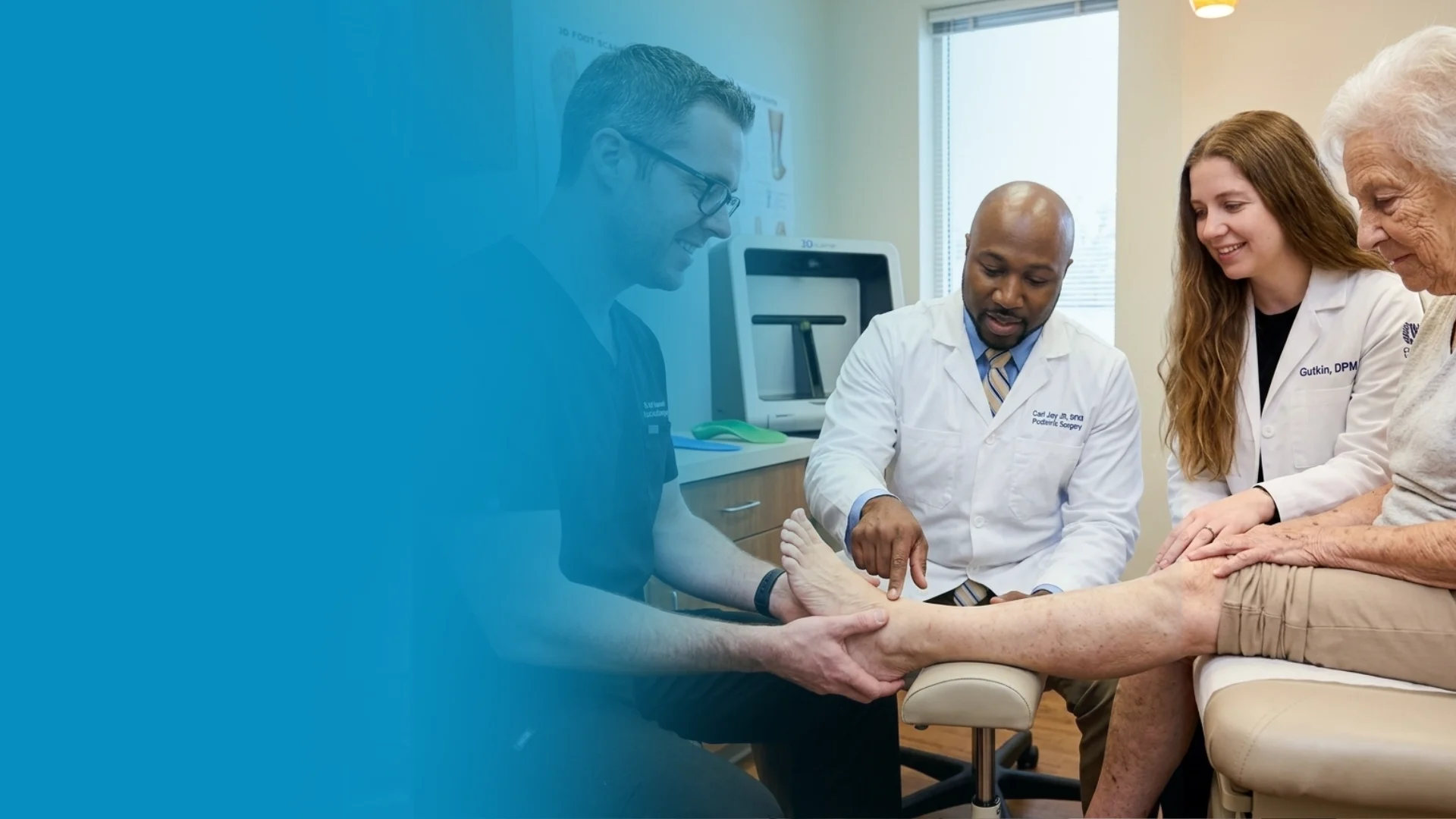

Medically reviewed by Dr. Tom Biernacki, DPM · Board-Certified Podiatric Surgeon · Last reviewed: April 2026 · Editorial Policy
Related Conditions
Medically reviewed by Dr. Tom Biernacki, DPM
Board-certified podiatric surgeon | Balance Foot & Ankle
Last reviewed: May 2026
In This Article

✅ Medically reviewed by Dr. Tom Biernacki, DPM — Board-Certified Podiatrist · Last updated April 6, 2026
▶ Watch: Mobile Podiatry Home Visits Michigan
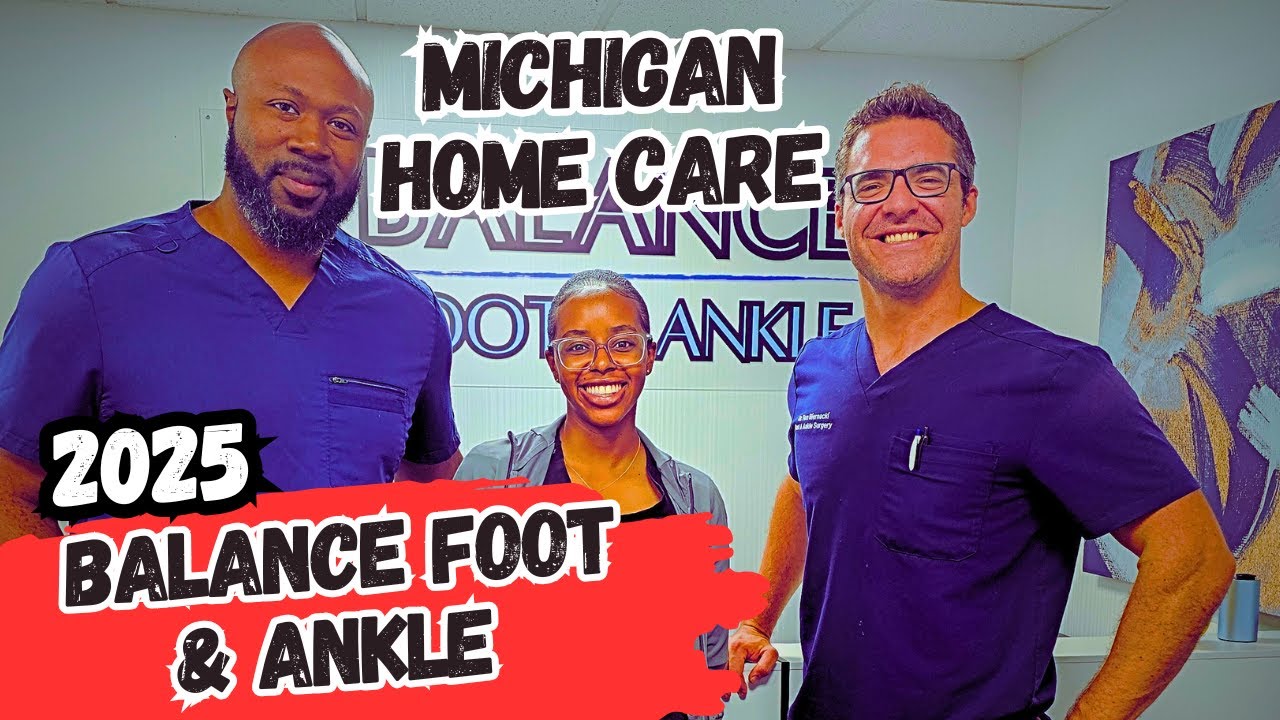
Dr. Tom Biernacki explains how our mobile podiatry home visits work across Michigan — who qualifies, what we bring, and how insurance covers it.
Podiatry Home Visits vs. Urgent Care for Foot Problems — When to Choose What
When something goes wrong with your foot, the choices can feel confusing: Do you call a podiatrist for a home visit? Drive to urgent care? Go to the ER? For homebound patients and seniors in Michigan, this decision is often made in the moment — and the wrong choice can mean hours in an ED waiting room for a problem a podiatrist could have handled at your bedside in 30 minutes.
This guide helps you choose the right level of care for common foot problems.
Choose a Podiatry Home Visit When:
A home visit from a board-certified podiatric surgeon is the right choice for most non-emergency foot problems in homebound or mobility-limited patients:
- Ingrown toenail — painful, red, possibly infected; a podiatrist can numb the toe and remove the nail border in one visit
- Diabetic foot wound or ulcer — new skin breakdown, wound not healing, minor infection signs; home visit with wound care and laser therapy is far superior to urgent care for this
- Severe nail problems — extremely thick nails, nail digging into skin, nail fungus causing pain
- Callus or corn causing significant pain — debridement at home is safe, quick, and effective
- Foot infection showing early signs — redness, warmth, swelling without systemic symptoms (no fever, not spreading rapidly)
- Swelling or pain with no acute injury — may be gout, vascular, or arthritic; diagnostic evaluation at home
- Diabetic foot assessment — something looks or feels wrong; early evaluation prevents escalation
Home visits run on scheduled days, grouped by town or building, so they suit problems that can wait for the next visit day in your area, such as thick nails, corns and calluses, or regular diabetic foot checks. You can get on the list without calling: register online through our secure patient portal and we will call you when your visit day is set. See the online sign-up steps. If an infection or wound on this list is new or getting worse, do not wait for that day. Call our office at (810) 206-1402 for a same-day or next-day appointment.
Choose Urgent Care When:
- Laceration requiring stitches (open wound from a cut or fall)
- Suspected fracture from a fall or injury (needs X-ray)
- Moderate infection not improving with antibiotics within 24-48 hours
- Wound that may need IV antibiotics but is not immediately life-threatening
Go Directly to the Emergency Room When:
- Rapidly spreading redness, red streaking, or swollen lymph nodes — signs of spreading infection (cellulitis, lymphangitis)
- Fever with a foot wound or infection — systemic signs of serious infection
- Black or dark tissue on a toe or foot — may indicate tissue death requiring urgent vascular evaluation
- Severe trauma — crush injury, significant fracture, vascular injury
- Signs of stroke or heart attack with foot symptoms — acute vascular occlusion
Why Home Visits Beat Urgent Care for Most Foot Problems
For homebound patients, urgent care involves transportation, waiting, exposure to illness, and often a provider with limited podiatric expertise. A podiatric home visit means a board-certified foot surgeon at your bedside, with specialized tools, wound care capability, and laser therapy — often faster than the trip to urgent care would take.
✅ REMY Class IV Laser — FDA-cleared
✅ EPAT Shockwave Therapy — non-surgical, in-office
✅ Magnetotransduction (EMTT) — Deep electromagnetic healing
✅ 3D-Scanned Custom Orthotics
✅ Toenail Fungus Laser
✅ In-Office X-Ray & Ultrasound
✅ Diabetic Shoe Program — Medicare-covered
📞 (810) 206-1402 | Howell & Bloomfield Township
📞 Not sure which level of care you need? Call our home visit line, (810) 206-1388 — we can help you decide if a home visit is appropriate.
Home Podiatry vs. Urgent Care for Foot Problems: Which Is Right for Your Situation?
Michigan patients with acute foot problems who cannot access a podiatrist’s office often face a choice between urgent care and home podiatry — a choice that is rarely as clear as it should be. Urgent care centers are appropriate for foot problems that require immediate evaluation and cannot wait for a podiatry appointment: severe acute ankle injuries with suspected fracture, open wounds with active significant bleeding, suspected deep space infections with systemic signs (fever, rapidly spreading redness, red streaking), or any foot emergency in a patient whose overall medical condition warrants urgent evaluation. Home podiatry visits from Balance Foot & Ankle are appropriate for foot problems that are urgent but not immediately life- or limb-threatening: infected ingrown toenails, acute diabetic foot wound changes that need podiatric assessment, severe nail pain from impingement, or acute exacerbations of chronic foot conditions in homebound patients.
Related Treatment Guides
- Ingrown Toenail Treatment
- Plantar Fasciitis & Heel Pain Treatment
- Custom 3D Orthotics
- Sports Foot & Ankle Injury Treatment
The practical distinction: if you would call 911 or go to the emergency room, an urgent care or ER is appropriate. If you need professional podiatric evaluation and treatment within 24–48 hours but do not have a life-threatening emergency, a home podiatry visit or same-day appointment at Balance Foot & Ankle‘s Howell or Bloomfield Township office is the appropriate choice — and typically delivers better clinical outcomes than an urgent care physician who is not a foot specialist. Michigan patients unsure which resource to use can call Balance Foot & Ankle at (810) 206-1402 and describe the situation — our clinical staff will advise on the appropriate level of care and help arrange a same-day or next-day appointment or home visit for appropriate presentations.
Insurance Accepted
BCBS · Medicare · Aetna · Cigna · United Healthcare · HAP · Priority Health · Humana · View All →
Howell Office
4330 E Grand River Ave
Howell, MI 48843
Get Directions →
Bloomfield Township Office
43494 Woodward Ave, #208
Bloomfield Township, MI 48302
Get Directions →
Ready to Get Back on Your Feet?
Book online 24/7 at either office.
More Podiatrist-Recommended Foot Health Essentials
Hoka Clifton 10

Max-cushion everyday shoe — podiatrist favorite for walking and running.

OOFOS Recovery Slide

Impact-absorbing recovery sandal — wear after long days on your feet.
As an Amazon Associate, Balance Foot & Ankle earns from qualifying purchases. Product recommendations are based on clinical experience; prices and availability shown above update live from Amazon.

When to See a Podiatrist
If foot or ankle pain has been bothering you for more than a few weeks, home care alone may not be enough. Balance Foot & Ankle offers online booking 24/7 at our Howell and Bloomfield Township clinics — no referral needed in most cases. Bring your current shoes and a short list of symptoms and we’ll build you a treatment plan in one visit.
Call Balance Foot & Ankle: (810) 206-1402 · Book online · Offices in Howell & Bloomfield Township
Pros & Cons of Conservative Care for foot care
Advantages
- ✓ Conservative care first
- ✓ Book online 24/7
- ✓ Multiple insurance accepted
Considerations
- ✗ Self-treatment can mask issues
- ✗ See a podiatrist if pain >2 weeks
Dr. Tom’s Recommended Products for foot care
Affiliate disclosure: As an Amazon Associate, Balance Foot & Ankle earns from qualifying purchases. We only recommend products we use with patients.
Footnanny Heel Cream Dr. Tom’s Pick
Best for: Daily moisturizer for cracked heels
Ready to Get Back on Your Feet?
Appointments in Howell + Bloomfield Township. Most insurance accepted. Dr. Tom Biernacki, DPM & team.
Call Now: (810) 206-1402
In-Office Treatment at Balance Foot & Ankle
If home treatment isn’t providing relief for your foot and ankle pain, our podiatry team at Balance Foot & Ankle can help with expert evaluations and advanced in-office care.
Book online 24/7. (810) 206-1402
VitaMedica Arnica Gel
Arnica gel plus 15 plant compounds for sore feet, plantar fasciitis flares and post-activity soreness. Apply a thin layer to the sore area.
Related Care at Balance Foot & Ankle
Clinical foot and ankle services at our Howell and Bloomfield Township offices.
Get Expert Care at Balance Foot & Ankle
Appointments at our Howell and Bloomfield Township offices. Board-certified podiatric surgeons. Most insurance accepted.
Ready for Expert Care?
Appointments in Howell & Bloomfield Township, MI.
4.9★ | 1,200+ Reviews | 3,000+ Surgeries
Or call: (810) 206-1402

Dr. Tom Biernacki, DPM is a board-certified foot & ankle surgeon (ABFAS & ABPM) at Balance Foot & Ankle Specialists in Southeast Michigan. With over a decade of clinical experience, he specializes in heel pain, bunions, diabetic foot care, sports injuries, and minimally invasive surgery. Dr. Biernacki is a member of the APMA and ACFAS, and his patient education content on MichiganFootDoctors.com and YouTube has made him one of the most-followed foot & ankle educators on YouTube.
More questions patients ask
Should I go to urgent care or schedule a home podiatry visit for foot problems?
For serious foot emergencies like suspected fractures, deep lacerations, or signs of severe infection, urgent care or the ER is appropriate. For chronic foot conditions, diabetic wound care, nail issues, or non-emergency problems in homebound patients, a home visit from Balance Foot & Ankle is often safer and more appropriate. Call (810) 206-1402.
What foot problems can a podiatrist treat at home that urgent care can't handle well?
Balance Foot & Ankle home visits excel at diabetic foot exams, wound care and dressing changes, nail debridement, ingrown toenail treatment, plantar wart care, orthotic assessments, and infection monitoring. These specialized podiatric services are better handled by Dr. Tom Biernacki DPM than by urgent care generalists.
Is a home podiatry visit covered by insurance like an urgent care visit?
Home podiatry visits may be covered by Medicare and some private insurance plans when medically necessary for homebound patients. Urgent care copays are often higher than specialist office copays. Balance Foot & Ankle verifies your coverage before scheduling. Call (810) 206-1402 for details.
How quickly can Balance Foot & Ankle schedule a home podiatry visit in Michigan?
Balance Foot & Ankle typically schedules home visits within 1–2 weeks for routine care and faster for urgent situations like wound infections or acute diabetic foot problems. Call (810) 206-1402 to describe your situation and we'll determine the appropriate timeline.
Can a home podiatry visit prevent an ER trip for diabetic foot problems?
Absolutely. Regular home podiatry visits from Balance Foot & Ankle allow early detection and treatment of diabetic foot ulcers, infections, and circulation problems before they become emergencies. For diabetic patients with limited mobility, proactive home care can prevent hospitalizations and amputations. Call (810) 206-1402.
Still have a question about coverage or cost? Book online and we will check your benefits before your visit: Book in Howell · Book in Bloomfield Township. Prefer to talk it through first? Call (810) 206-1402.