

Quick answer: Post Surgery Foot Wound Care Home Instructions is a common foot/ankle topic that affects many patients. The 2026 evidence-based approach combines proper diagnosis, conservative-first treatment, and escalation only when needed. We treat this regularly at our Howell and Bloomfield Township practices. Book online or call (810) 206-1402.
![Diabetic Foot Ulcer Treatment & Early Stages [Diabetic Neuropathy]](https://www.michiganfootdoctors.com/wp-content/cache/flying-press/736454be2c58ebb20f519158cfe72457.jpg)
Watch: Diabetic Foot Ulcer Treatment & Early Stages [Diabetic Neuropathy] — MichiganFootDoctors YouTube

Medically Reviewed by Dr. Tom Biernacki, DPM, FACFAS — Board-certified podiatrist & foot surgeon, Howell & Bloomfield Township, MI | Last updated: May 2026
Post-surgical foot wound care at home requires keeping the incision dry and protected for the first 2 weeks, daily inspection for signs of infection (redness spreading beyond the wound edge, increasing warmth, odour, or purulent discharge), and strict elevation to control swelling. Contact your surgeon immediately if you develop fever over 101°F, rapidly spreading redness, or wound separation. Most foot surgery wounds heal completely in 3–6 weeks with proper home care.
Week-by-Week Post-Surgery Wound Care Guide
| Week | Wound Status | Home Care Actions |
|---|---|---|
| Week 1–2 | Wound closed, sutures intact, swelling peak | Keep dry, elevate, no weight per surgeon instructions |
| Week 2–3 | Suture removal; early healing | Steri-strips applied; may shower with waterproof cover |
| Week 3–4 | Epithelialisation; scar forming | Gentle scar massage if fully closed; silicone gel optional |
| Week 4–6 | Scar maturation; progressive loading | Transition footwear per surgeon; scar desensitisation |
| Week 6+ | Functional recovery phase | Return to normal shoe per X-ray and clinical clearance |
Warning Signs That Require Immediate Contact With Your Surgeon
- Fever above 101°F (38.3°C) — systemic infection requiring urgent evaluation; do not wait until the next scheduled appointment
- Redness spreading beyond the wound margins — cellulitis extending >1 cm from the incision edge indicates spreading infection needing oral or IV antibiotics
- Purulent (pus) discharge — cloudy, thick, or foul-smelling drainage from the wound; distinguish from normal serous (clear/straw-coloured) fluid in the first 24–48 hours
- Wound separation (dehiscence) — any opening of the closed incision, even partial; cover with clean gauze and call immediately
- Severe increasing pain after day 3 — pain should progressively decrease after surgery; worsening pain after the third post-operative day requires evaluation
- Numbness, tingling, or colour change in toes — may indicate nerve or vascular compromise; elevate foot at heart level and call surgeon immediately
Watch: Foot Surgery Recovery — Week by Week Guide
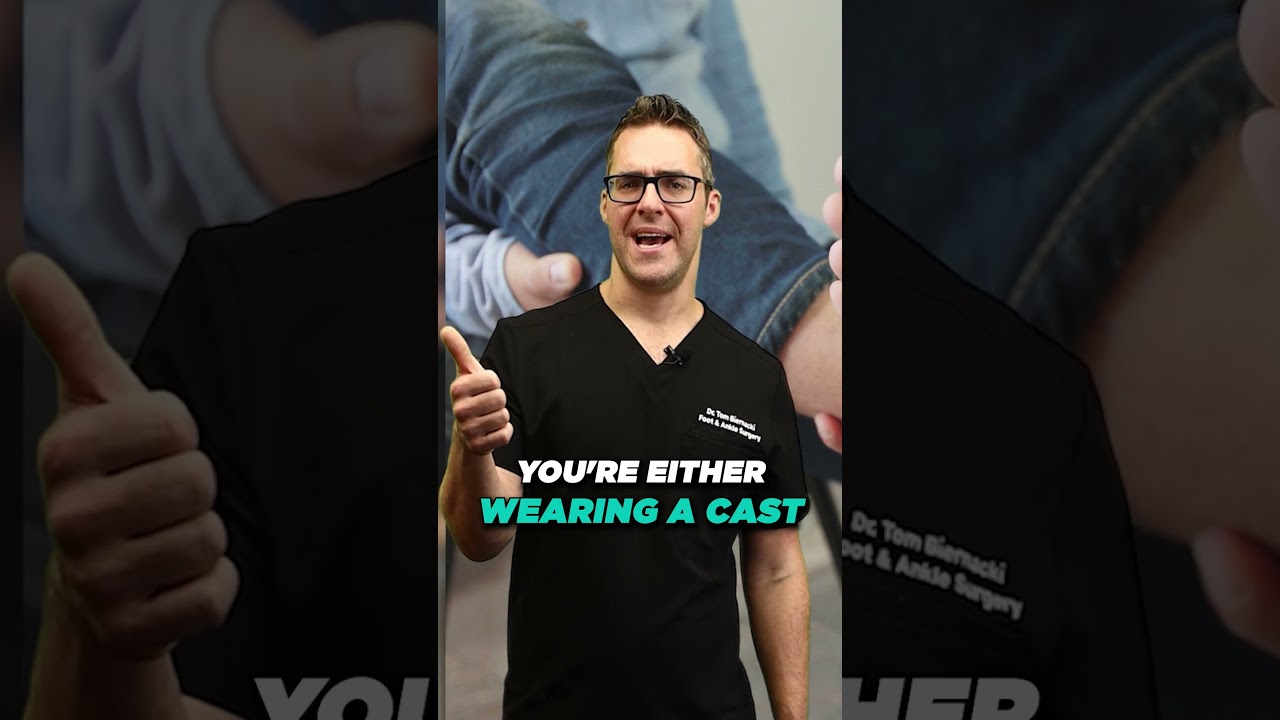
The most dangerous home wound care mistake is applying hydrogen peroxide or rubbing alcohol to a healing surgical incision. Both agents destroy the fibroblasts and new tissue cells essential for wound closure — they are appropriate for dirty traumatic wounds, not clean surgical incisions. Use only what your surgeon prescribed: typically sterile normal saline for gentle cleaning, followed by a non-adherent dressing. When in doubt, leave it alone and call — a 60-second phone call prevents weeks of delayed healing.
Frequently Asked Questions About Post-Surgery Foot Wound Care
When can I get my foot wet after surgery?
Most foot surgeons allow showering with a waterproof wound cover (cast bag or Limbo cover) from day 1–3, but direct water immersion — baths, pools, hot tubs, ocean — is prohibited until the wound is fully epithelialised, typically 3–4 weeks post-surgery. Even a pin-hole in your waterproof cover can introduce bacteria into a healing incision. Follow your surgeon’s specific protocol — healing timelines vary by procedure complexity and patient factors.
What does a healing surgical wound look like vs. infected?
Normal healing: wound edges closely apposed, mild pink colour at the margins, small amount of clear or straw-coloured serous drainage in the first 24–48 hours, progressive reduction in swelling. Infection warning signs: redness spreading beyond 1 cm from the wound edge, warmth noticeably greater than surrounding skin, purulent (cloudy, thick, or odorous) discharge, wound edges separating, increasing rather than decreasing pain after day 3, or fever. When in doubt, photograph the wound and send to your surgeon’s office.
Should I keep my wound covered or let it air out?
Keep the wound covered with a clean non-adherent dressing until sutures are removed and the wound is fully closed — typically 2–3 weeks. Contrary to popular belief, “airing out” a healing wound does not speed healing and actually allows desiccation of the wound surface, which slows epithelialisation. A moist wound environment (maintained by a non-adherent dressing, not by leaving it wet) heals 40% faster than a dry exposed wound.
How do I reduce swelling after foot surgery?
Elevation is the single most effective swelling control intervention: keep the foot above heart level as much as possible for the first 2 weeks. The R.I.C.E. protocol (Rest, Ice, Compression, Elevation) applies — use ice wrapped in a cloth for 20 minutes on, 20 minutes off during waking hours. Do not apply ice directly over the incision. Compression bandaging as applied by your surgeon should not be removed or re-wrapped at home unless specifically instructed.
When should I follow up after foot surgery?
Most foot surgeons schedule the first post-operative visit at 7–14 days for suture inspection and wound assessment, then at 4–6 weeks for X-ray and functional assessment. Do not wait for a scheduled appointment if you develop fever, spreading redness, increasing pain, or wound separation — call Balance Foot & Ankle at (810) 206-1402 for same-day evaluation. Early intervention for wound complications prevents serious complications including deep infection and non-union.
Questions About Your Surgical Wound? Call Us — Same Day.
Dr. Tom Biernacki, DPM, FACFAS and the Balance Foot & Ankle team are available for post-operative wound concerns in Howell & Bloomfield Township, MI. Don’t guess — call us.
Request Appointment (810) 206-1402Related: Foot surgery preparation checklist · Wound care podiatrist · Achilles tendon rupture surgery recovery · Plantar fascia release surgery
Frequently Asked Questions

When should I see a podiatrist?
If symptoms persist past 2 weeks, affect your normal activity, or are accompanied by red-flag symptoms (warmth, redness, swelling, inability to bear weight).
What does treatment cost?
Most diagnostic visits and conservative treatments are covered by Medicare and major insurers. Out-of-pocket costs vary by your specific plan.
How quickly can I get an appointment?
Most non-urgent cases see us within 5 business days. Urgent cases (sudden pain, possible fracture) typically same or next business day.
What is Wound care?
Wound care is a common foot/ankle condition that affects mobility and quality of life. Understanding the underlying cause is the first step in successful treatment. Our podiatrists at Balance Foot & Ankle perform a hands-on biomechanical exam, review your activity history, and use diagnostic imaging when appropriate to identify the root cause—not just treat the symptom. Many patients have been told to “rest and ice” without a deeper diagnostic workup; our approach is different.
Symptoms and warning signs
Common signs of wound care include pain that worsens with activity, morning stiffness, swelling, tenderness when palpated, and difficulty bearing weight. If you experience sudden severe pain, inability to walk, visible deformity, numbness or color change, contact our office the same day or visit urgent care—these can signal a more serious injury such as a fracture, tendon rupture, or vascular compromise. Diabetics with any foot wound should seek same-day care.
Conservative treatment options
Most cases of wound care respond to non-surgical care: structured rest, supportive footwear changes, custom orthotics, targeted stretching and strengthening protocols, anti-inflammatory medications when medically appropriate, and in-office procedures such as ultrasound-guided injections. We also offer advanced therapies including MLS laser therapy, EPAT/shockwave, regenerative injections, and image-guided procedures. Treatment is sequenced from least invasive to most invasive, and we explain the rationale at every step.
When is surgery considered?
Surgery is reserved for cases that fail 3-6 months of well-structured conservative care, when there is structural pathology (severe deformity, complete tear, advanced arthritis), or when imaging shows damage that will not heal without intervention. Our surgeons have performed 3,000+ foot and ankle procedures and prioritize minimally-invasive techniques whenever appropriate. We discuss recovery timelines, return-to-activity milestones, and realistic outcome expectations before any procedure is scheduled.
APMA: Wound Care and Diabetic Feet
Recovery timeline and prevention
Recovery from wound care varies based on severity and chosen treatment path. Conservative cases often improve within 4-8 weeks with consistent adherence to the protocol. Post-procedural recovery may range from a few days (in-office procedures) to several months (reconstructive surgery). Long-term prevention involves footwear assessment, activity modification, structured strengthening, and regular check-ins with your podiatrist if you have a history of recurrence. We provide written home-exercise plans and digital follow-up support.
Ready to feel better?
Same-week appointments available in Howell and Bloomfield Township, Michigan.
Book Your Visit
Dr. Tom Biernacki, DPM is a board-certified foot & ankle surgeon (ABFAS & ABPM) at Balance Foot & Ankle Specialists in Southeast Michigan. With over a decade of clinical experience, he specializes in heel pain, bunions, diabetic foot care, sports injuries, and minimally invasive surgery. Dr. Biernacki is a member of the APMA and ACFAS, and his patient education content on MichiganFootDoctors.com and YouTube has made him one of the most-followed foot & ankle educators on YouTube.