

Quick answer: Prevent Recurring Ankle Sprains Rehabilitation Guide is a common foot/ankle topic that affects many patients. The 2026 evidence-based approach combines proper diagnosis, conservative-first treatment, and escalation only when needed. We treat this regularly at our Howell and Bloomfield Hills practices. Call (810) 206-1402.
▶ Watch

Why Ankle Sprains Keep Coming Back
Medically Reviewed by Dr. Tom Biernacki, DPM — Board-Certified Podiatrist, Balance Foot & Ankle Specialists, Michigan. Last updated April 2026.
A single lateral ankle sprain has a 40–70% chance of recurring, particularly within the first 12 months after the initial injury. Many athletes and active individuals accept recurrent ankle sprains as an inevitable part of their sport — when in reality, recurrence is substantially preventable with appropriate rehabilitation and preventive strategies.
The reason sprains recur is not simply that the ligaments are “loose” after the initial injury. The more important factor is impaired neuromuscular control: the ankle sprain disrupts the mechanoreceptors (sensory nerve endings) in the lateral ankle ligaments that detect joint position and movement, reducing the reflexive protective muscle activation that normally prevents the ankle from inverting past safe limits.
The Three Deficits That Drive Recurrence
1. Proprioceptive Deficit
Proprioception is the body’s sense of joint position and movement. After a lateral ankle sprain, proprioceptive input from the damaged ATFL and CFL is reduced. Single-leg balance tests on an unstable surface typically demonstrate measurable proprioceptive deficit in the injured ankle compared to the uninjured side, even months after clinical recovery.
2. Peroneal Muscle Weakness and Reaction Time Delay
The peroneal muscles (peroneus longus and brevis) are the primary dynamic stabilizers against inversion. After a sprain, peroneal strength is reduced and — more importantly — the time between sensing ankle inversion and activating peroneal muscles to resist it is prolonged. This reaction time delay means the muscles cannot respond quickly enough to prevent the ankle from reaching the injury threshold.
3. Restricted Range of Motion
Ankles with persistent dorsiflexion restriction after sprains are at higher recurrence risk. Limited dorsiflexion forces compensation patterns during running and landing that increase inversion stress.
The Rehabilitation Program That Works
Phase 1: Acute Management (Days 1–7)
PEACE & LOVE protocol: Protection (avoid painful movements), Elevation, Avoid anti-inflammatories in the first 72 hours if possible, Compression, Education — followed by Load (progressive weight-bearing), Optimism, Vascularization (cardio that doesn’t stress the ankle), and Exercise. Aggressive early mobilization within pain tolerance, rather than immobilization, produces better long-term outcomes.
Phase 2: Range of Motion and Strength (Weeks 2–4)
Restoration of full range of motion — especially dorsiflexion — is the primary goal. Calf stretching, ankle circles, and band-resisted exercises in all planes address mobility deficits. Progressive peroneal strengthening using resistance bands, single-leg calf raises, and eccentric loading begins as pain allows.
Phase 3: Proprioception and Balance (Weeks 4–8)
Single-leg stance progressions — firm surface to foam surface to wobble board to perturbation training — restore proprioceptive function. Balance training should progress to eyes-closed and then dual-task (balance while catching a ball) to challenge the system further. BOSU ball exercises, balance beam walking, and stability platform training are all effective modalities.
Phase 4: Sport-Specific Return (Weeks 8–12)
Cutting, pivoting, and sport-specific movement patterns are introduced progressively before full return to sport. The Star Excursion Balance Test (SEBT) provides objective assessment of readiness — symmetric performance to within 4cm of the uninjured side on all reach directions indicates adequate neuromuscular recovery.
Long-Term Prevention: Bracing and Training
Athletes with prior ankle sprains should wear a lace-up ankle brace or ASO during sport for at least 12 months after injury — bracing reduces recurrence rates by 50–60% in this population. Proprioceptive training should become a permanent component of pre-season conditioning. If recurrent sprains continue despite these measures, evaluation for chronic ankle instability that may require surgical stabilization is appropriate.
Foot or Ankle Pain? We Can Help.
Balance Foot & Ankle — Howell & Bloomfield Township, MI
📅 Book Online
📞 (810) 206-1402
Insurance Accepted
BCBS · Medicare · Aetna · Cigna · United Healthcare · HAP · Priority Health · Humana · View All →
Howell Office
4330 E Grand River Ave
Howell, MI 48843
Get Directions →
Bloomfield Hills Office
43494 Woodward Ave, Suite 208
Bloomfield Hills, MI 48302
Get Directions →
Your Board-Certified Podiatrists



Ready to Get Back on Your Feet?
Same-week appointments available at both locations.
In Our Clinic
Most of our ankle sprains are acute — a patient comes in the same day or within 48 hours after rolling the ankle. We apply the Ottawa Ankle Rules first: bone tenderness at the posterior malleolus, navicular, or base of the 5th metatarsal, or inability to bear weight for 4 steps, means we image immediately to rule out fracture. For a clean grade 1–2 lateral ligament sprain, we use a short period of boot immobilization if needed, then transition into an ankle brace + proprioception training. The mistake we often see: patients skip the rehab phase and re-sprain within a year.
More Podiatrist-Recommended Ankle Sprain Essentials
Stability Walking/Running Shoe
Brooks Adrenaline GTS 25 — lateral support during recovery walking.
KT Tape for Ankle Support
KT Tape — proprioceptive support for athletic return-to-play.
Supportive Insole


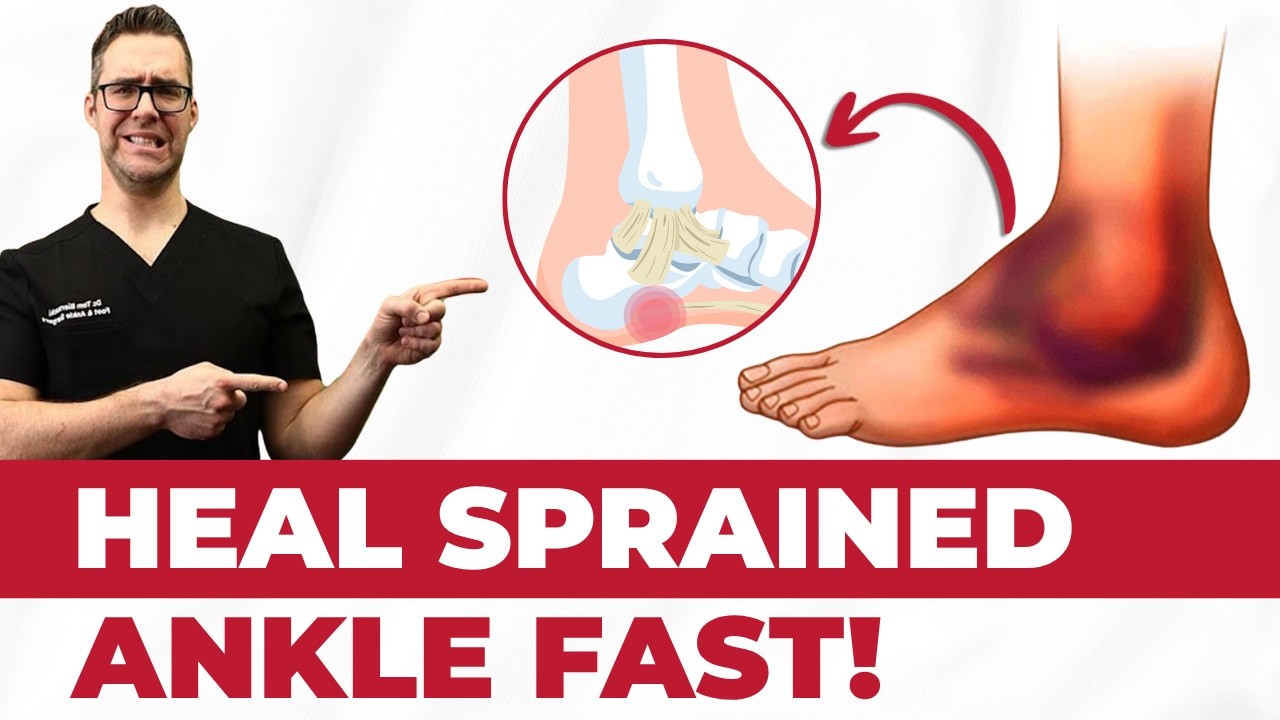
Watch: Fix TWISTED Ankle, ROLLED Ankle or SPRAINED Ankle Ligaments FASTER! — MichiganFootDoctors YouTube
PowerStep Pinnacle — arch support reduces re-injury risk during recovery.
As an Amazon Associate, Balance Foot & Ankle earns from qualifying purchases. Product recommendations are based on clinical experience; prices and availability shown above update live from Amazon.

When to See a Podiatrist
A sprain that hasn’t fully recovered after 6 weeks often has residual ligament laxity or occult fracture that keeps the ankle unstable. Balance Foot & Ankle X-rays and stress-tests every lingering sprain — if the ligament is torn, we offer bracing, PRP, and (for chronic instability) minimally-invasive repair. Don’t keep re-rolling the same ankle; let us stabilize it properly.
Call Balance Foot & Ankle: (810) 206-1402 · Book online · Offices in Howell & Bloomfield Hills
Watch: Dr. Tom explains

Podiatrist-recommended products
As an Amazon Associate, Dr. Tom earns from qualifying purchases.
Functional bracing during return to sport reduces re-sprain rate.
Lateral column support complements rehab.
Ice after rehab sessions to control swelling.
Softens heel strike during return-to-running phase.
Related resources
Ready to solve this? Book today.
Same-week appointments · Howell & Bloomfield Hills · 4.9★ (1,123+ reviews)
In-Office Treatment at Balance Foot & Ankle
If home treatment isn’t providing relief for your ankle pain, our podiatry team at Balance Foot & Ankle can help with same-day evaluations and advanced in-office care.
Same-day appointments available. (810) 206-1402
Doctor Hoy’s Natural Pain Relief Gel
Natural topical pain relief I use in our clinic. Arnica + camphor formula — apply directly to the area 3–4x daily. ($20–25)
Frequently Asked Questions
When should I see a podiatrist?
If symptoms persist past 2 weeks, affect your normal activity, or are accompanied by red-flag symptoms (warmth, redness, swelling, inability to bear weight).
What does treatment cost?
Most diagnostic visits and conservative treatments are covered by Medicare and major insurers. Out-of-pocket costs vary by your specific plan.
How quickly can I get an appointment?
Most non-urgent cases see us within 5 business days. Urgent cases (sudden pain, possible fracture) typically same or next business day.

Dr. Tom Biernacki, DPM is a board-certified foot & ankle surgeon (ABFAS & ABPM) at Balance Foot & Ankle Specialists in Southeast Michigan. With over a decade of clinical experience, he specializes in heel pain, bunions, diabetic foot care, sports injuries, and minimally invasive surgery. Dr. Biernacki is a member of the APMA and ACFAS, and his patient education content on MichiganFootDoctors.com and YouTube has made him one of the most-followed foot & ankle educators on YouTube.