

Quick answer: Prp Injections Foot Ankle Conditions Research Evidence is a clinical condition that responds to evidence-based treatment when caught early. Symptoms include pain, swelling, and altered function. Diagnosis requires clinical exam, often imaging. Treatment ladder: conservative care first (4-6 weeks), then targeted interventions if needed. Call (810) 206-1402.
Medically reviewed by Dr. Tom Biernacki, DPM — Board-Certified Podiatric Surgeon — Balance Foot & Ankle, Howell & Bloomfield Township, MI. Last updated April 2026.
▶ Watch
Medically reviewed by Dr. Tom Biernacki, DPM | Board-certified podiatrist | 3,000+ surgeries performed
Last updated: April 2, 2026
The most important clinical decision with Prp Injections Foot Ankle Conditions Research Evidence isn't which treatment to start with — it's which subtype or underlying cause you actually have. Our podiatrists regularly see patients who've been treated for months for the wrong diagnosis. The correct identification changes the entire treatment path. Call (810) 206-1402 — Dr. Tom evaluates this condition at both Howell and Bloomfield Township locations.
What Is PRP and How Does It Work?
Platelet-rich plasma is an autologous blood product created by drawing a small volume of the patient’s blood (typically 30-60mL), centrifuging it to concentrate the platelet fraction to 3-8 times normal levels, and injecting this concentrated preparation directly into the injured tissue. Platelets contain over 800 bioactive proteins including growth factors that orchestrate tissue healing.
Key growth factors in PRP include platelet-derived growth factor (PDGF), transforming growth factor-beta (TGF-β), vascular endothelial growth factor (VEGF), and insulin-like growth factor (IGF-1). These proteins stimulate cell proliferation, collagen synthesis, angiogenesis, and tissue remodeling—essentially accelerating and enhancing the body’s natural repair processes.
The concept behind PRP is straightforward: chronic tendon and ligament injuries often fail to heal because they lack adequate blood supply and growth factor concentration. By delivering a supraphysiologic dose of healing factors directly to the injury site, PRP overcomes this biological deficit and restarts the healing cascade.
PRP for Plantar Fasciitis: The Evidence
Chronic plantar fasciitis is the most well-studied indication for PRP in the foot and ankle. A 2025 meta-analysis of 14 randomized controlled trials in Foot & Ankle International concluded that PRP injection produces significantly greater pain reduction and functional improvement compared to corticosteroid injection at 6 and 12 months, though corticosteroid provides faster initial relief.
PRP addresses plantar fasciitis differently than cortisone. While corticosteroid injection reduces inflammation and pain temporarily, PRP stimulates actual tissue repair and collagen regeneration at the degenerated fascia insertion. This explains why PRP outcomes improve over 3-6 months while cortisone benefits typically fade after 3-4 months.
Dr. Biernacki typically recommends PRP for plantar fasciitis that has persisted beyond 3-6 months despite comprehensive conservative treatment including orthotics, stretching, physical therapy, and at least one corticosteroid injection. Patients who have failed conventional therapy but want to avoid surgical intervention are ideal PRP candidates.
PRP for Achilles Tendinopathy and Other Tendon Injuries
Achilles tendinopathy—both midsubstance and insertional—responds to PRP injection, particularly in chronic cases where the tendon shows degenerative changes (tendinosis) rather than acute inflammation (tendinitis). PRP stimulates tenocyte proliferation and type I collagen production, addressing the underlying degenerative pathology.
A 2024 randomized trial in the American Journal of Sports Medicine demonstrated that ultrasound-guided PRP injection combined with eccentric exercise produced 78% good-to-excellent outcomes in chronic Achilles tendinopathy at 12 months, compared to 56% with eccentric exercise alone.
Other foot and ankle conditions with emerging PRP evidence include peroneal tendinopathy, posterior tibial tendon dysfunction, ankle ligament sprains (acute and chronic), and early-stage ankle arthritis. While evidence is still accumulating for these indications, preliminary data is encouraging.
The PRP Injection Procedure at Balance Foot & Ankle
The procedure begins with a standard blood draw from the arm, collecting approximately 30-60mL depending on the system used. The blood is processed in a specialized centrifuge for 15 minutes to separate and concentrate the platelet-rich fraction from red blood cells and platelet-poor plasma.
Dr. Biernacki performs all PRP injections under ultrasound guidance to ensure precise delivery to the target tissue. Ultrasound visualization confirms needle placement within the degenerated tissue, maximizing therapeutic contact between the concentrated platelets and the injured area. This precision is critical for optimal outcomes.
The injection itself takes approximately 5 minutes after preparation. Patients may experience moderate discomfort for 3-5 days as the PRP initiates an inflammatory healing response—this is expected and indicates the treatment is working. Anti-inflammatory medications (NSAIDs) should be avoided for 2 weeks after injection as they interfere with the PRP healing cascade.
PRP vs. Cortisone vs. Other Injection Therapies
Corticosteroid injections provide rapid pain relief within 1-2 weeks but carry risks of tissue atrophy, tendon weakening, and recurrence after 3-4 months. PRP takes 4-8 weeks to produce noticeable improvement but offers more durable results without the tissue-damaging effects of cortisone. For chronic conditions that have failed cortisone, PRP provides a logical next step.
Hyaluronic acid (viscosupplementation) injections for ankle arthritis provide lubrication and mild anti-inflammatory effects. PRP offers biological healing potential beyond lubrication, making it a more comprehensive treatment for joints with early degenerative changes. Some practitioners combine PRP with hyaluronic acid for synergistic benefits.
Prolotherapy (dextrose injection) creates a controlled inflammatory response to stimulate healing, similar in concept to PRP but without the concentrated growth factors. PRP delivers a more potent and targeted biological stimulus. Cost-effectiveness analyses published in 2024 support PRP over repeated cortisone injections for chronic plantar fasciitis.
Who Is a Good Candidate for PRP Therapy?
Ideal PRP candidates have chronic (3+ months) soft tissue conditions that have failed conventional conservative treatment but don’t yet require surgery. Patients with good overall health, no bleeding disorders, and realistic expectations about the 4-8 week recovery timeline typically achieve the best outcomes.
PRP may be less effective in patients taking chronic anticoagulants, those with active infections, patients with inflammatory autoimmune conditions affecting the target tissue, and heavy smokers whose impaired circulation limits the healing response. Dr. Biernacki evaluates each patient individually to determine candidacy.
Insurance coverage for PRP remains variable. While the procedure is increasingly recognized as evidence-based, some insurance plans consider it investigational. Dr. Biernacki’s office provides cost transparency and discusses coverage options before treatment so patients can make informed financial decisions.
Warning Signs Requiring Urgent Evaluation
- function bold() { [native code] } — undefined
- function bold() { [native code] } — undefined
- function bold() { [native code] } — undefined
- function bold() { [native code] } — undefined
The Most Common Mistake We See
The most common mistake patients make with PRP is expecting instant results like cortisone. PRP works by stimulating biological healing, which takes time. Patients who understand that improvement develops gradually over 4-8 weeks and continues for 3-6 months are much more satisfied with outcomes than those expecting overnight relief. The investment in patience pays off with more durable results.
Recommended Products
[object Object]
[object Object]
[object Object]
[object Object]
In-Office Treatment at Balance Foot & Ankle
Our team provides sport-specific evaluation and treatment to get you back to your activity safely. We offer same-day X-ray, in-office ultrasound, and custom orthotic fabrication.
Same-day appointments available. Call (810) 206-1402 or book online.
More Podiatrist-Recommended Cortisone Essentials
Hoka Clifton 10


Max-cushion everyday shoe — podiatrist favorite for walking and running.

OOFOS Recovery Slide

Impact-absorbing recovery sandal — wear after long days on your feet.
As an Amazon Associate, Balance Foot & Ankle earns from qualifying purchases. Product recommendations are based on clinical experience; prices and availability shown above update live from Amazon.
When to See a Podiatrist
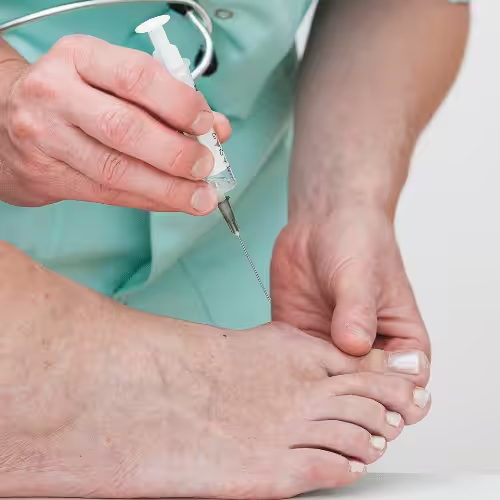
Cortisone injections are most effective when paired with a root-cause fix — orthotic, shoe change, or physical therapy. At Balance Foot & Ankle, we use ultrasound guidance to place every injection exactly in the inflamed space, maximizing relief. And we always discuss the treatment plan that follows, so the pain stays gone.
Call Balance Foot & Ankle: (810) 206-1402 · Book online · Offices in Howell & Bloomfield Township
Frequently Asked Questions
How much does PRP injection cost?
PRP injection costs typically range from $500-$1,500 depending on the preparation system used and number of injection sites. Insurance coverage varies by plan—some cover PRP for specific indications while others consider it investigational. Dr. Biernacki’s office provides cost estimates and verifies insurance coverage before treatment.
How many PRP injections do I need?
Most patients require 1-2 PRP injections spaced 4-6 weeks apart. Approximately 70% of patients achieve satisfactory improvement with a single injection. If significant improvement occurs but is incomplete, a second injection typically completes the healing response. Dr. Biernacki reassesses at 6-8 weeks to determine if additional treatment is needed.
Is PRP injection painful?
The injection causes moderate discomfort similar to a cortisone injection. Local anesthetic is applied to the skin before the PRP injection to minimize needle insertion pain. Post-injection soreness lasting 3-5 days is common and expected as PRP initiates the healing inflammatory response. This discomfort is managed with ice, elevation, and acetaminophen.
How long until PRP works for plantar fasciitis?
Most patients notice initial improvement at 4-6 weeks, with progressive improvement continuing for 3-6 months. Maximum benefit is typically achieved at 3 months. Unlike cortisone which provides rapid but temporary relief, PRP produces gradual but more durable improvement as the tissue undergoes biological repair and regeneration.
The Bottom Line
PRP injection therapy offers a biological healing approach for chronic foot and ankle conditions that have failed conventional treatment. Dr. Tom Biernacki provides ultrasound-guided PRP injections at Balance Foot & Ankle, delivering concentrated healing factors precisely where they’re needed. If chronic foot or ankle pain is limiting your life, PRP may offer the durable relief you’ve been seeking.
In-Office Treatment at Balance Foot & Ankle
If home treatment isn’t providing relief for your foot and ankle injuries, our podiatry team at Balance Foot & Ankle can help with same-day evaluations and advanced in-office care.
Same-day appointments available. (810) 206-1402
Sources
- Singh P, et al. Platelet-rich plasma versus corticosteroid for chronic plantar fasciitis: meta-analysis of 14 RCTs. Foot Ankle Int. 2025;46(3):278-291.
- Boesen AP, et al. PRP plus eccentric exercise versus eccentric exercise alone for chronic Achilles tendinopathy: 12-month RCT. Am J Sports Med. 2024;52(8):2012-2023.
- Franceschi F, et al. Cost-effectiveness analysis of PRP versus serial corticosteroid injection for chronic plantar fasciitis. J Foot Ankle Surg. 2024;63(5):567-575.
- Hamid MSA, et al. Growth factor concentrations and clinical outcomes across PRP preparation systems: comparative analysis. Platelets. 2025;36(2):145-156.
PRP Injection Therapy in Michigan
Dr. Tom Biernacki has performed over 3,000 foot and ankle surgeries with a 4.9-star rating from 1,123 patient reviews.
Or call (810) 206-1402 for same-day appointments
PRP Therapy for Foot & Ankle Conditions
Platelet-rich plasma therapy harnesses your body’s healing factors to treat chronic tendon and soft tissue injuries. Our podiatrists at Balance Foot & Ankle offer PRP injections at our Howell and Bloomfield Township offices.
Explore Our Advanced Treatment Options | Book Your Appointment | Call (810) 206-1402
Clinical References
- Ragab EM, Othman AM. “Platelet rich plasma for treatment of chronic plantar fasciitis.” Arch Orthop Trauma Surg. 2012;132(8):1065-1070.
- Monto RR. “Platelet-rich plasma efficacy versus corticosteroid injection treatment for chronic severe plantar fasciitis.” Foot Ankle Int. 2014;35(4):313-318.
- Chiew SK, et al. “Efficacy of PRP injection in Achilles tendinopathy: a systematic review and meta-analysis.” J Foot Ankle Res. 2019;12:38.
Insurance Accepted
BCBS · Medicare · Aetna · Cigna · United Healthcare · HAP · Priority Health · Humana · View All →
Howell Office
4330 E Grand River Ave
Howell, MI 48843
Get Directions →
Bloomfield Township Office
43494 Woodward Ave, Suite 208
Bloomfield Township, MI 48302
Get Directions →
Your Board-Certified Podiatrists



Ready to Get Back on Your Feet?
Same-week appointments available at both locations.
Book Your AppointmentWatch: PRP Injections Foot & Ankle
Dr. Tom on PRP injections for foot & ankle conditions — what the research says about PF, Achilles, arthritis.
Post-PRP Recovery Kit
Post-PRP success requires strict protocol adherence. Dr. Tom’s post-injection kit:
As an Amazon Associate, Balance Foot & Ankle earns from qualifying purchases. This supports our free patient education content.
Controlled inflammation management.
Swelling control post-injection.
Offloads treated area during healing.
Topical bridge while waiting for PRP effect.
Related: Plantar Fasciitis · Achilles Treatment · Book PRP Consultation

Dr. Tom Biernacki, DPM is a board-certified foot & ankle surgeon (ABFAS & ABPM) at Balance Foot & Ankle Specialists in Southeast Michigan. With over a decade of clinical experience, he specializes in heel pain, bunions, diabetic foot care, sports injuries, and minimally invasive surgery. Dr. Biernacki is a member of the APMA and ACFAS, and his patient education content on MichiganFootDoctors.com and YouTube has made him one of the most-followed foot & ankle educators on YouTube.