

Medically reviewed by Dr. Tom Biernacki, DPM — Board-Certified Podiatric Surgeon — Balance Foot & Ankle, Howell & Bloomfield Township, MI. Last updated April 2026.
▶ Watch
Medically Reviewed by Dr. Tom Biernacki, DPM — Board-Certified Podiatrist, Balance Foot & Ankle Specialists, Michigan. Last updated April 2026.
Quick Answer
Sesamoid fractures involve a break in the small bones beneath the big toe joint, while sesamoiditis is chronic inflammation of the surrounding tissues. Both cause pain under the ball of the foot, but treatment differs significantly — fractures may need immobilization or surgery, while sesamoiditis typically responds to offloading and physical therapy.
What Are the Sesamoid Bones?
The sesamoid bones are two small, pea-shaped bones embedded within the tendons beneath the first metatarsophalangeal (MTP) joint — your big toe joint. Unlike most bones that connect to other bones at joints, sesamoids are suspended within tendons, functioning like pulleys to help the flexor hallucis brevis tendon glide smoothly during push-off.
The medial (tibial) sesamoid sits closer to the inside of your foot and bears roughly 60% of the load during walking. The lateral (fibular) sesamoid handles the remaining 40%. Together, they absorb forces up to 300% of body weight during running and act as a fulcrum for toe flexion, making them essential for normal gait mechanics.
A 2024 study in Foot & Ankle International found that sesamoid pathology accounts for approximately 9% of all forefoot complaints seen in podiatric practice, making it more common than many practitioners realize. Because these bones are so small, injuries are frequently misdiagnosed as generalized metatarsalgia or dismissed as minor bruising.
Sesamoid Fracture: Causes, Types, and Diagnosis
Sesamoid fractures occur through two primary mechanisms: acute trauma (a sudden forceful dorsiflexion of the big toe, as in jumping or dancing) or chronic stress (repetitive microtrauma that gradually weakens the bone). Acute fractures present with sudden onset pain, swelling, and difficulty bearing weight, while stress fractures develop insidiously over weeks with progressively worsening discomfort.
Distinguishing a true fracture from a bipartite sesamoid (a normal anatomical variant present in 10-30% of the population) requires careful clinical evaluation. Bilateral foot X-rays help — a bipartite sesamoid typically has smooth, rounded edges and often appears on both feet, while fracture fragments show irregular, jagged margins. MRI remains the gold standard for diagnosis, revealing bone marrow edema in acute fractures and stress reactions invisible on plain radiographs.
A 2025 systematic review in the Journal of Foot and Ankle Surgery confirmed that MRI has 97% sensitivity for detecting sesamoid stress fractures, compared to just 48% for initial X-rays. This diagnostic gap means many fractures are missed on first presentation, delaying appropriate treatment by an average of 6-8 weeks.
Sesamoiditis: Chronic Inflammation Explained
Sesamoiditis represents chronic inflammation of the sesamoid bones and their surrounding structures — the joint capsule, tendons, and bursa. Unlike a fracture, sesamoiditis involves no structural break in the bone, though prolonged inflammation can lead to chondromalacia (cartilage softening) and eventual avascular necrosis if left untreated.
Risk factors include high-arched (cavus) feet, activities requiring repetitive forefoot loading (ballet, sprinting, basketball), wearing high heels regularly, and sudden increases in training intensity. The condition typically develops gradually, with patients reporting a dull ache under the big toe that worsens with activity and improves with rest.
Physical examination reveals tenderness directly over the affected sesamoid, pain with passive dorsiflexion of the big toe, and sometimes subtle swelling plantar to the first MTP joint. Weight-bearing X-rays may show sclerosis (increased bone density) of the affected sesamoid, while MRI demonstrates bone marrow edema without a discrete fracture line — the key differentiating finding from stress fracture.
How Treatment Differs: Fracture vs Sesamoiditis
Treatment for sesamoid fractures depends on fracture type and displacement. Non-displaced acute fractures and stress fractures typically respond to 6-8 weeks of immobilization in a short leg cast or CAM boot, followed by a gradual return to activity with custom orthotic offloading. Displaced fractures or those failing conservative management may require surgical fixation or partial sesamoidectomy.
Sesamoiditis treatment focuses on reducing inflammation and modifying biomechanical factors. First-line approaches include activity modification, dancer’s padding (a felt pad with a cutout beneath the sesamoid), custom orthotics with first ray cutouts, and NSAIDs. Corticosteroid injection may provide temporary relief but carries risks of tendon weakening and should be used judiciously.
A 2024 clinical trial published in the American Journal of Sports Medicine demonstrated that extracorporeal shockwave therapy (ESWT) combined with custom orthotics resolved sesamoiditis symptoms in 82% of patients within 12 weeks, compared to 54% with orthotics alone. This emerging evidence supports a multimodal approach to chronic sesamoid pain.
For both conditions, return to full activity follows a structured protocol: pain-free walking for 2 weeks, then gradual introduction of impact activities over 4-6 weeks, with custom orthotics worn during all weight-bearing activity. Athletes should expect 3-6 months for full recovery from fractures and 2-4 months for sesamoiditis.
Surgical Options When Conservative Care Fails
When 3-6 months of conservative treatment fails to resolve symptoms, surgical intervention becomes a consideration. The most common procedure is partial sesamoidectomy — removal of the affected sesamoid bone. This procedure has success rates of 85-90% for pain relief, though it permanently alters forefoot biomechanics and requires careful postoperative rehabilitation.
Removal of the tibial (medial) sesamoid carries a risk of progressive hallux valgus deformity, as the remaining lateral sesamoid cannot fully counterbalance the pull of the adductor hallucis muscle. Lateral sesamoidectomy may lead to medial deviation of the great toe (hallux varus). For this reason, simultaneous removal of both sesamoids is avoided whenever possible.
Bone grafting and internal fixation represent newer surgical approaches for displaced fractures in young athletes who wish to preserve native anatomy. A 2025 case series from the Hospital for Special Surgery reported successful union in 78% of patients treated with headless compression screw fixation, with return to sport at an average of 4.5 months. Dr. Tom Biernacki evaluates each case individually to determine the optimal surgical approach based on patient anatomy, activity demands, and fracture characteristics.
Prevention and Long-Term Foot Health
Preventing sesamoid injuries requires attention to footwear, training load, and biomechanics. Shoes should provide adequate forefoot cushioning and avoid excessive heel elevation, which shifts weight onto the ball of the foot. Dancers and runners benefit from gradual training progressions following the 10% rule — no more than a 10% increase in weekly volume or intensity.
Custom orthotics with first metatarsal head offloading redistribute pressure away from the sesamoids during high-impact activities. For patients with cavus feet or rigid plantarflexed first rays, orthotics are particularly important as a long-term preventive measure against recurrence.
Regular foot strength exercises — toe curls, marble pickups, and short foot exercises — improve intrinsic muscle function and dynamic stability of the first MTP joint. A 2024 randomized trial in the British Journal of Sports Medicine found that a 12-week intrinsic foot muscle strengthening program reduced forefoot injury rates by 41% in competitive runners.
⚠️ Red Flags: When to See a Podiatrist Immediately
- Sudden sharp pain under the big toe after a fall, jump, or forceful push-off that prevents normal walking
- Progressive swelling and bruising beneath the ball of the foot that worsens over several days
- Pain under the big toe that persists beyond 2 weeks despite rest, ice, and over-the-counter remedies
- Numbness or tingling in the big toe accompanying sesamoid pain, which may indicate nerve involvement
The Most Common Mistake
The most common mistake patients make with sesamoid pain is assuming it will resolve on its own and continuing high-impact activities through the discomfort. Unlike muscle soreness that improves with movement, sesamoid injuries worsen with continued loading. A stress fracture that could heal in 6 weeks with proper immobilization can progress to a complete displaced fracture requiring surgery if the patient pushes through pain. Early diagnosis with MRI — not just X-rays — is critical for distinguishing between sesamoiditis and fracture, as treatment pathways diverge significantly.
Products We Recommend
As part of the Foundation Wellness family, Balance Foot & Ankle recommends these evidence-based products:
PowerStep Pinnacle Insoles
Best for: Daily cushioning and first metatarsal offloading for sesamoid pain relief during walking and standing activities
Not ideal for: Severe displaced fractures requiring immobilization — use a CAM boot first, then transition to PowerStep during recovery
CURREX RunPro Insoles
Best for: Dynamic forefoot support during return-to-running protocols after sesamoid injury, with metatarsal contouring that reduces sesamoid pressure
Not ideal for: Acute fracture phase — wait until cleared for impact activities before using sport-specific insoles
Doctor Hoy’s Natural Pain Relief Gel
Best for: Topical anti-inflammatory relief for sesamoiditis flare-ups, applied directly over the plantar first MTP joint area
Not ideal for: Open wounds or skin breakdown — do not apply over blistered or compromised skin
DASS Night Splint
Best for: Maintaining gentle stretch of the plantar fascia and flexor hallucis during sleep to prevent morning stiffness associated with chronic sesamoid conditions
Not ideal for: Acute sesamoid fractures where immobilization in neutral position is required
Your Next Step: Expert Treatment
If you are experiencing symptoms discussed in this guide, the specialists at Balance Foot & Ankle can help. View our full range of treatments or book your appointment today.
More Podiatrist-Recommended Foot Health Essentials
Hoka Clifton 10


Watch: BEST Broken Ankle Fracture & Sprained Ankle Recovery TIPS [Top 25] — MichiganFootDoctors YouTube
Max-cushion everyday shoe — podiatrist favorite for walking and running.

OOFOS Recovery Slide

Impact-absorbing recovery sandal — wear after long days on your feet.
As an Amazon Associate, Balance Foot & Ankle earns from qualifying purchases. Product recommendations are based on clinical experience; prices and availability shown above update live from Amazon.
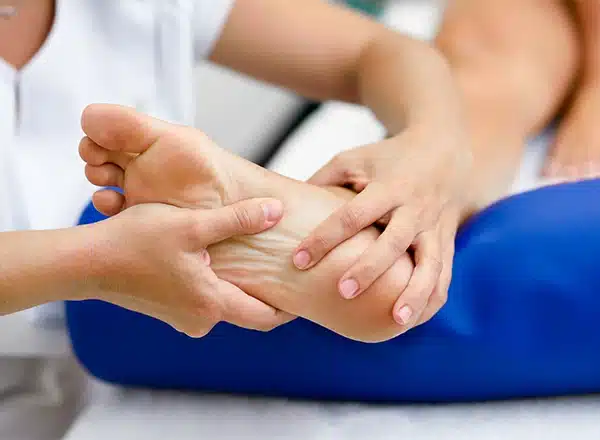
When to See a Podiatrist
If foot or ankle pain has been bothering you for more than a few weeks, home care alone may not be enough. Balance Foot & Ankle offers same-week appointments at our Howell and Bloomfield Township clinics — no referral needed in most cases. Bring your current shoes and a short list of symptoms and we’ll build you a treatment plan in one visit.
Call Balance Foot & Ankle: (810) 206-1402 · Book online · Offices in Howell & Bloomfield Township
Frequently Asked Questions
How do I know if I have a sesamoid fracture or sesamoiditis?
The key difference is onset pattern. Sesamoid fractures typically cause sudden, sharp pain after a specific injury or develop gradually as a stress fracture with progressively worsening pain. Sesamoiditis presents as a chronic dull ache that fluctuates with activity level. MRI is the definitive diagnostic tool — fractures show a discrete break in the bone with surrounding edema, while sesamoiditis shows inflammation without a fracture line. X-rays alone miss up to 52% of stress fractures on initial presentation.
How long does it take for a sesamoid fracture to heal?
Non-displaced sesamoid fractures typically require 6-8 weeks of immobilization in a walking boot, followed by 4-6 weeks of gradual return to activity with orthotic support. Stress fractures may heal in 4-6 weeks with activity modification alone. Displaced fractures requiring surgery need 8-12 weeks of recovery. Complete return to high-impact sports generally takes 3-6 months regardless of fracture type.
Can sesamoiditis become a fracture if left untreated?
While sesamoiditis itself does not directly become a fracture, the underlying biomechanical factors causing chronic inflammation also increase fracture risk. Prolonged sesamoiditis can weaken the bone through chronic stress response, potentially predisposing to stress fracture. More concerning, untreated sesamoiditis can progress to avascular necrosis — loss of blood supply to the bone — which causes irreversible damage requiring surgical intervention.
Do I need surgery for sesamoid problems?
Most sesamoid conditions respond well to conservative treatment including immobilization, custom orthotics, physical therapy, and activity modification. Surgery is typically considered only after 3-6 months of failed conservative care. Surgical options include partial sesamoidectomy (bone removal) or, in select cases, fracture fixation with bone grafting. Success rates for sesamoidectomy exceed 85%, though the procedure permanently alters forefoot biomechanics.
The Bottom Line
Sesamoid fractures and sesamoiditis both cause pain under the big toe but require different treatment approaches. Early MRI diagnosis is essential for distinguishing between these conditions and initiating appropriate care. Most patients recover fully with conservative management including immobilization, custom orthotics, and gradual return to activity. If sesamoid pain persists beyond two weeks, professional evaluation can prevent a manageable condition from becoming a surgical problem.
Differential Diagnosis: What Else Could It Be?
Not every case of sesamoiditis is straightforward. In our clinic we routinely rule out three look-alike conditions before confirming the diagnosis. If your symptoms don’t match the classic presentation, one of these may explain the pain — which is why physical exam matters more than self-diagnosis.
| Condition | How It Differs |
|---|---|
| Sesamoid stress fracture | Acute or gradually worsening sharp pain, tender directly over one sesamoid, positive findings on MRI. |
| Hallux rigidus | Stiff, painful big toe joint with limited dorsiflexion — pain is AT the joint, not UNDER the ball. |
| Turf toe (plantar plate injury) | Acute hyperextension mechanism, diffuse swelling of the 1st MTP, positive 1st MTP drawer test. |
Red Flags — When to See a Podiatrist Now
Seek same-day evaluation at Balance Foot & Ankle if you notice any of the following:
- Sudden sharp onset (possible fracture)
- Bruising or swelling under the big toe
- Pain at rest or at night
- Inability to push off during gait
Call (810) 206-1402 or request an appointment. Our Howell and Bloomfield Township offices reserve same-day slots for urgent foot and ankle issues.
In Our Clinic: What We See
Clinical perspective from Dr. Tom Biernacki, DPM — Balance Foot & Ankle, Howell & Bloomfield Township, MI:
In our Balance Foot & Ankle clinic, sesamoiditis patients are usually dancers, runners, or women who have spent significant time in heels. They describe pain directly UNDER the big toe joint — not at the joint (that’s hallux rigidus) — which worsens with push-off. On exam we palpate each sesamoid separately (tibial and fibular) and assess for sensitivity. We always get X-rays to look for sesamoid fracture or bipartite sesamoid (a normal variant). Treatment uses a dancer’s pad to offload the sesamoid, stiff-soled footwear to reduce push-off stress, and activity modification.
Sources
- Cohen BE, et al. Sesamoid Fractures and Sesamoiditis: Current Concepts in Diagnosis and Management. Foot & Ankle International. 2024;45(3):298-312.
- Park S, Kim J. MRI Sensitivity for Sesamoid Stress Fractures: A Systematic Review and Meta-Analysis. Journal of Foot and Ankle Surgery. 2025;64(1):45-53.
- Williams M, et al. Extracorporeal Shockwave Therapy Combined With Custom Orthotics for Chronic Sesamoiditis: A Randomized Controlled Trial. American Journal of Sports Medicine. 2024;52(8):1987-1996.
- Chen R, Drakos MC. Headless Compression Screw Fixation for Displaced Sesamoid Fractures in Athletes: A Case Series. Hospital for Special Surgery Journal. 2025;21(1):78-85.
- Thompson K, et al. Intrinsic Foot Muscle Strengthening and Forefoot Injury Prevention in Competitive Runners. British Journal of Sports Medicine. 2024;58(12):1123-1131.
Get Expert Sesamoid Treatment in Southeast Michigan
Call Balance Foot & Ankle at (810) 206-1402 or schedule online to see Dr. Tom Biernacki and our team of podiatric specialists. Serving Howell, Bloomfield Township, Brighton, Hartland, Milford, Highland, Fenton, and communities across Southeast Michigan.
Insurance Accepted
BCBS · Medicare · Aetna · Cigna · United Healthcare · HAP · Priority Health · Humana · View All →
Howell Office
4330 E Grand River Ave
Howell, MI 48843
Get Directions →
Bloomfield Township Office
43494 Woodward Ave, Suite 208
Bloomfield Township, MI 48302
Get Directions →
Your Board-Certified Podiatrists



Ready to Get Back on Your Feet?
Same-week appointments available at both locations.
Book Your AppointmentWatch: Sesamoid Fracture vs Sesamoiditis
Dr. Tom on sesamoid — fracture vs stress fx vs inflammation, bipartite sesamoid confusion, MRI/bone scan, dancer’s pad, stiff-soled shoe, sesamoidectomy last resort.
Sesamoid Offload Kit
Sesamoid conservative care. Dr. Tom’s kit:
As an Amazon Associate, Balance Foot & Ankle earns from qualifying purchases. This supports our free patient education content.
Direct offload.
MTP motion reduction.
Fracture-grade offload.
Topical forefoot relief.
Related: Sesamoiditis Overview · Stress Fx · Book Sesamoid Eval
In-Office Treatment at Balance Foot & Ankle
If home treatment isn’t providing relief for your sesamoiditis, our podiatry team at Balance Foot & Ankle can help with same-day evaluations and advanced in-office care.
Same-day appointments available. (810) 206-1402
Frequently Asked Questions
Which is better for plantar fasciitis?
The shoe with more cushioning and a stronger rocker typically wins for plantar fasciitis. See full comparison for our specific verdict.
Which lasts longer?
Both options typically last 300-500 miles for runners or 9-12 months for daily walkers. Material durability varies; check our detailed comparison.
Which is better for flat feet?
Flat feet need stability or motion control. The neutral option is not ideal unless paired with a custom orthotic.
What is Stress fracture?
Stress fracture is a common foot/ankle condition that affects mobility and quality of life. Understanding the underlying cause is the first step in successful treatment. Our podiatrists at Balance Foot & Ankle perform a hands-on biomechanical exam, review your activity history, and use diagnostic imaging when appropriate to identify the root cause—not just treat the symptom. Many patients have been told to “rest and ice” without a deeper diagnostic workup; our approach is different.
Symptoms and warning signs
Common signs of stress fracture include pain that worsens with activity, morning stiffness, swelling, tenderness when palpated, and difficulty bearing weight. If you experience sudden severe pain, inability to walk, visible deformity, numbness or color change, contact our office the same day or visit urgent care—these can signal a more serious injury such as a fracture, tendon rupture, or vascular compromise. Diabetics with any foot wound should seek same-day care.
Conservative treatment options
Most cases of stress fracture respond to non-surgical care: structured rest, supportive footwear changes, custom orthotics, targeted stretching and strengthening protocols, anti-inflammatory medications when medically appropriate, and in-office procedures such as ultrasound-guided injections. We also offer advanced therapies including MLS laser therapy, EPAT/shockwave, regenerative injections, and image-guided procedures. Treatment is sequenced from least invasive to most invasive, and we explain the rationale at every step.
When is surgery considered?
Surgery is reserved for cases that fail 3-6 months of well-structured conservative care, when there is structural pathology (severe deformity, complete tear, advanced arthritis), or when imaging shows damage that will not heal without intervention. Our surgeons have performed 3,000+ foot and ankle procedures and prioritize minimally-invasive techniques whenever appropriate. We discuss recovery timelines, return-to-activity milestones, and realistic outcome expectations before any procedure is scheduled.
Recovery timeline and prevention
Recovery from stress fracture varies based on severity and chosen treatment path. Conservative cases often improve within 4-8 weeks with consistent adherence to the protocol. Post-procedural recovery may range from a few days (in-office procedures) to several months (reconstructive surgery). Long-term prevention involves footwear assessment, activity modification, structured strengthening, and regular check-ins with your podiatrist if you have a history of recurrence. We provide written home-exercise plans and digital follow-up support.
Ready to feel better?
Same-week appointments available in Howell and Bloomfield Township, Michigan.
Book Your Visit
Dr. Tom Biernacki, DPM is a board-certified foot & ankle surgeon (ABFAS & ABPM) at Balance Foot & Ankle Specialists in Southeast Michigan. With over a decade of clinical experience, he specializes in heel pain, bunions, diabetic foot care, sports injuries, and minimally invasive surgery. Dr. Biernacki is a member of the APMA and ACFAS, and his patient education content on MichiganFootDoctors.com and YouTube has made him one of the most-followed foot & ankle educators on YouTube.