


Quick answer: A sprained pinky toe usually settles with buddy taping, a stiff-soled shoe and a few weeks of patience. Pain that persists beyond three weeks, a toe that looks crooked, or bruising that spreads across the foot should be x-rayed to rule out a fracture. Call (810) 206-1402.
⚡ Quick Answer: Sprained vs. Broken Pinky Toe: How Can You Tell?
A sprained pinky toe has pain and mild swelling without deformity; a broken toe may be crooked, severely swollen, or bruised. X-ray is the only definitive way to tell — both are treated with buddy-taping.
Dr. Tom’s 3 Picks to Heal a Sprained 5th Toe
A sprained pinky (5th) toe heals fastest when you do three things: offload the lateral column of the ball of the foot so you’re not jamming the base of the 5th metatarsal with every step, wear a supportive insole that spreads weight to the arch and heel (so your lateral forefoot isn’t carrying the brunt), and treat the inflammation topically. Buddy-taping alone is not enough — mechanics and inflammation both have to be addressed. Here are the three products we hand patients with sprained 5th toes.
Best Offload Pad
No products found.
Podiatrist Pros
- Self-adhesive felt pads you apply directly to the insole — positions proximal to the metatarsal heads, which is the whole point of a met pad
- Far cheaper than a custom metatarsal offload — ~$15 for 6 pads vs $300+ for custom orthotics
- Good for confirming a metatarsalgia diagnosis: if a correctly-placed met pad relieves pain, you’ve localized the lesion
Honest Cons
- Placement matters — most patients put them directly under the ball of the foot, which makes pain worse. Position just proximal to the metatarsal heads.
- Felt compresses after 4-6 weeks and loses effectiveness; treat as a consumable
- Not a substitute for an insole with a built-in metatarsal dome (PowerStep Pinnacle with Met) if you need long-term offload
Dr. Tom’s Take: The fastest, cheapest way to test whether metatarsal offload helps your pain. If it works, graduate to a PowerStep Pinnacle with Met or a custom orthotic with a rigid met pad built in.
Best Supportive Insole
No products found.
Podiatrist Pros
- Firm-but-flexible EVA arch with a deep heel cradle — matches the neutral-foot biomechanics most patients have
- Semi-rigid shell supports the medial arch without the painful break-in period that plastic-shell insoles (Superfeet) cause
- Fits most athletic, work, and casual shoes with a removable factory insole — doesn’t require volume shoes
- Antimicrobial top cover lasts ~12 months under daily wear; most patients re-order before it fails
Honest Cons
- Too firm for patients with fat-pad atrophy or advanced hallux rigidus — they need the softer Pulse version
- Full-length; you must remove the shoe’s factory insole. Won’t work in minimalist or low-volume dress shoes
Dr. Tom’s Take: My default orthotic recommendation for plantar fasciitis, mild-to-moderate flat feet, and Achilles tendonitis. Better value than Superfeet for 90% of patients, which is why I swapped it into our clinic kits three years ago.
Best Topical Relief
No products found.
Podiatrist Pros
- Arnica + camphor + menthol blend — the most evidence-backed non-NSAID topical combination for soft-tissue pain
- Non-greasy; absorbs without the waxy residue of Biofreeze
- Actually warms the tissue (camphor) before the cooling menthol hits — better for chronic stiffness than pure menthol formulas
- No parabens, no sulfates, no artificial dyes — safer for repeat daily use
Honest Cons
- Short-acting (2-4 hours); not a substitute for anti-inflammatories in acute flares
- Small 3oz tube runs out fast if you apply bilaterally
Dr. Tom’s Take: We swapped out Biofreeze in our clinic three years ago because Doctor Hoy’s works better and costs less. Use it nightly for plantar fasciitis, Achilles tendonitis, or post-run muscle soreness.
Sprained Pinky Toe Treatment in Howell & Bloomfield Township
If you’ve twisted or injured your little toe, even a minor sprain can cause significant pain and swelling. At Balance Foot & Ankle Specialist, our Michigan podiatrists provide accurate diagnosis and personalized treatment to relieve pain and help your toe heal properly.
Schedule Your Appointment Today

- Board-Certified Podiatrists
- Diabetic Foot Doctor Near You
- Serving Howell & Bloomfield Township
How to Fix a Sprained Pinky Toe: What’s Watch This First
https://youtu.be/Q1ifxZ3lR2oWhat Causes a Sprained Pinky Toe?
A sprained pinky toe occurs when the ligaments around the toe are stretched or torn. This can happen suddenly or from repeated stress.
Common causes include:
- Stubbing your toe against furniture or hard surfaces
- Twisting the foot during sports or physical activity
- Wearing tight or ill-fitting shoes
- Falls or accidental impacts
- Overuse or repetitive strain

Symptoms of a Sprained Pinky Toe
- Pain when walking or putting weight on the foot
- Swelling around the little toe
- Bruising or discoloration
- Tenderness to the touch
- Difficulty wearing shoes comfortably
How Balance Foot & Ankle Specialist Can Help
Our experienced Michigan podiatrists provide a thorough evaluation to determine the severity of your toe injury. Treatment may include:
- Protective taping or splinting
- Anti-inflammatory care
- Footwear and activity recommendations
- Footwear and activity recommendations
- Custom orthotics for added support
- Follow-up care to ensure proper healing
Early treatment helps prevent long-term pain, stiffness, or improper healing.
We can order x-rays that are performed inside the home.
Sprained Pinky Toe Pain or Broken Pinky Toe? [Best Treatment]
Sprained Pinky Toe or Broken Pinky Toe Pain? STOP continuing to live in pain: Follow these simple steps to make your pain goes away FOREVER!
This video will go over:
- How to diagnose a sprained pinky toe.
- How to tell between a sprained pinky toe vs. broken toe.
- How to treat a sprained pinky toe.
- How to wrap a sprained pinky toe.
Pinky Toe Sprain Causes:
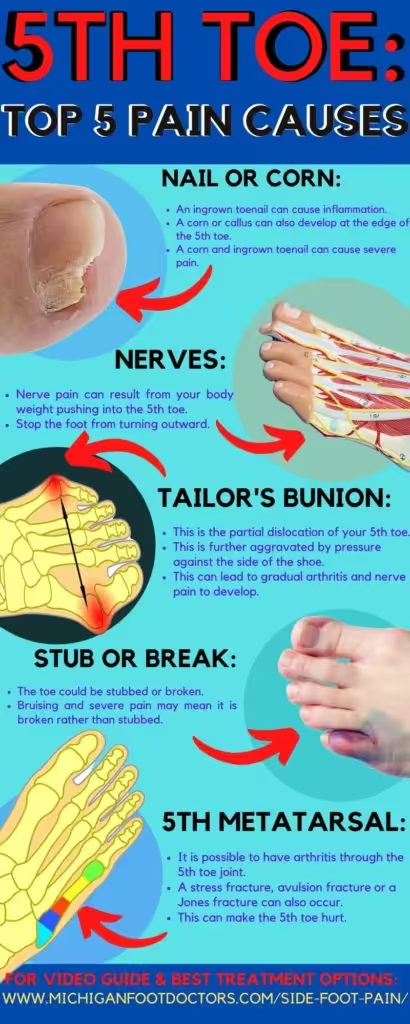
Sprained Pinky Toe Images:
Below is a gallery of sprained pinky toe pictures.
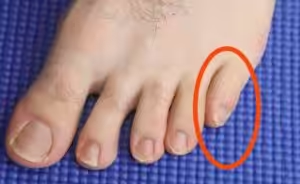
What does a sprained pinky toe look like?
- If you are asking yourself what does a sprained pinky toe look like, the answer is not much different than a lightly broken pinky toe.
- With a severe sprain there can be purple or dark bruising.
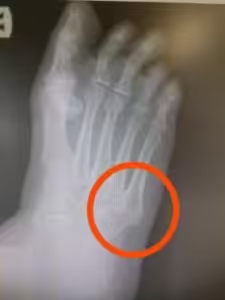
- Sprained pinky toe pictures do not always show whether there is a pinky toe sprain or break.
- Without seeing a podiatrist it can be very difficult to tell if you are pinky toe is broken or sprained.
Is my pinky toe broken or sprained?
- If you are asking yourself what does a sprained pinky toe look like, the answer is not much different than a lightly broken pinky toe.
- With a severe sprain there can be purple or dark bruising.
- Sprained pinky toe pictures do not always show whether there is a pinky toe sprain or break.
- Without seeing a podiatrist it can be very difficult to tell if you are pinky toe is broken or sprained.
Sprained Pinky Toe Symptoms
- As podiatrists this is a question we here frequently “is my pinky toe broken or just sprained?”
- The best way to tell is an x-ray, there is a very small margin of difference between a badly sprained pinky toe and a lightly broken pinky toe.
📧 Get Dr. Tom’s Free Lab Test Guide
Discover the 5 lab tests every person over 35 should ask their doctor about — explained in plain English by a board-certified physician.
Book Online for Fast, Professional Care.Sprained Pinky Toe Symptoms:
A sprained pinky toe and broken pinky toe will really hurt for the first couple of days. This is the inflammatory response taking place. This does not mean that you have had any permanent damage take place.

Sprained Pinky Toe Symptoms:
- A sprained pinky toe is damage to the ligaments.
- Pain in the entire pinky toe.
- Possible numbness, burning & tingling due to nerve irritation. This can be more noticeable even at night time.
- Swelling & edema in the entire little toe.
- Swelling & edema in the pinky toe joint.
- Bruising at the bottom of the outside of the foot or pinky toe a day or two later.
Broken Pinky Toe Symptoms:
- Similar symptoms to the sprained pinky toe, but rather than damage to the ligaments holding the bones together, the actual bone is broken.
- As a general rule, bone damage causes more swelling and bruising than soft tissue injury.
- With a broken pinky toe, these symptoms will be more noticeable and more painful. However, this is not reliable enough to make a true diagnosis.
- The only true way to diagnose a pinky toe fracture is if the toe is clearly displaced.
- Most fractures are not dislocated and have a crack but no displacement.
- A broken pinky toe will have more bruising and swelling than a sprained toe.
Causes Of A Sprained Pinky Toe:
Both a sprained pinky toe or a broken pinky toe can be caused by the following:
- A sprained pinky toe usually happens as the big toe is bent backward.
- This is common when walking barefoot and bumping the 5th toe.
- The pinky toe is not very strong & is easily overcome by stubbing or forcefully striking an object.
- It is most common while walking barefoot or with tremendous force.
- This toe is the most fragile and smallest of all the toes.
- A broken pinky toe is usually caused with greater force than a simple sprain of the toe.
Is My Pinky Toe Broken Or Sprained?
This is very difficult to say for sure. An X-ray is usually needed for confirmation.

- The only way to know 100% is to head to your podiatrist’s office or the ER for X-ray imaging.
- There are many cases where a sprained big toe looks worse than a broken toe, although generally, terrible bruising and pain are more likely to be a fracture.
- There are other cases where very mild injuries can result in a broken toe.
Think Broken Pinky Toe If:
Crunching noise during the injury.
Severe swelling & bruising.
Complete inability to move the toe.
Obvious deformity.
Think Sprained Toe If:
No cracking or crumpling noise during the time of injury.
No significant bruising or pain.
No obvious damage.
Sprained Pinky Toe Healing Time:
There are three grades of sprained pinky toe injuries. The recovery time and healing time can vary based on what grade of sprain you have.
Don’t worry; most sprains are a grade 1 injury.

Sprained Pinky Toe Recovery Time:
1) Grade 1 Pinky Toe Sprain:
The joint capsule & soft tissue are stretched.
This is the vast majority of pinky toe sprains, no matter how painful they are initially.
This results in a more mild amount of swelling & bruising.
Perform initial treatment as detailed below.
Sprained Pinky Toe Recovery Time: 1-2 weeks.
2) Grade 2 Pinky Toe Sprain:
This is a partial tear of the plantar anatomy.
This results in severe bruising & swelling.
It is usually indistinguishable from a grade 1 sprain early on.
This likely does not need any surgery or intervention.
It is a good idea to head in for precautionary imaging at your podiatrist’s office.
Perform initial treatment as detailed below.
Sprained Pinky Toe Recovery Time: 2-4 weeks.
3) Grade 3 Pinky Toe Sprain:
This is a complete tear of the soft tissue anatomy.
This causes severe swelling & bruising.
There is a possible deformity.
This will require a visit to the podiatrist for imaging and intervention.
Sprained Pinky Toe Recovery Time: 2-3 weeks. Will require podiatrist intervention & imaging.
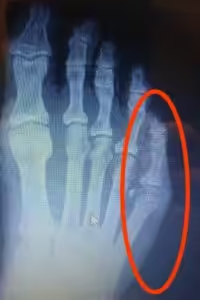
Broken Pinky Toe Recovery Time:
Non-displaced Broken Pinky Toe:
If your pinky toe is not deformed and broken out of place, it will be sore for a little while.
Generally, it can take a few weeks for the pain to start to go away.
Most people have bruising and pain for more than 6-8 weeks.
It is normal to have a sore toe for even over 3+ months.
See your podiatrist for imaging if it is not starting to get better pretty quickly.
Displaced Broken Pinky Toe:
If you have a deformity or severe bend in your toe, this may require some intervention.
If you have a displaced toe, then you may need a pin to hold it back into place. Usually, under imaging, a podiatrist or emergency room doctor can pop the toe back into place.
The good news is that even with a broken and displaced pinky toe, you should not really have any long-term damage or disability.
A displaced broken pinky toe does require immediate intervention. See your podiatrist as soon as possible!
Again this can take up to 3+ months until full recovery is achieved.

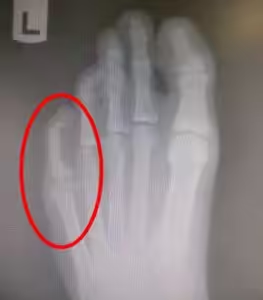
How to fix a dislocated pinky toe:
- If you have a dislocated or deformed pinky toe, this means one of two things: Either a fractured pinky toe or a complete tearing of the joint capsule.
- If this has happened to you, it is necessary to see your podiatrist or emergency room doctor quickly.
- With continued dislocation, this can cause more permanent damage to the soft tissue envelope.
Dislocated pinky toe symptoms:
- Symptoms and causes will be very similar to that of a severely sprained or broken pinky toe.
- There will likely be a deformity of the pinky toe appreciated.
Dislocated Pinky Toe Treatment:
There are two treatment options for a dislocated pinky toe:
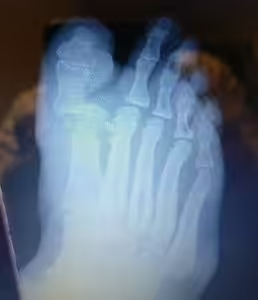
1)Pinky Toe surgery:
- This usually involved replacing the pinky toe into the proper position.
- If it does not stay there, it may need to be pinned with a wire.
- This wire can stay in place for up to 4-6 weeks, depending on your toe healing time.
2)Manual re-positioning:
- This re-positioning of the dislocated pinky toe under imaging is generally very successful.
- Fluoroscopy is a live imaging option that we do have available at the emergency room.
Dislocated pinky toe recovery time:
- The recovery time for a dislocated pinky toe can usually be at least 2-3 months of pain.
- Sometimes a dislocated pinky toe might need surgery, and sometimes your podiatrist will be able to pop it back in a place without a big problem.
- If the toe can be relocated back into place, then the soreness should eventually go away.
- The recovery time is usually 2-3 months, for about 75% of the pain to go away.
- In about 6 months for 90% of the pain will go away.
- Sometimes the toe may never get back to 100% if it is not fully pop back into place or damage the cartilage.
- There is always a possibility that there could be permanent osteoarthritis.
How to fix a sprained pinky toe:
- Sprained pinky toe treatment generally consists of a few simple things that you can do yourself at home.
- But if you have any concerns about more serious damage, make sure to see your podiatrist for X-rays and more in-depth evaluation.
A)Wear a good supportive pair of shoes:
- Getting a good supportive running shoe will take pressure off the pinky toe sprain.
- If you are still feeling pain, you may need a shoe with mesh or soft cloth around the edge of the fifth toe.
- Sometimes if there are stitches or pressure along with this site, it can irritate the toe.
- So ideally, you will have a good stiff running shoe with mesh non-restrictive cloth surrounding the 5th toe site.
B)Buddy taping:
- Budding taping consists of wrapping the fifth toe joint with tape.
- This is usually more important for the other toes, like the big toe, but it can still help the fifth toe.
- All this does is prevents excess motion of the 5th toe.
- It will not make it heal faster, but it will make the toe have less motion and possibly less damage.
C)Pinky Toe Splint:
- Sometimes a pinky toe splint may be necessary, but this is very, very rare!
- Pinky toe splints are not very practical.
D)Rest:
- There is really no secret to the sprained pinky toe.
- The key is really resting it and giving it a few weeks to get better.
- So if you have a 12-hour shift that you need to work, this may take longer to heal.
Broken Pinky Toe Treatment:
A)Wear a good supportive pair of shoes for your broken baby toe:
- Getting a good supportive running shoe will protect and take pressure off the baby toe sprain. This is similar to treatment for your sprained baby toe.
- If you are still feeling pain, you may need a shoe with mesh or soft cloth around the edge of the fifth toe.
- Sometimes if there are stitches or pressure along with this site, it can irritate the toe.
- So ideally, you will have a good stiff running shoe with mesh non-restrictive cloth surrounding the 5th toe site.

B)Buddy taping for your broken baby toe:
- Budding taping consists of wrapping the fifth toe joint with tape.
- This is usually more important for the other toes, like the big toe, but it can still help the fifth toe.
- All this does is prevents excess motion of the 5th toe.
- It will not make it heal faster, but it will make the toe have less motion and possibly less damage.
C)Pinky Toe Splint for broken small toes:
- A pinky toe splint does not really make sense for broken small toes.
- Stick with a good supportive shoe and buddy taping for your treatment.
D)Broken Pinky Toe Cast:
- A broken pinky toe cast does not make sense, just like a pinky toe splint is not very practical.
- Stick with great shoes and buddy taping.
- The only way a broken pinky toe cast is necessary is if you end up needing surgery and have further fractures.
Best shoes for a sprained pinky toe:
- If you have a pinky toe injury, consider getting a perfect pair of shoes to keep pressure off of the toe.
- A good shoe will prevent your foot from turning out and can really relieve the pain.

Best orthotics for a sprained pinky toe:
- Orthotics can be very effective in stopping the overpronation of your foot. This will prevent your 5th toe from pressing into the outside of the shoe.

Jones Fracture Treatment:
- A fractured pinky toe is the same as a broken pinky toe or a broken baby toe. These terms basically mean the same thing.
- Treat your fractured pinky toe just like you would the above-broken pinky toe.
- If you have a jones or fifth metatarsal fracture further up the bone, consider this treatment video.

Why Michigan Patients Trust Us
- Experienced podiatrists specializing in foot and toe injuries
- Personalized treatment plans for sprains, fractures, and chronic conditions
- Conservative care first, surgical options when necessary
- Convenient locations in Howell, Bloomfield Township, and surrounding communities
- Compassionate, patient-focused care
Our board-certified podiatrists specialize in foot and ankle care.
Expert Care for Sprained Pinky Toe and Foot Injuries

Dr. Tom Biernacki, DPM
Provides tailored treatment plans to relieve pain and restore mobility.
Book Now
Dr. Carl Jay,
DPM
Works closely with patients to reduce pain, improve function, and prevent recurring toe injuries.
Book Now
Dr. Daria Gutkin, DPM
Offers advanced treatment for foot and ankle injuries, ensuring safe and comfortable care at every step of the healing process.
Book NowDr. Tom’s Sprained Pinky Toe Recovery Protocol
- Doctor Hoy’s Natural Pain Relief Gel — Pinky toe sprain pain and periarticular swelling: arnica + camphor gel applied to the 5th toe and lateral forefoot 3-4x daily during the first 2 weeks of recovery.
- FLAT SOCKS No-Sock Insoles — Protect buddy-taped pinky toe from shoe box friction: FLAT SOCKS no-sock inserts create a smooth barrier between the healing toe and shoe upper during recovery.
- PowerStep Pinnacle — Return to activity: arch support reduces the lateral column loading that stresses the 5th ray during normal gait — important for runners recovering from pinky toe sprains.
Pinky toe sprain with significant displacement, skin integrity concern, or not improving at week 3? X-ray at Balance Foot & Ankle to rule out 5th metatarsal fracture. → (810) 206-1402
In-Office Treatment at Balance Foot & Ankle
If home treatment isn’t resolving your sprained pinky toe, our podiatry team at Balance Foot & Ankle can help. We offer same-day evaluations and advanced in-office treatments to get you back on your feet faster.
⚠️ When to see a podiatrist:
- Severe swelling and bruising suggesting fracture not sprain
- Visible deformity or angulation of the pinky toe
- Pain over the 5th metatarsal base (possible Jones fracture)
- No improvement after 1 week of buddy taping and rest

⭐ 4.5★ | 8K+ Sold
Protect a sprained pinky toe from adjacent toe pressure — the most effective tool for comfortable recovery.

PowerStep Pinnacle Arch Support Insoles
⭐ 4.7★ | 50K+ Sold
Supports the lateral foot during pinky toe sprain recovery — reduces stress on the 5th metatarsal and toe joint.
Ready to Get Relief? Same-Day Appointments Available
Board-certified podiatric surgeon | Howell & Bloomfield Township, MI | Most Insurance Accepted
4.9★ | 1,123 Reviews | 3,000+ Surgeries
Or call: (810) 206-1402
Frequently Asked Questions
When should I see a podiatrist?
If symptoms persist past 2 weeks, affect your normal activity, or are accompanied by red-flag symptoms (warmth, redness, swelling, inability to bear weight).
What does treatment cost?
Most diagnostic visits and conservative treatments are covered by Medicare and major insurers. Out-of-pocket costs vary by your specific plan.
How quickly can I get an appointment?
Most non-urgent cases see us within 5 business days. Urgent cases (sudden pain, possible fracture) typically same or next business day.
What is Ankle sprain?
Ankle sprain is a common foot/ankle condition that affects mobility and quality of life. Understanding the underlying cause is the first step in successful treatment. Our podiatrists at Balance Foot & Ankle perform a hands-on biomechanical exam, review your activity history, and use diagnostic imaging when appropriate to identify the root cause—not just treat the symptom. Many patients have been told to “rest and ice” without a deeper diagnostic workup; our approach is different.
Symptoms and warning signs
Common signs of ankle sprain include pain that worsens with activity, morning stiffness, swelling, tenderness when palpated, and difficulty bearing weight. If you experience sudden severe pain, inability to walk, visible deformity, numbness or color change, contact our office the same day or visit urgent care—these can signal a more serious injury such as a fracture, tendon rupture, or vascular compromise. Diabetics with any foot wound should seek same-day care.
Conservative treatment options
Most cases of ankle sprain respond to non-surgical care: structured rest, supportive footwear changes, custom orthotics, targeted stretching and strengthening protocols, anti-inflammatory medications when medically appropriate, and in-office procedures such as ultrasound-guided injections. We also offer advanced therapies including MLS laser therapy, EPAT/shockwave, regenerative injections, and image-guided procedures. Treatment is sequenced from least invasive to most invasive, and we explain the rationale at every step.
When is surgery considered?
Surgery is reserved for cases that fail 3-6 months of well-structured conservative care, when there is structural pathology (severe deformity, complete tear, advanced arthritis), or when imaging shows damage that will not heal without intervention. Our surgeons have performed 3,000+ foot and ankle procedures and prioritize minimally-invasive techniques whenever appropriate. We discuss recovery timelines, return-to-activity milestones, and realistic outcome expectations before any procedure is scheduled.
Recovery timeline and prevention
Recovery from ankle sprain varies based on severity and chosen treatment path. Conservative cases often improve within 4-8 weeks with consistent adherence to the protocol. Post-procedural recovery may range from a few days (in-office procedures) to several months (reconstructive surgery). Long-term prevention involves footwear assessment, activity modification, structured strengthening, and regular check-ins with your podiatrist if you have a history of recurrence. We provide written home-exercise plans and digital follow-up support.
Ready to feel better?
Same-week appointments available in Howell and Bloomfield Township, Michigan.
Book Your VisitGet Expert Care at Balance Foot & Ankle
Same-week appointments at our Howell and Bloomfield Township offices. Board-certified podiatric surgeons. Most insurance accepted.

Dr. Tom Biernacki, DPM is a board-certified foot & ankle surgeon (ABFAS & ABPM) at Balance Foot & Ankle Specialists in Southeast Michigan. With over a decade of clinical experience, he specializes in heel pain, bunions, diabetic foot care, sports injuries, and minimally invasive surgery. Dr. Biernacki is a member of the APMA and ACFAS, and his patient education content on MichiganFootDoctors.com and YouTube has made him one of the most-followed foot & ankle educators on YouTube.
More questions patients ask
How do I know if my pinky toe is sprained or broken?
Both cause swelling, bruising, and pain, but a fracture often causes sharp point tenderness directly on the bone. An X-ray is the only reliable way to distinguish a sprain from a fracture. A podiatrist can evaluate and provide proper treatment.
How do you treat a sprained pinky toe?
Treatment typically includes buddy taping (taping the pinky to the 4th toe), rest, ice, compression, and elevation (RICE). Rigid-soled shoes reduce movement and pain. Most pinky toe sprains heal within 3–6 weeks with proper care.
Can I walk on a sprained pinky toe?
Light walking is usually possible with buddy taping and a stiff-soled shoe or walking boot. Avoid barefoot walking on hard surfaces. If pain is severe or does not improve within 1–2 weeks, see a podiatrist to rule out fracture or ligament damage.
Still have a question about coverage or cost? Book online and we will check your benefits before your visit: Book in Howell · Book in Bloomfield Township. Prefer to talk it through first? Call (810) 206-1402.
Let us know your sprained or broken pinky toe stories! This helps us add to the page.