
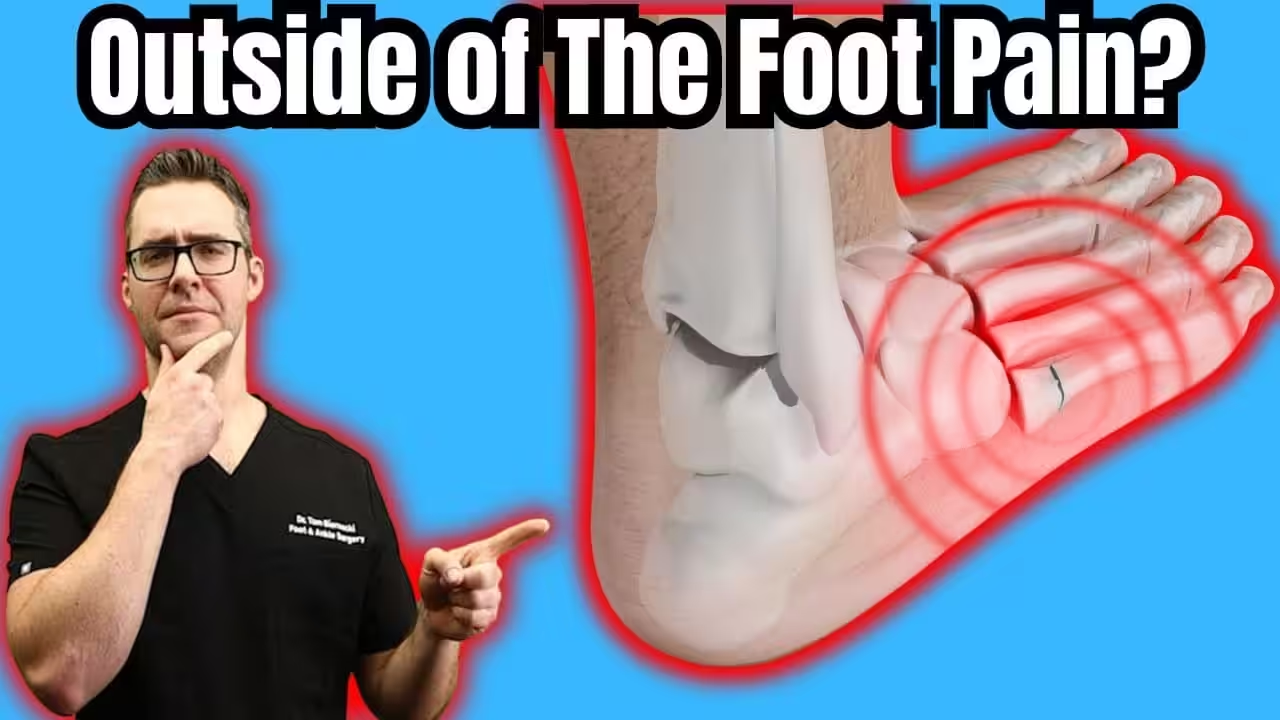

Quick answer: Outside Of The Foot Pain has multiple potential causes including mechanical, neurological, vascular, and inflammatory. The patterns we see most often are overuse, poorly-fitted shoes, and biomechanical imbalance. Red flags requiring urgent evaluation: warmth/redness (infection), inability to bear weight (fracture), and unilateral swelling without injury (DVT). Call (810) 206-1402.
Medically reviewed by Dr. Tom Biernacki, DPM · Board-Certified Podiatric Surgeon · Last reviewed: April 2026 · Editorial Policy
Quick Answer
Outside of Foot Pain — 7 Causes of Lateral Foot Pain & relates to foot pain — typically caused by overuse, footwear, or biomechanics. Most patients improve in 6-12 weeks with conservative care. Same-week appointments in Howell + Bloomfield Township: (810) 206-1402.
✅ Medically reviewed by Dr. Tom Biernacki, DPM — Board-Certified Podiatrist · Last updated April 6, 2026
Medically Reviewed

Dr. Carl Jay, DPM — Board-Certified Podiatrist
Balance Foot & Ankle · Howell & Bloomfield Township, MI

Dr. Daria Gutkin, DPM — Board-Certified Podiatrist
Balance Foot & Ankle · Howell & Bloomfield Township, MI
Last updated: April 2026 · Evidence-based content
QUICK ANSWER
Pain on the outside of the foot (lateral foot pain) has several possible causes depending on the exact location. The most common include peroneal tendonitis (behind/below the ankle bone), 5th metatarsal stress fracture (midfoot outer edge), cuboid syndrome (lateral midfoot), tailor’s bunion (base of the pinky toe), and sinus tarsi syndrome (in front of the outer ankle bone). Pinpointing where it hurts most helps identify the cause and choose the right treatment.
Table of Contents
- Pain Location Guide — Find Your Diagnosis
- 1. Peroneal Tendonitis
- 2. 5th Metatarsal Stress Fracture
- 3. Cuboid Syndrome
- 4. Tailor’s Bunion (Bunionette)
- 5. Sinus Tarsi Syndrome
- 6. Jones Fracture
- 7. Lateral Ankle Sprain (Chronic)
- Best Shoes & Supports for Lateral Foot Pain
- Warning Signs — See a Podiatrist Now
- Frequently Asked Questions
- Bottom Line
Pain Location Guide — Find Your Diagnosis
The outside of the foot is a broad area, and the exact location of your pain is the most useful clue for identifying the cause. Use this table to match your pain location to the most likely diagnosis:
| Pain Location | Most Likely Cause | Key Feature |
|---|---|---|
| Behind & below outer ankle bone | Peroneal tendonitis | Worse with eversion, often after ankle sprain |
| Bony bump on outer midfoot edge | 5th metatarsal base fracture or stress fracture | Point tenderness, worse with activity |
| Lateral midfoot (in front of ankle) | Cuboid syndrome | Vague deep ache, worse with push-off |
| Base of pinky toe | Tailor’s bunion (bunionette) | Visible bump, red and inflamed with tight shoes |
| In front of outer ankle bone (a small divot) | Sinus tarsi syndrome | Feels unstable, often follows ankle sprain |
| Outer ankle bone area | Chronic lateral ankle sprain | Recurrent giving way, feeling of instability |
| Outer midfoot shaft (between ankle and pinky toe) | Jones fracture (5th metatarsal shaft) | Point tenderness mid-shaft, may follow twisting injury |
1. Peroneal Tendonitis
The peroneal tendons (peroneus longus and peroneus brevis) run behind the outer ankle bone and are the most common cause of lateral foot and ankle pain. Peroneal tendonitis develops from overuse, ankle sprains, or improper footwear that places excessive stress on the outer ankle. The pain is typically located directly behind and below the lateral malleolus (the bony bump on the outside of the ankle) and worsens with walking on uneven surfaces, running, or turning the foot outward.
Treatment includes rest, a supportive ankle brace or walking boot for acute flare-ups, physical therapy focused on peroneal strengthening and proprioception, and shoes with good lateral stability. Most cases resolve within 6–12 weeks with conservative care.
Read more: Peroneus Longus Tendonitis | Peroneus Brevis Tendonitis
2. 5th Metatarsal Stress Fracture
The 5th metatarsal is the long bone along the outer edge of the midfoot that connects to the pinky toe. Stress fractures at the base of this bone cause a distinct, sharp pain on the outer midfoot that worsens with activity and improves with rest. The area where the bone flares out into its base (the styloid process) is especially vulnerable because it is a common site of tendon attachment and a transition zone between different types of bone loading.
Point tenderness directly over the bony prominence on the outer midfoot edge is the key clinical finding. Unlike an ankle sprain (which causes diffuse swelling and pain over a broader area), a 5th metatarsal stress fracture produces very localized pain at a specific spot on the bone. X-rays may show the fracture, but early stress fractures can be missed and may require MRI or bone scan for confirmation.
Treatment depends on the location: tuberosity avulsion fractures heal well in a walking boot, while Jones fractures (at the metaphyseal-diaphyseal junction) are high-risk and often require surgery with screw fixation because of the limited blood supply in that zone.
3. Cuboid Syndrome
Cuboid syndrome is a poorly understood but relatively common cause of lateral midfoot pain. It occurs when the cuboid bone — a small, cube-shaped bone on the outer side of the midfoot — becomes subluxated (shifted slightly out of its normal position) or develops joint dysfunction. The cuboid serves as a pulley point for the peroneus longus tendon and plays an important role in the lateral column of the foot during gait.
The pain is typically vague and deep, located in the lateral midfoot area in front of the ankle. It worsens with push-off and weight-bearing, and patients often describe a general feeling of something being “off” in their foot rather than sharp, localized pain. Cuboid syndrome frequently develops after an ankle sprain or from overuse in runners.
Treatment often includes cuboid manipulation (a specific adjustment technique performed by a podiatrist or physical therapist), low-dye taping to support the lateral arch, orthotic insoles with a cuboid pad, and strengthening of the peroneal muscles. Most patients experience significant relief within 2–4 treatments.
Read more: Cuboid Syndrome Treatment Guide
4. Tailor’s Bunion (Bunionette)
A tailor’s bunion is a bony prominence at the base of the fifth (pinky) toe — essentially a bunion on the outer side of the foot instead of the inner side. It gets its name from tailors who historically sat cross-legged on hard surfaces, irritating this area of the foot. The bump becomes painful when it rubs against shoes, causing redness, swelling, and callus formation over the prominence.
Conservative treatment includes wider shoes, protective padding, and gel toe spacers. When conservative measures fail, surgical correction (a bunionette osteotomy) realigns the fifth metatarsal and removes the painful prominence. Recovery is similar to bunion surgery — 4–6 weeks in a surgical shoe.
Read more: Tailor’s Bunion (Bunionette) Guide
5. Sinus Tarsi Syndrome
The sinus tarsi is a small, tunnel-like space on the outer side of the foot, located just in front of the outer ankle bone. It contains ligaments, nerve endings, and fatty tissue that help stabilize the subtalar joint (the joint between the talus and calcaneus). When these structures become inflamed or damaged — most commonly after an ankle sprain — the result is sinus tarsi syndrome.
Patients describe a feeling of instability or “looseness” in the ankle along with a deep, aching pain in the small divot just in front of the lateral malleolus. The pain worsens with walking on uneven surfaces and with inversion (turning the foot inward). Up to 70 percent of patients with sinus tarsi syndrome have a history of ankle sprains.
Treatment includes physical therapy focused on proprioception and ankle stability, corticosteroid injection into the sinus tarsi (which is both diagnostic and therapeutic), orthotic insoles with a lateral heel wedge, and ankle bracing for high-risk activities.
6. Jones Fracture
A Jones fracture is a specific type of 5th metatarsal fracture that occurs at the metaphyseal-diaphyseal junction — a zone approximately 1.5 cm from the base of the bone. This fracture is named after orthopedic surgeon Sir Robert Jones, who first described it in 1902 after fracturing his own foot while dancing.
Jones fractures are considered high-risk because they occur in a “watershed zone” of limited blood supply, similar to navicular stress fractures. This means they have a significant risk of delayed union or nonunion with conservative treatment alone. For this reason, many orthopedic and podiatric surgeons recommend surgical fixation with an intramedullary screw for Jones fractures, especially in athletes who need to return to sport. Non-surgical treatment requires 6–8 weeks of strict non-weight-bearing in a cast.
7. Chronic Lateral Ankle Sprain
An ankle sprain is the most common musculoskeletal injury in the world, and up to 40 percent of patients develop chronic ankle instability after their initial sprain. These patients experience recurrent episodes of the ankle “giving way” during walking or sport, persistent lateral ankle pain, and a constant feeling of instability.
Chronic ankle instability develops when the lateral ligaments (particularly the anterior talofibular ligament) do not heal adequately after the initial sprain. Without proper rehabilitation — specifically proprioceptive training and peroneal strengthening — the ankle remains mechanically and functionally unstable. Treatment includes structured physical therapy (3–6 months), ankle bracing during high-risk activities, and in refractory cases, surgical ligament reconstruction (Broström procedure).
Best Shoes & Supports for Lateral Foot Pain
OUR #1 RECOMMENDATION
ASICS Gel-Kayano — Best Stability Shoe for Lateral Support
The Gel-Kayano provides exceptional lateral stability through its structured heel counter and GEL cushioning system. The wider platform base reduces ankle roll and provides a stable foundation that protects the outer foot structures during walking and running. This is our top pick for patients with peroneal tendonitis, chronic ankle instability, or any condition that benefits from extra lateral support.
PowerStep Pinnacle Orthotic Insoles
Semi-rigid orthotic insoles help redistribute pressure across the foot, reducing the concentration of forces on the lateral structures. The built-in heel cradle stabilizes the rearfoot and limits excessive motion that overloads the peroneal tendons and lateral column. A solid OTC orthotic is one of the most cost-effective interventions for virtually every cause of lateral foot pain.
New Balance 990v6 — Best Supportive Walking Shoe
The New Balance 990 offers a perfect balance of cushioning, stability, and a wide toe box that accommodates tailor’s bunions and other forefoot conditions. Its FuelCell midsole absorbs lateral impact, and the ENCAP support system provides a structured heel that controls rearfoot motion. An excellent all-day walking shoe for patients with chronic lateral foot pain.
Warning Signs — See a Podiatrist Now
⚠ When to Seek Immediate Care
- Outer foot pain after a twisting injury with inability to bear weight — may indicate a Jones fracture or 5th metatarsal fracture
- Recurrent ankle giving way — chronic instability increases fracture risk and should be treated
- Pain on the outer midfoot that worsens progressively with activity — stress fracture pattern
- Visible snapping or popping behind the outer ankle bone — peroneal tendon subluxation
- Lateral foot pain that has persisted for more than 4 weeks despite rest and ice
- Swelling and bruising on the outer foot after an injury without improvement over 5–7 days
More Podiatrist-Recommended Foot Health Essentials
Hoka Clifton 10

Max-cushion everyday shoe — podiatrist favorite for walking and running.

OOFOS Recovery Slide

Impact-absorbing recovery sandal — wear after long days on your feet.
As an Amazon Associate, Balance Foot & Ankle earns from qualifying purchases. Product recommendations are based on clinical experience; prices and availability shown above update live from Amazon.

When to See a Podiatrist
If foot or ankle pain has been bothering you for more than a few weeks, home care alone may not be enough. Balance Foot & Ankle offers same-week appointments at our Howell and Bloomfield Township clinics — no referral needed in most cases. Bring your current shoes and a short list of symptoms and we’ll build you a treatment plan in one visit.
Call Balance Foot & Ankle: (810) 206-1402 · Book online · Offices in Howell & Bloomfield Township
Frequently Asked Questions
Why does the outside of my foot hurt when I walk?
The most common causes of lateral foot pain during walking are peroneal tendonitis, cuboid syndrome, and 5th metatarsal stress fracture. Peroneal tendonitis causes pain behind and below the outer ankle bone, cuboid syndrome causes a vague ache in the lateral midfoot, and a stress fracture produces sharp, localized pain over the 5th metatarsal bone. The key diagnostic clue is the exact location: press along the outer edge of your foot to find the most tender spot, then match it to the location guide above.
Can outside foot pain be caused by shoes?
Yes, shoes are a common contributing factor. Shoes with poor lateral support (worn-out sneakers, flat sandals, minimalist shoes) allow excessive ankle motion that overloads the peroneal tendons and lateral column. Shoes that are too narrow can directly compress the outer foot, aggravating tailor’s bunions and causing metatarsal irritation. Switching to a stability shoe with a wide toe box is one of the most effective first-line treatments for many causes of lateral foot pain.
Should I see a doctor for outside foot pain?
You should see a podiatrist if the pain has lasted more than 2–4 weeks despite rest and shoe changes, if you cannot bear weight comfortably, if the pain followed a specific injury (especially a twisting or rolling injury), or if your ankle frequently gives way. Lateral foot pain after an ankle sprain deserves particular attention because peroneal tendon injuries and 5th metatarsal fractures are commonly missed on initial evaluation. Early diagnosis prevents chronic problems and speeds recovery.
Is outside foot pain a sign of a stress fracture?
It can be. The 5th metatarsal is one of the most common sites for stress fractures in the foot. Warning signs that suggest a stress fracture include pain that worsens progressively with activity, point tenderness over a specific spot on the bone, pain that appeared after increasing your training volume, and swelling on the outer midfoot. If these features are present, an X-ray or MRI should be obtained to rule out a fracture before continuing to exercise.
Bottom Line
Outside-of-foot pain has many possible causes, but the exact location of your pain is the best diagnostic clue. Peroneal tendonitis, 5th metatarsal stress fractures, cuboid syndrome, tailor’s bunions, sinus tarsi syndrome, and chronic ankle instability are the most common conditions we treat. Most respond well to conservative measures — supportive footwear, orthotics, physical therapy, and activity modification — when caught early. If your lateral foot pain has persisted despite rest, or if it followed an ankle injury, a proper evaluation prevents chronic problems and ensures the right treatment.
Sources
- Roster B, et al. “Peroneal tendon disorders.” Clin Sports Med. 2015;34(4):625-641.
- Quill GE. “Fractures of the proximal fifth metatarsal.” Orthop Clin North Am. 1995;26(2):353-361.
- Jennings J, Davies GJ. “Treatment of cuboid syndrome secondary to lateral ankle sprains.” J Orthop Sports Phys Ther. 2005;35(7):409-415.
- Hertel J. “Functional anatomy, pathomechanics, and pathophysiology of lateral ankle instability.” J Athl Train. 2002;37(4):364-375.
Pain on the Outside of Your Foot?
Dr. Carl Jay and Dr. Daria Gutkin pinpoint the cause of lateral foot pain at Balance Foot & Ankle. In-office X-ray and ultrasound available. Howell & Bloomfield Township, MI.
Pain on the Outside of Your Foot?
Our podiatrists diagnose and treat lateral foot pain from peroneal tendonitis, stress fractures, cuboid syndrome, and more.
Clinical References
- Davda K, Malhotra K, O’Donnell P, Singh D, Cullen N. Peroneal tendon disorders. EFORT Open Rev. 2017;2(6):281-292.
- Bica D, Sprouse RA, Armen J. Diagnosis and management of common foot fractures. Am Fam Physician. 2016;93(3):183-191.
- Jennings J, Davies GJ. Treatment of cuboid syndrome secondary to lateral ankle sprains: a case series. J Orthop Sports Phys Ther. 2005;35(7):409-415.
Insurance Accepted
BCBS · Medicare · Aetna · Cigna · United Healthcare · HAP · Priority Health · Humana · View All →
👟 Dr. Tom Also Recommends
Podiatrist Recommended Shoes 2026: Dr. Tom’s Top Picks for Every Condition
The right footwear can make or break your recovery. Dr. Tom’s complete guide to the best shoes for plantar fasciitis, flat feet, neuropathy, bunions & more — with clinical picks for every foot type.
See Dr. Tom’s Top Shoe Picks →Howell Office
4330 E Grand River Ave
Howell, MI 48843
Get Directions →
Bloomfield Township Office
43494 Woodward Ave, #208
Bloomfield Township, MI 48302
Get Directions →
Your Board-Certified Podiatrists



Ready to Get Back on Your Feet?
Same-week appointments available at both locations.
Book Your AppointmentPodiatrist-Recommended Products
🏆 Doctor Hoy’s Natural Pain Relief Gel — Our top recommendation for reducing foot pain and inflammation naturally. Apply daily to affected areas.
PowerStep Pinnacle Orthotic Insoles — Reduces mechanical stress on the foot structures that cause pain. Physician-grade support in an OTC package.
CURREX Support Insoles — Dynamic arch support available in low, medium, and high arch profiles for a personalized fit.
Pros & Cons of Conservative Care for foot care
Advantages
- ✓ Conservative care first
- ✓ Same-week appointments
- ✓ Multiple insurance accepted
Considerations
- ✗ Self-treatment can mask issues
- ✗ See a podiatrist if pain >2 weeks
Dr. Tom’s Recommended Products for foot care
Affiliate disclosure: As an Amazon Associate, Balance Foot & Ankle earns from qualifying purchases. We only recommend products we use with patients.


Footnanny Heel Cream Dr. Tom’s Pick
Best for: Daily moisturizer for cracked heels
Ready to Get Back on Your Feet?
Same-day appointments in Howell + Bloomfield Township. Most insurance accepted. Dr. Tom Biernacki, DPM & team.
Book Today — Same-Day Appointments Available
Call Now: (810) 206-1402
About Your Care Team at Balance Foot & Ankle
Dr. Tom Biernacki, DPM · Board-Certified Foot & Ankle Surgeon. Specializes in conservative-first care, minimally invasive bunion surgery, and complex reconstruction.
Dr. Carl Jay, DPM · Accepting new patients. Specializes in sports medicine, athletic injuries, and routine podiatric care.
Dr. Daria Gutkin, DPM, AACFAS · Accepting new patients. Specializes in surgical reconstruction and pediatric podiatry.
Locations: 4330 E Grand River Ave, Howell, MI 48843 · 43494 Woodward Ave Suite 208, Bloomfield Township, MI 48302
Hours: Mon–Fri 8:00 AM – 5:00 PM · (810) 206-1402
In-Office Treatment at Balance Foot & Ankle
If outer foot pain from any cause persists or worsens, our team provides full evaluation and treatment at our Howell and Bloomfield Township locations.
Same-day appointments. (810) 206-1402
Learn about our stress fracture & foot pain treatment → | Book online →
Frequently Asked Questions
When should I see a doctor?
See a podiatrist if pain persists past 2 weeks, prevents normal activity, or is accompanied by red-flag symptoms (warmth, swelling, numbness, inability to bear weight).
Can I treat this at home?
Mild cases respond to RICE protocol (rest, ice, compression, elevation), supportive shoes, and OTC anti-inflammatories. Persistent symptoms need professional evaluation.
How long does it take to heal?
Most soft tissue injuries resolve in 2-6 weeks with appropriate care. Bone injuries take 6-12 weeks. Chronic conditions need longer-term management.
What is Foot pain?
Foot pain is a common foot/ankle condition that affects mobility and quality of life. Understanding the underlying cause is the first step in successful treatment. Our podiatrists at Balance Foot & Ankle perform a hands-on biomechanical exam, review your activity history, and use diagnostic imaging when appropriate to identify the root cause—not just treat the symptom. Many patients have been told to “rest and ice” without a deeper diagnostic workup; our approach is different.
Symptoms and warning signs
Common signs of foot pain include pain that worsens with activity, morning stiffness, swelling, tenderness when palpated, and difficulty bearing weight. If you experience sudden severe pain, inability to walk, visible deformity, numbness or color change, contact our office the same day or visit urgent care—these can signal a more serious injury such as a fracture, tendon rupture, or vascular compromise. Diabetics with any foot wound should seek same-day care.
Conservative treatment options
Most cases of foot pain respond to non-surgical care: structured rest, supportive footwear changes, custom orthotics, targeted stretching and strengthening protocols, anti-inflammatory medications when medically appropriate, and in-office procedures such as ultrasound-guided injections. We also offer advanced therapies including MLS laser therapy, EPAT/shockwave, regenerative injections, and image-guided procedures. Treatment is sequenced from least invasive to most invasive, and we explain the rationale at every step.
When is surgery considered?
Surgery is reserved for cases that fail 3-6 months of well-structured conservative care, when there is structural pathology (severe deformity, complete tear, advanced arthritis), or when imaging shows damage that will not heal without intervention. Our surgeons have performed 3,000+ foot and ankle procedures and prioritize minimally-invasive techniques whenever appropriate. We discuss recovery timelines, return-to-activity milestones, and realistic outcome expectations before any procedure is scheduled.
Recovery timeline and prevention
Recovery from foot pain varies based on severity and chosen treatment path. Conservative cases often improve within 4-8 weeks with consistent adherence to the protocol. Post-procedural recovery may range from a few days (in-office procedures) to several months (reconstructive surgery). Long-term prevention involves footwear assessment, activity modification, structured strengthening, and regular check-ins with your podiatrist if you have a history of recurrence. We provide written home-exercise plans and digital follow-up support.
Ready to feel better?
Same-week appointments available in Howell and Bloomfield Township, Michigan.
Book Your VisitGet Expert Care at Balance Foot & Ankle
Same-week appointments at our Howell and Bloomfield Township offices. Board-certified podiatric surgeons. Most insurance accepted.

Dr. Tom Biernacki, DPM is a board-certified foot & ankle surgeon (ABFAS & ABPM) at Balance Foot & Ankle Specialists in Southeast Michigan. With over a decade of clinical experience, he specializes in heel pain, bunions, diabetic foot care, sports injuries, and minimally invasive surgery. Dr. Biernacki is a member of the APMA and ACFAS, and his patient education content on MichiganFootDoctors.com and YouTube has made him one of the most-followed foot & ankle educators on YouTube.