Quick answer: Pain Outside Ankle has multiple potential causes including mechanical, neurological, vascular, and inflammatory. The patterns we see most often are overuse, poorly-fitted shoes, and biomechanical imbalance. Red flags requiring urgent evaluation: warmth/redness (infection), inability to bear weight (fracture), and unilateral swelling without injury (DVT). Call (810) 206-1402.
✅ Medically reviewed by Dr. Tom Biernacki, DPM — Board-Certified Podiatrist · Last updated April 6, 2026
Lateral Ankle Pain?
Pain On Outside Of The Ankle – Causes, Symptoms & Best Treatment
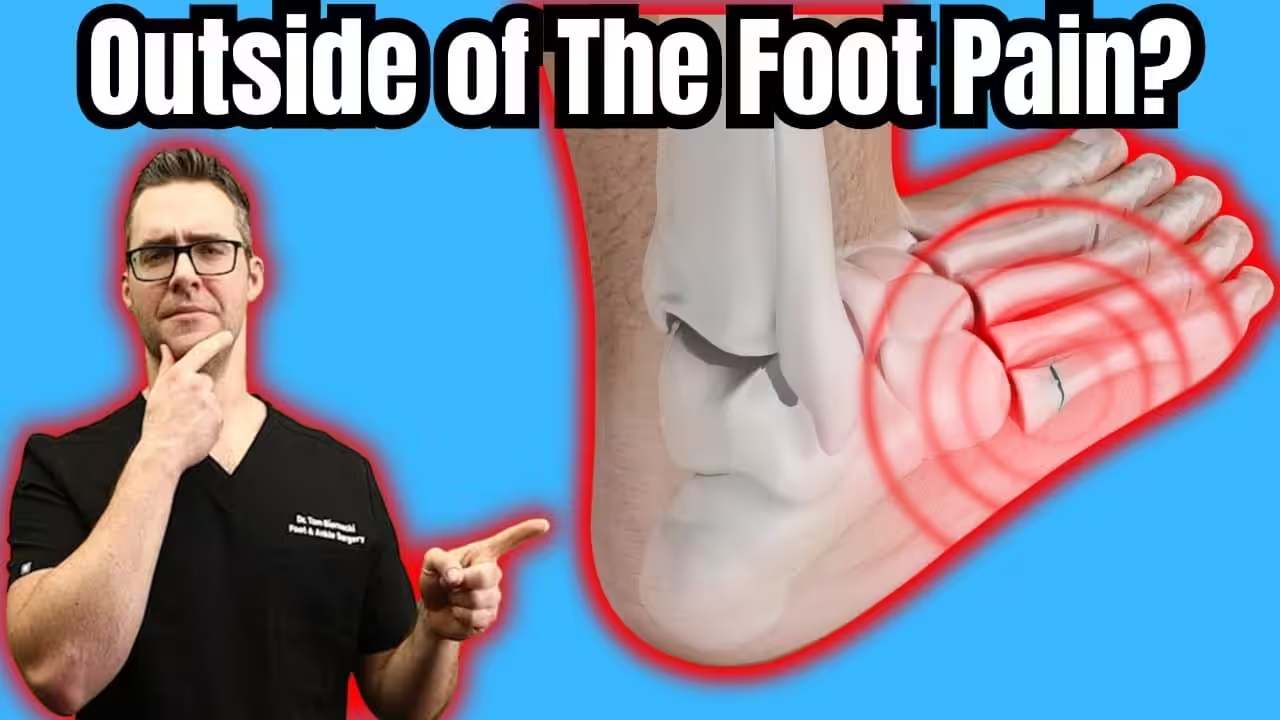
Pain On Outside Of Ankle: 95% is one of these causes: Ankle ligament sprains, peroneus brevis & peroneus longus tendonitis, or sinus tarsi pain!
https://www.youtube.com/watch?v=PZVD8Pl4IFA
Why Does the Outside of My Ankle Hurt —and What Can I Do About It?
Sharp or aching pain on the outside of the ankle (lateral ankle pain) can strike after a sudden twist, an old injury that never healed, or even daily overuse. Whether you notice swelling, instability, or stabbing discomfort with each step, identifying the root cause is the first step toward lasting relief. From simple RICE therapy to advanced imaging and rehabilitation, today’s podiatry tools can get you back on your feet safely and quickly.
Pain on the Outside of the Ankle: Key Causes & Proven Treatments
Common Causes
Lateral Ankle Sprain – overstretched ligaments from rolling the ankle
Peroneal Tendonitis – inflammation of tendons running behind the fibula
Ankle Impingement – pinched soft tissue or bone spurs at the joint edge
Stress Fracture – tiny cracks in the fibula or fifth metatarsal
MLS laser or EPAT shockwave for chronic tendon pain
PRP injections for stubborn soft-tissue injuries
Minimally invasive surgery for severe ligament tears or impingement
Early evaluation by a foot and ankle specialist prevents chronic instability and shortens recovery time.
End Ankle Pain—Start Your Customized Recovery Plan Today
Don’t let lateral ankle pain limit your life. The podiatrists at Balance Foot & Ankle Specialist offer on-site imaging, expert diagnosis, and personalized rehab so you can return to sports, work, or everyday walking without pain.
For managing foot pain from conditions like plantar fasciitis, flat feet, or diabetic neuropathy, the best orthotics can offer crucial support and relief.
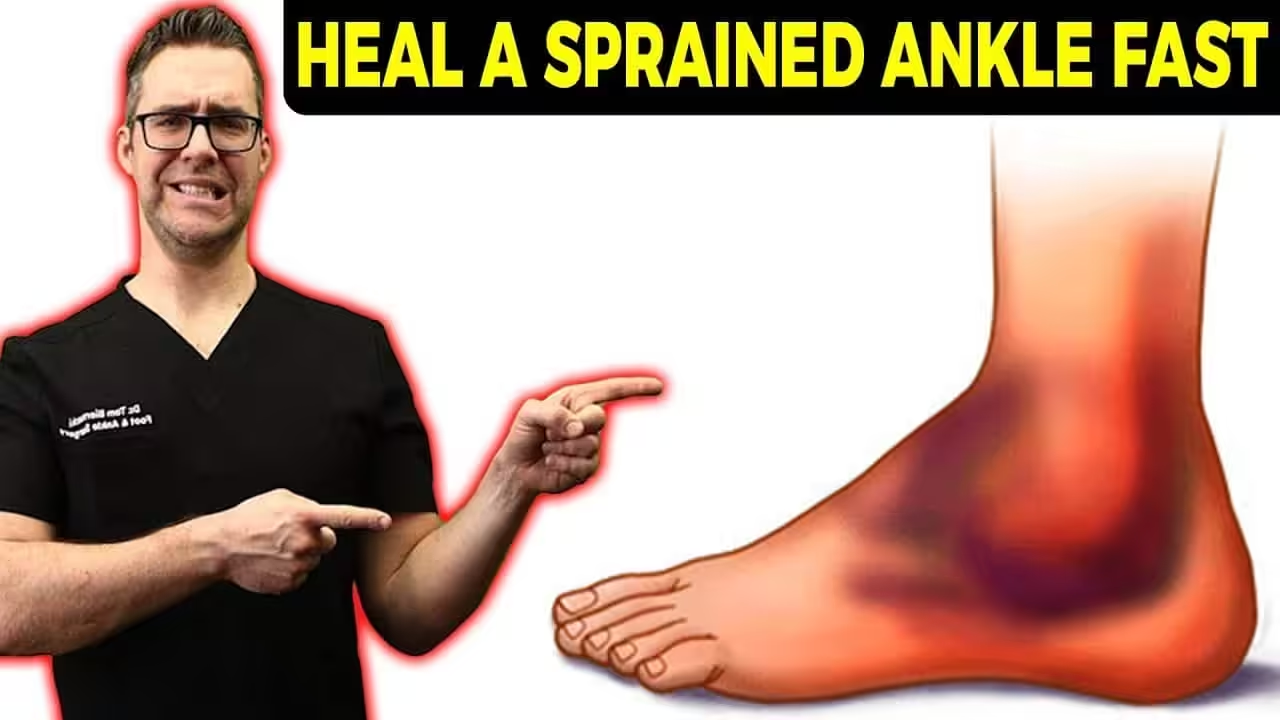
If you rupture or tear your ankle ligaments. This can be a stage III ankle sprain. This takes a long time to get better. After two weeks of icing and immobilizing, and then 6 to 8 weeks of protecting the ankle.
Ankle Sprain Causes:
Most commonly, this is due to a sprain or twist of the ankle.
This can be called a rolled ankle motion.
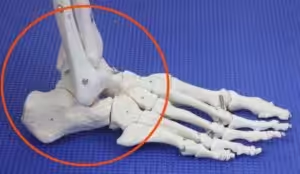
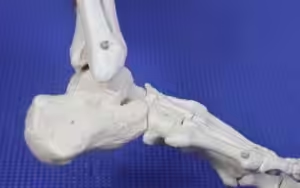
There are ligaments that hold the ankle to the rest of the foot. These ligaments attach the fibula to the calcaneus and talus bones.
Ankle Sprain Home Treatment:
See below for our recommended products are located below:
An ankle sprain requires a strong stability brace immediately after the injury. This will prevent future injury.
If the majority of your ankle sprain pain has healed, a compression race can work really well after the first month or two.
For long-term pain, in great orthotic with a good supportive shoe is an excellent idea.
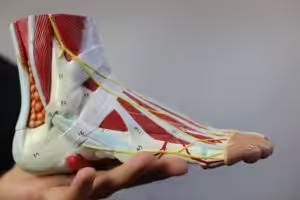
You can see on the outside of your ankle. There are a lot of ligaments. You have your peroneal tendons, deep ligaments such as the ATFL, the CFL, and the PTFL.
For More Specific Information:
If you have a specific ankle injury, consider some of our following guides for ankle sprain pain.
The peroneus longus tendon could lead to the back across the back of the ankle and side of the foot.
This muscle is responsible for push-off with foot and ankle stabilization.
It can commonly be irritated while running.
Peroneus longus tendinitis symptoms:
These can lead to soreness stretching up your leg.
Numbness, burning, and tingling.
Pain up the side of the outside of your leg when you push down with your big toe joint.
Lorem ipsum dolor sit amet, consectetur adipiscing elit. Ut elit tellus, luctus nec ullamcorper mattis, pulvinar dapibus leo.
You can see on the outside of your ankle. There are a lot of ligaments. You have your peroneal tendons, your deep ligaments such as the ATFL, the CFL, and the PTFL.
Peroneus longus tendinitis causes:
This is most commonly caused by people pushing off with the front of your foot.
I have seen this most commonly in people who push off with their big toe and sprain the outside of their ankle.
This radiates up the side of your leg, almost to the outside of your knee.
Peroneus longus tendinitis home treatment:
Look at the products below for our recommendations:
Probably the number one thing you want is a good supportive orthotic.
We prefer full-length orthotics and a good supportive running shoe.
The second thing you want to do is modifying your activity. Look for activities that cause you to push off with your big toe joint.
The peroneus brevis tendon could lead across the back of the ankle and side of the foot.
This muscle is responsible for push-off with foot and ankle stabilization.
This is the muscle that you use for turning the foot out.
It can commonly be irritated while running.
Peroneus Brevis Tendinitis Symptoms:
This usually leads to numbness, burning, and tingling, radiating up the side of your leg.
This is usually due to your foot twisting out to compensate for another injury.
The outside of your ankle in the soft meaty is sore behind your bone (fibula).
Peroneus Brevis Tendinitis Causes:
This is most commonly caused after compensating for another injury.
For example, if you have a sore knee or hip, your foot would rotate out to take pressure off of the impact.
Eventually, the peroneus brevis gets really sore.
This is also related to a tight ankle joint or hamstring.
Peroneus Brevis Tendinitis Home Treatment:
The single number one thing is a good stability ankle brace.
We also like a combination of the deep full-length orthotic.
Consider a good supportive shoe or boot.
If this is more of a chronic type of pain, and you cannot fit your stability brace into your shoe, try a good compression brace.
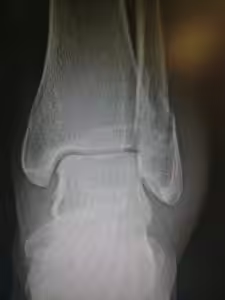
A Broken Ankle:
If you think you might have a broken ankle, you would likely have black and purple bruising. Next paragraph most the time he suffered a traumatic injury recently, or you had a really hard fall.
The only way to really get a broken ankle without a traumatic injury is to be very osteoporotic.
This usually means that you are way over 65 years old and likely hit menopause or have a vitamin D deficiency.
Or you even have some chronic disease that may be inhibiting your bone health.
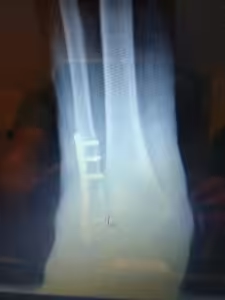
Ankle Fracture with hardware and fixation.” width=”300″ height=”225″> Ankle Fracture with hardware and fixation.
Broken Ankle Symptoms:
You will likely have suffered a traumatic injury.
You will likely have dark or black bruising.
Broken Ankle Causes:
This is almost always related to a traumatic injury.
It is possible to have a stress fracture. This will be if you have a medical condition such as osteoporosis or extreme stress.
Broken Ankle Treatment:
The best thing to do is to get an x-ray and to visit your podiatrist.
You do need either cast or supportive boot.
Once you heal, you can get a good stability ankle brace
Ankle Surgery Recovery Time: Best Treatment Options!
At the front of the foot, you can develop a bunion” href=”https://www.michiganfootdoctors.com/bunion/”>bunion at the outside of the foot by the base of the toes.
The pain can be relieved with 5th toe bunion padding & shoe accommodation.
But in the end, only surgery will permanently correct the deformity.
Outside of the Foot Home Treatment:
If you have 5th toe pain, tailor’s bunion pain, outside of the foot pain, or other lateral foot pain, this guide is for you!
These are the recommended treatment products that will help you get better the fastest.
The key is to stop your foot from turning outward and causing further damage to your foot.
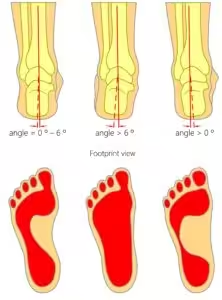
heel pain” width=”310″ height=”419″> As the foot pronates, it can stretch the plantar fascia and put more pressure on the outside of the foot.
The Real Key To Fix Outside of the Foot Pain in Order:
1. Most important is a good shoe & a good insole for your shoe.
Good shoes and good foot insoles are the best value and best long-term option.
This will stop your foot from turning outward.
Give these 1-2 weeks of effort, and you will really notice the pain relief.
This does not instantly fix the pain but prevents future damage.
2. Gel pad to offload the toe.
This will give your toes some cushion to keep pressure off the toes.
Read below to see the specific gel pads for each specific condition.
3. Ankle brace for a possible correction.
Check the recommended braces below.
For ankle pain, this is almost guaranteed to improve your problem.
4. Menthol-based cream for pain relief.
Creams and gels like Doctor Hoy’s Natural Pain Relief Gel act like ice but save you 20 minutes!
Check below for our recommended pain relief options.
Best Treatment Products:
5th Toe Gel Pads:
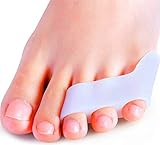
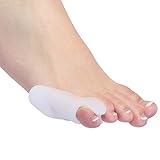
Fifth toe gel pads can stop your fifth toe or your Taylor’s bunion from rubbing against the side of your shoe.
There are downsides because these don’t last forever, and they do start to break apart and develop older.
They can be a low-cost option for tighter shoes during business meetings and at work.
Best 5th Toe & Tailor's Bunion Products:
Best Overall Gel Pad For 5th Toe Pain
Best Low Profile Tailor's Bunion Gel Pad.
Best Low Profile Option For 4-5th Corn/Interspace Pain.
Best Non-Walking Stretching Option.
Best Tailor's Bunion(Bunionette) Sock!
Price:
$9.99
Price not available
$5.99
$36.95
Price not available
Overview:
Best Overall Gel Pad: For 5th Toe and Tailor's Bunion Pain
Good Tailor's Bunion Gel Pad
Great Option For 4th-5th Toe Webspace Corns.
Great Heavy Duty Toe Separator (Not For Walking)
Price Range: $12+, Good value. Great reviews at 30+ reviews at 4.4/5
Pros:
Helps the 3rd, 4th and 5th toes. Heavy duty. Helps the entire area.
Lower profile, less bulky.
Slim and effective option for rubbing between the 4th and 5th toes.
Excellent reviews, great for stretching while resting.
They can be combined with gel pads as well as shoes and the sock. Another great layer of protection.
Cons:
These are more bulky. Can take up too much room in very slim shoes. These are not a splint! They are for pain relief.
Does not help the 3rd or 4th toe from pinching.
Zero benefit for tailor's bunions and 5th metatarsal joint pain.
Can't wear these while walking. Won't work if you have osteoarthritis. (If your toes don't bend).
Not perfect and by themselves may not fix your bunionette(tailor's bunion) pain. They can break down over time.
Affiliate Link (Buying through these links will connect you to Amazon):
Menthol-based creams have been studied medically and show safety and excellent results.
This is best for nerve irritation.
This can help with the nerve pain on the outside of the foot. Just don’t use this as your only treatment option.
This is not fluff, and these are scientifically backed!
Bio-freeze is cost-effective and shows great results.
This is more for people who have difficulty sleeping or walking due to significant issues.
Table setup not completed.
Massage & Ice Products:
Ice is an excellent option that can be safe for almost everyone.
There are many nerves, ligaments, and tendons on the outside of your foot.
This can help calm the inflammation until you fix the biomechanics making your foot turn outward.
There is some debate about whether icing is worth doing, but this can help limit the need for medications and keep your options open for chronic pain.
This works great for your arch, less for the ball of the foot.
The more muscle and ligament tissue there is, the better ice will work there.
Best Foot & Ankle Manual Massage Devices:
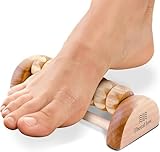
Best Premium Massage Roller
Most Cost Effective Massage Roller.
Cost Effective Freezable Massage Roller.
Price:
Price not available
$7.99
$16.49
Overview:
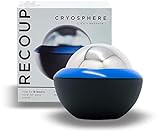
Premium freezable metal ball that stays cold for up to 6 hours. Great for plantar fascia, neck, shoulders and calf muscles.
Amazing Price, Great Reviews - Non-Freezable Massage Rolling Stick
Great price and it is freezable. Budget friendly freezable massage roller.
Pros:
Great reviews - near 5 star. Stays cold for a long time with deep penetrating plantar fascia massage. Used by professional athletes. Stays cold for HOURS!
Great for what it does. You roll it back and forth along your plantar fascia massaging the swelling and irritation out. Decreases pain. Thousands of 5 star reviews on Amazon.
Excellent reviews. It massages and ices, so it is a step up over the massage rollers. Near 5 star reviews with >500 reviews.
Cons:
More expensive than some of the other options, but near perfect reviews.
Is not freezable like the other two options. Massaging a sore muscle without the cold sensation can be very painful and render it useless to you if really sore.
It does a great job doing what it is supposed to do. Main downside is that it does not stay cold as long as the premium metal ball.
Important Tips:
Use it with a sock to start (could be too cold). Massaging and icing definitely loosens you up and makes you feel better, but you still have to prevent the pain in the first place. You still need stretching, orthotics and good shoes to prevent the initial damage.
Two things: Without the freezing component, it may be really painful for a very sore arch (So make sure to use ICE also). Also this only reduces pain, it does not stop the cause! You still need good orthotics, shoes and stretching to stop the pain in the first place!
Start with socks at first, especially if you have peripheral neuropathy => don't freeze your foot! Remember that you still need good orthotics, good shoes and inserts as well as temporary activity reduction.
Affiliate Link (Buying through these links will connect you to Amazon):
Premium freezable metal ball that stays cold for up to 6 hours. Great for plantar fascia, neck, shoulders and calf muscles.
Pros:
Great reviews - near 5 star. Stays cold for a long time with deep penetrating plantar fascia massage. Used by professional athletes. Stays cold for HOURS!
Cons:
More expensive than some of the other options, but near perfect reviews.
Important Tips:
Use it with a sock to start (could be too cold). Massaging and icing definitely loosens you up and makes you feel better, but you still have to prevent the pain in the first place. You still need stretching, orthotics and good shoes to prevent the initial damage.
Affiliate Link (Buying through these links will connect you to Amazon):
Amazing Price, Great Reviews - Non-Freezable Massage Rolling Stick
Pros:
Great for what it does. You roll it back and forth along your plantar fascia massaging the swelling and irritation out. Decreases pain. Thousands of 5 star reviews on Amazon.
Cons:
Is not freezable like the other two options. Massaging a sore muscle without the cold sensation can be very painful and render it useless to you if really sore.
Important Tips:
Two things: Without the freezing component, it may be really painful for a very sore arch (So make sure to use ICE also). Also this only reduces pain, it does not stop the cause! You still need good orthotics, shoes and stretching to stop the pain in the first place!
Affiliate Link (Buying through these links will connect you to Amazon):
Great price and it is freezable. Budget friendly freezable massage roller.
Pros:
Excellent reviews. It massages and ices, so it is a step up over the massage rollers. Near 5 star reviews with >500 reviews.
Cons:
It does a great job doing what it is supposed to do. Main downside is that it does not stay cold as long as the premium metal ball.
Important Tips:
Start with socks at first, especially if you have peripheral neuropathy => don't freeze your foot! Remember that you still need good orthotics, good shoes and inserts as well as temporary activity reduction.
Affiliate Link (Buying through these links will connect you to Amazon):
More flexibility will make your foot turn out less.
This is a very counter-intuitive way to take pressure off of the outside of your foot!
This allows less tightness and pressure on the ball of your foot.
This is very effective for the arch, the gastrocnemius, calf muscle, and the hamstring and thigh muscles.
This also works very well for the gluteus muscles if you are having butt cheek or hip pain.
Leg & Calf Muscle Massage Roller Sticks:
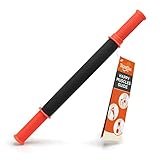
Best Overall Muscle Massage Stick
Best Cost Effective Massage Roller.
Price:
$39.95
Price not available
Overview:
This is a great option because hair or skin never gets pinched between the wheels. Softer interface.
Great option for an amazing cost. Not as sturdy and comfortable as the tiger tail.
Pros:
Best reviews. Hair and skin cannot get pinched. Almost instantly makes you less tender and more flexible. This is a professional grade massage roller.
Amazing reviews for the price point. It essentially does the same job. Muscles feel great afterward. Same overall benefit.
Cons:
If truly injured (break or tear) this won't fix your pain. But no real downsides as far as what a massage roller does. Reviews are near perfect.
Wheels and handles can come loose. As a result it can gap and pinch skin and leg hairs. Not as durable as the other roller recommended here.
Important Tips:
Studies show how effective massage rollers are: Use for 30-60 seconds to loosen up tight muscles, and then you can stretch further short term(1-2 hrs). Great for calf, hamstring, thight and IT band muscle stretching.
Same as for the more expensive one. Studies show the real benefits appear in 30-60 seconds per muscle => less sore and more flexible. That is the time to take advantage and play sports/stay loose. Very proven results.
Affiliate Link (Buying through these links will connect you to Amazon):
This is a great option because hair or skin never gets pinched between the wheels. Softer interface.
Pros:
Best reviews. Hair and skin cannot get pinched. Almost instantly makes you less tender and more flexible. This is a professional grade massage roller.
Cons:
If truly injured (break or tear) this won't fix your pain. But no real downsides as far as what a massage roller does. Reviews are near perfect.
Important Tips:
Studies show how effective massage rollers are: Use for 30-60 seconds to loosen up tight muscles, and then you can stretch further short term(1-2 hrs). Great for calf, hamstring, thight and IT band muscle stretching.
Affiliate Link (Buying through these links will connect you to Amazon):
Great option for an amazing cost. Not as sturdy and comfortable as the tiger tail.
Pros:
Amazing reviews for the price point. It essentially does the same job. Muscles feel great afterward. Same overall benefit.
Cons:
Wheels and handles can come loose. As a result it can gap and pinch skin and leg hairs. Not as durable as the other roller recommended here.
Important Tips:
Same as for the more expensive one. Studies show the real benefits appear in 30-60 seconds per muscle => less sore and more flexible. That is the time to take advantage and play sports/stay loose. Very proven results.
Affiliate Link (Buying through these links will connect you to Amazon):
Getting a great supportive pair of shoes will make sure that there is pressure removed from the outside of your foot
This is especially important if you have flat feet.
Consider shoes combined with a good supportive orthotic for the best pain relief!.
The following link will show you what our favorites are.
Best Orthotics for Side of Foot Pain:
Orthotics are the single most important way to improve your outside of the foot pain, Seriously!
Most people don’t think orthotics will fix their foot pain.
Besides trauma, 95% of all 5th toe, middle of the foot, and outside of the ankle pain can be improved with orthotics.
This is because orthotics help your foot from twisting out and compressing against your shoe when you walk.
Would you please not take our word for it? Read the reviews!
Most Important Tips For Orthotics:
Make sure you have a roomy enough shoe.
I’m warning you right now, don’t try to stuff a full-length orthotic into a tiny tight shoe. It won’t work.
If you have tighter or dress shoes: try the dress shoe or 3/4″ orthotics.
Full-length orthotics give you the most correction and improvement:
If you have roomy enough shoes like running shoes or work boots. Get a full-length orthotic.
The cushion under the front of your foot prevents it from twisting out against the outside of your shoe as much as possible.
These are one of the best possible options for the medium and heavy-duty correction!
Best Flat Shoe (Non-Lace Up) Orthotics:
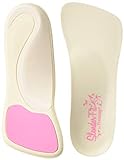
Best Choice For Tight Women's Shoes or High Heels..
Price:
Price not available
Overview:
These are the best fitting for the most narrow shoes. Some but not great correction.
Pros:
They will fit in even the tightest shoes! Guaranteed to make you feel better, but you know what you are getting in a tight shoes. Great reviews and price.
Cons:
At the end of the day high heels and slender orthotics help, but never cure all your pain. Make the best of a painful shoe!
Crucial Tips:
**WARNING***: If your shoe almost just barely fits onto your foot, this WILL NOT FIT! Be aware, it still needs a small amount of space to fit.
Affiliate Link (Buying through these links will connect you to Amazon):
Best Choice For Tight Women's Shoes or High Heels..
Price:
Price not available
Overview:
These are the best fitting for the most narrow shoes. Some but not great correction.
Pros:
They will fit in even the tightest shoes! Guaranteed to make you feel better, but you know what you are getting in a tight shoes. Great reviews and price.
Cons:
At the end of the day high heels and slender orthotics help, but never cure all your pain. Make the best of a painful shoe!
Crucial Tips:
**WARNING***: If your shoe almost just barely fits onto your foot, this WILL NOT FIT! Be aware, it still needs a small amount of space to fit.
Affiliate Link (Buying through these links will connect you to Amazon):
These orthotics are for slimmer shoes without laces:
If you are tight in the front of your shoes, or the shoes are tighter, these 3/4″ might be the best choice for you.
But if you have a choice, the full-length orthotics are much, much more supportive!
So if you wear work boots or running shoes, get the full length. They get you more support.
Best Medium to Heavy Duty Heel Pain Orthotics:
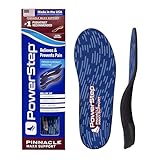
Best Overall Orthotic For Everything (Medium Thick Fit)
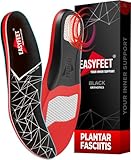
Best Heavy Duty Orthotic (Thickest Fit)
Best SOFTER Choice For Sensitive Feet (Medium Thick Fit)
Best Women's Orthotics
Price:
$44.04
$54.95
Price not available
$51.04
Overview:
These work best in shoes with laces and running shoes. Not good for dress shoes or women's cute shoes.
Biggest and most corrective option. Only use for running shoes or work boots. Not cute shoes.
These are full length inserts, but softer. Great if you can't tolerate the firmer ones. Best for very sore and sensitive feet.
Great Support & Better Fit
Pros:
Pretty much guaranteed to help you if it fits in your shoes and you give it 2 weeks to get used to. 5,000+ amazon reviews, great track record.
My personal favorite, but not for everyone. Amazing reviews over 3,500. But not for everyone. Only for bigger shoes that can fit them
They are softer and the initial break in time is AMAZING. But longer term benefits are less. >500 Almost 5 star amazon rating.
Sleek, supportive and have a better fit than the orthotics above.
Cons:
Do not wear these in cute or dress shoes!
Bigger and bulkier than all the other ones. You will be disappointed if you have a cute women's shoe or dress shoe. This is meant for running shoes and boots.
Great to start with, but don't correct long term as much as the other ones.
A little bit more expensive.
Crucial Tips:
Ease in to these, 1-2hrs a day. They are like braces for your teeth, they suck at the beginning! But they will make your feet pain free as 1-2 weeks go by. Don't give up on them after 1 or 2 days. Everyone feels off at the beginning!
This has the most correction, but hardest break in time! IF SENSITIVE, USE A SOFTER PAIR FIRST! But if you get these, you must break them in. Give it 1-2 hours a day, but then you will start to have excellent results. The bad reviews are all people who couldn't fit it into their shoes and gave up too quickly. You have been WARNED!
If you are very sore, TRY THESE FIRST! These are easiest to break in with initially. If you are very sore and rigid, don't use the heavy duty ones to start with.
These will have a harder time fitting in flats and pointed shoes.
Affiliate Link (Buying through these links will connect you to Amazon):
Best Overall Orthotic For Everything (Medium Thick Fit)
Price:
$44.04
Overview:
These work best in shoes with laces and running shoes. Not good for dress shoes or women's cute shoes.
Pros:
Pretty much guaranteed to help you if it fits in your shoes and you give it 2 weeks to get used to. 5,000+ amazon reviews, great track record.
Cons:
Do not wear these in cute or dress shoes!
Crucial Tips:
Ease in to these, 1-2hrs a day. They are like braces for your teeth, they suck at the beginning! But they will make your feet pain free as 1-2 weeks go by. Don't give up on them after 1 or 2 days. Everyone feels off at the beginning!
Affiliate Link (Buying through these links will connect you to Amazon):
Biggest and most corrective option. Only use for running shoes or work boots. Not cute shoes.
Pros:
My personal favorite, but not for everyone. Amazing reviews over 3,500. But not for everyone. Only for bigger shoes that can fit them
Cons:
Bigger and bulkier than all the other ones. You will be disappointed if you have a cute women's shoe or dress shoe. This is meant for running shoes and boots.
Crucial Tips:
This has the most correction, but hardest break in time! IF SENSITIVE, USE A SOFTER PAIR FIRST! But if you get these, you must break them in. Give it 1-2 hours a day, but then you will start to have excellent results. The bad reviews are all people who couldn't fit it into their shoes and gave up too quickly. You have been WARNED!
Affiliate Link (Buying through these links will connect you to Amazon):
Best SOFTER Choice For Sensitive Feet (Medium Thick Fit)
Price:
Price not available
Overview:
These are full length inserts, but softer. Great if you can't tolerate the firmer ones. Best for very sore and sensitive feet.
Pros:
They are softer and the initial break in time is AMAZING. But longer term benefits are less. >500 Almost 5 star amazon rating.
Cons:
Great to start with, but don't correct long term as much as the other ones.
Crucial Tips:
If you are very sore, TRY THESE FIRST! These are easiest to break in with initially. If you are very sore and rigid, don't use the heavy duty ones to start with.
Affiliate Link (Buying through these links will connect you to Amazon):
These are premium leather orthotic recommendations for dress shoes.
If you have a tight dress shoe get the 3/4″ orthotic.
Best Dress Shoe Orthotics:
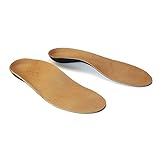
Best Fitting Dress Shoe Orthotic (3/4")
Best Full Length Dress Orthotic.
Great Heavy Duty Insole for Men
Price:
Price not available
Price not available
$34.95
Overview:
This is my top choice due to best fit. It is a little less supportive than full length, but fit is the key in dress shoes!
Best option if you can fit a full length orthotic. This does give you most control.
Great price and heavy duty insole for Oxford shoes.
Pros:
Excellent overall fit. This will fit in almost every dress shoe. Excellent reviews and reasonable cost overall. Can't go wrong in most cases.
Great color dress option. Not the most corrective, but very color and dress appropriate. Great Reviews. Better correction and relief than the 3/4" length.
These fit in most shoes and have really good predictable results
Cons:
Less correction than full length and heavy duty orthotics.
These can have a poor fit in in some shoes. If you have tight shoes, DO NOT BUY the full length orthotic! You have been warned.
They are not full length and thus do not provide as much support
Crucial Tips:
If you haven't used dress orthotics before, get this one and avoid poor fit. If you wear dress shoes every day with room, the full length might give you more support.
This is will work great in most men's shoes that are not pointy. If you have a rounded toe box, this will probably work well. If a tight shoe go with the 3/4" length.
Get these for Oxford and pointed shoes. This will provide best results.
Affiliate Link (Buying through these links will connect you to Amazon):
This is my top choice due to best fit. It is a little less supportive than full length, but fit is the key in dress shoes!
Pros:
Excellent overall fit. This will fit in almost every dress shoe. Excellent reviews and reasonable cost overall. Can't go wrong in most cases.
Cons:
Less correction than full length and heavy duty orthotics.
Crucial Tips:
If you haven't used dress orthotics before, get this one and avoid poor fit. If you wear dress shoes every day with room, the full length might give you more support.
Affiliate Link (Buying through these links will connect you to Amazon):
Best option if you can fit a full length orthotic. This does give you most control.
Pros:
Great color dress option. Not the most corrective, but very color and dress appropriate. Great Reviews. Better correction and relief than the 3/4" length.
Cons:
These can have a poor fit in in some shoes. If you have tight shoes, DO NOT BUY the full length orthotic! You have been warned.
Crucial Tips:
This is will work great in most men's shoes that are not pointy. If you have a rounded toe box, this will probably work well. If a tight shoe go with the 3/4" length.
Affiliate Link (Buying through these links will connect you to Amazon):
If you think you might have a broken 5th metatarsal fracture, a Jones fracture, a stub, or a broken 5th toe, these products may be of assistance.
This guide is meant only after getting your foot evaluated by a foot and ankle specialist first!
Always remember to see a foot and ankle specialist like a podiatrist if you have severe outside of the foot pain or a broken bone!
5th Toe or 5th Metatarsal Injury Treatment:
If you have a traumatic injury such as a broken 5th metatarsal fracture, a Jones fracture, a stubbed, or a broken 5th toe: consider protecting your foot!
The best way to do this is, of course, to see your podiatrist and get evaluated with an x-ray, ultrasound, and potentially even an MRI or CT scan.
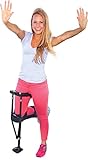
If you cannot do so, it may benefit you to be in a cast, fractured boot, or even keep the weight off of it with a rolling knee scooter or other protective devices.
We as podiatrists frequently take patients off work for a very long period of time when they suffer a traumatic injury. Unfortunately, there is no other way around us in labor jobs.
If you have a sit-down job, there are ways to get people back to work quicker, but this can be impossible otherwise.
Outside of the Foot Boot Treatment:
There are pros and cons to using a boot to treat your outside of the foot injury. The Pros are that your injured lateral foot will hopefully have a chance to heal gradually! If you are immobilized too long, the cons are that you will gradually become stiff and overworked to your other leg.
Our favorite fracture boots and their supplies:
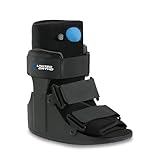
Best Fracture Boots & Covers
Best Tall Boot
Best Short Boot
Best Fracture Boot Balance Device
Best Cast Shower Cover
Price:
$85.99
$59.95
Price not available
$15.99
Overview:
Excellent reviews at 4.6/5 with over 800+ Reviews:
Very good reviews. This is 4.3/5 ratings on over 3,000+ reviews.
Outstanding reviews: 4.3/5 for 1,000+ reviews! Prevents hip, knee and back pain.
Amazing Reviews at 4.6/5 at 500+ reviews. Best reviewed and cost effective bag.
Pros:
It has an air bladder for extra cushion. It is tall for extra support, as well as air bladder.
Excellent lower cost walking boot. With a orthotic and cushion, it really keeps pressure off of your ankle.
This works great to balance the opposite foot. This prevents the back, hip and knees from having any pain.
It is very effective but not perfect. The price is really good and it has excellent reviews.
Cons:
The inner sleeve can ride lower and the plastic around the rim can irritate the boot.
Less support with the less than full length boot. It is more comfortable but less supportive.
Does not work that great for slippers and less supportive shoes.
It can still leak, so be careful!
Crucial Tips:
Make sure your lift the cushioning material along the hard plastic rim. Make sure to keep it pumped up. Use an orthotic and a lift on the other side.
Use a lift for the other foot to prevent back and hip problems. Also use an orthotic for the flat foot bed.
This is very cost effective and well worth it. Just make sure both shoes have good supportive orthotics.
Just be careful with this is not perfect. It can still get wet underneath.
Affiliate Link (Buying through these links will connect you to Amazon):
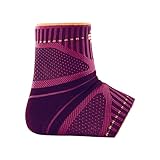
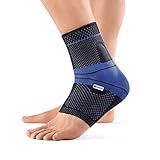
A good compression brace can stabilize your foot from turning outward.
This prevents your foot from pronation.
The pronated foot will turn your foot outward, in your foot will rub on the outside of the shoe.
This has solved their pain for many of her patients and is very comfortable to wear inside your shoe.
This solves both pain and outward pronation for a relatively low cost.
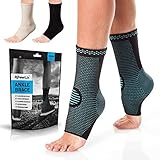
Best Heel & Ankle Compression Braces:
Best Premium Brace (Support & Compression)
Budget Brace With Some Compression & Some Support.
Price:
Price not available
Price not available
Overview:
This is The Top Level Brace - Does Compression, Support & Great Fit.
This brace attempts mild compression and mild support.
Pros:
Excellent brace: Best overall mix of compression & support, and it still fits in most shoes! If you have a chronic injury and need to wear normal shoes => This is the BEST CHOICE.
Good rating at 4.3 with 2,000 reviews. It is cost effective and gives some support with some compression. Does both ok, but excellent when price is factored in.
Cons:
Expensive. It doesn't do any single thing the best. There are cheaper and more supportive braces, there are cheaper and more compressive braces. But no braces combine the two and still fit in a shoe.
Does not really do anything well. Weak support and not the best compression. Meant as an assist for chronic pain and low activity. Not for an acute injury.
Important Tips:
This is a high durability brace for everyday use. If you have chronic arthritis or pain with a high need for activity, this is your brace to use! **Gel inside seems to deteriorate after daily washing at about 1 year old**
This is mean for lower activity and better fit than a true supportive brace. Don't use this for an acute sprain or injury.
Affiliate Link (Buying through these links will connect you to Amazon):
This is The Top Level Brace - Does Compression, Support & Great Fit.
Pros:
Excellent brace: Best overall mix of compression & support, and it still fits in most shoes! If you have a chronic injury and need to wear normal shoes => This is the BEST CHOICE.
Cons:
Expensive. It doesn't do any single thing the best. There are cheaper and more supportive braces, there are cheaper and more compressive braces. But no braces combine the two and still fit in a shoe.
Important Tips:
This is a high durability brace for everyday use. If you have chronic arthritis or pain with a high need for activity, this is your brace to use! **Gel inside seems to deteriorate after daily washing at about 1 year old**
Affiliate Link (Buying through these links will connect you to Amazon):
Budget Brace With Some Compression & Some Support.
Price:
Price not available
Overview:
This brace attempts mild compression and mild support.
Pros:
Good rating at 4.3 with 2,000 reviews. It is cost effective and gives some support with some compression. Does both ok, but excellent when price is factored in.
Cons:
Does not really do anything well. Weak support and not the best compression. Meant as an assist for chronic pain and low activity. Not for an acute injury.
Important Tips:
This is mean for lower activity and better fit than a true supportive brace. Don't use this for an acute sprain or injury.
Affiliate Link (Buying through these links will connect you to Amazon):
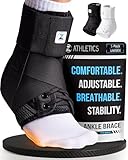
The stability brace goes a little bit further than the compression brace to stop your foot from turning out.
At the same time, this is a little bit bulkier and does not affect every shoe.
We find people are a little bit happier trying the compression brace before the stability brace.
Best Ankle Stability Braces (Not for Compression):
The Best Overall Brace For Fit & Support.
Most Supportive Premium Brace.
Best Budge Supportive Brace.
Price:
$54.99
Price not available
$29.99
Overview:
Amazing brace, best fit and support combination: If you can afford it.
This is the best brace for pure support, but it can't fit in more snug shoes.
Outstanding brace for the price point. This is a figure 8 strap with laces, soft interface.
Pros:
Amazing brace. Best reviews and best fit. This is the Ferrari of braces if you can afford it.
This is a very highly rated, great reviewed brace. The support and stability is top notch for athletics. Very durable and does it's job.
Amazing reviews with proven track record. This is very soft and supportive in your shoe.
Cons:
The only downside besides cost, is complexity. This brace must be left or right. Not interchangeable. It is also for post-injury situations and good support. Not for compression!
The brace may be a little too big for a more snug shoe. This requires some room to fit and would be the main complaint. Hard interface along the padding.
The main downside is the durability and the ability for the material to give out. Great at first but maybe 3-4 months of continuous use prior to failure.
Important Tips:
Make sure to choose left vs. right. This is a high level brace mean specifically for injury support. This is not for compression or non-injury situations. It will be too tight.
This is a fantastic and supportive brace. Just make sure that your shoe will have some room for it to fit. Most good running shoes should let it fit.
This is an excellent starter brace if you have never had a brace before. It is a little longer to put with the straps and laces.
Affiliate Link (Buying through these links will connect you to Amazon):
Best Ankle Stability Braces (Not for Compression):
The Best Overall Brace For Fit & Support.
Price:
$54.99
Overview:
Amazing brace, best fit and support combination: If you can afford it.
Pros:
Amazing brace. Best reviews and best fit. This is the Ferrari of braces if you can afford it.
Cons:
The only downside besides cost, is complexity. This brace must be left or right. Not interchangeable. It is also for post-injury situations and good support. Not for compression!
Important Tips:
Make sure to choose left vs. right. This is a high level brace mean specifically for injury support. This is not for compression or non-injury situations. It will be too tight.
Affiliate Link (Buying through these links will connect you to Amazon):
Best Ankle Stability Braces (Not for Compression):
Most Supportive Premium Brace.
Price:
Price not available
Overview:
This is the best brace for pure support, but it can't fit in more snug shoes.
Pros:
This is a very highly rated, great reviewed brace. The support and stability is top notch for athletics. Very durable and does it's job.
Cons:
The brace may be a little too big for a more snug shoe. This requires some room to fit and would be the main complaint. Hard interface along the padding.
Important Tips:
This is a fantastic and supportive brace. Just make sure that your shoe will have some room for it to fit. Most good running shoes should let it fit.
Affiliate Link (Buying through these links will connect you to Amazon):
Best Ankle Stability Braces (Not for Compression):
Best Budge Supportive Brace.
Price:
$29.99
Overview:
Outstanding brace for the price point. This is a figure 8 strap with laces, soft interface.
Pros:
Amazing reviews with proven track record. This is very soft and supportive in your shoe.
Cons:
The main downside is the durability and the ability for the material to give out. Great at first but maybe 3-4 months of continuous use prior to failure.
Important Tips:
This is an excellent starter brace if you have never had a brace before. It is a little longer to put with the straps and laces.
Affiliate Link (Buying through these links will connect you to Amazon):
Lateral ankle pain can signal peroneal tendonitis, sinus tarsi syndrome, or chronic instability. Our podiatrists provide accurate diagnosis and effective treatment.
Impact-absorbing recovery sandal — wear after long days on your feet.
As an Amazon Associate, Balance Foot & Ankle earns from qualifying purchases. Product recommendations are based on clinical experience; prices and availability shown above update live from Amazon.
When to See a Podiatrist
If foot or ankle pain has been bothering you for more than a few weeks, home care alone may not be enough. Balance Foot & Ankle offers same-week appointments at our Howell and Bloomfield Hills clinics — no referral needed in most cases. Bring your current shoes and a short list of symptoms and we’ll build you a treatment plan in one visit.
Foot pain is a common foot/ankle condition that affects mobility and quality of life. Understanding the underlying cause is the first step in successful treatment. Our podiatrists at Balance Foot & Ankle perform a hands-on biomechanical exam, review your activity history, and use diagnostic imaging when appropriate to identify the root cause—not just treat the symptom. Many patients have been told to “rest and ice” without a deeper diagnostic workup; our approach is different.
Symptoms and warning signs
Common signs of foot pain include pain that worsens with activity, morning stiffness, swelling, tenderness when palpated, and difficulty bearing weight. If you experience sudden severe pain, inability to walk, visible deformity, numbness or color change, contact our office the same day or visit urgent care—these can signal a more serious injury such as a fracture, tendon rupture, or vascular compromise. Diabetics with any foot wound should seek same-day care.
Conservative treatment options
Most cases of foot pain respond to non-surgical care: structured rest, supportive footwear changes, custom orthotics, targeted stretching and strengthening protocols, anti-inflammatory medications when medically appropriate, and in-office procedures such as ultrasound-guided injections. We also offer advanced therapies including MLS laser therapy, EPAT/shockwave, regenerative injections, and image-guided procedures. Treatment is sequenced from least invasive to most invasive, and we explain the rationale at every step.
When is surgery considered?
Surgery is reserved for cases that fail 3-6 months of well-structured conservative care, when there is structural pathology (severe deformity, complete tear, advanced arthritis), or when imaging shows damage that will not heal without intervention. Our surgeons have performed 3,000+ foot and ankle procedures and prioritize minimally-invasive techniques whenever appropriate. We discuss recovery timelines, return-to-activity milestones, and realistic outcome expectations before any procedure is scheduled.
Recovery timeline and prevention
Recovery from foot pain varies based on severity and chosen treatment path. Conservative cases often improve within 4-8 weeks with consistent adherence to the protocol. Post-procedural recovery may range from a few days (in-office procedures) to several months (reconstructive surgery). Long-term prevention involves footwear assessment, activity modification, structured strengthening, and regular check-ins with your podiatrist if you have a history of recurrence. We provide written home-exercise plans and digital follow-up support.
Reviewed by Dr. Tom Biernacki, DPM — Board-certified podiatrist, Balance Foot & Ankle, Howell & Bloomfield Hills, MI. 4.9-star rating across 1,123+ patient reviews. Schedule an evaluation | (810) 206-1402
Ready to feel better?
Same-week appointments available in Howell and Bloomfield Hills, Michigan.
If home treatment isn’t providing relief for your ankle condition, our podiatry team at Balance Foot & Ankle can help with same-day evaluations and advanced in-office care.
Related Care at Balance Foot & Ankle
Clinical ankle services at our Howell and Bloomfield Hills offices.
Dr. Tom Biernacki, DPM is a board-certified foot & ankle surgeon (ABFAS & ABPM) at Balance Foot & Ankle Specialists in Southeast Michigan. With over a decade of clinical experience, he specializes in heel pain, bunions, diabetic foot care, sports injuries, and minimally invasive surgery. Dr. Biernacki is a member of the APMA and ACFAS, and his patient education content on MichiganFootDoctors.com and YouTube has made him one of the most-followed foot & ankle educators on YouTube.
Balance Foot & Ankle surgeons are affiliated with Trinity Health Michigan, Corewell Health, and Henry Ford Health — three of Michigan’s largest health systems.