


Swollen feet and ankles (edema) are most often fluid pooling with gravity — long hours of standing or sitting, hot weather, pregnancy, weak leg veins (venous insufficiency) or a medication side effect such as amlodipine. That kind of swelling affects both feet, builds through the day and goes down with elevation, walking and compression socks. Swelling can also signal heart, kidney, liver or thyroid disease, an injury, an infection or a blood clot. Get same-day care if one leg suddenly swells with pain, warmth or redness, and call 911 if swelling comes with shortness of breath or chest pain.
Swollen Feet and Ankles: 8 Causes Diagnosed by Pattern, Timing, and Location
Swollen feet (pedal edema) is a symptom, not a diagnosis. The cause determines whether it’s a minor nuisance or a medical emergency — and the pattern of swelling tells you which one you’re dealing with. Bilateral foot swelling (both feet equally swollen) almost always has a systemic cause: heart failure, venous insufficiency, medication side effects, or kidney/liver disease. Unilateral swelling (one foot only) is more likely to have a local cause: DVT, cellulitis, lymphedema, or joint disease. The distinction between pitting and non-pitting edema further narrows the diagnosis.
| Cause | Pattern | Timing | Pitting? | Associated Symptoms | Urgency |
|---|---|---|---|---|---|
| Venous insufficiency (chronic) | Bilateral; worse in ankles and lower legs; spares the dorsal foot initially; dependent distribution (worse at the end of the day, improved by morning) | Worsens throughout the day; significantly improved after overnight elevation; chronic and progressive over years; worse in warm weather | Pitting — soft pit that fills slowly; stasis dermatitis (brown discoloration, skin thickening) in chronic cases | Leg heaviness, aching, fatigue; varicose veins often visible; skin changes (lipodermatosclerosis, stasis dermatitis); no shortness of breath; no chest pain | Non-urgent — chronic management; compression stockings; leg elevation; venous ablation for severe varicose veins |
| Heart failure (congestive) | Bilateral; symmetric; pitting; extends up the legs; may involve sacral edema in bedridden patients; dependent distribution | Progressive over days to weeks; worse with exertion; associated with weight gain (fluid); may develop acutely with a heart failure exacerbation | Pitting — significant pitting; may pit to mid-calf or thigh in severe cases | Shortness of breath (especially lying flat — orthopnea); fatigue with exertion; decreased exercise tolerance; recent weight gain; paroxysmal nocturnal dyspnea | URGENT — new-onset bilateral pitting edema with any dyspnea or orthopnea → cardiology evaluation; acute worsening with shortness of breath → emergency department |
| Medication-induced edema | Bilateral; typically ankle and foot; symmetric; one of the most common causes of bilateral leg swelling in adults | Onset correlates with medication start or dose increase; usually develops within weeks of starting offending drug; resolves within weeks of stopping | Pitting — typically soft | No shortness of breath; no other systemic symptoms; often discovered when patient presents with “new swelling” after medication change; Common offending drugs: amlodipine (calcium channel blockers — #1 cause), NSAIDs, steroids, gabapentin/pregabalin, thiazolidinediones (pioglitazone), minoxidil | Non-urgent — review medication list; discuss alternatives with prescribing physician; do NOT stop heart or blood pressure medications without physician guidance |
| Deep vein thrombosis (DVT) | UNILATERAL — almost always only one leg; swelling from below the knee to the foot; sudden or subacute onset | Onset over hours to days; often after prolonged travel, surgery, hospitalization, or in patients with cancer or hypercoagulable state | Pitting, but often with significant calf tenderness that distinguishes it from other causes | Unilateral calf or thigh pain; warmth and erythema of the affected leg; may have no symptoms (20-30% of DVT is asymptomatic); pulmonary embolism risk: chest pain, shortness of breath, hemoptysis | URGENT/EMERGENCY — unilateral leg swelling with calf pain → duplex ultrasound same day; confirmed DVT requires anticoagulation; if respiratory symptoms → 911 |
| Lymphedema | Unilateral or bilateral; typically starts in the foot and ankle; dorsal foot fullness prominent (swelling on the TOP of the foot and toes — “buffalo hump” toes) | Progressive; does NOT fully resolve with elevation overnight (distinguishes from venous edema); worse with prolonged activity; often worse in warm weather | Pitting early (Stage 1); non-pitting in advanced stages (fibrosis); Stemmer sign positive (cannot pinch and tent the skin at 2nd toe base) | History of cancer surgery (lymph node removal), radiation, or recurrent cellulitis; heaviness and tightness; no significant pain; skin changes in advanced stages (papillomatosis, hyperkeratosis) | Non-urgent but requires specialist referral — certified lymphedema therapist (CLT) for complete decongestive therapy (CDT); compression garments lifelong |
| Kidney disease / hypoalbuminemia | Bilateral; often facial edema also present (periorbital puffiness); extensive pitting | Progressive; associated with kidney disease, liver disease, malnutrition, or protein-losing enteropathy; nephrotic syndrome produces severe bilateral edema with foamy urine | Pitting — significant; may pit to the thigh and sacrum | Foamy urine (proteinuria); fatigue; decreased urine output; possibly hypertension; may have facial swelling; often associated with systemic illness | Urgent — requires nephrology evaluation; serum albumin, BMP, urinalysis with protein-to-creatinine ratio |
| Cellulitis (infection) | UNILATERAL; typically involves the lower leg more than the foot; erythema (redness) is the distinguishing feature | Acute onset over hours to 1-2 days; often preceded by skin break (cut, blister, insect bite, tinea pedis); rapidly expanding erythema; fever common | Pitting in the swollen area; surrounding warm, red skin | Fever, chills; red, warm skin with advancing border (may be marked with pen to track spread); pain with palpation; possible abscess or lymphangitis (red streak); underlying diabetes or lymphedema increases risk | URGENT — IV antibiotics for spreading cellulitis, high fever, or systemic symptoms; oral antibiotics for mild-moderate; emergency department if fever >101°F, rapidly spreading erythema, or immunocompromised |
| Prolonged standing / gravity / pregnancy | Bilateral; symmetrical; feet and ankles; completely resolves with elevation and rest | End-of-day only; no morning swelling; typically minimal after a rest day; very common in pregnancy (third trimester), long-haul travel, and occupations requiring prolonged standing | Mild pitting — resolves completely overnight; no skin changes | No pain at rest; no systemic symptoms; correlates directly with prolonged standing; completely normal feet in the morning | Non-urgent — compression socks during prolonged standing; elevation breaks; exercise to improve calf pump; normal variant of prolonged standing |
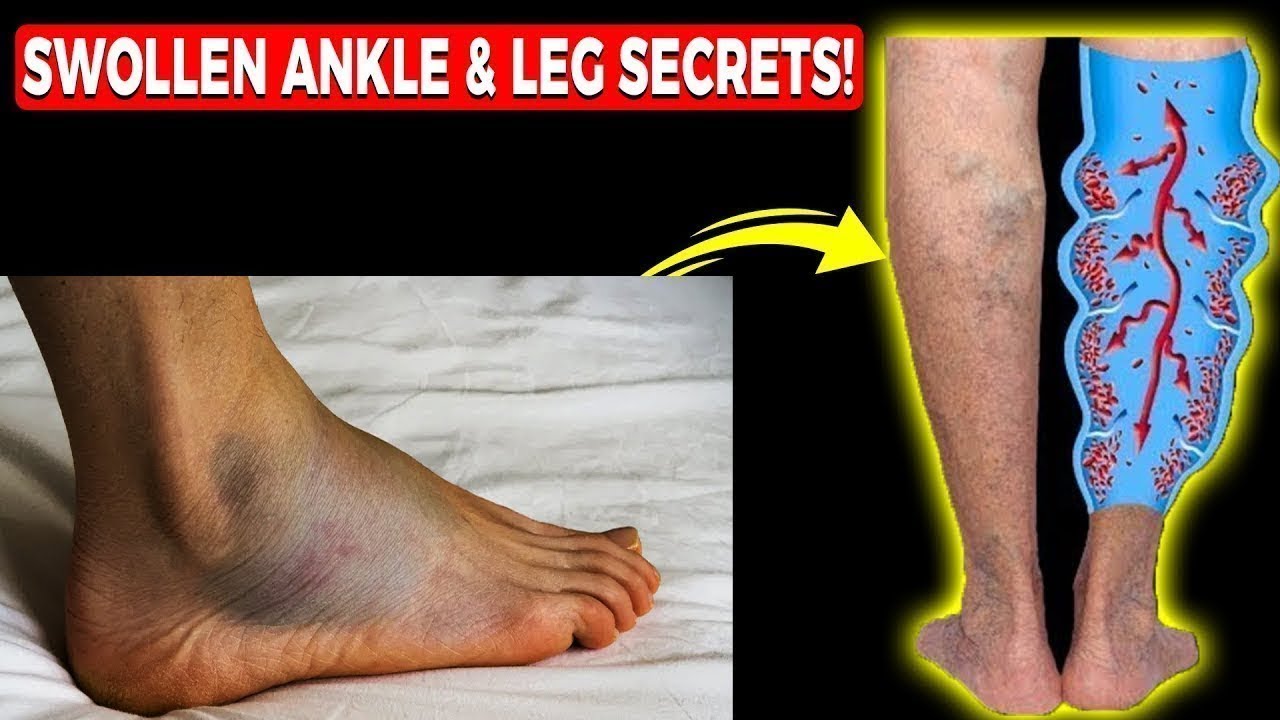
Swollen Ankles: Causes That Start at the Ankle
The ankle is usually the first place fluid collects, so every cause in the table above can show up as swollen ankles. But the ankle joint and the tendons that wrap around it add causes of their own. Swelling on one side of the ankle, swelling that follows a twist or a new activity, and swelling that hurts when you move the joint usually point to a local problem rather than to fluid overload.
- Sprain or fracture. Swelling within hours of a twist or fall, often with bruising. If you could not take four steps right after the injury, or the bone at the back edge of either ankle knob is tender to press, you need an X-ray. Our ankle sprain guide covers recovery.
- Arthritis and gout. A warm, puffy, stiff joint. A gout flare comes on over hours, often overnight, with a red and exquisitely tender joint; rheumatoid arthritis tends to swell both ankles, with morning stiffness. More in gout in the foot and ankle arthritis treatment.
- Tendon problems. Swelling behind the inner ankle bone, often with an arch that is slowly flattening, suggests posterior tibial tendon dysfunction. Swelling behind the outer ankle bone suggests peroneal tendonitis, and a thick, sore cord at the back of the heel is Achilles tendonitis.
- Old injury or repeated sprains. An ankle that has been sprained several times can stay puffy over the outer side and give way on uneven ground (chronic ankle instability).
- Charcot foot in diabetes. A warm, red, swollen foot or ankle with little or no pain in someone with diabetic neuropathy should be seen within a day or two and kept off weight until Charcot foot is ruled out.
- Infection. Spreading redness, heat and fever with swelling is cellulitis until proven otherwise and needs same-day care.
Swollen ankles with no pain
Painless swelling of both ankles is most often dependent edema: fluid that collects during the day and drains overnight. Common triggers are long hours on your feet or in a chair, hot weather, salty meals, hormonal changes and medications — amlodipine and the other calcium channel blockers are the classic culprits. Painless does not always mean harmless, though. Heart, kidney, liver and thyroid problems also cause swelling that does not hurt, so have it checked if it is new, keeps getting worse, or comes with breathlessness, quick weight gain or foamy urine. Swelling is also more common after 65, when calf muscles weaken, vein valves wear out and more medicines are taken, which is a reason for an exam rather than a reason to ignore it.
Check Your Swelling at Home: One Side or Both, Pitting or Not
Three simple observations tell a doctor most of what they need to know, and you can make them yourself before your visit.
- One side or both? Swelling in both feet points toward gravity, veins, medications or a whole-body cause. Swelling in one foot or one ankle points toward something local: an injury, an infection, gout, a tendon problem, a blocked lymph channel or a blood clot. Sudden swelling of one leg with calf pain needs same-day care. Our guide to one swollen ankle covers the one-sided causes in detail.
- Does it pit? Press a thumb firmly into the swollen area over the shin bone or the top of the foot for five seconds, then let go. A dent that stays for several seconds is pitting edema — loose fluid in the tissue, typical of gravity, vein, heart, kidney and medication causes. Swelling that springs straight back (non-pitting) is more typical of long-standing lymphedema or an underactive thyroid. See pitting edema in the feet for how doctors grade it.
- Is it gone by morning? Swelling that builds through the day and is gone after a night in bed is usually gravity or weak veins. Swelling that is already there when you wake up, or that no longer goes down overnight, deserves an examination.
It also helps to note when the swelling started, any new medicine in the weeks before, recent travel, injury or surgery, and whether your shoes or sock bands are leaving deeper marks than usual.
Swollen Feet and Ankles: When Is It an Emergency?
| Sign | Possible Cause | Action |
|---|---|---|
| UNILATERAL leg swelling + calf pain + recent travel or surgery | Deep vein thrombosis (DVT) — risk of pulmonary embolism | Emergency — duplex ultrasound same day; call physician or go to ED immediately |
| Bilateral swelling + shortness of breath + cannot lie flat | Acute heart failure decompensation | Emergency — call 911 or go to ED immediately; do not drive yourself |
| Unilateral red, warm, expanding redness + fever >101°F | Severe cellulitis — spreading bacterial skin infection | Emergency — IV antibiotics required; ED same day |
| Bilateral swelling + foamy urine + periorbital puffiness | Nephrotic syndrome / significant kidney disease | Urgent — call physician same day for labs; urine protein, BMP, albumin |
| Sudden unilateral swelling of entire leg after cancer or surgery | DVT or iliofemoral thrombosis | Emergency — go to the ED immediately |
| Bilateral swelling with rapid weight gain (5+ lbs in 1 week) | Heart failure or renal fluid retention | Urgent — call cardiologist or primary care same day; fluid overload |
| Bilateral or unilateral swelling without any of the above — chronic, slowly progressive, with improvement overnight | Venous insufficiency, medication side effect, or gravitational edema | Non-urgent — podiatry or primary care within 1-2 weeks; compression stocking trial |
Common Causes of Swollen Feet: Benign vs. Serious
The most important clinical distinction is whether swelling is unilateral (one foot) or bilateral (both feet), and whether it appeared suddenly or gradually. Unilateral sudden swelling is far more concerning — it suggests a DVT, fracture, infection, or acute injury. Bilateral gradual swelling is more commonly systemic (heart, kidney, venous disease, medication side effect). This distinction guides the urgency of workup.
| Cause | Pattern | Urgent? | Action |
|---|---|---|---|
| DVT (blood clot) | One leg, sudden, red/warm | ER immediately | Ultrasound doppler, anticoagulation |
| Cellulitis / infection | One foot, red streaks, fever | Same-day | Antibiotics, wound care |
| Venous insufficiency | Both feet, worse by evening | Routine | Compression stockings, elevation |
| Medication side effect | Both feet, started with new Rx | Routine | Review medications with physician |
| Ankle sprain / fracture | One foot, after injury | Same-day | X-ray, immobilization |
Treating Swollen Feet and Ankles: From Compression to Medical Management
For positional and venous-related swelling, the most effective interventions are graduated compression stockings (20–30 mmHg for mild-moderate venous insufficiency), elevating the feet above heart level for 20–30 minutes twice daily, and reducing dietary sodium. Walking — not prolonged standing or sitting — is the best pump to move fluid out of the legs. For systemic causes (heart failure, kidney disease), treating the underlying condition is the primary intervention, with compression stockings as adjunctive support.

How to bring swelling down at home
These steps help swelling from gravity, long days on your feet, weak veins and medication side effects. They are not a substitute for an exam when swelling is new, one-sided or getting worse.
- Elevate the right way. Lie down with your feet on pillows above the level of your heart for 20–30 minutes, at least twice a day. Propping your feet on a footstool while you sit helps far less.
- Keep the calf pump working. Walk regularly. When you have to sit — at a desk, in a car or on a plane — point and flex your feet 10–20 times every half hour.
- Use graduated compression. Put the socks on in the morning before swelling builds. 15–20 mmHg is a reasonable starting level for everyday swelling; 20–30 mmHg is the usual level for diagnosed venous insufficiency. Check with a doctor first if you have poor circulation (weak foot pulses or peripheral artery disease), diabetes with numb feet, or fragile skin, because compression on a leg with poor blood flow can injure the skin. Our compression sock guide explains sizing.
- Cut back on salt. Salt makes the body hold on to water, so a lower-salt diet means less fluid to pool in the legs.
- Review your medicines. If the swelling started after a new prescription or a dose change, ask the prescriber about alternatives. Never stop a blood pressure or heart medicine on your own.
- Wear shoes that still fit late in the day. Adjustable straps or laces and a roomy toe box keep swollen feet from rubbing and blistering; see shoes for swollen feet.
- Protect the skin. Moisturize daily and check for cracks, sores or color changes; skin over long-standing swelling breaks down and gets infected more easily.
What not to do
- Don’t take water pills (diuretics) that were not prescribed for you; they treat some causes of swelling and do nothing for others.
- Don’t massage or stretch a leg that may have a blood clot. Get it checked first.
- Don’t wear socks or stockings with tight elastic bands that dig into the leg.
- Don’t wait out sudden swelling in one leg, swelling with fever, or swelling with shortness of breath.
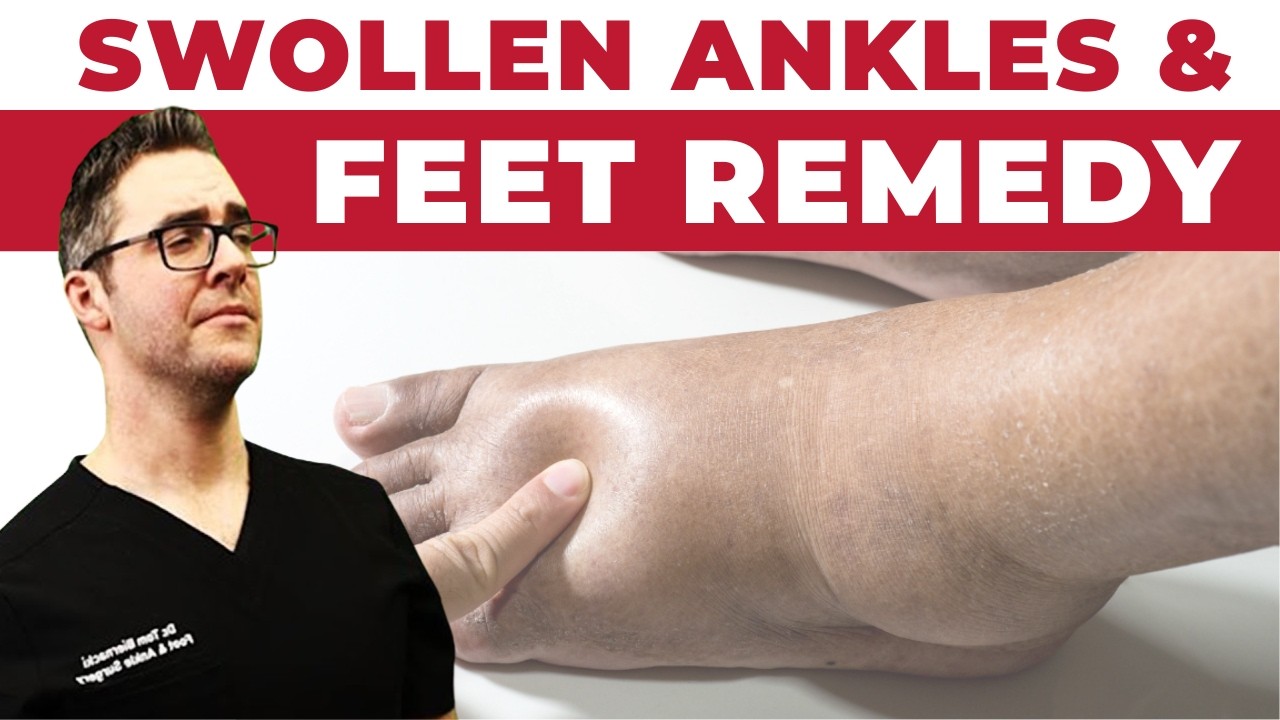
The most dangerous mistake with swollen feet is ignoring sudden unilateral swelling in a leg that has been immobile — after a long flight, bed rest, or post-surgery. This is the classic presentation of a deep vein thrombosis. DVT can be completely asymptomatic beyond the swelling, and a clot that travels to the lungs causes a pulmonary embolism — a life-threatening emergency. If one leg is noticeably more swollen than the other after a period of immobility, go to the ER for a doppler ultrasound. Do not wait to see if it improves.
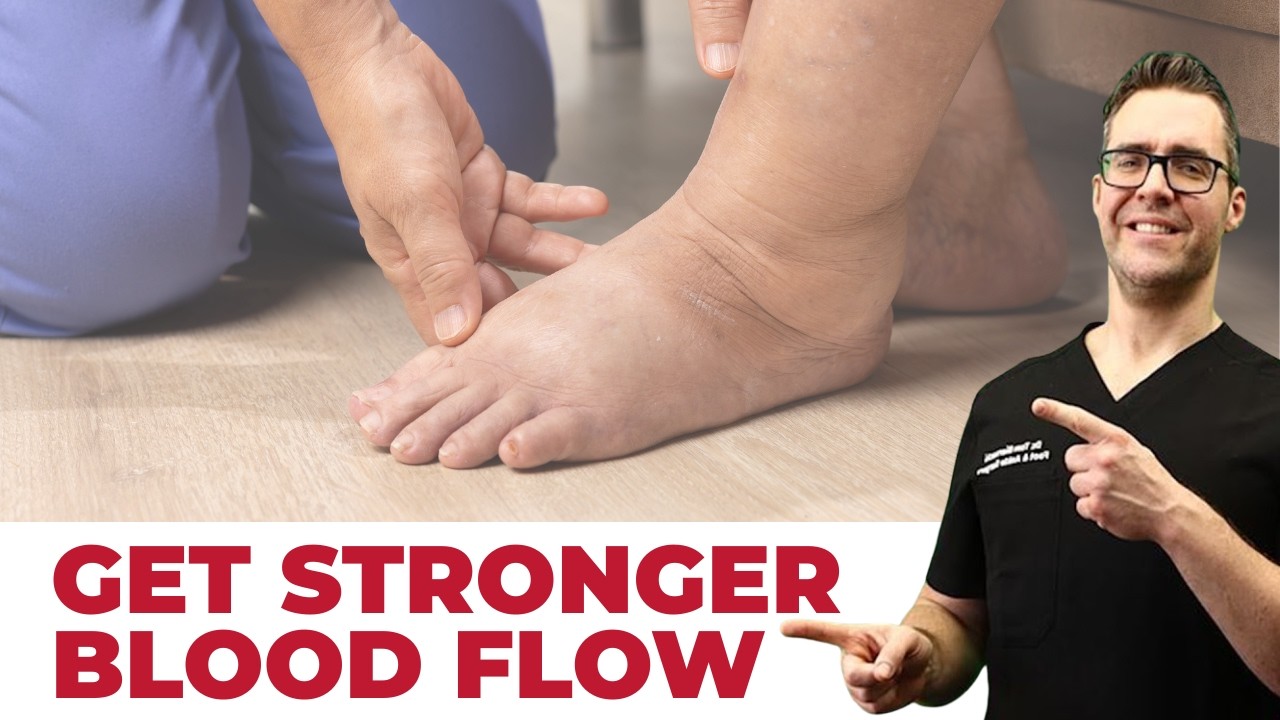
What a Podiatrist Checks for Swollen Feet and Ankles
At a visit we look at where the swelling is and how it behaves: one side or both, pitting or not, the skin over it (shiny, tight, brown-stained or broken), the pulses in your feet, and any tender joint or tendon. We also go through your medicines and any recent travel, injury or surgery. X-rays at the visit rule out a fracture, arthritis or Charcot changes when the swelling follows an injury or sits over a joint.
When the pattern points beyond the foot — a possible blood clot, or a heart, kidney, liver or thyroid cause — we order the right test, such as a duplex ultrasound or blood work, and coordinate with your primary care doctor or the appropriate specialist. For vein and lymph swelling we guide compression, treat skin problems and wounds, and refer to a vein specialist or a certified lymphedema therapist when that is the better route. You can book online at our Howell or Bloomfield Township office.
Frequently Asked Questions About Swollen Feet and Ankles
Why are my feet swollen in the morning?
Feet that are swollen in the morning — before you’ve been standing — suggest a systemic cause rather than positional edema. Morning swelling can indicate kidney disease (fluid retained overnight), heart failure, hypoalbuminemia, or hypothyroidism. Positional venous edema typically develops throughout the day and improves with overnight elevation. Morning swelling warrants a conversation with your primary care physician.
Why do my ankles swell at the end of the day?
Gravity pulls fluid toward your feet all day, and when you sit or stand still your calf muscles are not squeezing it back up. Heat, salty food and long hours on your feet add to it. Swelling that appears by evening and is gone by morning is usually this kind of dependent edema, and walking breaks, compression socks and elevation help. If evening swelling is new and getting worse, or comes with breathlessness or weight gain, see a doctor. More on why feet swell at night.
Why is only one ankle swollen?
Swelling on one side usually has a local cause: a sprain or fracture, an infection, gout, a tendon problem, an old injury or surgery, or a blocked lymph channel. A blood clot (DVT) is the cause not to miss — sudden swelling of one leg with calf pain or warmth, especially after travel, surgery or bed rest, needs same-day care.
Is walking good for swollen feet?
Yes, for most swelling. Each step squeezes the calf muscles, which pump fluid back up the veins, so regular walks — ideally with compression socks on — reduce swelling better than standing or sitting still. The exceptions are swelling from a fresh injury, an infection or a suspected blood clot, which need an exam first.
Can swollen feet be a sign of heart problems?
Yes — bilateral pitting edema that is progressively worsening, accompanied by shortness of breath, fatigue, or weight gain, can be a sign of right-sided heart failure or cardiomyopathy. This requires cardiac evaluation. A podiatrist can identify the pattern of edema and refer appropriately — but if you have sudden onset severe bilateral leg swelling with breathing difficulty, call 911.
What compression socks are best for swollen feet?
For mild-to-moderate venous insufficiency causing daily foot and ankle swelling, graduated compression stockings at 20–30 mmHg are the clinical standard. They must be graduated (stronger at the ankle, weaker at the calf) to actively pump fluid upward. Put them on before getting out of bed in the morning — once swelling has accumulated during the day, stockings are far less effective.
When should I see a podiatrist vs. a doctor for swollen feet?
See a podiatrist for swelling related to a foot or ankle injury, local infection, or chronic venous swelling affecting the feet. See your primary care physician or ER for sudden severe swelling, bilateral worsening swelling, or swelling with systemic symptoms (shortness of breath, chest pain, fever). To see a podiatrist at Balance Foot & Ankle, book online or call (810) 206-1402.
Does insurance cover evaluation for swollen feet?
Yes — office visits, X-rays, and diagnostic workup for swollen feet are covered by most PPO plans and Medicare when medically indicated. Compression stockings may require a prescription and are covered by some plans. Call (810) 206-1402 to verify your specific benefits before your visit.
Swollen Feet That Won’t Go Down?
Dr. Tom Biernacki and our podiatrists evaluate foot and ankle swelling, with X-rays at the visit when needed, at Balance Foot & Ankle in Howell and Bloomfield Township, MI. No referral needed.
Related guides on swelling
- One swollen ankle: causes on one side
- Swollen feet during pregnancy
- Swelling after foot surgery: the normal timeline
- Foot lymphedema
- Pitting edema in the feet
- Venous insufficiency and foot swelling
- Heart disease and foot swelling
- Swollen feet, ankles and legs with diabetes (Diabetic Foot Guide, our sister education site)
- Swelling on the top of the foot
- Swollen toes
- How to choose compression socks
- Best shoes for swollen feet
Sources: Trayes KP, Studdiford JS, Pickle S, Tully AS. Edema: diagnosis and management. Am Fam Physician. 2013;88(2):102–110. · MedlinePlus, U.S. National Library of Medicine: Foot, leg, and ankle swelling.
🧦 For swollen feet and ankles: DASS Medical Compression Socks (15-20 mmHg)
Graduated compression is the most evidence-backed conservative intervention for peripheral edema and venous insufficiency swelling. DASS Medical Compression Socks give 15–20 mmHg of graduated pressure, a reasonable starting level for everyday swelling (diagnosed venous insufficiency usually needs 20–30 mmHg). I recommend putting them on before getting out of bed in the morning, before gravity pulls fluid down. FSA/HSA eligible with a letter of medical necessity.
See DASS Medical Compression Socks on Amazon →
Affiliate disclosure: As an Amazon Associate and Foundation Wellness partner, we earn from qualifying purchases at no extra cost to you.

Dr. Tom Biernacki, DPM is a board-certified foot & ankle surgeon (ABFAS & ABPM) at Balance Foot & Ankle Specialists in Southeast Michigan. With over a decade of clinical experience, he specializes in heel pain, bunions, diabetic foot care, sports injuries, and minimally invasive surgery. Dr. Biernacki is a member of the APMA and ACFAS, and his patient education content on MichiganFootDoctors.com and YouTube has made him one of the most-followed foot & ankle educators on YouTube.
More questions patients ask
What causes swollen feet?
Swollen feet range from benign (prolonged standing/sitting, hot weather, pregnancy) to serious (heart failure, venous insufficiency, DVT, kidney disease, liver disease, medication side effects). Bilateral ankle and foot swelling that worsens through the day and improves with elevation suggests venous pooling or systemic causes. Sudden unilateral swelling with calf pain warrants urgent DVT evaluation.
When should I worry about swollen feet?
Seek immediate care if: one leg is significantly more swollen with calf pain (possible DVT), swelling occurs with chest pain or breathlessness (possible pulmonary embolism), you have fever alongside swelling (possible infection/cellulitis), or you have known heart/kidney/liver disease with sudden swelling increase. See a doctor within 1-3 days for new bilateral swelling that doesn't improve with leg elevation.
How can I reduce foot swelling quickly?
For gravitational/benign swelling: elevate feet above heart level for 20-30 minutes, wear compression stockings (20-30 mmHg), walk to engage the calf muscle pump, reduce salt intake, and apply cool compresses. Avoid prolonged sitting or standing. Address the underlying cause for systemic swelling — diuretics should only be used under physician direction.
Still have a question about coverage or cost? Book online and we will check your benefits before your visit: Book in Howell · Book in Bloomfield Township. Prefer to talk it through first? Call (810) 206-1402.