
Medically reviewed by Dr. Tom Biernacki, DPM
Board-certified podiatric surgeon | Balance Foot & Ankle, Howell & Bloomfield Township, MI
Last reviewed: May 2026

Quick answer: Treatment for talus fracture treatment follows a stepwise approach: 1) conservative care first (rest, ice, supportive footwear, OTC anti-inflammatories), 2) physical therapy and targeted exercises, 3) in-office treatments (injections, custom orthotics) if conservative fails at 4-6 weeks, 4) surgery for refractory cases. Most patients resolve at step 1 or 2. Call (810) 206-1402.
The most important clinical decision with Talus Fracture Treatment isn’t which treatment to start with — it’s identifying the correct subtype. That changes everything. Call (810) 206-1402.
Why Talus Fractures Are Uniquely Dangerous
The talus is unique among foot bones: 60% of its surface is covered with articular cartilage, and it has no direct muscle attachments. Its blood supply enters from limited points, making it vulnerable to avascular necrosis (AVN) — death of the bone from interrupted blood supply — after fracture displacement. This complication affects up to 50% of displaced talar neck fractures.
Anatomy of the Talus
The talus has three parts: the body (sits in the ankle mortise), the neck (most commonly fractured), and the head (articulates with the navicular). Fractures can occur in any region but talar neck fractures are most common and most dangerous.
Hawkins Classification for Talar Neck Fractures
Hawkins I: non-displaced — AVN risk ~0–13%. Hawkins II: displaced with subtalar dislocation — AVN risk ~20–50%. Hawkins III: displaced with subtalar + ankle dislocation — AVN risk ~40–100%. Hawkins IV: displaced with subtalar + ankle + talonavicular dislocation — AVN risk near 100%.
Treatment by Fracture Type
Hawkins I: Non-weight-bearing cast for 8–12 weeks, monitor for AVN. Hawkins II–IV: Urgent surgical reduction (within 6–8 hours is ideal to reduce AVN risk). Open reduction and internal fixation with screws, often using dual approaches to achieve anatomic reduction. Associated dislocations must be reduced emergently.
The Hawkins Sign: Predicting AVN
At 6–8 weeks post-injury, a subchondral lucency (Hawkins sign) seen on X-ray indicates intact blood supply and predicts against AVN. Absence of the Hawkins sign is worrying for AVN development.
Recovery Timeline
Non-displaced fractures: 8–12 weeks non-weight-bearing, then gradual return over 3–6 months. Displaced/surgical cases: 12–16 weeks non-weight-bearing, then progressive weight-bearing with therapy. Full functional recovery takes 12–18 months for uncomplicated cases.
Managing Avascular Necrosis
Early AVN is managed by protected weight-bearing and monitoring. If AVN progresses to collapse of the talar dome, options include core decompression, bone grafting, partial or total talectomy, tibiocalcaneal fusion, or total ankle replacement depending on severity.
Other Complications
Post-traumatic arthritis of the ankle and subtalar joints is very common. Malunion and nonunion occur with inadequate fixation. Osteonecrosis remains the most feared long-term outcome.
Frequently Asked Questions
How common is avascular necrosis after a talus fracture? It depends entirely on the fracture type — non-displaced fractures have minimal AVN risk; highly displaced or dislocated fractures have very high risk. This is why urgent surgery for displaced fractures is critical.
Will I need ankle fusion after a talus fracture? Many patients with AVN or severe post-traumatic arthritis eventually require ankle or subtalar fusion, but not all — outcomes depend on the extent of bone death and joint damage.
When Shoes Aren’t Enough — Dr. Tom’s Top 9 Orthotics
About 30% of patients I see for foot pain need MORE than a great shoe — they need a structured insole. Below: my complete 2026 orthotic ranking with pros, cons, and the specific patient I’d give each one to.

- The Pinnacle Full length insoles for men & women provide maximum cushioning, from high activity to moderate support. The PowerStep arch support shape provides stability to the foot and ankle, helping to relieve foot pain.
- When you spend all day on your feet, every step counts. PowerStep insoles are a podiatrist-recommended orthotic to help relieve & prevent foot pain related to athletes, runners, Plantar Fasciitis, heel spurs & other common foot, ankle & knee injuries
- The Pinnacle plantar fasciitis insoles offer superior heel cushioning and arch support. The dual-layer cushioning is designed to reduce stress and fatigue, while PowerStep premium arch support is designed for plantar fasciitis relief.
- The PowerStep Pinnacle arch support inserts for men & women can be worn in a variety of shoe types such as; athletic, walking, running, work & some casual shoes. Orthotic Inserts are ordered by shoe size, no trimming required.
- Made in the USA & backed by a 30-day money-back guarantee. PowerStep orthotic inserts for men & women are designed for shoes where the factory insole can be removed. HSA & FSA Eligible

- Full Length Support – Our ProTech orthotic insoles support pronation, arch pain, heel pain, plantar fasciitis, and heel spurs.
- Your Go To Inserts – These orthotics for plantar fasciitis provide full length, total contact support for a number of common foot issues
- Easily Fix Your Arches – Standard, semi-rigid arch support that fits most shoes including, work boots, dress shoes and sneakers.
- Enhanced Comfort – Our ProTech orthotic inserts have maximum cushioning featuring ShockAbsorb Premium Foam heel support cushion to increased protection.
- Support + Comfort – PowerStep ProTech orthotic insoles are designed with built-in arch support, heel cradle, and a perfect balance of support and comfort. Legitimate PowerStep product packaging is marked with a unique US quality control code. If you are concerned that a PowerStep item is not legitimate, please contact PowerStep customer service.
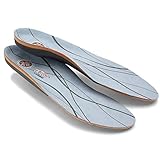
- PODIATRIST DESIGNED! An effective alternative to expensive custom-made orthotics. Innovative biomechanical THREE-ZONE COMFORT technology delivers deep heel cup stability, forefoot cushioning, and ultimate arch support to prevent excessive pronation caused by flat feet. These essential contact points help to realign positioning of feet, aiding to re-establish your body’s natural alignment, from the ground up.
- VIONIC ORTHOTIC INSOLES! These women’s and men’s shoe inserts offer a convenient, pain-free natural healing solution for many of the common aches and pains associated with poor lower-limb alignment, plantar fasciitis, and arch pain. EVA orthotic with re-enforced, hardened plastic (PE) shell for added motion control and stability. Cushioned shock dot in the heel for added shock absorption. Can be trimmed in forefoot if necessary.
- DESIGNED FOR EVERYDAY USE! Designed to provide greater control in faster paced activities such as running and fast walking. 4 degree rear foot wedge to provide support and control which helps prevent excess pronation. Odor absorbing cover. Contoured around the heel and arch areas to achieve 100% foot contact. Podiatrist Designed, APMA Seal of Acceptance.
- COMFORTABLE TO WEAR! Shoe inserts for women and men contoured around the heel and arch areas to achieve perfect foot contact.
- SIZES AVAILABLE: XS: Women’s 4.5 – 6 / Men’s 3.5 – 5 S: Women’s 6.5 – 8 / Men’s 5.5 – 7 M: Women’s 8.5 – 10 / Men’s 7.5 – 9 L: Women’s 10.5 – 12 / Men’s 9.5 – 11 XL: Men’s 11.5 – 13

- Signature waffle-inspired rubber outsole for traction and flexibility

- Provides continuous support of the Plantar Fascia by gently stretching the fascia tissue.
- Compression zones promote circulation, reduce impact vibration, boost recovery and strengthen feet.
- Lightweight, seamless design with extra cushioning provides support while still being comfortable.
- Supports the heel/arch and overall foot structure while stabilizing the tendon for better performance
- Made from high quality materials, the socks are moisture wicking and breathable.

- The first generation of Protalus’s M-100 Insole
- Patented Alignment Technology: The M-100 features a deep heel cup and contoured arch to correct overpronation and promote better posture, stability, and joint health throughout your body.
- Comfortable Insoles: The patented stress relief replacement shoe insoles increase comfort and relieve plantar fasciitis and anti-fatigue.
- Improves Alignment: The shoe insoles help improve alignment and reduce pain in the feet, ideal for low and high arches.
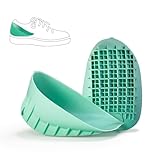
- ✶ALLEVIATES HEEL PAIN – Tuli’s Heavy Duty Heel Cups provide heel pain relief caused by plantar fasciitis, Sever’s disease, excessive pronation, Achilles tendonitis, etc. Ideal for those on their feet for most of the day or those looking for added comfort.
- ✶PODIATRIST PREFERRED – In an independent study conducted by M3 Global Research, podiatrists chose Tuli’s as the clear winner of recommended heel cup brands.
- ✶SHOCK-ABSORBING DESIGN – The multi-cell, multi-layer design absorbs shock and impact energy, mimicking the natural shock-absorbing system of your feet. As you walk or run, the design reduces the stress on your feet.
- ✶DOCTOR RECOMMENDED & APMA ACCEPTED – Tuli’s Heel Cups were designed by a leading podiatrist and have the honor of being accepted by the American Podiatric Medical Association.
- ✶FITS MOST LACE-UP SHOES – Best used in spacious lace-up shoes like athletic shoes / sneakers.
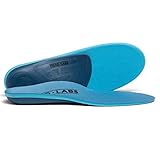
- Plantar Fasciitis Relief, Every Step – Firm arch support helps relieve heel and arch pain from plantar fasciitis and supports flat feet and overpronation for better alignment and all-day comfort.
- Clinical-Grade Biomechanics – Tread Labs 26-33 ARCHitecture delivers orthotic-level stability—custom-orthotic feel without the prescription.
- Dialed Fit for Any Shoe – Four arch heights (low, medium, high, extra-high) and an easy 3-step sizing guide make selection simple for work boots, sneakers, and everyday shoes—great for standing all day.
- Built to Last a Million Miles – Durable, recyclable arch supports with our Million-Mile Guarantee; replaceable top covers keep insoles fresh and cost-effective. Unlike foam that flattens, Pace is engineered to last.
- Trusted Expertise – Designed by Mark Paigen (founder of Chaco). Premium arch support inserts for men and women backed by decades of footwear innovation.
In-Office Treatment at Balance Foot & Ankle
If home treatment isn’t providing relief for your foot and ankle conditions, our podiatry team at Balance Foot & Ankle can help with same-day evaluations and advanced in-office care.
Frequently Asked Questions
How long does treatment take to work?
Most patients see improvement in 4-8 weeks with consistent conservative care. Persistent symptoms after 8 weeks need imaging and escalation.
When is surgery needed?
Surgery is reserved for cases that fail 3-6 months of conservative care, structural deformities, or fractures requiring stabilization.
Is this covered by insurance?
Most diagnostic visits and conservative treatments are covered by Medicare and major insurers. Custom orthotics often require diabetic or post-surgical justification.
What is Stress fracture?
Stress fracture is a common foot/ankle condition that affects mobility and quality of life. Understanding the underlying cause is the first step in successful treatment. Our podiatrists at Balance Foot & Ankle perform a hands-on biomechanical exam, review your activity history, and use diagnostic imaging when appropriate to identify the root cause—not just treat the symptom. Many patients have been told to “rest and ice” without a deeper diagnostic workup; our approach is different.
Symptoms and warning signs
Common signs of stress fracture include pain that worsens with activity, morning stiffness, swelling, tenderness when palpated, and difficulty bearing weight. If you experience sudden severe pain, inability to walk, visible deformity, numbness or color change, contact our office the same day or visit urgent care—these can signal a more serious injury such as a fracture, tendon rupture, or vascular compromise. Diabetics with any foot wound should seek same-day care.
Conservative treatment options
Most cases of stress fracture respond to non-surgical care: structured rest, supportive footwear changes, custom orthotics, targeted stretching and strengthening protocols, anti-inflammatory medications when medically appropriate, and in-office procedures such as ultrasound-guided injections. We also offer advanced therapies including MLS laser therapy, EPAT/shockwave, regenerative injections, and image-guided procedures. Treatment is sequenced from least invasive to most invasive, and we explain the rationale at every step.
When is surgery considered?
Surgery is reserved for cases that fail 3-6 months of well-structured conservative care, when there is structural pathology (severe deformity, complete tear, advanced arthritis), or when imaging shows damage that will not heal without intervention. Our surgeons have performed 3,000+ foot and ankle procedures and prioritize minimally-invasive techniques whenever appropriate. We discuss recovery timelines, return-to-activity milestones, and realistic outcome expectations before any procedure is scheduled.
Recovery timeline and prevention
Recovery from stress fracture varies based on severity and chosen treatment path. Conservative cases often improve within 4-8 weeks with consistent adherence to the protocol. Post-procedural recovery may range from a few days (in-office procedures) to several months (reconstructive surgery). Long-term prevention involves footwear assessment, activity modification, structured strengthening, and regular check-ins with your podiatrist if you have a history of recurrence. We provide written home-exercise plans and digital follow-up support.
American Academy of Orthopaedic Surgeons: Talus Fractures
Ready to Get Relief?
Same-day appointments available in Howell & Bloomfield Township, MI
4.9★ | 1,123 Reviews | 3,000+ Surgeries
Or call: (810) 206-1402

Dr. Tom Biernacki, DPM is a board-certified foot & ankle surgeon (ABFAS & ABPM) at Balance Foot & Ankle Specialists in Southeast Michigan. With over a decade of clinical experience, he specializes in heel pain, bunions, diabetic foot care, sports injuries, and minimally invasive surgery. Dr. Biernacki is a member of the APMA and ACFAS, and his patient education content on MichiganFootDoctors.com and YouTube has made him one of the most-followed foot & ankle educators on YouTube.