
Hammertoe Treatment in Michigan
![Claw Toe & Hammer Toe Treatment [Straighten Your Toes] NO SURGERY!!!](https://i.ytimg.com/vi/FmTScgSZTb8/maxresdefault.jpg "Hammertoe Treatment Michigan 2026 | Balance Foot & Ankle 2")
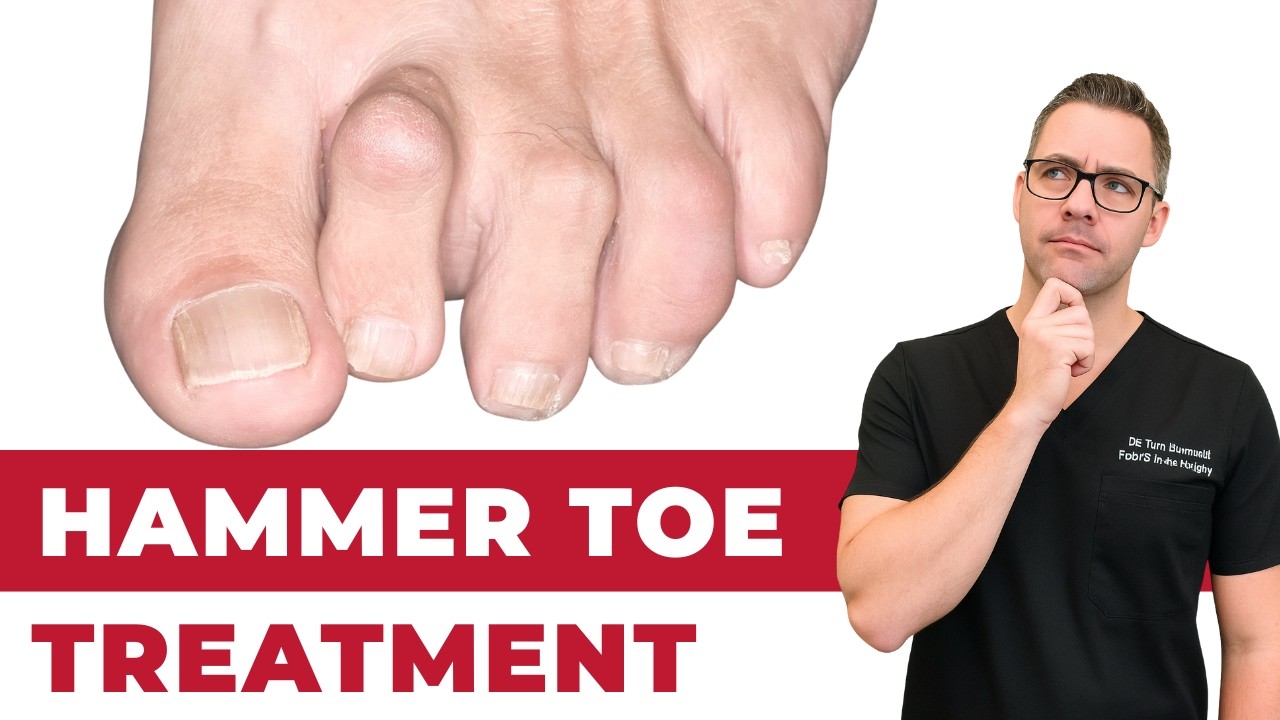
A hammertoe is a deformity in which a toe bends abnormally at the middle joint, causing it to curl downward like a claw. This painful condition most commonly affects the second, third, or fourth toe and is often caused by muscle imbalances, improper footwear, or structural foot problems. At Balance Foot & Ankle, our podiatrists treat hammertoes at all stages — from early conservative management to surgical correction when needed.
For patients exploring non-surgical options, see our guide to hammertoe treatment without surgery.
Hammertoe vs. Mallet Toe vs. Claw Toe
These three related deformities are often confused. A hammertoe involves bending at the proximal interphalangeal (PIP) joint — the middle knuckle — causing the toe to arch upward in the middle. A mallet toe involves the distal joint nearest the toenail, causing the tip of the toe to curl downward. A claw toe involves both the middle and end joints, resulting in the toe curling both upward and downward. All three deformities can cause corns on the top of the toe from shoe friction, calluses under the ball of the foot, pain with walking, and difficulty fitting into normal footwear.
What Causes Hammertoes?
The most common cause of hammertoe is a muscle and tendon imbalance that causes one set of tendons to overpower another, forcing the toe into a bent position over time. Contributing factors include wearing shoes that are too short or too narrow (high heels are a major risk factor), flat feet or high arches that alter tendon tension, bunions that push the big toe against the second toe, previous toe injuries, and neurological conditions that affect muscle control. Heredity also plays a role — if a parent has hammertoes, you are at higher risk.
Flexible vs. Rigid Hammertoes
This distinction is critical for treatment planning. A flexible hammertoe can still be straightened manually — the joint is not locked. At this stage, conservative treatments are most effective and can slow or stop progression. A rigid hammertoe cannot be straightened by hand; the joint is fixed in the bent position. Rigid hammertoes typically require surgical correction for lasting relief. Early treatment dramatically improves outcomes by preventing the flexible stage from progressing to rigid.
Conservative Treatment for Hammertoes
Non-surgical treatment is appropriate for flexible hammertoes and for rigid hammertoes where surgery is not desired or appropriate.
Footwear Modification
Switching to shoes with a high, wide toe box removes the primary driver of hammertoe progression. Shoes should be at least half an inch longer than your longest toe, with a toe box wide enough that toes lie flat without touching the top. Avoiding high heels is essential, as they concentrate weight on the forefoot and force toes into a cramped position.
Toe Splints, Pads, & Strapping
Gel toe separators, foam pads over prominent knuckles, and buddy taping (securing the hammertoe to an adjacent toe) can relieve pain by reducing friction and gently realigning the toe. These measures are most effective for flexible hammertoes. We recommend specific products based on which toe is affected and the deformity pattern.
Custom Orthotics
Custom orthotics address the underlying biomechanical cause of hammertoes by correcting flat feet or high arches that alter tendon tension. A metatarsal pad built into the orthotic can also offload pressure under the ball of the foot, significantly reducing pain with walking. Learn more about custom orthotics at Balance Foot & Ankle.
Toe Exercises & Stretching
For flexible hammertoes, exercises that stretch the toe extensor tendons and strengthen the toe flexors can help maintain joint mobility and slow progression. Common exercises include towel scrunches (picking up a towel with your toes), marble pickups, and manual toe stretching. We provide a customized home exercise program during your visit.
Corticosteroid Injections
When pain and inflammation at the joint are severe, a cortisone injection can provide significant temporary relief — typically lasting several weeks to months. Injections are most useful to manage pain during a course of conservative treatment and are not a long-term solution on their own.
Surgical Treatment for Hammertoes
When a hammertoe is rigid, causing persistent pain despite conservative care, or when the deformity is severe enough to affect adjacent toes or prevent comfortable footwear, surgery is an effective option. Hammertoe surgery is typically performed as an outpatient procedure under local anesthesia with sedation. Common surgical techniques include arthroplasty (removing a small portion of the joint to allow the toe to straighten), arthrodesis (fusing the joint in a straight position), and tendon lengthening procedures to release the deforming force. Recovery generally involves special protective footwear for 4–6 weeks, with gradual return to regular shoes. Our surgeons explain all surgical options clearly, including realistic recovery expectations, before any decision is made.
Hammertoe and Bunion Connection
Hammertoes and bunions frequently occur together. A bunion (hallux valgus deformity) pushes the big toe toward the second toe, crowding it and forcing it into a bent position. In these cases, treating only the hammertoe without addressing the bunion often results in recurrence. Our podiatrists evaluate the entire forefoot to develop a comprehensive treatment plan that addresses all contributing deformities. Learn more about bunion treatment options in Michigan.
Frequently Asked Questions About Hammertoe
No — hammertoes do not resolve without treatment. They are progressive deformities that worsen over time, especially with continued footwear pressure. The goal of early conservative treatment is to halt progression and relieve symptoms. Once a hammertoe becomes rigid, it cannot be straightened without surgery. This is why early evaluation and treatment are important — flexible hammertoes have far more treatment options than rigid ones.
Hammertoe surgery is performed under local anesthesia, so there is no pain during the procedure. Post-operative discomfort is typically mild to moderate and well-controlled with oral pain medications for the first few days. Most patients transition to over-the-counter pain relievers by the end of the first week. The affected toe will be bandaged and protected in a surgical shoe for 4-6 weeks, during which normal walking is possible but limited.
Recovery varies by the specific procedure performed. Most patients wear a protective surgical shoe for 4-6 weeks. Return to regular shoes typically occurs at 6-8 weeks. Full resolution of swelling (which is normal) takes 3-6 months. Athletic activities and running are usually resumed at 3-4 months post-surgery. We provide detailed post-operative instructions and follow-up care throughout recovery.
The recurrence rate for hammertoe surgery is low when the procedure is matched to the deformity and underlying cause. Using custom orthotics after surgery to address biomechanical causes, wearing proper footwear, and addressing any coexisting bunion significantly reduces recurrence risk. Our surgeons discuss realistic long-term outcomes before surgery.
Hammertoe surgery is typically covered by insurance and Medicare when it is performed for a documented medical indication — pain, inability to wear normal footwear, or skin breakdown from the deformity. Purely cosmetic procedures (correcting a deformity that causes no symptoms) may not be covered. Our team obtains prior authorization and verifies your benefits before scheduling any surgical procedure.
Related Services
- Bunion Treatment — often coexists with hammertoes
- Custom Orthotics — address the biomechanical cause
- Gait Analysis — identify contributing movement patterns
- Plantar Fasciitis — common co-condition with foot structure changes
- Corn & Callus Removal — frequent complication of hammertoes
Book Hammertoe Treatment in Michigan
Balance Foot & Ankle treats hammertoes at two Michigan locations. Don’t wait until a flexible hammertoe becomes rigid — early treatment preserves more options and avoids surgery for many patients.
- Howell: 4330 E Grand River, Howell, MI 48843
- Bloomfield Hills: 43494 Woodward Ave #208, Bloomfield Twp, MI 48302
Call (810) 206-1402 or request an appointment online.
![Hammer Toe Exercises, Stretches & Treatment [Claw Toes & Mallet Toes!]](https://i.ytimg.com/vi/pA4dicQIzLY/maxresdefault.jpg "Hammertoe Treatment Michigan 2026 | Balance Foot & Ankle 3")
Hammertoe Treatment Near You in Michigan
Balance Foot & Ankle provides expert hammertoe care at both our Michigan locations. Find your nearest office for scheduling and local information:
- Hammertoe Treatment in Howell, MI — Serving Brighton, Hartland, Pinckney, Fenton, and Livingston County
- Hammertoe Treatment in Bloomfield Hills, MI — Serving Troy, Birmingham, West Bloomfield, and Oakland County
Hammertoe commonly occurs alongside other foot conditions. Related treatment pages: Bunion Treatment, Corn & Callus Removal, Biomechanical Gait Analysis, and Flat Feet Treatment.
Related reading: How to Treat Hammertoe Without Surgery
👟 Dr. Tom’s Pick: FLAT SOCKS for Minimalist & Zero-Drop Shoes
Ultra-thin flat-knit socks designed specifically for zero-drop, barefoot, and minimalist shoes. No bunching, no seams — just foot-contact-the-ground feel with moisture control.
View FLAT SOCKS on Amazon →Affiliate disclosure: As an Amazon Associate, Balance Foot & Ankle earns from qualifying purchases.
👟 Dr. Tom’s Pick: CURREX RunPro Insoles for Runners
CURREX RunPro are biomechanically tuned running insoles with 3 arch profiles (low, medium, high) to match your foot type. Unlike generic insoles, they’re engineered specifically for the high-impact demands of running — reducing pronation stress and metatarsal loading.
View CURREX RunPro on Amazon →Affiliate disclosure: As an Amazon Associate, Balance Foot & Ankle earns from qualifying purchases.
🛒 Dr. Tom’s Product Recommendations: