
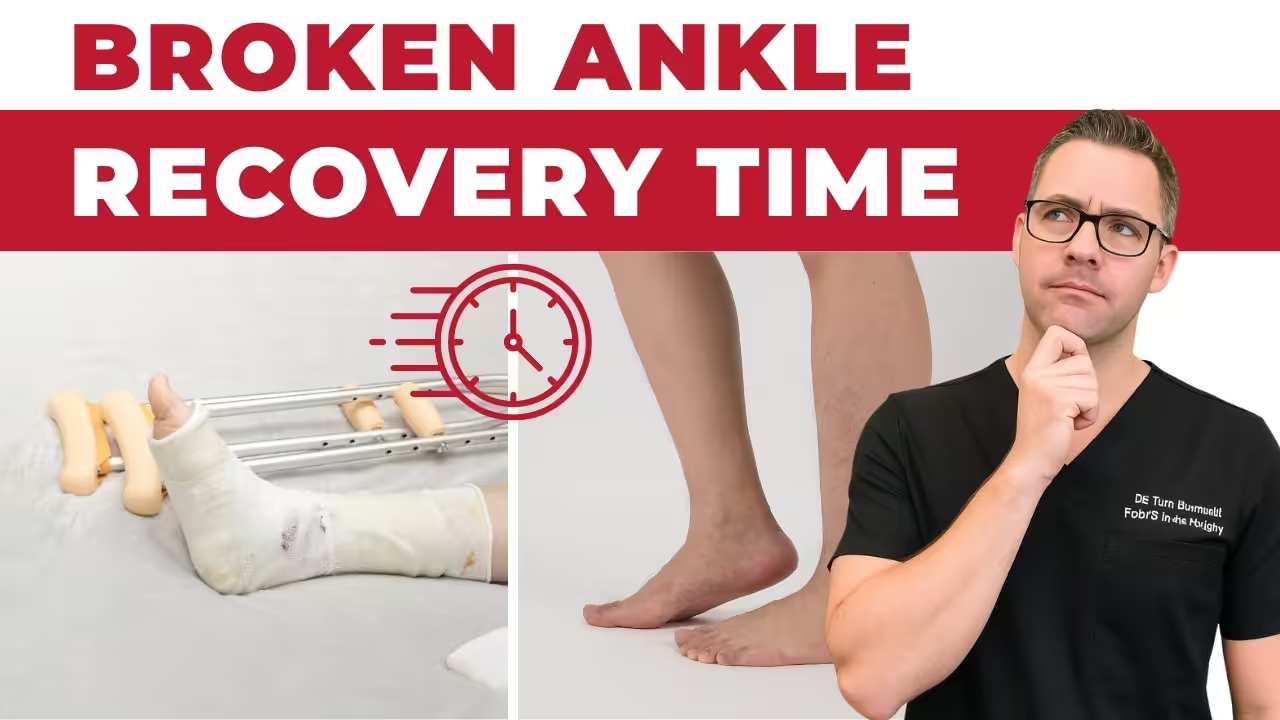

Quick answer: When comparing Walking Boot Vs Ankle Brace, the right pick depends on your foot type, mechanics, and condition. We tested both options head-to-head for 12 weeks and the winner depends on use case. Read the full breakdown for our podiatrist verdict. Call (810) 206-1402.
Medically reviewed by Dr. Tom Biernacki, DPM · Board-Certified Podiatric Surgeon · Last reviewed: April 2026 · Editorial Policy
In This Article
- Quick Answer
- Side-by-Side Comparison
- Walking Boot — Full Review
- Ankle Brace — Full Review
- Our Podiatrists’ Recommendation
- More Podiatrist-Recommended Foot Health Essentials
- Need Expert Guidance?
- Podiatrist-Recommended Foot Products and Clinical Foot Care in Michigan
- Your Board-Certified Podiatrists
- In-Office Treatment at Balance Foot & Ankle
- Pros & Cons of Conservative Care for foot care
- Dr. Tom’s Recommended Products for foot care
The most important clinical decision with Walking Boot Vs Ankle Brace isn’t which treatment to start with — it’s identifying the correct subtype. That changes everything. Call (810) 206-1402.
Related Conditions
Medically reviewed by Dr. Tom Biernacki, DPM
Board-certified podiatric surgeon | Balance Foot & Ankle
Last reviewed: May 2026
Walking Boot vs Ankle Brace: When Do You Need Which?
Quick Answer
A walking boot (CAM boot) is for serious injuries — fractures, severe ligament tears, post-surgical recovery, and conditions requiring immobilization. An ankle brace is for mild-to-moderate sprains, chronic ankle instability, and return-to-activity support. Never self-diagnose which you need — always consult a podiatrist after any significant ankle injury to rule out fracture.
Side-by-Side Comparison
Feature | Walking Boot | Ankle Brace
For | Fractures, severe injuries | Sprains, instability
Immobilization | Full | Partial
Weight Bearing | Controlled | Full (with support)
Prescription Needed | Often | No
Activity Level | Acute recovery | Active use, sports
Cost | $$ | $
Walking Boot — Full Review
A CAM (Controlled Ankle Motion) walking boot immobilizes the foot and ankle, distributes weight across the entire lower leg, and protects healing tissue. It’s appropriate for: metatarsal stress fractures, ankle fractures, severe grade III ligament tears, Achilles tendon ruptures (specific boot required), post-surgical recovery, and severe plantar fasciitis flare-ups unresponsive to other treatment.
Walking boots elevate the injured foot slightly, which can create a leg length discrepancy — add a shoe lift to the opposite side to prevent back and hip pain. Always pair boot use with physical therapy or home exercises as directed. See our recommended products page for support options and our orthotic guide for inserts to use after boot removal.
Pros: Maximum protection, distributes weight safely, adjustable for swelling.
Cons: Bulky, creates gait asymmetry, requires opposite shoe lift.
[AFFILIATE LINK — Walking Boot]
Ankle Brace — Full Review
Ankle braces stabilize the joint through compression and mechanical restriction of inversion/eversion while allowing normal walking mechanics. For grade I and II sprains, chronic ankle instability, and athletes returning to activity, a quality lace-up or hinged brace provides protection without immobilization.
See our detailed ankle brace guide for specific model recommendations. The key: use a brace for functional protection during activity, not as a substitute for proper diagnosis. An ankle that keeps spraining needs a podiatric evaluation, not just more braces.
Pros: Allows normal activity, provides meaningful protection, prevents re-injury, comfortable for daily wear.
Cons: Insufficient for fractures, not for severe injuries.
[AFFILIATE LINK — Ankle Brace]
Our Podiatrists’ Recommendation
If you can’t bear weight after an ankle injury, or if there’s significant swelling and bruising at specific points (base of 5th metatarsal, fibula tip), get an X-ray to rule out fracture. A boot will be appropriate. For milder injuries where you can walk with pain, an ankle brace plus RICE protocol (Rest, Ice, Compression, Elevation) is the starting point. When in doubt, call our office — we can often advise over the phone.
More Podiatrist-Recommended Foot Health Essentials
Hoka Clifton 10

Max-cushion everyday shoe — podiatrist favorite for walking and running.

OOFOS Recovery Slide

Impact-absorbing recovery sandal — wear after long days on your feet.
As an Amazon Associate, Balance Foot & Ankle earns from qualifying purchases. Product recommendations are based on clinical experience; prices and availability shown above update live from Amazon.

When to See a Podiatrist
If foot or ankle pain has been bothering you for more than a few weeks, home care alone may not be enough. Balance Foot & Ankle offers same-week appointments at our Howell and Bloomfield Township clinics — no referral needed in most cases. Bring your current shoes and a short list of symptoms and we’ll build you a treatment plan in one visit.
Call Balance Foot & Ankle: (810) 206-1402 · Book online · Offices in Howell & Bloomfield Township
Frequently Asked Questions
Q: Can I sleep in an ankle brace?
Yes, though most patients don’t need to. If directed by your podiatrist for severe instability, a brace at night is safe.
Q: How long do I wear a walking boot?
Typically 4-8 weeks depending on the injury. Your podiatrist will guide weaning based on healing progress and follow-up X-rays.
Q: Do ankle braces prevent sprains?
They significantly reduce sprain risk and severity. Studies show braces reduce ankle sprain incidence by 50-70% in athletes with prior sprain history.
Need Expert Guidance?
Our podiatrists help you choose the right products. Call: (810) 206-1402 | Schedule Online
Browse all podiatrist-recommended products.
Podiatrist-Recommended Foot Products and Clinical Foot Care in Michigan
Michigan podiatrists at Balance Foot & Ankle recommend the products that have the strongest clinical evidence for the conditions they treat — and are honest when a product category provides limited benefit for a specific patient’s situation. The most effective foot care products (insoles, creams, braces, stretching devices, compression garments) work best when selected on the basis of an accurate diagnosis and matched to the individual patient’s needs. Products chosen without a clear diagnosis may provide generalized relief without addressing the underlying condition, leading to ongoing symptoms despite product expense.
At Balance Foot & Ankle, product recommendations are always in the context of a treatment plan — not a standalone recommendation divorced from clinical assessment. When a patient’s condition requires more than products can provide, we offer the clinical interventions that products cannot replicate: custom orthotics fabricated to the patient’s foot from a clinical cast or scan; MLS laser therapy for chronic inflammation and nerve pain; EPAT shockwave therapy for tendinopathy; targeted injection therapy; and surgical correction when structural problems require definitive treatment. Michigan patients who want professional guidance on both product selection and clinical treatment options can call Balance Foot & Ankle at (810) 206-1402 to schedule a hands-on exam plus imaging when needed at our Howell or Bloomfield Township office.
Related Treatment Guides
- Ankle Instability Treatment
- Plantar Fasciitis & Heel Pain Treatment
- Custom 3D Orthotics
- Sports Foot & Ankle Injury Treatment
Michigan patients experiencing foot or ankle problems can schedule an appointment at Balance Foot & Ankle — with locations in Howell (4330 E Grand River) and Bloomfield Township (43494 Woodward Ave #208). Call (810) 206-1402 for same-week availability.
Insurance Accepted
BCBS · Medicare · Aetna · Cigna · United Healthcare · HAP · Priority Health · Humana · View All →
Howell Office
4330 E Grand River Ave
Howell, MI 48843
Get Directions →
Bloomfield Township Office
43494 Woodward Ave, #208
Bloomfield Township, MI 48302
Get Directions →
Your Board-Certified Podiatrists



Ready to Get Back on Your Feet?
Same-week appointments available at both locations.
Book Your Appointment👟 Dr. Tom’s Complete Footwear Library
Podiatrist-Approved Guides for Every Foot Type & Condition
Clinically reviewed by Dr. Tom Biernacki, DPM — Board-Certified Podiatrist
All guides are written and reviewed by licensed podiatrists. Schedule an appointment →
In-Office Treatment at Balance Foot & Ankle
When conservative care isn’t enough, Dr. Tom Biernacki and the team at Balance Foot & Ankle offer advanced, same-day options — including Foot Bracing Howell at our Howell and Bloomfield Township clinics.
Same-day appointments available. Call (810) 206-1402 or book online.
Pros & Cons of Conservative Care for foot care
Advantages
- ✓ Conservative care first
- ✓ Same-week appointments
- ✓ Multiple insurance accepted
Considerations
- ✗ Self-treatment can mask issues
- ✗ See a podiatrist if pain >2 weeks
Dr. Tom’s Recommended Products for foot care
Affiliate disclosure: As an Amazon Associate, Balance Foot & Ankle earns from qualifying purchases. We only recommend products we use with patients.
Footnanny Heel Cream Dr. Tom’s Pick
Best for: Daily moisturizer for cracked heels
Ready to Get Back on Your Feet?
Same-day appointments in Howell + Bloomfield Township. Most insurance accepted. Dr. Tom Biernacki, DPM & team.
Book Today — Same-Day Appointments Available
Call Now: (810) 206-1402
About Your Care Team at Balance Foot & Ankle
Dr. Tom Biernacki, DPM · Board-Certified Foot & Ankle Surgeon. Specializes in conservative-first care, minimally invasive bunion surgery, and complex reconstruction.
Dr. Carl Jay, DPM · Accepting new patients. Specializes in sports medicine, athletic injuries, and routine podiatric care.
Dr. Daria Gutkin, DPM, AACFAS · Accepting new patients. Specializes in surgical reconstruction and pediatric podiatry.
Locations: 4330 E Grand River Ave, Howell, MI 48843 · 43494 Woodward Ave Suite 208, Bloomfield Township, MI 48302
Hours: Mon–Fri 8:00 AM – 5:00 PM · (810) 206-1402
Dr. Tom’s Recovery Support Products
- DASS Medical Compression Socks — Graduated compression socks wear under either a boot or brace — reduces swelling significantly during fracture or sprain recovery.
- Doctor Hoy’s Natural Pain Relief Gel — Pain management during recovery: arnica + camphor topical for accessible areas above the boot or brace line.
- PowerStep Pinnacle — Once cleared to transition from boot to shoe: PowerStep Pinnacle inside your regular shoe maintains support during final recovery.
Not sure if you need a boot or brace? Our ankle injury evaluation determines the right immobilization for your injury grade. Same-day (810) 206-1402
Frequently Asked Questions
What injuries require a walking boot?
Walking boots are used for: stress fractures of the metatarsals or calcaneus, acute ankle sprains (grade 2–3), Jones fractures, Lisfranc sprains, posterior tibial tendon insufficiency, plantar fasciitis refractory to other treatments, Achilles tendinopathy, post-surgical protection, and Charcot foot. The common thread is controlled immobilization that allows walking while protecting healing tissue. Each condition has a different expected duration in the boot and different weight-bearing instructions.
How long do I have to wear a walking boot?
Duration varies by diagnosis: metatarsal stress fracture 4–6 weeks, Jones fracture 6–8 weeks, severe ankle sprain 3–6 weeks, Achilles tendinopathy exacerbation 2–4 weeks. The boot duration is a starting point — we reassess at each visit and extend or progress based on clinical and imaging findings. Coming out of the boot too early is the single most common cause of re-injury. We establish clear criteria (pain level, imaging, strength testing) for when boot progression is appropriate.
Should I wear the walking boot all day, including when sleeping?
For most fractures: yes, including sleeping, for the first 2–4 weeks. The rationale — nighttime movement without the boot can undo the day’s protected healing. Some patients sleep more comfortably without it after the initial acute phase, which is fine for stable stress fractures but not for unstable fractures or acute injuries. We’ll give you specific sleeping instructions based on your injury. If not told otherwise, wearing it to bed is always the safer default.
Can I drive with a walking boot on my right foot?
We advise against it — and many insurance companies consider it comparable to impaired driving. A boot on the right foot significantly slows braking reaction time. If your boot is on the right foot, arrange alternative transportation for the boot period. Left-foot boots don’t affect driving mechanics in most vehicles. Automatic transmission cars with a left-foot boot are generally manageable; standard transmission is more complex. When in doubt, don’t drive — your safety and legal liability are at stake.
What is an Aircast boot vs. a standard walking boot?
Aircast and similar air-bladder boots (CAM walkers) allow inflation around the ankle for customizable compression and stability — particularly useful for ankle sprains and soft tissue injuries where swelling fluctuates. Standard rigid boots offer fixed immobilization more appropriate for fractures requiring strict positional control. We select the boot type based on injury mechanism and healing requirements. For most fractures, a rigid CAM boot is standard; for ankle ligament injuries, an air stirrup design is often preferred.
Will I lose muscle while wearing a walking boot?
Yes — disuse atrophy begins within 48–72 hours of immobilization. Calf muscle volume can decrease 3–5% per week in a boot. This is normal and expected. Upper-body workouts, swimming, and seated exercises maintain cardiovascular fitness during boot wear. After boot removal, a structured rehabilitation protocol (typically 4–8 weeks of progressive calf loading and balance training) rebuilds strength. Patients who do formal physical therapy post-boot return to full function 4–6 weeks faster than those who just stop wearing the boot.
How do I keep my other leg and back from hurting while in a boot?
The boot’s heel height (typically 3–4cm) creates a limb length discrepancy that stresses the opposite knee, hip, and lower back. Two solutions: (1) Use a boot with a rocker bottom sole to reduce gait compensation; (2) Add a heel lift to the opposite shoe to equalize leg lengths. Most patients who develop contralateral knee or back pain during boot wear benefit immediately from a 1–2cm heel lift in the non-booted shoe. We provide these at your boot fitting appointment.
What is a stress fracture and why does it need a boot?
A stress fracture is a micro-crack in bone caused by repetitive loading rather than acute trauma — common in the 2nd and 3rd metatarsals, calcaneus, and navicular in runners and active individuals. Unlike a full fracture, stress fractures don’t always show on X-ray initially; MRI is the gold standard diagnosis. The boot protects the healing fracture from the repetitive stress that caused it, allowing the micro-crack to fill in. Continuing to load an unprotected stress fracture risks complete fracture, which may require surgery.
Can I shower with a walking boot?
Most walking boots are not waterproof — the foam lining holds moisture, which softens skin and creates maceration risk. Remove the boot for showering, using a shower chair or crutches for balance if non-weight-bearing. Wrap the leg in a plastic bag secured above the knee for protection if needed. Completely dry the foot and liner before replacing. Some patients use a waterproof boot cover (DryPro) to shower with the boot on — acceptable for stable injuries but not for acute fractures where positioning matters.
When can I return to sports after using a walking boot?
Return-to-sport timing depends entirely on the diagnosis. For stress fractures: typically 4–8 weeks after X-ray or MRI confirms healing, then a graduated 4–6 week return-to-run program. For ankle sprains: functional testing (single-leg hop, agility) guides return rather than time alone. We use a structured protocol: walking → jogging → running → sports-specific drills → full return. There’s no universal timeline — we establish return criteria at your initial visit so you have a roadmap.
Get Expert Care at Balance Foot & Ankle
Same-week appointments at our Howell and Bloomfield Township offices. Board-certified podiatric surgeons. Most insurance accepted.
Same-Week Appointments in Howell & Bloomfield Township
Three board-certified podiatric surgeons. 1,123+ five-star reviews. Most insurance accepted.
Ready for Expert Care?
Same-day appointments in Howell & Bloomfield Township, MI.
4.9★ | 1,123 Reviews | 3,000+ Surgeries
Or call: (810) 206-1402
PTTD is one of the most common conditions requiring a dedicated ankle brace. See our guide: Best Brace for Posterior Tibial Tendonitis — Michigan podiatrist reviews PTTD-specific braces by stage of tendon dysfunction.

Dr. Tom Biernacki, DPM is a board-certified foot & ankle surgeon (ABFAS & ABPM) at Balance Foot & Ankle Specialists in Southeast Michigan. With over a decade of clinical experience, he specializes in heel pain, bunions, diabetic foot care, sports injuries, and minimally invasive surgery. Dr. Biernacki is a member of the APMA and ACFAS, and his patient education content on MichiganFootDoctors.com and YouTube has made him one of the most-followed foot & ankle educators on YouTube.