

Every PowerStep Pinnacle Insole Compared: Which Model Is Right for YOUR Feet?
Medically reviewed by Dr. Tom Biernacki, DPM
Board-certified podiatric surgeon | Balance Foot & Ankle
Last reviewed: May 2026
PowerStep Pinnacle makes over a dozen insole models — and choosing the wrong one means you don’t get the results you’re looking for. This is the definitive guide to every PowerStep Pinnacle model, with a podiatrist’s honest recommendation for each foot type and condition.
— Dr. Tom Biernacki, Board-Certified Podiatrist, Balance Foot & Ankle Specialists
The Full PowerStep Pinnacle Comparison Table
| Model | Arch Type | Best For | Shoe Type | Support Level | Dr. Rating |
|---|---|---|---|---|---|
| Pinnacle (Standard) | Medium arch | PF, mild flat feet, general arch pain | Athletic, casual, most shoes | Moderate (semi-rigid) | 9.5/10 ⭐ |
| Pinnacle Maxx | Higher, firmer arch | Severe flat feet, significant overpronation | Athletic, roomy shoes | Maximum OTC correction | 9/10 |
| Pinnacle High | Tall arch profile | High arches (pes cavus) | Athletic, casual | Moderate (accommodative) | 9/10 |
| Pinnacle Low | Low, gentle arch | Very flat feet, sensitivity to arch pressure | Athletic, casual | Mild (introductory) | 8/10 |
| Pinnacle 3/4 | Medium arch (short length) | Dress shoes, low-volume shoes | Dress, professional, flats | Moderate | 9/10 |
| ProTech | Clinical-grade arch | Near-custom correction, serious PF cases | Athletic, roomy shoes | High (semi-custom feel) | 9.5/10 |
| PULSE | Running-optimized arch | Running, high-impact sports | Running shoes | Firm with running cushion | 9/10 |
| Bridge | Minimal arch | Minimalist shoes, patients wanting subtle support | Wide shoes, casual | Low (minimal) | 7.5/10 |
Model-by-Model Deep Dive
PowerStep Pinnacle — Our #1 Recommendation
The Pinnacle is the workhorse of the PowerStep Pinnacle lineup — and the most recommended OTC orthotic in podiatry practices nationwide. Its semi-rigid arch shell corrects mild-to-moderate overpronation, the deep heel cup keeps the calcaneus centered, and the dual-layer foam top cover provides enough cushion to be comfortable from day one.
Best for: Plantar fasciitis, mild flat feet, general arch fatigue, patients who stand all day, first-time orthotic users.
Not for: Severe flat feet (→ Maxx), dress shoes (→ 3/4), runners (→ PULSE or Curex RunPro), high arches (→ Pinnacle High).
PowerStep Pinnacle — check current price →
PowerStep Pinnacle Maxx — For Severe Flat Feet
The Maxx uses a firmer, higher arch shell than the standard Pinnacle. It provides maximum OTC correction for patients with significant pes planus (flat feet), posterior tibial tendon dysfunction, or severe overpronation that the standard Pinnacle doesn’t adequately control. Expect a slightly longer adjustment period — the firmer correction is more aggressive.
Best for: Severe flat feet, patients who tried standard Pinnacle and needed more support, adult-acquired flatfoot early management.
PowerStep Pinnacle Maxx — check current price →
PowerStep Pinnacle High — For High Arches
High-arch feet (pes cavus) are rigid and don’t pronate — they supinate (roll outward). They need accommodative cushioning and a higher arch profile that meets the foot where it is rather than pushing up against it. The Pinnacle High is designed specifically for this foot type. Using a standard arch-correcting insole on a rigid high arch can actually cause lateral foot pain.
Best for: High arches, lateral foot pain, patients with hammertoes or clawed toes (common in pes cavus), patients whose feet roll outward.
PowerStep Pinnacle High — check current price →
PowerStep Pinnacle 3/4 — The Dress Shoe Solution
Three-quarter length means it covers only the arch and heel — no toe coverage. This makes it thin enough to fit inside dress shoes, women’s professional flats, loafers, and other low-volume footwear where a full-length insole would cause the foot to ride too high. For the millions of professionals who need arch support in their work footwear, this is the answer.
Best for: Dress shoes, professional footwear, loafers, women’s flats and heels, any situation where a full-length insole doesn’t fit.
PowerStep Pinnacle 3/4 — check current price →
PowerStep Pinnacle ProTech — Clinical-Grade OTC
The ProTech is PowerStep Pinnacle’s premium clinical-grade option — firmer and more corrective than any Pinnacle model, approaching the feel of a custom orthotic at an OTC price. Our podiatrists use this for patients who need more correction than the Pinnacle provides but aren’t ready or willing to commit to custom devices. It has the deepest heel cup in the line and the most aggressive arch correction.
Best for: Patients who tried Pinnacle and needed more, patients transitioning off custom orthotics, moderate structural flat feet.
PowerStep Pinnacle ProTech — check current price →
PowerStep Pinnacle PULSE — Running-Specific
Designed for running biomechanics — the PULSE has a motion-control shell that addresses the increased pronation forces of running gait, with a running-specific cushioning compound that handles impact absorption differently than walking foam. For patients who only need orthotics during running (not daily wear), this is the appropriate choice.
Best for: Runners with mild overpronation and PF, patients who want support specifically for high-impact activity.
Note: Compare with Curex RunPro — for dynamic flex during running, Curex may be preferred. PULSE wins for structured motion control.
PowerStep Pinnacle PULSE — check current price →
PowerStep Pinnacle Bridge — Minimalist Support
The Bridge provides subtle arch support in a thinner, lower-profile format — ideal for patients transitioning from no insole to arch support, patients in minimalist shoes who want some correction without bulk, or patients who find standard insoles too aggressive. It’s the gentlest option in the lineup.
[AFFILIATE LINK — PowerStep Pinnacle Bridge]
Which PowerStep Pinnacle Is Right for You? Quick Decision Guide
I have plantar fasciitis (heel pain in the morning): → Start with PowerStep Pinnacle. If you have severe flat feet, try Pinnacle Maxx.
I have flat feet (low arches): → Standard Pinnacle for mild-moderate. Pinnacle Maxx for severe.
I have high arches: → PowerStep Pinnacle High. NOT the standard Pinnacle.
I need support in dress shoes: → PowerStep Pinnacle 3/4. Only option that fits properly.
I’m a runner with arch pain: → PowerStep Pinnacle PULSE for structure. Curex RunPro for dynamic flex. Compare: PowerStep Pinnacle vs Curex for Running.
I tried regular Pinnacle and need more correction: → Upgrade to ProTech or Pinnacle Maxx. If those don’t work, see a podiatrist for custom orthotics.
PowerStep Pinnacle vs. Curex: When to Choose Each
PowerStep Pinnacle and Curex are both recommended brand partners at our practice. Here’s the honest split:
- Choose PowerStep Pinnacle for all-day standing, walking, everyday wear, plantar fasciitis, flat feet — the full PowerStep Pinnacle lineup handles these cases best.
- Choose Curex RunPro for running, hiking, and dynamic athletic activity — Curex’s adaptive arch technology responds better to movement patterns.
See our full comparison: Curex Insoles Review | PowerStep Pinnacle vs Curex Head-to-Head
More Podiatrist-Recommended Compression Essentials
Graduated Compression Sock
Medical-grade 15-20mmHg — reduces swelling without cutting off circulation.
Everyday Compression Sock
Light compression for travel, all-day standing, or mild edema.
Leg-Skin Hydrator
Softens skin underneath long-wear compression garments.
As an Amazon Associate, Balance Foot & Ankle earns from qualifying purchases. Product recommendations are based on clinical experience; prices and availability shown above update live from Amazon.
When to See a Podiatrist
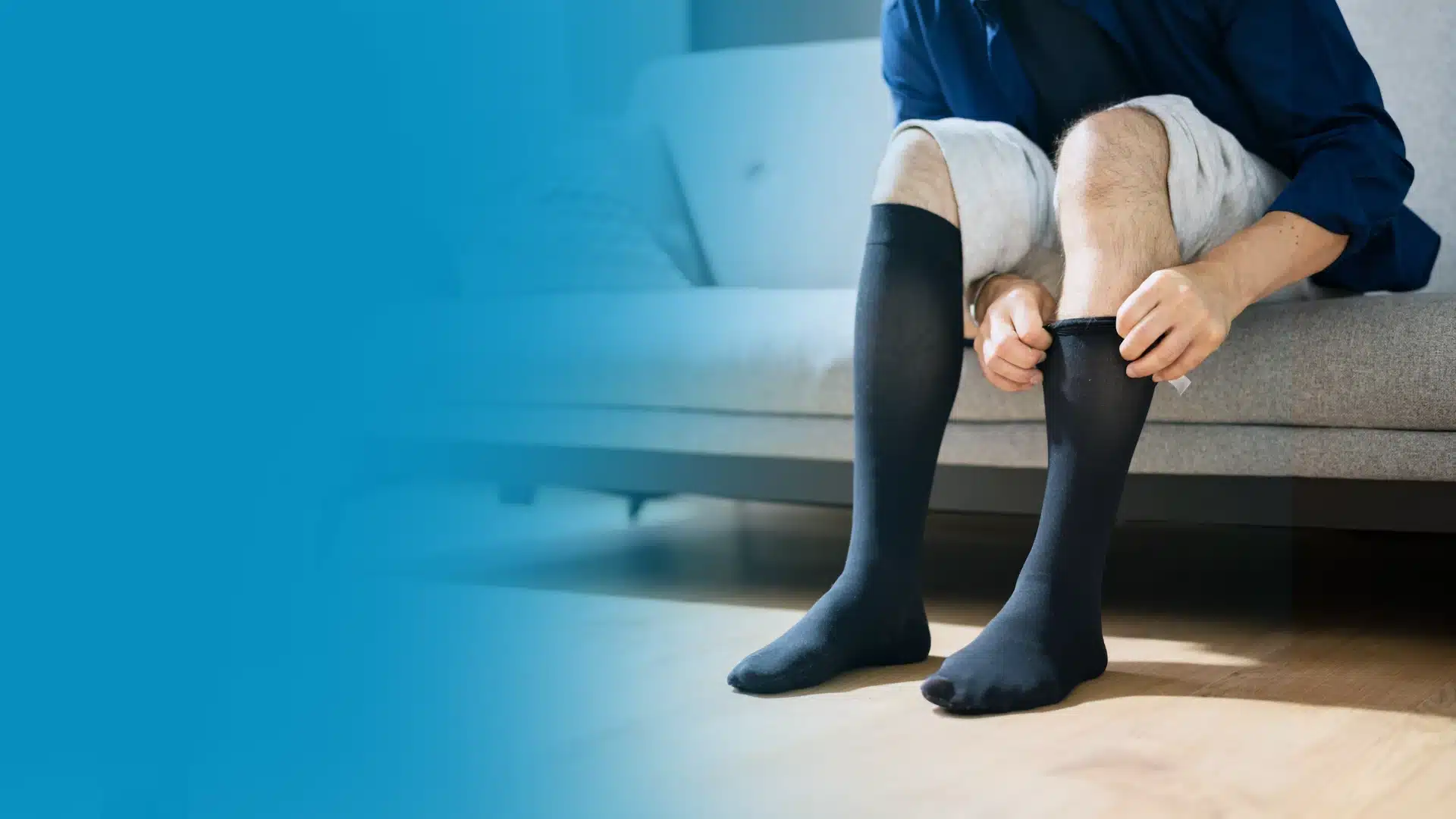
Compression stockings only work if they’re the right pressure (15-30 mmHg typically), the right length, and worn consistently. Balance Foot & Ankle measures your legs in-office and prescribes medical-grade compression that fits and actually works. If you’ve been wearing store-bought tights without improvement, we can fix that fast.
Call Balance Foot & Ankle: (810) 206-1402 · Book online · Offices in Howell & Bloomfield Township
Frequently Asked Questions
Q: Are all PowerStep Pinnacle insoles FSA/HSA eligible?
Yes — the full PowerStep Pinnacle line qualifies as FSA/HSA-eligible medical devices. Use pre-tax healthcare dollars for your purchase.
Q: How often should I replace PowerStep Pinnacle insoles?
Every 6–9 months with daily use. Replace sooner if your original pain symptoms return — that’s the first sign the support has compressed out.
Q: Can I trim PowerStep Pinnacle insoles to fit?
Yes — all models can be trimmed using the size guide lines on the bottom of the insole. Trim to the length that fits your shoe, not to your foot length.
Q: Do PowerStep Pinnacle insoles work in all shoe types?
Most models work in athletic and casual shoes. For dress shoes: use the 3/4 model. For work boots: standard Pinnacle fits most; for steel-toe work boots, confirm volume before purchasing.
Book Your Orthotic Fitting
PowerStep Pinnacle resolves pain in 70–80% of patients — but if you’ve tried it without success, it’s time for a professional evaluation. Custom orthotics address structural problems OTC products can’t. Schedule your evaluation at Balance Foot & Ankle Specialists: (810) 206-1402.
Also see: PowerStep Pinnacle Deep Review | Curex Insoles Review | Custom vs OTC Orthotics
Affiliate disclosure: Links may earn a small commission. We recommend only products used in our clinical practice.
Michigan patients experiencing foot or ankle problems can schedule an appointment at Balance Foot & Ankle — with locations in Howell (4330 E Grand River) and Bloomfield Township (43494 Woodward Ave #208). Book online or call (810) 206-1402.
Related Treatment Guides
- Plantar Fasciitis & Heel Pain Treatment
- Custom 3D Orthotics
- Sports Foot & Ankle Injury Treatment
- Bunion Treatment
Medical References & Sources
- American Podiatric Medical Association — Patient Education
- American Orthopaedic Foot & Ankle Society — Foot Conditions
Dr. Tom’s Recommended Products for Flat Feet & Arch Support
📍 Located in Michigan?
Our board-certified podiatrists treat this condition at two convenient locations. Book online 24/7 at either office.
These are products I personally use and recommend to my patients at Balance Foot & Ankle.
- PowerStep Pinnacle Insoles — The most clinically effective OTC arch support for flat feet — corrects pronation without prescription cost
- PowerStep Pinnacle Insoles — Deep heel cup with high arch profile — controls severe overpronation in athletic and everyday shoes
- Brooks Adrenaline GTS 24 — GuidRails motion control activates only when overpronation occurs — the most forgiving stability shoe for flat feet
Affiliate disclosure: As an Amazon Associate, Balance Foot & Ankle earns from qualifying purchases. We only recommend products we trust for our own patients.
Join 950,000+ Learning About Foot Health
Dr. Tom shares honest medical advice, supplement reviews, and treatment guides you won’t find anywhere else.
Dealing With Leg Swelling or Poor Circulation?
Compression therapy can significantly improve circulation and reduce swelling, but proper fit and compression level matter. Our podiatrists can recommend the right compression solution for your needs.
Clinical References
- Amsler F, Blättler W. Compression therapy for occupational leg symptoms and chronic venous disorders: a meta-analysis of randomised controlled trials. Eur J Vasc Endovasc Surg. 2008;35(3):366-372.
- Engel FA, et al. Is there evidence that runners can benefit from wearing compression clothing? Sports Med. 2016;46(12):1939-1952.
- Mosti G, Partsch H. Occupational leg oedema is more reduced by antigraduated than by graduated stockings. Eur J Vasc Endovasc Surg. 2013;45(5):523-527.
Insurance Accepted
BCBS · Medicare · Aetna · Cigna · United Healthcare · HAP · Priority Health · Humana · View All →
Howell Office
4330 E Grand River Ave
Howell, MI 48843
Get Directions →
Bloomfield Township Office
43494 Woodward Ave, #208
Bloomfield Township, MI 48302
Get Directions →
Ready to Get Back on Your Feet?
Book online 24/7 at either office.
Pros & Cons of Conservative Care for foot care
Advantages
- ✓ Conservative care first
- ✓ Book online 24/7
- ✓ Multiple insurance accepted
Considerations
- ✗ Self-treatment can mask issues
- ✗ See a podiatrist if pain >2 weeks
In This Article
- The Full PowerStep Pinnacle Comparison Table
- Model-by-Model Deep Dive
- Which PowerStep Pinnacle Is Right for You? Quick Decision Guide
- PowerStep Pinnacle vs. Curex: When to Choose Each
- More Podiatrist-Recommended Compression Essentials
- Book Your Orthotic Fitting
- Pros & Cons of Conservative Care for foot care
- Dr. Tom’s Recommended Products for foot care
- What is Foot pain?
- Symptoms and warning signs
- Conservative treatment options
Dr. Tom’s Recommended Products for foot care
Affiliate disclosure: As an Amazon Associate, Balance Foot & Ankle earns from qualifying purchases. We only recommend products we use with patients.
Footnanny Heel Cream Dr. Tom’s Pick
Best for: Daily moisturizer for cracked heels
Ready to Get Back on Your Feet?
Appointments in Howell + Bloomfield Township. Most insurance accepted. Dr. Tom Biernacki, DPM & team.
Call Now: (810) 206-1402
Dr. Tom’s Compression Selection Protocol
- DASS Medical Compression Socks — Our clinical recommendation for graduated compression: DASS Medical Compression Socks provide true ankle-to-calf graduated pressure — the only proven design for venous return.
- Doctor Hoy’s Natural Pain Relief Gel — Swollen foot and ankle pain: arnica + camphor gel applied to the ankles and feet before putting on compression socks treats the inflammatory component.
- PowerStep Pinnacle — Compression addresses swelling; arch support addresses the structural overpronation that contributes to venous pooling in flat-footed patients.
Daily foot and ankle swelling despite consistent compression use? Pitting edema or skin changes require evaluation. Balance Foot & Ankle → (810) 206-1402
Related Conditions
Related Care at Balance Foot & Ankle
Clinical foot and ankle services at our Howell and Bloomfield Township offices.
Get Expert Care at Balance Foot & Ankle
Appointments at our Howell and Bloomfield Township offices. Board-certified podiatric surgeons. Most insurance accepted.
Ready for Expert Care?
Appointments in Howell & Bloomfield Township, MI.
4.9★ | 1,200+ Reviews | 3,000+ Surgeries
Or call: (810) 206-1402

Dr. Tom Biernacki, DPM is a board-certified foot & ankle surgeon (ABFAS & ABPM) at Balance Foot & Ankle Specialists in Southeast Michigan. With over a decade of clinical experience, he specializes in heel pain, bunions, diabetic foot care, sports injuries, and minimally invasive surgery. Dr. Biernacki is a member of the APMA and ACFAS, and his patient education content on MichiganFootDoctors.com and YouTube has made him one of the most-followed foot & ankle educators on YouTube.
More questions patients ask
What's the difference between compression socks and compression sleeves for feet?
Compression socks cover the entire foot and lower leg, providing graduated pressure from the toes to the calf. Compression sleeves cover only the lower leg without a foot portion — they require a regular sock underneath. For foot-specific swelling and plantar fasciitis, full socks are better. For pure calf/shin issues and situations requiring shoe changes without sock changes (running, cycling), sleeves offer convenience. Dr. Tom Biernacki DPM at Balance Foot & Ankle matches patients to the right type based on their specific condition.
Are compression sleeves effective for plantar fasciitis?
Compression sleeves provide some benefit for plantar fasciitis by improving calf circulation and reducing Achilles/posterior leg tension that indirectly stresses the plantar fascia. However, compression socks that include a plantar fascia band or arch support section (Plantar Fasciitis Socks brand, CEP Plantar Fascia Socks) target the fascia more directly. Balance Foot & Ankle recommends plantar fasciitis-specific compression socks over generic sleeves for heel pain management.
What compression level is best for leg swelling?
For general swelling prevention (travel, standing at work): 15–20 mmHg. For moderate varicose veins or post-sprain swelling: 20–30 mmHg. For severe edema, post-DVT, or lymphedema: 30–40 mmHg (often prescription). Balance Foot & Ankle measures ankle circumference and assesses venous insufficiency to prescribe the appropriate level — wearing too-high compression with arterial disease can cause harm, so medical evaluation before using 30+ mmHg is important.
Can compression sleeves help with shin splints?
Yes — compression calf sleeves have good evidence for shin splint (medial tibial stress syndrome) prevention and symptom management. They reduce muscle oscillation during impact, improve circulation, and provide proprioceptive feedback. Runners at Balance Foot & Ankle with shin splints often see meaningful improvement with compression combined with gait correction and appropriate footwear. CEP and 2XU make sport-specific compression sleeves with strong evidence bases.
Do compression garments help with recovery after foot surgery?
Yes — post-surgical compression is standard care for most foot and ankle surgeries. It reduces swelling that delays healing, prevents DVT formation, and improves pain management. Balance Foot & Ankle prescribes specific compression garments as part of post-operative care protocols. The level, type, and duration of compression varies by procedure — our surgical team provides detailed post-op instructions for each patient at our Howell, MI and Bloomfield Township offices.
Still have a question about coverage or cost? Book online and we will check your benefits before your visit: Book in Howell · Book in Bloomfield Township. Prefer to talk it through first? Call (810) 206-1402.