
![[QUARANTINED] Rickroll — do not use](https://www.michiganfootdoctors.com/uploads/2026/03/morton-s-neuroma-symptoms-causes-treatment-without-surgery.avif)
You are in the right place. Dr. Tom Biernacki, DPM, FACFAS — board-certified foot & ankle surgeon with 3,000+ surgeries — explains exactly what yellow toenails causes treatment means and what works. Call (810) 206-1402 for same-day appointment at Howell or Bloomfield Hills.
Quick answer: Treatment for yellow toenails causes treatment follows a stepwise approach: 1) conservative care first (rest, ice, supportive footwear, OTC anti-inflammatories), 2) physical therapy and targeted exercises, 3) in-office treatments (injections, custom orthotics) if conservative fails at 4-6 weeks, 4) surgery for refractory cases. Most patients resolve at step 1 or 2. Call (810) 206-1402.
Medically reviewed by Dr. Tom Biernacki, DPM — Board-Certified Podiatric Surgeon — Balance Foot & Ankle, Howell & Bloomfield Hills, MI. Last updated April 2026.
Medically reviewed by Dr. Tom Biernacki, DPM | Board-certified podiatrist | 3,000+ surgeries performed
Last updated: April 2, 2026
The most important clinical decision with Yellow Toenails Causes Treatment isn’t which treatment to start with — it’s identifying the correct subtype. That changes everything. Call (810) 206-1402.
Fungal Infection: The Most Common Cause of Yellow Toenails
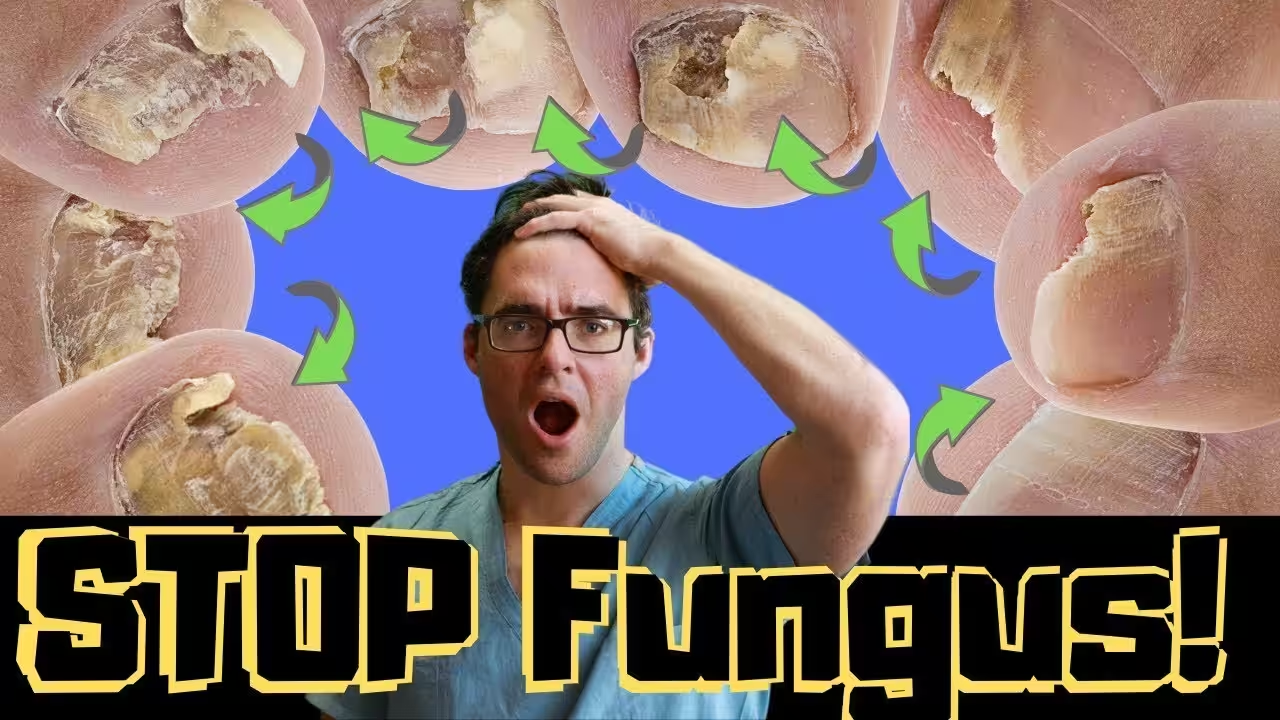
Onychomycosis accounts for approximately 50% of all toenail discoloration cases. Dermatophyte fungi — primarily Trichophyton rubrum — invade the nail bed and produce yellow, thickened, crumbly nails that progressively worsen without treatment. The infection typically starts at the free edge and works backward toward the cuticle.
Fungal toenails are not just a cosmetic problem. The thickened, distorted nail can cause pain in shoes, create pressure on adjacent toes, and serve as a reservoir of infection that spreads to skin causing athlete’s foot. In diabetic patients, fungal nails increase the risk of secondary bacterial infection and foot ulceration.
In our clinic, we confirm fungal infection with laboratory testing before starting treatment because several non-fungal conditions look identical. A nail clipping sent for PAS staining or fungal culture provides definitive diagnosis within 1-2 weeks and prevents unnecessary antifungal therapy.
Treatment options range from topical antifungals for mild cases (less than 50% of nail involved) to oral terbinafine for moderate-to-severe infections. Our laser therapy provides an additional option for patients who cannot tolerate oral medication or prefer a drug-free approach.
Nail Polish Staining: A Harmless but Frustrating Cause
Dark-colored nail polishes — reds, oranges, and browns — contain pigments that penetrate the superficial nail plate over time, leaving yellow or orange discoloration after polish removal. This is purely cosmetic and does not indicate disease.
The staining occurs because the nail plate is porous and absorbs pigment molecules, particularly when polish is worn continuously without breaks. Always use a base coat before applying colored polish, and allow nails a 1-2 week polish-free recovery period between applications.
Mild staining can be reduced by gently buffing the nail surface with a fine-grit nail file and applying whitening products containing hydrogen peroxide. However, the most effective solution is simply allowing the stained nail to grow out over 3-6 months while using a base coat going forward.
The key differentiator between polish staining and fungal infection is texture — stained nails remain smooth, thin, and firmly attached to the nail bed, while fungal nails become thick, crumbly, and separated from the bed. If you are unsure, visit our clinic for a quick evaluation.
Psoriasis and Other Systemic Causes of Yellow Nails
Nail psoriasis affects up to 50% of people with psoriasis and can cause yellowing, pitting (small depressions in the nail surface), oil drop spots (salmon-colored patches under the nail), and onycholysis (nail lifting from the bed). Psoriatic nail changes often precede skin symptoms.
Thyroid disease, particularly hypothyroidism, can slow nail growth and cause yellow discoloration, brittleness, and thickening. Any unexplained nail changes in multiple nails simultaneously should prompt thyroid function testing.
Yellow nail syndrome is a rare condition characterized by yellow, thickened, slow-growing nails in all 20 digits, typically associated with lymphedema and pleural effusions. This systemic condition requires medical workup beyond podiatric care.
Diabetes affects nail health through impaired circulation and peripheral neuropathy, causing nails to become thick, yellow, and prone to fungal infection. In our clinic, we monitor diabetic patients’ nails at every visit as part of comprehensive foot care — nail changes can signal worsening vascular status.
Home Remedies: What Works and What Does Not
Tea tree oil has mild antifungal properties and may slow fungal progression, but studies show cure rates of only 10-20% as monotherapy. It is best used as a supplement to medical treatment, not as a replacement.
Vicks VapoRub contains thymol and camphor, which have demonstrated antifungal activity in small studies. Applied daily to affected nails, it may improve mild cases over 6-12 months. We consider it a reasonable adjunct for patients with mild fungal involvement who prefer natural approaches.
Vinegar soaks, baking soda paste, and hydrogen peroxide soaks have minimal evidence supporting their antifungal effectiveness. While they are unlikely to cause harm, relying on these remedies delays effective treatment and allows the infection to progress.
Bleach soaks are actively harmful — bleach damages surrounding skin, can cause chemical burns, and does not penetrate the nail plate sufficiently to kill fungi in the nail bed. We strongly advise against this approach despite its popularity online.
Professional Treatment Options
Topical prescription antifungals like efinaconazole (Jublia) and tavaborole (Kerydin) are applied daily for 48 weeks and achieve cure rates of 15-25%. They work best for mild infections limited to the distal half of the nail and are a good option for patients who cannot take oral medication.
Oral terbinafine (Lamisil) taken daily for 12 weeks is the most effective single treatment, with cure rates of 70-80%. It requires baseline liver function testing and monitoring, but serious side effects are rare. In our clinic, this is our first-line recommendation for moderate-to-severe fungal nails.
Laser therapy uses focused light energy to heat and destroy fungal organisms within the nail bed. We offer this as an adjunct to topical or oral therapy, or as a standalone option for patients who cannot tolerate systemic medication. Treatment typically requires 3-4 sessions spaced one month apart.
Permanent nail removal is reserved for severely damaged nails causing pain, recurrent infection, or ingrown nail complications. We perform this procedure in-office under local anesthesia with chemical matrixectomy to prevent regrowth when the nail is irreparably damaged.
In-Office Treatment at Balance Foot & Ankle
Our clinic provides comprehensive toenail evaluation including laboratory testing for accurate diagnosis, prescription topical and oral antifungal therapy, laser treatment, and surgical nail procedures. We create individualized treatment plans based on the cause and severity of your nail discoloration.
Same-day appointments available. Call (810) 206-1402 or visit michiganfootdoctors.com/new-patient-information/ to schedule.
Warning Signs Requiring Urgent Evaluation
- function bold() { [native code] } — undefined
- function bold() { [native code] } — undefined
- function bold() { [native code] } — undefined
- function bold() { [native code] } — undefined
The Most Common Mistake We See
The most common mistake we see is patients treating yellow toenails with over-the-counter antifungals for months without confirming the diagnosis. Nearly half of yellow toenails are NOT fungal — treating nail polish staining or psoriasis with antifungal cream wastes time and money while the real problem goes unaddressed.
Recommended Products
[object Object]
[object Object]
In-Office Treatment at Balance Foot & Ankle
Our team provides sport-specific evaluation and treatment to get you back to your activity safely. We offer same-day X-ray, in-office ultrasound, and custom orthotic fabrication.
Same-day appointments available. Call (810) 206-1402 or book online.
More Podiatrist-Recommended Foot Health Essentials
Hoka Clifton 10


![Tea Tree Oil Toenail Fungus Home Treatment [Doctor Cure!]](https://www.michiganfootdoctors.com/wp-content/cache/flying-press/a434e04a532dc4826563b11aa0541dd4.jpg)
Watch: Tea Tree Oil Toenail Fungus Home Treatment [Doctor Cure!] — MichiganFootDoctors YouTube
Max-cushion everyday shoe — podiatrist favorite for walking and running.

OOFOS Recovery Slide

Impact-absorbing recovery sandal — wear after long days on your feet.
As an Amazon Associate, Balance Foot & Ankle earns from qualifying purchases. Product recommendations are based on clinical experience; prices and availability shown above update live from Amazon.
When to See a Podiatrist
If foot or ankle pain has been bothering you for more than a few weeks, home care alone may not be enough. Balance Foot & Ankle offers same-week appointments at our Howell and Bloomfield Hills clinics — no referral needed in most cases. Bring your current shoes and a short list of symptoms and we’ll build you a treatment plan in one visit.
Call Balance Foot & Ankle: (810) 206-1402 · Book online · Offices in Howell & Bloomfield Hills
Frequently Asked Questions
What causes yellow toenails?
The most common causes are fungal infection (onychomycosis), nail polish staining, psoriasis, diabetes, thyroid disease, and aging. Fungal infection accounts for about 50% of cases, but proper diagnosis is essential because treatment depends entirely on the cause.
Can yellow toenails be cured?
Yes, most causes of yellow toenails are treatable. Fungal infections respond to oral antifungals with 70-80% cure rates. Polish staining resolves by growing out the nail. Psoriasis-related changes improve with appropriate dermatologic treatment. The key is correct diagnosis first.
When should you see a podiatrist for yellow toenails?
See a podiatrist if discoloration is spreading, the nail is thickening or becoming painful, you have diabetes or a weakened immune system, home remedies have not improved the condition after 3 months, or you notice redness and warmth around the nail suggesting infection.
Does insurance cover toenail fungus treatment?
Yes, most insurance plans cover podiatric evaluation and medical treatment of onychomycosis, including prescription antifungals and in-office procedures. Laser treatment coverage varies by plan. Our office can verify your benefits before treatment.
The Bottom Line
Yellow toenails are common and usually treatable, but getting the right diagnosis is everything. Do not waste months on antifungal treatment if the problem is actually nail psoriasis or polish staining. A quick evaluation at our clinic can identify the cause and get you on the right treatment path.
Sources
- Lipner SR, Scher RK. Onychomycosis: treatment and prevention of recurrence. J Am Acad Dermatol. 2025;92(1):56-69.
- Westerberg DP, Voyack MJ. Onychomycosis: current trends in diagnosis and treatment. Am Fam Physician. 2013;88(11):762-770.
Expert Toenail Care in Michigan
Dr. Tom Biernacki has performed over 3,000 foot and ankle surgeries with a 4.9-star rating from 1,123 patient reviews.
Or call (810) 206-1402 for same-day appointments
Yellow Toenail Treatment in Michigan
Yellow, thickened, or discolored toenails are usually caused by fungal infection (onychomycosis), but can also signal other conditions like psoriasis, diabetes, or nail trauma. Dr. Tom Biernacki provides accurate diagnosis and effective treatments including laser therapy and topical antifungals at Balance Foot & Ankle.
Learn About Our Toenail Fungus Treatment | Book Your Appointment | Call (810) 206-1402
Clinical References
- Scher RK, et al. Onychomycosis: diagnosis and definition of cure. Journal of the American Academy of Dermatology. 2007;56(6):939-944.
- Gupta AK, et al. Optimal management of fungal infections of the skin, hair, and nails. American Journal of Clinical Dermatology. 2004;5(4):225-237.
- Westerberg DP, Voyack MJ. Onychomycosis: current trends in diagnosis and treatment. American Family Physician. 2013;88(11):762-770.
Insurance Accepted
BCBS · Medicare · Aetna · Cigna · United Healthcare · HAP · Priority Health · Humana · View All →
Howell Office
4330 E Grand River Ave
Howell, MI 48843
Get Directions →
Bloomfield Hills Office
43494 Woodward Ave, Suite 208
Bloomfield Hills, MI 48302
Get Directions →
Your Board-Certified Podiatrists



Ready to Get Back on Your Feet?
Same-week appointments available at both locations.
Book Your AppointmentVisit Balance Foot & Ankle — Same-Day Appointments Available
Our podiatry team serves patients throughout Michigan including Howell, Brighton, and Bloomfield Hills. If you’re dealing with heel pain, ingrown toenails, or a foot injury, we have same-day appointment availability.
Same-day appointments available. (810) 206-1402
Doctor Hoy’s Natural Pain Relief Gel
Natural topical pain relief I use in our clinic. Arnica + camphor formula — apply directly to the area 3–4x daily. ($20–25)
Shop Doctor Hoy’s →Frequently Asked Questions
How long does treatment take to work?
Most patients see improvement in 4-8 weeks with consistent conservative care. Persistent symptoms after 8 weeks need imaging and escalation.
When is surgery needed?
Surgery is reserved for cases that fail 3-6 months of conservative care, structural deformities, or fractures requiring stabilization.
Is this covered by insurance?
Most diagnostic visits and conservative treatments are covered by Medicare and major insurers. Custom orthotics often require diabetic or post-surgical justification.
What is Foot pain?
Foot pain is a common foot/ankle condition that affects mobility and quality of life. Understanding the underlying cause is the first step in successful treatment. Our podiatrists at Balance Foot & Ankle perform a hands-on biomechanical exam, review your activity history, and use diagnostic imaging when appropriate to identify the root cause—not just treat the symptom. Many patients have been told to “rest and ice” without a deeper diagnostic workup; our approach is different.
Symptoms and warning signs
Common signs of foot pain include pain that worsens with activity, morning stiffness, swelling, tenderness when palpated, and difficulty bearing weight. If you experience sudden severe pain, inability to walk, visible deformity, numbness or color change, contact our office the same day or visit urgent care—these can signal a more serious injury such as a fracture, tendon rupture, or vascular compromise. Diabetics with any foot wound should seek same-day care.
Conservative treatment options
Most cases of foot pain respond to non-surgical care: structured rest, supportive footwear changes, custom orthotics, targeted stretching and strengthening protocols, anti-inflammatory medications when medically appropriate, and in-office procedures such as ultrasound-guided injections. We also offer advanced therapies including MLS laser therapy, EPAT/shockwave, regenerative injections, and image-guided procedures. Treatment is sequenced from least invasive to most invasive, and we explain the rationale at every step.
When is surgery considered?
Surgery is reserved for cases that fail 3-6 months of well-structured conservative care, when there is structural pathology (severe deformity, complete tear, advanced arthritis), or when imaging shows damage that will not heal without intervention. Our surgeons have performed 3,000+ foot and ankle procedures and prioritize minimally-invasive techniques whenever appropriate. We discuss recovery timelines, return-to-activity milestones, and realistic outcome expectations before any procedure is scheduled.
Recovery timeline and prevention
Recovery from foot pain varies based on severity and chosen treatment path. Conservative cases often improve within 4-8 weeks with consistent adherence to the protocol. Post-procedural recovery may range from a few days (in-office procedures) to several months (reconstructive surgery). Long-term prevention involves footwear assessment, activity modification, structured strengthening, and regular check-ins with your podiatrist if you have a history of recurrence. We provide written home-exercise plans and digital follow-up support.
Ready to feel better?
Same-week appointments available in Howell and Bloomfield Hills, Michigan.
Book Your VisitReady to fix this for good?
Reading goes so far. The fastest path is a 30-minute office visit. Same-day Howell or Bloomfield Hills. Call (810) 206-1402.

Dr. Tom Biernacki, DPM is a board-certified foot & ankle surgeon (ABFAS & ABPM) at Balance Foot & Ankle Specialists in Southeast Michigan. With over a decade of clinical experience, he specializes in heel pain, bunions, diabetic foot care, sports injuries, and minimally invasive surgery. Dr. Biernacki is a member of the APMA and ACFAS, and his patient education content on MichiganFootDoctors.com and YouTube has made him one of the most-followed foot & ankle educators on YouTube.