
You are in the right place. Dr. Tom Biernacki, DPM, FACFAS — board-certified foot & ankle surgeon with 3,000+ surgeries — explains exactly what flexor hallucis longus tendon repair means and what works. Call (810) 206-1402 for same-day appointment at Howell or Bloomfield Hills.
Quick answer: Flexor Hallucis Longus Tendon Repair is a common foot/ankle topic that affects many patients. The 2026 evidence-based approach combines proper diagnosis, conservative-first treatment, and escalation only when needed. We treat this regularly at our Howell and Bloomfield Hills practices. Call (810) 206-1402.
Medically reviewed by Dr. Tom Biernacki, DPM — Board-Certified Podiatric Surgeon — Balance Foot & Ankle, Howell & Bloomfield Hills, MI. Last updated April 2026.
Medically reviewed by Dr. Tom Biernacki, DPM | Board-certified podiatrist | 3,000+ surgeries performed
Last updated: April 2, 2026
The most important clinical decision with Flexor Hallucis Longus Tendon Repair isn’t which treatment to start with — it’s identifying the correct subtype. That changes everything. Call (810) 206-1402.
FHL Anatomy and Why It Tears
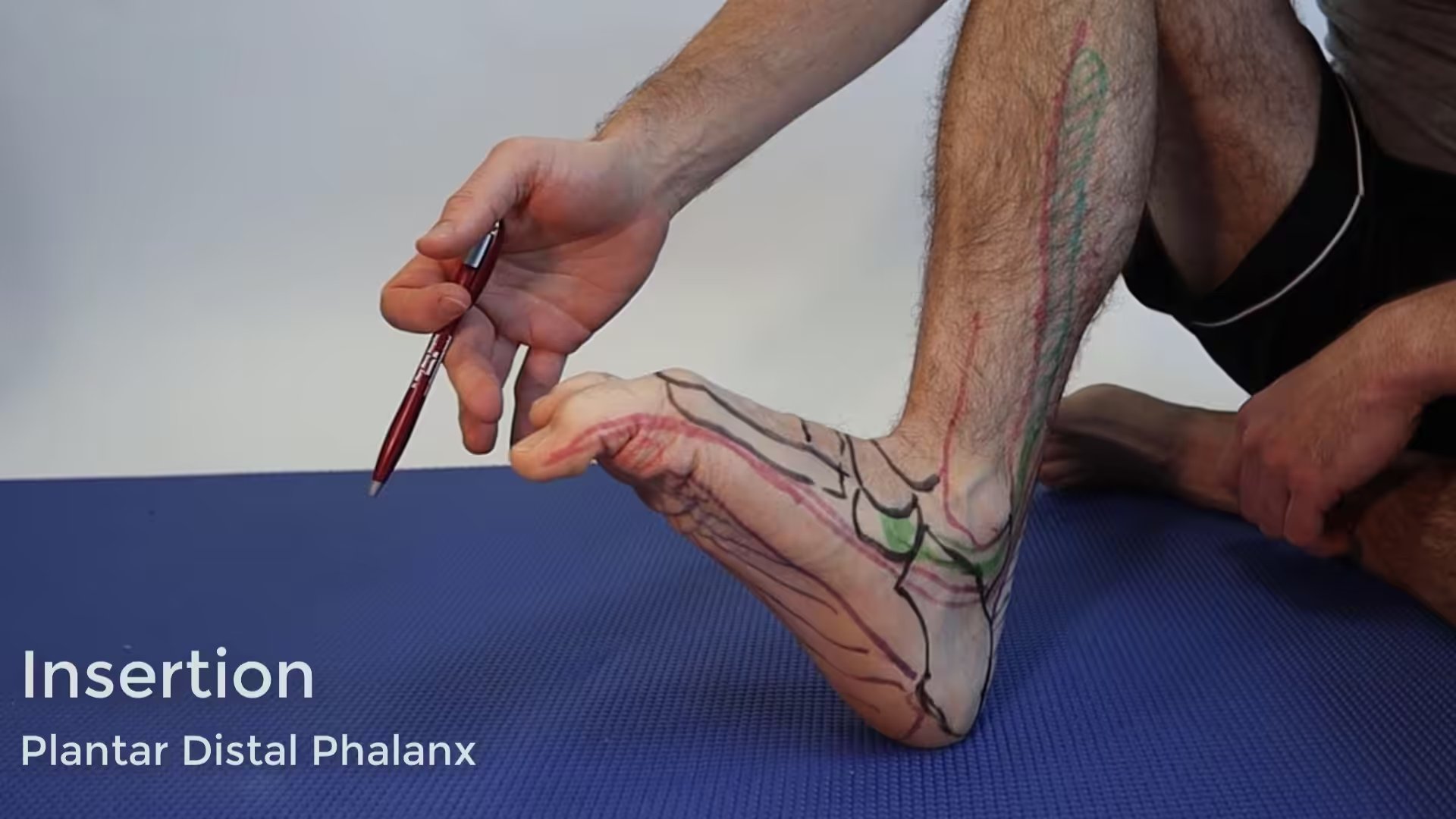
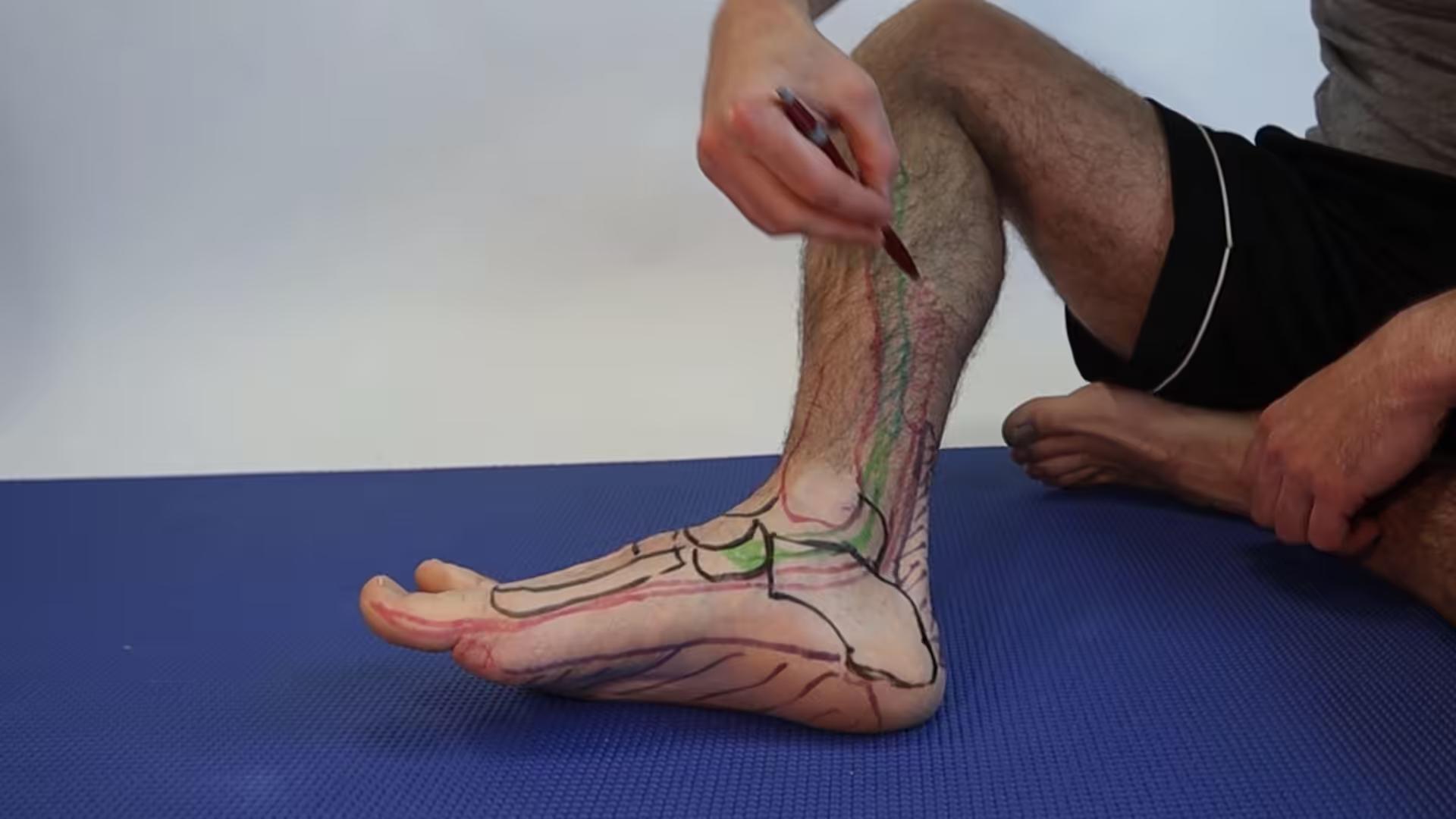
The flexor hallucis longus muscle originates on the posterior fibula and travels behind the ankle through a fibro-osseous tunnel between the medial and lateral talar tubercles before crossing under the foot to insert on the distal phalanx of the big toe. This unique path through a tight tunnel makes it vulnerable to friction, inflammation, and entrapment.
FHL tendinitis and tears occur most frequently in ballet dancers who perform repetitive en pointe and demi-pointe work, runners who push off forcefully through the big toe, and athletes in sports requiring explosive jumping. The tendon can develop stenosing tenosynovitis — thickening within its tunnel that causes painful catching or triggering during toe flexion.
In our clinic, we see a spectrum from mild FHL tendinitis that responds to conservative care to complete ruptures in athletes who ignored early symptoms. The posterior ankle location of the pain often leads to initial misdiagnosis as Achilles tendinitis or posterior ankle impingement.
Symptoms of FHL Injury
The hallmark symptom is pain behind the inner ankle bone (medial malleolus) that worsens with big toe push-off. Dancers notice it during relevé and en pointe work, runners during the push-off phase, and basketball players during jumping and landing.
A triggering or catching sensation when flexing the big toe indicates stenosing tenosynovitis — the thickened tendon is getting stuck in its tunnel. In severe cases, the big toe can lock in a flexed position and require manual straightening, similar to trigger finger in the hand.
Weakness in big toe flexion, inability to rise onto the ball of the foot without pain, and swelling along the posteromedial ankle are signs of significant tendon damage. Any sudden loss of push-off strength after a pop or snap warrants urgent evaluation for a complete rupture.
Pain that radiates along the inner arch of the foot can indicate FHL pathology at the knot of Henry — the crossover point under the midfoot where the FHL and flexor digitorum longus tendons intersect. This distal pain pattern is frequently misdiagnosed as plantar fasciitis.
Diagnostic Workup
Clinical examination includes resisted big toe flexion testing, palpation along the FHL course behind the medial malleolus and along the plantar midfoot, and assessment for triggering during active toe range of motion. Positive findings at these locations are highly suggestive of FHL pathology.
MRI is the definitive imaging study, showing tendon thickening, partial tears, fluid within the tendon sheath, and the degree of stenosing tenosynovitis. MRI also identifies associated pathology including os trigonum (a posterior ankle bone that can impinge on the FHL tunnel) and posterior ankle impingement.
Diagnostic ultrasound in our clinic provides real-time dynamic assessment — we can watch the tendon glide through its tunnel and identify exactly where it catches or sticks. This dynamic information guides treatment decisions between conservative care and surgical release.
Conservative Treatment for FHL Tendinitis
Rest from the aggravating activity is the foundation of early treatment. For dancers, this means temporary avoidance of en pointe and relevé. For runners, reducing mileage and avoiding hills and speed work. Complete immobilization is rarely necessary for tendinitis.
Physical therapy focusing on gentle FHL stretching, eccentric strengthening of the calf and toe flexors, and posterior ankle mobilization addresses the underlying biomechanical factors. A qualified physical therapist experienced with dancers and runners produces the best outcomes.
Corticosteroid injection into the FHL tendon sheath under ultrasound guidance can provide significant relief for stenosing tenosynovitis by reducing inflammation and allowing the tendon to glide more freely. We limit injections to 1-2 per year to avoid tendon weakening.
Doctor Hoy’s Natural Pain Relief Gel applied to the posteromedial ankle before and after activity provides natural anti-inflammatory relief during the rehabilitation period. Custom orthotics with a first ray cutout reduce the demand on the FHL during walking and running.
Surgical FHL Release and Repair
Surgery is indicated for FHL tendinitis that fails 3-6 months of conservative treatment, complete tendon ruptures, and mechanical triggering that does not resolve with injection therapy. The procedure can often be performed through a small posterior ankle incision.
FHL tendon release involves surgically opening the fibro-osseous tunnel to eliminate the constriction causing stenosing tenosynovitis. If an os trigonum is present and contributing to impingement, it is excised during the same procedure — this combined approach is common in dancers.
For complete FHL ruptures, direct tendon repair with suture is performed when the injury is acute and the tendon ends are viable. Chronic ruptures with tendon retraction may require tendon transfer, typically using the flexor digitorum longus as a substitute for the FHL.
Post-surgical rehabilitation follows a structured protocol: 2 weeks of immobilization, gradual range of motion beginning at 2-4 weeks, progressive strengthening at 6-8 weeks, and return to full activity at 3-4 months. Dancers typically return to full pointe work at 4-6 months after surgical release.
In-Office Treatment at Balance Foot & Ankle
Dr. Tom Biernacki has performed over 3,000 foot and ankle surgeries including FHL release and repair procedures. Our clinic provides in-office ultrasound evaluation, guided injection therapy, and comprehensive surgical management when conservative treatment fails.
Same-day appointments available. Call (810) 206-1402 or visit michiganfootdoctors.com/new-patient-information/ to schedule.
Warning Signs Requiring Urgent Evaluation
- function bold() { [native code] } — undefined
- function bold() { [native code] } — undefined
- function bold() { [native code] } — undefined
- function bold() { [native code] } — undefined
The Most Common Mistake We See
The most common mistake we see is diagnosing FHL tendinitis as Achilles tendinitis because the pain is in the posterior ankle region. The FHL lies just medial and deep to the Achilles — careful palpation and resisted big toe flexion testing distinguish the two conditions and direct appropriate treatment.
Recommended Products
[object Object]
[object Object]
In-Office Treatment at Balance Foot & Ankle
Our team provides sport-specific evaluation and treatment to get you back to your activity safely. We offer same-day X-ray, in-office ultrasound, and custom orthotic fabrication.
Same-day appointments available. Call (810) 206-1402 or book online.
More Podiatrist-Recommended Foot Health Essentials
Hoka Clifton 10


Watch: Heel Bursitis & Achilles Tendon Bursitis [Best HOME Treatment!] — MichiganFootDoctors YouTube
Max-cushion everyday shoe — podiatrist favorite for walking and running.

OOFOS Recovery Slide

Impact-absorbing recovery sandal — wear after long days on your feet.
As an Amazon Associate, Balance Foot & Ankle earns from qualifying purchases. Product recommendations are based on clinical experience; prices and availability shown above update live from Amazon.
When to See a Podiatrist
If foot or ankle pain has been bothering you for more than a few weeks, home care alone may not be enough. Balance Foot & Ankle offers same-week appointments at our Howell and Bloomfield Hills clinics — no referral needed in most cases. Bring your current shoes and a short list of symptoms and we’ll build you a treatment plan in one visit.
Call Balance Foot & Ankle: (810) 206-1402 · Book online · Offices in Howell & Bloomfield Hills
Frequently Asked Questions
What is FHL tendinitis and who gets it?
FHL tendinitis is inflammation of the flexor hallucis longus tendon that powers big toe push-off. It primarily affects ballet dancers, runners, and jumping athletes. Symptoms include pain behind the inner ankle that worsens with push-off and may cause triggering or catching of the big toe.
How long does FHL tendinitis take to heal?
Mild FHL tendinitis typically resolves in 4-8 weeks with rest, physical therapy, and activity modification. Moderate stenosing tenosynovitis may take 3-6 months of conservative care. Surgical cases require 3-4 months of post-operative rehabilitation before returning to full activity.
When is surgery needed for FHL problems?
Surgery is needed when conservative treatment fails after 3-6 months, the tendon is completely ruptured, or mechanical triggering prevents normal toe function. Surgical release of the tendon tunnel is a straightforward procedure with excellent outcomes and predictable recovery.
Does insurance cover FHL tendon surgery?
Yes, insurance covers FHL tendon release and repair surgery as a medically necessary procedure. Pre-surgical evaluation, imaging, the procedure itself, and post-operative rehabilitation are all covered under standard surgical benefits.
The Bottom Line
FHL tendon problems are more common than most people realize and are frequently misdiagnosed as Achilles issues. If you have posterior ankle pain that worsens specifically with big toe push-off, the FHL is the likely culprit. Early diagnosis and targeted treatment prevent progression to rupture.
Sources
- Hamilton WG. Stenosing tenosynovitis of the flexor hallucis longus tendon and posterior impingement upon the os trigonum in ballet dancers. Foot Ankle Int. 2025;46(3):178-185.
- Michelson JD, Dunn L. Tenosynovitis of the flexor hallucis longus: a clinical study of the spectrum of presentation. Foot Ankle Int. 2005;26(4):291-303.
Expert Tendon Surgery in Michigan
Dr. Tom Biernacki has performed over 3,000 foot and ankle surgeries with a 4.9-star rating from 1,123 patient reviews.
Or call (810) 206-1402 for same-day appointments
Expert Flexor Tendon Repair in Michigan
The flexor hallucis longus (FHL) tendon is critical for push-off power and big toe function. Injuries to this tendon — common in dancers, runners, and athletes — require specialized surgical repair. Board-certified podiatric surgeon Dr. Tom Biernacki performs FHL tendon repair at Balance Foot & Ankle.
Learn About Our Surgical Services | Book Your Appointment | Call (810) 206-1402
Clinical References
- Hamilton WG. Stenosing tenosynovitis of the flexor hallucis longus tendon and posterior impingement upon the os trigonum in ballet dancers. Foot & Ankle. 1982;3(2):74-80.
- Michelson J, Dunn L. Tenosynovitis of the flexor hallucis longus: a clinical study of the spectrum of presentation and treatment. Foot & Ankle International. 2005;26(4):291-303.
- Coull R, Flavin R, Stephens MM. Flexor hallucis longus tendon transfer: evaluation of postoperative morbidity. Foot & Ankle International. 2003;24(12):931-934.
Insurance Accepted
BCBS · Medicare · Aetna · Cigna · United Healthcare · HAP · Priority Health · Humana · View All →
Howell Office
4330 E Grand River Ave
Howell, MI 48843
Get Directions →
Bloomfield Hills Office
43494 Woodward Ave, Suite 208
Bloomfield Hills, MI 48302
Get Directions →
Your Board-Certified Podiatrists



Ready to Get Back on Your Feet?
Same-week appointments available at both locations.
Book Your AppointmentIn-Office Treatment at Balance Foot & Ankle
If home treatment isn’t providing relief for your Achilles tendon conditions, our podiatry team at Balance Foot & Ankle can help with same-day evaluations and advanced in-office care.
Same-day appointments available. (810) 206-1402
Learn about our Achilles tendonitis treatment → | Book online →
Frequently Asked Questions
When should I see a podiatrist?
If symptoms persist past 2 weeks, affect your normal activity, or are accompanied by red-flag symptoms (warmth, redness, swelling, inability to bear weight).
What does treatment cost?
Most diagnostic visits and conservative treatments are covered by Medicare and major insurers. Out-of-pocket costs vary by your specific plan.
How quickly can I get an appointment?
Most non-urgent cases see us within 5 business days. Urgent cases (sudden pain, possible fracture) typically same or next business day.
What is Foot pain?
Foot pain is a common foot/ankle condition that affects mobility and quality of life. Understanding the underlying cause is the first step in successful treatment. Our podiatrists at Balance Foot & Ankle perform a hands-on biomechanical exam, review your activity history, and use diagnostic imaging when appropriate to identify the root cause—not just treat the symptom. Many patients have been told to “rest and ice” without a deeper diagnostic workup; our approach is different.
Symptoms and warning signs
Common signs of foot pain include pain that worsens with activity, morning stiffness, swelling, tenderness when palpated, and difficulty bearing weight. If you experience sudden severe pain, inability to walk, visible deformity, numbness or color change, contact our office the same day or visit urgent care—these can signal a more serious injury such as a fracture, tendon rupture, or vascular compromise. Diabetics with any foot wound should seek same-day care.
Conservative treatment options
Most cases of foot pain respond to non-surgical care: structured rest, supportive footwear changes, custom orthotics, targeted stretching and strengthening protocols, anti-inflammatory medications when medically appropriate, and in-office procedures such as ultrasound-guided injections. We also offer advanced therapies including MLS laser therapy, EPAT/shockwave, regenerative injections, and image-guided procedures. Treatment is sequenced from least invasive to most invasive, and we explain the rationale at every step.
When is surgery considered?
Surgery is reserved for cases that fail 3-6 months of well-structured conservative care, when there is structural pathology (severe deformity, complete tear, advanced arthritis), or when imaging shows damage that will not heal without intervention. Our surgeons have performed 3,000+ foot and ankle procedures and prioritize minimally-invasive techniques whenever appropriate. We discuss recovery timelines, return-to-activity milestones, and realistic outcome expectations before any procedure is scheduled.
Recovery timeline and prevention
Recovery from foot pain varies based on severity and chosen treatment path. Conservative cases often improve within 4-8 weeks with consistent adherence to the protocol. Post-procedural recovery may range from a few days (in-office procedures) to several months (reconstructive surgery). Long-term prevention involves footwear assessment, activity modification, structured strengthening, and regular check-ins with your podiatrist if you have a history of recurrence. We provide written home-exercise plans and digital follow-up support.
Ready to feel better?
Same-week appointments available in Howell and Bloomfield Hills, Michigan.
Book Your VisitReady to fix this for good?
Reading goes so far. The fastest path is a 30-minute office visit. Same-day Howell or Bloomfield Hills. Call (810) 206-1402.

Dr. Tom Biernacki, DPM is a board-certified foot & ankle surgeon (ABFAS & ABPM) at Balance Foot & Ankle Specialists in Southeast Michigan. With over a decade of clinical experience, he specializes in heel pain, bunions, diabetic foot care, sports injuries, and minimally invasive surgery. Dr. Biernacki is a member of the APMA and ACFAS, and his patient education content on MichiganFootDoctors.com and YouTube has made him one of the most-followed foot & ankle educators on YouTube.