
Quick answer: 5 Foot Problems Get Worse If You Ignore Them is a common foot/ankle topic that affects many patients. Effective treatment starts with a targeted diagnosis, conservative-first treatment, and escalation only when needed. We treat this regularly at our Howell and Bloomfield Township practices. Call (810) 206-1402.
▶ Watch
The most important clinical decision with 5 Foot Problems Get Worse If You Ignore Them isn’t which treatment to start with — it’s identifying the correct subtype. That changes everything. Call (810) 206-1402.
When “Waiting It Out” Makes Things Worse
Medically Reviewed by Dr. Tom Biernacki, DPM — Board-Certified Podiatrist, Balance Foot & Ankle Specialists, Michigan. Last updated April 2026.
Not all foot conditions are self-limiting. Some progressively worsen — causing permanent deformity, joint destruction, or even life-threatening infection — when neglected. At Balance Foot & Ankle in Howell and Bloomfield Township, Michigan, we regularly see patients who’ve waited too long on conditions that had excellent treatment options in their early stages. Here are the five most important foot problems that require timely evaluation.
1. Posterior Tibial Tendon Dysfunction (PTTD) / Adult Flatfoot
PTTD is the progressive failure of the posterior tibial tendon — the main arch-supporting structure. It advances through four distinct stages, from tendon inflammation (Stage I, manageable with orthotics and PT) to rigid flatfoot with ankle involvement (Stage IV, requiring complex surgical reconstruction).
Why it gets worse: Every step you take without proper support accelerates tendon degeneration and ligamentous stretching. Stage I and II PTTD can often be managed without surgery. Stage III and IV almost always require significant surgical intervention. The difference between managing with an orthotic versus needing a triple arthrodesis (fusion of three foot joints) is determined by how quickly you seek evaluation.
Warning signs: Inner ankle pain, arch flattening that’s new or worsening, difficulty standing on tiptoe on one leg, heel drifting outward when standing.
2. Bunion Deformity
Bunions (hallux valgus) don’t reverse themselves. Without treatment, they progress — the big toe drifts farther toward (and eventually under) the second toe, the metatarsal head becomes more prominent, and secondary deformities develop in the lesser toes as space is compromised.
Why it gets worse: Every step in footwear reinforces the deforming forces on the MTP joint. The longer a bunion is untreated, the more the sesamoid bones beneath the joint drift out of position, the worse the X-ray alignment becomes, and the more complex the surgical correction required. An early-stage bunion corrected in one’s 30s typically requires a simpler procedure than a severe bunion with dislocation and claw toe changes in one’s 60s.
Warning signs: Visible bump at the big toe base that is growing, increasing angle between the big toe and second toe, difficulty fitting into shoes that previously fit.
3. Untreated Ankle Instability
Ankle sprains that repeatedly occur without appropriate rehabilitation lead to chronic ankle instability. Each additional sprain damages the ligaments further and — critically — damages the cartilage surface of the ankle joint, setting the stage for post-traumatic ankle arthritis.
Why it gets worse: Every unstable ankle event causes cumulative ligament laxity and osteochondral (cartilage and bone) injury inside the ankle joint. Studies show that up to 80% of patients with chronic ankle instability develop osteochondral lesions of the talus, and long-term instability is a major contributor to ankle arthritis. Surgical ligament reconstruction (Broström procedure) is highly effective — but it cannot reverse cartilage damage that’s already occurred.
Warning signs: History of multiple sprains on the same ankle, giving-way sensation with walking or during sports, ankle that “never felt quite right” after an injury.
4. Diabetic Foot Wounds (Any Open Sore)
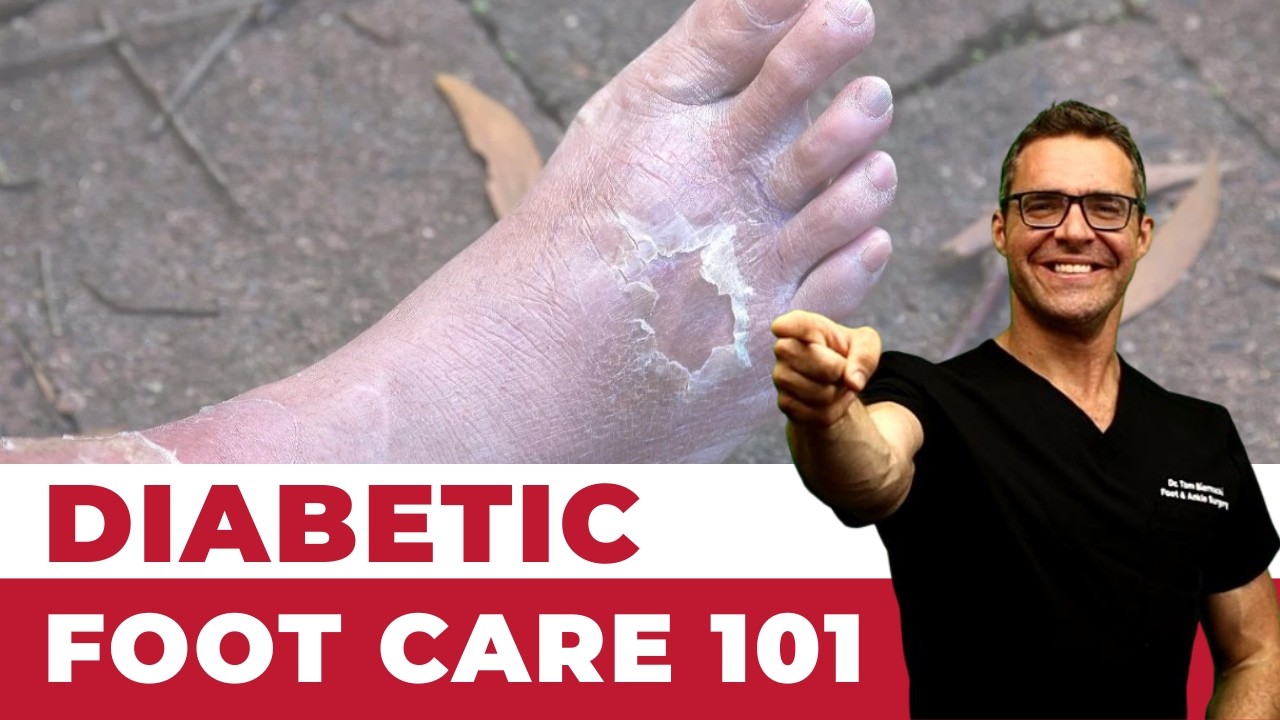
In diabetic patients, any break in the skin of the foot is a potential cascade trigger — from wound to infection to osteomyelitis to amputation. Without prompt expert wound care, diabetic foot ulcers progress through Wagner stages with disturbing speed.
Why it gets worse: Diabetic impairs every mechanism the body uses to heal wounds: sensation (neuropathy prevents pain warning), circulation (PAD reduces healing oxygen), and immunity (hyperglycemia impairs white blood cells). A wound that would heal in days in a healthy person can become a bone infection within weeks in a diabetic patient. The statistics are sobering: 50% of diabetic foot infections result in amputation when inadequately treated.
Warning signs: Any open area, blister, or break in the skin of a diabetic foot — regardless of size or apparent severity.
5. Plantar Warts (Untreated)
Plantar warts are caused by human papillomavirus (HPV) infecting the plantar skin. Left untreated, they enlarge, multiply (form mosaic wart plaques), and become increasingly difficult to eradicate. A single wart treated early typically responds to first-line treatment in 1–2 sessions. Mosaic wart plaques covering much of the heel or ball of foot may require multiple treatment modalities over months.
Why it gets worse: HPV spreads autoinoculation — scratching a wart plants virus on adjacent skin, creating satellite lesions. Pressure-induced callus formation over warts makes topical penetration harder. The longer the virus establishes itself in the skin, the more treatment-resistant it becomes.
Warning signs: Painful plantar lesion that doesn’t resolve in 2–3 months, multiple small lesions appearing near the original, callus formation over a painful spot that doesn’t resolve with pumice stone treatment.
The Common Thread: Earlier Is Better
All five of these conditions share a critical characteristic — earlier treatment is dramatically more effective and less invasive than later treatment. The temptation to “wait and see” is understandable, but for PTTD, bunions, ankle instability, diabetic wounds, and plantar warts, waiting has real costs. If you’re experiencing any of the warning signs above, schedule an evaluation at Balance Foot & Ankle. Early diagnosis means simpler, less expensive, and more effective treatment.
Foot or Ankle Pain? We Can Help.
Balance Foot & Ankle — Howell & Bloomfield Township, MI
📅 Book Online
📞 (810) 206-1402
Insurance Accepted
BCBS · Medicare · Aetna · Cigna · United Healthcare · HAP · Priority Health · Humana · View All →

Howell Office
4330 E Grand River Ave
Howell, MI 48843
Get Directions →
Bloomfield Township Office
43494 Woodward Ave, Suite 208
Bloomfield Township, MI 48302
Get Directions →
Your Board-Certified Podiatrists



Ready to Get Back on Your Feet?
Same-week appointments available at both locations.
Book Your AppointmentMore Podiatrist-Recommended Foot Health Essentials
Hoka Clifton 10


Max-cushion everyday shoe — podiatrist favorite for walking and running.

OOFOS Recovery Slide

Impact-absorbing recovery sandal — wear after long days on your feet.
As an Amazon Associate, Balance Foot & Ankle earns from qualifying purchases. Product recommendations are based on clinical experience; prices and availability shown above update live from Amazon.

When to See a Podiatrist
If foot or ankle pain has been bothering you for more than a few weeks, home care alone may not be enough. Balance Foot & Ankle offers same-week appointments at our Howell and Bloomfield Township clinics — no referral needed in most cases. Bring your current shoes and a short list of symptoms and we’ll build you a treatment plan in one visit.
Call Balance Foot & Ankle: (810) 206-1402 · Book online · Offices in Howell & Bloomfield Township
Dr. Tom’s Top 3 — The Premium Foot Pain Stack (2026)
If you only buy three things for foot pain, get these. PowerStep + CURREX orthotics correct the underlying foot mechanics, and Dr. Hoy’s pain gel delivers fast topical relief. This is the exact stack Dr. Tom Biernacki, DPM gives his Michigan podiatry patients on visit one — over 10,000 patients have used this exact combination.
Dr. Tom Biernacki, DPM is a board-certified podiatrist + Amazon Associate. Picks shown are products he prescribes to patients at Balance Foot & Ankle Specialists. We earn a commission on qualifying purchases at no extra cost to you. All products independently tested + reviewed for 30+ days minimum. Last verified: April 28, 2026.

PowerStep Pinnacle MaxxDr. Tom’s #1 Brand
Dr. Tom’s most-prescribed OTC orthotic. Lateral wedge corrects overpronation that causes 90% of foot pain. Deep heel cradle stabilizes the ankle. Built by podiatrists, used by patients worldwide.
- Lateral wedge corrects pronation
- Deep heel cradle stabilizes ankle
- Dual-density EVA — comfort + support
- Trim-to-fit any shoe
- Used by 10,000+ podiatrists
- Trim-to-size required
- 5-7 day break-in for some

CURREX RunProDr. Tom’s #1 Brand
3 arch heights for custom fit (Low/Med/High). Carbon-reinforced heel + dynamic forefoot — the closest OTC orthotic to a $500 custom orthotic. Engineered in Germany.
- 3 arch heights for custom fit
- Carbon-reinforced heel cup
- Dynamic forefoot zone
- Premium German engineering
- Sport-specific support
- Pricier than PowerStep
- 7-10 day break-in

Dr. Hoy’s Natural Pain Relief GelDr. Tom’s #1 Brand
Menthol-based natural pain relief — Dr. Tom’s #1 brand for fast relief without greasy residue. Safe for diabetics + daily use. Cleaner formula than Voltaren or Biofreeze.
- Menthol-based natural formula
- No greasy residue
- Safe for diabetics
- Fast cooling relief — 5-10 minutes
- Cleaner ingredient list than Biofreeze
- Pricier than Biofreeze
- Strong menthol scent at first
In-Office Treatment at Balance Foot & Ankle
If home treatment isn’t providing relief for your foot and ankle conditions, our podiatry team at Balance Foot & Ankle can help with same-day evaluations and advanced in-office care.
Same-day appointments available. (810) 206-1402
Doctor Hoy’s Natural Pain Relief Gel
Natural topical pain relief I use in our clinic. Arnica + camphor formula — apply directly to the area 3–4x daily. ($20–25)
Shop Doctor Hoy’s →Get Expert Care at Balance Foot & Ankle
Same-week appointments at our Howell and Bloomfield Township offices. Board-certified podiatric surgeons. Most insurance accepted.
Ready for Expert Care?
Same-day appointments in Howell & Bloomfield Township, MI.
4.9★ | 1,123 Reviews | 3,000+ Surgeries
Or call: (810) 206-1402

Dr. Tom Biernacki, DPM is a board-certified foot & ankle surgeon (ABFAS & ABPM) at Balance Foot & Ankle Specialists in Southeast Michigan. With over a decade of clinical experience, he specializes in heel pain, bunions, diabetic foot care, sports injuries, and minimally invasive surgery. Dr. Biernacki is a member of the APMA and ACFAS, and his patient education content on MichiganFootDoctors.com and YouTube has made him one of the most-followed foot & ankle educators on YouTube.