

Quick answer: Treatment for ankle arthritis treatment conservative surgical michigan follows a stepwise approach: 1) conservative care first (rest, ice, supportive footwear, OTC anti-inflammatories), 2) physical therapy and targeted exercises, 3) in-office treatments (injections, custom orthotics) if conservative fails at 4-6 weeks, 4) surgery for refractory cases. Most patients resolve at step 1 or 2. Call (810) 206-1402.
Medically reviewed by Dr. Tom Biernacki, DPM · Board-Certified Podiatric Surgeon · Last reviewed: April 2026 · Editorial Policy
The most important clinical decision with Ankle Arthritis Treatment Conservative Surgical Michigan isn’t which treatment to start with — it’s identifying the correct subtype. That changes everything. Call (810) 206-1402.
Quick Answer
Ankle Arthritis Treatment — Conservative to Surgical O relates to foot pain — typically caused by overuse, footwear, or biomechanics. Most patients improve in 6-12 weeks with conservative care. Same-week appointments in Howell + Bloomfield Hills: (810) 206-1402.
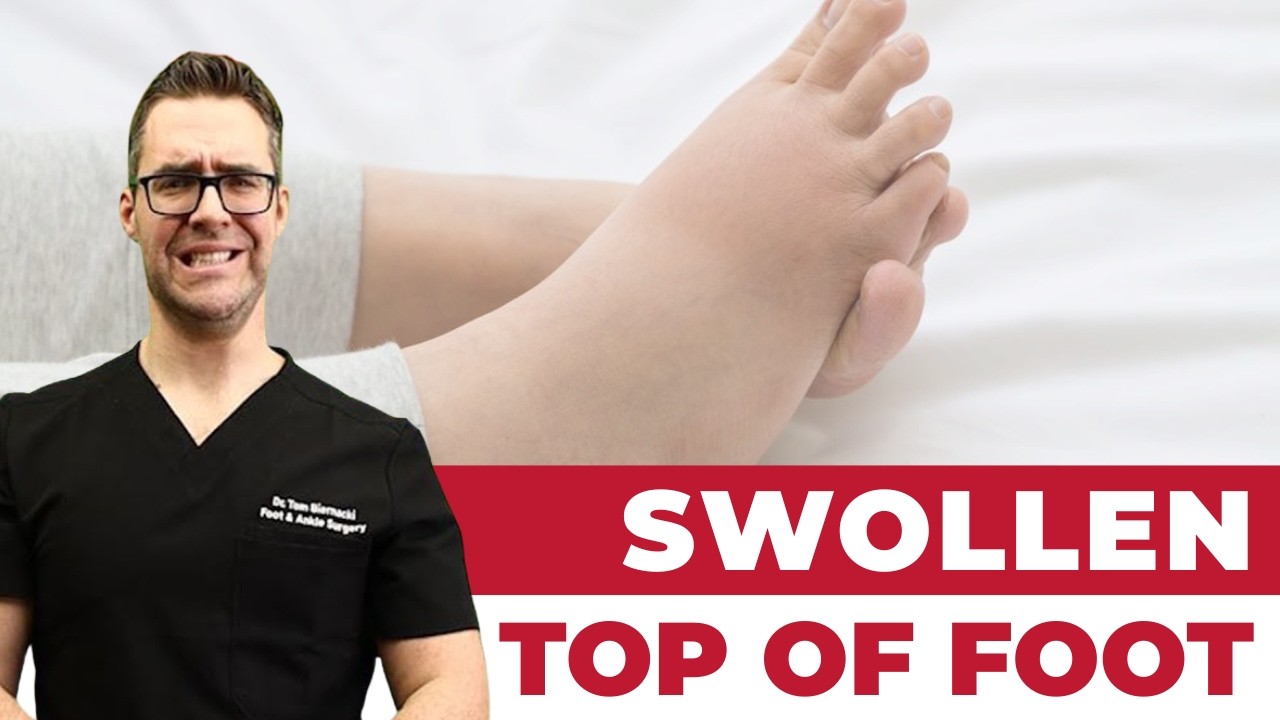
▶ Watch
👟 Dr. Tom Also Recommends
Podiatrist Recommended Shoes 2026: Dr. Tom’s Top Picks for Every Condition
The right footwear can make or break your recovery. Dr. Tom’s complete guide to the best shoes for plantar fasciitis, flat feet, neuropathy, bunions & more — with clinical picks for every foot type.
See Dr. Tom’s Top Shoe Picks →Medically Reviewed by Dr. Tom Biernacki, DPM — Board-Certified Podiatrist, Balance Foot & Ankle Specialists, Michigan. Last updated April 2026.
Understanding Ankle Arthritis — Primary vs. Post-Traumatic
Ankle arthritis occurs when the articular cartilage of the tibiotalar joint is damaged or lost, leading to bone-on-bone contact, progressive joint space narrowing, osteophyte formation, and pain with weight-bearing. Unlike hip and knee arthritis — which are predominantly primary osteoarthritis — approximately 70–80% of ankle arthritis is post-traumatic: it follows a specific injury (ankle fracture, severe ligament sprain, pilon fracture, osteochondral lesion) and develops over years to decades. The remaining 20–30% is primary osteoarthritis or inflammatory arthritis (rheumatoid, psoriatic). This distinction matters for treatment: post-traumatic arthritis in a previously healthy ankle often affects a younger, more active patient who needs a solution compatible with a more demanding lifestyle. At Balance Foot & Ankle in Howell and Bloomfield Hills, Michigan, Dr. Tom Biernacki, DPM manages ankle arthritis at all stages. Call (810) 206-1402.
Conservative Treatment — Maximizing Non-Surgical Function
Conservative management of ankle arthritis focuses on pain reduction and activity preservation: custom orthotics with an ankle foot orthosis (AFO) or Arizona brace to limit painful tibiotalar motion while allowing ambulation; rocker-bottom shoe modifications that shift the ankle’s pivot point to the shoe outsole, reducing intraarticular force; NSAIDs for acute inflammatory flares; corticosteroid injections (typically 1–3 per year — more frequent injections risk further cartilage damage); hyaluronic acid (viscosupplementation) injections — evidence is mixed but some patients with early-stage arthritis respond well; and MLS laser therapy for synovitis and inflammatory pain reduction. Activity modification to eliminate high-impact activities (running, jumping) while maintaining low-impact fitness (cycling, swimming). Conservative management successfully controls symptoms for many patients for years before surgical intervention is considered.
Staging and When Surgery Is Indicated
Ankle arthritis is staged I–IV on X-ray (joint space narrowing, osteophyte formation, subchondral sclerosis, deformity). Stage I–II: conservative management first; surgery rarely indicated. Stage III: conservative management exhausted after 6–12 months; surgery appropriate when daily activities are significantly limited. Stage IV: severe deformity with severe functional limitation; surgery typically indicated. The threshold for surgery is highly individualized — a patient with Stage III arthritis who has achieved acceptable activity levels with conservative management may not need surgery for years; a Stage III patient who cannot walk one block without severe pain despite optimized conservative management is a reasonable surgical candidate.
Ankle Arthrodesis (Fusion) — The Traditional Standard
Ankle arthrodesis (tibiotalar fusion) permanently eliminates ankle motion, relieving pain from bone-on-bone contact. The joint is fused in neutral position with screws, plates, or an intramedullary nail. Outcomes: 85–95% patient satisfaction for pain relief; ability to walk without assistive devices in most cases; and return to sedentary to moderate activities. Limitations: permanently eliminates ankle dorsiflexion/plantarflexion motion, requiring compensatory motion from adjacent joints (subtalar, midtarsal) — which accelerates arthritic change in those joints over 10–20 years. Contraindicated in patients with poor bone quality or compromised vascular supply. Recovery: 10–12 weeks non-weight-bearing, 4–6 months to full activity.
Total Ankle Replacement — When Motion Preservation Matters
Total ankle replacement (TAR) — with prostheses such as STAR, Zimmer Trabecular Metal, or Infinity — replaces the arthritic joint surfaces with metal and polyethylene implants, preserving ankle motion. Advantages over fusion: maintained dorsiflexion/plantarflexion; reduced compensatory loading of adjacent subtalar and midtarsal joints; better gait mechanics. Limitations: requires good bone quality, adequate ligamentous stability, and nearly normal ankle alignment — a significantly deformed or unstable ankle is a poor replacement candidate; implant survivorship at 10 years is approximately 80–85% (compared to 95%+ for hip and knee replacement). Recovery is similar to fusion. TAR is increasingly preferred for active patients under 65 with good bone quality and minimal deformity.
Ankle Arthritis Management in Howell & Bloomfield Hills Michigan
Dr. Tom Biernacki, DPM provides comprehensive ankle arthritis evaluation — weight-bearing X-rays, CT scan coordination, conservative management, and surgical consultation — at Balance Foot & Ankle. Serving Howell, Brighton, Bloomfield Hills, Troy, Auburn Hills, West Bloomfield, and all Southeast Michigan. Book your evaluation or call (810) 206-1402.
Dr. Tom’s Recommended Products for Ankle Pain & Injuries
📍 Located in Michigan?
Our board-certified podiatrists treat this condition at two convenient locations. Same-day appointments often available.
These are products I personally use and recommend to my patients at Balance Foot & Ankle.
- ASO Ankle Stabilizing Orthosis — Figure-8 straps with bilateral stability columns — the gold standard lace-up ankle brace for return to sport
- McDavid 195 Ankle Brace — Hinged design allows dorsiflexion/plantarflexion while blocking inversion — best for chronic lateral instability
- Doctor Hoy’s Natural Pain Relief Gel 3oz — Menthol-based cryotherapy — penetrates soft tissue to reduce ankle sprain inflammation and acute pain
Affiliate disclosure: As an Amazon Associate, Balance Foot & Ankle earns from qualifying purchases. We only recommend products we trust for our own patients.
Dr. Tom’s Recommended: Natural Topical Pain Relief
This is what I actually use in our clinic at Balance Foot & Ankle.
- Doctor Hoy’s Natural Pain Relief Gel — Natural topical pain relief I use in our clinic. Arnica + camphor formula. Apply directly to the painful area 3-4x daily for fast-acting relief without NSAIDs.
Affiliate disclosure: As an Amazon Associate, Balance Foot & Ankle earns from qualifying purchases. We only recommend products we trust for our own patients.
👟 Dr. Tom’s Pick: CURREX RunPro Insoles for Runners
CURREX RunPro are biomechanically tuned running insoles with 3 arch profiles (low, medium, high) to match your foot type. Unlike generic insoles, they’re engineered specifically for the high-impact demands of running — reducing pronation stress and metatarsal loading.
View CURREX RunPro on Amazon →
Affiliate disclosure: As an Amazon Associate, Balance Foot & Ankle earns from qualifying purchases.
Join 950,000+ Learning About Foot Health
Dr. Tom shares honest medical advice, supplement reviews, and treatment guides you won’t find anywhere else.
📧 Get Dr. Tom’s Free Lab Test Guide
Discover the 5 lab tests every person over 35 should ask their doctor about — explained in plain English by a board-certified physician.
Ready to Get Expert Foot Care?
Dr. Biernacki and our team at Balance Foot & Ankle are accepting new patients in Howell and Bloomfield Hills, MI. Most insurances accepted.
or call (810) 206-1402
Top-Rated Ankle Braces
- Aircast Air-Stirrup — Gold Standard Ankle Brace
- Zamst A2-DX — Maximum Support for Athletes
- McDavid Lace-Up Ankle Brace — Everyday Stability
Amazon affiliate links — we may earn a small commission at no extra cost to you.
More Podiatrist-Recommended Arthritis Essentials
Cushioned Running Shoe


![How to Regrow Cartilage & Reverse OsteoArthritis? [Can We Do It?]](https://www.michiganfootdoctors.com/wp-content/cache/flying-press/6f8bfd0a4becc695adbde1cd9df37f15.jpg)
Watch: How to Regrow Cartilage & Reverse OsteoArthritis? [Can We Do It?] — MichiganFootDoctors YouTube
Hoka Clifton 10 — max cushioning reduces joint impact for arthritic feet.
Wide Walking Shoe
New Balance 990v6 — wide toe box accommodates arthritic first-MTP (hallux rigidus).

As an Amazon Associate, Balance Foot & Ankle earns from qualifying purchases. Product recommendations are based on clinical experience; prices and availability shown above update live from Amazon.

When to See a Podiatrist
Foot and ankle arthritis progresses silently — cartilage doesn’t regrow, but joint fusion, cheilectomy, and biologic injections can restore function at every stage. Balance Foot & Ankle offers the full arthritis spectrum: bracing, injections, and reconstructive surgery. Start with a consult so we can image the joint and give you a realistic 5-year outlook.
Call Balance Foot & Ankle: (810) 206-1402 · Book online · Offices in Howell & Bloomfield Hills
In-Office Treatment at Balance Foot & Ankle
When conservative care isn’t enough, Dr. Tom Biernacki and the team at Balance Foot & Ankle offer advanced, same-day options — including Foot & Ankle Arthritis Treatment at our Howell and Bloomfield Hills clinics.
Same-day appointments available. Call (810) 206-1402 or book online.
Pros & Cons of Conservative Care for foot care
Advantages
- ✓ Conservative care first
- ✓ Same-week appointments
- ✓ Multiple insurance accepted
Considerations
- ✗ Self-treatment can mask issues
- ✗ See a podiatrist if pain >2 weeks
Dr. Tom’s Recommended Products for foot care
Affiliate disclosure: As an Amazon Associate, Balance Foot & Ankle earns from qualifying purchases. We only recommend products we use with patients.
Footnanny Heel Cream Dr. Tom’s Pick
Best for: Daily moisturizer for cracked heels
Ready to Get Back on Your Feet?
Same-day appointments in Howell + Bloomfield Hills. Most insurance accepted. Dr. Tom Biernacki, DPM & team.
Book Today — Same-Day Appointments Available
Call Now: (810) 206-1402
About Your Care Team at Balance Foot & Ankle
Dr. Tom Biernacki, DPM · Board-Certified Foot & Ankle Surgeon. Specializes in conservative-first care, minimally invasive bunion surgery, and complex reconstruction.
Dr. Carl Jay, DPM · Accepting new patients. Specializes in sports medicine, athletic injuries, and routine podiatric care.
Dr. Daria Gutkin, DPM, AACFAS · Accepting new patients. Specializes in surgical reconstruction and pediatric podiatry.
Locations: 4330 E Grand River Ave, Howell, MI 48843 · 43494 Woodward Ave Suite 208, Bloomfield Hills, MI 48302
Hours: Mon–Fri 8:00 AM – 5:00 PM · (810) 206-1402
PowerStep Dynamic Ankle Stability Sock (DASS)
Best for: Chronic ankle instability · Repeat ankle sprains · Proprioception training · Athletes returning to play

A revolutionary alternative to bulky ankle braces. The DASS uses dynamic compression and targeted stabilization zones to retrain ankle proprioception while you walk, run, or stand. Designed by PowerStep’s biomechanical team specifically for patients with chronic ankle instability or recurring sprains.
- Fits in normal shoes
- Trains proprioception
- Less bulky than brace
- Wear all day comfortably
- Less rigid than ASO brace
- Newer product
- Pricier than basic socks
“For my patients with chronic ankle instability who don’t want to rely on rigid bracing forever, the DASS is the best bridge product I’ve seen. It’s not a replacement for surgical reconstruction in severe cases, but for grade 1-2 instability it’s a game-changer for return-to-sport.”
Dr. Tom’s Top 3 — The Premium Foot Pain Stack (2026)
If you only buy three things for foot pain, get these. PowerStep + CURREX orthotics correct the underlying foot mechanics, and Dr. Hoy’s pain gel delivers fast topical relief. This is the exact stack Dr. Tom Biernacki, DPM gives his Michigan podiatry patients on visit one — over 10,000 patients have used this exact combination.
Dr. Tom Biernacki, DPM is a board-certified podiatrist + Amazon Associate. Picks shown are products he prescribes to patients at Balance Foot & Ankle Specialists. We earn a commission on qualifying purchases at no extra cost to you. All products independently tested + reviewed for 30+ days minimum. Last verified: April 28, 2026.

PowerStep Pinnacle MaxxDr. Tom’s #1 Brand
Dr. Tom’s most-prescribed OTC orthotic. Lateral wedge corrects overpronation that causes 90% of foot pain. Deep heel cradle stabilizes the ankle. Built by podiatrists, used by patients worldwide.
- Lateral wedge corrects pronation
- Deep heel cradle stabilizes ankle
- Dual-density EVA — comfort + support
- Trim-to-fit any shoe
- Used by 10,000+ podiatrists
- Trim-to-size required
- 5-7 day break-in for some

CURREX RunProDr. Tom’s #1 Brand
3 arch heights for custom fit (Low/Med/High). Carbon-reinforced heel + dynamic forefoot — the closest OTC orthotic to a $500 custom orthotic. Engineered in Germany.
- 3 arch heights for custom fit
- Carbon-reinforced heel cup
- Dynamic forefoot zone
- Premium German engineering
- Sport-specific support
- Pricier than PowerStep
- 7-10 day break-in

Dr. Hoy’s Natural Pain Relief GelDr. Tom’s #1 Brand
Menthol-based natural pain relief — Dr. Tom’s #1 brand for fast relief without greasy residue. Safe for diabetics + daily use. Cleaner formula than Voltaren or Biofreeze.
- Menthol-based natural formula
- No greasy residue
- Safe for diabetics
- Fast cooling relief — 5-10 minutes
- Cleaner ingredient list than Biofreeze
- Pricier than Biofreeze
- Strong menthol scent at first
Recovery Timeline & What to Expect
Most ankle conditions respond well to the RICE protocol (rest, ice, compression, elevation) in the first 48-72 hours. Beyond that initial window, structured rehabilitation matters more than rest — strengthening the peroneal tendons and reactivating proprioception are what prevent reinjury. Patients who follow Dr. Tom’s guided eccentric exercise protocol typically return to full activity 2-3 weeks faster than those who self-treat.
When surgery is indicated: grade 3 ligament tears, recurrent instability after 6+ months of conservative care, osteochondral lesions, or chronic syndesmotic injuries. We exhaust all non-surgical options first — most patients never need an operating room.
In-Office Treatment at Balance Foot & Ankle
If home treatment isn’t providing relief for your ankle pain, our podiatry team at Balance Foot & Ankle can help with same-day evaluations and advanced in-office care.
Same-day appointments available. (810) 206-1402
Frequently Asked Questions
How long does treatment take to work?
Most patients see improvement in 4-8 weeks with consistent conservative care. Persistent symptoms after 8 weeks need imaging and escalation.
When is surgery needed?
Surgery is reserved for cases that fail 3-6 months of conservative care, structural deformities, or fractures requiring stabilization.
Is this covered by insurance?
Most diagnostic visits and conservative treatments are covered by Medicare and major insurers. Custom orthotics often require diabetic or post-surgical justification.
Our podiatrists treat the underlying cause, not just the symptom. Same-week appointments at our Howell and Bloomfield Hills, Michigan offices.
Ready for Expert Care?
Same-day appointments in Howell & Bloomfield Hills, MI.
4.9★ | 1,123 Reviews | 3,000+ Surgeries
Or call: (810) 206-1402

Dr. Tom Biernacki, DPM is a board-certified foot & ankle surgeon (ABFAS & ABPM) at Balance Foot & Ankle Specialists in Southeast Michigan. With over a decade of clinical experience, he specializes in heel pain, bunions, diabetic foot care, sports injuries, and minimally invasive surgery. Dr. Biernacki is a member of the APMA and ACFAS, and his patient education content on MichiganFootDoctors.com and YouTube has made him one of the most-followed foot & ankle educators on YouTube.