

Quick answer: Treatment for ankle fracture treatment recovery michigan follows a stepwise approach: 1) conservative care first (rest, ice, supportive footwear, OTC anti-inflammatories), 2) physical therapy and targeted exercises, 3) in-office treatments (injections, custom orthotics) if conservative fails at 4-6 weeks, 4) surgery for refractory cases. Most patients resolve at step 1 or 2. Call (810) 206-1402.
Medically reviewed by Dr. Tom Biernacki, DPM · Board-Certified Podiatric Surgeon · Last reviewed: April 2026 · Editorial Policy
The most important clinical decision with Ankle Fracture Treatment Recovery Michigan isn’t which treatment to start with — it’s identifying the correct subtype. That changes everything. Call (810) 206-1402.
Quick Answer
Ankle Fracture: Treatment, Surgery & Recovery Guide Mi relates to foot/ankle injury — typically caused by trauma or twist. Most patients improve in 4-8 weeks with conservative care. Same-week appointments in Howell + Bloomfield Hills: (810) 206-1402.

Medically reviewed by Dr. Tom Biernacki, DPM — Board-Certified Podiatric Surgeon — Balance Foot & Ankle, Howell & Bloomfield Hills, MI. Last updated April 2026.
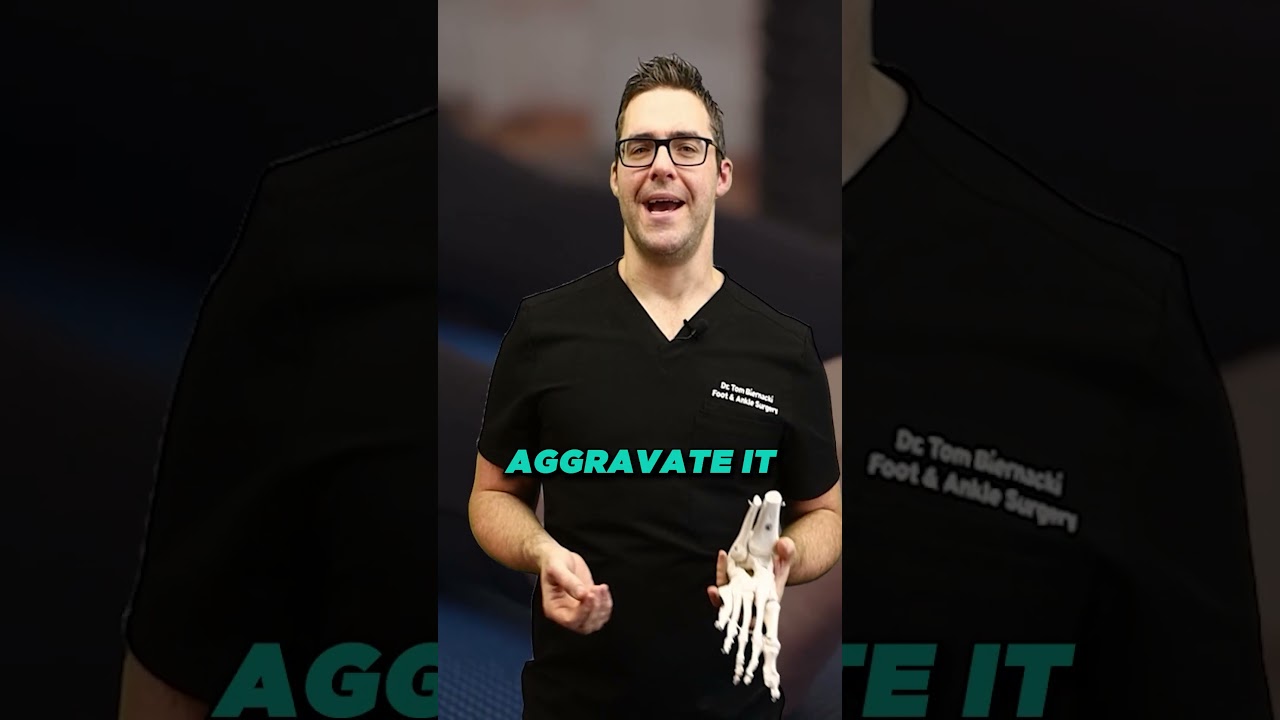
▶ Watch

👟 Dr. Tom Also Recommends
Podiatrist Recommended Shoes 2026: Dr. Tom’s Top Picks for Every Condition
The right footwear can make or break your recovery. Dr. Tom’s complete guide to the best shoes for plantar fasciitis, flat feet, neuropathy, bunions & more — with clinical picks for every foot type.
See Dr. Tom’s Top Shoe Picks →Medically Reviewed by Dr. Tom Biernacki, DPM — Board-Certified Podiatrist, Balance Foot & Ankle Specialists, Michigan. Last updated April 2026.
Ankle fractures are among the most common fractures seen in emergency rooms and podiatric offices — yet the pathway from injury to full recovery is often poorly understood by patients. The treatment approach, recovery timeline, and return-to-activity expectations vary enormously depending on fracture type, stability, and patient factors. An unstable ankle fracture treated conservatively will fail to heal correctly and result in lifelong arthritis; a stable fracture treated with unnecessary surgery carries operative risks without benefit. At Balance Foot & Ankle in Howell and Bloomfield Hills, MI, Dr. Tom Biernacki, DPM evaluates and treats the full spectrum of ankle fractures with the goal of restoring full function as rapidly and safely as possible.
Types of Ankle Fractures
The ankle joint is formed by three bones: the tibia, fibula, and talus. Fractures most commonly involve the distal fibula (lateral malleolus), the distal tibia (medial malleolus), or both simultaneously (bimalleolar fracture). When the posterior aspect of the tibia is also fractured, it is called a trimalleolar fracture — the most complex and unstable pattern. Isolated lateral malleolus fractures are the most common ankle fracture type, comprising approximately 70% of all ankle fractures, and are frequently caused by a twisting inversion injury that the patient initially mistakes for a severe sprain. The key clinical question for any ankle fracture is stability — whether the mortise (the bony ring formed by the tibia and fibula that holds the talus) is intact. Stable fractures can be treated non-surgically; unstable fractures require surgical fixation to restore mortise anatomy.
Ottawa Ankle Rules — When to X-Ray
The Ottawa Ankle Rules are the validated clinical decision tool for determining when ankle X-rays are indicated after an acute injury. X-ray is required if the patient cannot bear weight for four steps immediately after the injury AND in the emergency department, AND/OR if there is bone point tenderness at the posterior edge of the lateral malleolus, the posterior edge of the medial malleolus, the base of the 5th metatarsal, or the navicular. The Ottawa Rules have a sensitivity of 96–99% for clinically significant fractures — meaning a negative Ottawa examination makes fracture extremely unlikely. However, subtle fractures including osteochondral lesions of the talus and physeal injuries in children are not reliably excluded by Ottawa criteria; if clinical suspicion is high despite negative Ottawa criteria, MRI or CT may be indicated.
Conservative Treatment — For Stable Fractures
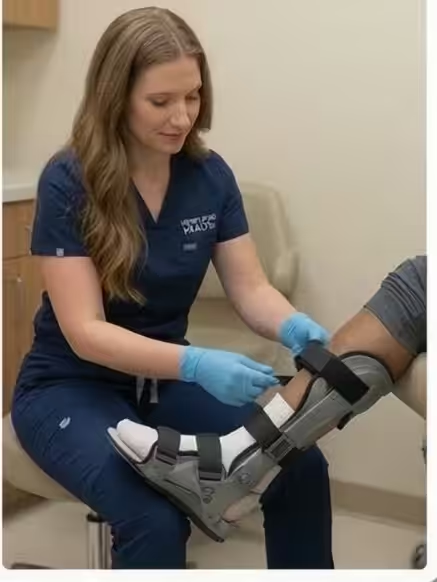
Stable ankle fractures — most commonly isolated lateral malleolus fractures with intact mortise alignment on stress X-rays — can be successfully treated without surgery. The initial management involves immobilization in a short-leg cast or controlled ankle motion (CAM) walker boot for 6 weeks, with non-weight-bearing for the first 2–4 weeks depending on fracture pattern and pain tolerance. Weekly or biweekly X-rays confirm the fracture maintains reduction during healing. After cast or boot removal, a structured physical therapy program rebuilding ankle range of motion, strength, and proprioception is essential — ankle fractures that receive no formal rehabilitation have significantly higher rates of persistent stiffness, weakness, and long-term arthritis. Most stable lateral malleolus fractures achieve full bony union at 6–8 weeks and return to pre-injury activity level at 3–4 months.
Surgical Fixation — When It’s Necessary
Unstable ankle fractures require surgical fixation to restore the anatomic mortise alignment that is essential for normal ankle biomechanics. Even 1mm of talar shift within the mortise produces a 42% reduction in tibiofibular contact area — dramatically accelerating cartilage wear and arthritis development. Surgical options include open reduction and internal fixation (ORIF) with a lateral fibular plate and screws, medial malleolus screw or tension band fixation, and syndesmotic screw placement for high fibula fractures with disrupted syndesmotic ligament. Minimally invasive percutaneous fixation techniques are available for certain fracture patterns, reducing soft tissue disruption and wound healing complications. After ORIF, patients are typically non-weight-bearing for 6 weeks, followed by progressive loading in a boot over 4–6 weeks, with full return to sport at 4–6 months depending on fracture complexity.
Ankle Fractures in Special Populations
Ankle fracture management requires modification in specific patient populations. Diabetic patients have significantly elevated rates of wound healing complications, deep infection, and hardware failure after ORIF — fixation technique, choice of hardware, and postoperative offloading protocol must account for neuropathy, vascular status, and tissue quality. Osteoporotic patients with fragility fractures may require augmented fixation with cement-filled screws or longer-span constructs to achieve adequate bone purchase. Pediatric patients with open growth plates require growth plate assessment (Salter-Harris classification) to guide treatment and predict growth disturbance risk. Elderly patients with trimalleolar fractures have higher rates of complications with anesthesia and prolonged non-weight-bearing — shared decision-making about goals of care and functional recovery expectations is essential.
Recovery Timeline After Ankle Fracture
Recovery from an ankle fracture follows a predictable sequence regardless of whether treatment is surgical or non-surgical. Weeks 0–6: immobilization and non- or limited weight-bearing; swelling management with elevation and compression; pain management. Weeks 6–10: transition to boot with progressive weight-bearing; physical therapy begins with range of motion and gentle strengthening. Weeks 10–16: formal physical therapy with functional strengthening, balance training, and gait retraining; most patients transition to supportive lace-up footwear. Months 4–6: return to sport, high-impact activities, and normal footwear. Months 6–12: continued remodeling of bone; periarticular stiffness gradually improves. Residual stiffness beyond 12 months is uncommon with adequate rehabilitation but represents a reason for re-evaluation.
Most Common Ankle Fracture Mistake
The most common ankle fracture mistake: returning to full activity because the pain has resolved but before bony union is confirmed on X-ray. Pain resolution typically precedes complete fracture healing by 2–4 weeks. Loading a fracture that has not yet achieved solid bony union risks re-displacement (for conservative cases) or hardware failure (for surgical cases). The second most common mistake: skipping physical therapy after fracture healing. The immobilization period inevitably produces significant atrophy of the peroneals and calf musculature, loss of ankle proprioception, and joint stiffness — all of which dramatically increase the risk of re-injury when returning to activities without formal rehabilitation.
Red Flags After an Ankle Injury
Seek immediate emergency evaluation if: you cannot bear weight at all on the ankle after a twisting injury; significant swelling develops within 30–60 minutes of injury; you see deformity — the ankle appears crooked or the foot points in an abnormal direction; the skin over the ankle appears tented or blanched (open or impending open fracture); or you have a diabetic neuropathy and any ankle injury — Charcot neuroarthropathy can present as a painless ankle fracture in neuropathic patients and requires immediate offloading to prevent catastrophic deformity. After initial emergency evaluation, follow up with a podiatric surgeon within 3–5 days for definitive treatment planning.
Ankle Fracture Treatment at Balance Foot & Ankle — Michigan
Dr. Tom Biernacki, DPM provides comprehensive ankle fracture evaluation and management including in-office digital X-ray, CT and MRI coordination, conservative management with fracture clinic follow-up, and surgical fixation for appropriate candidates. Our Howell office (4330 E Grand River Ave, Howell MI 48843) and Bloomfield Hills office (43494 Woodward Ave #208, Bloomfield Hills MI 48302) both offer urgent-access scheduling for acute fracture evaluation. Call (810) 206-1402 or
Discover the 5 lab tests every person over 35 should ask their doctor about — explained in plain English by a board-certified physician.📧 Get Dr. Tom’s Free Lab Test Guide
Dr. Tom’s Recommended Products for Ankle Pain & Injuries
📍 Located in Michigan?
Our board-certified podiatrists treat this condition at two convenient locations. Same-day appointments often available.
These are products I personally use and recommend to my patients at Balance Foot & Ankle.
- ASO Ankle Stabilizing Orthosis — Figure-8 straps with bilateral stability columns — the gold standard lace-up ankle brace for return to sport
- McDavid 195 Ankle Brace — Hinged design allows dorsiflexion/plantarflexion while blocking inversion — best for chronic lateral instability
- Doctor Hoy’s Natural Pain Relief Gel 3oz — Menthol-based cryotherapy — penetrates soft tissue to reduce ankle sprain inflammation and acute pain
Affiliate disclosure: As an Amazon Associate, Balance Foot & Ankle earns from qualifying purchases. We only recommend products we trust for our own patients.
Dr. Tom’s Recommended: Natural Topical Pain Relief
This is what I actually use in our clinic at Balance Foot & Ankle.
- Doctor Hoy’s Natural Pain Relief Gel — Natural topical pain relief I use in our clinic. Arnica + camphor formula. Apply directly to the painful area 3-4x daily for fast-acting relief without NSAIDs.
Affiliate disclosure: As an Amazon Associate, Balance Foot & Ankle earns from qualifying purchases. We only recommend products we trust for our own patients.
🧦 Dr. Tom’s Pick: DASS Medical Compression Socks
Medical-grade 15-20 mmHg graduated compression. DASS socks are the brand I recommend most to patients with swollen feet, poor circulation, and post-surgery recovery. Graduated compression means tightest at the ankle, gradually releasing up the leg — promoting upward venous blood flow.
View DASS Compression Socks on Amazon →Affiliate disclosure: As an Amazon Associate, Balance Foot & Ankle earns from qualifying purchases.
Join 950,000+ Learning About Foot Health
Dr. Tom shares honest medical advice, supplement reviews, and treatment guides you won’t find anywhere else.
Subscribe on YouTube →Top-Rated Ankle Braces
- Aircast Air-Stirrup — Gold Standard Ankle Brace
- Zamst A2-DX — Maximum Support for Athletes
- McDavid Lace-Up Ankle Brace — Everyday Stability
Amazon affiliate links — we may earn a small commission at no extra cost to you.
Insurance Accepted
BCBS · Medicare · Aetna · Cigna · United Healthcare · HAP · Priority Health · Humana · View All →
Howell Office
4330 E Grand River Ave
Howell, MI 48843
Get Directions →
Bloomfield Hills Office
43494 Woodward Ave, #208
Bloomfield Hills, MI 48302
Get Directions →
Your Board-Certified Podiatrists



Ready to Get Back on Your Feet?
Same-week appointments available at both locations.
Book Your AppointmentMore Podiatrist-Recommended Foot Health Essentials
Hoka Clifton 10


Max-cushion everyday shoe — podiatrist favorite for walking and running.

OOFOS Recovery Slide

Impact-absorbing recovery sandal — wear after long days on your feet.
As an Amazon Associate, Balance Foot & Ankle earns from qualifying purchases. Product recommendations are based on clinical experience; prices and availability shown above update live from Amazon.
When to See a Podiatrist
If foot or ankle pain has been bothering you for more than a few weeks, home care alone may not be enough. Balance Foot & Ankle offers same-week appointments at our Howell and Bloomfield Hills clinics — no referral needed in most cases. Bring your current shoes and a short list of symptoms and we’ll build you a treatment plan in one visit.
Call Balance Foot & Ankle: (810) 206-1402 · Book online · Offices in Howell & Bloomfield Hills
In-Office Treatment at Balance Foot & Ankle
When conservative care isn’t enough, Dr. Tom Biernacki and the team at Balance Foot & Ankle offer advanced, same-day options — including Foot & Ankle Fracture Repair Michigan at our Howell and Bloomfield Hills clinics.
Same-day appointments available. Call (810) 206-1402 or book online.
Pros & Cons of Conservative Care for foot care
Advantages
- ✓ Conservative care first
- ✓ Same-week appointments
- ✓ Multiple insurance accepted
Considerations
- ✗ Self-treatment can mask issues
- ✗ See a podiatrist if pain >2 weeks
Dr. Tom’s Recommended Products for foot care
Affiliate disclosure: As an Amazon Associate, Balance Foot & Ankle earns from qualifying purchases. We only recommend products we use with patients.
Footnanny Heel Cream Dr. Tom’s Pick
Best for: Daily moisturizer for cracked heels
Ready to Get Back on Your Feet?
Same-day appointments in Howell + Bloomfield Hills. Most insurance accepted. Dr. Tom Biernacki, DPM & team.
Book Today — Same-Day Appointments Available
Call Now: (810) 206-1402
About Your Care Team at Balance Foot & Ankle
Dr. Tom Biernacki, DPM · Board-Certified Foot & Ankle Surgeon. Specializes in conservative-first care, minimally invasive bunion surgery, and complex reconstruction.
Dr. Carl Jay, DPM · Accepting new patients. Specializes in sports medicine, athletic injuries, and routine podiatric care.
Dr. Daria Gutkin, DPM, AACFAS · Accepting new patients. Specializes in surgical reconstruction and pediatric podiatry.
Locations: 4330 E Grand River Ave, Howell, MI 48843 · 43494 Woodward Ave Suite 208, Bloomfield Hills, MI 48302
Hours: Mon–Fri 8:00 AM – 5:00 PM · (810) 206-1402
PowerStep Dynamic Ankle Stability Sock (DASS)
Best for: Chronic ankle instability · Repeat ankle sprains · Proprioception training · Athletes returning to play

A revolutionary alternative to bulky ankle braces. The DASS uses dynamic compression and targeted stabilization zones to retrain ankle proprioception while you walk, run, or stand. Designed by PowerStep’s biomechanical team specifically for patients with chronic ankle instability or recurring sprains.
- Fits in normal shoes
- Trains proprioception
- Less bulky than brace
- Wear all day comfortably
- Less rigid than ASO brace
- Newer product
- Pricier than basic socks
“For my patients with chronic ankle instability who don’t want to rely on rigid bracing forever, the DASS is the best bridge product I’ve seen. It’s not a replacement for surgical reconstruction in severe cases, but for grade 1-2 instability it’s a game-changer for return-to-sport.”
Dr. Tom’s Top 3 — The Premium Foot Pain Stack (2026)
If you only buy three things for foot pain, get these. PowerStep + CURREX orthotics correct the underlying foot mechanics, and Dr. Hoy’s pain gel delivers fast topical relief. This is the exact stack Dr. Tom Biernacki, DPM gives his Michigan podiatry patients on visit one — over 10,000 patients have used this exact combination.
Dr. Tom Biernacki, DPM is a board-certified podiatrist + Amazon Associate. Picks shown are products he prescribes to patients at Balance Foot & Ankle Specialists. We earn a commission on qualifying purchases at no extra cost to you. All products independently tested + reviewed for 30+ days minimum. Last verified: April 28, 2026.

PowerStep Pinnacle MaxxDr. Tom’s #1 Brand
Dr. Tom’s most-prescribed OTC orthotic. Lateral wedge corrects overpronation that causes 90% of foot pain. Deep heel cradle stabilizes the ankle. Built by podiatrists, used by patients worldwide.
- Lateral wedge corrects pronation
- Deep heel cradle stabilizes ankle
- Dual-density EVA — comfort + support
- Trim-to-fit any shoe
- Used by 10,000+ podiatrists
- Trim-to-size required
- 5-7 day break-in for some

CURREX RunProDr. Tom’s #1 Brand
3 arch heights for custom fit (Low/Med/High). Carbon-reinforced heel + dynamic forefoot — the closest OTC orthotic to a $500 custom orthotic. Engineered in Germany.
- 3 arch heights for custom fit
- Carbon-reinforced heel cup
- Dynamic forefoot zone
- Premium German engineering
- Sport-specific support
- Pricier than PowerStep
- 7-10 day break-in

Dr. Hoy’s Natural Pain Relief GelDr. Tom’s #1 Brand
Menthol-based natural pain relief — Dr. Tom’s #1 brand for fast relief without greasy residue. Safe for diabetics + daily use. Cleaner formula than Voltaren or Biofreeze.
- Menthol-based natural formula
- No greasy residue
- Safe for diabetics
- Fast cooling relief — 5-10 minutes
- Cleaner ingredient list than Biofreeze
- Pricier than Biofreeze
- Strong menthol scent at first
In-Office Treatment at Balance Foot & Ankle
If home treatment isn’t providing relief for your foot fracture, our podiatry team at Balance Foot & Ankle can help with same-day evaluations and advanced in-office care.
Same-day appointments available. (810) 206-1402
Frequently Asked Questions
How long does treatment take to work?
Most patients see improvement in 4-8 weeks with consistent conservative care. Persistent symptoms after 8 weeks need imaging and escalation.
When is surgery needed?
Surgery is reserved for cases that fail 3-6 months of conservative care, structural deformities, or fractures requiring stabilization.
Is this covered by insurance?
Most diagnostic visits and conservative treatments are covered by Medicare and major insurers. Custom orthotics often require diabetic or post-surgical justification.
Our podiatrists treat the underlying cause, not just the symptom. Same-week appointments at our Howell and Bloomfield Hills, Michigan offices.
Ready for Expert Care?
Same-day appointments in Howell & Bloomfield Hills, MI.
4.9★ | 1,123 Reviews | 3,000+ Surgeries
Or call: (810) 206-1402

Dr. Tom Biernacki, DPM is a board-certified foot & ankle surgeon (ABFAS & ABPM) at Balance Foot & Ankle Specialists in Southeast Michigan. With over a decade of clinical experience, he specializes in heel pain, bunions, diabetic foot care, sports injuries, and minimally invasive surgery. Dr. Biernacki is a member of the APMA and ACFAS, and his patient education content on MichiganFootDoctors.com and YouTube has made him one of the most-followed foot & ankle educators on YouTube.