
Medically reviewed by Dr. Tom Biernacki, DPM · Board-Certified Podiatric Surgeon · Last reviewed: April 2026 · Editorial Policy
The most important clinical decision with Ankle Pain Running Michigan isn’t which treatment to start with — it’s identifying the correct subtype. That changes everything. Call (810) 206-1402.
Quick Answer
Ankle Pain While Running — Causes & Treatment Mic relates to foot pain — typically caused by overuse, footwear, or biomechanics. Most patients improve in 6-12 weeks with conservative care. Same-week appointments in Howell + Bloomfield Hills: (810) 206-1402.
Quick Answer
Most foot and ankle problems respond to conservative care — proper footwear, supportive inserts, activity modification, and targeted stretching — within 4-8 weeks. Persistent pain beyond that window, or any symptom that prevents walking, warrants a podiatric evaluation to rule out fracture, tendon tear, or systemic cause.
Medically reviewed by Dr. Tom Biernacki, DPM — Board-Certified Podiatric Surgeon — Balance Foot & Ankle, Howell & Bloomfield Hills, MI. Last updated April 2026.
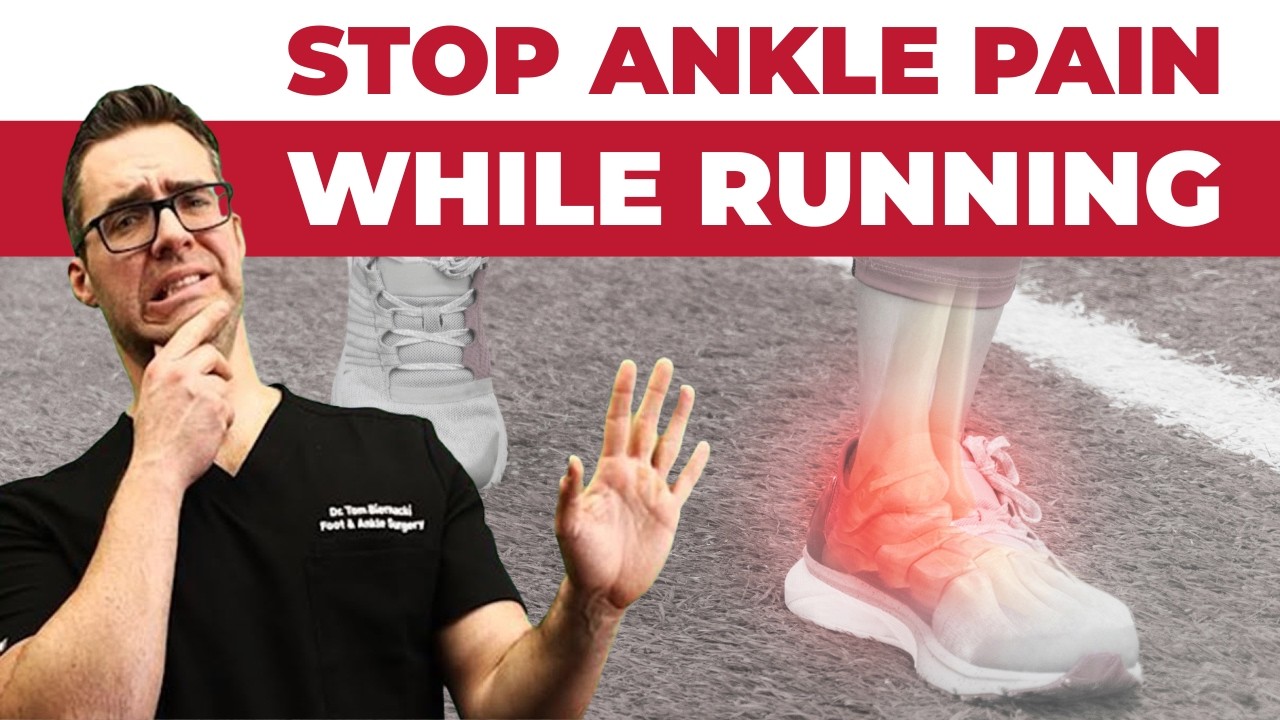
Watch: Dr. Tom Biernacki, DPM
👟 Dr. Tom Also Recommends
Podiatrist Recommended Shoes 2026: Dr. Tom’s Top Picks for Every Condition
The right footwear can make or break your recovery. Dr. Tom’s complete guide to the best shoes for plantar fasciitis, flat feet, neuropathy, bunions & more — with clinical picks for every foot type.
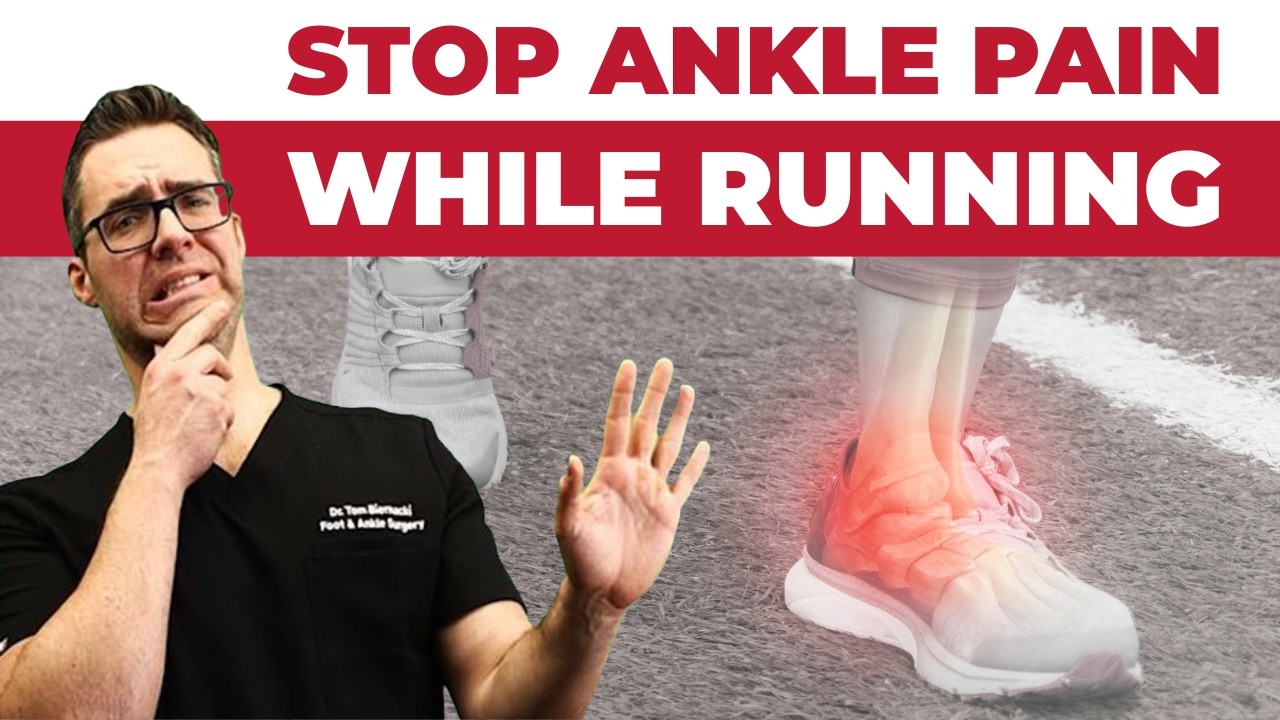
See Dr. Tom’s Top Shoe Picks →Runners put enormous repetitive stress on their ankles — the ankle joint absorbs forces up to 5–6 times body weight with every running stride. When ankle pain develops during or after runs, it’s a signal that something is biomechanically wrong — and ignoring it risks turning a minor problem into a season-ending injury. At Balance Foot & Ankle, Dr. Tom Biernacki provides sport-specific ankle evaluation and treatment for Michigan’s running community.
Common Causes of Ankle Pain in Runners
Peroneal tendinitis — The peroneal tendons run along the outer ankle and are the primary stabilizers against inversion sprains. Overuse in runners, particularly those who increase mileage quickly or run on uneven terrain, causes tendinitis — aching pain along the outer ankle that is worse during and after runs. Treatment: relative rest, eccentric peroneal strengthening, custom orthotics to control excessive pronation or supination, and ultrasound-guided injection for severe cases.
Posterior tibial tendinitis — The posterior tibial tendon runs along the inner ankle and supports the arch. Overpronating runners are most susceptible. Pain on the inner ankle and arch during and after runs is the hallmark. If left untreated, this tendinitis can progress to tendon rupture and adult-acquired flatfoot deformity. Custom motion-control orthotics and ankle bracing are essential treatment components.
Anterior impingement syndrome — Repeated forced dorsiflexion (running uphill, sprinting) pinches the anterior ankle joint, causing deep aching pain at the front of the ankle. Bone spurs (osteophytes) on the front of the tibia and talus develop over time, progressively limiting ankle flexion. Initial treatment is anti-inflammatory therapy and modified training; refractory cases benefit from arthroscopic anterior ankle debridement.
Lateral ankle instability — Runners with a history of ankle sprains may have incompletely healed ligaments, causing a sense of giving-way on uneven surfaces. This is not just a sprain risk — the repetitive micro-instability damages cartilage over time. Diagnosis with stress X-ray and clinical exam; treatment with peroneal strengthening, ankle bracing during runs, and ligament repair surgery when rehabilitation fails.
Fibular stress fracture — Repetitive running stress on the fibula (the small outer leg bone) can cause a stress fracture, producing localized outer ankle pain that builds progressively over a run and is tender to direct palpation. X-ray may be negative initially; MRI confirms early stress reactions. Treatment: complete rest from running for 6–8 weeks.
Osteochondral lesion (OCD) — Cartilage damage on the talar dome (ankle joint surface) causes deep ankle pain with running, often with catching or locking sensations. MRI is essential for diagnosis. Treatment ranges from physical therapy and orthotics for small stable lesions to arthroscopic drilling or cartilage repair for larger or displaced fragments.
Runner-Specific Evaluation at Balance Foot & Ankle
Dr. Biernacki performs a running-specific biomechanical evaluation — analyzing your arch type, ankle alignment, foot strike pattern, and training load history. Custom running orthotics, gait modification guidance, and a graduated return-to-run protocol are provided. The goal is to get you back running as quickly as possible — injury-free.
Call (734) 479-6200 for a same-week running injury evaluation at our southeast Michigan offices.
More Podiatrist-Recommended Sports Essentials
Hoka Clifton 10


Max-cushion everyday shoe — podiatrist favorite for walking and running.

OOFOS Recovery Slide

Impact-absorbing recovery sandal — wear after long days on your feet.
As an Amazon Associate, Balance Foot & Ankle earns from qualifying purchases. Product recommendations are based on clinical experience; prices and availability shown above update live from Amazon.
When to See a Podiatrist
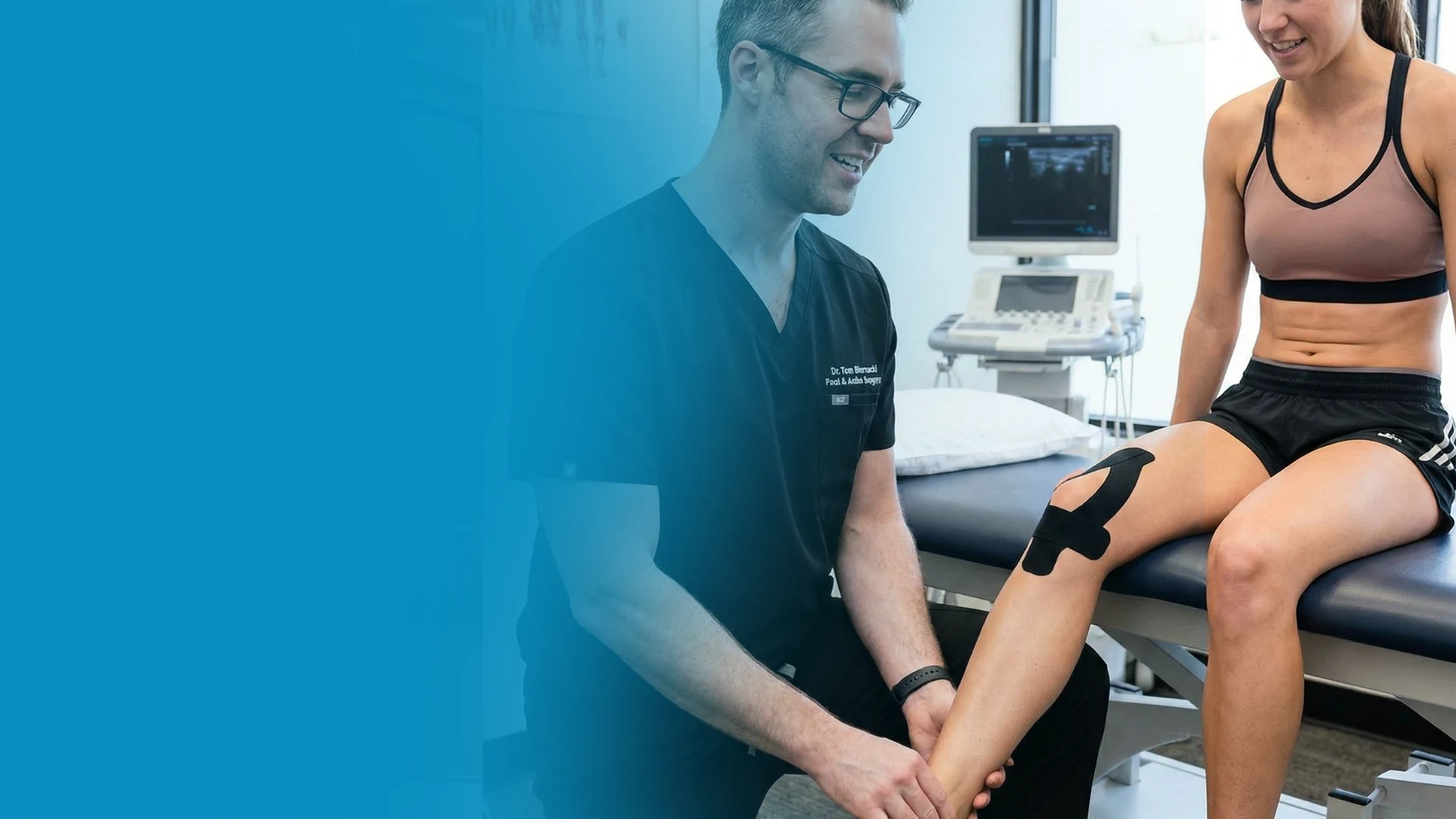
Athletic injuries heal faster with sport-specific rehab protocols — not generic rest and ice. Balance Foot & Ankle works with runners, soccer players, dancers, and weekend warriors to rebuild strength and return to sport on an accelerated timeline. Don’t let a foot injury keep you sidelined longer than necessary.
Call Balance Foot & Ankle: (810) 206-1402 · Book online · Offices in Howell & Bloomfield Hills
Frequently Asked Questions
Should I run through ankle pain?
Generally no. Mild muscle soreness is normal with training, but joint pain, ligament pain, or tendon pain that worsens during a run or is still present the next day warrants evaluation before continuing. Running through significant ankle pain risks converting a minor soft tissue injury into a chronic problem or complete structural failure (tendon rupture, displaced fracture).
What running shoes help with ankle pain?
The best shoe depends on your ankle problem’s cause. Pronation-related ankle pain benefits from stability running shoes (Brooks Adrenaline, ASICS GT series, New Balance 860). Instability and outer ankle pain benefits from a wider platform shoe with more lateral support. Ultra-minimalist or zero-drop shoes are generally contraindicated for most ankle conditions. Dr. Biernacki provides shoe recommendations specific to your biomechanics at your evaluation.
Can custom orthotics help runners with ankle pain?
Yes, significantly. Custom running orthotics correct the biomechanical problems driving ankle injury — excessive pronation, supination, leg length discrepancy, and forefoot deformities that alter ankle loading. Studies consistently show runners using custom orthotics have lower rates of overuse ankle injury compared to those using OTC insoles or no insoles.
Dr. Tom’s Recommended Products for Ankle Pain & Injuries
📍 Located in Michigan?
Our board-certified podiatrists treat this condition at two convenient locations. Same-day appointments often available.
These are products I personally use and recommend to my patients at Balance Foot & Ankle.
- ASO Ankle Stabilizing Orthosis — Figure-8 straps with bilateral stability columns — the gold standard lace-up ankle brace for return to sport
- McDavid 195 Ankle Brace — Hinged design allows dorsiflexion/plantarflexion while blocking inversion — best for chronic lateral instability
- Doctor Hoy’s Natural Pain Relief Gel 3oz — Menthol-based cryotherapy — penetrates soft tissue to reduce ankle sprain inflammation and acute pain
Affiliate disclosure: As an Amazon Associate, Balance Foot & Ankle earns from qualifying purchases. We only recommend products we trust for our own patients.
Dr. Tom’s Recommended Insoles
PowerStep is the brand I prescribe most — medical-grade OTC support without the custom orthotic price tag.
- PowerStep Pulse Insoles — Performance insoles for runners — flexible arch support with shock absorption for high-mileage athletes.
- PowerStep Pinnacle Insoles — The #1 podiatrist-recommended OTC insole — firm arch support with dual-layer cushioning for all-day wear.
Affiliate disclosure: As an Amazon Associate, Balance Foot & Ankle earns from qualifying purchases. We only recommend products we trust for our own patients.
Dr. Tom’s Recommended: Natural Topical Pain Relief
This is what I actually use in our clinic at Balance Foot & Ankle.
- Doctor Hoy’s Natural Pain Relief Gel — Natural topical pain relief I use in our clinic. Arnica + camphor formula. Apply directly to the painful area 3-4x daily for fast-acting relief without NSAIDs.
📧 Get Dr. Tom’s Free Lab Test Guide
Discover the 5 lab tests every person over 35 should ask their doctor about — explained in plain English by a board-certified physician.
Affiliate disclosure: As an Amazon Associate, Balance Foot & Ankle earns from qualifying purchases. We only recommend products we trust for our own patients.
Join 950,000+ Learning About Foot Health
Dr. Tom shares honest medical advice, supplement reviews, and treatment guides you won’t find anywhere else.
Subscribe on YouTube →Top-Rated Ankle Braces
- Aircast Air-Stirrup — Gold Standard Ankle Brace
- Zamst A2-DX — Maximum Support for Athletes
- McDavid Lace-Up Ankle Brace — Everyday Stability
Amazon affiliate links — we may earn a small commission at no extra cost to you.
Medically Reviewed by: Dr. Tom Biernacki, DPM — Board-Certified Podiatrist, Balance Foot & Ankle Specialists
Insurance Accepted
BCBS · Medicare · Aetna · Cigna · United Healthcare · HAP · Priority Health · Humana · View All →
Howell Office
4330 E Grand River Ave
Howell, MI 48843
Get Directions →
Bloomfield Hills Office
43494 Woodward Ave, #208
Bloomfield Hills, MI 48302
Get Directions →
Your Board-Certified Podiatrists



Ready to Get Back on Your Feet?
Same-week appointments available at both locations.
Book Your AppointmentMost Common Mistake We See
The most common mistake we see is: Waiting too long before seeking care. Fix: any foot pain lasting more than 4 weeks, or any sudden severe symptom, deserves a professional evaluation rather than more rest.
Warning Signs That Need Same-Day Care
Seek immediate evaluation at Balance Foot & Ankle if you experience any of the following:
- Unable to bear weight
- Severe swelling with skin colour change
- Fever with foot pain (possible infection)
- Diabetes plus any new foot symptom
Call (810) 206-1402 — same-day and next-day appointments at our Howell and Bloomfield Hills offices.
Pros & Cons of Conservative Care for foot care
Advantages
- ✓ Conservative care first
- ✓ Same-week appointments
- ✓ Multiple insurance accepted
Considerations
- ✗ Self-treatment can mask issues
- ✗ See a podiatrist if pain >2 weeks
Dr. Tom’s Recommended Products for foot care
Affiliate disclosure: As an Amazon Associate, Balance Foot & Ankle earns from qualifying purchases. We only recommend products we use with patients.
Footnanny Heel Cream Dr. Tom’s Pick
Best for: Daily moisturizer for cracked heels
Ready to Get Back on Your Feet?
Same-day appointments in Howell + Bloomfield Hills. Most insurance accepted. Dr. Tom Biernacki, DPM & team.
Book Today — Same-Day Appointments Available
Call Now: (810) 206-1402
About Your Care Team at Balance Foot & Ankle
Dr. Tom Biernacki, DPM · Board-Certified Foot & Ankle Surgeon. Specializes in conservative-first care, minimally invasive bunion surgery, and complex reconstruction.
Dr. Carl Jay, DPM · Accepting new patients. Specializes in sports medicine, athletic injuries, and routine podiatric care.
Dr. Daria Gutkin, DPM, AACFAS · Accepting new patients. Specializes in surgical reconstruction and pediatric podiatry.
Locations: 4330 E Grand River Ave, Howell, MI 48843 · 43494 Woodward Ave Suite 208, Bloomfield Hills, MI 48302
Hours: Mon–Fri 8:00 AM – 5:00 PM · (810) 206-1402
In-Office Treatment at Balance Foot & Ankle
If home treatment isn’t providing relief for your ankle conditions, our podiatry team at Balance Foot & Ankle can help with same-day evaluations and advanced in-office care.
Same-day appointments available. (810) 206-1402
Frequently Asked Questions
When should I see a doctor?
See a podiatrist if pain persists past 2 weeks, prevents normal activity, or is accompanied by red-flag symptoms (warmth, swelling, numbness, inability to bear weight).
Can I treat this at home?
Mild cases respond to RICE protocol (rest, ice, compression, elevation), supportive shoes, and OTC anti-inflammatories. Persistent symptoms need professional evaluation.
How long does it take to heal?
Most soft tissue injuries resolve in 2-6 weeks with appropriate care. Bone injuries take 6-12 weeks. Chronic conditions need longer-term management.
Our podiatrists treat the underlying cause, not just the symptom. Same-week appointments at our Howell and Bloomfield Hills, Michigan offices.
Ready for Expert Care?
Same-day appointments in Howell & Bloomfield Hills, MI.
4.9★ | 1,123 Reviews | 3,000+ Surgeries
Or call: (810) 206-1402

Dr. Tom Biernacki, DPM is a board-certified foot & ankle surgeon (ABFAS & ABPM) at Balance Foot & Ankle Specialists in Southeast Michigan. With over a decade of clinical experience, he specializes in heel pain, bunions, diabetic foot care, sports injuries, and minimally invasive surgery. Dr. Biernacki is a member of the APMA and ACFAS, and his patient education content on MichiganFootDoctors.com and YouTube has made him one of the most-followed foot & ankle educators on YouTube.