

📅 Book your visit — same-week appointments at our Howell & Bloomfield offices. Most insurance & Medicare accepted.
An ankle sprain that has not settled by about six weeks is usually not just a sprain. A missed fracture, a cartilage injury in the joint, or a high (syndesmotic) sprain all present this way. Book online in Howell or Bloomfield Township — the booking form takes about a minute, 24/7.
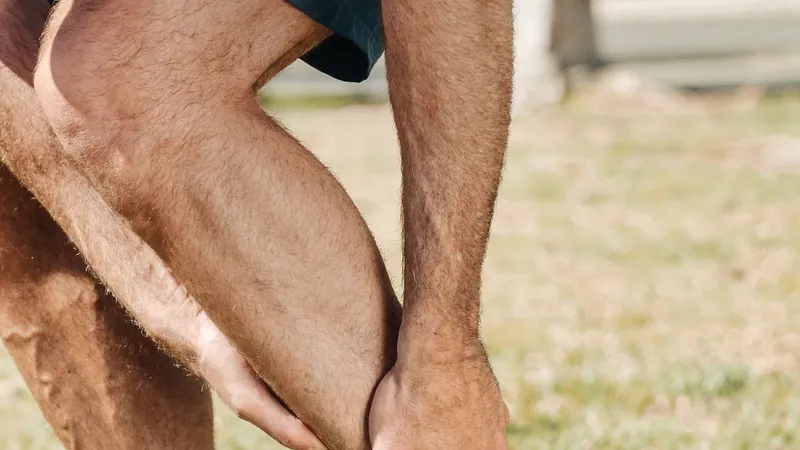
What Happens When You Sprain Your Ankle?
Medically reviewed by Dr. Tom Biernacki, DPM
Board-certified podiatric surgeon | Balance Foot & Ankle
Last reviewed: May 2026
Ankle sprains are the most common musculoskeletal injury in sports and one of the most common injuries in everyday life — accounting for roughly 2 million emergency department visits in the United States each year. If you have ever “rolled” your ankle and felt the sharp lateral pain that follows, you have experienced the most common mechanism: inversion with plantarflexion, where the foot turns inward and downward while the ankle bears load. This loads the lateral ligament complex to failure, tearing the ligaments in a predictable sequence from most vulnerable (anterior talofibular — ATFL) to least (calcaneofibular — CFL, then posterior talofibular — PTFL).
In our clinic at Balance Foot & Ankle, we see a wide spectrum of ankle sprains — from the athlete with a mild Grade 1 sprain wanting to return to practice in 5 days, to the patient who has sprained the same ankle dozens of times and now has chronic lateral ankle instability, recurrent giving-way, and early lateral compartment arthritis. The difference between these outcomes is almost entirely determined by how the initial sprain was managed: adequate immobilization, progressive rehabilitation, and proprioceptive retraining resolve most ankle sprains definitively; inadequate treatment leads to the chronic instability pattern that is far harder to treat.
Anatomy: The Lateral Ligament Complex
The ankle's lateral stability is maintained by three ligaments that run from the fibula to the talus and calcaneus:
- Anterior talofibular ligament (ATFL): The most commonly injured ankle ligament — it resists anterior translation of the talus and inversion in plantarflexion. Torn in 80%+ of lateral ankle sprains.
- Calcaneofibular ligament (CFL): Restrains inversion in neutral and dorsiflexed positions. Injured in combination with the ATFL in moderate-to-severe sprains (Grades 2–3).
- Posterior talofibular ligament (PTFL): The strongest lateral ligament; rarely torn except in complete dislocations.
The medial (deltoid) ligament complex is torn in eversion injuries, which are less common but more serious — the deltoid is so strong that a medial ankle sprain often fractures the medial malleolus before tearing the ligament, which is why any medial ankle pain after a sprain mechanism warrants X-ray.
Grading: 1, 2, and 3
- Grade 1 (stretch, no tear): Microscopic ligament fiber disruption. Mild swelling and tenderness, full weight-bearing possible, no instability on examination. Return to activity in 5–14 days with taping/bracing.
- Grade 2 (partial tear): Moderate swelling and ecchymosis, significant lateral ankle tenderness, difficulty weight-bearing. Mild-to-moderate laxity on anterior drawer test. Requires protected weight-bearing (boot or brace) for 1–3 weeks, followed by rehabilitation. Return to sport in 3–6 weeks.
- Grade 3 (complete tear): Complete rupture of the ATFL (and often CFL). Marked swelling, ecchymosis spreading toward the arch and dorsal foot, inability to weight-bear, and significant laxity on anterior drawer and talar tilt tests. MRI or ultrasound confirms complete disruption. Requires 4–6 weeks of bracing and a structured rehabilitation program. Return to sport in 6–12 weeks. Surgical repair considered for elite athletes with complete multi-ligament tears or those with recurrent instability.
The Ottawa Ankle Rules: Do You Need an X-Ray?
The Ottawa Ankle Rules are a validated clinical decision tool for determining which ankle sprains require X-ray to exclude fracture. They have 98%+ sensitivity for ankle and midfoot fractures and significantly reduce unnecessary imaging. An X-ray is indicated if the patient has pain in the malleolar zone AND either of the following:
- Bone tenderness at the posterior edge or tip of either malleolus (last 6 cm of fibula or tibia), OR
- Inability to bear weight immediately after the injury AND at the time of evaluation (4 steps)
For midfoot fractures (particularly the base of the fifth metatarsal — a very common associated injury in ankle inversion), the Ottawa Foot Rules apply: X-ray if there is bone tenderness at the navicular or the base of the fifth metatarsal, or inability to bear weight. We obtain X-rays liberally for any mechanism that involves significant force, medial tenderness, or inability to weight-bear. The Ottawa Rules define the minimum — clinical judgment drives the final decision.
Acute Treatment: RICE + Controlled Loading
The classic RICE protocol (Rest, Ice, Compression, Elevation) remains the first-line acute management for the first 48–72 hours, with one important update: complete rest is not optimal. Current evidence supports early controlled weight-bearing — walking with a brace or support boot as tolerated — rather than strict non-weight-bearing. The so-called POLICE protocol (Protection, Optimal Loading, Ice, Compression, Elevation) better reflects the evidence: protect the ankle from re-injury while progressively loading it.
- Ice: 15–20 minutes every 2 hours for the first 48–72 hours reduces swelling and pain
- Compression: An elastic compression wrap or stirrup brace limits swelling and provides proprioceptive feedback See our step-by-step guide to how to wrap a sprained ankle.
- Elevation: Keep the foot above heart level as much as possible in the first 48–72 hours
- NSAIDs: Short-term ibuprofen or naproxen for the first 3–5 days reduces pain and swelling; avoid prolonged use as some inflammatory signaling is necessary for healing
- Early weight-bearing: Begin weight-bearing in a brace or boot as soon as pain permits — typically within 24–48 hours for Grade 1–2 sprains
The 4-Phase Rehabilitation Program
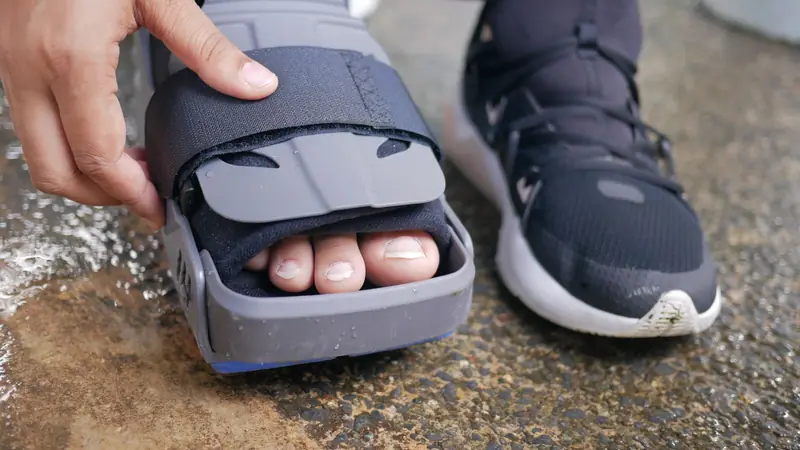
Rehabilitation — not immobilization — is what determines long-term outcomes. The goal is full return to activity without chronic instability.
Phase 1 (Days 1–7): Control swelling, restore range of motion. RICE, gentle range-of-motion exercises (alphabet tracing with the foot), and progressive weight-bearing as tolerated. Avoid aggressive stretching while acute swelling is present.
Phase 2 (Days 7–21): Restore strength. Resistance band exercises targeting ankle eversion (peroneal strengthening — these muscles dynamically stabilize the lateral ankle), inversion, plantarflexion, and dorsiflexion. Calf raises as pain permits. Begin walking without a limp before progressing.
Phase 3 (Days 14–35): Proprioception and neuromuscular control. Single-leg balance (progress from stable to unstable surfaces: firm floor → foam pad → balance board). Proprioceptive training is the most critical component for preventing recurrence — the ATFL carries mechanoreceptors that, when torn, leave the ankle with impaired position sense. Re-training this system is what prevents the ankle from “giving way” in the future.
Phase 4 (Days 21–42+): Return to sport. Jogging, cutting, jumping, and sport-specific drills, progressing in speed and complexity. Return to full practice when the patient can complete all sport-specific activities without pain or apprehension, single-leg balance equals the unaffected side, and strength is ≥90% symmetrical.
⚠️ Seek immediate evaluation after an ankle injury if you have:
- Inability to take even 4 steps with weight-bearing
- Bone tenderness directly over a malleolus or the base of the 5th metatarsal
- Significant medial (inner ankle) tenderness or swelling
- A prior history of ankle fracture on the same side
- Marked deformity or an ankle that appears “out of place”
Chronic Lateral Ankle Instability
When multiple ankle sprains occur without adequate rehabilitation, the result is chronic lateral ankle instability — a subjective feeling of the ankle “giving way,” recurrent sprains from minor perturbations, and lateral ankle pain with activity. The functional deficits in proprioception and peroneal strength allow the ankle to roll repeatedly on minor terrain variations. Management requires the same 4-phase rehabilitation program as acute sprains, with particular emphasis on peroneal strengthening and balance training. Persistent mechanical instability (positive drawer test, documented ligament insufficiency on MRI or stress X-ray) that fails conservative management may warrant Broström-Gould lateral ankle reconstruction — an outpatient surgery with excellent long-term outcomes for appropriately selected patients.
Frequently Asked Questions
How long does a sprained ankle take to heal?
Grade 1: 1–2 weeks. Grade 2: 3–6 weeks. Grade 3: 6–12 weeks for return to sport. Functional recovery (no pain with daily activities) is typically faster; full proprioceptive recovery and return to unrestricted athletic activity takes longer.
Should I wrap a sprained ankle?
Yes — a compression wrap or stirrup brace for the first 1–2 weeks limits swelling, provides proprioceptive feedback, and reduces reinjury risk during early rehabilitation. A functional lace-up brace (not a rigid cast) is appropriate for return to activity in the weeks following the acute phase.
Is walking on a sprained ankle bad?
Early controlled walking (within 24–48 hours for Grade 1–2 sprains) in a supportive brace is beneficial — it stimulates healing and prevents the deconditioning and proprioceptive decline that occurs with strict non-weight-bearing. Complete non-weight-bearing is only appropriate for Grade 3 sprains in the first 1–2 weeks or when fracture is present.
The Bottom Line
Ankle sprains are common but should not be dismissed as minor. The Grade 3 sprain that receives only RICE and 2 weeks of rest becomes the chronic instability that re-sprains repeatedly and eventually develops lateral compartment arthritis. The critical investment is proprioceptive rehabilitation — the 4-phase program described above. If your ankle has “never been right” since a prior sprain, or if you are experiencing recurrent giving-way, come in for evaluation. We can assess your mechanical stability, design a targeted rehabilitation program, and discuss whether surgical reconstruction is appropriate for your situation.
OrthoInfo – AAOS: Sprained Ankle
Ankle Sprain or Chronic Instability? Get Properly Evaluated.
Same-day appointments at Balance Foot & Ankle — Howell & Bloomfield Township, MI.
4.9★ | 1,123 Reviews | 3,000+ Surgeries Performed
Or call: (810) 206-1402
📋 Dr. Tom Biernacki, DPM, FACFAS answers:
Healing time depends on sprain severity. A Grade 1 sprain (ligament stretching) typically heals in 1–2 weeks with RICE (rest, ice, compression, elevation) and range-of-motion exercises. Grade 2 (partial tear) takes 3–6 weeks and benefits from a brace and physical therapy. Grade 3 (complete rupture) can take 3–6 months and occasionally requires surgical reconstruction if the ankle remains unstable. The biggest mistake I see is patients returning to activity too soon — reinjuring a partially healed sprain turns a minor injury into a chronic instability problem. Any ankle sprain that is still painful at 2 weeks, causes you to favor your foot, or happened alongside a popping sensation should be evaluated by a podiatrist to rule out fracture or ligament avulsion.

Dr. Tom Biernacki, DPM is a double board-certified podiatrist and foot & ankle surgeon at Balance Foot & Ankle Specialists in Southeast Michigan. With over a decade of clinical experience, he specializes in heel pain, bunions, diabetic foot care, sports injuries, and minimally invasive surgery. Dr. Biernacki is a member of the APMA and ACFAS, and his patient education content on MichiganFootDoctors.com and YouTube has reached over one million views.
- Diagnosis and Treatment of Plantar Fasciitis (PubMed / AAFP)
- Heel Pain (APMA)
- Hallux Valgus (Bunions): Evaluation and Management (PubMed)
- Bunions (Mayo Clinic)
Related Treatments at Balance Foot & Ankle
Our board-certified podiatrists offer advanced treatments at our Bloomfield Township and Howell locations.
Ankle & Achilles Resources
Expert guides on ankle sprains, Achilles tendinopathy, and ankle conditions:
- Balance Foot Ankles
- Equinus Deformity & Tight Achilles Michigan 2026
- Ice vs Heat for Foot Injuries 2026
- Ankle Osteoarthritis Treatment Options 2026
- Best Insoles for Achilles Tendonitis 2026
- Foot Rehab After Achilles Surgery 2026
- Ankle Swelling in One Leg 2026
- Foot Rehab After Ankle Surgery 2026
- Kobe Bryant Achilles Rupture
- Podiatrist Milford Highland Twp MI 2026
- Ankle Tendonitis Causes Treatment 2026
- Ankle Fracture Bimalleolar Treatment 2026
- Foot & Ankle Pain in Athletes 2026
- Osteochondral Lesion Talus 2026
- Skin Cancer of the Foot 2026
- Gout in Foot & Ankle 2026
- Golf Foot and Ankle Injuries
- Golf Foot and Ankle Injuries
- Ankle Equinus 2026
- Total Ankle Replacement Michigan 2026
- Posterior Ankle Impingement and Os Trigonum 2026
- Low Level Laser Therapy Foot Ankle 2026
- Achilles Rupture Surgery 2026
- Gout Foot & Ankle Treatment 2026
- Dance and Ballet Foot Injuries
- Posterior Ankle Impingement Michigan
- Foot Drop Treatment & AFO 2026
- Podiatrist Near Farmington Hills, MI 2026
- Ankle Sprain Treatment in Bloomfield Township, MI
- Ankle Arthritis Pain & Stiffness 2026
- Total Ankle Replacement (TAR)
- Tarsal Tunnel Syndrome Ankle Pain 2026
- Golf Foot and Ankle Injuries
- New Patient Special
- Supramalleolar Osteotomy
- Ankle Fusion for Ankle Arthritis 2026
- Ankle Osteochondral Lesion Talus 2026
- Ankle Sprain Grades 2026
- Triathlon Foot and Ankle Injuries
- Swollen Feet and Ankles
- Ankle Osteoarthritis Treatment Michigan 2026
- DVT Warning Signs Foot & Ankle Michigan 2026
- Achilles Tendinitis Recovery 2026
- Foot Ankle Imaging 2026
- Plantar Fibroma & Ledderhose Disease 2026
- Podiatrist Near Milford & South Lyon MI 2026
- Achilles Tendon Rupture Surgery 2026
- Field Hockey Foot and Ankle Injuries
- Night Splints for Plantar Fasciitis and Achilles Tendi
- Why Choose Balance Foot Ankle
- Weightlifting and Powerlifting
- Achilles Tendinitis vs Tendinosis 2026
- Foot & Ankle Soft Tissue Mass 2026
- Achilles Tendinitis Treatment Auburn Hills MI 2026
- Pain on Top of Foot Near Ankle
- FHL Tendinopathy (Dancers Ankle)
- Pickleball Foot Injuries 2026
- Podiatrist Jackson Lenawee County MI 2026
- Ankle Fracture Non-Surgical Treatment 2026
- Podiatrist Livonia Redford Michigan 2026
- Ankle Pain Without Injury 2026
- Acute Achilles Tendon Rupture
- Podiatrist Flat Rock MI 2026
- Ankle Fracture Surgery 2026
- Ankle Sprain Treatment Bloomfield Township MI 2026
- Daily Foot and Ankle Stretching Routine
- Peroneal Tendon Tears
- Exercises for Ankle Sprain Recovery
- Chronic Ankle Arthritis Treatment 2026
- Podiatrist Ypsilanti Belleville MI 2026
- Podiatrist Flint MI
- Posterior Ankle Impingement Treatment 2026
Related: our overview of common ankle pain conditions and what causes them.
Related foot & ankle guides
- Ankle pain: common causes
- Ankle tendinitis
- Swollen ankle
- Sprained ankle exercises
- Spring ligament tear
- Bone bruise in the foot
- Talocalcaneal coalition
Need an ankle sprain doctor near you? Balance Foot & Ankle evaluates and treats ankle sprains, chronic instability, and fractures — with bracing, rehab, and on-site imaging — at our Bloomfield Township office (Oakland County) and Howell office (Livingston County). Don’t let a “minor” sprain become chronic instability. Book online or call (810) 206-1402.
Prefer we call you?
Leave your info and our team calls back within 2 hours, the same business day — to get you scheduled with a board-certified podiatrist at our Howell or Bloomfield Township office. Same-week appointments; most insurance accepted, and we verify your benefits up front.
Ankle sprain not healing right?
A poorly-healed sprain can turn into chronic instability — get it evaluated. In Michigan? our podiatrists make sure it heals properly. Same-week visits in Howell & Bloomfield Township, most insurance accepted.
📅 Book an Appointment 📞 (810) 206-1402★ 4.9 from 1,123+ Google reviews · Same-week visits · We verify your insurance free — most visits are just a copay.
Related
Injuries that get mistaken for an ordinary sprain, and what a sprain can lead to:
- Lisfranc injury — the midfoot sprain that is commonly missed
- Post-traumatic ankle arthritis after repeated sprains
Seen locally, same week: Acute sprains are treated at our Howell and Bloomfield Hills offices, with imaging on site. Book online at Howell or book at Bloomfield Township.
Getting Care at Balance Foot & Ankle
Treated at our Howell and Bloomfield Township offices — same-week appointments available.
- Emergency Podiatrist: Same-Day Care for Acute Injuries
- Foot Injury: ER or Podiatrist?
- Sports Ankle Care in Michigan
- Deltoid Ligament Tear
- Fibula Stress Fracture
- Ankle Ligament Anatomy: ATFL, CFL, and PTFL — What Each Does and What Fails in Sprains
- Sinus Tarsi Syndrome: Lateral Hindfoot Pain After Ankle Sprain
- Ankle Instability Bracing & Non-Surgical Treatment in Michigan
- Ankle Arthrofibrosis: Stiffness After Ankle Surgery or Injury and Treatment
- Ankle Fusion vs. Total Ankle Replacement: Choosing the Right Surgery for End-Stage Arthritis
- Platform Tennis Foot Injuries: Ankle Sprains and Forefoot Pain in Paddle Sports
Ankle sprains are the most common sports injury there is, and the ones that turn into chronic instability are usually the ones that were never properly assessed. If this happened during sport and you want to get back to training safely, see how a sports medicine podiatrist approaches return-to-play testing and reinjury prevention.
Dr. Tom Biernacki, DPM is a board-certified foot & ankle surgeon (ABFAS & ABPM) at Balance Foot & Ankle Specialists in Southeast Michigan. With over a decade of clinical experience, he specializes in heel pain, bunions, diabetic foot care, sports injuries, and minimally invasive surgery. Dr. Biernacki is a member of the APMA and ACFAS, and his patient education content on MichiganFootDoctors.com and YouTube has made him one of the most-followed foot & ankle educators on YouTube.
More questions patients ask
How long does an ankle sprain take to heal?
Grade I ankle sprains (stretched, intact ligaments): 1-3 weeks. Grade II (partial tear): 3-6 weeks. Grade III (complete ligament rupture): 6-12 weeks or longer, sometimes requiring functional rehabilitation or surgical reconstruction. The anterior talofibular ligament (ATFL) is the most commonly torn ankle ligament. Full functional recovery (return to sport) typically takes 1-2 weeks longer than pain resolution, as proprioception and balance must be restored.
Should I see a doctor for an ankle sprain?
See a doctor if: you cannot bear weight at all (Ottawa Ankle Rules — bone tenderness at posterior edge of either malleolus or at the base of the 5th metatarsal indicates X-ray is needed), swelling is severe and came on immediately (possible fracture), symptoms haven't improved after 5-7 days of RICE treatment, this is a repeat sprain (may indicate chronic instability needing MRI), or you heard/felt a pop and have gross instability (Grade III).
What is the RICE method for ankle sprains?
RICE stands for: Rest (avoid weight-bearing for the first 24-48 hours, use crutches if needed), Ice (apply wrapped ice pack for 15-20 minutes every 2 hours for the first 48 hours — do not apply ice directly to skin), Compression (elastic bandage from toes to mid-calf to reduce swelling), and Elevation (keep the foot above heart level when resting). Current guidelines also support the POLICE protocol: Protect, Optimal Loading (early gentle motion), Ice, Compression, Elevation — early motion improves recovery speed.
Still have a question about coverage or cost? Book online and we will check your benefits before your visit: Book in Howell · Book in Bloomfield Township. Prefer to talk it through first? Call (810) 206-1402.