
Quick answer: Athlete’s foot (tinea pedis) is a dermatophyte fungal infection of the foot skin — causing itching, burning, scaling, and sometimes blistering between the toes and on the sole. It does not resolve on its own. OTC topical antifungals (clotrimazole, terbinafine cream) cure most cases in 4 weeks when applied consistently. The most common mistake is stopping at symptom relief — the infection returns immediately. Diabetic patients and anyone with spreading redness or open fissures need same-day podiatric evaluation.
In This Article
Medically reviewed by Dr. Tom Biernacki, DPM, FACFAS
Board-certified podiatric surgeon | Balance Foot & Ankle
Last reviewed: May 2026
- What Is Athlete’s Foot?
- Symptoms by Type: Which Pattern Do You Have?
- What Causes Athlete’s Foot and Who Gets It?
- How We Diagnose Tinea Pedis
- Treatment: OTC First, Then Escalation
- Prevention: How to Stop It Coming Back
- The Most Common Mistake We See
- Warning Signs: When to See a Podiatrist
- What Else Could It Be?
- Frequently Asked Questions
- The Bottom Line
What Is Athlete’s Foot?
You don’t have to be an athlete to get athlete’s foot — in our Howell clinic, we see it in office workers, retirees, and teenagers who’ve never stepped in a gym shower. The name comes from its prevalence in communal locker rooms and pool decks, but the fungus (dermatophyte species, most commonly Trichophyton rubrum or T. mentagrophytes) is everywhere, and it only needs moisture, warmth, and compromised skin barrier to take hold.
Tinea pedis — the medical term for athlete’s foot — affects approximately 15–25% of the general population at any given time. It’s one of the most prevalent fungal infections in humans. Importantly, it does not self-resolve: dermatophytes digest keratin (the protein in skin) and will continue spreading as long as the skin environment suits them. Treating it completely requires consistent antifungal application for the full course, not just until symptoms resolve.
Symptoms by Type: Which Pattern Do You Have?
Athlete’s foot presents in three distinct patterns, each with slightly different treatment implications:
Interdigital (Between the Toes) — Most Common
The interdigital pattern — scaling, maceration (softened, whitish skin), itching, and sometimes painful fissuring (cracks) between the toes — is the most common presentation. The 4th–5th toe web space is affected most frequently because it’s the tightest and most humid space on the foot. Severe maceration with a strong odor may indicate bacterial superinfection (Pseudomonas or Staphylococcus), which complicates treatment and may require combined antibiotic and antifungal therapy.
Moccasin (Sole and Heel) — Chronic Form
The moccasin pattern creates a diffuse, fine, silvery scaling across the entire sole and heel in a moccasin distribution. The skin is dry, thickened, and finely flaking rather than obviously itchy. This chronic form is often bilateral (both feet) and frequently co-exists with tinea unguium (nail fungus) and tinea manuum (one affected palm — the “two feet, one hand syndrome”). It responds more slowly to topical treatment and often requires oral antifungals for complete eradication.
Vesicular (Blistering) — Acute Inflammatory Form
The vesicular or bullous pattern causes sudden-onset clusters of itchy, fluid-filled blisters on the arch, heel, or ball of the foot. The blisters may coalesce into larger bullae (large blisters). This form represents an aggressive host inflammatory response to dermatophyte antigens. It’s often misidentified as dyshidrotic eczema. The blisters should not be punctured — this risks bacterial superinfection. Treatment includes topical antifungals with addition of mild topical corticosteroid to reduce the inflammatory response in severe cases.
What Causes Athlete’s Foot and Who Gets It?
Athlete’s foot is caused by dermatophyte fungi that thrive in warm, moist environments. Transmission occurs through direct skin-to-skin contact and through contaminated surfaces — shower floors, pool decks, locker room floors, and shared towels or nail clippers. The fungi can survive in the environment for extended periods.
Risk factors that increase susceptibility include: hyperhidrosis (excessive foot sweating), wearing occlusive footwear that traps moisture, sharing footwear or towels, walking barefoot in communal areas, diabetes (impaired immune response and skin barrier), peripheral arterial disease (reduced blood flow = reduced immune delivery), elderly age (skin becomes thinner and more permeable), immunosuppression (chemotherapy, HIV, transplant medications), and prior nail fungus (which serves as a reservoir for reinfection).
How We Diagnose Tinea Pedis
For typical presentations, tinea pedis is diagnosed clinically — the pattern of scaling, maceration, and distribution, combined with risk factors and treatment history, provides a confident diagnosis without laboratory testing.
When the diagnosis is uncertain (especially when differentiating from contact dermatitis, dyshidrotic eczema, or psoriasis), we perform a potassium hydroxide (KOH) preparation — scraping scale from the active border of the lesion, applying KOH to dissolve skin cells, and examining under microscopy for fungal hyphae. This is a rapid, in-office test with high sensitivity when performed from an active area. Culture is reserved for treatment-resistant cases to identify the specific organism and confirm antifungal sensitivity.
Treatment: OTC First, Then Escalation
Step 1: OTC Topical Antifungals (First-Line)
For interdigital and mild moccasin tinea pedis, OTC topical antifungals are highly effective when used correctly:
- Terbinafine 1% cream (Lamisil AT): Apply once daily × 1 week (interdigital) or twice daily × 2 weeks (moccasin). Highest clinical cure rate of OTC options.
- Clotrimazole 1% cream (Lotrimin AF): Apply twice daily × 4 weeks. Azole class — effective for most dermatophytes.
- Miconazole 2% (Micatin): Apply twice daily × 4 weeks. Equivalent efficacy to clotrimazole.
- Tolnaftate (Tinactin): Apply twice daily × 4 weeks. Fungistatic (slows growth) rather than fungicidal (kills) — adequate for mild cases, may be insufficient for moccasin type.
Critical application rule: Apply to the entire affected area plus 2 cm beyond the visible border of the infection — the fungus extends beyond visible scaling. Continue for the full course even when symptoms resolve. Most treatment failures result from stopping early.
Step 2: Prescription Topicals (Treatment-Resistant Cases)
If OTC treatment fails after one full course (4 weeks), we prescribe prescription-strength topical antifungals: ciclopirox 0.77% cream, econazole nitrate 1% cream, or naftifine 1–2% cream/gel. These are applied once or twice daily and may be combined with urea cream to address thick skin in moccasin-type infections.
Step 3: Oral Antifungals (Severe or Moccasin Type)
Oral terbinafine (250 mg daily × 2 weeks) or itraconazole (pulse dosing) is indicated for: widespread or severe infection, moccasin-type that hasn’t responded to topical therapy, concurrent nail infection (toenail fungus acts as a reservoir for reinfection), diabetic or immunosuppressed patients. Oral treatment achieves systemic drug levels that reach the thick hyperkeratotic scale of moccasin-type infections where topicals can’t penetrate.
Prevention: How to Stop It Coming Back
Athlete’s foot has a high recurrence rate — primarily because patients eliminate the infection but not the conditions that caused it. These measures significantly reduce recurrence:
- Foot powder daily: Apply antifungal powder (miconazole or tolnaftate powder) to feet and inside shoes after showering — reduces moisture that sustains fungal growth
- Dry between toes completely: Pat dry each toe web space after bathing — moisture is the fungus’s primary requirement
- Breathable footwear: Mesh or leather uppers; rotate shoes every 2–3 days to allow complete drying between uses
- Shower sandals: Never walk barefoot in communal showers, pool decks, or locker rooms
- Moisture-wicking socks: Wool or synthetic technical fibers; change socks mid-day if feet sweat heavily
- Treat shoes: Spray UV shoe sanitizer or antifungal shoe spray inside shoes weekly — shoes harbor fungi even after skin clears
The Most Common Mistake We See
The most common mistake we see is patients stopping antifungal treatment as soon as the itching stops — usually after 1–2 weeks. The itch resolves when the inflammatory response quiets, not when the fungus is eliminated. The fungal organisms are still present in the skin at the 2-week mark. Stopping treatment allows them to repopulate, and the infection returns within weeks — exactly where it started. The full 4-week course (for azoles) or the full 1–2 week course (for terbinafine cream, which works faster) is mandatory for complete mycological cure.
The second mistake is applying antifungal cream only to the most symptomatic spot. The fungal infection extends 2 cm beyond visible scaling. Apply to the full affected area plus a border around it to eliminate all active fungus.
⚠️ See a podiatrist same-day for athlete’s foot if:
- Red streaking spreading up the foot toward the ankle (cellulitis — bacterial complication)
- Open fissures with pus or discharge between the toes
- Diabetic patient with any foot skin change — immediate evaluation
- Vesicular eruption spreading rapidly across the sole
- Athlete’s foot not responding after one full 4-week OTC course
What Else Could It Be? Differential Diagnosis
Several skin conditions closely mimic athlete’s foot and don’t respond to antifungal treatment because they aren’t fungal:
- Contact dermatitis: Bilateral symmetric distribution (matching both feet in the same pattern from shoe material) rather than the asymmetric spread of tinea pedis; often worse in summer heat; KOH prep negative
- Dyshidrotic eczema (pompholyx): Deep-seated blisters on the palms and soles, strongly associated with nickel sensitivity and stress; bilateral; KOH negative; responds to corticosteroids, not antifungals
- Psoriasis: Well-demarcated, red, silvery-scale plaques; often involves nail pitting and plaque psoriasis elsewhere; KOH negative; requires dermatologic evaluation
- Pitted keratolysis: Bacterial (not fungal) infection causing small pits in the sole skin with a characteristic foul odor; responds to antibacterial wash (benzoyl peroxide, clindamycin) not antifungals
Frequently Asked Questions
How long does athlete’s foot take to clear?
With consistent OTC topical terbinafine (Lamisil AT), most interdigital athlete’s foot clears in 1–2 weeks. Azole creams (clotrimazole, miconazole) require 4 weeks applied twice daily. Moccasin-type tinea pedis takes longer and may require oral antifungals. Even after clinical clearance (no visible scaling or itch), continue treatment for the full course to prevent recurrence. If the infection has also involved the nails, nail treatment (typically 12 weeks of oral terbinafine) is required separately to eliminate the reservoir.
Is athlete’s foot contagious?
Yes — athlete’s foot spreads through direct skin contact and contaminated surfaces. The fungus can survive on shower floors, towels, and shoe insoles for extended periods. To prevent spreading to family members: don’t share towels, socks, or shoes; use antifungal spray on shared shower floors; wash affected socks in hot water; and wear flip-flops in shared bathrooms during active infection. The infection can spread from your feet to your groin (tinea cruris/”jock itch”) and nails through self-contamination — apply antifungal with a clean applicator rather than direct hand contact with the affected area.
Can athlete’s foot spread to the toenails?
Yes — approximately 30% of athlete’s foot cases eventually involve the toenails (onychomycosis). The fungus migrates from skin into the nail via the distal groove (the skin under the free nail edge). Once established in the nail, it creates a reservoir that reinfects the surrounding skin even after successful skin treatment. This is why persistent, recurrent athlete’s foot often points to undiagnosed nail fungus — treating the skin without treating the nail simply delays the next skin outbreak. A DPM nail culture confirms nail involvement and guides treatment escalation.
The Bottom Line
Athlete’s foot is a completely treatable fungal infection — but it requires a full antifungal course, not just symptom control. OTC terbinafine cream clears most cases in 1–2 weeks when applied consistently to the full affected area. Persistent or recurrent athlete’s foot usually means untreated nail fungus serving as a reservoir, or a misdiagnosis (contact dermatitis or dyshidrotic eczema). If OTC treatment has failed after one full course, come in — we’ll confirm the diagnosis and implement the right escalation so you’re not repeating ineffective treatment cycles.
Sources
- Goldstein AO, Goldstein BG. “Dermatophyte (tinea) infections.” UpToDate. 2026.
- Sahoo AK, Mahajan R. “Management of tinea corporis, tinea cruris, and tinea pedis: a comprehensive review.” Indian Dermatol Online J. 2016;7(2):77-86.
- Crawford F, Hollis S. “Topical treatments for fungal infections of the skin and nails of the foot.” Cochrane Database Syst Rev. 2007.
- Bell-Syer SE, et al. “Oral treatments for fungal infections of the skin of the foot.” Cochrane Database Syst Rev. 2012.
Watch: Best 9 Athlete’s Foot Fungus Remedies
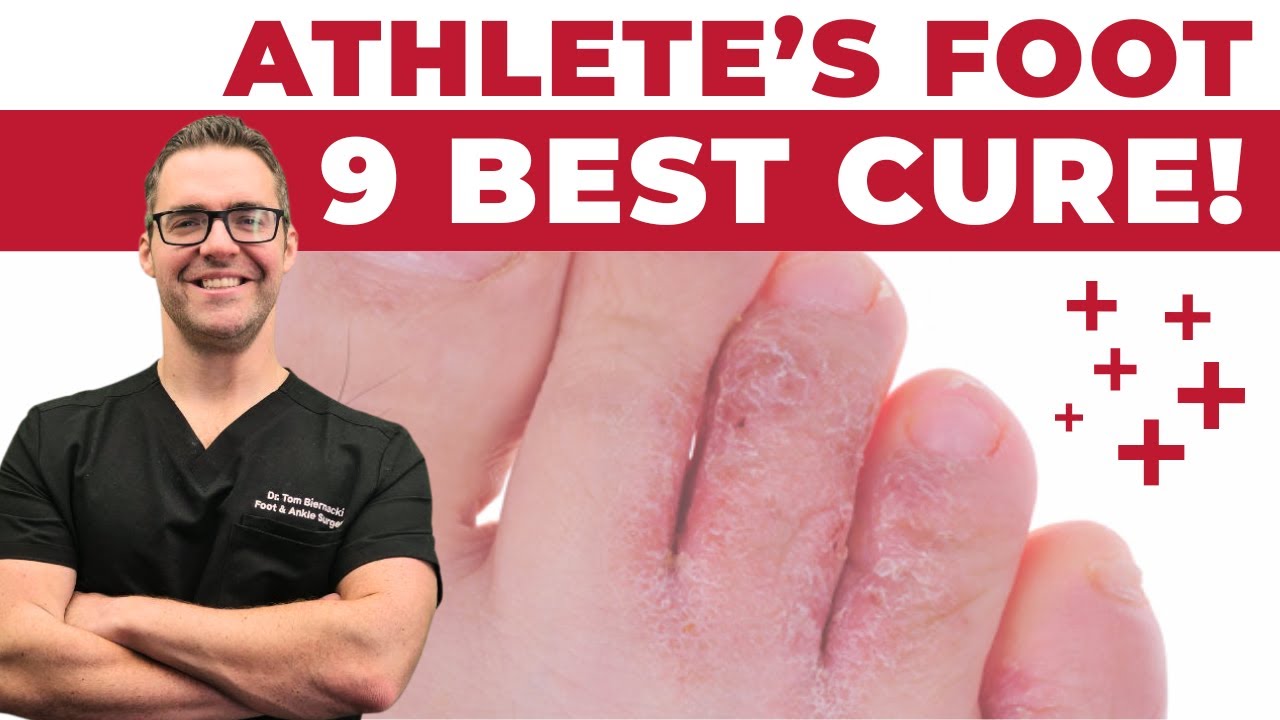
Dr. Tom ranks the 9 most evidence-backed athlete’s foot remedies from most to least effective — including what the research shows about OTC creams vs. prescription medications vs. home remedies like vinegar and tea tree oil. The #1 mistake that causes athlete’s foot to keep coming back is clearly identified.
Get Expert Care at Balance Foot & Ankle
Appointments at our Howell and Bloomfield Township offices. Board-certified podiatric surgeons. Most insurance accepted.
Related reading: foot fungus treatment · toenail onychomycosis · best socks for toenail fungus
Have a painful soft corn between your toes? See our guide: Heloma Molle (Soft Corn Between Toes) — Michigan podiatrist explains causes and the 4 most effective treatments.
Noticing pits and odor on the soles of your feet? See our guide: Pitted Keratolysis — Michigan podiatrist explains this bacterial infection and the most effective prescription treatments.
Related: Not clearing or starting to spread? Here’s how to treat severe athlete’s foot and when you need a prescription.

Dr. Tom Biernacki, DPM is a board-certified foot & ankle surgeon (ABFAS & ABPM) at Balance Foot & Ankle Specialists in Southeast Michigan. With over a decade of clinical experience, he specializes in heel pain, bunions, diabetic foot care, sports injuries, and minimally invasive surgery. Dr. Biernacki is a member of the APMA and ACFAS, and his patient education content on MichiganFootDoctors.com and YouTube has made him one of the most-followed foot & ankle educators on YouTube.
More questions patients ask
What is the most effective athletes foot treatment?
OTC terbinafine (Lamisil) cream applied 2x/day for 2-4 weeks has the highest cure rate at 80%. Other effective options: clotrimazole 2x/day for 4-6 weeks; econazole or ciclopirox prescription topicals; oral terbinafine 250mg/day for 2-6 weeks for severe or refractory cases. Critical: dry feet thoroughly + alternate shoes daily + treat shoes with antifungal spray.
How long does athletes foot take to clear?
With proper antifungal treatment: 2-4 weeks for most cases. Moccasin-pattern (chronic, scaly soles) takes 4-8 weeks. Nail involvement (onychomycosis) takes 12+ months because nails grow slowly. Stop treatment too early and recurrence is common (50%+ if footwear isnt also treated).
Can I prevent athletes foot?
Yes. Dry feet thoroughly after showering (especially between toes). Wear moisture-wicking socks (not cotton). Alternate shoes daily — gives them 24+ hours to dry out. Use antifungal foot powder if you sweat heavily. Wear shower sandals in public locker rooms and pool decks. Treat the inside of shoes with antifungal spray monthly.
Still have a question about coverage or cost? Book online and we will check your benefits before your visit: Book in Howell · Book in Bloomfield Township. Prefer to talk it through first? Call (810) 206-1402.