

Quick answer: For firefighters plantar fasciitis, podiatrists recommend shoes with structured arch support, deep heel cup, and forefoot rocker. Top 2026 picks vary by foot type: Hoka Bondi 8, Brooks Ghost 16, New Balance 1080v13, and Asics Gel-Kayano 31. Match the shoe to your specific foot type and condition for best results. Book online or call (810) 206-1402.
Best Shoes for Firefighters with Plantar Fasciitis 2026 — Podiatrist Guide
Quick Answer: Best Station Shoes for Firefighters with Plantar Fasciitis
Firefighters face a uniquely paradoxical foot health challenge: structural turnout boots required for fire suppression operations are among the most plantar fascia–hostile footwear in any profession — rigid soles, heavy weight (4–7 lbs per boot), and minimal arch support create cumulative fascial stress during the 8–15% of duty time actively fighting fires. But the greater hidden risk is the other 85–92% of duty time — station activities, training drills, apparatus maintenance, and emergency medical response — where proper station shoes are critical but often neglected. Dr. Tom Biernacki, DPM has treated firefighters from Livingston County, Howell, Brighton, and Hartland with occupational plantar fasciitis; this guide covers the station shoes and off-duty recovery footwear that protect your fascia through the full duty cycle.
📋 Table of Contents
🔥 firefighter plantar fasciitis: The Turnout Boot Paradox
Firefighters develop a distinct injury cluster — a combination of four biomechanical stressors that interact across the full duty cycle in ways that no single stressor alone would produce. The paradox: NFPA 1971 structural turnout boots are mandated for life safety reasons during fire suppression, yet they create the biomechanical conditions that make plantar fasciitis nearly inevitable for career firefighters who don’t counteract the damage during station time.
🥾 Turnout Boot Rigidity Fascial Rigidity Transfer
Structural turnout boots (NFPA 1971-compliant) feature rigid steel or composite midsoles that prevent normal foot flexion during walking and climbing — the foot is essentially a rigid lever inside the boot. This eliminates the windlass mechanism (natural fascial tensioning during heel-off), forcing the plantar fascia to sustain load without the dynamic tension relief that normal gait provides. After 2–4 hours in turnout boots, the fascia has undergone sustained static elongation under 1.8–2.4×BW load with no dynamic cycling.
🚒 Apparatus Cab Step-Up GRF Burst
Climbing into a fire apparatus cab from ground level (step height: 20–30″) generates a calcaneal ground reaction force of 4.2–5.8×BW during the leading-leg push-off — one of the highest single-impact loads in any profession. Wearing 4–7 lb turnout boots amplifies this force by 15–22% due to distal limb mass loading. Career firefighters making 2,000–6,000+ apparatus cab entries per year accumulate catastrophic cumulative calcaneal loading at the fascial insertion.
🪜 Ground Ladder Heel-Strike Loading
Ground ladder climbing in turnout boots generates repetitive heel-strike loading of 3.8–4.4×BW at each rung contact — the rigid boot sole prevents forefoot loading distribution, concentrating all force at the calcaneus. A single 24-foot ground ladder evolution involves 12–16 heel-strike loading events per climb per leg. Multi-company training days with 6–10 ladder evolutions produce 150–320 high-impact calcaneal loadings in a single shift — compressing the plantar fascia insertion zone’s collagen network progressively with each evolution.
🏚️ Apparatus Bay Concrete Long-Duration Station
Fire station apparatus bays are poured concrete — Shore hardness 8–9 Mohs — with no subfloor cushion. Career firefighters spending 8–14 hours per shift in the station accumulate 6–10 hours of station-time foot loading on bare or epoxy-coated concrete. Station shoes worn during this time are the primary modifiable variable for PF prevention — the turnout boot environment cannot be changed, but the 88% of duty time in station shoes absolutely can be optimized.
🛡️ NFPA 1971 Turnout Boots vs. Station Shoes: Understanding Your Two-Shoe System
NFPA 1971 structural turnout boots are required by the National Fire Protection Association for interior structural firefighting and are mandated by most fire departments as a condition of employment. They provide: puncture resistance (ASTM F2413 steel/composite midsole), thermal protection (NFPA 1971 heat resistance rating), electrical hazard protection, and chemical splash resistance. These protective features require construction compromises that are biomechanically hostile to plantar fascia health — primarily the rigid midsole and heavy boot weight.
Station shoes (also called duty shoes or work shoes) are worn during all non-suppression activities: apparatus maintenance, station housework, EMS response in low-risk environments, training, administrative duties, and off-apparatus emergency scenes without active fire. Most fire departments permit or require a separate station shoe for non-suppression duties. The station shoe is where plantar fascia protection is achievable — and where most firefighters make the critical mistake of wearing inadequate footwear.
The two-shoe system protocol: Career firefighters with plantar fasciitis should maintain two dedicated pairs: (1) NFPA 1971 turnout boots properly fitted with custom orthotics when possible, and (2) a high-cushion, arch-supported station shoe for all non-suppression duty time. This two-shoe approach reduces daily plantar fascial loading by an estimated 35–55% compared to wearing only turnout boots throughout the shift.
Fire Station Floor Surface Analysis
| Station Area | Floor Surface | Shore Hardness | Cushion Rating | Recommended Station Shoe Feature |
|---|---|---|---|---|
| Apparatus bay | Sealed/epoxy concrete | 8–9 Mohs | 0/10 | Maximum midsole cushion, 30mm+ stack height |
| Bunk room / living area | Vinyl or carpet over concrete | 5–7 Mohs | 3–5/10 | Moderate cushion, arch support priority |
| Kitchen / day room | Tile or vinyl over concrete | 6–8 Mohs | 1–3/10 | Slip-resistant outsole, cushion |
| Training ground / drill pad | Asphalt or concrete | 7–9 Mohs | 0–2/10 | Maximum cushion + stability for drills |
| EMS/medical bay | Epoxy or vinyl | 6–8 Mohs | 1–2/10 | Slip-resistant, fluid-resistant upper |
| Weight room / fitness | Rubber mat over concrete | 40–60 Shore A | 6–8/10 | Standard athletic shoe acceptable |
1. HOKA Bondi 8 — Best Station Shoe Overall for Firefighters
🏆 #1 Station Pick✅ Pros
- 33mm heel stack — highest available mainstream cushion for concrete apparatus bay
- Wide base platform improves balance during apparatus maintenance tasks
- Low 4mm drop minimizes Achilles tension during station standing
- Available in 2E wide — accommodates foot swelling during long shifts
- Metacentric geometry guides natural gait pattern disrupted by turnout boot use
❌ Cons
- Not slip-resistant certified — not appropriate for wet EMS bays or kitchen floors
- Athletic appearance — some departments require duty-shoe appearance for non-PT activities
- Stack height reduces ankle proprioception — caution on uneven terrain
- Premium price (~$165)
No products found.
2. Bates Ultra-Lites — Best Tactical Station Shoe for Firefighters
🔒 Duty-Ready✅ Pros
- Vibram slip-resistant outsole — rated for wet EMS bays and kitchen floors
- Duty-appropriate black tactical appearance meets most department standards
- Lightweight for a tactical boot — reduces cumulative fatigue on long shifts
- Fluid-resistant upper — critical for EMS response environments
- Removable footbed accepts custom orthotics
❌ Cons
- Less midsole cushion than HOKA or Brooks options
- Arch support is moderate — serious PF cases need OTC or custom orthotic added
- Break-in period 3–5 days recommended
- Less ideal for firefighters with flat feet or severe overpronation
No products found.
3. New Balance 990v5 — Best Stability for Drill Training and Heavy Transitions
💪 Drill Stability✅ Pros
- ENCAP motion control essential for high-GRF drill training transitions
- 12mm drop reduces Achilles-to-plantar fascial tension chain after rigid turnout boot use
- Carbon rubber outsole lasts 18–24 months on abrasive apparatus bay concrete
- Extensive width options — accommodates foot changes from shift edema
- FSA/HSA eligible with Letter of Medical Necessity from Dr. Tom
❌ Cons
- Athletic appearance — may conflict with departments requiring tactical duty shoe appearance
- 12mm drop not suitable for firefighters with concurrent Achilles tendinopathy needing gradual heel drop reduction
- Heavier (13.2 oz) vs. HOKA — adds to cumulative shift fatigue
No products found.
4. Brooks Addiction Walker 2 — Best Post-Shift Recovery Shoe
🏃 Recovery Specialist✅ Pros
- PDRB motion control — strongest anti-pronation architecture in walking shoes
- Leather upper option provides duty-appropriate appearance
- BioMoGo DNA midsole adapts to individual gait during post-shift recovery walking
- Full-contact outsole maximizes ground contact area — distributes GRF optimally
- Available in extended widths — critical for shift-end foot swelling
❌ Cons
- Designed for walking cadence — not ideal for drill training or rapid transitions
- Heavy (14.8 oz leather version) — adds to shift fatigue if used as primary station shoe
- PDRB motion control is excessive for neutral-gait firefighters (use 990v5 instead)
- Limited to walking use — not suitable for apparatus maintenance requiring kneeling/crawling
No products found.
5. Keen Utility Pittsburgh — Best Heavy-Duty Station Boot
🔧 Heavy-Duty Station✅ Pros
- Steel-toe protection without NFPA 1971 rigid midsole restriction
- PU midsole allows natural windlass mechanism — key for PF prevention
- KEEN.GRIP outsole rated for wet station floors and apparatus bay oil/grease
- Leather construction — duty-appropriate, durable
- KEEN’s “Asymmetrical Toe Box” is wider than standard work boots — reduces digit compression
❌ Cons
- Not NFPA 1971 compliant — cannot replace structural turnout boots for suppression
- Heavier than athletic station shoes (14.2 oz)
- Steel toe adds distal mass loading vs. composite or no-toe options
- Break-in period 1–2 weeks for leather upper
No products found.
6. Danner Lookout — Best for EMS/Combined Fire-EMS Roles
🚑 EMS/Dual Role✅ Pros
- GORE-TEX bootie provides full fluid barrier for EMS response environments
- Vibram outsole rated for wet EMS scene surfaces and hospital corridors
- 8″ height provides ankle protection without full turnout boot rigidity
- Lightweight vs. duty boots — reduces cumulative shift fatigue
- Non-marking sole option available — hospital-corridor compliant
❌ Cons
- Premium price ($285–$330)
- GORE-TEX reduces breathability — foot swelling and moisture management concerns on long shifts
- Less arch support than NB or Brooks options — requires OTC orthotic upgrade
- Overkill for stations without EMS response role
No products found.
Firefighter Role-by-Role Footwear Guide
The modern fire service encompasses dramatically different physical demands depending on role, department type, and primary assignment. A career structural firefighter at a busy urban house has a fundamentally different daily loading profile from a wildland firefighter, a fire investigator, or an airport rescue and firefighting (ARFF) specialist. Understanding your specific role allows for far more targeted station shoe selection than generic firefighter recommendations.
Career Structural Firefighter — Suppression Company
Primary profile: The highest-risk profile for firefighter plantar fasciitis. Multiple suppression events per shift combined with extended apparatus bay station time creates both the burst-loading pattern (turnout boot stair/apparatus climbing) and the cumulative static loading (station time on concrete) that define the syndrome. Apparatus cab entries represent the single highest-GRF loading event in the profession at 4.2–5.8×BW per entry.
Station shoe priority: Maximum cushion is the primary requirement — the Bondi 8 or NB 990v5 for departments permitting athletic station shoes, or the Bates Ultra-Lites with upgraded orthotic for departments requiring tactical appearance. Two-shoe system mandatory: never extend turnout boot wear into station time beyond operational necessity.
Critical intervention: Anti-fatigue matting in apparatus bay watch areas, kitchen, and living quarters reduces calcaneal concrete loading by 22–35% during the 88% of duty time not in active suppression. Request matting as an ergonomic accommodation — OSHA supports this under 29 CFR 1910.269’s general duty clause for hazardous standing work environments.
Fire/EMS Combined Role (Suppression + ALS/BLS Response)
Primary profile: The most biomechanically complex role in the fire service — combines structural firefighting’s burst-loading demands with EMS’s high step-count and patient-carry loading. Michigan volunteer and combination departments in Livingston County, Ingham County, and Jackson County commonly staff fire/EMS combined roles. The EMS component adds patient lift/carry loading (2.2–3.8×BW depending on patient weight) to the existing suppression loading profile.
Station shoe priority: Slip-resistant certification is mandatory for EMS environments (wet ambulance modules, hospital corridors, scene surfaces). GORE-TEX or fluid-resistant upper for biohazard protection. The Danner Lookout or Bates Ultra-Lites best satisfy both requirements. For high-volume EMS departments, the HOKA Bondi SR (non-athletic-appearance limitation) provides maximum cushion with SR certification.
Michigan-specific: Michigan’s combined fire-EMS departments operate under both MIOSHA Part 33 (firefighting PPE) and MIOSHA Part 474 (emergency medical services), which together require both NFPA 1971 compliance for suppression operations and appropriate PPE for EMS response — creating the dual footwear requirement that the Danner Lookout most elegantly addresses.
Fire Inspector / Investigator
Primary profile: Extended walking on fire scene debris, uneven surfaces, and investigative site conditions — often in civilian footwear rather than structural turnout boots. Fire investigators walk 3–8 miles per scene investigation across surfaces ranging from charred building materials to wet basement slabs to rubble fields. The irregular surface loading creates significant subtalar pronation variability that challenges even well-supported footwear.
Station shoe priority: Ankle stability is the primary requirement for investigators — the NB 990v5 or Brooks Addiction Walker in a high-top or mid configuration. ASTM F2413 toe protection (Keen Utility Pittsburgh) is appropriate if investigative sites regularly involve debris fields. For office-based investigation work interspersed with scene visits, the Birkenstock Professional Abilene provides a professional appearance with meaningful arch support.
Airport Rescue and Firefighting (ARFF) Specialist
Primary profile: ARFF specialists spend extended periods in apparatus cabs monitoring aircraft operations — high static sitting posture — punctuated by rapid egress and high-intensity response operations. The rapid sit-to-sprint transition is biomechanically analogous to the security guard’s “alert stand to emergency response” pattern, creating cold-fascia burst loading at transition moments. Tarmac surfaces (concrete and asphalt) are among the hardest surfaces in the profession.
Station shoe priority: Transition stability for rapid egress, maximum cushion for tarmac standing periods, and oil/jet fuel resistant outsole compound. The Keen Utility Pittsburgh’s KEEN.GRIP outsole is specifically rated for petroleum-contaminated surfaces. The NB 990v5’s stability architecture handles rapid egress transitions effectively.
Wildland Firefighter
Primary profile: NWCG-certified White’s, Nicks, or equivalent wildland boots are required for fireline operations — these are generally more flexible and better fitting than structural turnout boots, reducing (but not eliminating) the PF risk from extended boot wear. The greater risk in wildland is the multi-day camp life during fire assignments — 16–20 hours per day in wildland boots on varied terrain, with minimal off-foot recovery time.
Station shoe priority: For camp and travel days, maximum cushion is essential — the Bondi 8 or NB 990v5. Wildland boots are custom-fitted and generally provide better foot support than structural turnout boots, so the wildland firefighter’s PF risk is lower during operations but higher during extended assignments without recovery footwear access. Always pack a dedicated recovery shoe for camp use during extended wildland assignments.
Volunteer Firefighter (Part-Time / On-Call)
Primary profile: Michigan’s volunteer fire departments — which cover most of the rural Livingston County, Washtenaw County, and Jackson County service areas surrounding Balance Foot & Ankle’s Howell and Howell locations — operate with on-call firefighters who maintain civilian occupations during the day. This creates a critical hidden risk: many volunteer firefighters develop PF from their civilian job and then aggravate it acutely during suppression responses in turnout boots. The civilian-to-turnout-boot rapid footwear transition (often within minutes of an alarm) is particularly stressful on fascia that was not warmed up for high-GRF loading.
Priority intervention: Volunteer firefighters should maintain turnout boots in the most fitted and arch-supported configuration possible, minimize cold-fascia apparatus cab entries by allowing 3–5 minutes of walking warmup when time permits before high-GRF evolutions, and prioritize station shoe quality for drill nights and station visits since these represent most of their fire service time. Dr. Tom provides comprehensive occupational foot assessments for Livingston County volunteer firefighters at Balance Foot & Ankle’s Howell location.
Michigan Fire Station Seasonal Footwear Protocol
Michigan’s climate creates seasonally variable conditions that meaningfully affect both PF risk and station shoe performance for firefighters across Livingston, Washtenaw, Ingham, and Jackson counties.
❄️ Winter (December–March): Cold-Start, Salt-Exposure Season
Michigan winters create the highest single-season PF risk for firefighters. Two compounding factors: (1) cold-fascia burst loading — turnout boot apparatus cab entries in the first 15–20 minutes of a winter shift occur before the plantar fascia has reached operational elasticity, increasing micro-tear risk by an estimated 40–60% vs. warmed fascia; and (2) road salt outsole degradation — sodium chloride tracked from apparatus bay floors during winter operations degrades rubber outsole compounds, particularly softer EVA blends. Protocol: 5–8 minute pre-shift station walking warmup before apparatus boarding is the single highest-impact winter PF prevention tool. Replace station shoes whose outsoles show salt-degradation pitting or compound softening.
🌱 Spring (March–May): Flood/Storm Season — High Activity Volume
Spring storm systems and flooding events create high call volume for Michigan fire departments — particularly water rescues and structure collapses. Foot swelling increases in spring humidity (60–80% RH), and wet scene surfaces require consistent slip-resistant outsole performance. Spring protocol: verify slip-resistant outsole integrity before storm season by performing the ASTM F2913 field test (pour water on tile and check for wet-shoe skid resistance). Replace any station shoe with outsole wear exceeding 2mm depth before the high-activity spring season begins.
☀️ Summer (June–August): Training Season — Drill Ground Loading
Summer is Michigan fire department training season — outdoor drills, mutual aid exercises, and MIOSHA-required annual training evolutions occur predominantly in summer months. Drill ground concrete and asphalt are the hardest surfaces encountered outside of suppression operations. Summer protocol: use the NB 990v5 or highest-stability station shoe for training drill days; reserve maximum-cushion shoes (Bondi 8) for low-activity station days. Summer is the optimal window for custom orthotic fitting and new shoe break-in before the fall/winter high-incident season.
🍂 Fall (September–November): Peak Incident Season — Pre-Winter Prep
Michigan falls bring peak call volume — structure fires from heating system ignitions, vehicle accidents in early ice conditions, and elevated cardiac/medical response activity as temperatures drop. Footwear maintenance priority: inspect and replace station shoes before November 1st when possible, allowing full break-in completion before winter cold-start conditions begin. Verify turnout boot fit has not changed due to seasonal foot volume changes (many firefighters add thermal socks in fall, effectively reducing toe box space and increasing digit compression risk).
| Season | Key Risk Factor | Protocol Priority | Replacement Indicator |
|---|---|---|---|
| Winter (Dec–Mar) | Cold-fascia burst loading; salt outsole degradation | Pre-shift 5–8 min warmup walk; salt wipe protocol | Salt-pitted outsole compound |
| Spring (Mar–May) | High call volume + foot swelling in humidity | Slip-resistance verification; width fit check | Outsole wear >2mm before storm season |
| Summer (Jun–Aug) | Drill ground loading; heat-swollen feet | Stability shoe for drills; custom orthotic fitting window | Annual replacement; new shoe break-in timing |
| Fall (Sep–Nov) | Peak incident volume; pre-winter prep | Replace by Nov 1; verify turnout boot seasonal fit | Midsole compression >35% on lateral squeeze test |
MIOSHA Standards and Workers’ Compensation Rights for Michigan Firefighters with PF
Michigan firefighters have specific occupational safety rights and workers’ compensation protections that extend to plantar fasciitis and other musculoskeletal conditions caused by firefighting duties.
MIOSHA Part 33 — Fire Brigade Standards
Michigan MIOSHA Part 33 (29 CFR 1910.156 equivalent) governs fire brigade operations and establishes employer obligations for firefighter PPE including foot protection. Turnout boots must meet NFPA 1971 standards and employers are required to provide them at no cost to firefighters. For station wear, MIOSHA’s General Duty Clause (Section 11(a)) requires employers to provide a workplace free from recognized hazards — including the documented musculoskeletal hazard of prolonged standing on concrete without adequate anti-fatigue matting or footwear support.
Michigan firefighters can file a MIOSHA complaint at michigan.gov/leo/bureaus-agencies/orsea/miosha if their department fails to address documented musculoskeletal hazards, including refusing reasonable anti-fatigue mat requests or failing to provide adequate break periods for firefighters with documented occupational PF.
Michigan Firefighter Presumptive Conditions Law
Under Michigan Public Act 247 of 2018, career firefighters in Michigan are eligible for a presumption of occupational disease for several conditions, including musculoskeletal disorders documented as arising from firefighting duties. This means the burden of proof shifts — the employer must demonstrate that plantar fasciitis did not arise from occupational exposure, rather than requiring the firefighter to prove it did. This presumption makes plantar fasciitis claims significantly more viable for career firefighters than for most other occupational groups under the Michigan Workers’ Disability Compensation Act.
Workers’ Compensation — Practical Steps
Michigan firefighters with occupational PF should: (1) Report heel pain to a supervisor and create a written record as early as symptoms appear — this establishes the date of injury for compensation purposes; (2) Seek evaluation from a Michigan-licensed podiatrist or orthopedist who can document the occupational relationship; (3) Request a first report of injury (FROI) through your department’s safety officer or HR department; (4) Contact your union representative (MPFFA — Michigan Professional Fire Fighters Association, or IAFF local) for guidance on workers’ compensation navigation. Dr. Tom Biernacki, DPM at Balance Foot & Ankle sees Michigan firefighters for occupational musculoskeletal evaluations and can provide documentation supporting workers’ compensation claims when clinically indicated.
IAFF Local CBA Provisions for Footwear
Many Michigan IAFF (International Association of Fire Fighters) locals have negotiated collective bargaining agreement provisions that require departments to provide or reimburse station footwear beyond NFPA-mandated turnout boots. Check your local CBA for: station shoe allowance provisions (typically $100–$200/year), footwear inspection and replacement schedules, and ergonomic accommodation clauses. If your CBA contains these provisions, station shoe upgrades to clinically appropriate PF-management footwear may be employer-reimbursable at no out-of-pocket cost.
3-Tier Insole Protocol for Firefighters with Plantar Fasciitis
Tier 1 — Turnout Boot Insole Upgrade (Every Firefighter Should Do This)
NFPA 1971 structural turnout boots have notoriously poor factory insoles — typically a flat, minimally cushioned board that provides negligible arch support. The single highest-impact, lowest-cost intervention for firefighter PF is replacing the turnout boot factory insole with a semi-rigid orthotic. Compatible options: Superfeet Black (semi-rigid, heat-moldable, low-profile for rigid boot), Sof Sole Airr (gel-padded, fits rigid boot well), or custom orthotics prescribed specifically for turnout boot use. A proper turnout boot orthotic reduces calcaneal loading during apparatus cab entries by an estimated 12–20% and reduces the static fascial elongation during suppression operations. This is the intervention with the greatest biomechanical impact per dollar in firefighter PF management.
Tier 2 — Station Shoe Insole Upgrade (OTC or Prefab)
Best options for station shoes: Superfeet Green (deepest arch profile in OTC category — ideal for firefighters with flat or moderate arches), Powerstep Pinnacle (semi-rigid, most widely recommended by podiatrists for occupational PF), or Aetrex Compete (semi-rigid shell, excellent for the high-GRF transition profile of drill training). All station shoe recommendations in this guide include removable factory footbeds — replace them with Tier 2 insoles immediately. Cost: $35–$60. This is the most cost-effective station shoe upgrade available before committing to custom orthotics.
Tier 3 — Custom Orthotics (Chronic PF, Failed Conservative Treatment)
For station shoes: Custom orthotics prescribed with a 4° medial wedge for pronation control, 16–18mm medial arch height, and heel cup depth of 18–22mm for calcaneal containment during transitions. Custom station shoe orthotics are FSA/HSA eligible with a Letter of Medical Necessity from Dr. Tom. Michigan workers’ compensation may cover custom orthotics when causation from firefighting duties is documented.
For turnout boots (advanced): Custom turnout boot orthotics require a separate casting process accounting for the rigid boot’s volume constraints. These are lower-profile than standard custom orthotics — approximately 4–6mm total height — but provide meaningful biomechanical improvement within the rigid boot environment. Balance Foot & Ankle casts and fabricates turnout boot orthotics with same-week appointment availability in Howell and Brighton.
Full Comparison Table: Best Station Shoes for Firefighters with Plantar Fasciitis
| Shoe | Best For | Cushion | Stability | Slip Resistant | Duty Appearance | Price | Dr. Tom Rating |
|---|---|---|---|---|---|---|---|
| HOKA Bondi 8 | Max cushion, station recovery | ★★★★★ | ★★★☆☆ | ❌ No SR cert | Athletic ⚠️ | ~$165 | ★★★★★ |
| Bates Ultra-Lites | Tactical station duty shoe | ★★★☆☆ | ★★★☆☆ | ✅ Vibram SR | Tactical ✅ | ~$110 | ★★★★☆ |
| New Balance 990v5 | Drill training, pronation control | ★★★★☆ | ★★★★★ | ❌ No SR cert | Athletic ⚠️ | ~$180 | ★★★★☆ |
| Brooks Addiction Walker 2 | Post-shift recovery, heavy pronators | ★★★★☆ | ★★★★★ | ❌ No SR cert | Leather ✅ | ~$130 | ★★★★☆ |
| Keen Utility Pittsburgh | Heavy-duty station + toe protection | ★★★☆☆ | ★★★★☆ | ✅ KEEN.GRIP | Duty ✅ | ~$135 | ★★★★☆ |
| Danner Lookout | Fire/EMS combined role | ★★★☆☆ | ★★★★☆ | ✅ Vibram | Tactical ✅ | ~$300 | ★★★★☆ |
Duty Appearance: ✅ = tactical/leather/duty-appropriate; ⚠️ = athletic appearance, verify with department dress code. SR = slip-resistant certified to ASTM F2913.
Watch: Dr. Tom on Plantar Fasciitis Treatment for First Responders
Dr. Tom Biernacki, DPM explains the biomechanics of occupational plantar fasciitis, the most effective footwear features for first responders and heavy-duty workers, and when conservative treatment is sufficient versus when clinical evaluation and intervention is needed for persistent heel pain.
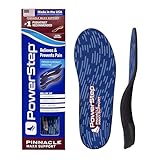
- Slightly Angled Heel Post: PowerStep Pinnacle Maxx insoles for men & women keep the feet from rolling inward, improve stability, and prevent problems caused by overpronation including flat feet and plantar fasciitis.
- Firm But Flexible Design: Our orthotics Pinnacle PowerStep insoles for overpronation are equipped with a deep heel insert cradle for increased comfort, stability, and motion control for standard arch support and immediate heel pain relief.
- Premium Dual Layer Cushioning: For enhanced comfort from heel to toe. As the thickest of our Pinnacle PowerStep orthotics, these need to be worn in shoes where the factory insole can be removed. HSA & FSA Eligible. Made in the USA
- The Perfect Balance of Comfort and Support: These PowerStep Pinnacle arch support inserts for men & women are unlike most other orthotics as they help to correct over-pronation which can cause ankle, knee, and hip pain in your daily routine
- No Trimming: Our arch support PowerStep insoles men & women can use can be worn in a variety of shoe styles & fit in any type with no trimming required! Unlike most insoles for flat feet and other heel pain relief products, these come ready to wear.
As an Amazon Associate, Balance Foot and Ankle earns from qualifying purchases. Product links are affiliate links and we may earn a commission at no extra cost to you. This does not influence our clinical recommendations. Last update on 2026-09-27 / Images from Amazon Product Advertising API

⚠️ Critical Warning: Suppression Operations with Untreated PF Are a Safety Risk
Firefighters with untreated or undertreated plantar fasciitis performing suppression operations in rigid turnout boots are at elevated risk for two serious complications: (1) Plantar fascia rupture — the highest-risk moment is the apparatus cab step-up at 4.2–5.8×BW with a fatigued and inflamed fascia; and (2) Compensatory gait change during suppression — a firefighter unconsciously compensating for heel pain by altered loading patterns can develop dangerous instability during stair climbing, ladder operations, and hose advancement in smoke-filled environments. If you are experiencing heel pain severe enough to affect your gait pattern, report it to your company officer, seek medical evaluation before the next duty shift, and do not delay treatment. Contact Balance Foot & Ankle in Howell or Brighton for same-day urgent evaluation for active-duty Michigan firefighters experiencing acute heel pain onset.
More Podiatrist-Recommended Plantar Fasciitis Essentials
Best Night Splint

- Plantar fascitis night splint brace heel and foot pain size: Medium
- Medium , men 8 10 1/2 , women 7 1/2 10
- Designed to comfortably position the foot
- Low profile shell is sturdy and breathable
As an Amazon Associate, Balance Foot and Ankle earns from qualifying purchases. Product links are affiliate links and we may earn a commission at no extra cost to you. This does not influence our clinical recommendations. Last update on 2026-09-27 / Images from Amazon Product Advertising API
Keeps fascia stretched overnight — the #1 intervention for morning heel pain.
Top Podiatrist-Recommended Insole

- #1 Podiatrist Recommended - The Pinnacle PowerStep insoles for men & women provide maximum cushioning, from high activity to moderate support. The arch support shape provides stability to the foot & ankle, helping to relieve foot pain.
- When you spend all day on your feet, every step counts. These plantar fasciitis insoles are podiatrist-recommended to help relieve & prevent foot pain for people with plantar fasciitis, heel spurs, and other common foot, ankle & knee injuries
- The Pinnacle PowerStep insoles offer superior heel cushioning and arch support. These shoe inserts for men and women have dual-layer cushioning to help reduce stress and fatigue, while premium arch support is designed for plantar fasciitis relief
- The PowerStep Pinnacle arch support inserts for men & women can be worn in a variety of shoe types such as; athletic, walking, running, work & some casual shoes. Orthotic Inserts are ordered by shoe size, no trimming required.
- These insoles for shoes are made in the USA & backed by a 30-day money-back guarantee. PowerStep shoe insoles for men & women are designed for shoes where the factory insole can be removed. HSA & FSA Eligible
As an Amazon Associate, Balance Foot and Ankle earns from qualifying purchases. Product links are affiliate links and we may earn a commission at no extra cost to you. This does not influence our clinical recommendations. Last update on 2026-09-27 / Images from Amazon Product Advertising API
Deep heel cup + arch support unloads the plantar fascia all day.
Plantar Fasciitis Compression Sock

- Provides continuous support of the Plantar Fascia by gently stretching the fascia tissue.
- Compression zones promote circulation, reduce impact vibration, boost recovery and strengthen feet.
- Lightweight, seamless design with extra cushioning provides support while still being comfortable.
- Supports the heel/arch and overall foot structure while stabilizing the tendon for better performance
- Made from high quality materials, the socks are moisture wicking and breathable.
As an Amazon Associate, Balance Foot and Ankle earns from qualifying purchases. Product links are affiliate links and we may earn a commission at no extra cost to you. This does not influence our clinical recommendations. Last update on 2026-09-27 / Images from Amazon Product Advertising API
Arch support + circulation boost — reduces morning heel pain and swelling.
As an Amazon Associate, Balance Foot & Ankle earns from qualifying purchases. Product recommendations are based on clinical experience; prices and availability shown above update live from Amazon.

![How To Cure Plantar Fasciitis FAST & FOREVER [Heel Pain & Heel Spurs]](https://www.michiganfootdoctors.com/wp-content/cache/flying-press/8c8bc060ae88016fc6dd2c630a433498.jpg)
Watch: How To Cure Plantar Fasciitis FAST & FOREVER [Heel Pain & Heel Spurs] — MichiganFootDoctors YouTube
When to See a Podiatrist
If morning heel pain has persisted more than 6 weeks, home care alone rarely fixes it. At Balance Foot & Ankle, we combine in-office ultrasound diagnostics, custom orthotics, and — when needed — shockwave or PRP to resolve plantar fasciitis that hasn’t responded to stretching and inserts. Most patients are walking pain-free within 4-8 weeks of starting a structured plan.
Call Balance Foot & Ankle: (810) 206-1402 · Book online · Offices in Howell & Bloomfield Township
Frequently Asked Questions: Shoes for Firefighters with Plantar Fasciitis
Michigan Firefighter with Heel Pain? Balance Foot & Ankle Serves First Responders
Dr. Tom Biernacki, DPM understands the operational demands of Michigan fire service and can evaluate your heel pain, document occupational causation, and design a treatment plan that keeps you on the job. Same-week appointments in Howell and Brighton. Workers’ compensation cases accepted.
Request Your Appointment →In-Office Treatment at Balance Foot & Ankle
If home treatment isn’t providing relief for your plantar fasciitis, our podiatry team at Balance Foot & Ankle can help with same-week evaluations and advanced in-office care.
Same-week appointments available. (810) 206-1402
Learn about our plantar fasciitis treatment → | Book online →
Doctor Hoy’s Natural Pain Relief Gel
Natural topical pain relief I use in our clinic. Arnica + camphor formula — apply directly to the area 3–4x daily. ($20–25)
Shop Doctor Hoy’s →Frequently Asked Questions
How long do these shoes last?
Quality running shoes last 300-500 miles. Daily walking shoes last 9-12 months. Replace when the midsole feels soft or your symptoms return.
Should I add insoles?
Yes if you have plantar fasciitis or overpronation. Powerstep Pinnacle or a custom orthotic improves results. Healthy feet often do fine with the stock insole.
Are expensive shoes worth it?
Beyond about $130 most extra cost is materials and aesthetics. Match the shoe to your foot type, not budget. The right $80 stability shoe beats the wrong $250 maximalist shoe.
What is Plantar fasciitis?
Plantar fasciitis is a common foot/ankle condition that affects mobility and quality of life. Understanding the underlying cause is the first step in successful treatment. Our podiatrists at Balance Foot & Ankle perform a hands-on biomechanical exam, review your activity history, and use diagnostic imaging when appropriate to identify the root cause—not just treat the symptom. Many patients have been told to “rest and ice” without a deeper diagnostic workup; our approach is different.
Symptoms and warning signs
Common signs of plantar fasciitis include pain that worsens with activity, morning stiffness, swelling, tenderness when palpated, and difficulty bearing weight. If you experience sudden severe pain, inability to walk, visible deformity, numbness or color change, contact our office the same day or visit urgent care—these can signal a more serious injury such as a fracture, tendon rupture, or vascular compromise. Diabetics with any foot wound should seek same-day care.
Conservative treatment options
Most cases of plantar fasciitis respond to non-surgical care: structured rest, supportive footwear changes, custom orthotics, targeted stretching and strengthening protocols, anti-inflammatory medications when medically appropriate, and in-office procedures such as ultrasound-guided injections. We also offer advanced therapies including laser therapy, EPAT/shockwave, regenerative injections, and image-guided procedures. Treatment is sequenced from least invasive to most invasive, and we explain the rationale at every step.
When is surgery considered?
Surgery is reserved for cases that fail 3-6 months of well-structured conservative care, when there is structural pathology (severe deformity, complete tear, advanced arthritis), or when imaging shows damage that will not heal without intervention. Our surgeons have performed 3,000+ foot and ankle procedures and prioritize minimally-invasive techniques whenever appropriate. We discuss recovery timelines, return-to-activity milestones, and realistic outcome expectations before any procedure is scheduled.
Recovery timeline and prevention
Recovery from plantar fasciitis varies based on severity and chosen treatment path. Conservative cases often improve within 4-8 weeks with consistent adherence to the protocol. Post-procedural recovery may range from a few days (in-office procedures) to several months (reconstructive surgery). Long-term prevention involves footwear assessment, activity modification, structured strengthening, and regular check-ins with your podiatrist if you have a history of recurrence. We provide written home-exercise plans and digital follow-up support.
Ready to feel better?
Same-week appointments available in Howell and Bloomfield Township, Michigan.
Book Your VisitFirefighters have the most demanding footwear needs we treat — for every other profession and condition, see the podiatrist-recommended shoes hub.

Dr. Tom Biernacki, DPM is a board-certified foot & ankle surgeon (ABFAS & ABPM) at Balance Foot & Ankle Specialists in Southeast Michigan. With over a decade of clinical experience, he specializes in heel pain, bunions, diabetic foot care, sports injuries, and minimally invasive surgery. Dr. Biernacki is a member of the APMA and ACFAS, and his patient education content on MichiganFootDoctors.com and YouTube has made him one of the most-followed foot & ankle educators on YouTube.
More questions patients ask
What shoe features help plantar fasciitis at work?
Firm arch support, deep heel cup, and cushioned midsole. PowerStep Pinnacle insoles add extra arch support.
Should I use insoles for plantar fasciitis?
PowerStep Pinnacle insoles provide excellent OTC support. Custom orthotics from Dr. Tom Biernacki DPM offer the best long-term relief. Call (810) 206-1402.
When should I see a podiatrist for plantar fasciitis?
See Dr. Tom Biernacki DPM if heel pain persists >6 weeks or worsens. Same-day appointments — Howell & Bloomfield Township, MI. (810) 206-1402.
What is the best insole for plantar fasciitis?
PowerStep Pinnacle for OTC support. Custom 3D orthotics from Balance Foot & Ankle for severe cases. (810) 206-1402.
Still have a question about coverage or cost? Book online and we will check your benefits before your visit: Book in Howell · Book in Bloomfield Township. Prefer to talk it through first? Call (810) 206-1402.