
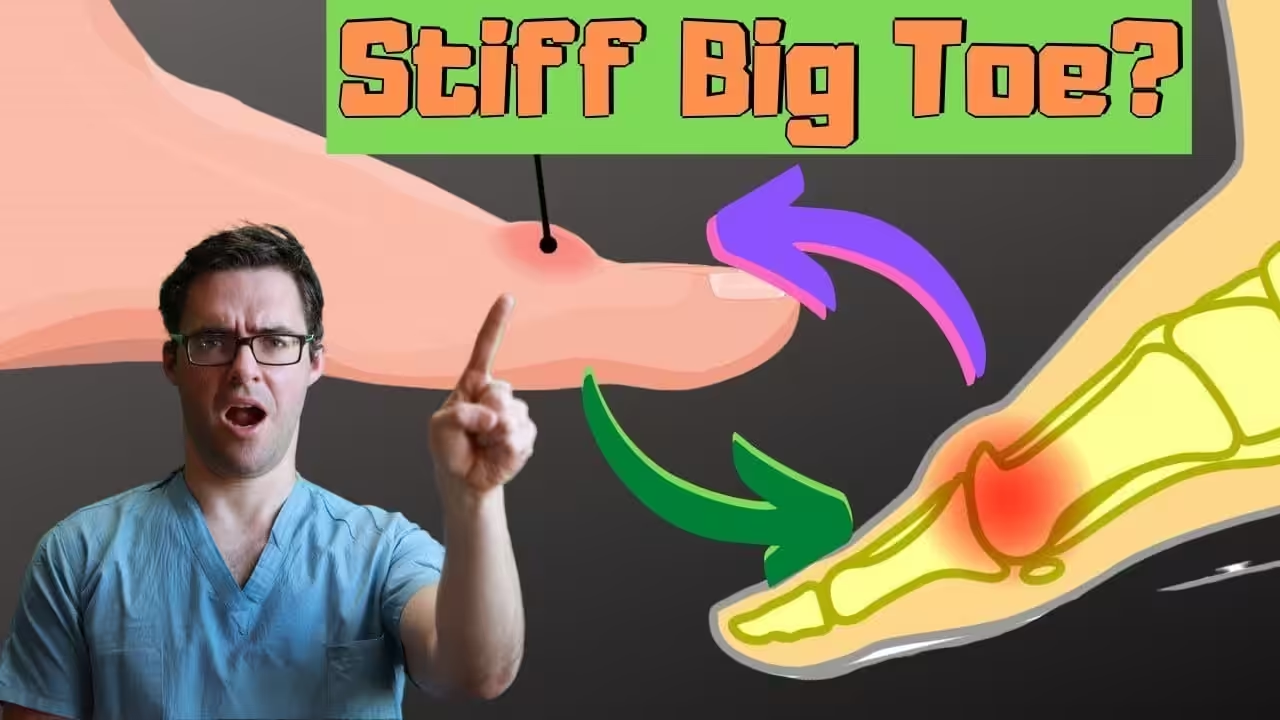

You are in the right place. Dr. Tom Biernacki, DPM, FACFAS — board-certified foot & ankle surgeon with 3,000+ surgeries — explains exactly what bone spurs big toe means and what works. Call (810) 206-1402 for same-week appointment at Howell or Bloomfield Township.
Quick answer: Bone Spurs Big Toe comes up often in our clinics. Effective treatment starts with a targeted diagnosis, conservative-first treatment, and escalation only when needed. We treat this regularly at our Howell and Bloomfield Township practices. Call (810) 206-1402.
Bone Spur on Toe: Causes, Symptoms & Treatment (Podiatrist 2026)
A bone spur on the toe is most often: (1) dorsal exostosis on the big-toe joint (hallux rigidus) — bony bump on TOP of joint, limits big-toe motion, (2) subungual exostosis — bony bump under the nail (often the great toe), (3) distal phalanx exostosis — bony bump on the toe tip, (4) tailor’s bunion — bony bump on outside of pinky toe, or (5) arthritis-related bone changes. Symptoms: painful bump, redness/callus over the spur, pain wearing shoes, sometimes nail deformity.
In my Michigan podiatry clinic, ~75% of toe bone spurs improve without surgery: (1) wider-toe-box shoes, (2) silicone toe sleeve over the bump, (3) NSAIDs + ice for flares, (4) custom orthotic to address underlying biomechanics. Surgery (exostectomy or cheilectomy for hallux rigidus) for failed 6+ months conservative care — ~85-90% success, recovery 4-6 weeks. Subungual exostosis typically needs surgical removal because it causes nail deformity. Avoid: tight-fitting shoes that compress the spur.
Same-Week Appointments at Balance Foot & Ankle
Three board-certified podiatric surgeons. 950K+ YouTube subscribers. 1,123+ five-star reviews. Howell & Bloomfield Township, Michigan.
Medically reviewed by Dr. Tom Biernacki, DPM · Board-Certified Podiatric Surgeon · Last reviewed: April 2026 · Editorial Policy
Quick Answer
Bone Spurs on Big Toe 2026: Symptoms & Treatment DPM relates to toe deformity — typically caused by imbalanced muscles + footwear. Most patients improve in depends on severity with conservative care. Same-week appointments in Howell + Bloomfield Township: (810) 206-1402.
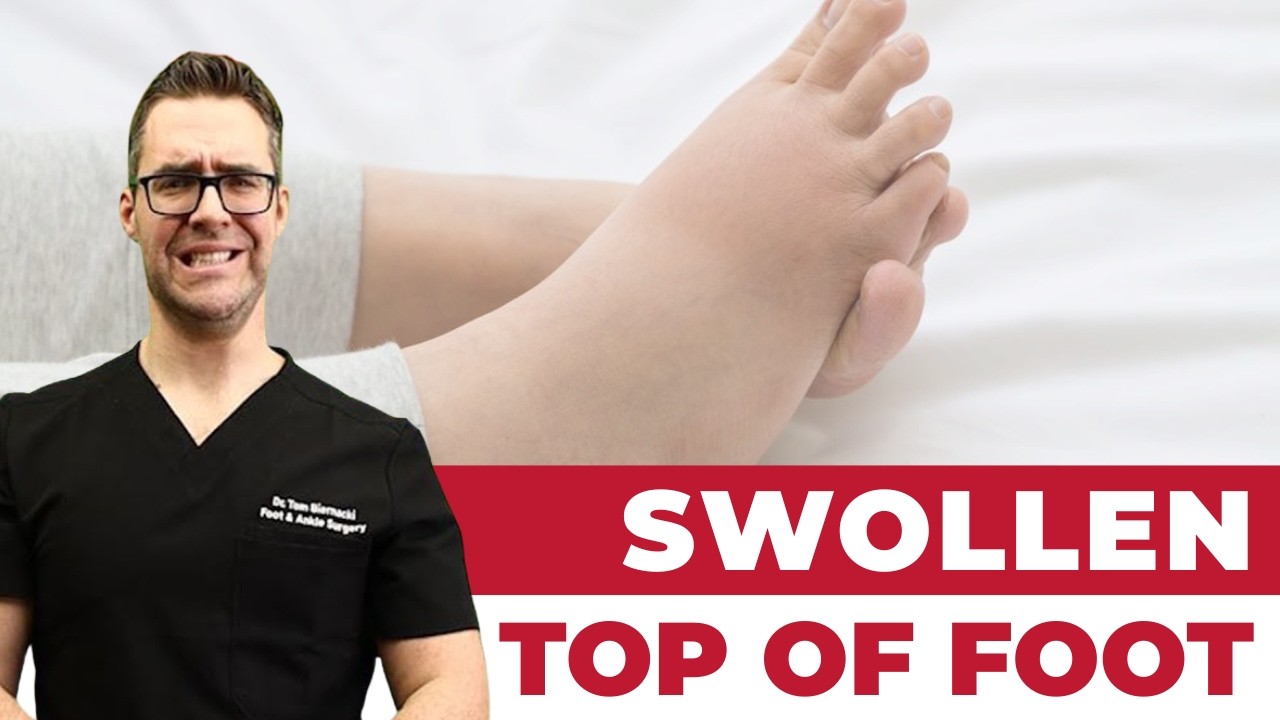
✅ Medically reviewed by Dr. Tom Biernacki, DPM — Board-Certified Podiatrist · Last updated April 6, 2026
Bone Spurs Big Toe: AKA Stiff Big Toe or Hallux Rigidus [Best Treatment]
Do you have bone spurs on your big toe joint? The #1 cause is hallux rigidus , #2 Hallux Limitus & this causes a STIFF big toe. The 100% Top Treatment!
https://youtu.be/nfyY_8n5B8sHeel Spurs and Calcaneal Conditions in Michigan: Treatment at Balance Foot & Ankle
Michigan patients with heel spurs identified on X-ray should understand that the heel spur itself is rarely the direct cause of heel pain — the spur is a radiographic finding that often accompanies plantar fasciitis but does not cause symptoms independently. Pain is produced by the inflamed plantar fascia at its calcaneal insertion, not by the bony spur. This is clinically important because treatment targeting the plantar fascia inflammation is what produces pain relief, not treatment targeting the spur. At Balance Foot & Ankle, heel pain evaluation identifies the specific cause — plantar fasciitis, Baxter’s nerve entrapment, calcaneal stress fracture, or fat pad atrophy — and directs treatment accordingly. Custom orthotics with deep heel cups reduce plantar fascia load and distribute heel pressure away from the painful insertion; corticosteroid injection reduces acute inflammation; EPAT (extracorporeal pulse activation therapy) produces lasting resolution of recalcitrant plantar fasciitis. Michigan patients with heel pain or heel spurs can call Balance Foot & Ankle at (810) 206-1402 to schedule at our Howell or Bloomfield Township office.
Plantar Fasciitis Treatment in Michigan: From Conservative Care to EPAT at Balance Foot & Ankle
Michigan patients with plantar fasciitis — pain at the medial heel on first steps in the morning, after prolonged sitting, or at the end of the day — have access to the full spectrum of evidence-based treatment at Balance Foot & Ankle. Our treatment protocol begins with the interventions most likely to resolve plantar fasciitis without surgery: custom orthotics addressing the specific structural factors driving plantar fascia overload (flatfoot, limited ankle dorsiflexion, or high arch); targeted Achilles and plantar fascia stretching with compliance coaching; appropriate footwear selection; and corticosteroid injection for acute inflammatory flares. For patients with plantar fasciitis that has not responded to a structured 6-8 week conservative program, EPAT (extracorporeal pulse activation therapy) is the most evidence-supported non-surgical escalation — producing clinical cure in 70-80% of recalcitrant cases. Surgical plantar fascia release is reserved for the rare patient who has thoroughly completed conservative care including EPAT without adequate response. Michigan plantar fasciitis patients can call Balance Foot & Ankle at (810) 206-1402 for an evaluation at our Howell or Bloomfield Township office.
Heel Spurs and Calcaneal Conditions in Michigan: Treatment at Balance Foot & Ankle
Michigan patients with heel spurs identified on X-ray should understand that the heel spur itself is rarely the direct cause of heel pain — the spur is a radiographic finding that often accompanies plantar fasciitis but does not cause symptoms independently. Pain is produced by the inflamed plantar fascia at its calcaneal insertion, not by the bony spur. This is clinically important because treatment targeting the plantar fascia inflammation is what produces pain relief, not treatment targeting the spur. At Balance Foot & Ankle, heel pain evaluation identifies the specific cause — plantar fasciitis, Baxter’s nerve entrapment, calcaneal stress fracture, or fat pad atrophy — and directs treatment accordingly. Custom orthotics with deep heel cups reduce plantar fascia load and distribute heel pressure away from the painful insertion; corticosteroid injection reduces acute inflammation; EPAT (extracorporeal pulse activation therapy) produces lasting resolution of recalcitrant plantar fasciitis. Michigan patients with heel pain or heel spurs can call Balance Foot & Ankle at (810) 206-1402 to schedule at our Howell or Bloomfield Township office.
Plantar Fasciitis Treatment in Michigan: From Conservative Care to EPAT at Balance Foot & Ankle
Related Treatment Guides
Michigan patients with plantar fasciitis — pain at the medial heel on first steps in the morning, after prolonged sitting, or at the end of the day — have access to the full spectrum of evidence-based treatment at Balance Foot & Ankle. Our treatment protocol begins with the interventions most likely to resolve plantar fasciitis without surgery: custom orthotics addressing the specific structural factors driving plantar fascia overload (flatfoot, limited ankle dorsiflexion, or high arch); targeted Achilles and plantar fascia stretching with compliance coaching; appropriate footwear selection; and corticosteroid injection for acute inflammatory flares. For patients with plantar fasciitis that has not responded to a structured 6-8 week conservative program, EPAT (extracorporeal pulse activation therapy) is the most evidence-supported non-surgical escalation — producing clinical cure in 70-80% of recalcitrant cases. Surgical plantar fascia release is reserved for the rare patient who has thoroughly completed conservative care including EPAT without adequate response. Michigan plantar fasciitis patients can call Balance Foot & Ankle at (810) 206-1402 for an evaluation at our Howell or Bloomfield Township office.
Bone Spur on Your Big Toe?
Our podiatrists specialize in treating bone spurs with both conservative and surgical approaches to restore comfortable movement.
Clinical References
- Coughlin MJ, Shurnas PS. Hallux rigidus: grading and long-term results of operative treatment. J Bone Joint Surg Am. 2003;85(11):2072-2088.
- Beeson P, Phillips C, Corr S, Ribbans WJ. Classification systems for hallux rigidus: a review of the literature. Foot Ankle Int. 2008;29(4):407-414.
- Roukis TS. The need for surgical revision after hallux rigidus surgery: a systematic review. J Foot Ankle Surg. 2010;49(5):465-470.
Insurance Accepted
BCBS · Medicare · Aetna · Cigna · United Healthcare · HAP · Priority Health · Humana · View All →
👟 Dr. Tom Also Recommends
Podiatrist Recommended Shoes 2026: Dr. Tom’s Top Picks for Every Condition
The right footwear can make or break your recovery. Dr. Tom’s complete guide to the best shoes for plantar fasciitis, flat feet, neuropathy, bunions & more — with clinical picks for every foot type.
See Dr. Tom’s Top Shoe Picks →Howell Office
4330 E Grand River Ave
Howell, MI 48843
Get Directions →
Bloomfield Township Office
43494 Woodward Ave, #208
Bloomfield Township, MI 48302
Get Directions →
Your Board-Certified Podiatrists



Ready to Get Back on Your Feet?
Same-week appointments available at both locations.
Book Your AppointmentMore Podiatrist-Recommended Foot Health Essentials
Hoka Clifton 10

Max-cushion everyday shoe — podiatrist favorite for walking and running.

OOFOS Recovery Slide

Impact-absorbing recovery sandal — wear after long days on your feet.
As an Amazon Associate, Balance Foot & Ankle earns from qualifying purchases. Product recommendations are based on clinical experience; prices and availability shown above update live from Amazon.
When to See a Podiatrist
If foot or ankle pain has been bothering you for more than a few weeks, home care alone may not be enough. Balance Foot & Ankle offers same-week appointments at our Howell and Bloomfield Township clinics — no referral needed in most cases. Bring your current shoes and a short list of symptoms and we’ll build you a treatment plan in one visit.
Call Balance Foot & Ankle: (810) 206-1402 · Book online · Offices in Howell & Bloomfield Township
Pros & Cons of Conservative Care for foot care
Advantages
- ✓ Conservative care first
- ✓ Same-week appointments
- ✓ Multiple insurance accepted
Considerations
- ✗ Self-treatment can mask issues
- ✗ See a podiatrist if pain >2 weeks
Dr. Tom’s Recommended Products for foot care
Affiliate disclosure: As an Amazon Associate, Balance Foot & Ankle earns from qualifying purchases. We only recommend products we use with patients.


Footnanny Heel Cream Dr. Tom’s Pick
Best for: Daily moisturizer for cracked heels
Ready to Get Back on Your Feet?
Same-week appointments in Howell + Bloomfield Township. Most insurance accepted. Dr. Tom Biernacki, DPM & team.
Book Today — Same-Week Appointments Available
Call Now: (810) 206-1402
About Your Care Team at Balance Foot & Ankle
Dr. Tom Biernacki, DPM · Board-Certified Foot & Ankle Surgeon. Specializes in conservative-first care, minimally invasive bunion surgery, and complex reconstruction.
Dr. Carl Jay, DPM · Accepting new patients. Specializes in sports medicine, athletic injuries, and routine podiatric care.
Dr. Daria Gutkin, DPM, AACFAS · Accepting new patients. Specializes in surgical reconstruction and pediatric podiatry.
Locations: 4330 E Grand River Ave, Howell, MI 48843 · 43494 Woodward Ave Suite 208, Bloomfield Township, MI 48302
Hours: Mon–Fri 8:00 AM – 5:00 PM · (810) 206-1402
In-Office Treatment at Balance Foot & Ankle
If home treatment isn’t providing relief for your foot and ankle conditions, our podiatry team at Balance Foot & Ankle can help with same-week evaluations and advanced in-office care.
Same-week appointments available. (810) 206-1402
Doctor Hoy’s Natural Pain Relief Gel
Natural topical pain relief I use in our clinic. Arnica + camphor formula — apply directly to the area 3–4x daily. ($20–25)
Shop Doctor Hoy’s →
Dr. Tom Biernacki, DPM is a board-certified foot & ankle surgeon (ABFAS & ABPM) at Balance Foot & Ankle Specialists in Southeast Michigan. With over a decade of clinical experience, he specializes in heel pain, bunions, diabetic foot care, sports injuries, and minimally invasive surgery. Dr. Biernacki is a member of the APMA and ACFAS, and his patient education content on MichiganFootDoctors.com and YouTube has made him one of the most-followed foot & ankle educators on YouTube.
More questions patients ask
What are bone spurs on the big toe?
Bone spurs (osteophytes) on the big toe are bony overgrowths that form at the joint margins, most commonly at the metatarsophalangeal (MTP) joint. They typically develop in response to chronic arthritis, repetitive stress, or cartilage damage. Big toe bone spurs can cause pain, stiffness, and difficulty with activities like walking and running. Balance Foot & Ankle provides expert evaluation and treatment at (810) 206-1402.
What causes bone spurs on the big toe joint?
Big toe bone spurs are most often caused by hallux rigidus (arthritis of the big toe joint), hallux valgus (bunions), repetitive trauma, or biomechanical abnormalities that place excess stress on the joint. Over time, the body forms extra bone in response to joint irritation. Tight or poorly fitting shoes can accelerate this process.
How are big toe bone spurs treated without surgery?
Non-surgical treatments for big toe bone spurs include custom orthotics to redistribute pressure, stiff-soled shoes or rocker-bottom footwear to limit joint motion, anti-inflammatory medications, corticosteroid injections for pain relief, and physical therapy exercises. Many patients achieve significant relief with conservative management at Balance Foot & Ankle.
When is surgery needed for big toe bone spurs?
Surgery is considered when bone spurs significantly limit motion, cause persistent pain despite conservative treatment, or result in nerve or tendon compression. Surgical options include cheilectomy (removing the bone spur while preserving the joint) or joint fusion for severe arthritis. Balance Foot & Ankle's podiatric surgeons offer minimally invasive surgical techniques at our Howell and Bloomfield Township offices.
Do big toe bone spurs go away without treatment?
Bone spurs do not disappear on their own; however, many patients manage symptoms effectively without surgery. Conservative care can reduce pain and slow progression. If left untreated, bone spurs and underlying arthritis may worsen. Early evaluation at Balance Foot & Ankle (810) 206-1402 allows for a treatment plan tailored to your activity level and goals.
Still have a question about coverage or cost? Book online and we will check your benefits before your visit: Book in Howell · Book in Bloomfield Township. Prefer to talk it through first? Call (810) 206-1402.