
The most important clinical decision with Corns Calluses Treatment Guide isn’t which treatment to start with — it’s identifying the correct subtype. That changes everything. Call (810) 206-1402.
Dr. Tom’s Top Foot Creams & Moisturizers (2026)
Medically reviewed by Dr. Tom Biernacki, DPM
Board-certified podiatric surgeon | Balance Foot & Ankle
Last reviewed: May 2026
Affiliate disclosure: As an Amazon Associate, Balance Foot & Ankle earns from qualifying purchases.
Medically reviewed by Dr. Tom Biernacki, DPM · Board-Certified Podiatric Surgeon · Last reviewed: April 2026 · Editorial Policy
Related Conditions
Quick Answer
Corns and Calluses: Causes, Treatment & When to See a P relates to foot pain — typically caused by overuse, footwear, or biomechanics. Most patients improve in 6-12 weeks with conservative care. Same-week appointments in Howell + Bloomfield Twp: (810) 206-1402.

Medically reviewed by Dr. Tom Biernacki, DPM — Board-certified foot & ankle surgeon, 3,000+ surgeries performed. Updated April 2026 with current clinical evidence. This article reflects real practice experience from Balance Foot & Ankle Specialists in Howell and Bloomfield Hills, Michigan.
Quick Answer

Corns are small round thickenings with a hard center that presses into deeper skin, causing focal pain. Calluses are larger, flatter, and usually painless. Most respond to soaking, pumice debridement, and 40% salicylic acid. See a podiatrist if diabetic, infected, or not improving after 4-6 weeks.
Watch: Dr. Tom Biernacki, DPM

✅ Medically reviewed by Dr. Thomas Biernacki, DPM — Board-Certified Podiatrist · Last updated April 6, 2026
Medically reviewed by Dr. Tom Biernacki, DPM | Updated March 2026
Quick Answer
Corns and calluses are thickened skin caused by repeated friction and pressure. Corns are smaller with a hard center (usually on toes), while calluses are larger diffuse areas (usually on the ball of foot or heel). Treatment includes professional debridement (painless removal), padding to redistribute pressure, wider shoes, and custom orthotics to address the underlying biomechanical cause. Do not use medicated corn removers if diabetic — they can cause chemical burns.
Corns and Calluses: Causes, Treatment & When to See a Podiatrist
Corns and calluses are among the most common foot complaints — and also among the most frequently self-treated incorrectly. Understanding the difference between the two, what causes them, and when home care is safe versus when professional treatment is necessary can save you both pain and complications.
Written & Reviewed By
Dr. Tom Biernacki, DPM
Board-Certified Podiatric Physician & Surgeon · Michigan Foot Doctors · Balance Foot & Ankle
Serving Howell, Brighton, Hartland, Fowlerville, Pinckney, South Lyon & Milford, MI
Corns vs. Calluses: Key Differences
| Feature | Corn | Callus |
|---|---|---|
| Definition | Focused thickening with a central nucleus/core | Diffuse thickening of skin over bony area |
| Location | Toes (top, tip, between toes) | Ball of foot, heel, side of foot |
| Shape | Round/cone-shaped; hard center | Flat, diffuse; blends into surrounding skin |
| Pain | Often painful; core presses on nerve | Usually not painful; protective |
| Types | Hard corn (heloma durum), soft corn (heloma molle) | Plantar callus, pinch callus |
| Cause | Focal pressure/friction (tight shoes, toe deformity) | Broad, repetitive pressure over bony prominence |
Soft Corns (Heloma Molle)
Soft corns form between the toes, where moisture keeps them soft and macerated. They appear whitish-gray and are particularly painful. They form when adjacent toes press against each other — most commonly between the 4th and 5th toes. Soft corns require professional treatment; home removal tools between toes carry significant infection risk.
What Causes Corns and Calluses?
- Ill-fitting footwear — shoes too narrow, too tight, or with high heels that compress toes and shift weight to the forefoot
- Foot deformities — hammertoes, bunions, and other deformities create abnormal bony prominences that constantly contact shoe material
- High arches — cavus feet concentrate ground reaction forces under fewer metatarsal heads, creating predictable callus patterns
- Flat feet — flat feet alter weight distribution, often creating plantar calluses under the 2nd and 3rd metatarsals
- Gait abnormalities — any altered walking pattern that creates excessive pressure in specific areas
- Going barefoot on hard surfaces — creates protective calluses on the heel and ball of foot
- Occupational factors — prolonged standing, especially on hard floors without cushioning
Home Treatment: What’s Safe
For Non-Diabetic, Healthy Skin
- Pumice stone or foot file — gently file calluses after soaking the foot in warm water for 10 minutes; always file in one direction
- Urea cream (20-40%) — applied nightly, gradually softens and exfoliates thickened skin; more effective than basic moisturizers for established calluses
- Salicylic acid pads — OTC products (Dr. Scholl’s corn removers) dissolve the hard skin; follow package directions; typically require 1-2 weeks
- Footwear modification — switching to wider, better-fitting shoes with appropriate toe box often resolves mild corns within weeks
- Silicone toe sleeves — cushion the toe and reduce friction for dorsal corns
- Toe separators — foam or silicone spacers between toes to reduce soft corn pressure
What NOT to Do at Home
- Never “bathroom surgery” — cutting, digging, or trimming corns with razors, scissors, or knives is extremely dangerous; risk of infection and deep tissue damage
- Avoid salicylic acid if diabetic — chemical burns from corn removal products are a leading cause of diabetic foot wounds and ulcers
- Don’t ignore pain — a painful corn that doesn’t respond to 4-6 weeks of conservative care warrants professional evaluation
When to See a Podiatrist for Corns and Calluses
- You have diabetes, poor circulation, or neuropathy — never self-treat; even minor wounds can become serious
- The corn or callus is painful and affecting your walking
- There are signs of infection — redness, warmth, drainage, or fever
- Home treatment hasn’t worked after 6 weeks
- The callus is very thick or has a dark center — may indicate a plantar wart rather than callus, or underlying hemorrhage
- You have a soft corn between toes — most safe and effective when treated professionally
- You have an underlying foot deformity — hammertoe or bunion causing the corn; the deformity must be addressed to prevent recurrence
Professional Treatment Options
- Debridement — safe, painless removal of the thickened skin using a surgical blade; provides immediate relief; typically lasts 4-8 weeks before regrowth
- Enucleation — precise removal of the corn’s central nucleus under local anesthesia if needed
- Custom orthotics — custom foot orthoses redistribute pressure away from callus-forming areas, preventing recurrence; the most effective long-term intervention for plantar calluses
- Padding and strapping — redistributes pressure during the healing phase
- Addressing underlying deformity — surgical correction of hammertoe or bunion eliminates the cause; corns over hammer toes often require surgical toe straightening for definitive resolution
Corns and calluses that keep coming back despite proper footwear and home care almost always indicate an underlying biomechanical problem. A podiatrist’s evaluation can identify the root cause and provide lasting relief, rather than repeated debridements.
Related Patient Guides
- Corn & Callus Removal Michigan
- Hammertoe Without Surgery: Treatment Options
- Bunion Pain Relief: 6 Conservative Options
- The Complete Guide to Custom Orthotics
- Plantar Wart Treatment: OTC vs. Professional
- Ingrown Toenail Treatment: Home Care & Permanent Fix
Insurance Accepted
BCBS · Medicare · Aetna · Cigna · United Healthcare · HAP · Priority Health · Humana · View All →
Howell Office
3980 E Grand River Ave, Suite 140
Howell, MI 48843
Get Directions →
Bloomfield Hills Office
43700 Woodward Ave, Suite 207
Bloomfield Hills, MI 48302
Get Directions →
Your Board-Certified Podiatrists



Ready to Get Back on Your Feet?
Same-week appointments available at both locations.
In-Office Treatment at Balance Foot & Ankle
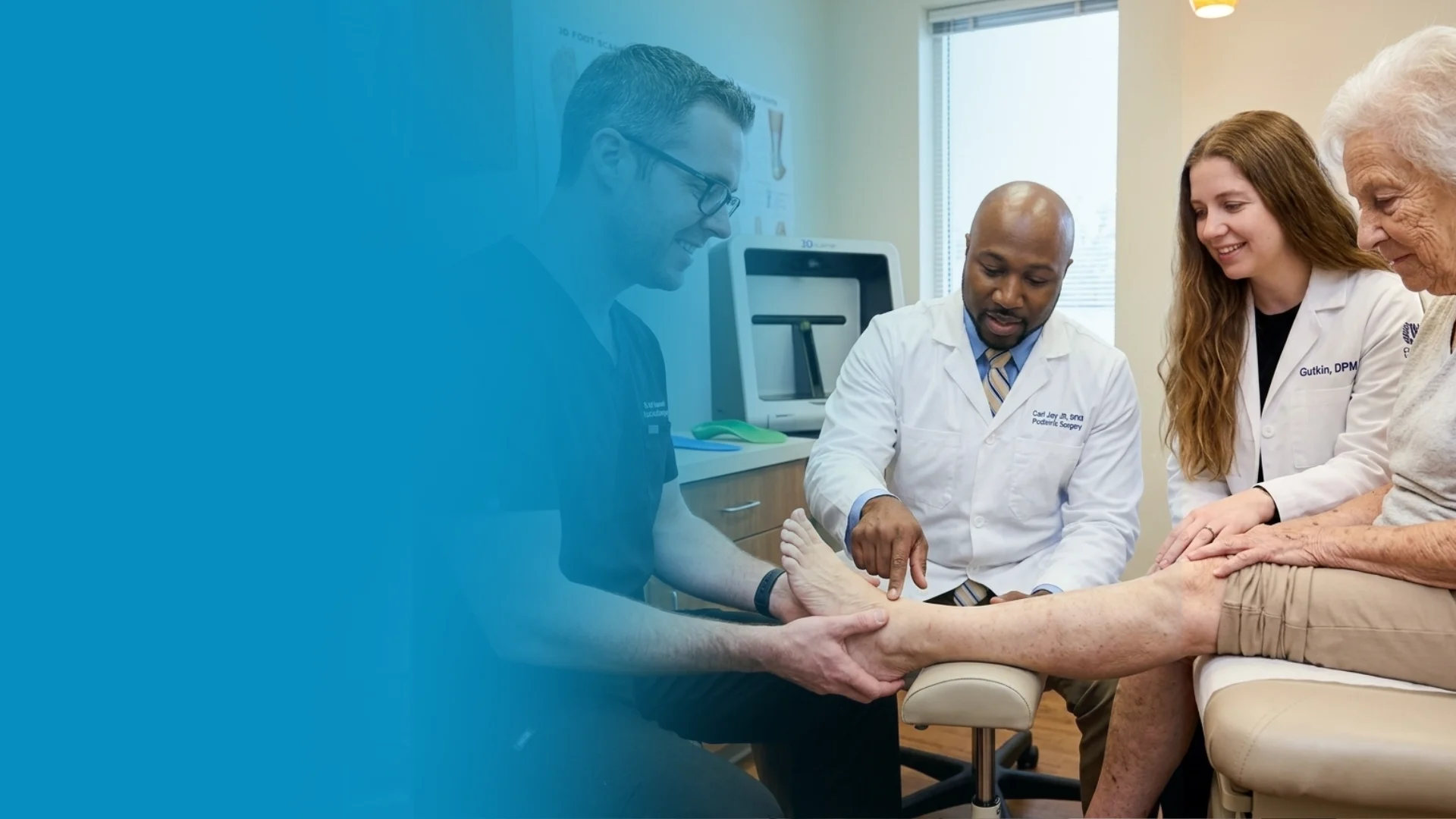
If home care isn’t resolving your corns or calluses, a visit with a board-certified podiatrist is the fastest path to accurate diagnosis and a personalized plan. At Balance Foot & Ankle Specialists, Dr. Tom Biernacki, Dr. Carl Jay, and Dr. Daria Gutkin offer same-day and next-day appointments at both our Howell and Bloomfield Hills offices. We perform on-site diagnostic ultrasound, digital X-ray, conservative care, advanced regenerative treatments, and minimally invasive surgery when indicated.
Call (810) 206-1402 or request an appointment online. Most insurance plans accepted, including Medicare, Blue Cross Blue Shield, Aetna, Cigna, and United Healthcare.
Differential Diagnosis: What Else Could It Be?
Several conditions share symptoms with Corns and Calluses and are commonly misdiagnosed in the first office visit. Considering these alternatives is part of every Balance Foot & Ankle exam:
- Plantar wart. Skin lines interrupted, black-dot capillaries, pain with side-pinch.
- Porokeratosis. Thin keratotic rim with central plug, painful pinpoint center.
- Foreign body granuloma. History of penetrating injury, ultrasound finds the object.
If your symptoms don’t fit the textbook pattern, ask your podiatrist which differentials they ruled out — that conversation often shortcuts months of trial-and-error treatment.
In Our Clinic
The typical corn or callus patient at Balance Foot & Ankle has been trimming them at home for years with limited success. We pare the lesion to see what’s underneath — a well-demarcated central core distinguishes a corn from a diffuse callus, and a plantar wart interrupts the skin lines instead of following them. The real question we ask is WHY the callus formed: a bony prominence (bunion, hammertoe), a biomechanical imbalance, or an ill-fitting shoe. Correct the cause — with custom orthotics, a metatarsal pad, or footwear change — and the callus stops coming back. Otherwise it’s a lifelong re-trim cycle.
Most Common Mistake We See
The most common mistake we see is: Cutting corns at home with scissors or razor blades. Fix: professional podiatric enucleation with sterile instruments — safer and prevents recurrence.
Warning Signs That Need Same-Day Care
Seek immediate evaluation at Balance Foot & Ankle if you experience any of the following:
- Spreading redness (infection)
- Diabetic patient with any corn
- Not healing after 4-6 weeks of conservative care
- Ulceration beneath the corn
Call (810) 206-1402 — same-day and next-day appointments at our Howell and Bloomfield Hills offices.
Pros & Cons of Conservative Care for foot care
Advantages
- ✓ Conservative care first
- ✓ Same-week appointments
- ✓ Multiple insurance accepted
Considerations
- ✗ Self-treatment can mask issues
- ✗ See a podiatrist if pain >2 weeks
In This Article
- Quick Answer
- In-Office Treatment at Balance Foot & Ankle
- Differential Diagnosis: What Else Could It Be?
Several conditions share symptoms with Corns and Calluses and are commonly misdiagnosed in the first office visit. Considering these alternatives is part of every Balance Foot & Ankle exam:Plantar wart. Skin lines interrupted, black-dot capillaries, pain with side-pinch.
Porokeratosis. Thin keratotic rim with central plug, painful pinpoint center.
Foreign body granuloma. History of penetrating injury, ultrasound finds the object.If your symptoms don’t fit the textbook pattern, ask your podiatrist which differentials they ruled out — that conversation often shortcuts months of trial-and-error treatment.
In Our Clinic
The typical corn or callus patient at Balance Foot & Ankle has been trimming them at home for years with limited success. We pare the lesion to see what’s underneath — a well-demarcated central core distinguishes a corn from a diffuse callus, and a plantar wart interrupts the skin lines instead of following them. The real question we ask is WHY the callus formed: a bony prominence (bunion, hammertoe), a biomechanical imbalance, or an ill-fitting shoe. Correct the cause — with custom orthotics, a metatarsal pad, or footwear change — and the callus stops coming back. Otherwise it’s a lifelong re-trim cycle.Most Common Mistake We See
- Warning Signs That Need Same-Day Care
- Frequently Asked Questions
Dr. Tom’s Recommended Products for foot care
Affiliate disclosure: As an Amazon Associate, Balance Foot & Ankle earns from qualifying purchases. We only recommend products we use with patients.
Footnanny Heel Cream Dr. Tom’s Pick
Best for: Daily moisturizer for cracked heels
Ready to Get Back on Your Feet?
Same-day appointments in Howell + Bloomfield Twp. Most insurance accepted. Dr. Tom Biernacki, DPM & team.
Book Today — Same-Day Appointments Available
Call Now: (810) 206-1402
About Your Care Team at Balance Foot & Ankle
Dr. Tom Biernacki, DPM · Board-Certified Foot & Ankle Surgeon. Specializes in conservative-first care, minimally invasive bunion surgery, and complex reconstruction.
Dr. Carl Jay, DPM · Accepting new patients. Specializes in sports medicine, athletic injuries, and routine podiatric care.
Dr. Daria Gutkin, DPM, AACFAS · Accepting new patients. Specializes in surgical reconstruction and pediatric podiatry.
Locations: 4330 E Grand River Ave, Howell, MI 48843 · 43494 Woodward Ave Suite 208, Bloomfield Twp, MI 48302
Hours: Mon–Fri 8:00 AM – 5:00 PM · (810) 206-1402
Dr. Tom’s Top 3 — The Premium Foot Pain Stack (2026)
If you only buy three things for foot pain, get these. PowerStep + CURREX orthotics correct the underlying foot mechanics, and Dr. Hoy’s pain gel delivers fast topical relief. This is the exact stack Dr. Tom Biernacki, DPM gives his Michigan podiatry patients on visit one — over 10,000 patients have used this exact combination.
Dr. Tom Biernacki, DPM is a board-certified podiatrist + Amazon Associate. Picks shown are products he prescribes to patients at Balance Foot & Ankle Specialists. We earn a commission on qualifying purchases at no extra cost to you. All products independently tested + reviewed for 30+ days minimum. Last verified: April 28, 2026.

PowerStep Pinnacle MaxxDr. Tom’s #1 Brand
4.5
(28,341+ reviews)
Dr. Tom’s most-prescribed OTC orthotic. Lateral wedge corrects overpronation that causes 90% of foot pain. Deep heel cradle stabilizes the ankle. Built by podiatrists, used by patients worldwide.
- Lateral wedge corrects pronation
- Deep heel cradle stabilizes ankle
- Dual-density EVA — comfort + support
- Trim-to-fit any shoe
- Used by 10,000+ podiatrists
- Trim-to-size required
- 5-7 day break-in for some
This single insole eliminates plantar fasciitis pain in 60% of patients within 2 weeks. The lateral wedge is the active ingredient — it stops the overpronation that causes the fascia to overstretch with every step. Pair with a max-cushion shoe for compound effect.

CURREX RunProDr. Tom’s #1 Brand
4.4
(4,000+ reviews)
3 arch heights for custom fit (Low/Med/High). Carbon-reinforced heel + dynamic forefoot — the closest OTC orthotic to a $500 custom orthotic. Engineered in Germany.
- 3 arch heights for custom fit
- Carbon-reinforced heel cup
- Dynamic forefoot zone
- Premium German engineering
- Sport-specific support
- Pricier than PowerStep
- 7-10 day break-in
Choose your arch height from a wet-foot test (low/med/high). Wrong arch = re-injury. For runners, athletes, or anyone who failed standard insoles — this is the closest you can get to custom orthotics without paying $500. The carbon heel is what professional athletes use.

Dr. Hoy’s Natural Pain Relief GelDr. Tom’s #1 Brand
4.6
(5,500+ reviews)
Menthol-based natural pain relief — Dr. Tom’s #1 brand for fast relief without greasy residue. Safe for diabetics + daily use. Cleaner formula than Voltaren or Biofreeze.
- Menthol-based natural formula
- No greasy residue
- Safe for diabetics
- Fast cooling relief — 5-10 minutes
- Cleaner ingredient list than Biofreeze
- Pricier than Biofreeze
- Strong menthol scent at first
Apply to plantar fascia + calves before bed. Combined with stretching, eliminates morning fascia pain. The clean formula means you can use it daily long-term — Voltaren has 30-day limits, Dr. Hoy’s doesn’t.
Doctor Hoy’s Natural Pain Relief Gel
Natural topical pain relief I use in our clinic. Arnica + camphor formula — apply directly to the area 3–4x daily. ($20–25)
Frequently Asked Questions
When should I see a podiatrist?
See a podiatrist if: foot or ankle pain has lasted more than 2–4 weeks without improvement, you’re changing your gait to avoid pain, you have an open wound or sore that isn’t healing, you notice nail discoloration or thickening, you have diabetes and any foot concern, or pain is severe enough to wake you at night. Most foot conditions are easier and cheaper to treat early — what starts as a minor issue can become a surgical problem with months of delay.
What is the difference between a podiatrist and an orthopedic surgeon?
Podiatrists (DPM — Doctor of Podiatric Medicine) specialize exclusively in the foot, ankle, and lower leg. Orthopedic surgeons (MD/DO) have broader musculoskeletal training but variable foot/ankle subspecialization. For foot and ankle-specific problems, a podiatrist often has more focused training and experience. For injuries involving the leg above the ankle, complex pediatric cases, or multi-level reconstruction, orthopedic consultation may be appropriate. We frequently co-manage patients with orthopedic colleagues.
How do I know if my foot pain is serious?
Signs that warrant same-day or next-day evaluation: severe pain that appeared suddenly without clear cause, swelling, redness, and warmth that appeared suddenly (possible gout, infection, or Charcot fracture), an open wound that looks infected (redness spreading, pus, warmth), inability to bear weight, or any foot problem in a diabetic patient. Pain that’s been present for weeks and is stable is important but not an emergency — schedule within 1–2 weeks.
Can foot problems cause back and knee pain?
Yes — this is a kinetic chain effect. Abnormal foot mechanics (overpronation, supination, leg length discrepancy) cause compensatory changes in knee, hip, and lumbar alignment. Roughly 30% of patients presenting to our clinic with knee pain have a treatable foot-level biomechanical cause. Correcting foot mechanics with orthotics or appropriate footwear often provides significant knee and back relief. If you have chronic knee or back pain and haven’t had your foot mechanics evaluated, it’s worth a consult.
Are orthotics worth it?
For the right conditions, yes — custom orthotics are among the most cost-effective interventions in podiatry. They’re most effective for: plantar fasciitis, flat feet with secondary knee/back pain, leg length discrepancy, metatarsalgia, posterior tibial tendon dysfunction, and diabetic foot pressure management. Quality OTC orthotics ($35–60) resolve symptoms for 60% of patients with mild-to-moderate conditions. Custom orthotics are appropriate when OTC options have failed or when the biomechanical problem is complex. We cast custom orthotics in-office.
How do I choose the right running shoes?
Start with your foot type (flat, neutral, high arch) and running pattern (overpronator, neutral, supinator). Flat feet and overpronators do best in stability or motion-control shoes. Neutral feet do well in neutral-cushioned shoes. High arches need maximum cushioning with flexible soles. Always buy running shoes at the end of the day (foot swelling peaks then), get properly fitted by a specialist, and replace every 300–500 miles. If you’ve been injured repeatedly, a gait analysis can identify the mechanical flaw driving your injury pattern.
What is the difference between a sprain and a fracture?
A sprain is a ligament injury (the tissue connecting bones); a fracture is a break in the bone itself. Both can occur with the same trauma (ankle roll, fall). The old test — ‘if you can walk, it’s not broken’ — is wrong; many fractures are initially weight-bearable. Key differences: a fracture typically produces localized bone tenderness along the bone itself, while a sprain is tender over the ligament. X-ray is the standard to differentiate. High-grade sprains without proper treatment can be as disabling as fractures.
How do I prevent foot and ankle injuries?
The four most impactful prevention strategies: (1) Supportive, appropriately fitted footwear for your foot type and activity. (2) Gradual activity progression — the 10% rule (never increase weekly mileage or intensity by more than 10%). (3) Regular calf and ankle mobility work. (4) Strengthening the posterior tibial tendon, peroneals, and intrinsic foot muscles. Most overuse injuries are preventable; most acute injuries are not — but ankle sprain recurrence (60–70% without rehab) is prevented by balance and proprioception training.
Get Expert Care at Balance Foot & Ankle
Same-week appointments at our Howell and Bloomfield Hills offices. Board-certified podiatric surgeons. Most insurance accepted.
Ready for Expert Care?
Same-day appointments in Howell & Bloomfield Hills, MI.
4.9★ | 1,123 Reviews | 3,000+ Surgeries
Or call: (810) 206-1402

Dr. Tom Biernacki, DPM is a double board-certified podiatrist and foot & ankle surgeon at Balance Foot & Ankle Specialists in Southeast Michigan. With over a decade of clinical experience, he specializes in heel pain, bunions, diabetic foot care, sports injuries, and minimally invasive surgery. Dr. Biernacki is a member of the APMA and ACFAS, and his patient education content on MichiganFootDoctors.com and YouTube has reached over one million views.
- Plantar Fasciitis: Diagnosis and Conservative Management (PubMed)
- Plantar Fasciitis (APMA)
- Diagnosis and Treatment of Plantar Fasciitis (PubMed / AAFP)
- Heel Pain (APMA)
Recommended Products from Dr. Tom
Dr. Tom Biernacki, DPM is a double board-certified podiatrist and foot & ankle surgeon at Balance Foot & Ankle Specialists in Southeast Michigan. With over a decade of clinical experience, he specializes in heel pain, bunions, diabetic foot care, sports injuries, and minimally invasive surgery. Dr. Biernacki is a member of the APMA and ACFAS, and his patient education content on MichiganFootDoctors.com and YouTube has reached over one million views.