

You are in the right place. Dr. Tom Biernacki, DPM, FACFAS — board-certified foot & ankle surgeon with 3,000+ surgeries — explains exactly what diabetic peripheral neuropathy in the feet means and what works. Call (810) 206-1402 for same-week appointment at Howell or Bloomfield Township.
Medically reviewed by Dr. Tom Biernacki, DPM — Board-Certified Podiatric Surgeon — Balance Foot & Ankle, Howell & Bloomfield Township, MI. Last updated April 2026.
▶ Watch

Medically reviewed by Dr. Tom Biernacki, DPM | Board-certified podiatrist | 3,000+ surgeries performed
Last updated: April 2, 2026
How Diabetes Damages Foot Nerves
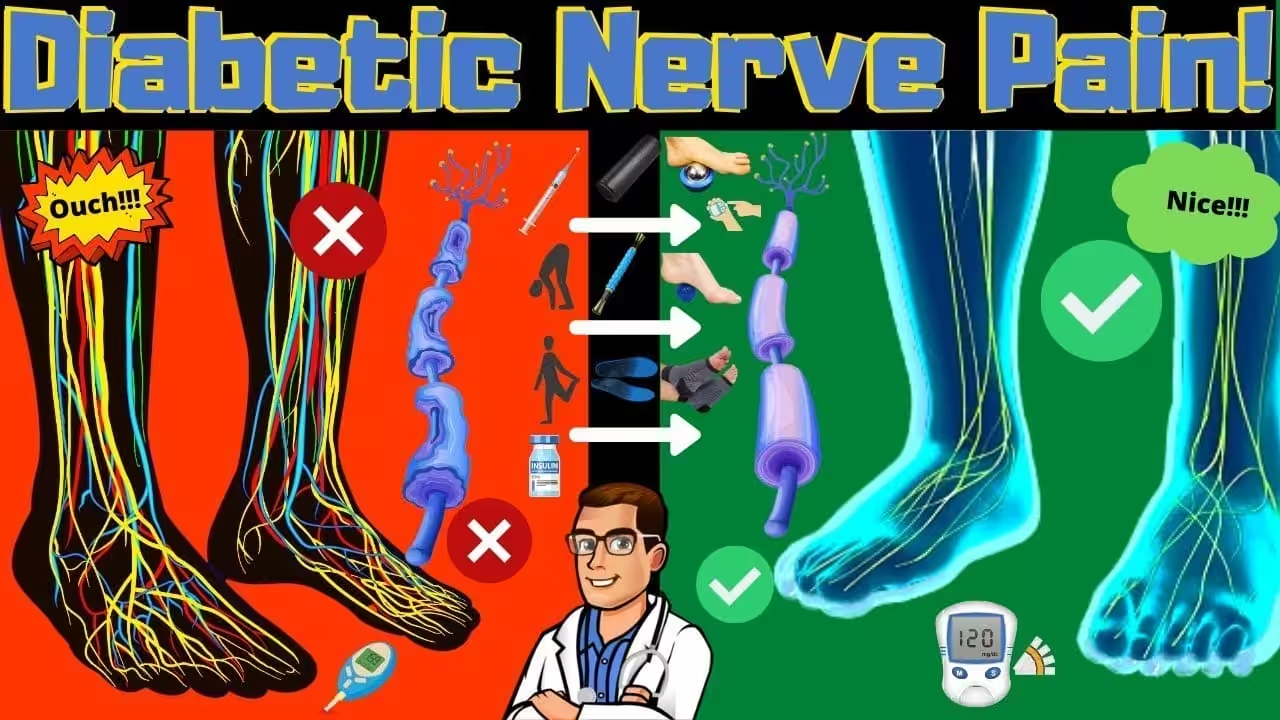
Chronically elevated blood glucose damages peripheral nerves through multiple mechanisms. High glucose concentrations activate the polyol pathway, converting glucose to sorbitol—a sugar alcohol that accumulates within nerve cells and draws water in through osmosis, causing nerve swelling and dysfunction. Simultaneously, advanced glycation end products (AGEs) form when glucose binds to nerve proteins, disrupting their normal function and triggering inflammatory cascades.
Microvascular disease—damage to the tiny blood vessels that supply the nerves themselves (vasa nervorum)—further compromises nerve health. Just as diabetes damages blood vessels in the eyes and kidneys, it restricts blood flow to the peripheral nerves, creating an ischemic environment that impairs nerve repair and regeneration. This vascular component explains why neuropathy progresses even when blood sugar is moderately controlled.
The longest nerves are affected first because their extreme length makes them most vulnerable to metabolic and vascular damage. The nerves supplying the feet and lower legs are the longest in the body, which is why neuropathy symptoms begin in the toes and feet before progressing upward. This length-dependent pattern creates the characteristic stocking distribution of sensory loss.
Types of Diabetic Neuropathy Affecting the Feet
Sensory neuropathy—the most common type—progressively reduces the ability to feel pain, temperature, vibration, and pressure in the feet. Initially, patients notice tingling or burning sensations (positive symptoms) that eventually give way to numbness (negative symptoms) as more nerve fibers die. The loss of pain sensation eliminates the body’s early warning system for tissue damage.
Motor neuropathy weakens the intrinsic foot muscles that maintain toe alignment and arch structure. As these small muscles atrophy, the toes develop claw or hammertoe deformities that create abnormal pressure points inside shoes. The resulting prominence of the metatarsal heads on the sole of the foot concentrates weight-bearing forces on small areas, dramatically increasing ulceration risk.
Autonomic neuropathy disrupts the nerves controlling sweat glands and blood flow regulation in the feet. Reduced sweating leads to dry, cracked skin that is vulnerable to infection. Impaired vascular regulation causes arteriovenous shunting—blood bypasses the capillary beds that nourish skin and tissue, leaving the foot warm to touch but actually nutrient-deprived. This paradox of a warm but poorly nourished foot contributes to poor wound healing.
Recognizing Neuropathy Symptoms
Early symptoms include intermittent tingling, pins-and-needles sensations, and burning discomfort in the toes and soles of the feet. These symptoms often worsen at night when external stimulation decreases and the nervous system amplifies the abnormal signals. Some patients describe the sensation as walking on cotton or feeling like a sock is bunched under the toes even when barefoot.
Progressive neuropathy transitions from positive symptoms (abnormal sensations) to negative symptoms (loss of sensation). Patients notice they cannot feel hot water temperature accurately, cannot detect small objects under the foot, and may discover injuries—cuts, blisters, or foreign bodies—that they cannot recall happening. This asymptomatic injury is the gateway to diabetic foot ulceration.
Balance problems develop as proprioceptive nerve fibers lose function. The feet can no longer accurately report their position to the brain, making balance adjustments slower and less precise. Patients notice increased unsteadiness on uneven surfaces, difficulty walking in the dark, and a wider-based gait pattern. Falls become more frequent and more dangerous.
Screening and Diagnostic Testing
The Semmes-Weinstein monofilament test is the primary screening tool performed at every diabetic foot examination. A calibrated nylon filament is pressed against the sole of the foot at specific sites—inability to feel the 10-gram monofilament indicates loss of protective sensation and significantly elevated ulceration risk. This simple test takes less than 2 minutes and identifies at-risk feet before ulcers develop.
Vibration perception testing using a 128 Hz tuning fork evaluates large-fiber sensory function. The tuning fork is placed on the dorsal first toe and the patient reports when vibration stops. Comparison with the examiner’s perception at the same time point provides objective assessment. Reduced vibration sense typically develops before monofilament sensation is lost, making it a sensitive early screening tool.
Nerve conduction studies and electromyography (NCS/EMG) provide definitive neuropathy diagnosis and severity staging when the clinical picture is unclear. These tests measure the speed and strength of electrical signals traveling through specific nerves. Slowed conduction velocity and reduced amplitude confirm neuropathy and help distinguish diabetic neuropathy from other causes of nerve damage.
Protecting Neuropathic Feet: Daily Care Essentials
Daily foot inspection replaces the protective sensation that neuropathy eliminates. Examine both feet thoroughly each day for cuts, blisters, redness, swelling, warmth, calluses, corns, and toenail changes. Use a mirror or smartphone camera for the soles. Any new finding—regardless of how minor it appears—deserves monitoring and potentially professional evaluation.
Never walk barefoot—not at home, not at the beach, not at the pool. Without protective sensation, every step on an uncovered surface risks stepping on objects that cause puncture wounds or friction that causes blisters. Wear house shoes or supportive slippers with closed toes on all indoor surfaces. The cost of proper house shoes is insignificant compared to the cost of treating a diabetic foot ulcer.
Test bath water temperature with your elbow or a thermometer before stepping in—neuropathic feet cannot accurately gauge temperature, and burns from hot water are a common injury. Keep water below 95 degrees Fahrenheit. Similarly, avoid heating pads, hot water bottles, or electric blankets on the feet—these create burn risk when sensation cannot warn of excessive heat.
Footwear and Orthotics for Neuropathic Feet
Diabetic-appropriate footwear features a deep toe box that accommodates claw toe deformities without dorsal pressure, seamless interior lining that eliminates friction points, firm sole with rocker bottom geometry that reduces forefoot pressure during push-off, and adjustable closure for swelling accommodation. Medicare covers one pair of therapeutic shoes and three pairs of insoles annually for qualifying diabetic patients.
Custom diabetic orthotics with total-contact design distribute weight evenly across the entire sole, preventing pressure concentration on vulnerable metatarsal heads and heel. Plastazote or Poron top covers provide soft cushioning that conforms to foot contours. The orthotics must be replaced every 6-12 months as the cushioning materials compress with use.
Never wear new shoes for more than 2 hours without removing them and checking for redness or pressure marks. Break in new shoes gradually over 1-2 weeks, adding 1-2 hours of wear time daily. Check inside shoes before wearing for foreign objects—pebbles, wrinkled insoles, or other items that could cause injury to insensate feet. This simple habit prevents a surprising number of diabetic foot ulcers.
Treatment Options for Neuropathy Symptoms
Optimal blood glucose control is the most important treatment for slowing neuropathy progression. Maintaining HbA1c below 7% significantly reduces the rate of nerve damage and may partially reverse early neuropathic changes. Every 1% reduction in HbA1c reduces neuropathy risk by approximately 30%. Work closely with your endocrinologist to optimize your diabetes management.
Neuropathic pain medications include gabapentin, pregabalin, duloxetine, and amitriptyline—each targeting different pain pathways in the nervous system. Medication selection depends on pain severity, side effect profile, and concurrent medical conditions. Many patients require combination therapy for adequate pain control. Your podiatrist coordinates with your primary care physician or pain specialist for medication management.
Topical treatments including capsaicin cream and lidocaine patches provide localized pain relief without systemic side effects. These are particularly useful for patients who cannot tolerate oral neuropathy medications. Alpha-lipoic acid—an antioxidant supplement—has shown modest benefit in clinical trials for neuropathic pain and may slow nerve damage progression.
The Most Common Mistake We See
The biggest mistake diabetic patients make is waiting for symptoms before seeking neuropathy evaluation. By the time numbness is obvious, significant nerve damage has already occurred. Annual screening with monofilament testing—starting at diabetes diagnosis for Type 2 and at 5 years after diagnosis for Type 1—catches neuropathy at the stage where aggressive glucose control and protective foot care can prevent the most serious complications.
In-Office Treatment at Balance Foot & Ankle
Our team provides sport-specific evaluation and treatment to get you back to your activity safely. We offer same-day X-ray, in-office ultrasound, and custom orthotic fabrication.
Same-week appointments available. Call (810) 206-1402 or book online.
More Podiatrist-Recommended Diabetic Essentials
Diabetic-Approved Walking Shoe
Orthofeet Sprint — seamless, extra-depth, designed for neuropathic feet.
Seamless Diabetic Sock


![Peripheral Neuropathy Home Remedies [Leg & Foot Nerve Pain Treatment]](https://www.michiganfootdoctors.com/wp-content/cache/flying-press/8ef3ff851f04e8721b97630df65b15ff.jpg)
Watch: Peripheral Neuropathy Home Remedies [Leg & Foot Nerve Pain Treatment] — MichiganFootDoctors YouTube
OS1st FS4 — non-binding, moisture-wicking, protects fragile diabetic skin.
Recovery Slide for Indoor Wear
HOKA Ora 3 — protects diabetic feet from barefoot injury at home.
As an Amazon Associate, Balance Foot & Ankle earns from qualifying purchases. Product recommendations are based on clinical experience; prices and availability shown above update live from Amazon.
When to See a Podiatrist
One unnoticed blister on a neuropathic foot can become a limb-threatening ulcer in under 14 days. Medicare covers diabetic shoes (A5500) and comprehensive foot exams annually for most diabetic patients with neuropathy or circulation concerns. Balance Foot & Ankle runs a dedicated diabetic limb-preservation program — vascular screening, offloading, ulcer care, and shoe fitting — all in one visit. Schedule your annual diabetic foot exam today.
Call Balance Foot & Ankle: (810) 206-1402 · Book online · Offices in Howell & Bloomfield Township
Frequently Asked Questions
Can diabetic neuropathy be reversed?
Early-stage neuropathy may partially improve with strict blood glucose control—maintaining HbA1c below 7% consistently. Advanced neuropathy with significant nerve fiber loss is generally not reversible, but progression can be slowed or halted with optimal glucose management. The earlier neuropathy is detected and treated, the more potential for functional preservation.
How often should diabetic patients see a podiatrist?
Diabetic patients without neuropathy should see a podiatrist annually. Those with diagnosed neuropathy need visits every 3-6 months depending on risk level. Patients with prior ulceration or amputation need monthly visits. Medicare covers medically necessary podiatric care for diabetic patients including routine nail and callus care.
Does Medicare cover diabetic shoes?
Yes. The Medicare Therapeutic Shoe Bill covers one pair of therapeutic shoes and three pairs of custom insoles annually for diabetic patients with qualifying foot conditions including neuropathy, foot deformity, prior ulceration, or poor circulation. Your podiatrist certifies the medical necessity and prescribes the appropriate footwear.
What causes burning feet at night with diabetes?
Nighttime foot burning results from damaged sensory nerves sending spontaneous pain signals to the brain. Symptoms worsen at night because external stimulation decreases, making the brain more aware of the abnormal nerve signals. Neuropathy medications (gabapentin, pregabalin), topical capsaicin, and blood sugar optimization can reduce nighttime burning.
The Bottom Line
Diabetic peripheral neuropathy is the leading cause of diabetic foot ulcers and lower extremity amputations, but these outcomes are preventable. Regular screening, optimal blood sugar control, daily foot inspection, proper footwear, and consistent podiatric care dramatically reduce complication rates. Early detection and proactive management preserve foot health and independence for diabetic patients.
In Our Clinic
Diabetic neuropathy patients in our clinic often don’t realize they have it until we put a 10-gram Semmes-Weinstein monofilament to the plantar foot and they can’t feel it. Many arrive for an unrelated concern — an ingrown toenail, a callus — and we catch the neuropathy on screening. The conversation then shifts: we need to discuss daily foot inspections, appropriate footwear, the urgency of any blister or open area, and the timing of vascular referral if pulses are diminished. Comprehensive diabetic foot exams are covered by Medicare annually. If you have diabetes, we want to see you once a year even if nothing hurts.
Sources
- Pop-Busui R, et al. Diabetic Neuropathy: A Position Statement by the American Diabetes Association. Diabetes Care. 2025;48(5):S164-S179.
- Feldman EL, et al. Diabetic Peripheral Neuropathy: Mechanisms, Diagnosis, and Treatment. Nat Rev Dis Primers. 2024;10(1):23.
- Bus SA, et al. IWGDF Guideline on Prevention of Foot Ulcers in Persons with Diabetes. Diabetes Metab Res Rev. 2025;41(S1):e3651.
- Boulton AJ, et al. Diabetic Foot Screening and Risk Stratification: A Global Evidence Review. Lancet Diabetes Endocrinol. 2024;12(9):657-669.
Expert Diabetic Foot Care in Michigan
Dr. Tom Biernacki has performed over 3,000 foot and ankle surgeries with a 4.9-star rating from 1,123 patient reviews.
Or call (810) 206-1402 for same-week appointments
Diabetic Neuropathy Foot Care Guide
Peripheral neuropathy is the leading cause of diabetic foot ulcers and amputations — but with proactive foot care, these complications are highly preventable. At Balance Foot & Ankle, our diabetic neuropathy program includes regular neurological testing, protective footwear, and advanced wound prevention strategies.
Learn About Our Diabetic Neuropathy Treatment → | Book Your Appointment | Call (810) 206-1402
Clinical References
- Singh N, et al. Preventing foot ulcers in patients with diabetes. JAMA. 2005;293(2):217-228.
- Vinik AI, et al. Diabetic neuropathies. Diabetologia. 2000;43(8):957-973.
- Apelqvist J, et al. International consensus on the diabetic foot: practical guidelines. Diabetes Metab Res Rev. 2000;16(Suppl 1):S84-S92.
Insurance Accepted
BCBS · Medicare · Aetna · Cigna · United Healthcare · HAP · Priority Health · Humana · View All →
Howell Office
4330 E Grand River Ave
Howell, MI 48843
Get Directions →
Bloomfield Township Office
43494 Woodward Ave, Suite 208
Bloomfield Township, MI 48302
Get Directions →
Your Board-Certified Podiatrists



Ready to Get Back on Your Feet?
Same-week appointments available at both locations.
Book Your AppointmentIn-Office Treatment at Balance Foot & Ankle
If home treatment isn’t providing relief for your neuropathy, our podiatry team at Balance Foot & Ankle can help with same-week evaluations and advanced in-office care.
Same-week appointments available. (810) 206-1402
Learn about our peripheral neuropathy treatment → | Book online →
Doctor Hoy’s Natural Pain Relief Gel
Natural topical pain relief I use in our clinic. Arnica + camphor formula — apply directly to the area 3–4x daily. ($20–25)
Shop Doctor Hoy’s →Ready to fix this for good?
Reading goes so far. The fastest path is a 30-minute office visit. Same-day Howell or Bloomfield Township. Call (810) 206-1402.

Dr. Tom Biernacki, DPM is a board-certified foot & ankle surgeon (ABFAS & ABPM) at Balance Foot & Ankle Specialists in Southeast Michigan. With over a decade of clinical experience, he specializes in heel pain, bunions, diabetic foot care, sports injuries, and minimally invasive surgery. Dr. Biernacki is a member of the APMA and ACFAS, and his patient education content on MichiganFootDoctors.com and YouTube has made him one of the most-followed foot & ankle educators on YouTube.
More questions patients ask
How often should diabetics check their feet?
Diabetic patients should perform daily self-examinations of both feet, checking for cuts, blisters, redness, swelling, calluses, and temperature changes. Professional diabetic foot exams should occur at least annually, or every 3-6 months for patients with neuropathy, peripheral artery disease, or history of foot ulcers. Dr. Biernacki provides comprehensive diabetic foot care programs.
Why do diabetics have foot problems?
Diabetes causes peripheral neuropathy (nerve damage reducing sensation), peripheral artery disease (reduced blood flow), and impaired immune function. This combination means injuries go unnoticed, heal slowly, and are prone to infection. Approximately 15% of diabetics will develop a foot ulcer, and diabetic foot complications are the leading cause of non-traumatic amputation. Prevention through regular podiatric care is essential.
What are the signs of diabetic neuropathy in feet?
Early signs include tingling, burning, or numbness starting in the toes and progressing upward. Other symptoms include sensitivity to touch, muscle weakness, balance problems, and loss of reflexes. If you experience any of these symptoms, schedule an evaluation with Dr. Biernacki at 810-206-1402 for nerve conduction testing and a comprehensive neuropathy management plan.
Still have a question about coverage or cost? Book online and we will check your benefits before your visit: Book in Howell · Book in Bloomfield Township. Prefer to talk it through first? Call (810) 206-1402.