
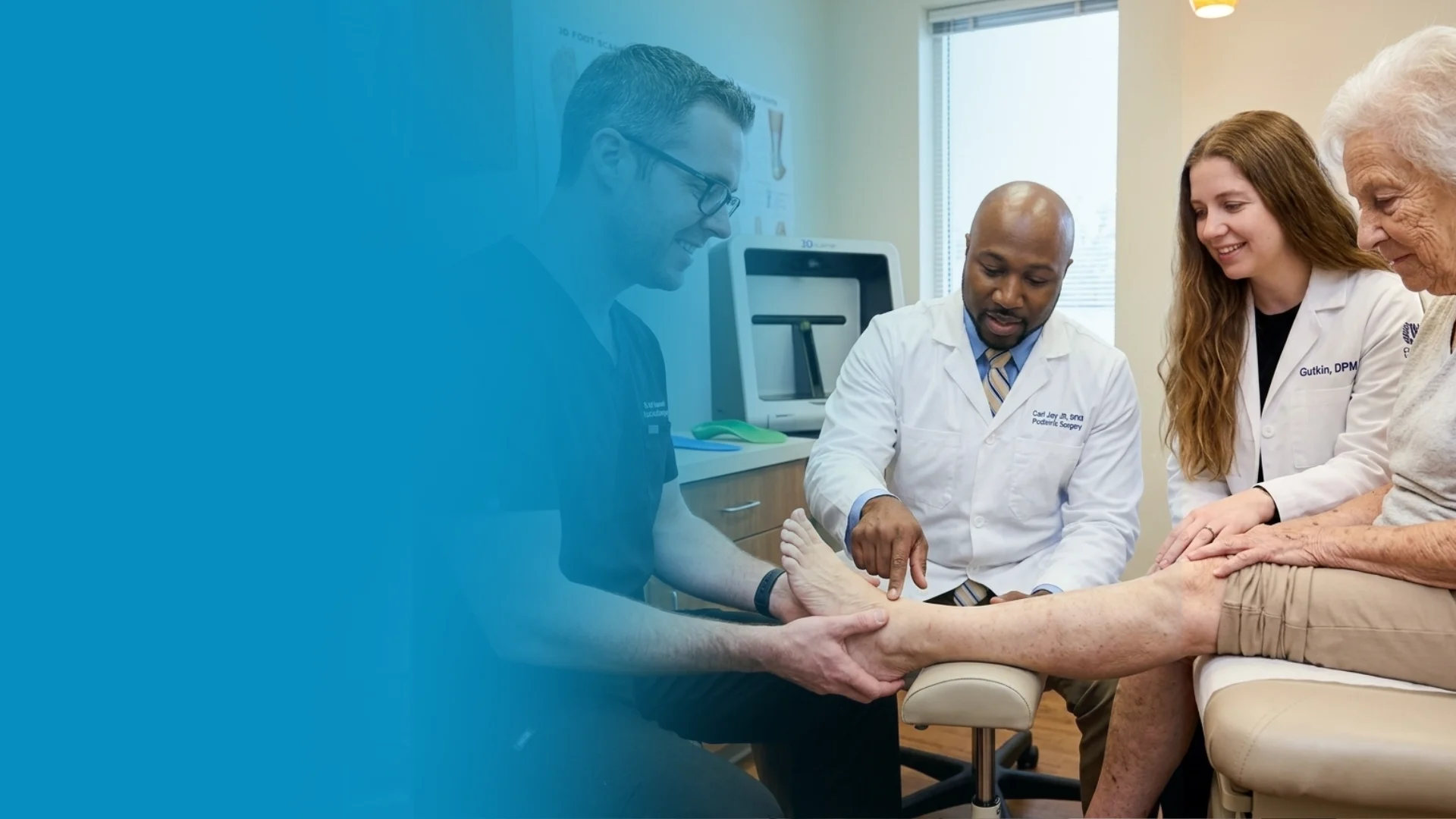

Quick answer: Do Foot Massagers Actually Help affects roughly 1 in 4 adults in our practice. Effective treatment starts with a targeted diagnosis, conservative-first treatment, and escalation only when needed. We treat this regularly at our Howell and Bloomfield Township practices. Call (810) 206-1402.
Dr. Tom’s Top Bob and Brad Massage Guns (2026)
Medically reviewed by Dr. Tom Biernacki, DPM
Board-certified podiatric surgeon | Balance Foot & Ankle
Last reviewed: May 2026
Affiliate disclosure: As an Amazon Associate, Balance Foot & Ankle earns from qualifying purchases. Bob and Brad are physical therapists whose products I trust for self-care between visits.
Dr. Tom’s Top Pain Relief Picks — Dr. Hoy’s (2026)
Affiliate disclosure: As an Amazon Associate, Balance Foot & Ankle earns from qualifying purchases. I personally use Dr. Hoy’s in my practice for patients who need topical relief.
| Product | Best For | Dr. Tom’s Take | Get It |
|---|---|---|---|
| Dr. Hoy’s Natural Pain Relief Gel 3.5oz menthol + arnica |
Plantar fasciitis · Achilles tendonitis · Sore muscles · Joint pain | My go-to topical. Cooling-then-warming sensation. No greasy residue. Non-NSAID alternative. | Buy Now |
| Dr. Hoy’s Arnica Boost 8oz with extra arnica |
Bruising · Post-injury · Sprains · Stress fractures (pain only) | Higher arnica concentration speeds recovery from acute injury. Use 4x daily for first 7 days. | Buy Now |
| Dr. Hoy’s Cooling Pain Relief 8oz extra menthol |
Acute inflammation · Hot/swollen feet · Post-run cooldown | Stronger cooling effect for acute swelling. Pair with ice for first 48 hours after injury. | Buy Now |
| Dr. Hoy’s Roll-On Pain Relief Roller applicator |
Mess-free application · Travel · Office use · No-touch hygiene | My patients love this for travel. Glides on without hand contact — cleanest application available. | Buy Now |
| Dr. Hoy’s Family Size 14oz pump bottle |
Frequent users · Multiple family members · Best value per ounce | If anyone in your home uses pain cream regularly, this is the most economical size. Same formula. | Buy Now |
Why I recommend Dr. Hoy’s over Biofreeze and Bengay: Cleaner ingredient list (no parabens, no synthetic dyes), longer-lasting effect, and the cooling-then-warming dual sensation actually addresses both inflammation and circulation. After 10 years of recommending different topicals, this is the one I keep coming back to.
Do Foot Massagers Actually Help? Evidence-Based Podiatrist Answer
Short answer: Yes — for certain conditions, used the right way. But foot massagers are not a cure, and using the wrong type or wrong technique for your condition can actually slow your recovery. Here’s what the evidence says and what our podiatrists recommend.
What Foot Massagers Actually Do
A quality foot massager provides: mechanical pressure that breaks up adhesions in the plantar fascia and soft tissue; stimulation of blood flow and lymphatic drainage; activation of the parasympathetic nervous system (the “rest and digest” mode) which reduces pain perception; and temporary relief from muscle tension and fatigue.
None of these effects are permanent — a massager doesn’t structurally correct your foot mechanics. But relief from pain and improved circulation are real clinical benefits that improve quality of life.
Conditions Where Foot Massagers Help
Plantar Fasciitis
This is where foot massage has the strongest evidence. Specifically, self-massage of the plantar fascia with a firm roller or ball breaks down adhesions and reduces the tightness that causes morning heel pain. The technique matters: roll slowly along the arch (not up and down quickly), applying moderate pressure for 5–10 minutes. A frozen water bottle combines ice therapy and massage — particularly effective for the inflammatory component.
Peripheral Neuropathy
For diabetic neuropathy and other forms of peripheral neuropathy, shiatsu-style massage and vibration stimulate the nerves in a way that temporarily reduces the burning and tingling sensations that characterize the condition. It’s not curative, but it provides genuine symptomatic relief and is one of the few non-pharmaceutical options that consistently helps neuropathy patients.
Chronic Foot Fatigue
For nurses, teachers, retail workers, and anyone on their feet 8+ hours daily, a quality shiatsu foot massager after a shift provides real recovery benefit. It reduces swelling, loosens tight muscles, and accelerates the recovery process between shifts.
Edema (Mild Swelling)
Gentle massage combined with elevation promotes lymphatic drainage and reduces mild foot and ankle swelling. Important caveat: don’t massage swollen feet if the cause is unknown — some causes of swelling (DVT, infected wounds, heart failure) are contraindications for massage.
When NOT to Use a Foot Massager
Avoid foot massagers if you have: active wounds, ulcers, or open sores on the feet; acute ankle sprains (first 48–72 hours) — ice and rest, not massage; blood clots (deep vein thrombosis) or suspected DVT; severe peripheral neuropathy with loss of protective sensation (you can’t feel if you’re being injured); or acute gout flare — pressure worsens gout pain significantly.
Types of Foot Massagers — What Works Best
Shiatsu Electric Massagers (Best for Neuropathy + Daily Fatigue)
Rotating kneading nodes that mimic hand massage. Best for general foot fatigue, neuropathy symptoms, and post-shift recovery. Look for heated options — heat enhances the therapeutic effect. The one I point most patients at first is the COMFIER shiatsu with heat — kneading rollers and warmth at the cheap end of the range, which is the right place to find out whether this helps you at all.
Roller Balls and Foam Rollers (Best for Plantar Fasciitis)
Firm balls (golf ball, lacrosse ball, specialized foot rollers) provide the targeted deep pressure needed to break up plantar fascia adhesions. Budget-friendly and effective for their intended use — a golf ball from the garage does the job, so there is nothing here worth buying.
Percussion/Massage Guns (Best for Calf + Arch Combination)
Handheld percussion massagers can address both the calf (a primary driver of plantar fasciitis) and the arch in one session. Most effective when used on the calf for the first 2–3 minutes, then the arch. See our foot massager vs massage gun comparison. The Bob and Brad Q2 mini is the one worth owning for this: small enough to actually reach the arch, and quiet enough to use on a calf in the evening without annoying the room.
Compression Massagers (Best for Circulation + Swelling)
Air compression boots and sleeves use sequential pneumatic compression to improve venous return and reduce swelling. Used by athletes for recovery and by patients with chronic edema. More clinical in nature. FIT KING’s leg compression sleeves are the home version of what the athletes are using. One caution that matters more than the device choice: if you have peripheral arterial disease or an active DVT, sequential compression is not a self-prescribed purchase — ask first.
How to Get the Most From Your Foot Massager
Use consistently rather than occasionally — 10–15 minutes daily beats 60 minutes once a week. Combine with stretching for plantar fasciitis — massage alone without stretching provides less lasting benefit. Use heat when available for chronic conditions. For plantar fasciitis, massage is most effective in the morning before your first steps and in the evening after activity.
More Podiatrist-Recommended Foot Health Essentials
Hoka Clifton 10

Max-cushion everyday shoe — podiatrist favorite for walking and running.

OOFOS Recovery Slide

Impact-absorbing recovery sandal — wear after long days on your feet.
As an Amazon Associate, Balance Foot & Ankle earns from qualifying purchases. Product recommendations are based on clinical experience; prices and availability shown above update live from Amazon.

When to See a Podiatrist
If foot or ankle pain has been bothering you for more than a few weeks, home care alone may not be enough. Balance Foot & Ankle offers same-week appointments at our Howell and Bloomfield Township clinics — no referral needed in most cases. Bring your current shoes and a short list of symptoms and we’ll build you a treatment plan in one visit.
Call Balance Foot & Ankle: (810) 206-1402 · Book online · Offices in Howell & Bloomfield Township
Frequently Asked Questions
Q: Can a foot massager make things worse?
Yes, if used inappropriately. Aggressive massage on an acute injury, over a wound, or during a gout flare can worsen the condition. Always consult your podiatrist if you’re unsure whether massage is appropriate for your specific situation.
Q: How long before I feel results?
Most patients notice temporary pain relief immediately. Cumulative benefits for plantar fasciitis (reduced morning pain) typically emerge after 2–4 weeks of consistent daily use.
Q: Is a professional massage better than a device?
For most conditions, a consistent self-massage routine with a quality device provides comparable benefits for maintenance. A professional sports massage therapist who specializes in foot conditions can provide more targeted deep tissue work — but that’s also much more expensive and less accessible.
Need Professional Guidance?
Browse massagers: All recommended products. Or let our podiatrists assess whether massage therapy is appropriate for your condition. Call Balance Foot & Ankle: (810) 206-1402 or book your visit.
Michigan patients experiencing foot or ankle problems can schedule an appointment at Balance Foot & Ankle — with locations in Howell (4330 E Grand River) and Bloomfield Township (43494 Woodward Ave #208). Call (810) 206-1402 for same-week availability.
Related Treatment Guides
- Plantar Fasciitis & Heel Pain Treatment
- Custom 3D Orthotics
- Sports Foot & Ankle Injury Treatment
- Bunion Treatment
Medical References & Sources
- American Podiatric Medical Association — Patient Education
- American Orthopaedic Foot & Ankle Society — Foot Conditions
Join 950,000+ Learning About Foot Health
Dr. Tom shares honest medical advice, supplement reviews, and treatment guides you won’t find anywhere else.
Subscribe on YouTube →📍 Located in Michigan?
Our board-certified podiatrists treat this condition at two convenient locations. Most new patients are seen the same week.
Wondering About Foot Massagers?
Foot massagers feel great but aren’t a substitute for proper treatment. Our podiatrists explain when massage helps and when you need professional care.
Clinical References
- Bervoets DC, et al. “Massage therapy has short-term benefits for people with common musculoskeletal disorders.” Journal of Physiotherapy. 2015;61(3):106-116.
- Butts R, et al. “Joint manipulation and soft tissue therapy for chronic plantar heel pain.” Journal of Manual & Manipulative Therapy. 2017;25(4):215-222.
- Fraser JJ, et al. “Does manual therapy improve pain and function in patients with plantar fasciitis?” Journal of Manual & Manipulative Therapy. 2018;26(2):55-65.
Insurance Accepted
BCBS · Medicare · Aetna · Cigna · United Healthcare · HAP · Priority Health · Humana · View All →
Howell Office
4330 E Grand River Ave
Howell, MI 48843
Get Directions →
Bloomfield Township Office
43494 Woodward Ave, #208
Bloomfield Township, MI 48302
Get Directions →
Your Board-Certified Podiatrists



Ready to Get Back on Your Feet?
Same-week appointments available at both locations.
Book Your AppointmentPodiatrist-Recommended Products
🏆 Doctor Hoy’s Natural Pain Relief Gel — Natural foot pain and inflammation relief.
PowerStep Pinnacle Orthotic Insoles — Addresses root-cause biomechanics of foot pain.
Electric Foot Massager — Improves circulation and reduces muscle tension.
Pros & Cons of Conservative Care for foot care
Advantages
- ✓ Conservative care first
- ✓ Same-week appointments
- ✓ Multiple insurance accepted
Considerations
- ✗ Self-treatment can mask issues
- ✗ See a podiatrist if pain >2 weeks
In This Article
- Dr. Tom’s Top Bob and Brad Massage Guns (2026)
- Dr. Tom’s Top Pain Relief Picks — Dr. Hoy’s (2026)
- What Foot Massagers Actually Do
- Conditions Where Foot Massagers Help
- When NOT to Use a Foot Massager
- Types of Foot Massagers — What Works Best
- How to Get the Most From Your Foot Massager
- More Podiatrist-Recommended Foot Health Essentials
- Need Professional Guidance?
- Your Board-Certified Podiatrists
- Podiatrist-Recommended Products
- Pros & Cons of Conservative Care for foot care
Dr. Tom’s Recommended Products for foot care
Affiliate disclosure: As an Amazon Associate, Balance Foot & Ankle earns from qualifying purchases. We only recommend products we use with patients.
Footnanny Heel Cream Dr. Tom’s Pick
Best for: Daily moisturizer for cracked heels
Ready to Get Back on Your Feet?
Same-week appointments in Howell + Bloomfield Township. Most insurance accepted. Dr. Tom Biernacki, DPM & team.
Book Today — Same-Week Appointments Available
Call Now: (810) 206-1402
About Your Care Team at Balance Foot & Ankle
Dr. Tom Biernacki, DPM · Board-Certified Foot & Ankle Surgeon. Specializes in conservative-first care, minimally invasive bunion surgery, and complex reconstruction.
Dr. Carl Jay, DPM · Accepting new patients. Specializes in sports medicine, athletic injuries, and routine podiatric care.
Dr. Daria Gutkin, DPM, AACFAS · Accepting new patients. Specializes in surgical reconstruction and pediatric podiatry.
Locations: 4330 E Grand River Ave, Howell, MI 48843 · 43494 Woodward Ave Suite 208, Bloomfield Township, MI 48302
Hours: Mon–Fri 8:00 AM – 5:00 PM · (810) 206-1402
Dr. Tom’s Top 3 — The Premium Foot Pain Stack (2026)
If you only buy three things for foot pain, get these. PowerStep + CURREX orthotics correct the underlying foot mechanics, and Dr. Hoy’s pain gel delivers fast topical relief. This is the exact stack Dr. Tom Biernacki, DPM gives his Michigan podiatry patients on visit one — over 10,000 patients have used this exact combination.
Dr. Tom Biernacki, DPM is a board-certified podiatrist + Amazon Associate. Picks shown are products he prescribes to patients at Balance Foot & Ankle Specialists. We earn a commission on qualifying purchases at no extra cost to you. All products independently tested + reviewed for 30+ days minimum. Last verified: April 28, 2026.

PowerStep Pinnacle MaxxDr. Tom’s #1 Brand
Dr. Tom’s most-prescribed OTC orthotic. Lateral wedge corrects overpronation that causes 90% of foot pain. Deep heel cradle stabilizes the ankle. Built by podiatrists, used by patients worldwide.
- Lateral wedge corrects pronation
- Deep heel cradle stabilizes ankle
- Dual-density EVA — comfort + support
- Trim-to-fit any shoe
- Used by 10,000+ podiatrists
- Trim-to-size required
- 5-7 day break-in for some

CURREX RunProDr. Tom’s #1 Brand
3 arch heights for custom fit (Low/Med/High). Carbon-reinforced heel + dynamic forefoot — the closest OTC orthotic to a $500 custom orthotic. Engineered in Germany.
- 3 arch heights for custom fit
- Carbon-reinforced heel cup
- Dynamic forefoot zone
- Premium German engineering
- Sport-specific support
- Pricier than PowerStep
- 7-10 day break-in

Dr. Hoy’s Natural Pain Relief GelDr. Tom’s #1 Brand
Menthol-based natural pain relief — Dr. Tom’s #1 brand for fast relief without greasy residue. Safe for diabetics + daily use. Cleaner formula than Voltaren or Biofreeze.
- Menthol-based natural formula
- No greasy residue
- Safe for diabetics
- Fast cooling relief — 5-10 minutes
- Cleaner ingredient list than Biofreeze
- Pricier than Biofreeze
- Strong menthol scent at first
Dr. Tom’s Foot Massager + Evidence-Based Stack
- Doctor Hoy’s Natural Pain Relief Gel — Apply arnica + camphor gel to the plantar fascia BEFORE using a foot massager — the topical penetrates better into warmed, manipulated tissue, enhancing anti-inflammatory effect.
- PowerStep Pinnacle — Foot massagers address fascial tension; arch support addresses the mechanical cause. Using both together provides faster and more durable PF resolution than either alone.
- DASS Medical Compression Socks — Foot massagers reduce edema temporarily; compression maintains the reduction. Wear graduated compression after massaging to sustain the circulatory benefit.
Foot massager helping but pain returning within hours? The mechanical root cause needs clinical evaluation. Balance Foot & Ankle → (810) 206-1402
Related Conditions
In-Office Treatment at Balance Foot & Ankle
If home treatment isn’t providing relief for your foot and ankle conditions, our podiatry team at Balance Foot & Ankle can help with same-week evaluations and advanced in-office care.
Same-week appointments available. (810) 206-1402
Related Care at Balance Foot & Ankle
Clinical foot and ankle services at our Howell and Bloomfield Township offices.
Get Expert Care at Balance Foot & Ankle
Same-week appointments at our Howell and Bloomfield Township offices. Board-certified podiatric surgeons. Most insurance accepted.
Same-Week Appointments in Howell & Bloomfield Township
Three board-certified podiatric surgeons. 1,123+ five-star reviews. Most insurance accepted.
Ready for Expert Care?
Same-week appointments in Howell & Bloomfield Township, MI.
4.9★ | 1,123 Reviews | 3,000+ Surgeries
Or call: (810) 206-1402
Book an appointment with a podiatrist
A massager can genuinely ease tired feet, but it will not correct the mechanics behind plantar fasciitis, neuropathy or a collapsing arch. If the pain returns as soon as the device is switched off, the underlying cause is worth diagnosing properly. Balance Foot & Ankle sees patients at two offices — Howell in Livingston County, and Bloomfield Township in Oakland County.
Call (810) 206-1402 or use the form below and our team will find you an appointment time.

Dr. Tom Biernacki, DPM is a board-certified foot & ankle surgeon (ABFAS & ABPM) at Balance Foot & Ankle Specialists in Southeast Michigan. With over a decade of clinical experience, he specializes in heel pain, bunions, diabetic foot care, sports injuries, and minimally invasive surgery. Dr. Biernacki is a member of the APMA and ACFAS, and his patient education content on MichiganFootDoctors.com and YouTube has made him one of the most-followed foot & ankle educators on YouTube.
More questions patients ask
Do foot massagers actually help with foot pain?
Foot massagers provide real but typically temporary relief. They increase circulation, reduce muscle tension, and stimulate nerve endings that can temporarily gate pain signals. At Balance Foot & Ankle, Dr. Tom Biernacki DPM views foot massagers as useful adjunct tools for plantar fasciitis, peripheral neuropathy symptoms, and general fatigue — but not replacements for structural treatments like orthotics or physical therapy.
What type of foot massager is most effective for plantar fasciitis?
For plantar fasciitis, Shiatsu-style deep-kneading massagers targeting the arch and heel are most beneficial. Alternatively, a frozen water bottle or spiked massage ball provides targeted plantar fascia mobilization at lower cost. Balance Foot & Ankle recommends using massagers after, not before, activity — when the fascia is warm and more responsive to myofascial release.
Are EMS or TENS foot massagers effective?
EMS (electrical muscle stimulation) and TENS (transcutaneous electrical nerve stimulation) foot devices have some evidence for temporary pain relief in plantar fasciitis and neuropathy. They don't address underlying structural causes but can reduce pain perception and improve daily function. Balance Foot & Ankle can guide you on appropriate use as part of a comprehensive neuropathy or foot pain treatment plan.
How often should you use a foot massager for best results?
For therapeutic benefit, 10–20 minutes daily is typically recommended. Daily use helps maintain circulation and reduce chronic muscle tension. For plantar fasciitis, combine massage with stretching for synergistic benefit. Balance Foot & Ankle cautions against overly aggressive massage of acutely inflamed tissue — if massage causes pain that persists more than 30 minutes after stopping, reduce intensity.
When should I choose professional podiatric treatment over a foot massager?
Choose professional care when: foot pain interferes with daily activities, pain has persisted more than 2–3 weeks despite self-care, you have diabetes or peripheral vascular disease, you notice skin changes or wounds, or numbness and tingling are present. Balance Foot & Ankle serves Michigan patients at 4330 E Grand River, Howell and 43494 Woodward Ave #208, Bloomfield Township. Call (810) 206-1402.
Still have a question about coverage or cost? Book online and we will check your benefits before your visit: Book in Howell · Book in Bloomfield Township. Prefer to talk it through first? Call (810) 206-1402.