
In-office wart removal · most insurance accepted
Plantar wart that will not clear up? Same-week appointments in Howell & Bloomfield Township
Medically reviewed by Dr. Tom Biernacki, DPM
Board-certified podiatric surgeon | Balance Foot & Ankle
Last reviewed: May 2026
Most plantar warts are mistaken for calluses, and treating a wart like a callus is why they persist for years. The giveaway is pinpoint bleeding when the surface is pared back. We confirm which it is before treating, at our Howell and Bloomfield Township offices. Book online for a same-week visit, or call (810) 206-1402.
What Are Plantar Warts?
If you’ve noticed a rough, painful bump on the bottom of your foot — especially one that seems to grow inward rather than outward — there’s a good chance you’re dealing with a plantar wart. In our clinic, patients often arrive convinced they have a callus or a stone bruise, only to discover an HPV infection hiding under a layer of thickened skin.
A plantar wart (also called a verruca plantaris) is a skin growth on the sole of the foot caused by human papillomavirus (HPV) — specifically the low-risk strains HPV-1, HPV-2, HPV-4, HPV-60, and HPV-63. Unlike the high-risk HPV types associated with cervical cancer, these strains only infect the superficial skin layers and pose no systemic health risk. What they do cause, though, is a persistent, often painful growth that can interfere with walking and standing.
Plantar warts are among the most common dermatological conditions affecting the foot. Studies suggest roughly 10–12% of the population will have at least one at some point in their life, with the highest rates in children and teenagers. In our clinic, we see them year-round — most commonly after swimming season when barefoot time in public spaces peaks.
Key takeaway: Plantar warts are caused by low-risk HPV strains that enter the skin through tiny cuts or abrasions. They are not dangerous, but they are contagious and often painful enough to affect your daily movement.
What Do Plantar Warts Look Like? (The 5 Signs)
Correctly identifying a plantar wart is the first step to choosing the right treatment. These five features reliably distinguish a wart from a callus, corn, or other foot lesion.
- Black dots (“seeds”): The most reliable sign. These tiny dark pinpoints are not seeds — they are thrombosed (clotted) capillaries within the wart tissue. A callus will never have them.
- Interrupted skin lines: Normal fingerprint-like ridges run continuously across your sole. A plantar wart disrupts this pattern — the lines bend around the wart rather than crossing through it. A callus preserves the ridge pattern.
- Pain on lateral (squeeze) pressure: Plantar warts hurt when you pinch them from the sides. Calluses hurt when pressed directly from above. This distinction helps us confirm the diagnosis in seconds in the clinic.
- Grainy, rough surface: Under the skin’s surface, the wart tissue has a cauliflower-like texture when shaved down during treatment. The outer surface looks rough and may feel like walking on a pebble.
- Grows inward under pressure: Because warts develop on the weight-bearing sole, body weight pushes them into the skin rather than letting them grow outward — which is why they’re often flat and deeply embedded rather than raised.
Two Types of Plantar Warts
Not all plantar warts behave identically. Understanding which type you have matters because treatment difficulty varies significantly between them.
Myrmecia (deep, solitary): Caused primarily by HPV-1. These are single, deep, crater-like warts that penetrate far into the dermis and are intensely painful. They often look like a round callus with a central core of black dots. These are the type most likely to cause limping and are the most challenging to treat completely.
Mosaic warts (superficial, clustered): Caused primarily by HPV-2. These are flat, tile-like clusters of smaller warts that spread laterally across a broad area rather than going deep. They’re typically less painful than myrmecia but much harder to eradicate because the HPV-infected tissue is spread over a wider zone. In our clinic, patients with mosaic warts often require more treatment cycles.
What Causes Plantar Warts? (How HPV Gets In)
HPV doesn’t just land on your foot and cause a wart — it needs a way in. The virus enters through breaks in the skin that may be too small to see or feel. This is why the risk goes up dramatically in certain situations:
- Wet, warm environments: Public showers, locker rooms, pool decks, and gym floors are the most common transmission sites. The virus thrives when the skin is softened by moisture.
- Walking barefoot: Going barefoot on shared surfaces allows direct skin-to-surface contact where the virus can be present from prior infected walkers.
- Skin damage: Dry, cracked heels; blisters; cuts; or abrasions give HPV its entry point. Athletes with repeated microtrauma to the feet are at especially high risk.
- Immune suppression: People with diabetes, autoimmune conditions, or those taking immunosuppressant medications are more susceptible and more likely to develop persistent or treatment-resistant warts.
- Age: Children and teenagers get plantar warts at much higher rates than adults, likely because they lack prior HPV immunity and spend more time barefoot in shared spaces.
The most common mistake we see is patients who treat every rough spot on the bottom of the foot as a callus, missing a wart for months or years. If OTC callus treatments aren’t working after 4–6 weeks, a plantar wart should be high on your list of suspects.
Key takeaway: Plantar warts are contagious — not just in public spaces, but within your own household. Avoid sharing towels, socks, or nail files. Treat warts early to reduce the risk of spreading them to other parts of your foot or to family members.
Plantar Wart vs. Callus vs. Corn: How to Tell Them Apart
Confusing a plantar wart with a callus is the most common diagnostic mistake patients make — and it leads to months of ineffective treatment. Here’s how we tell them apart clinically. For a full comparison with the pinch test explained in detail, see our complete guide: Plantar Wart vs. Callus vs. Corn.
- Callus: Yellow-gray thickening with smooth surface, normal skin ridges intact, no black dots, painless or dull ache from direct pressure only.
- Corn: Small raised bump with a hard central core, located on bony prominences (tops or sides of toes), painful on direct downward pressure.
- Plantar wart: Black dots present, skin ridges interrupted, pain on lateral squeeze, may bleed when shaved down to reveal white, fleshy tissue.
How Podiatrists Diagnose Plantar Warts
For most plantar warts, diagnosis is clinical — meaning we can confirm or rule out a wart through physical examination alone. In our office, the workup takes less than two minutes:
- Visual inspection: Look for black dots, disrupted skin lines, and the characteristic grainy texture.
- Shave test: Gently removing the top layer of skin reveals a wart’s white, fleshy tissue with capillary bleeding — a callus shaves down to smooth, yellowish skin without bleeding.
- Squeeze test: Lateral pinch pressure causes pain in a wart; direct pressure causes pain in a corn or callus.
- Biopsy (rare): In unusual presentations — such as a wart-like lesion in an older patient that doesn’t respond to treatment — we may send a tissue sample to pathology to rule out amelanotic melanoma or other rare diagnoses. This is the exception, not the rule.
Plantar Wart Treatment Options: Every Option Ranked
There is no single “best” treatment for plantar warts — what works depends on the wart’s depth, type, duration, and your immune response. Here’s how we rank the options in our clinic, from first-line to definitive.
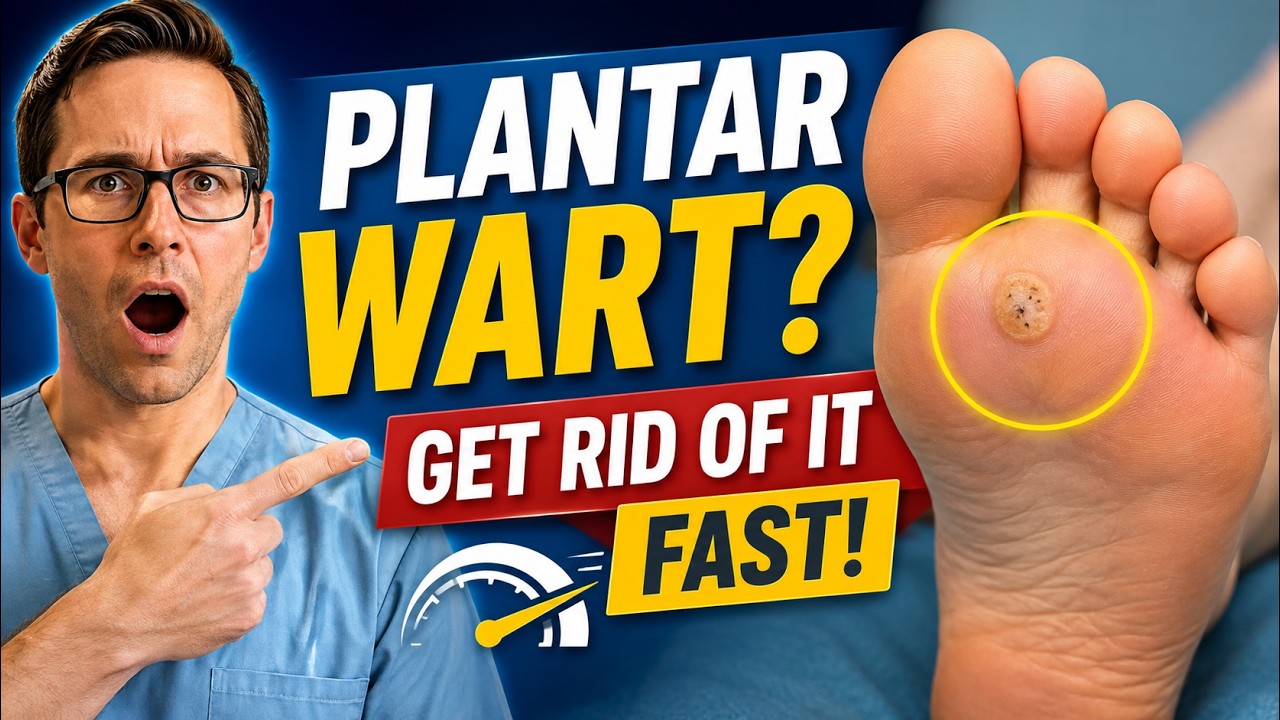
▶ Watch: Dr. Tom Biernacki on getting rid of a plantar wart
Home Treatments (First-Line)
Salicylic acid (17–40%): Available OTC as liquids, gels, or medicated pads. Breaks down the wart tissue by keratolysis. Effective in ~50–60% of cases but requires daily application for 8–12 weeks. The most important step is paring down the dead skin before each application so the acid can reach live wart tissue.
Duct tape occlusion: Covering the wart with duct tape for 6-day cycles, then soaking and filing. Evidence is mixed — some studies show results comparable to cryotherapy, others show no benefit over placebo. Low risk, low cost. We recommend it as an adjunct to salicylic acid rather than a standalone treatment.
In-Office Treatments
Cryotherapy (liquid nitrogen): The most commonly performed plantar wart treatment in our office. Liquid nitrogen at −196°C freezes the wart tissue, causing cell death and stimulating an immune response. Typically requires 3–5 sessions spaced 2–3 weeks apart. Success rates of 70–80% in responsive cases. Can be painful and may cause temporary blistering.
Swift microwave therapy: A newer FDA-cleared device that delivers precisely targeted microwave energy into wart tissue to heat HPV-infected cells and trigger an immune response. In our clinical experience, Swift is particularly effective for mosaic warts and treatment-resistant cases. Typically 3–4 sessions. No open wound, no anesthesia, faster return to normal activity.
Cantharidine (“beetle juice”): A blistering agent applied by the physician that causes the wart to separate from the skin. Painless at application, produces a blister 24–48 hours later that requires follow-up debridement. Good option for children and needle-averse patients.
Bleomycin injection: A chemotherapy agent injected directly into the wart. Effective but reserved for stubborn cases due to cost and technique requirements.
Surgical excision or CO2 laser: Definitive removal for non-responding warts. CO2 laser vaporizes wart tissue with high precision. Used as a last resort because scarring can create a chronic pressure point. We avoid excision on the heel and ball of the foot for this reason.
Key takeaway: About two-thirds of plantar warts resolve on their own within 24 months — but treatment speeds this dramatically and prevents spread to other areas of the foot. Don’t wait if the wart is painful, growing, or spreading.
⚠️ When to see a podiatrist immediately:
- The wart is bleeding, oozing, or has changed color rapidly.
- You have diabetes, peripheral neuropathy, or poor circulation — never try to treat foot warts yourself if any of these apply.
- The wart has not responded to 8–12 weeks of consistent OTC salicylic acid treatment.
- Multiple warts are spreading or clustering across a large area of your sole.
- The wart is causing you to alter your gait or limp to avoid pain.
- You’re immunocompromised and warts are appearing rapidly in new locations.
How to Prevent Plantar Warts
Prevention is more practical than most patients realize. These habits consistently reduce transmission risk:
- Wear flip-flops or shower shoes in public showers, pool decks, and locker rooms — even for brief visits.
- Keep feet dry: Change socks daily, use moisture-wicking socks for exercise, and dry between your toes after bathing.
- Don’t share personal items: Towels, nail files, pumice stones, and socks can carry the virus.
- Treat cuts promptly: Even small abrasions provide entry points. A thin application of petroleum jelly after minor skin trauma can help.
- Inspect your feet regularly: The earlier a plantar wart is caught, the easier it is to treat before it grows deeper or spreads.
Frequently Asked Questions
Are plantar warts contagious? Yes. HPV spreads through direct contact with contaminated surfaces or infected skin. Warts are most contagious when broken or bleeding. Infected individuals should avoid walking barefoot on shared surfaces and not share personal foot-care items.
Can plantar warts go away on their own? About two-thirds do — but the timeline is typically 12–24 months. In children, spontaneous resolution is more common and faster. Treatment is recommended if the wart is painful, spreading, or located in a weight-bearing area.
Do plantar warts have roots? No. This is a common misconception. Warts don’t have roots that grow deep into the bone or tissue. The black dots sometimes mistaken for “roots” are actually thrombosed capillaries. The wart tissue itself is confined to the epidermis and upper dermis.
Can I treat plantar warts at home? Mild, single warts in healthy individuals can be treated with OTC salicylic acid for 8–12 weeks. If the wart persists, grows, or you have diabetes or vascular disease, see a podiatrist rather than continuing OTC treatment.
How many treatments does cryotherapy take? Most patients require 3–5 sessions spaced 2–3 weeks apart. Deep myrmecia warts may need more. We reassess after each session and adjust the approach if the wart isn’t responding.
What is the most effective treatment for plantar warts? There is no single best option — it depends on the wart’s depth, type and how long you have had it. Salicylic acid is a reasonable first step for a small, new wart if you do not have diabetes, neuropathy or poor circulation. For warts that are painful, deep, clustered, or still there after 8–12 weeks of home treatment, cryotherapy is the treatment we perform most often, and Swift microwave therapy is particularly effective for mosaic and treatment-resistant warts. Excision or laser is reserved for warts that do not respond.
Does plantar wart removal hurt? It depends on the method. Cryotherapy can be painful during treatment and may leave a temporary blister. Cantharidin is painless when applied, and a blister forms 24–48 hours later. Swift microwave therapy uses a brief pulse that patients describe as a short, sharp sensation — it needs no anesthesia and leaves no open wound.
Does insurance cover plantar wart removal? Usually, when treatment is medically necessary — for example, when the wart is painful or changes how you walk. Removal for purely cosmetic reasons may not be covered, and coverage for Swift therapy varies by plan. Our team checks your benefits before treatment. More detail: does insurance cover wart removal on the feet?
The Bottom Line
Plantar warts are caused by low-risk HPV and are among the most common foot problems we treat. The key to managing them is early identification (look for the black dots and the squeeze test), choosing the right treatment tier for your specific wart type, and being consistent. Two-thirds resolve without treatment — but if yours is painful, spreading, or disrupting how you walk, treatment is absolutely worth it.
If you’re in the Howell or Bloomfield Township area and want a confirmed diagnosis and a treatment plan in a single visit, our team at Balance Foot & Ankle has treated thousands of plantar warts across every type and severity level. We’ll tell you exactly what you’re dealing with and pick the most effective approach for your situation.
When plantar warts will not clear with OTC treatment
Plantar warts are caused by HPV and can be stubborn because they grow inward under pressure. OTC salicylic acid works on small, new warts but fails on large, clustered, or long-standing ones. A podiatrist can offer stronger options: cryotherapy, Swift microwave therapy, cantharidin, in-office debridement, or laser. Treating early prevents spread and the painful mosaic clusters.
Balance Foot & Ankle — Howell & Bloomfield Township, MI: board-certified podiatrists, same-week appointments, most insurance accepted.
Related reading: calluses on the foot · foot fungus treatment · pitted keratolysis
Sources
- Mulhem E, Pinelis S. “Treatment of nongenital cutaneous warts.” Am Fam Physician. 2011. AAFP
- Kwok CS, et al. “Topical treatments for cutaneous warts.” Cochrane Database Syst Rev. 2012. Cochrane Library
- “Efficacy of cryotherapy for plantar warts: a systematic review and meta-analysis.” Dermatol Ther. 2022. Wiley
- Chaudhary et al. “Comparison of cryotherapy and topical salicylic acid in common warts: a systematic review and meta-analysis.” Dermatol Ther. 2023. Wiley
- Leung L. “Recalcitrant nongenital warts.” Aust Fam Physician. 2011. RACGP
- Lipke MM. “An armamentarium of wart treatments.” Clin Med Res. 2006. Clin Med Res
- American Podiatric Medical Association. “Warts.” APMA

Dr. Tom Biernacki, DPM is a board-certified foot & ankle surgeon (ABFAS & ABPM) at Balance Foot & Ankle Specialists in Southeast Michigan. With over a decade of clinical experience, he specializes in heel pain, bunions, diabetic foot care, sports injuries, and minimally invasive surgery. Dr. Biernacki is a member of the APMA and ACFAS, and his patient education content on MichiganFootDoctors.com and YouTube has made him one of the most-followed foot & ankle educators on YouTube.