
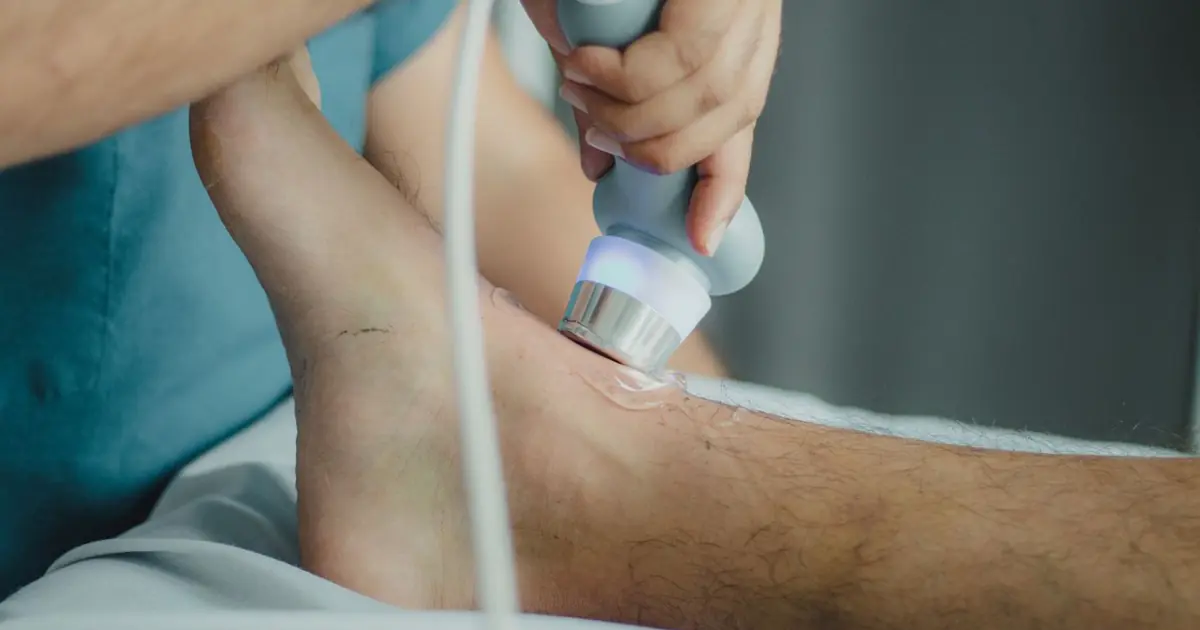
Quick answer: Laser toenail fungus treatment uses focused light to heat and disable the fungus living beneath the nail — no pills, no needles, and no downtime. At Balance Foot & Ankle we use an FDA-cleared medical laser at both our Howell and Bloomfield Township offices, usually as part of a complete plan that can also include topical or oral antifungals. It is a strong option if oral medication isn’t right for you or a stubborn infection keeps coming back.
Toenail fungus is one of the most stubborn problems we treat. Creams struggle to reach it, pills aren’t right for everyone, and the internet is full of home remedies that mostly waste months. Laser therapy earned its place in our offices for one reason: it lets us attack the infection directly, under the nail, for patients who can’t take — or haven’t been helped by — the usual medications. Here is how it works, who it genuinely helps, and what honest expectations look like.
Ready to be seen? Book a real appointment time online, 24/7 — Howell or Bloomfield Township. Takes about a minute, 24/7.
Why Toenail Fungus Is So Hard to Clear
The fungus doesn’t live on top of your nail — it lives underneath it, in and on the nail bed, shielded by the hard nail plate. That shield is why drugstore creams so often fail: very little medication actually penetrates to where the infection is. Oral antifungals reach it through the bloodstream and work well, but they aren’t appropriate for every patient. That gap is exactly where laser treatment fits. For a full overview of every option we offer, see our toenail fungus treatment page.
How Laser Treatment Works
The laser passes safely through the nail plate and delivers concentrated light energy to the tissue underneath, heating and disabling fungal cells that medication has trouble reaching. There is no cutting and no anesthesia. Most patients describe a warming sensation over the nail during treatment. A session takes only minutes per foot, you walk out the way you walked in, and you can drive yourself home. We usually trim and thin the nail first so the light reaches the nail bed effectively. For the deeper science — laser types, wavelengths, and what clinical studies show — see our complete nail fungus laser treatment guide.
Who Laser Therapy Is Right For
Laser is not a gimmick, but it is also not automatically the first choice for everyone. In our Howell and Bloomfield Township offices it earns its keep in three situations: patients who cannot take oral antifungals (liver concerns, medication interactions, or personal preference), resistant infections that have already failed topicals or a course of oral medication, and combination treatment, where laser is layered with prescription topicals or orals to give a severe infection no place to hide. At your exam we’ll tell you plainly which camp you fall into — and if a cheaper option is likely to work just as well for you, we’ll say so.
If topicals and even oral antifungals haven’t cleared it, laser is often the next honest step — and you can arrange it without a phone call. Book our Howell office or Bloomfield Township online and we’ll tell you honestly whether laser is worth it for your nails.
What to Expect at Your Visit
First comes a proper diagnosis — thickened, discolored nails are not always fungus, and treating the wrong problem wastes everyone’s time. Once fungus is confirmed, a typical laser visit includes trimming and debriding the nail, treating each affected nail with the laser, and setting your follow-up plan. Many patients need more than one session, spaced out over weeks, depending on how many nails are involved and how deep the infection runs. You’ll get a specific plan, not a vague promise.
Honest Expectations: What Laser Can and Can’t Do
No toenail fungus treatment — laser included — makes an ugly nail clear overnight, and anyone who promises that is selling something. The laser damages the fungus, but the discolored nail you see still has to grow out and be replaced by healthy nail, which takes months because toenails grow slowly. What you should expect is gradual, visible improvement at the base of the nail as clean nail comes in. Just as important is keeping reinfection out of your shoes while that happens: rotating footwear, breathable socks, and disinfecting shoes all matter — see our guide to UV shoe sanitizers for what actually helps.
Laser vs. Other Toenail Fungus Treatments
| Treatment | Best for | Keep in mind |
|---|---|---|
| Prescription topicals | Early, surface-level infections | Slow; struggles to penetrate the nail plate in established infections |
| Oral antifungals | Established infections in patients who can take them | Effective, but not appropriate with certain liver conditions or medications |
| Laser therapy | Patients who can’t take orals, resistant infections, combination plans | No downtime; several sessions are common; nail still needs months to grow out |
| Nail removal (avulsion) | Severe, painful, end-stage nails | Reserved for the worst cases; performed in-office when truly needed |
All four of these are available under one roof at Balance Foot & Ankle — which means the recommendation you get is based on your case, not on the one tool a clinic happens to own.
Want the deeper comparisons? See toenail removal vs. laser treatment and our side-by-side look at laser vs. oral vs. topical antifungals.
Cost and Insurance
Insurance coverage for laser nail treatment varies: some plans classify it as elective, while related medically necessary care — the exam, diagnosis, and nail debridement — is often covered. Rather than guessing, call us at (810) 206-1402 and our team will verify your benefits and give you the real numbers before you commit to anything.
For a plan-by-plan breakdown of what insurers typically cover and what a course of treatment costs out of pocket, read our guide: does insurance cover toenail fungus laser treatment?
Laser Nail Treatment in Howell and Bloomfield Township
Balance Foot & Ankle offers laser toenail fungus treatment at both locations: our Howell office (see our dedicated Howell laser toenail fungus page for that location’s details) at 4330 E Grand River Ave, Howell, MI 48843 (serving Livingston County, Brighton, Hartland, and Fowlerville) and our Bloomfield Township office (details on our Bloomfield Township laser toenail fungus page) at 43494 Woodward Ave #208, Bloomfield Township, MI 48302 (serving Oakland County, Troy, Birmingham, and West Bloomfield). Same-week appointments are usually available — request an appointment online or call (810) 206-1402.
Laser Toenail Fungus Treatment Near Me: Both Michigan Offices
If you are searching for laser toenail fungus treatment near you in Livingston or Oakland County, we treat fungal nails at both Balance Foot & Ankle offices, and most new patients are seen within the same week. No referral is needed, and questions about cost, session count and realistic results are welcome at the first visit rather than after you have committed.
Howell office (Livingston County)
4330 E Grand River Ave, Howell, MI 48843. Ground-floor access with free parking at the door, and an easy drive from Brighton, Fowlerville, Hartland and Pinckney. Call (810) 206-1402 to ask what the next open laser appointment looks like.
Bloomfield Hills office (Oakland County)
43494 Woodward Ave #208, Bloomfield Township, MI 48302, convenient from Birmingham, Troy, Pontiac and West Bloomfield. Both offices share one phone line: (810) 206-1402.
What actually happens at your first nail visit
We confirm the diagnosis before we treat, because a thick discolored nail is not always fungus. Old trauma, nail psoriasis and steady pressure from tight shoes produce nails that look almost identical to a fungal infection. Dr. Tom Biernacki examines the nail, and when the picture is not clear-cut we send a clipping for testing, so you are not paying for laser sessions aimed at the wrong problem. If it is fungus, we walk through laser, topical, oral and combination approaches honestly, including which options your plan is likely to cover and which it is not.
Related nail care at Balance Foot & Ankle: nail and callus care, KeryFlex nail restoration for the cosmetic appearance of a damaged nail, diabetic and at-risk nail care, professional toenail trimming, and our medical pedicure.
Frequently Asked Questions
Does laser toenail fungus treatment hurt?
Most patients feel a warming sensation over the nail and nothing more. There are no needles, no anesthesia, and no recovery period — you can put your shoes back on, drive home, and go about your day immediately.
How many laser sessions will I need?
It depends on how many nails are infected and how deep the infection runs. Many patients need more than one session spaced weeks apart. You’ll get a specific treatment plan at your first visit instead of a one-size-fits-all answer.
Is laser toenail fungus treatment covered by insurance?
Coverage varies by plan. Laser treatment itself is often considered elective, while the exam, diagnosis, and medically necessary nail care are frequently covered. Our team verifies your benefits before treatment — call (810) 206-1402 and we’ll check for you.
Is laser better than oral antifungal medication?
Neither is best for every patient. Oral antifungals work well but aren’t safe for everyone; laser avoids medication interactions and liver concerns entirely. For stubborn infections we often combine approaches. Because we offer both, our recommendation is based on your case — not on the only tool available.
When will my toenail look normal again?
The laser disables the fungus, but the damaged nail still has to grow out. Toenails grow slowly, so expect gradual improvement over several months as healthy nail replaces the old plate — with clean new growth at the base as the early sign it’s working.
Medically reviewed by Dr. Tom Biernacki, DPM — Balance Foot & Ankle.